

Start: 10th March 2027 | End: 18th March 2027 | Meeting location: Zamboanga City, Philippines | Spaces available: 5
Included in the tour:
- Expert herpetologist & Filipino guides.
- Accommodation.
- Transportation.
- Domestic flights.
- Meals & drinks.
- National Park/Permit fees.

INTRODUCTION
This is our second edition of Expedition Mindanao, which was originally titled "Expedition Samarensis" and featured nine nights in the Davao del Sur region of Mindanao, focusing on the Samar cobra (Naja samarensis). This time, we have expanded the itinerary to feature three nights in Zamboanga City, where we can encounter several species which are impossible to see in Davao, including the South Philippine temple viper (Tropidolaemus philippensis). The remainder of the trip will be a refined five nights in Davao del Sur, focusing on finding several key Mindanao endemics and other high-profile target species. The expedition will take us through primary lowland rainforest, urban parks, agricultural land and submontane forest, as we work hard to uncover the incredible herpetofauna diversity present in the Philippines' most southern island.
Nights 1 - 3: ZAMBOANGA CITY
This herping trip begins in Zamboanga City, where we will have special permitted access to this area's unique karst-infused lowland rainforest - home to our number one target, the South Philippine temple viper (Tropidolaemus philippensis). This very rarely-photographed pit viper glows like a gemstone in the jungle, due to its vibrant teal-green colouration, and can only be found in a few isolated pockets of habitat in western Mindanao. While exploring this hot and humid habitat may feel challenging at times, our group have a great chance to observe a wild individual within our three days of searching.
While searching for our main target, we have the opportunity to observe a broad variety of other herpetofauna, as the habitat here is some of the best in all of the Philippines. Most notably, the rivers have a thriving population of the Zamboanga clade of the Mindanao mangrove cat snake (Boiga dendrophila latifasciata). Individuals from this population have extremely bold and broad yellow bands, making them arguably the most striking Boiga dendrophila subspecies in the world. Zamboanga also boasts the most vibrantly-coloured population of Zig-zag lined keelback (Rhabdophis lineatus) and Philippine coral snake (Calliophis philippinus). We have found the rare Southern triangle-spotted snake (Cycloclorus nuchalis taylori), mock viper (Psammodynastes pulverulentus) and Mindanao red-tailed ratsnake (Coelognathus erythrurus) here in the past, along with many other Mindanao-endemic herpetofauna. This is also our only opportunity to encounter the Philippine sailfin lizard (Hydrosaurus pustulatus) during the expedition, which survives deeper in the jungle despite being heavily poached for food.
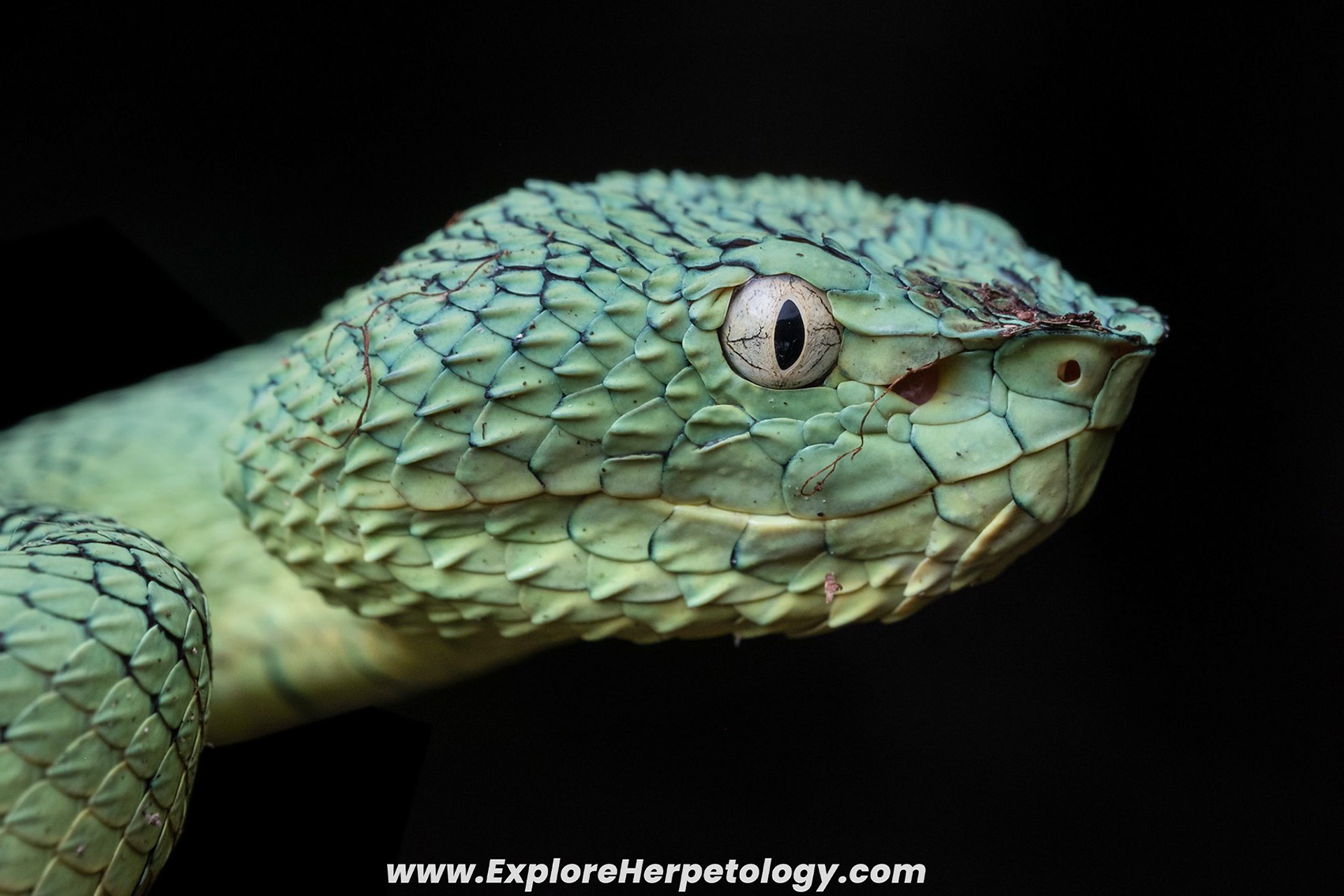
Adult female South Philippine temple viper (Tropidolaemus philippensis).

Adult male South Philippine temple viper (Tropidolaemus philippensis).

Juvenile female South Philippine temple viper (Tropidolaemus philippensis).


Juvenile Philippine shrub snake (Oxyrabdium modestum).

Philippine bronzeback (Dendrelaphis philippensis).

Common wolf snake (Lycodon capucinus).

Leyte cat snake (Boiga angulata).

Mindanao mangrove cat snake (Boiga d. latifasciata).

Mindanao red-tailed ratsnake (Coelognathus erythrurus).

Southern triangle-spotted snake (Cyclocorus nuchalis).

Mock viper (Psammodyastes cf. pulverulentus).
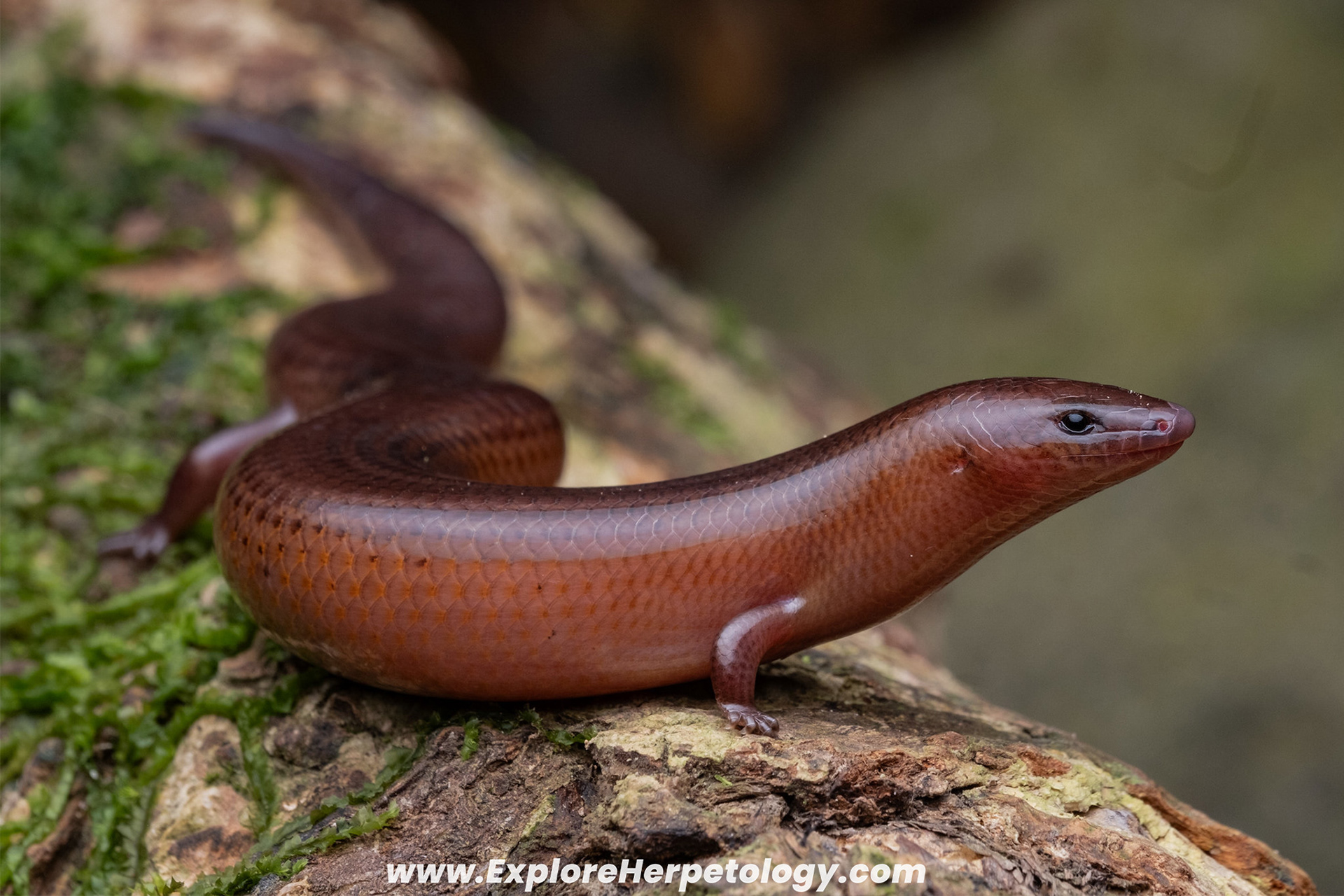
Western Mindanao short-limbed skink (Brachymeles cf. tiboliorum)

Asiatic tree frog (Leptomantis bimaculatus).

Photographing Tropidolaemus philippensis.

Nights 4 - 6: DAVAO CITY
Our next stop is Davao City, undoubtedly the best area to consistently encounter the incredible Samar cobra (Naja samarensis). The population of Samar cobra (Naja samarensis) in this region is the black phenotype, which contrasts well with the yellow-edged scales and interstitial skin, making it arguably one of the most visually impressive true cobras in the world. This colourful and feisty cobra can be found in forested habitat, agricultural land and urban areas, and while we will have a chance to encounter it in all three areas, our best chance will be while checking underground tunnels and beneath large slabs of fractured concrete in the suburban outskirts of Davao City. Better yet, we also have the chance to encounter the highly-skittish Mindanao yellow-headed monitor lizard (Varanus cumingi) while searching for the cobra. These live in the same microhabitat and can also be found while searching the drainage tunnels and rock crevices, as well as in the trees.
We will embark on multiple daytime hikes in the hopes of encountering the magnificent Mindanao king cobra (Ophiophagus sp.), a currently undescribed species within the king cobra species complex. Of course, these are rare and incredibly secretive, but this trip takes place within peak breeding season, which will definitely increase our chances. While hiking forested streams and agricultural land in the daytime, we can also see the locally-endemic yellow morph of the Philippine vine snake (Ahaetulla prasina preocularis) and many other very beautiful snakes, such as red-tailed racer (Gonyosoma oxycephalum), Philippine paradise flying snake (Chrysopelea paradisi variabilis) and Maren's bronzeback (Dendrelaphis marenae).
At night, we will venture to the outskirts of Davao City, where we will hunt avidly for the North-Philippine temple viper (Tropidolaemus subannulatus). As Mindanao is the type locality for this species, the population here is the 'true' Tropidolaemus subannulatus, which looks very different from the morphs from other islands in its range. Young individuals have impressive blue and bright red bands, while large adult females are distinguished by their broad black and blue bands on the dark green dorsum. They are far from the most common snake in the area, but we have a good chance to see multiple individuals across our nights searching. The Mindanao clade of dog-toothed cat snake (Boiga cf. cynodon) is also abundant in the same habitat, and exceptionally beautiful. Another key target from Davao is the Philippine coral snake (Calliophis philippina). The best method of searching for the coral snake is to look under large piles of coconut husks and other ground debris, although we have also found them crawling on the edge of streams and forest trails at night.

Samar cobra (Naja samarensis).

Samar cobra (Naja samarensis).

Mindanao yellow-headed monitor (Varanus cumingi).
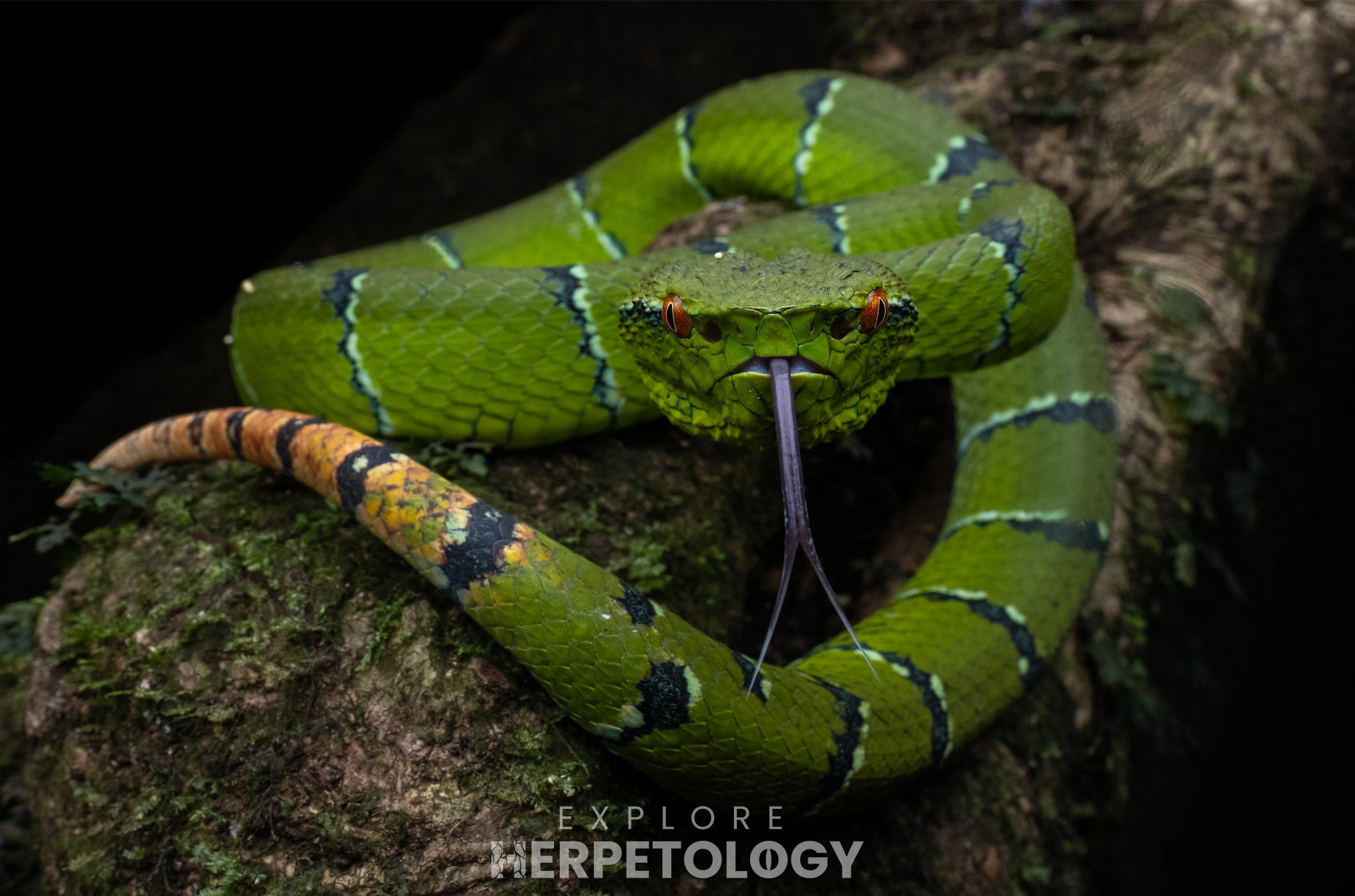
Adult female North-Philippine temple viper (Tropidolaemus subannulatus).

Philippine coral snake (Calliophis philippina).

Dog-toothed cat snake (Boiga cynodon)

Mindanao king cobra (Ophiophagus cf. bungarus).

Mindanao red-tailed ratsnake (Coelognathus erythrurus).

Philippine vine snake (Ahaetulla prasina preocularis)

Banded sphenomorphus (Sphenomorphus fasciatus).

Exploring stream valleys.

Philippine bronzeback (Dendrelaphis philippensis).

Philippine shrub snake (Oxyrabdium modestum).

North-Philippine temple viper (Tropidolaemus subannulatus)

Olive blind snake (Ramphotyphlops olivaceus).

Maren's bronzeback (Dendrelaphis marenae).

Brachymeles gracilis.

Hiking agricultural lands.

Red-tailed ratsnake (Gonyosoma oxycephalum).
Nights 7 & 8: TORIL
After three days in Davao, we conclude the expedition with two nights in Toril, a district comprising predominantly of highlands up to 1,200 meters. These highlands are inhabited by the Mindanao clade of the Philippine pit viper (Trimeresurus cf. flavomaculatus), often referred to as "Trimeresurus schadenbergi". This distinctive morph is much rarer than the typical Trimeresurus flavomaculatus found across the more northern islands in The Philippines, but we have discovered some hidden areas with a healthy population. Males and females differ drastically in colouration, so we will aim to find high-quality individuals of both sexes.
Toril has been a great place to find the Mindanao kukri snake (Oligodon maculatus) in the past, while other rare Mindanao endemics such as Dumeril's wolf snake (Lycodon dumerilii), Philippine ground snake (Stegonotus muelleri) and white-lined keelback (Rhabdophis auriculatus) can all be found here. The Mindanao clade of Gervais' reed snake (Calamaria gervaisii), blunt-headed slug snake (Aplopeltura boa) and variable reed snake (Calamaria lumbricoidea) also occur in the area. The humid forests of Toril are also great for frogs. Our team have observed Mindanao horned frog (Pelobatrachus stejnegeri), Mindanao sticky frog (Kalophrynus sinensis), saffron-bellied frog (Chaperina cf. fusca), Asiatic tree frog (Leptomantis bimaculatus) and smooth-skinned shrub frog (Philautus worcesteri) in the past. The endemic Davao stream skink (Tropidophorus davaoensis) is abundant along the streams, and we have a great chance to encounter both Pungkaypinit's false gecko (Pseudogekko pungkaypinit) and Philippine angle-headed lizard (Gonocephalus sp.).

Juvenile male Mindanao/Philippine pit viper (Trimeresurus cf. flavomaculatus).
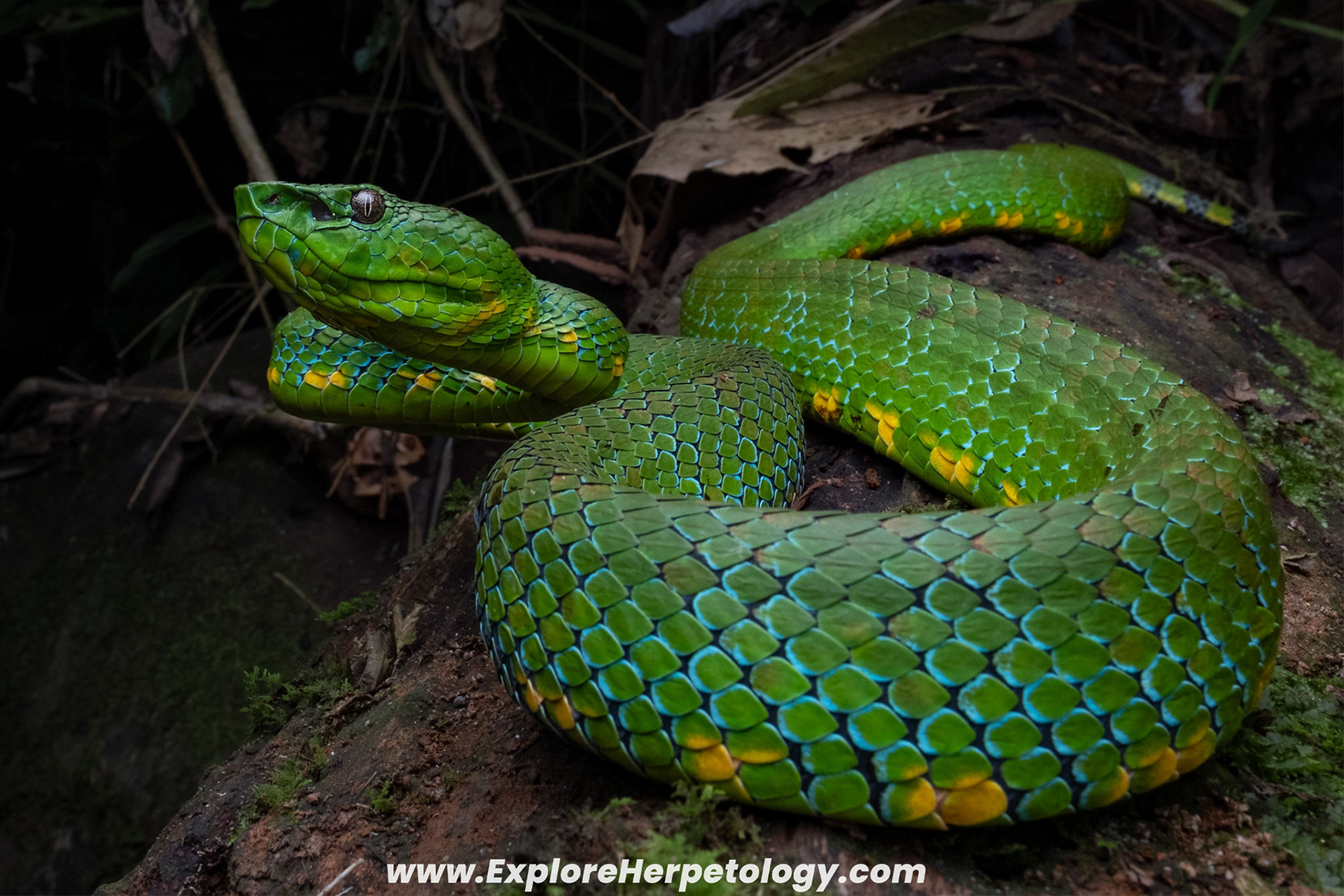
Adult female Mindanao/Philippine pit viper (Trimeresurus cf. flavomaculatus).

Adult female Mindanao/Philippine pit viper (Trimeresurus cf. flavomaculatus).

Juvenile female Mindanao/Philippine pit viper (Trimeresurus cf. flavomaculatus).

Philippine coral snake (Calliophis philippinus).

Mindanao kukri snake (Oligodon maculatus).

Mindanao kukri snake (Oligodon maculatus).
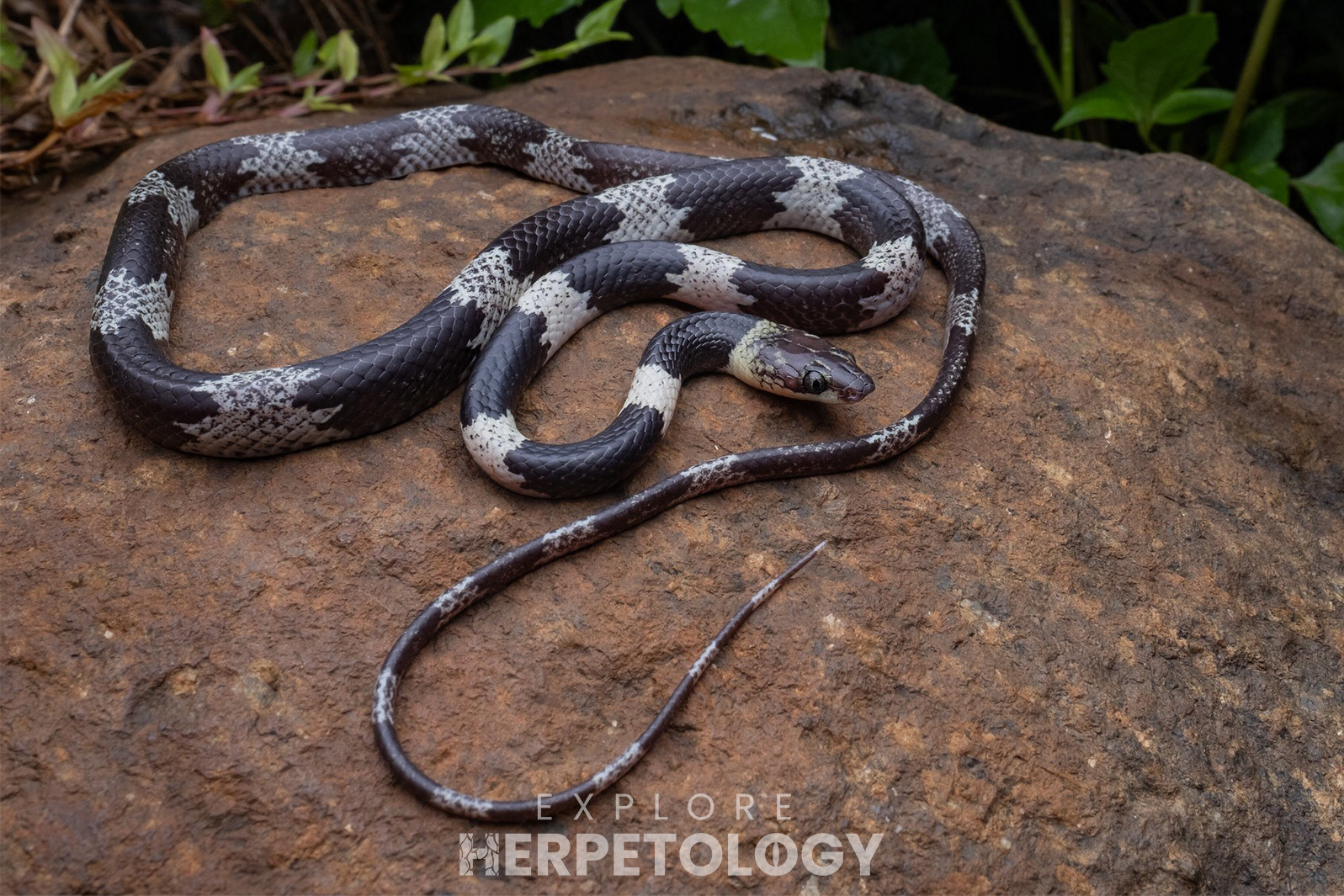
Dumeril's wolf snake (Lycodon dumerilii).

Gervais' reed snake (Calamaria cf. gervaisii).

North-Philippine temple viper (Tropidolaemus subannulatus).

Blunt-headed slug snake (Aplopeltura boa).

Variable reed snake (Calamaria lumbricoidea).

Zig-zag lined keelback (Rhabdophis lineatus).

Philippine shrub snake (Oxyrabdium modestum).

Pungkaypinit's false gecko (Pseudogekko pungkaypinit).

Philippine angle-headed lizard (Gonocephalus sp.).

Western-Mindanao short-limbed skink (Brachymeles tiboliorum).

Spiny cinnamon frog (Nyctixalus spinosus).

Rabor's forest frog (Platymantis rabori).

Asiatic tree frog (Leptomantis bimaculatus).

Mindanao sticky frog (Kalophrynus sinensis).

Smooth-skinned shrub frog (Philautus worcesteri).

Mindanao horned frog (Pelobatrachus stejnegeri).
Accommodation:
The accommodation throughout the trip is mid-range hotels, with air conditioning and a western bathroom guaranteed. Not all locations have hot water, but this can be very pleasing after a hot and sweaty hike. We will have an opportunity to do laundry on day 5 of the expedition.
Food:
We will predominantly eat at western-catered restaurants during this trip, but will also eat some fast food and local food when we are low on time or out for a long time in more remote areas.
Environmental conditions & fitness:
This expedition involves very high amounts of hiking during the daytime and at night, so you must self-assess yourself to ensure you are capable of this endeavour. The terrain in the valleys can be steep and slippery, so chances of falling over or getting wet are high. Of course, not every hike is mandatory, but you will certainly be hiking in the field a lot during this trip. The temperatures will often exceed 30 degrees celsius in the daytime, and even the highlands can be very hot if there is no rain. As March is during the dry season, we expect limited rain during the trip (but never zero).
Travel information & Safety:
All participants must arrive in Zamboanga City at the designated meeting location by 15:00 on the 10th March 2027. The exact meeting location will be communicated privately around 1 month before the start of the expedition. The best means to access Zamboanga is by plane, via Manila. We will end the tour at Davao City, Philippines, by midday on the 18th March 2027, where the expedition will officially end. There are daily flights from Davao to Manila and Singapore, for those looking to head home immediately.
Governments worldwide advise against travel to the Zamboanga Peninsula due to historical issues with insurgency groups and kidnapping, but these days this is rare and limited to areas in Zamboanga del Norte - very far from Zamboanga City. Zamboanga City is very safe, especially as we will be in a large group and spending most of our time in the local protected area accompanied by rangers. We consider this an extremely low risk area to travel to.
It is the guests’ responsibility to meet all entry requirements needed to enter The Philippines, including visa procedures. Most countries are visa-free when entering The Philippines, but make sure to check the entry requirements for your country before booking.


