
Start: 20th August 2027 | End: 31st August 2027 | Meeting location: Phuket | Availability: 7 Spaces
Included in the tour:
- Expert herpetologist guides.
- Accommodation.
- Transport.
- Meals and accompanying drinks.
- Permits and entrance fees.
Introduction:
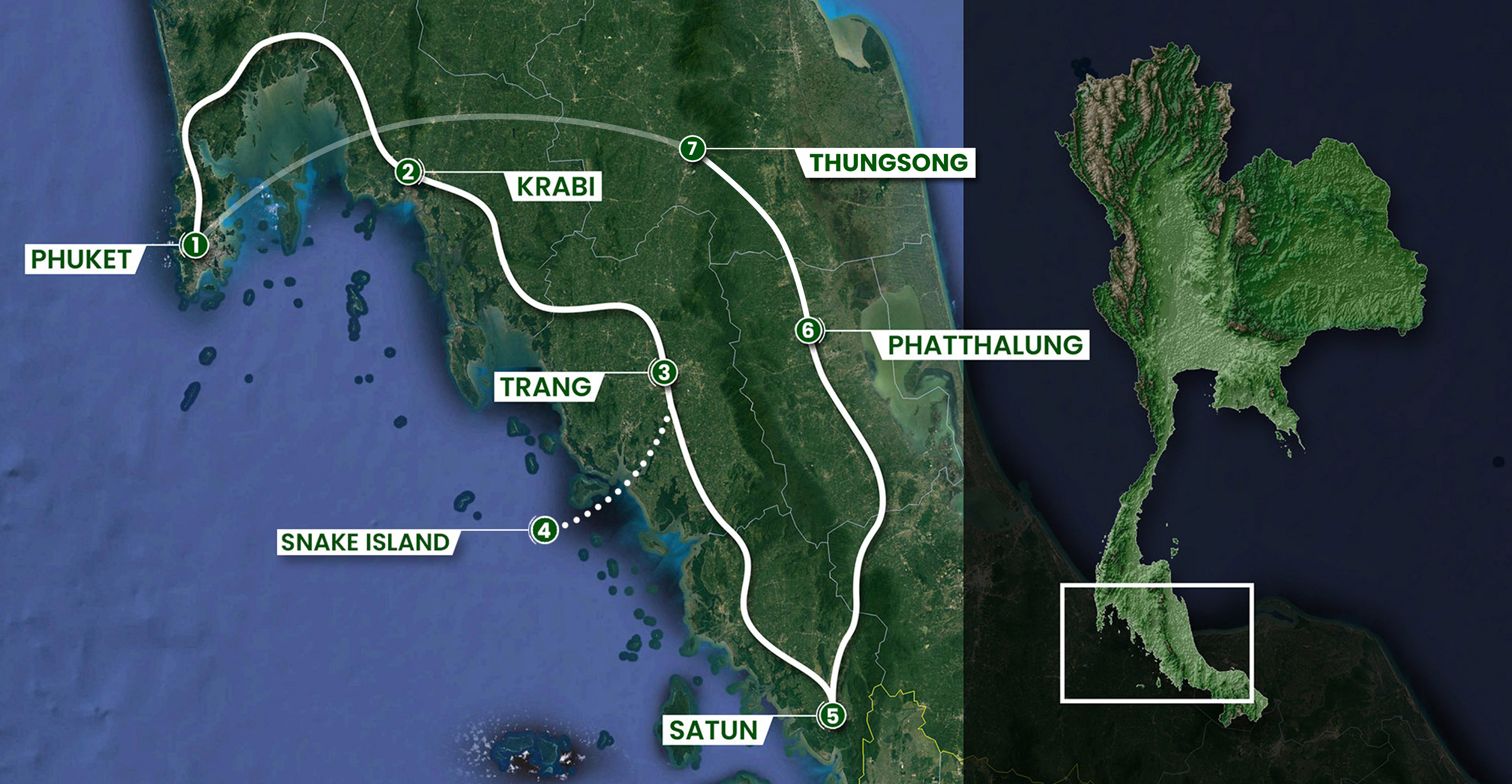
As our longest-running annual flagship expedition, Thai Peninsula is famous for consistently providing the highest herpetofauna species count of any trip we offer, with extremely high numbers of snakes guaranteed. We cover all the key biotopes in Southern Thailand, travelling to seven different locations as we look for wildlife in mangrove forests, limestone karst formations, tropical dipterocarp rainforest, agricultural land, rocky coastlines, swamp forest and submontane peaks. This expedition is curated around seeing all that Southern Thailand has to offer, and has been one of our most popular trips since its inception in 2022. In the past, we have observed nine different pit viper species on this expedition, along with Sunda king cobra (Ophiophagus bungarus), multiple red-headed kraits (Bungarus flaviceps) and monocled cobra (Naja kaouthia). Get in touch now to secure your space and join us on an unforgettable adventure to the Thai Peninsula.
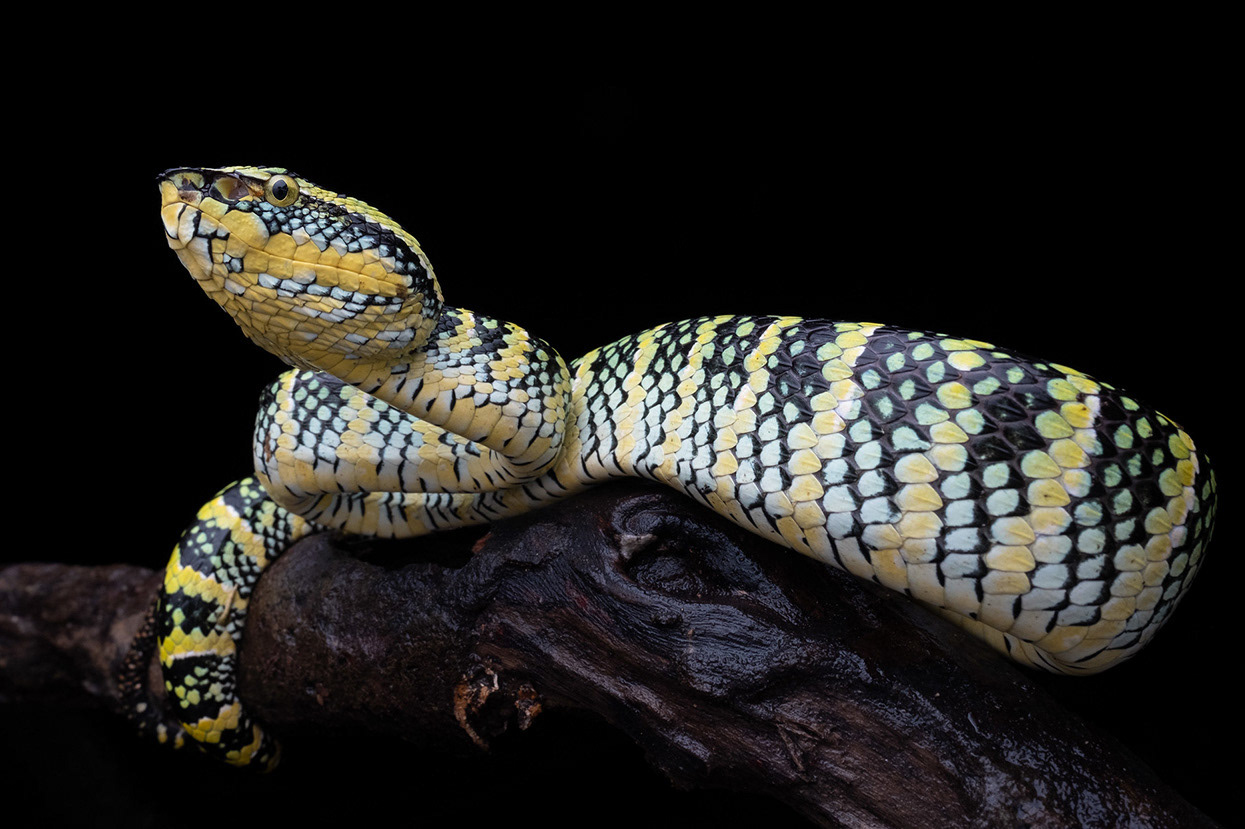
Wagler's pit viper (Tropidolaemus wagleri).
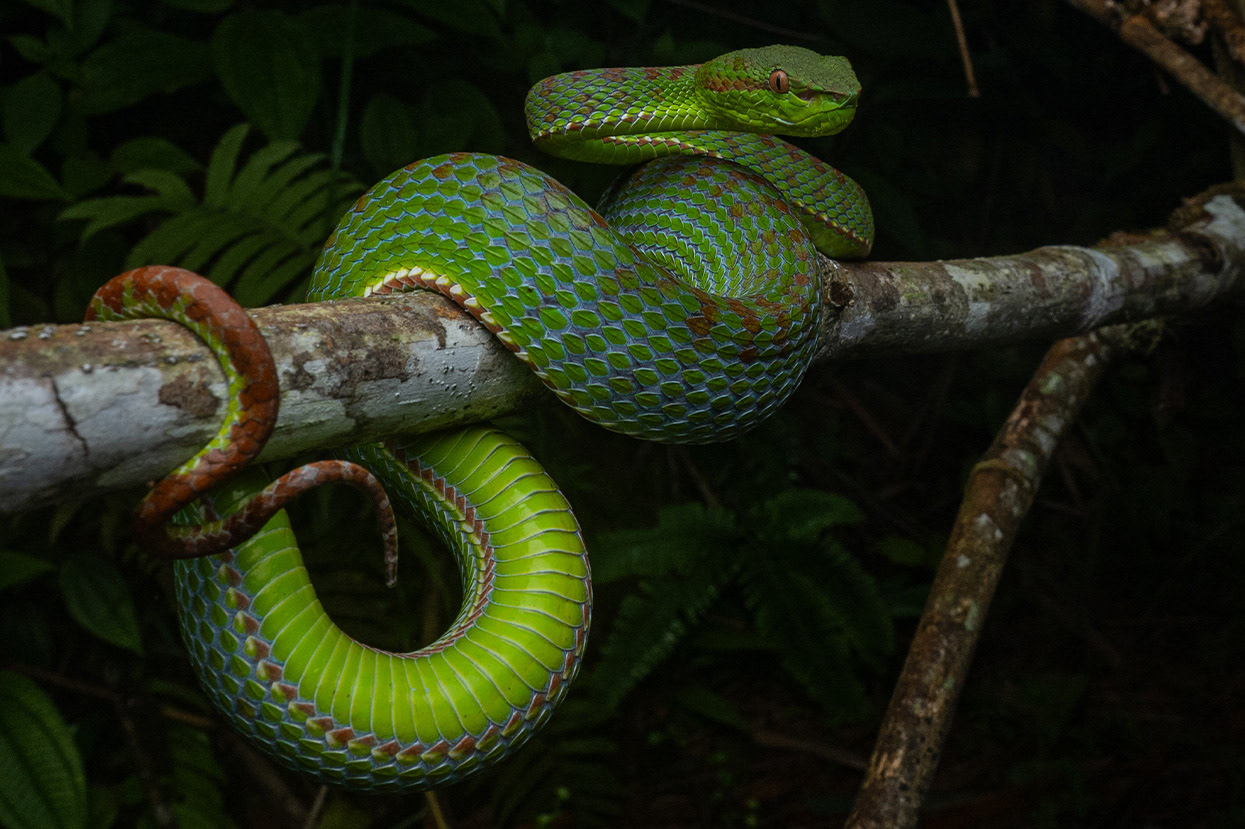
Phuket pit viper (Trimeresurus phuketensis)
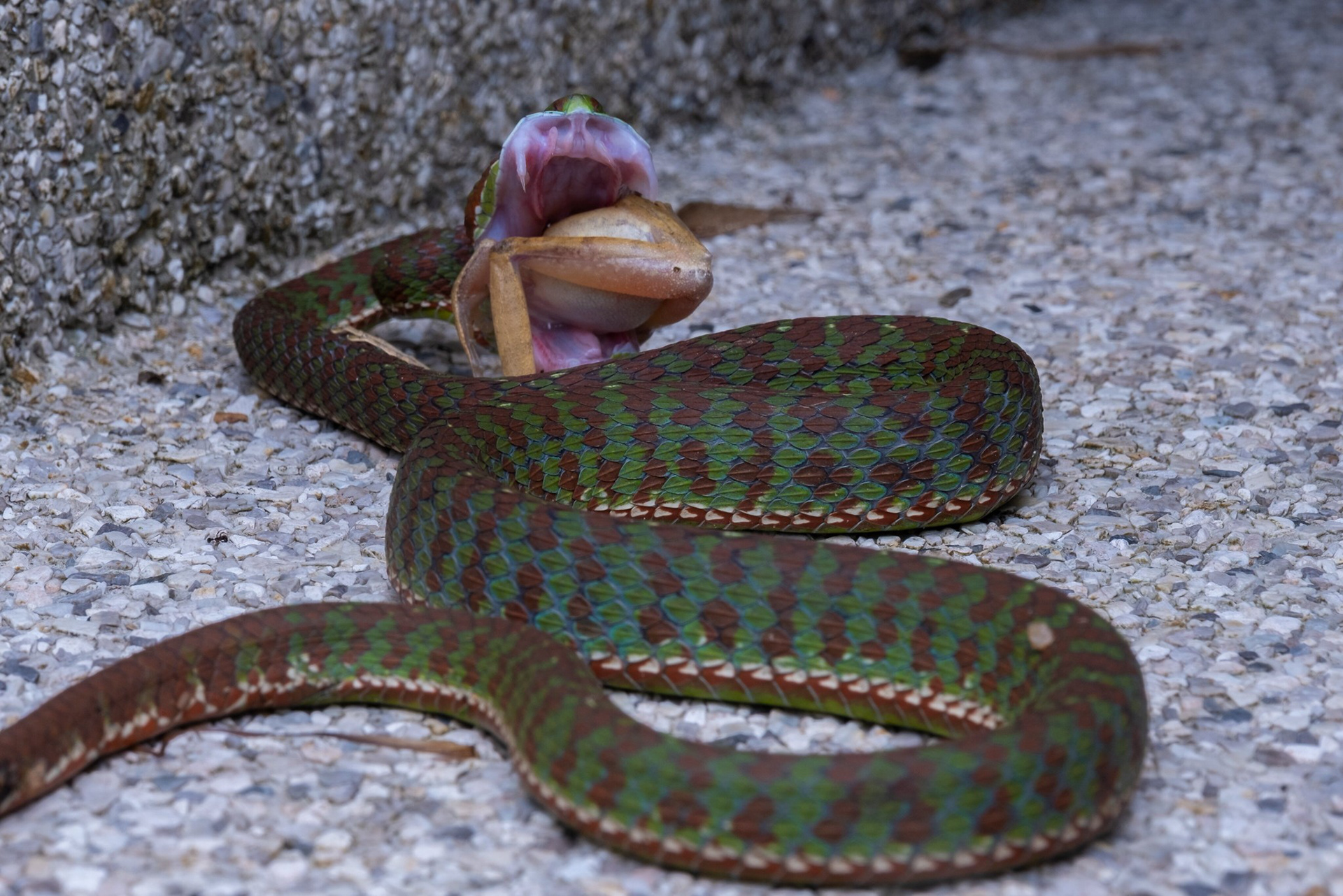
Phuket pit viper (Trimeresurus phuketensis)
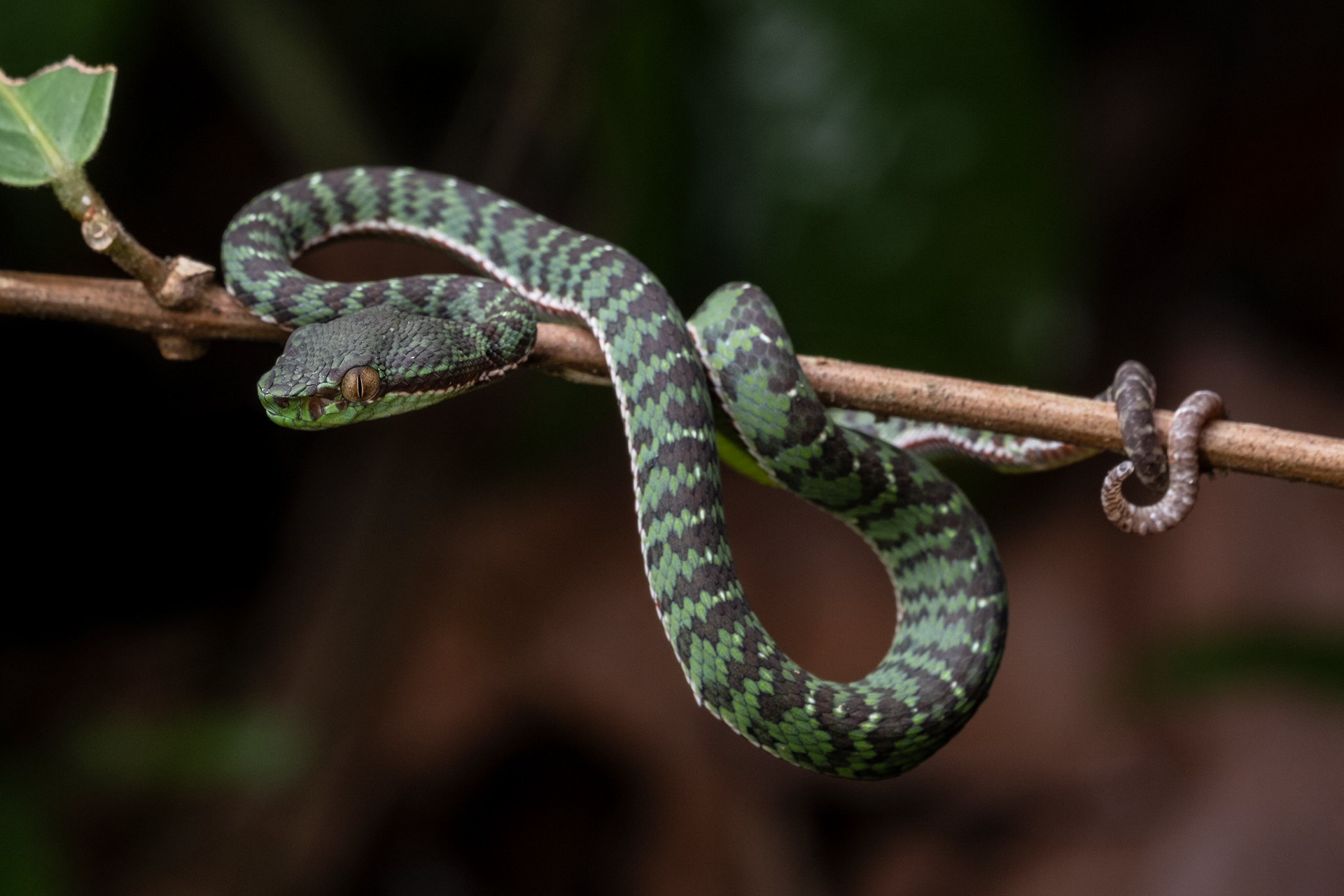
Phuket pit viper (Trimeresurus phuketensis)
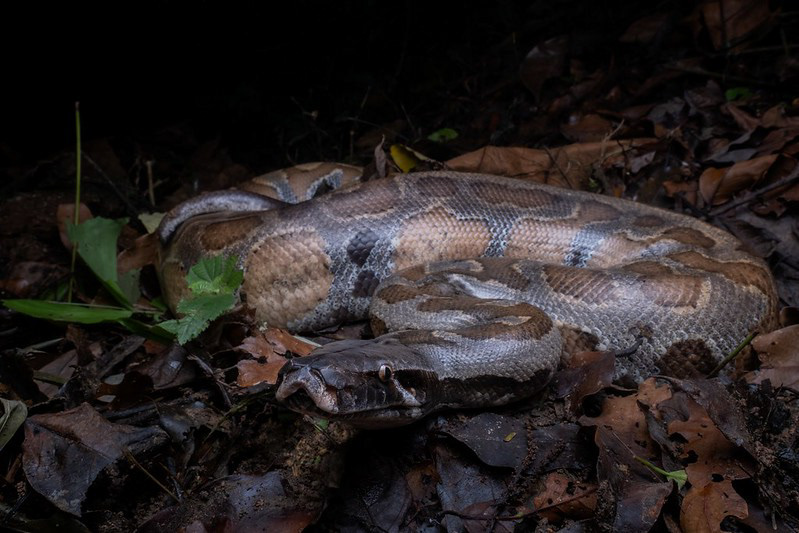
Blood python (Python brongersmai)
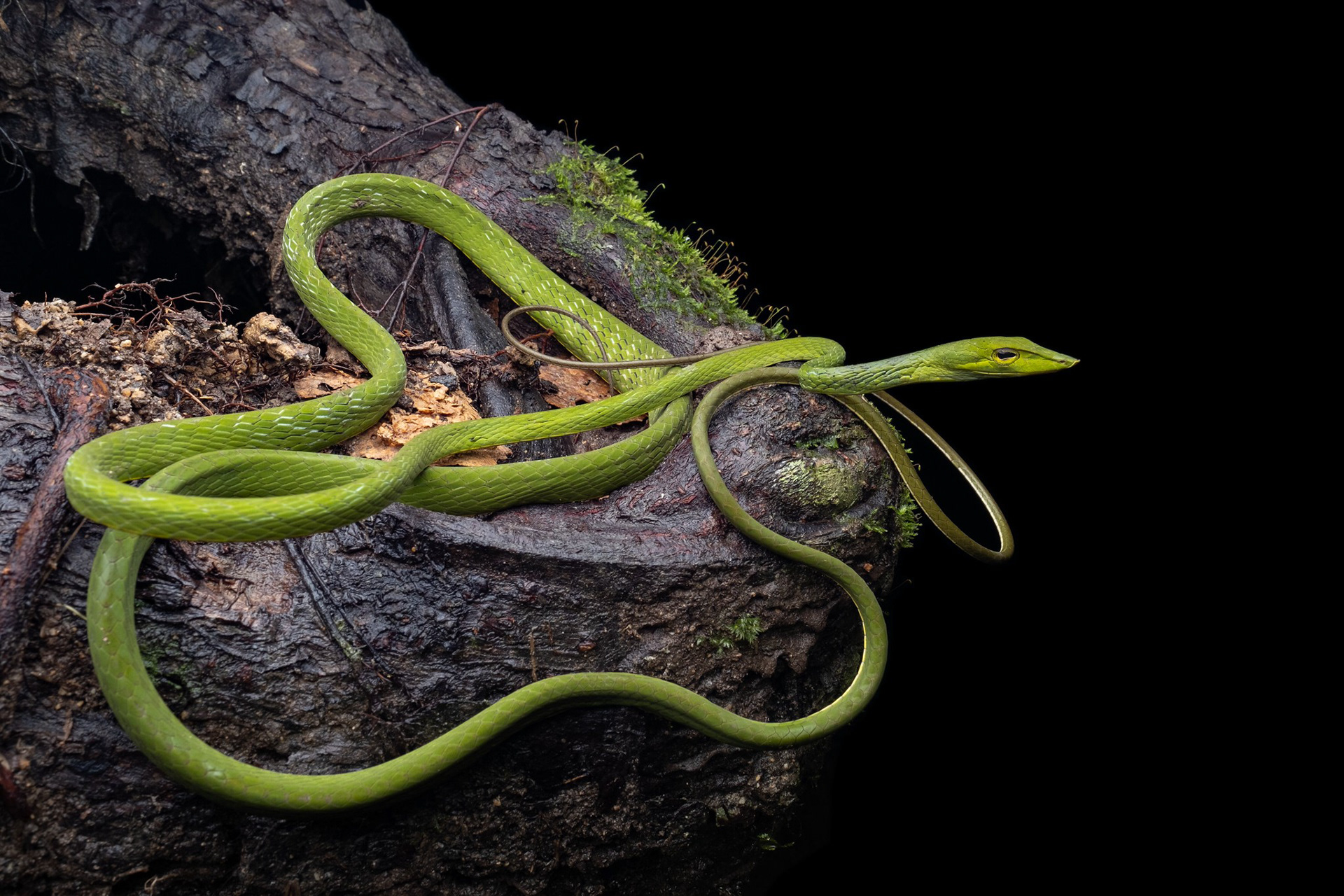
Speckle-headed vine snake (Ahaetulla fasciolata).
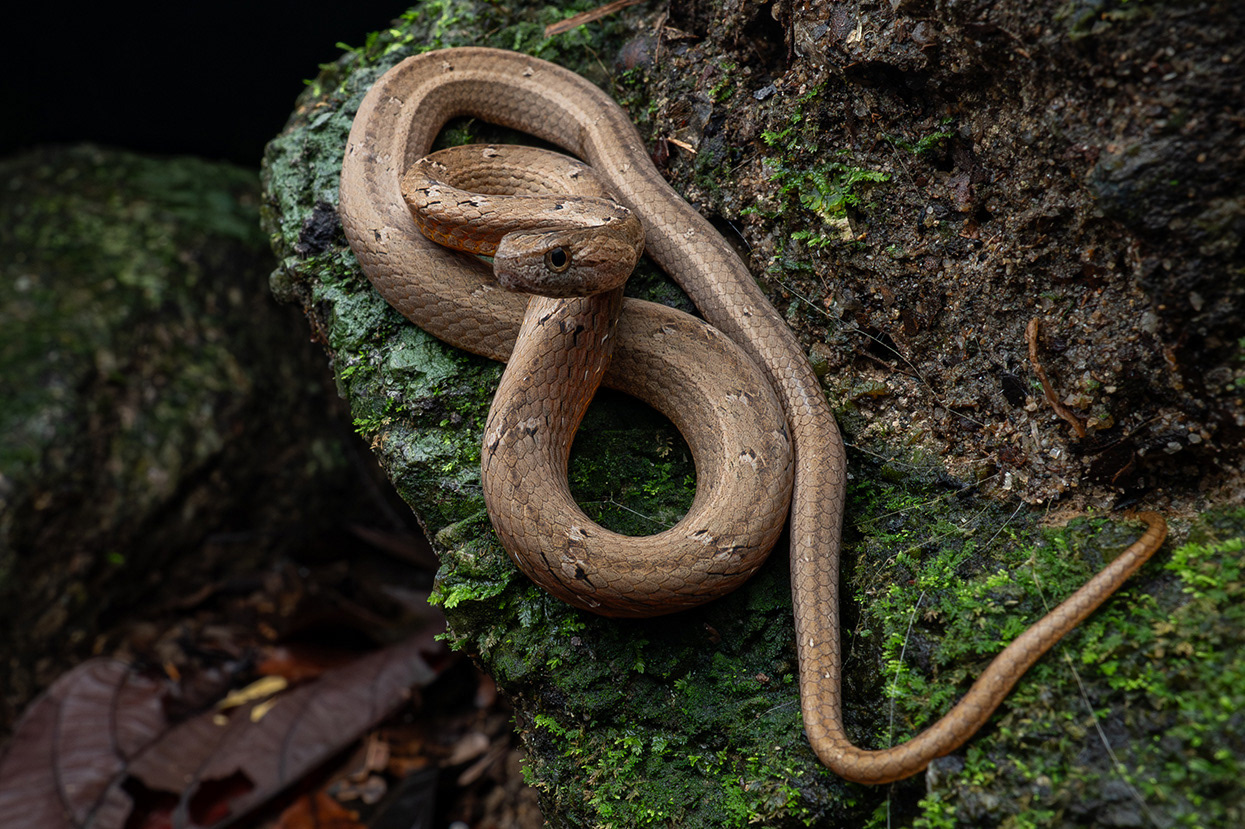
Mock viper (Psammodynastes pulverulentus).
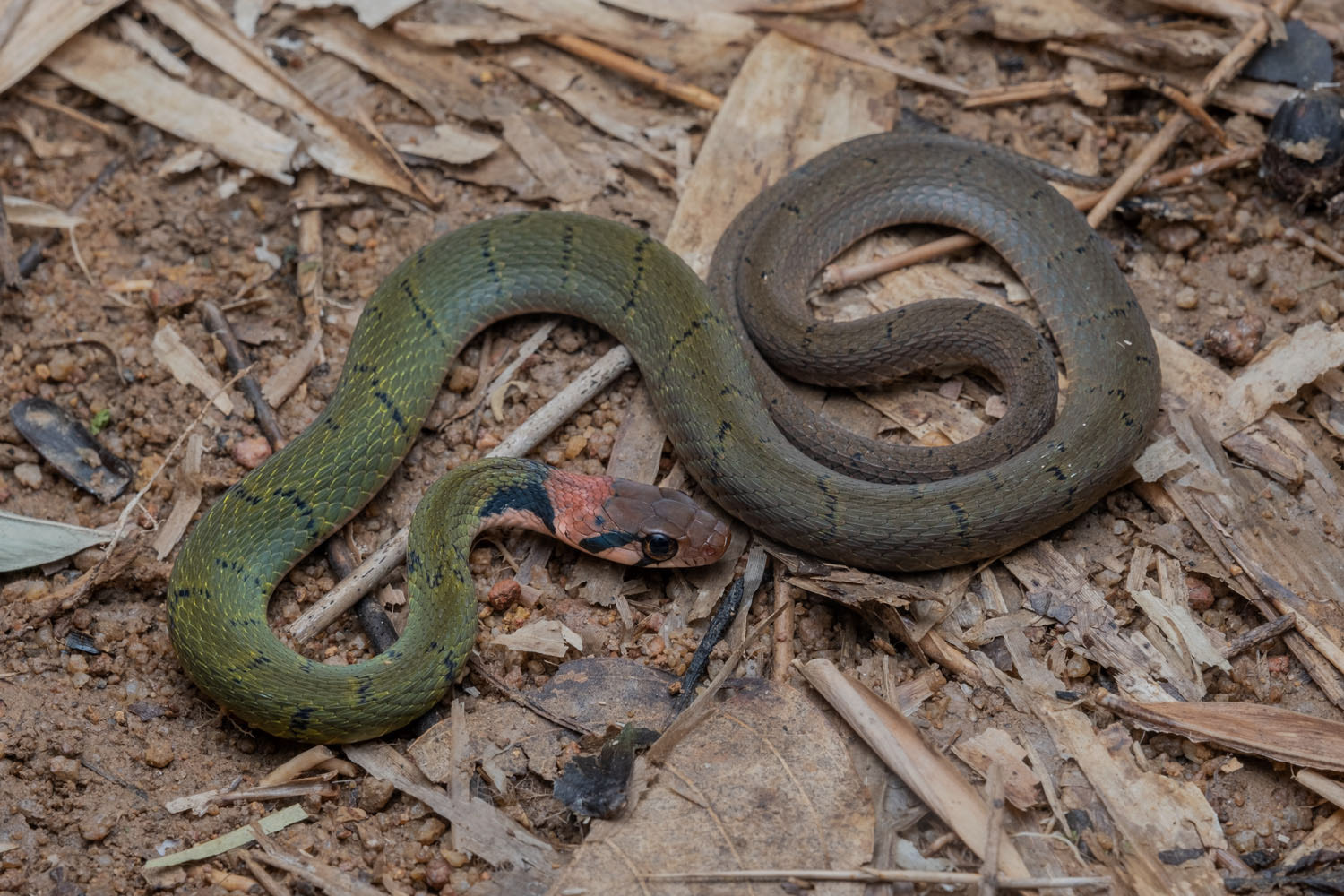
Black-barred keelback (Rhabdophis nigrocinctus)
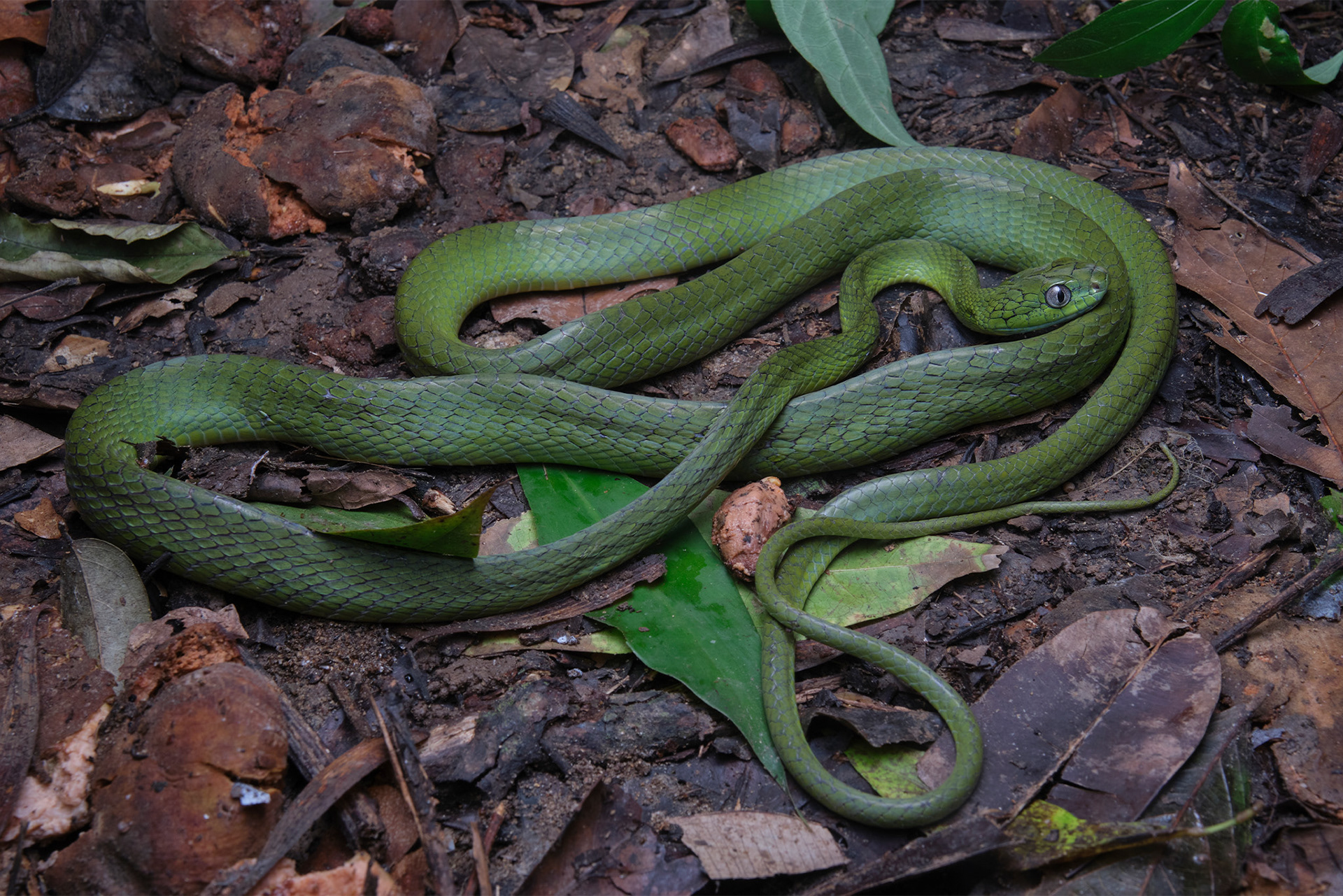
Green cat snake (Boiga cyanea)
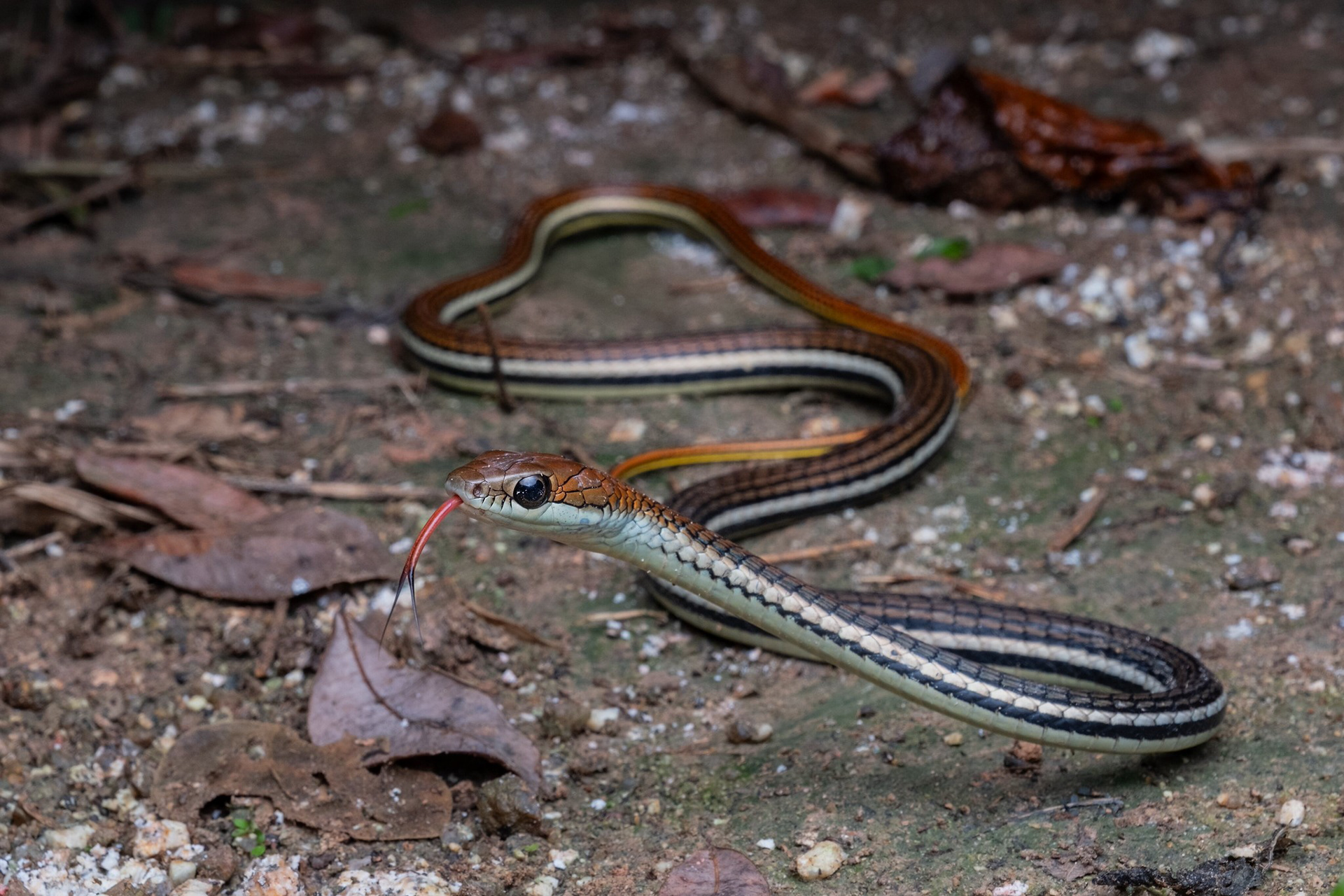
Striped bronzeback (Dendrelaphis caudolineatus).
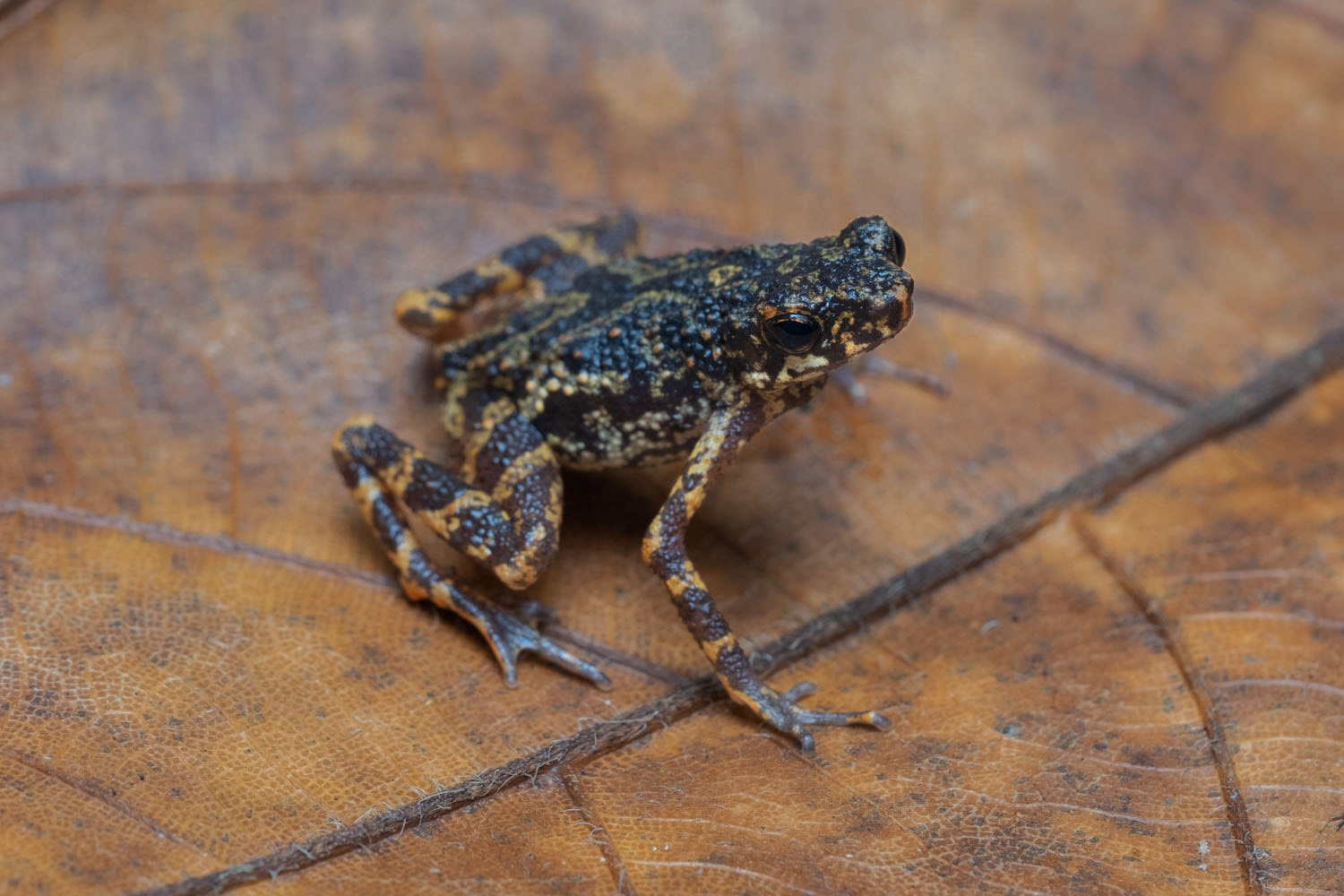
Phuket stream toad (Ansonia phuketensis)
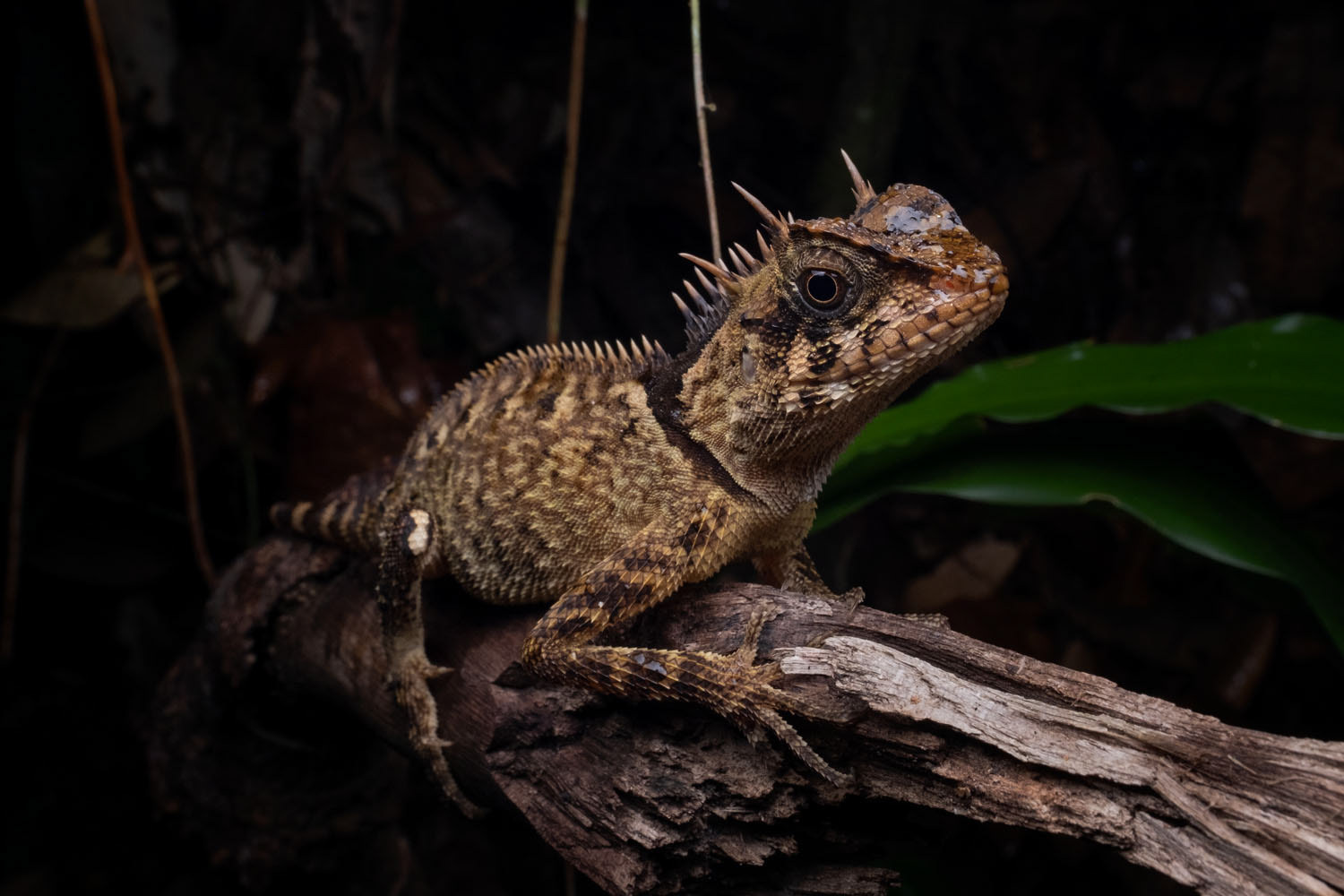
Phuket horned dragon (Acanthosaura phuketensis)
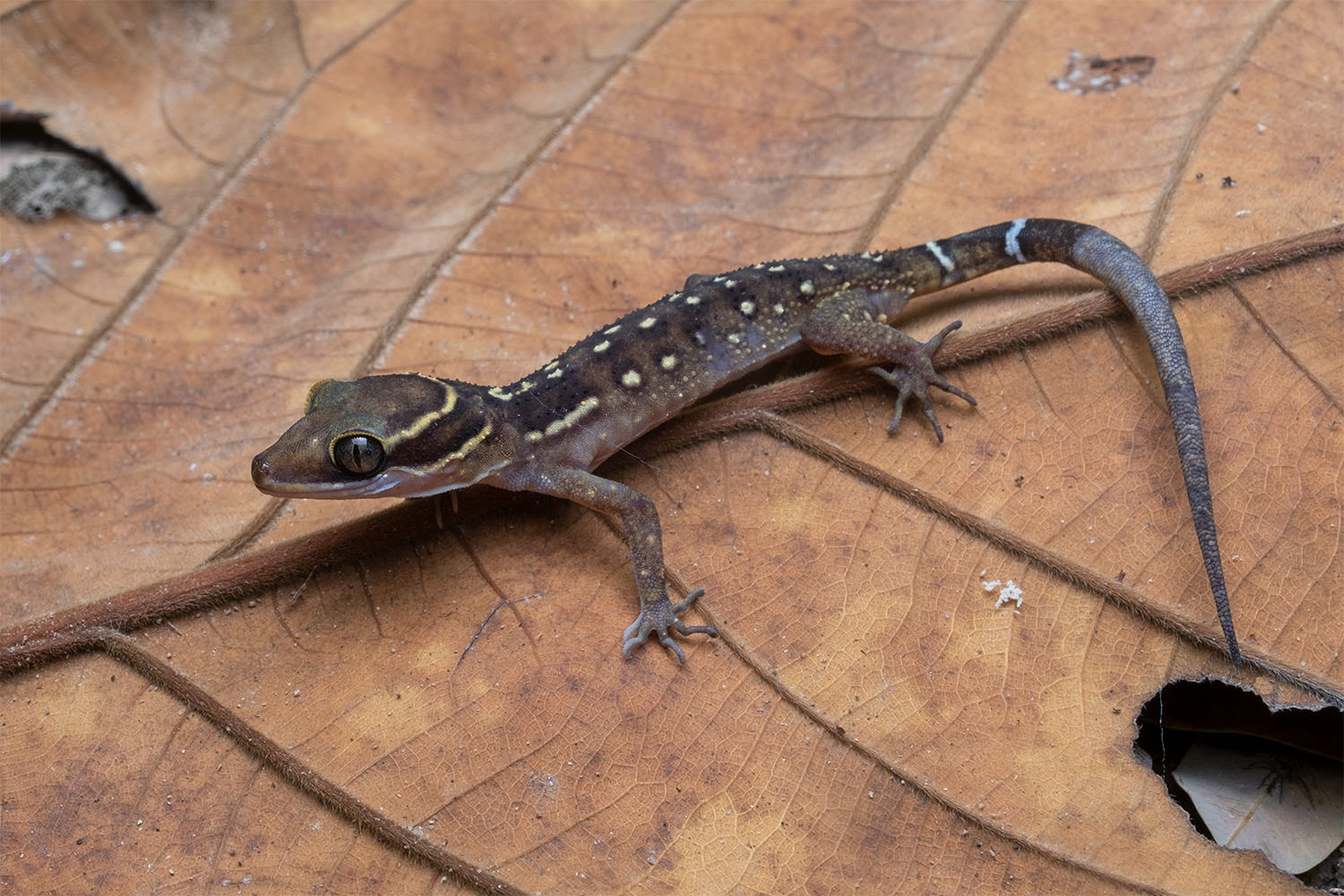
Oldham's bent-toed gecko (Cyrtodactylus oldhami)
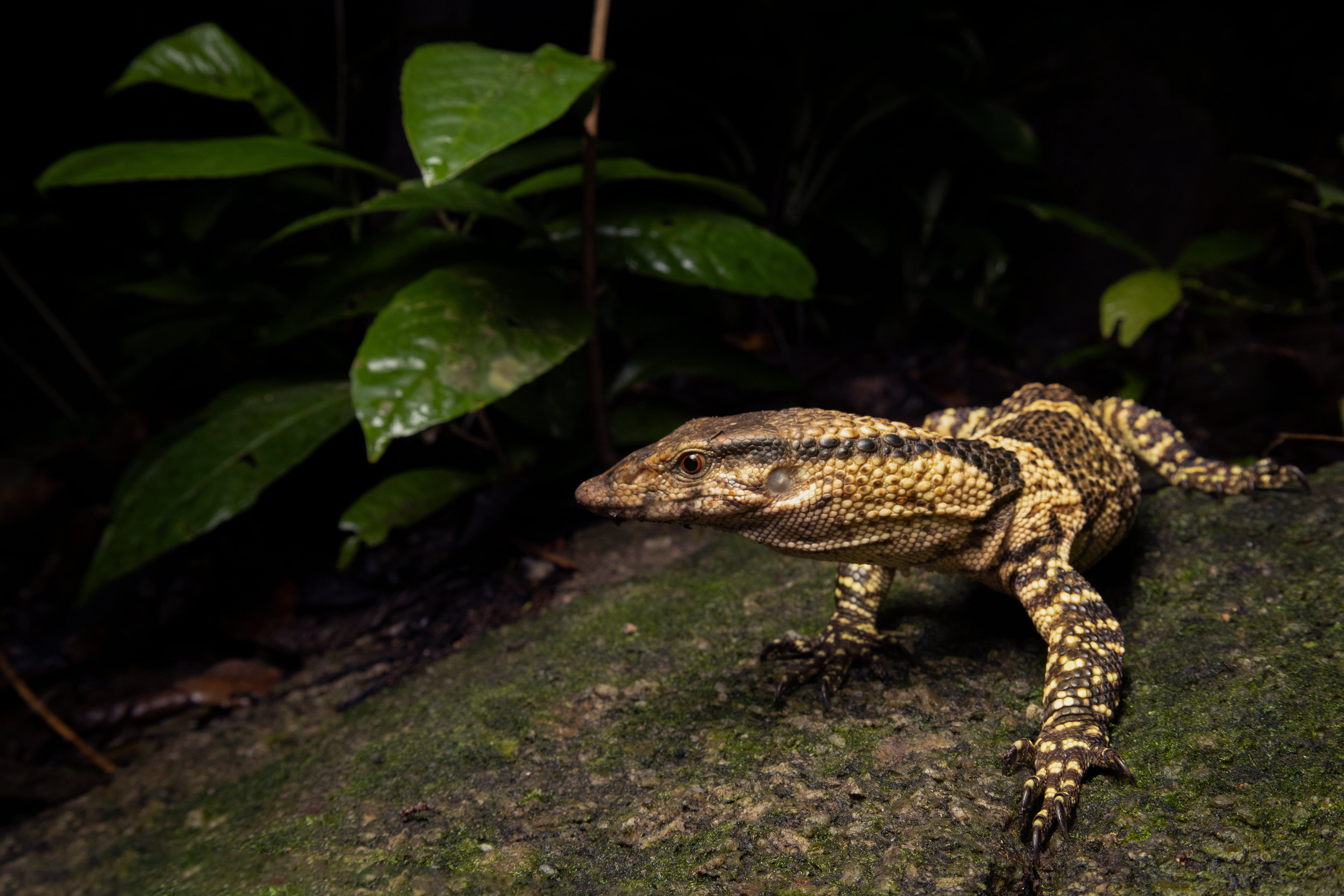
Dumeril's monitor (Varanus dumerilii)
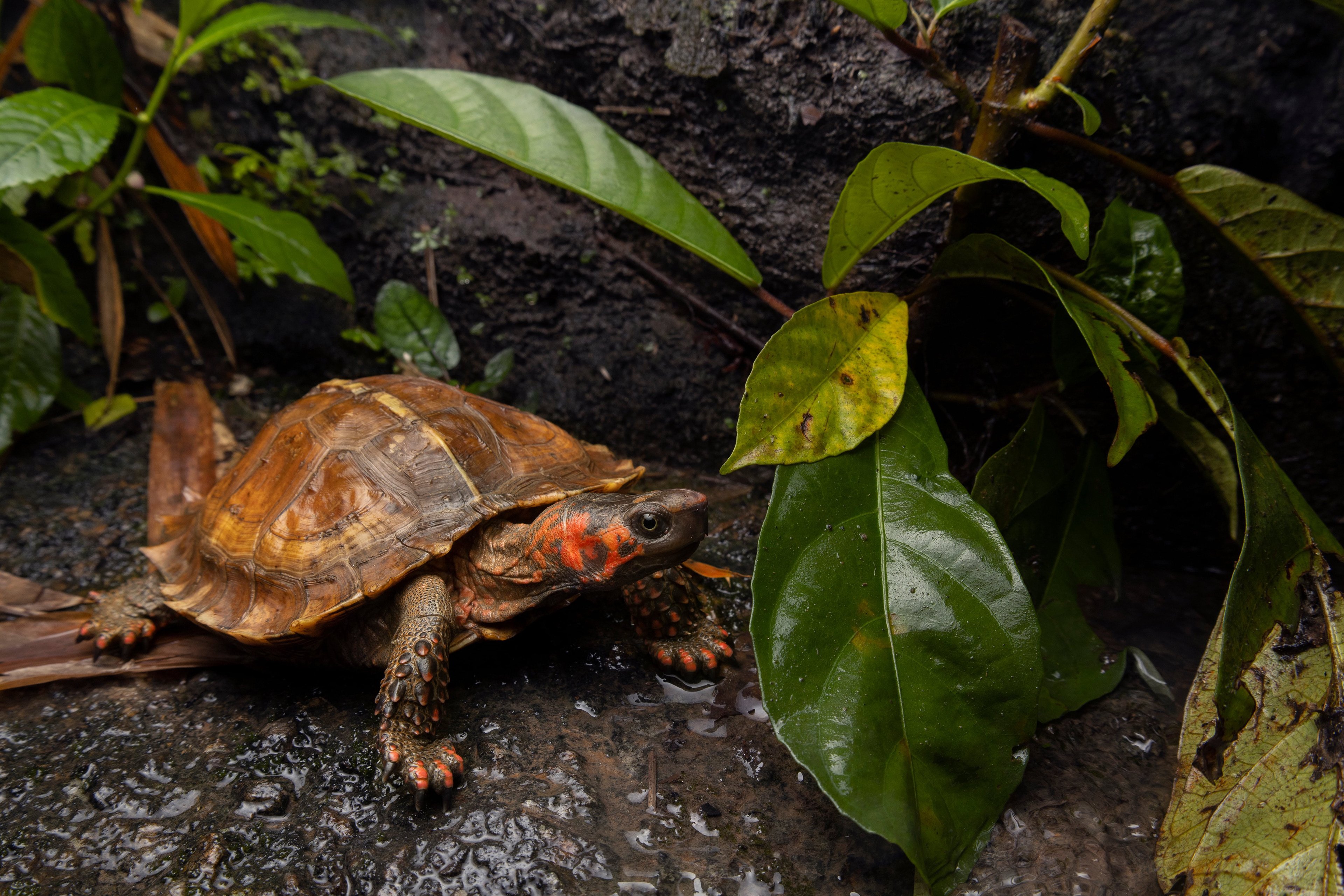
Spiny turtle (Heosemys spinosa)
Night 1: Phuket
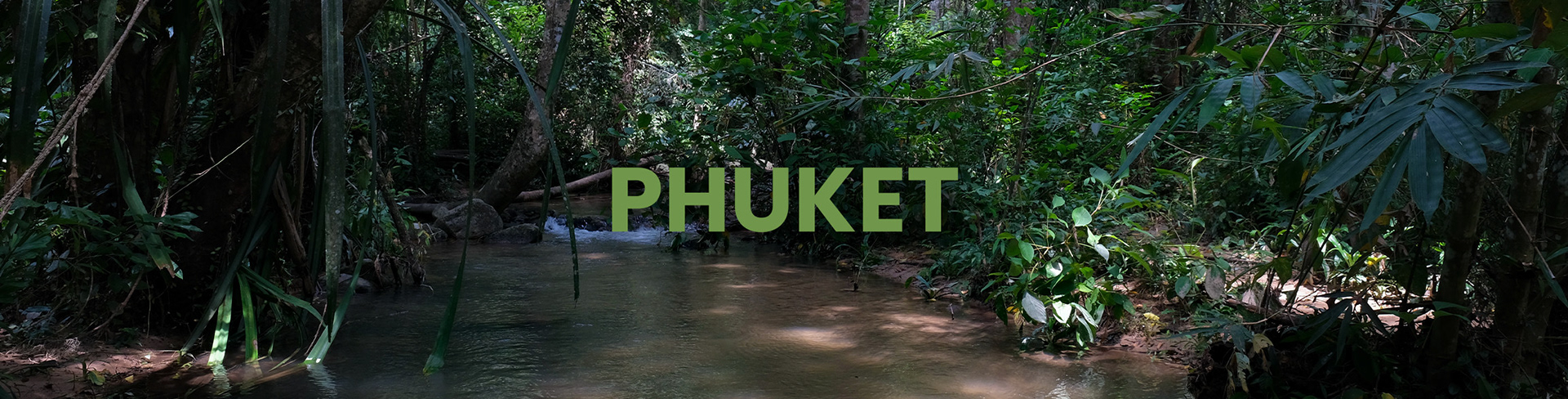
The expedition begins in Phuket, an extremely popular tourist destination with an international airport. While this may not seem conducive to herping, large portions of the island remain covered in tropical rainforest, with higher snake densities than anywhere else on the trip. Our primary targets will be Wagler’s pit viper (Tropidolaemus wagleri) and the endemic Phuket pit viper (Trimeresurus phuketensis). Phuket is also a great location to see the common mock viper (Psammodynastes pulverulentus), black-barred keelback (Rhabdophis nigrocinctus) and green cat snake (Boiga cyanea) - all species which we are unlikely to see at other locations on the tour. If we get heavy rain, this area provides the highest chances to encounter blood pythons (Python brongersmai), a very rare species otherwise. Other herpetofauna targets include the Phuket horned dragon (Acanthosaura phuketensis), Oldham’s bent-toed gecko (Cyrtodactylus oldhami) and the Thalang bent-toed gecko (Cyrtodactylus thalang), while our key amphibian targets are the delightful Phuket stream toad (Ansonia phuketensis) and the very rare Burmese warty frog (Theloderma phrynoderma).
Our singular night's stay at this location will be spent at a comfortable hotel on the north side of Phuket town, surrounded by a myriad of restaurants, malls and other shops where we can buy last-minute supplies for our travels across the peninsula. We will drive to our herping destinations, both during the day and at night, although one can find herpetofauna just walking around the streets beside the hotel.
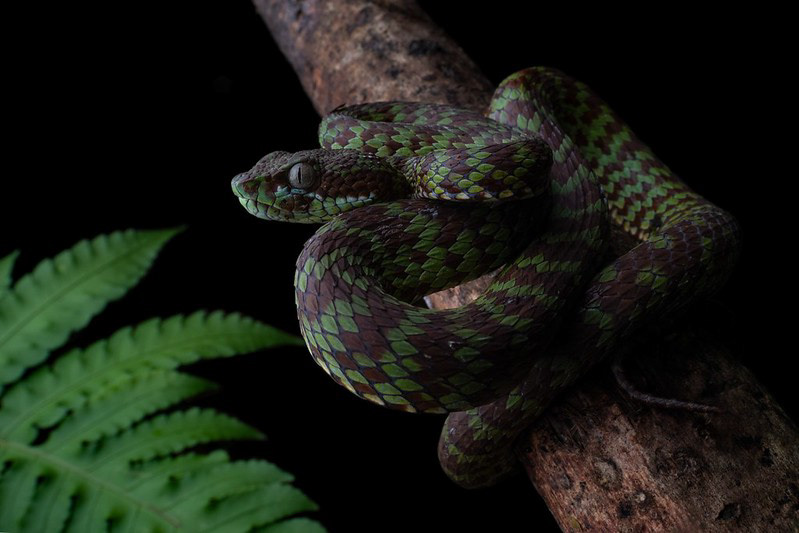
Beautiful pit viper (Trimeresurus venustus)
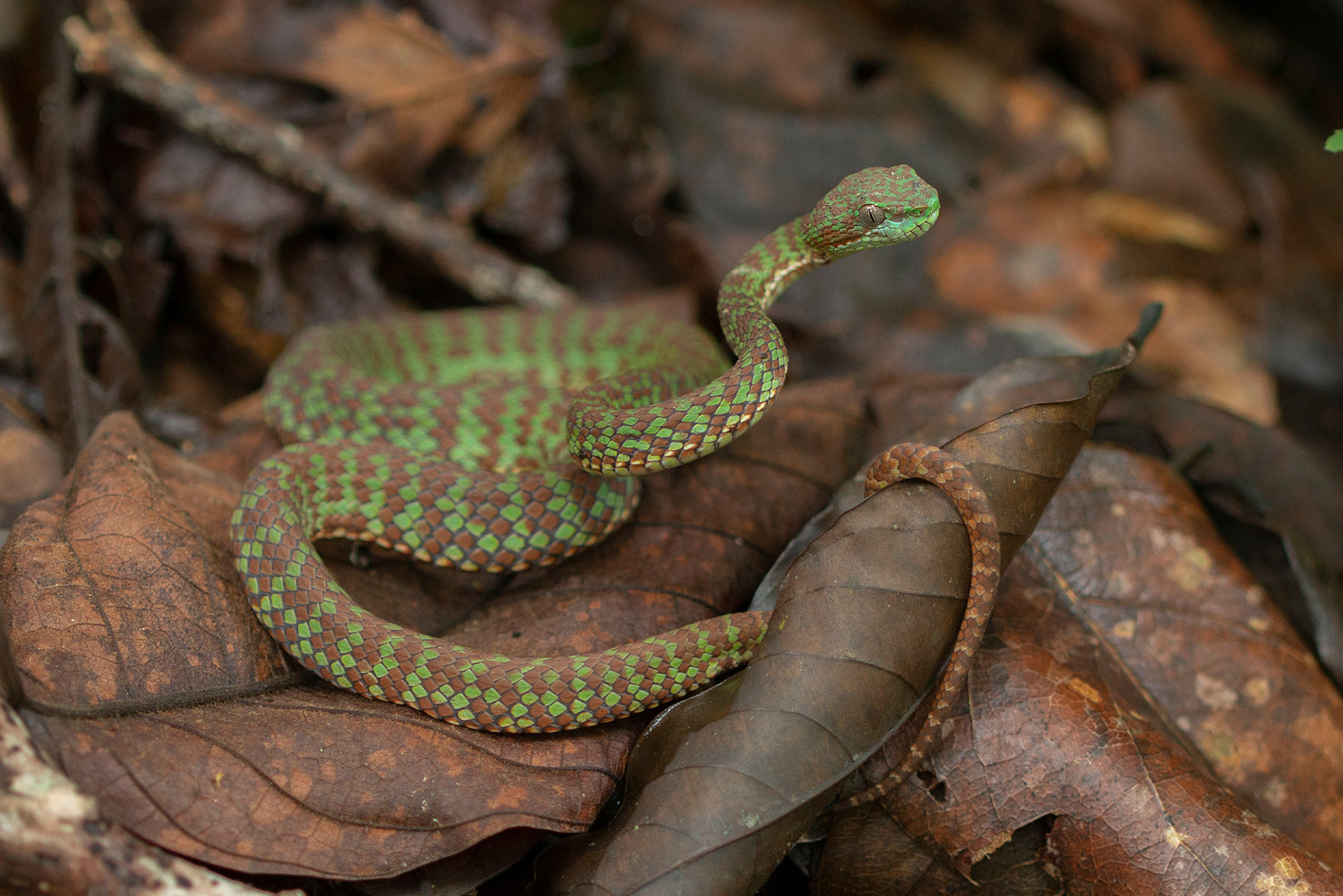
Beautiful pit viper (Trimeresurus venustus)
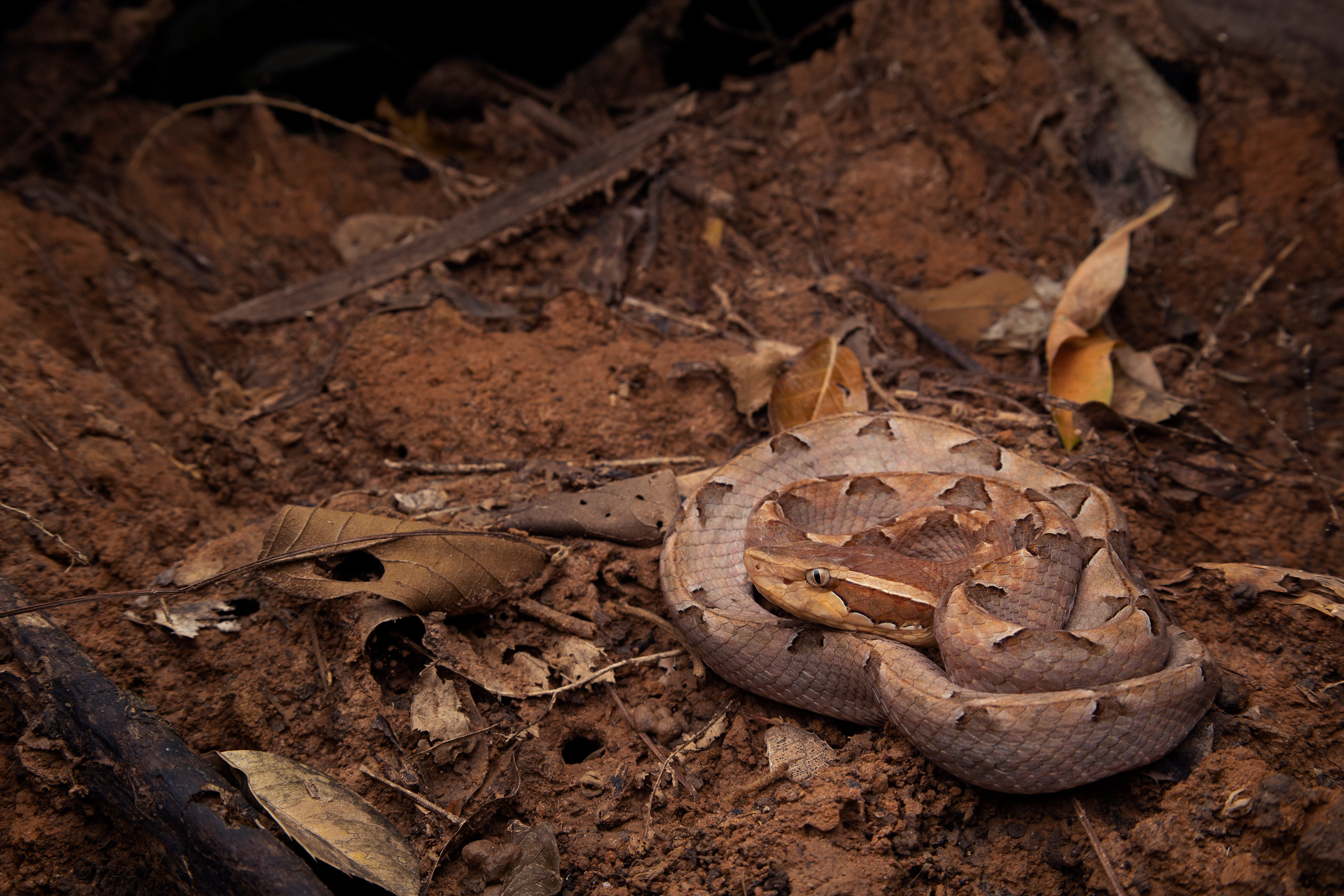
Malayan pit viper (Calloselasma rhodostoma)
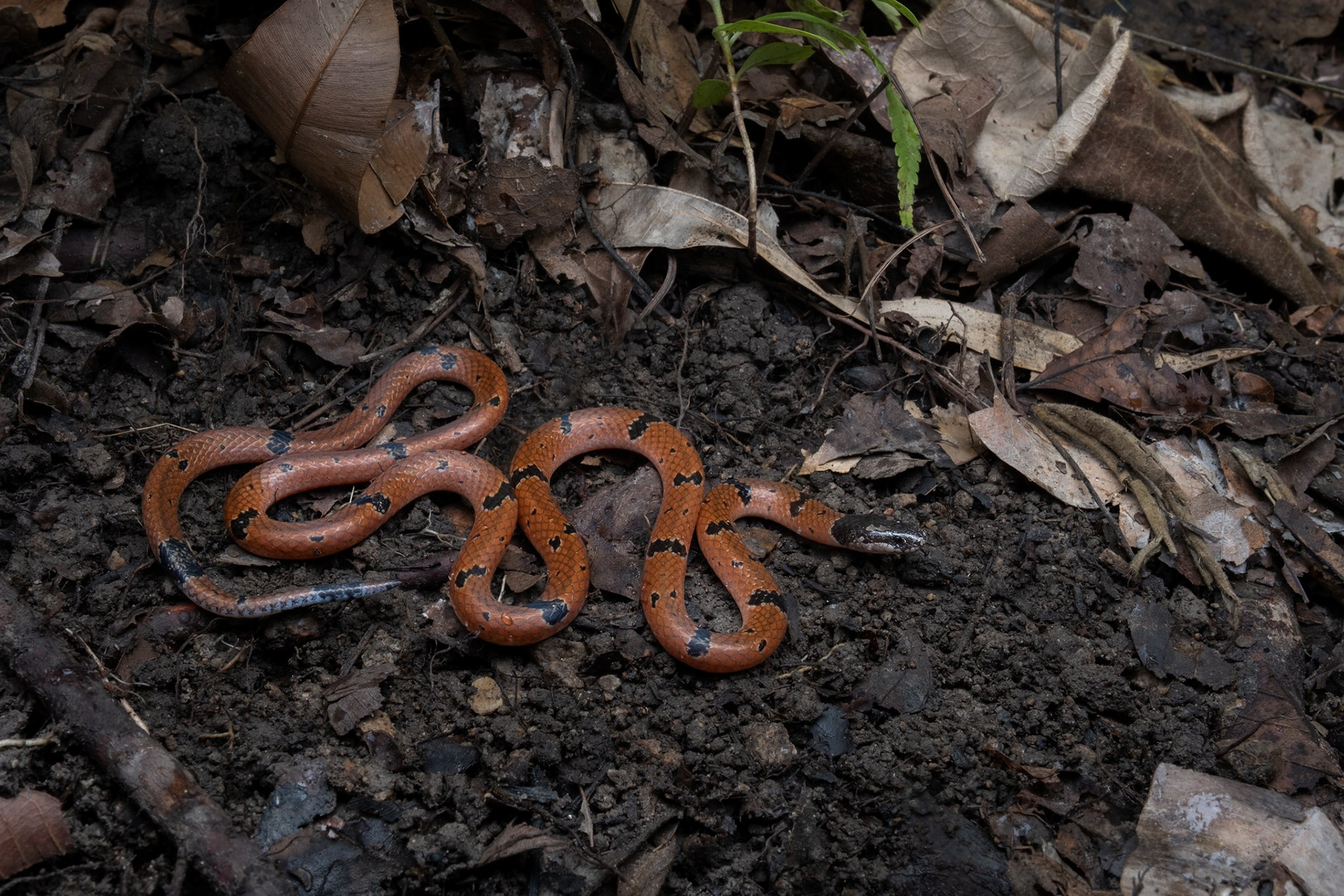
Small-spotted coral snake (Calliophis maculiceps)
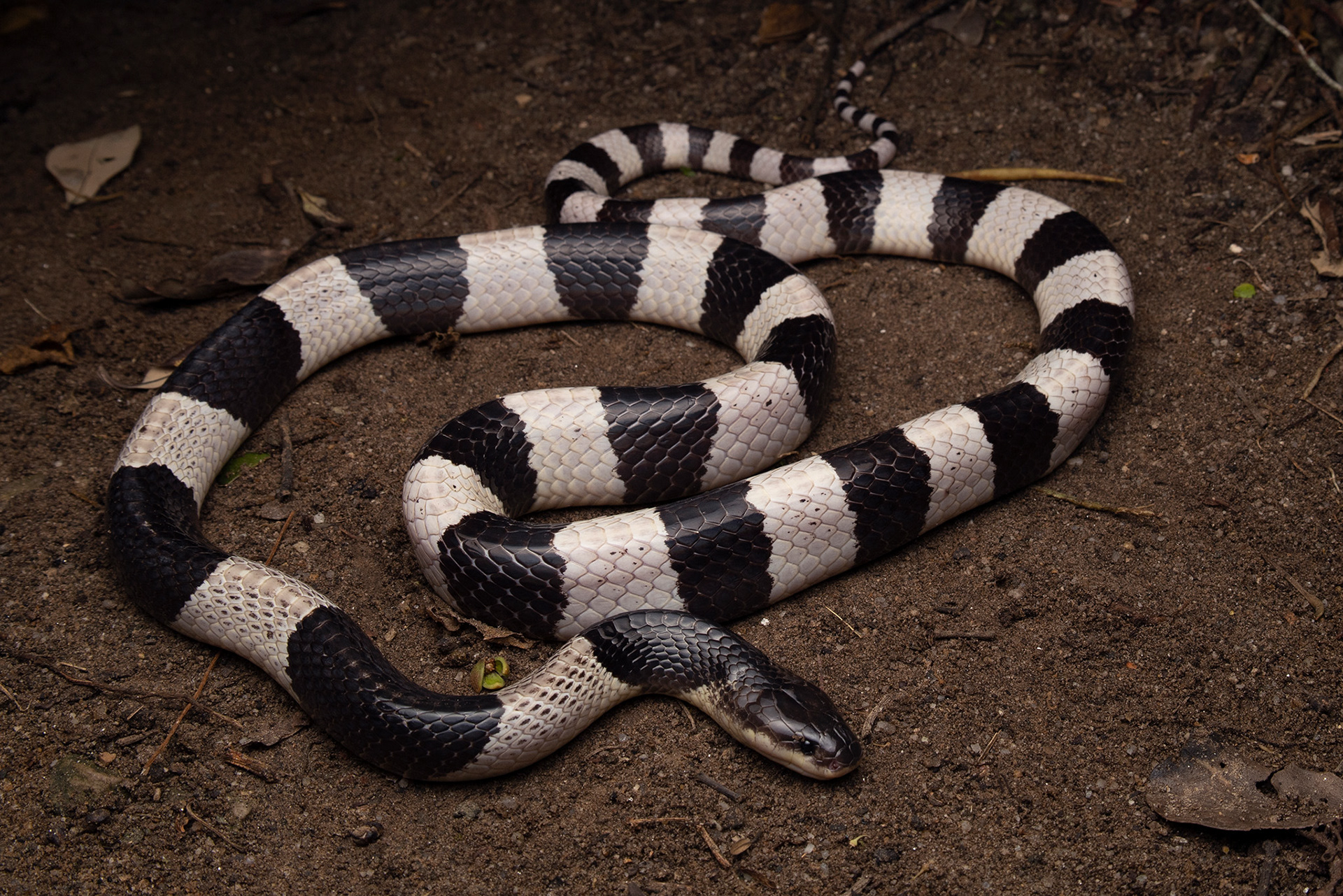
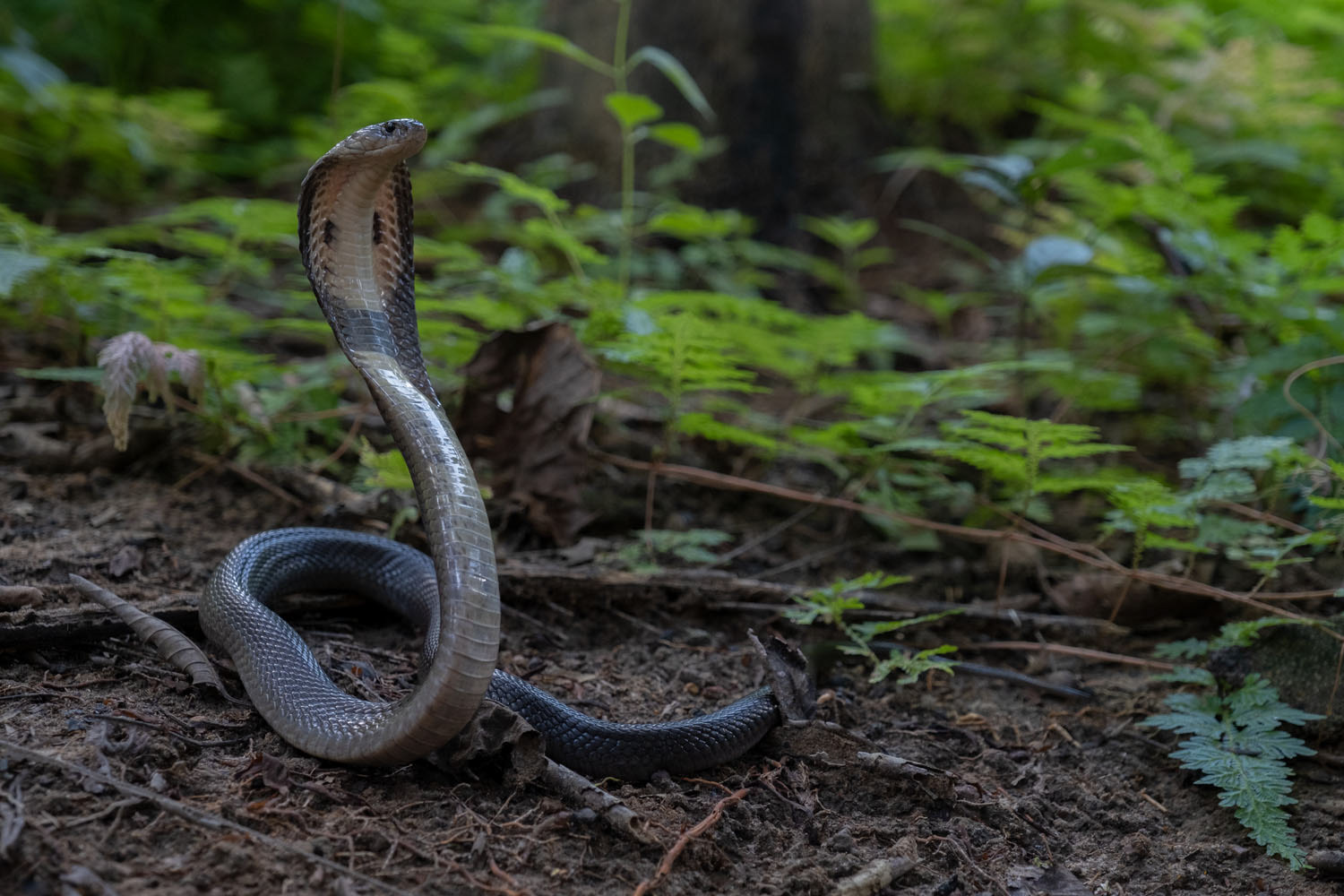
Monocled cobra (Naja kaouthia)
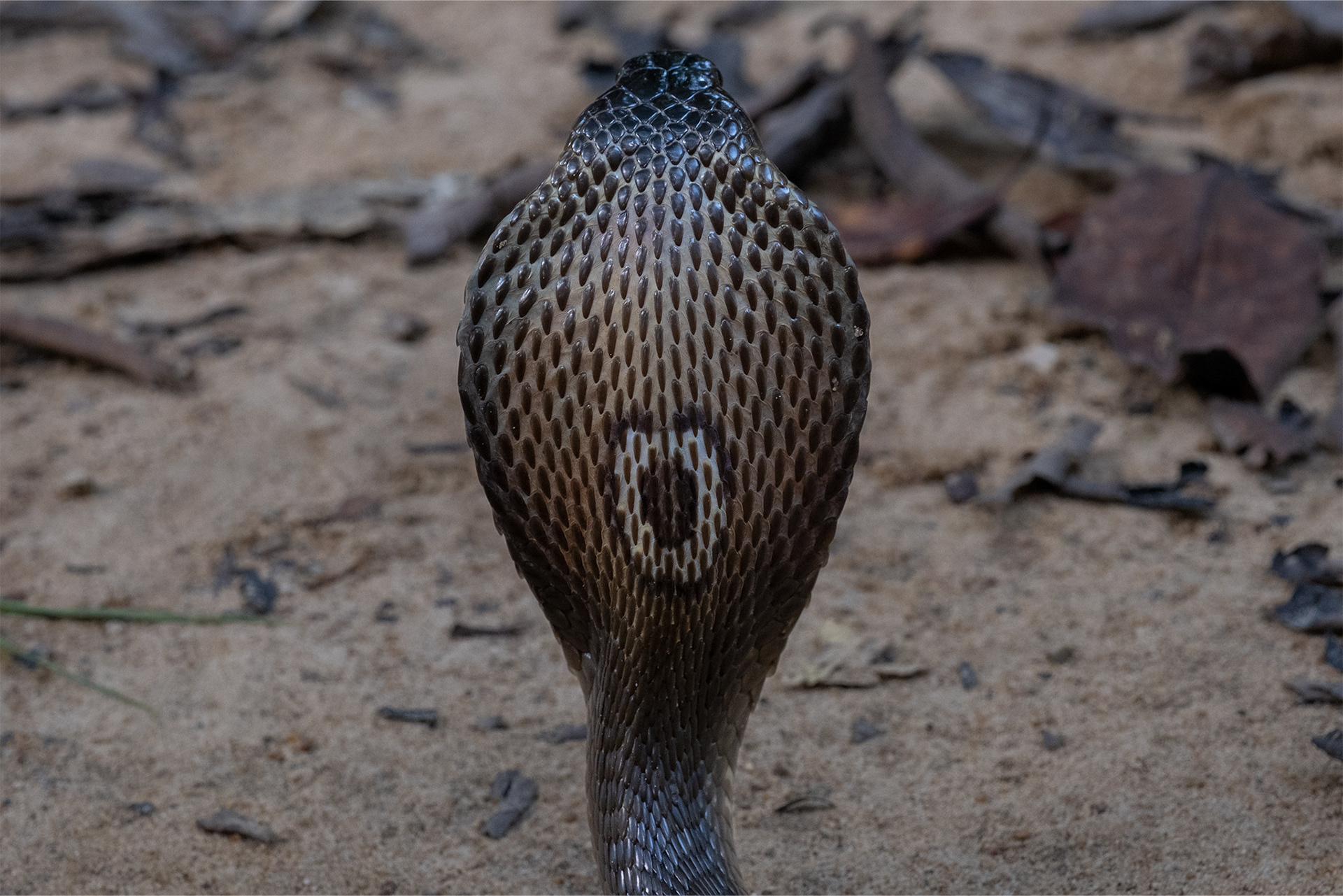
Monocled cobra (Naja kaouthia)
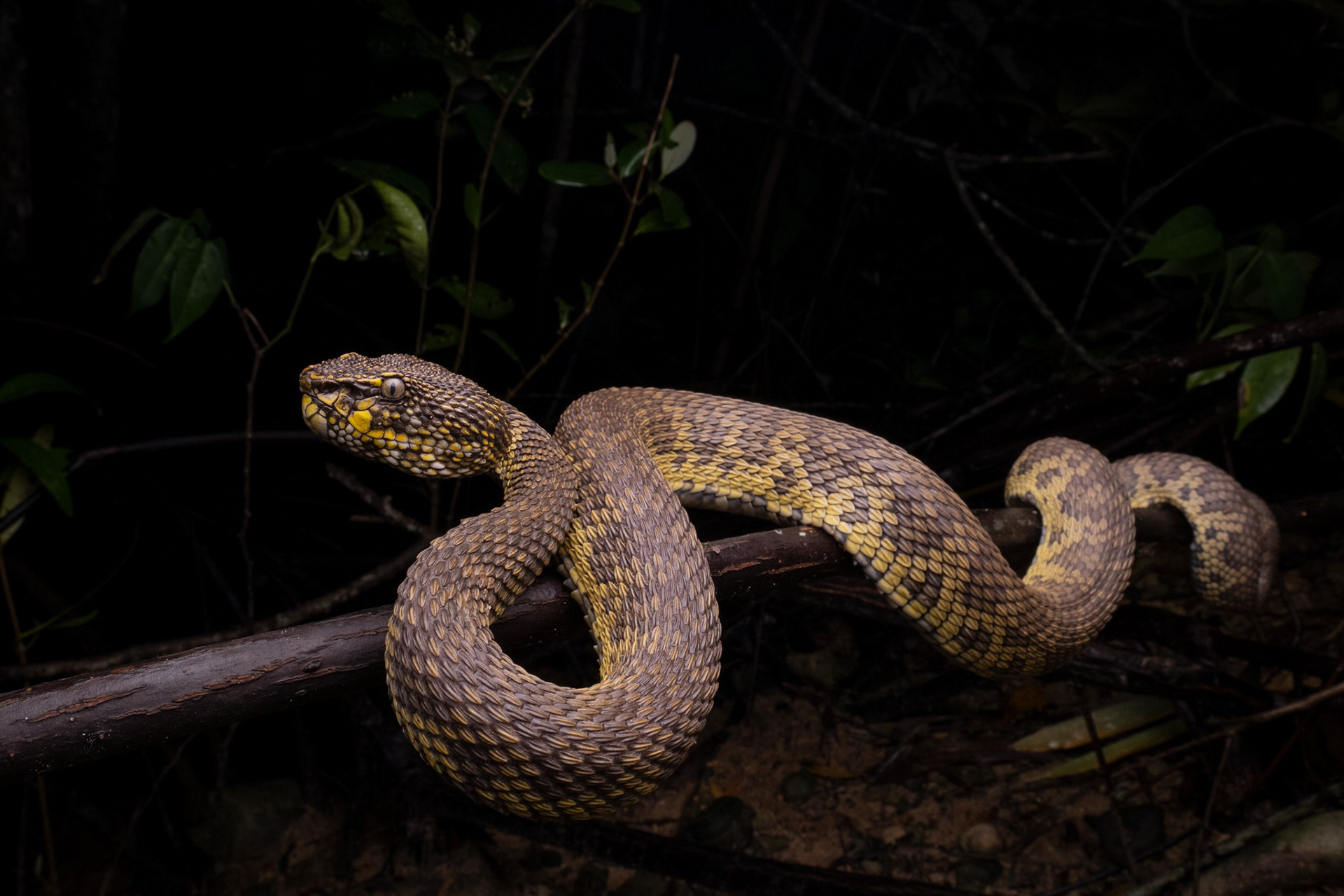
Mangrove pit viper (Trimeresurus purpureomaculatus)
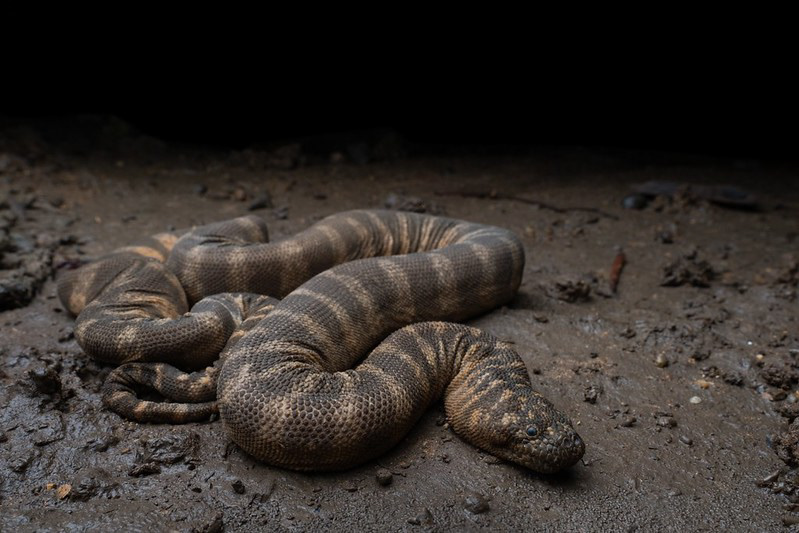
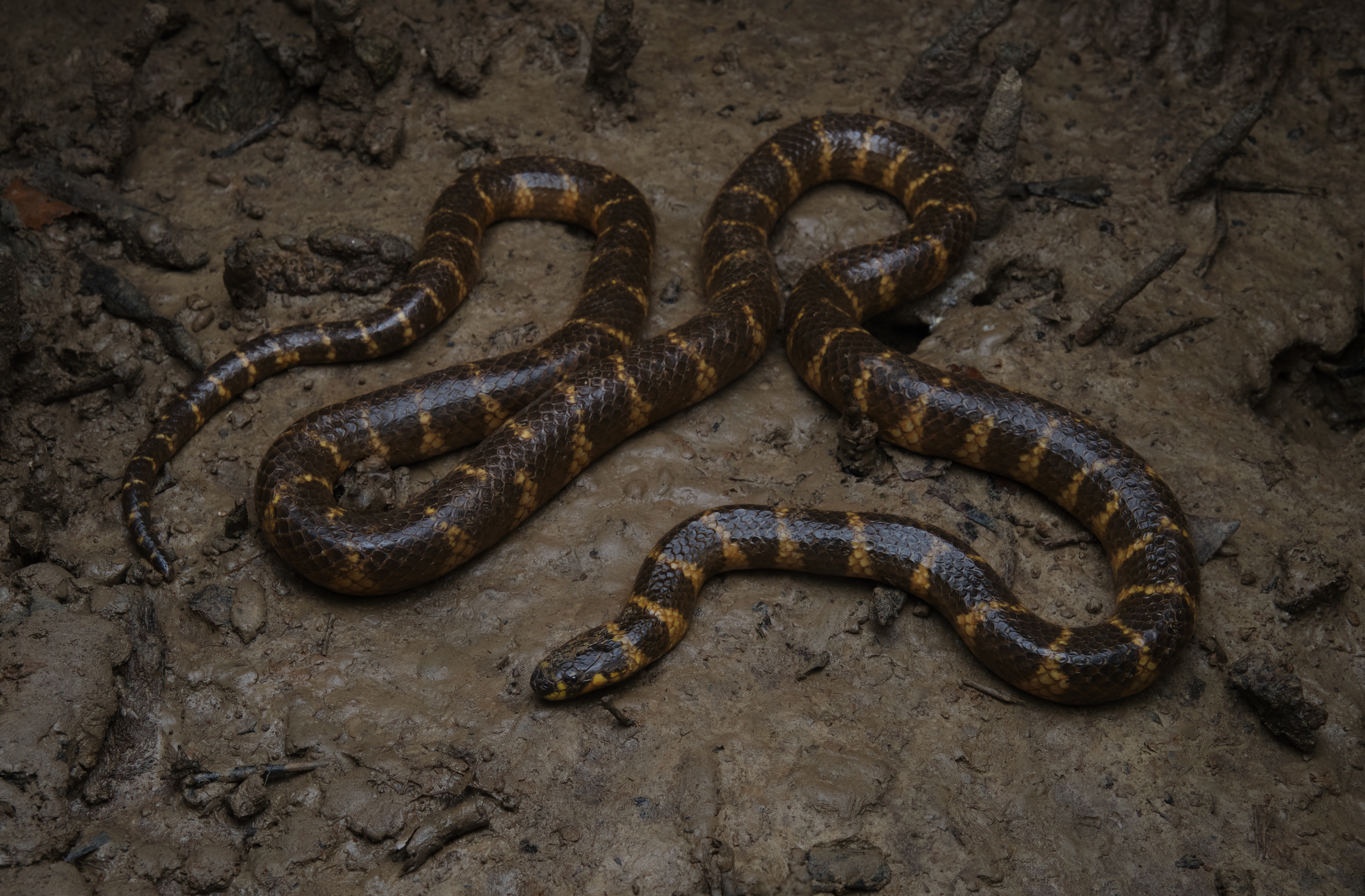
Marine file snake (Acrochordus granulatus)
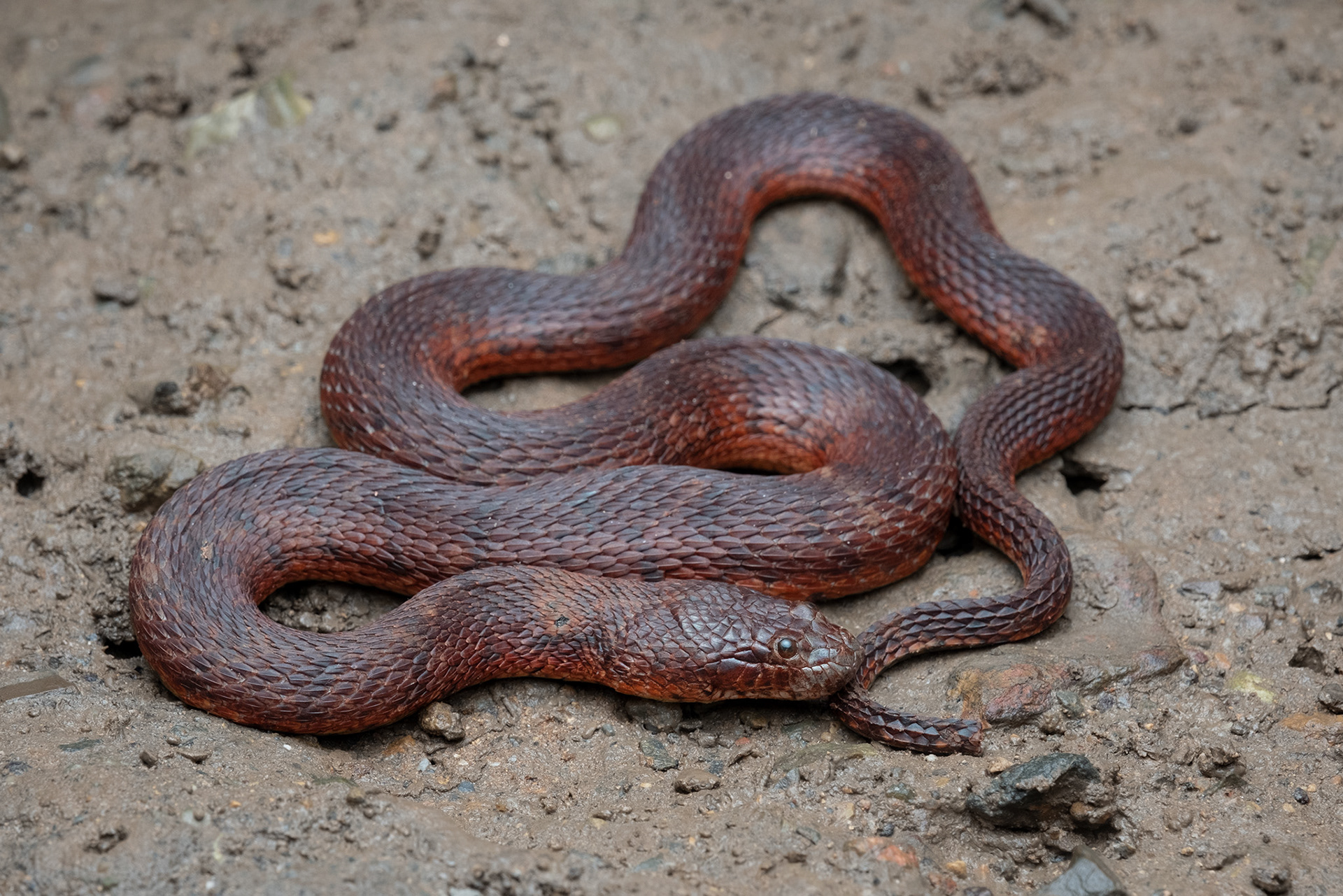
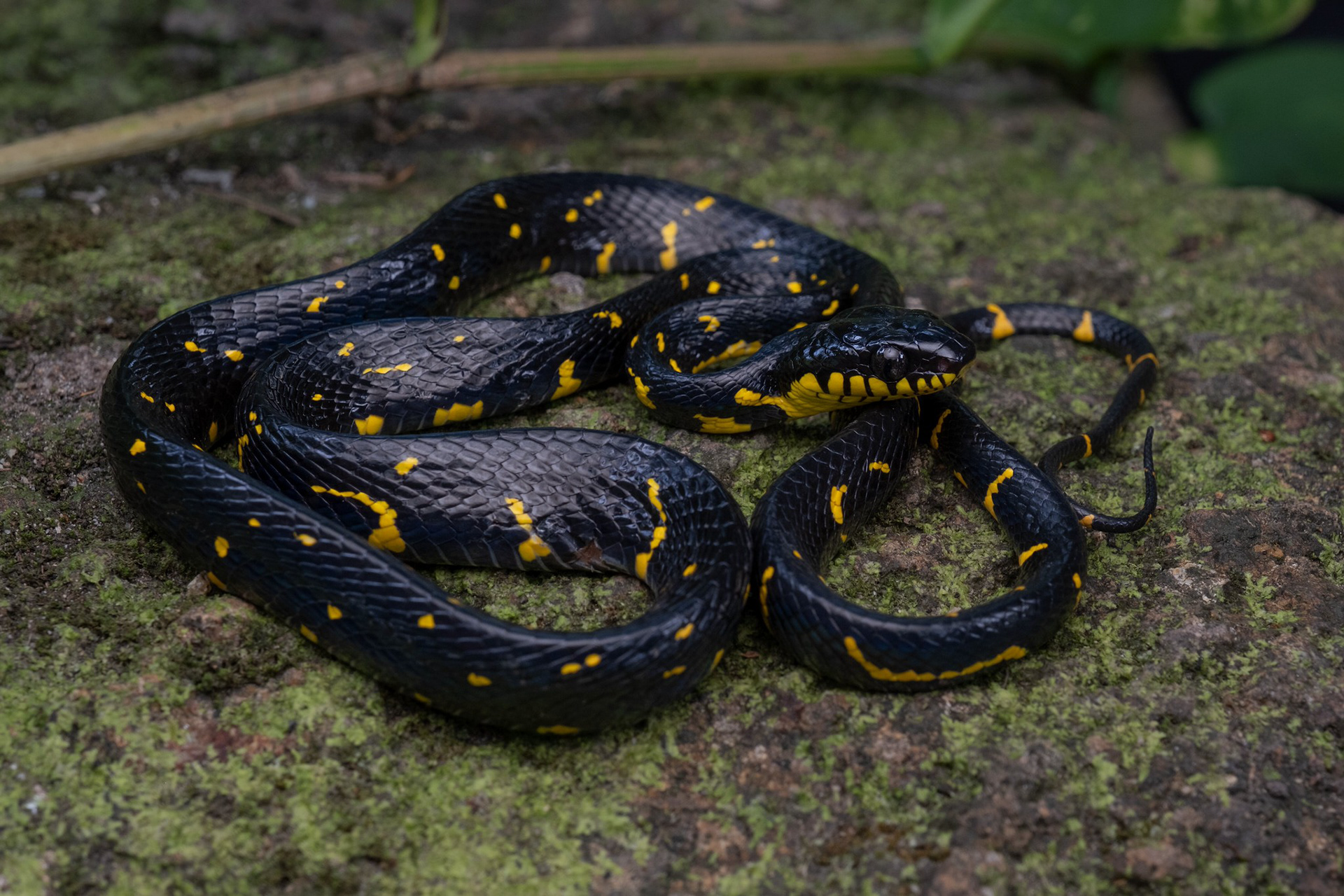
Aberrant mangrove cat snake (Boiga melanota)
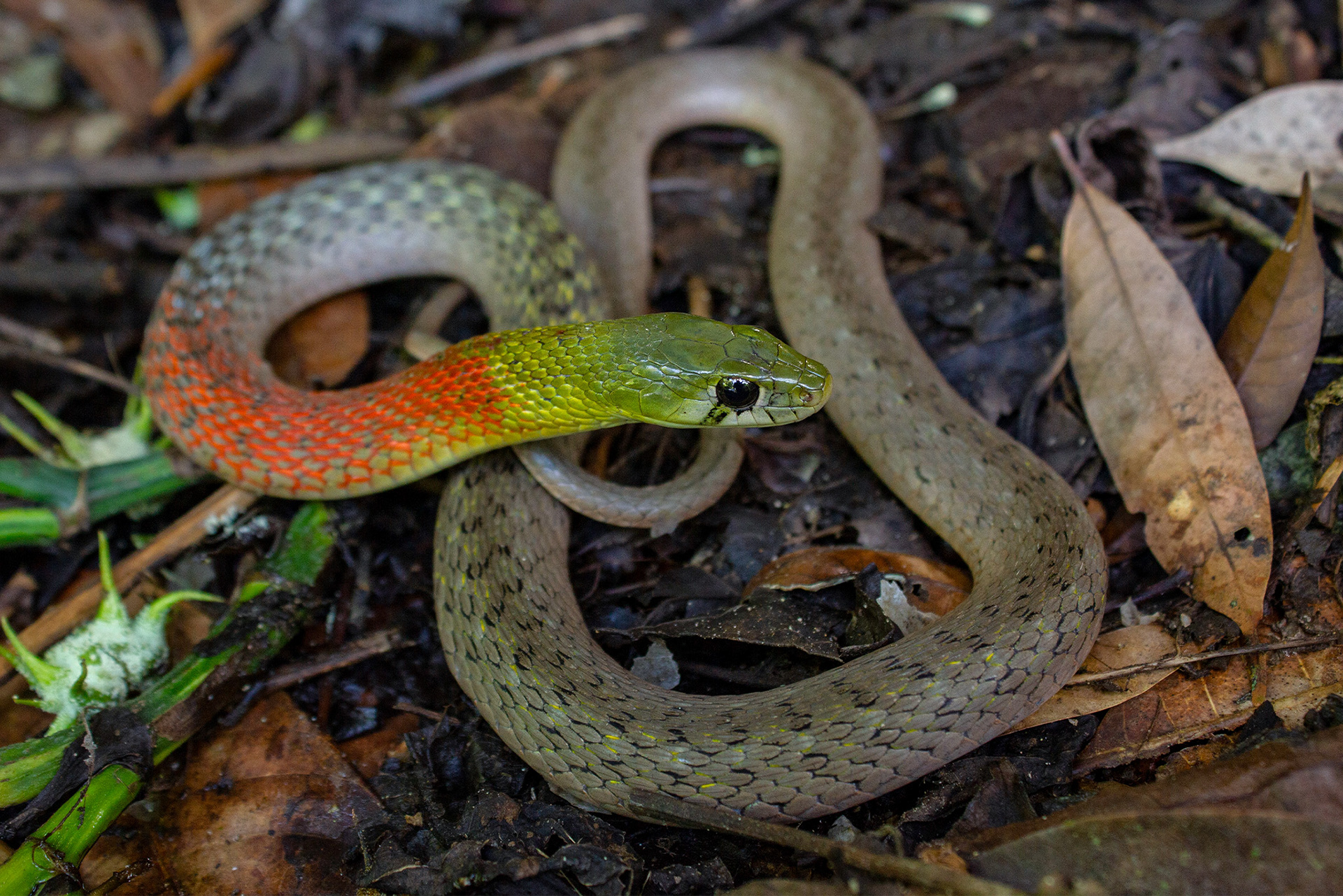
Siamese red-necked keelback (Rhabdophis siamensis)
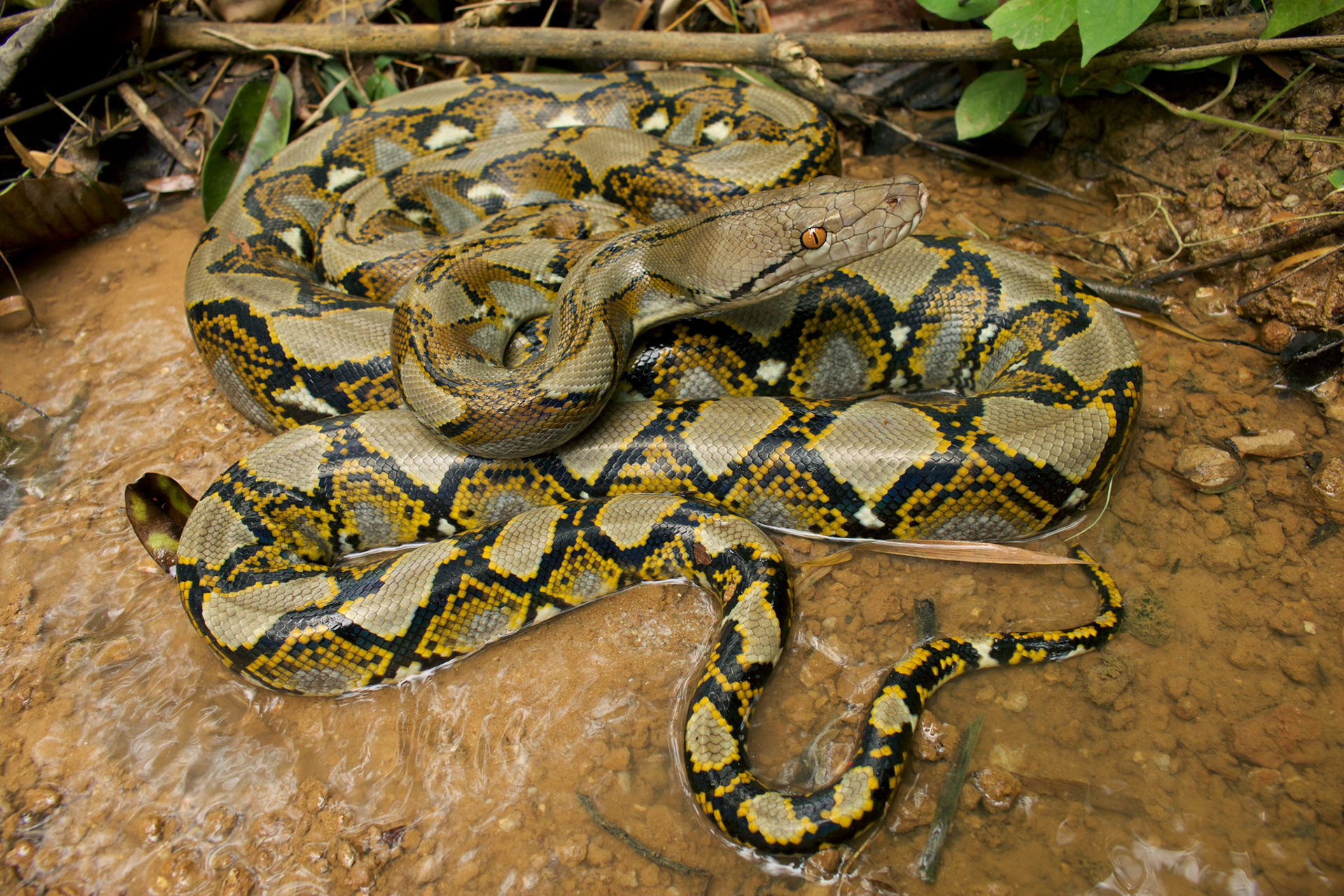
Reticulated python (Malayopython reticulatus)
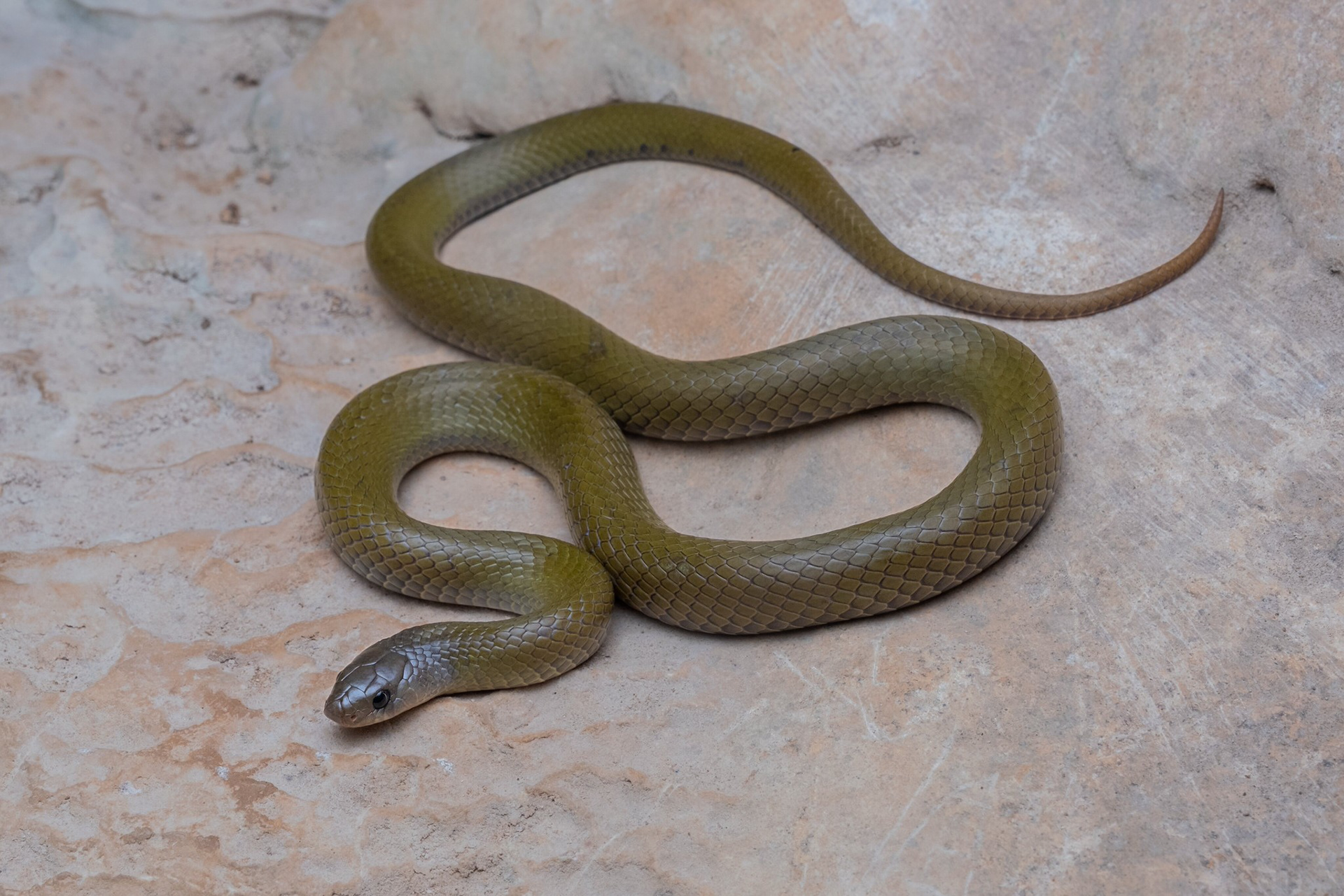
Cicada-eating kukri snake (Oligodon cicadophagous)
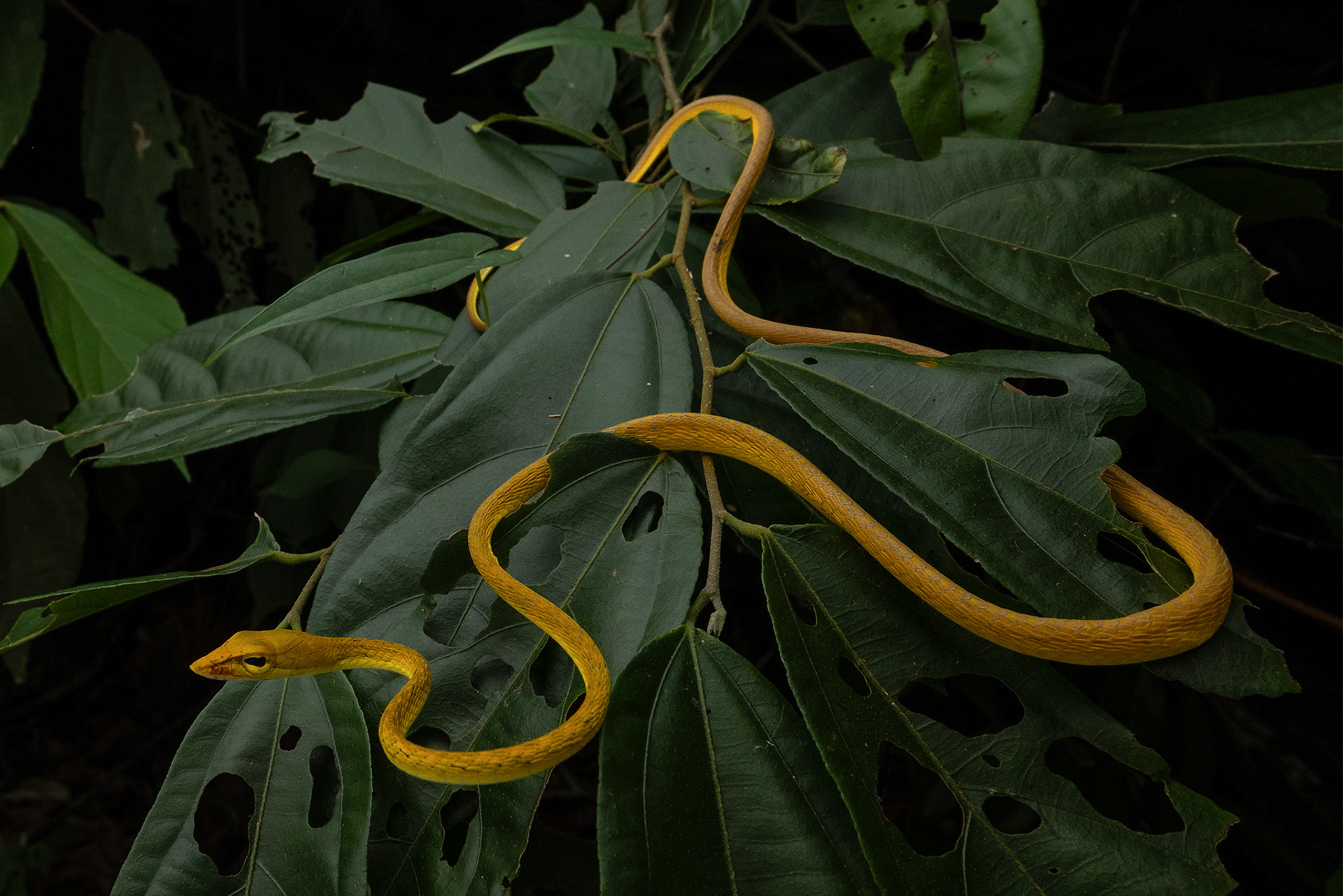
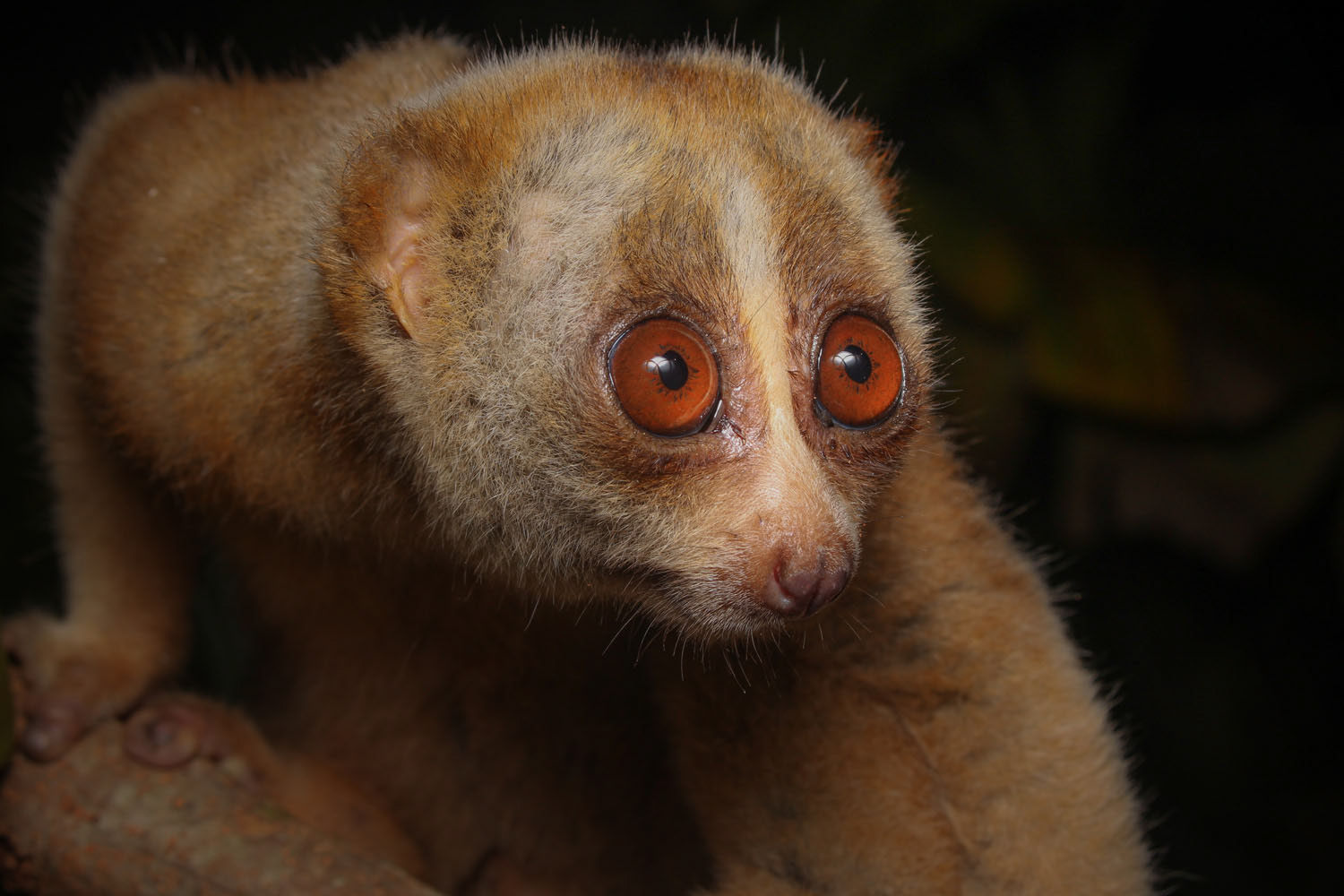
Slow loris (Nycticebus coucang)
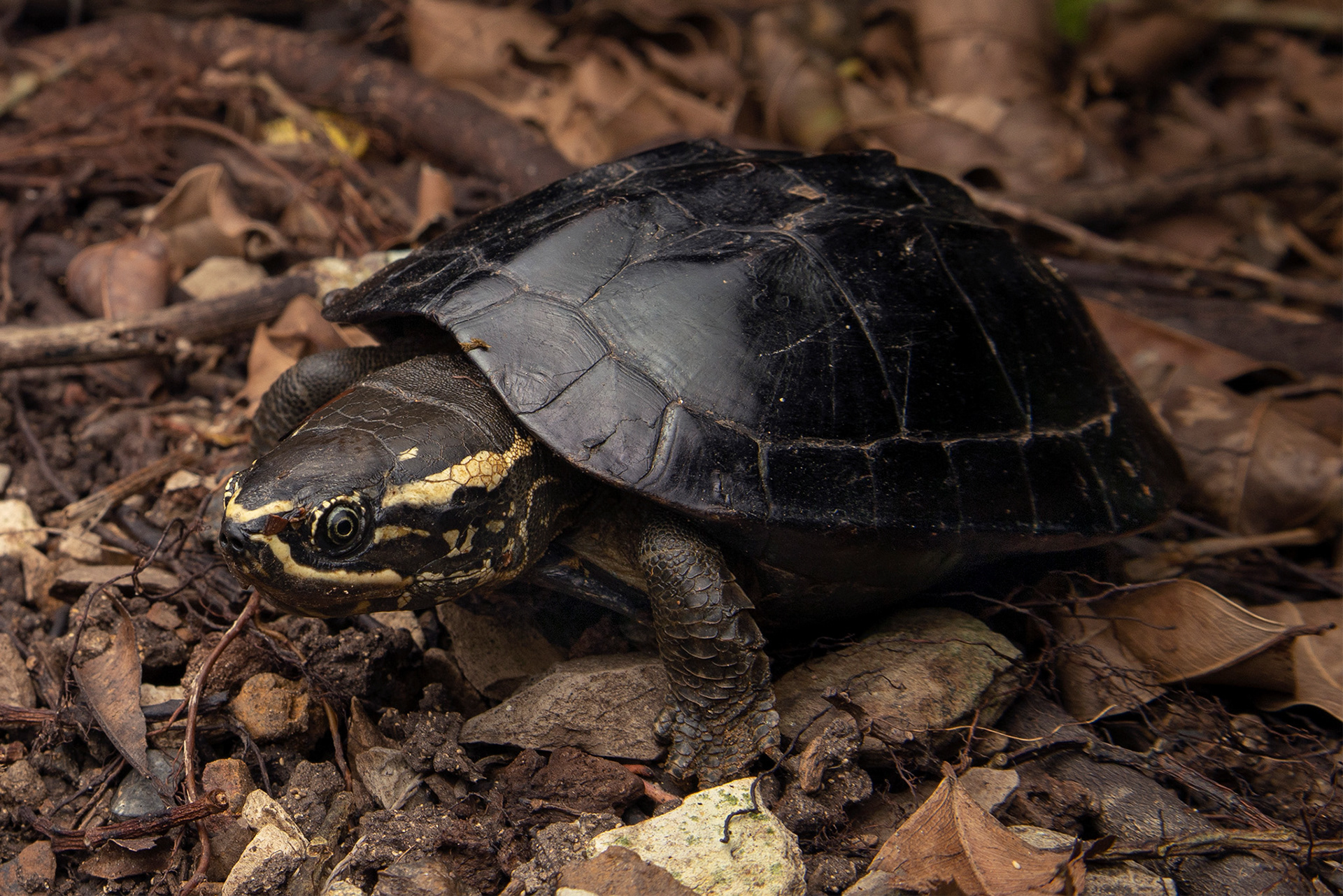
Malayan snail-eating turtle (Malayemys macrocephala).
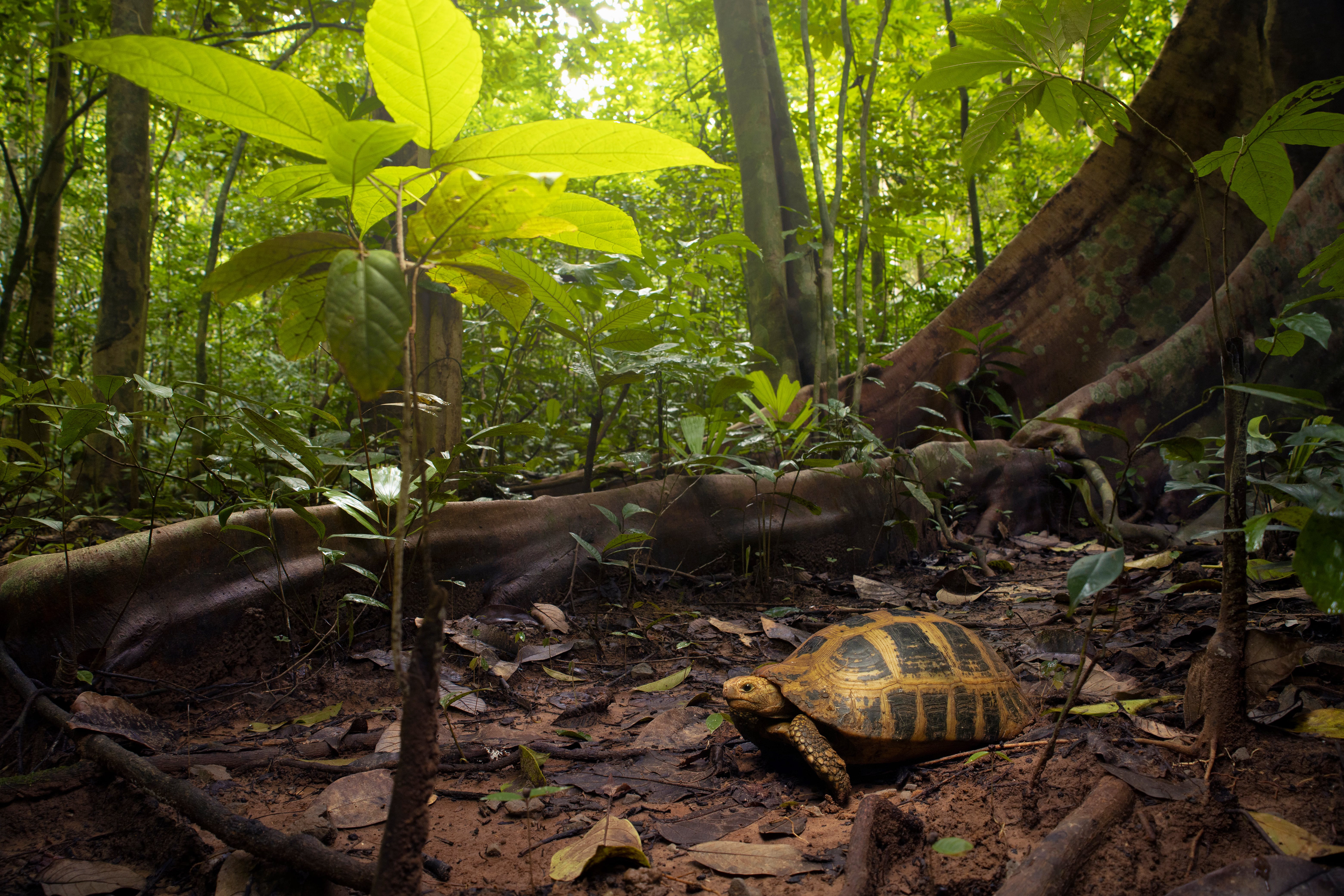
Elongated tortoise (Indotestudo elongata)
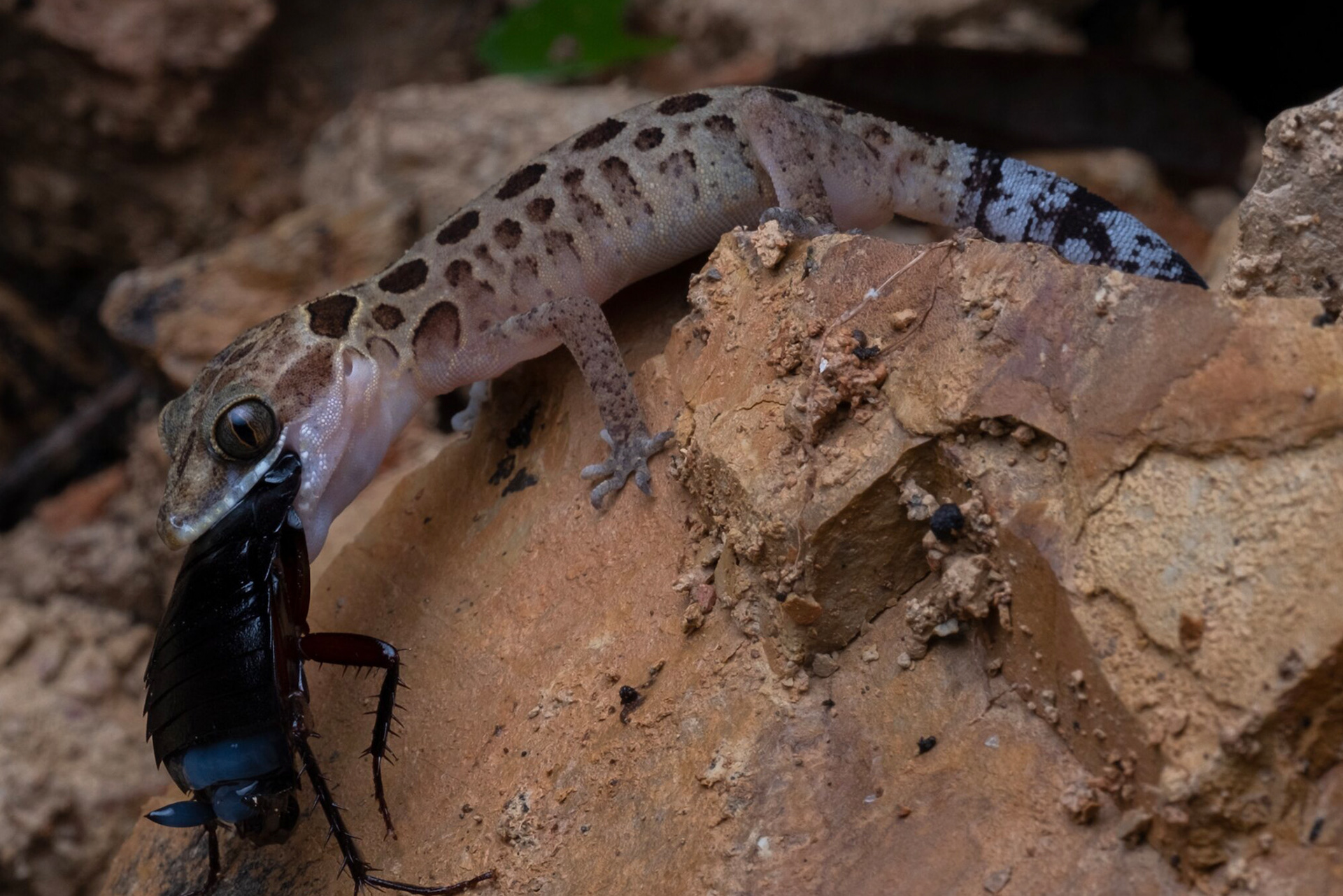
Zebra bent-toed gecko (Cyrtodactylus zebraicus)
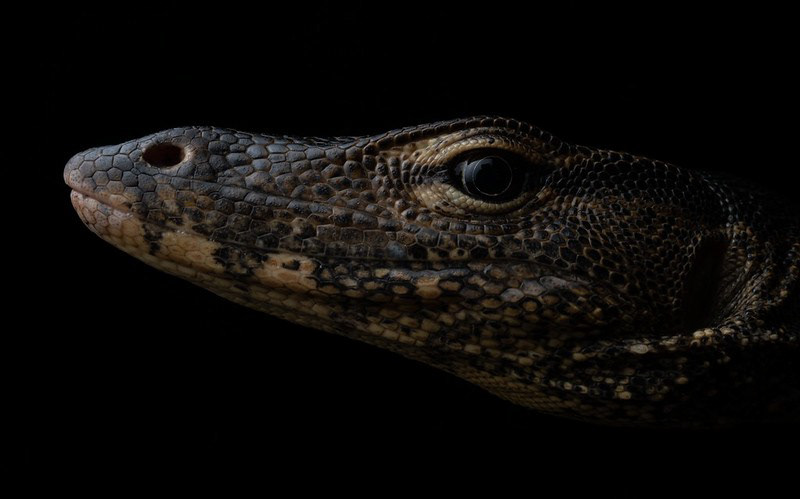
Water monitor (Varanus salvator)
Days 2 & 3: Krabi
The second location is Krabi province, one of the most popular destinations for herping in Thailand and somewhere our guides have been exploring for close to 15 years. Amongst the towering limestone karst valleys, we can find the emblematic beautiful pit viper (Trimeresurus venustus), as well as keeled rat snake (Ptyas carinata) and Siamese red-necked keelback (Rhabdophis siamensis) during the dayime. The very rare Cicada eating kukri snake (Oligodon cicadophagous) was described from here and can also be encountered during daytime hikes. We regularly encounter both elongated tortoise (Indotestudo elongata) and South-East Asian box turtle (Cuora amboinensis) at one of our favourite karst trails, as well as Malayan snail-eating turtle (Malayemys macrocephala) around specific ponds. Both water monitor (Varanus salvator) and clouded monitor (Varanus nebulosus) are very common here too.
For our first night, we will visit a road winding through low hills near Krabi town. This area is home to a lot of different species of herpetofauna, most notably the small-spotted coral snake (Calliophis maculiceps) and the melanistic form of the dog-toothed cat snake (Boiga cynodon). We regularly encounter mammals at this hill, such as Sunda slow loris, banded palm civets, greater hog badgers, mouse deer, and leopard cat. We even saw a Sunda pangolin in Krabi on our expedition in 2023. On the second night, we will hire a longtail boat to travel through the mangrove estuary with the ambition of encountering resting mangrove pit vipers (Trimeresurus purpureomaculatus) and marine file snake (Acrochordus granulatus). We can also explore the mangroves on foot in search of other rare mangrove mud snakes, and the clean-banded form of the Malayan krait (Bungarus candidus).
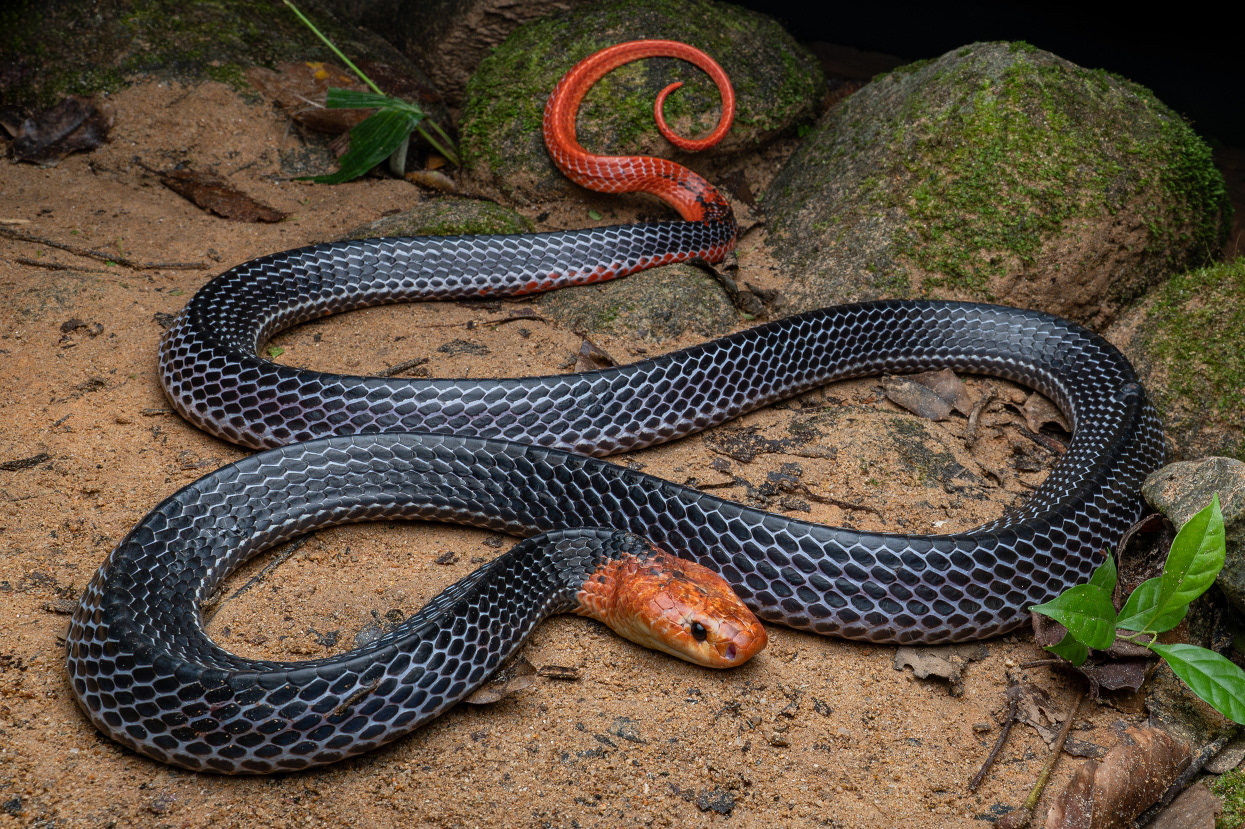
Red-headed krait (Bungarus flaviceps)
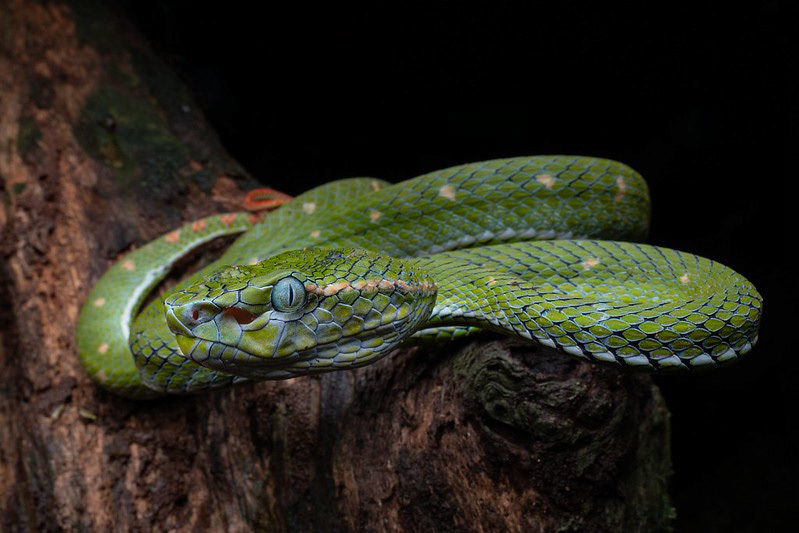
Hagen's pit viper (Trimeresurus hageni)
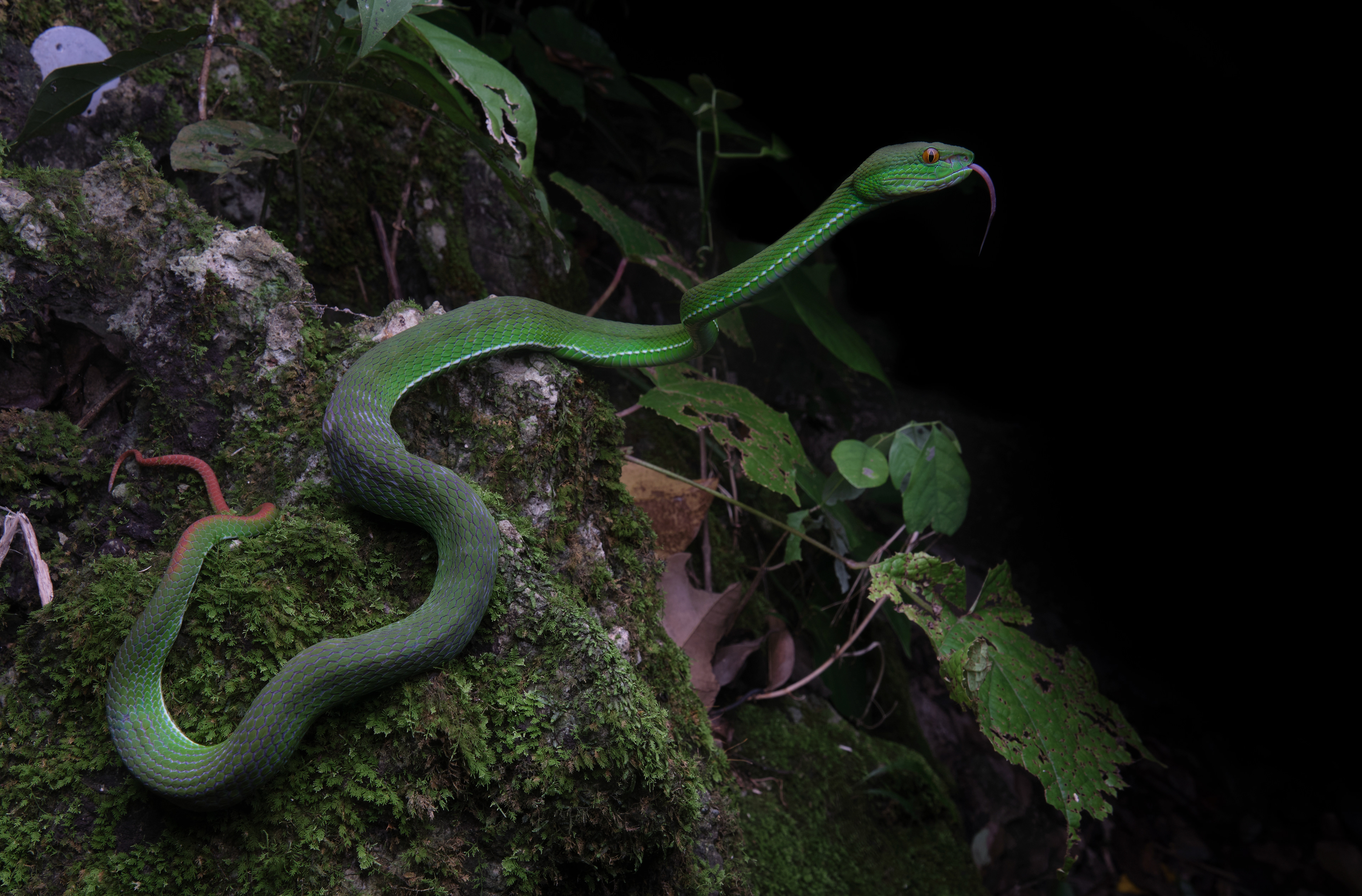
White-lipped pit viper (Trimeresurus cf. albolabris)
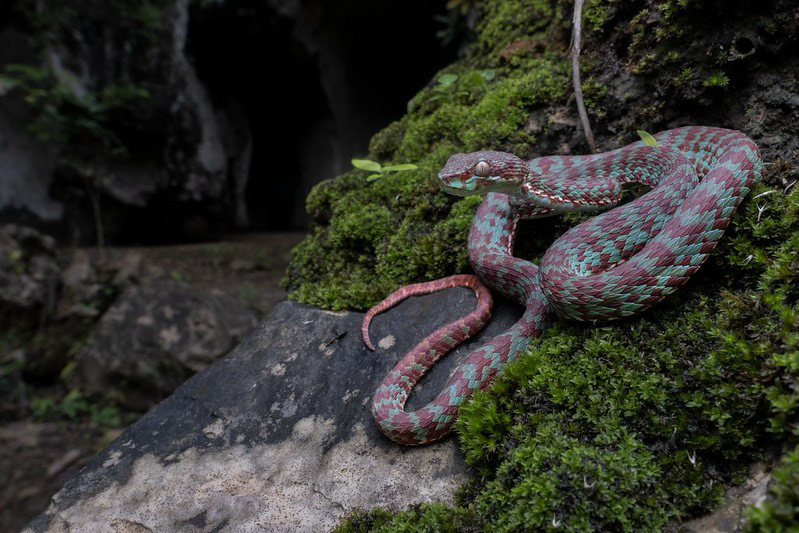
Beautiful pit viper (Trimeresurus venustus)
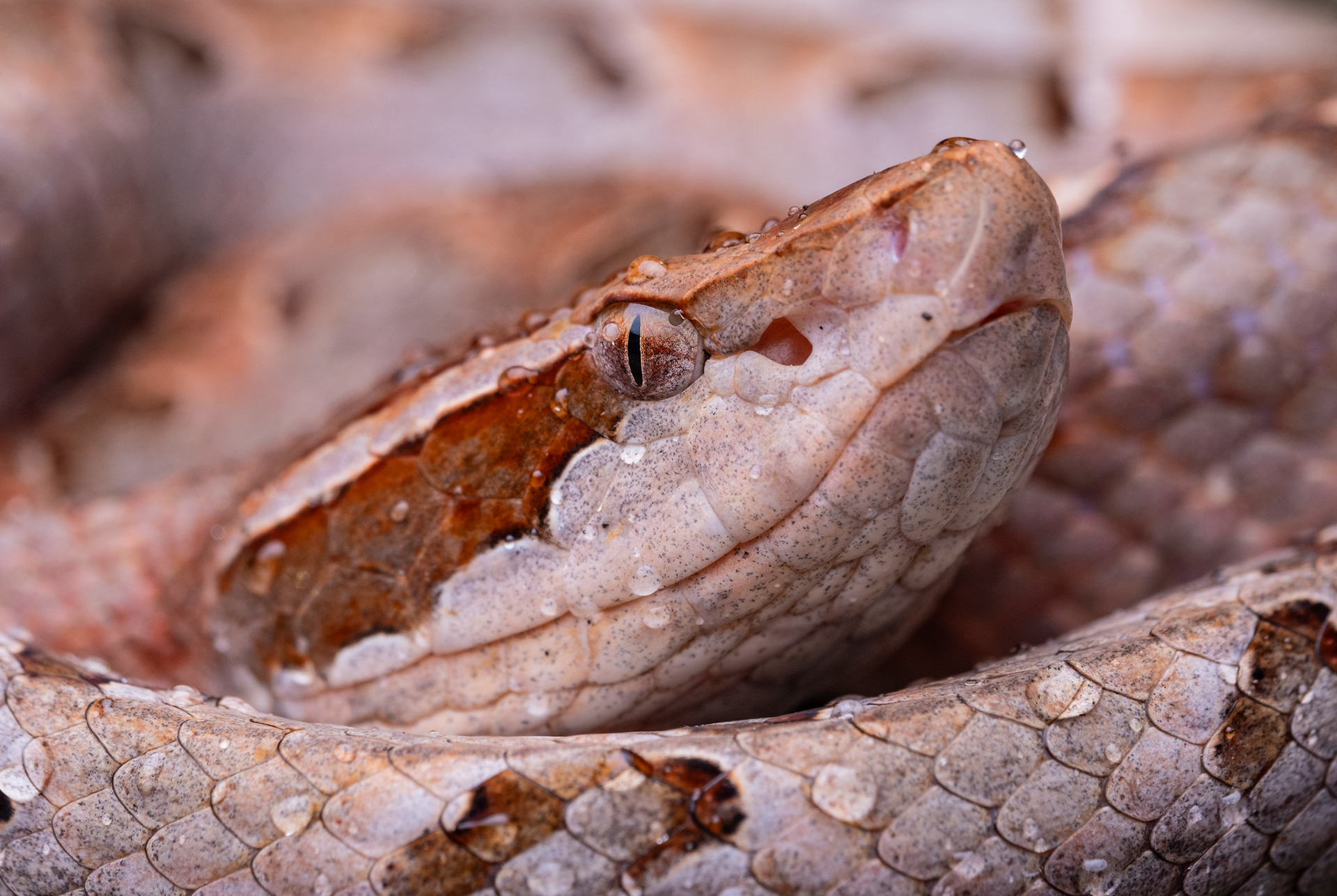
Malayan pit viper (Calloselasma rhodostoma)
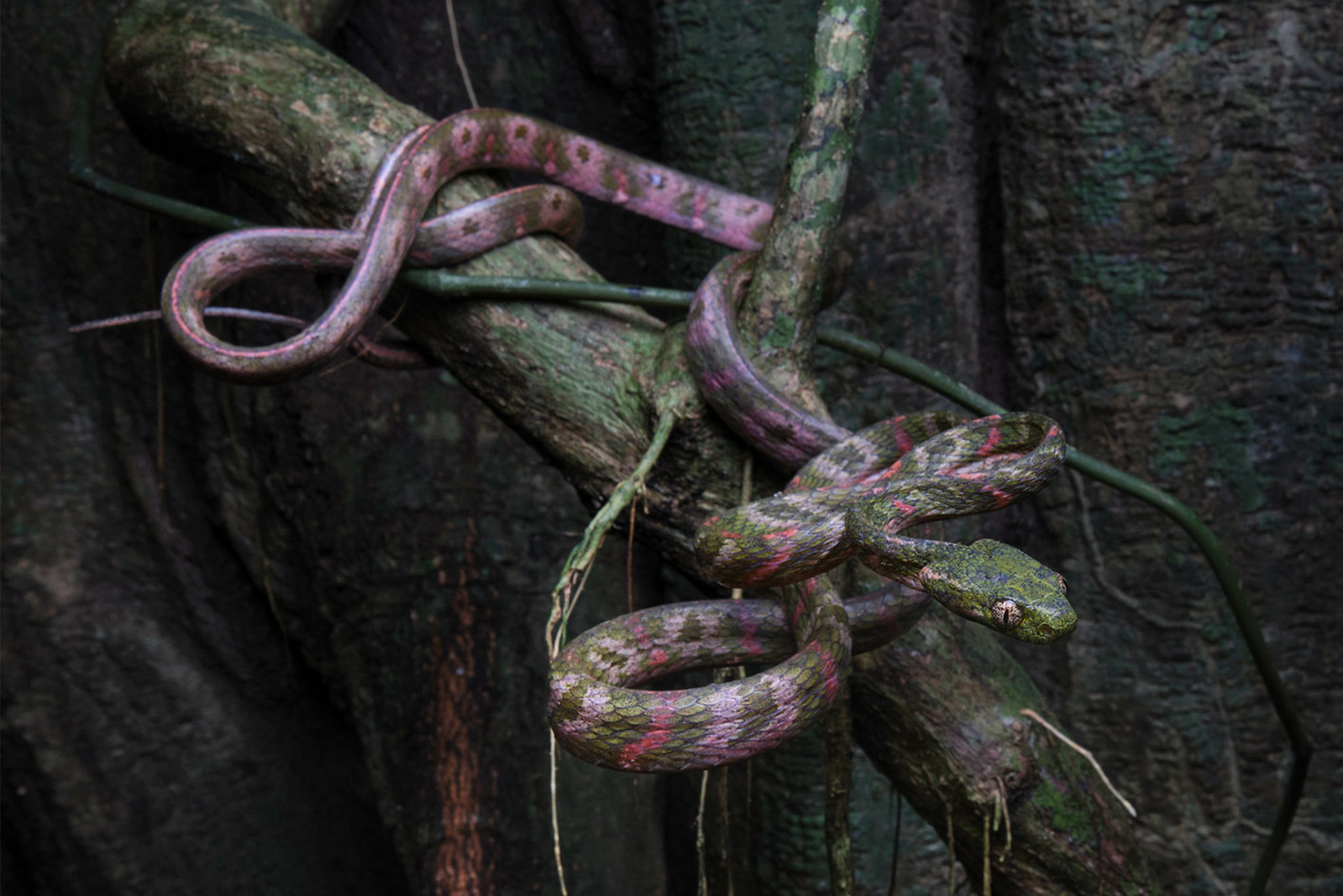
Bengkulu cat snake (Boiga bengkuluensis)
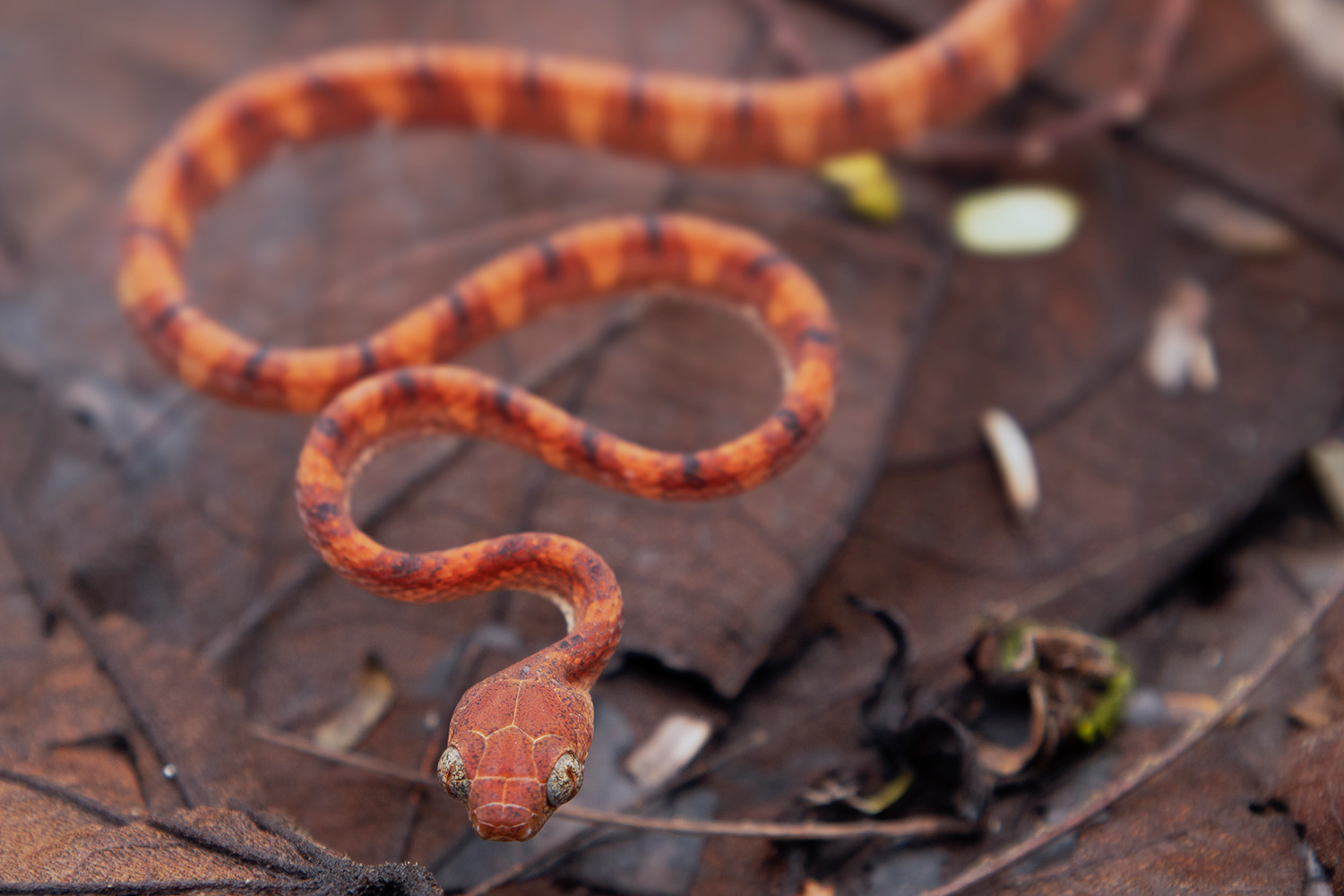
White-spotted cat snake (Boiga drapiezii)
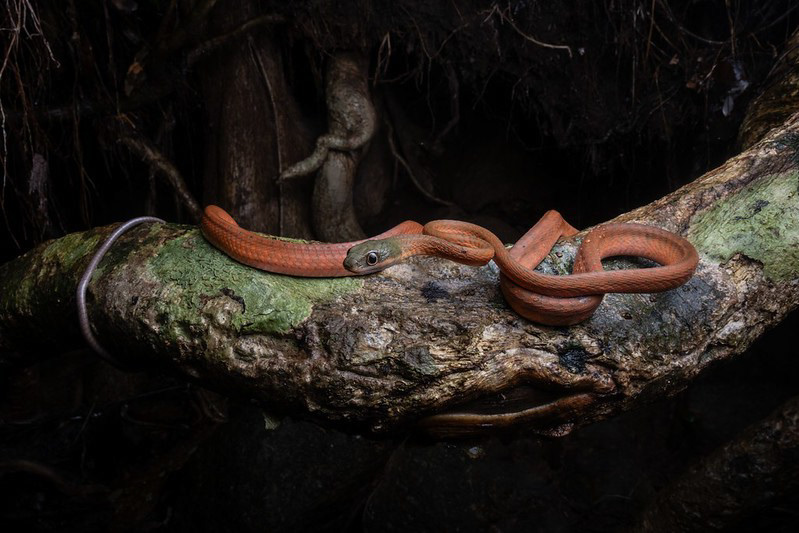
Dark-headed cat snake (Boiga nigriceps)
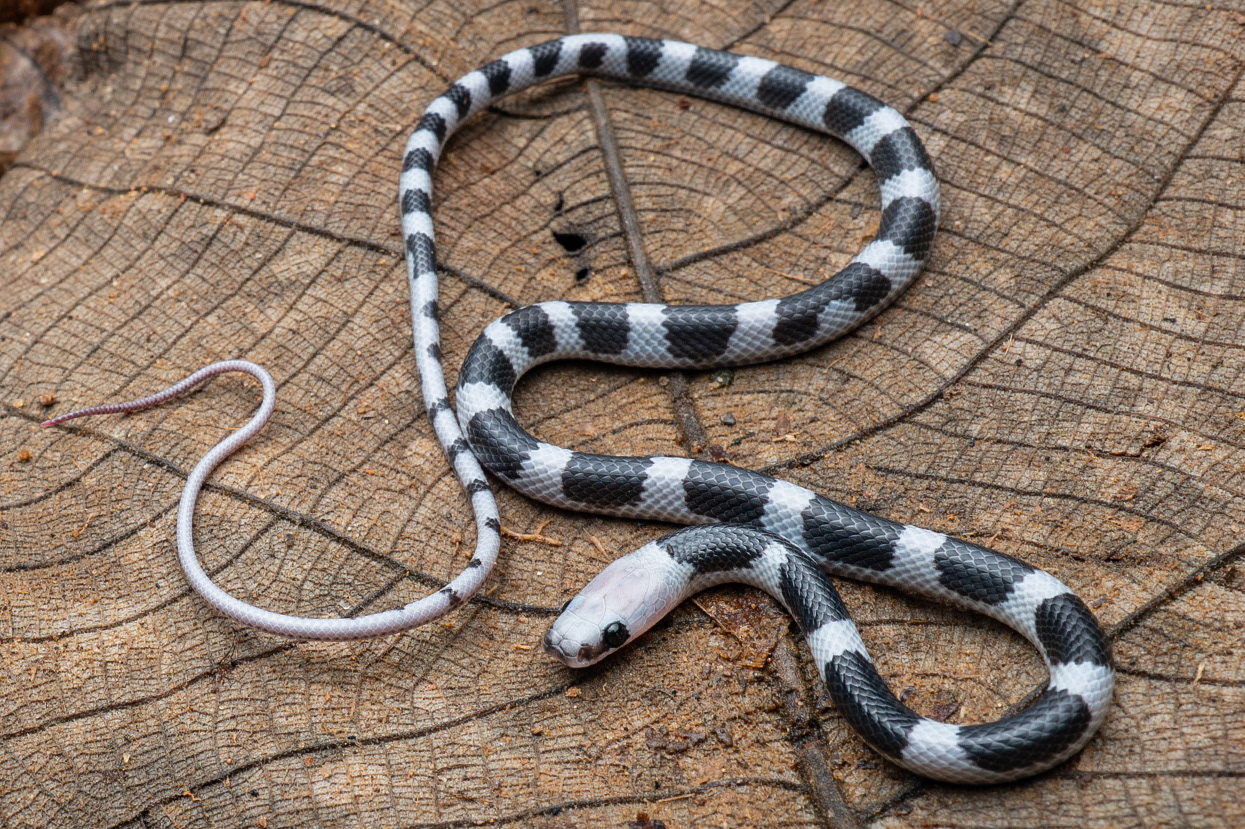
Dusky wolf snake (Lycodon albofuscus).
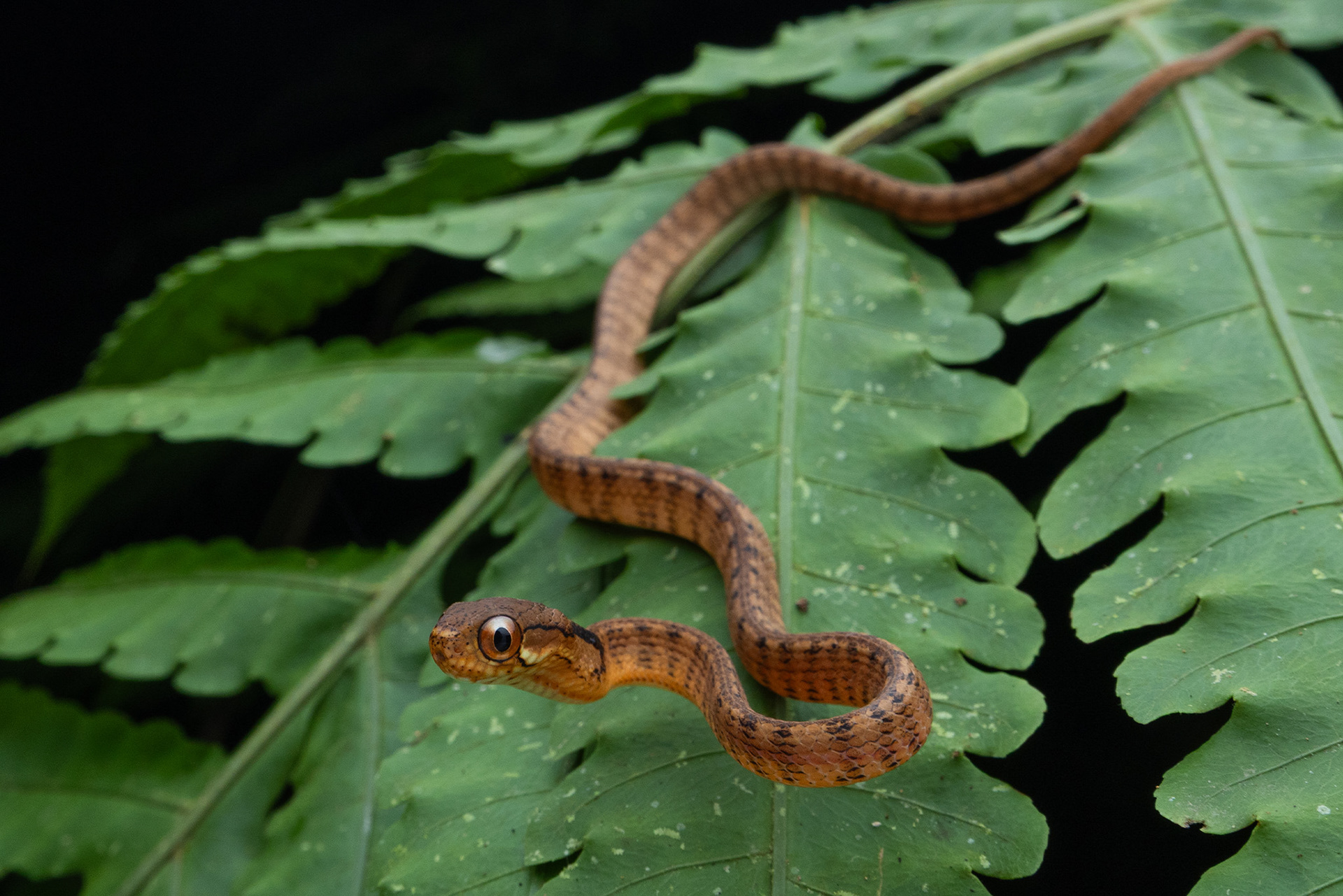
Keeled slug snake (Pareas carinatus)
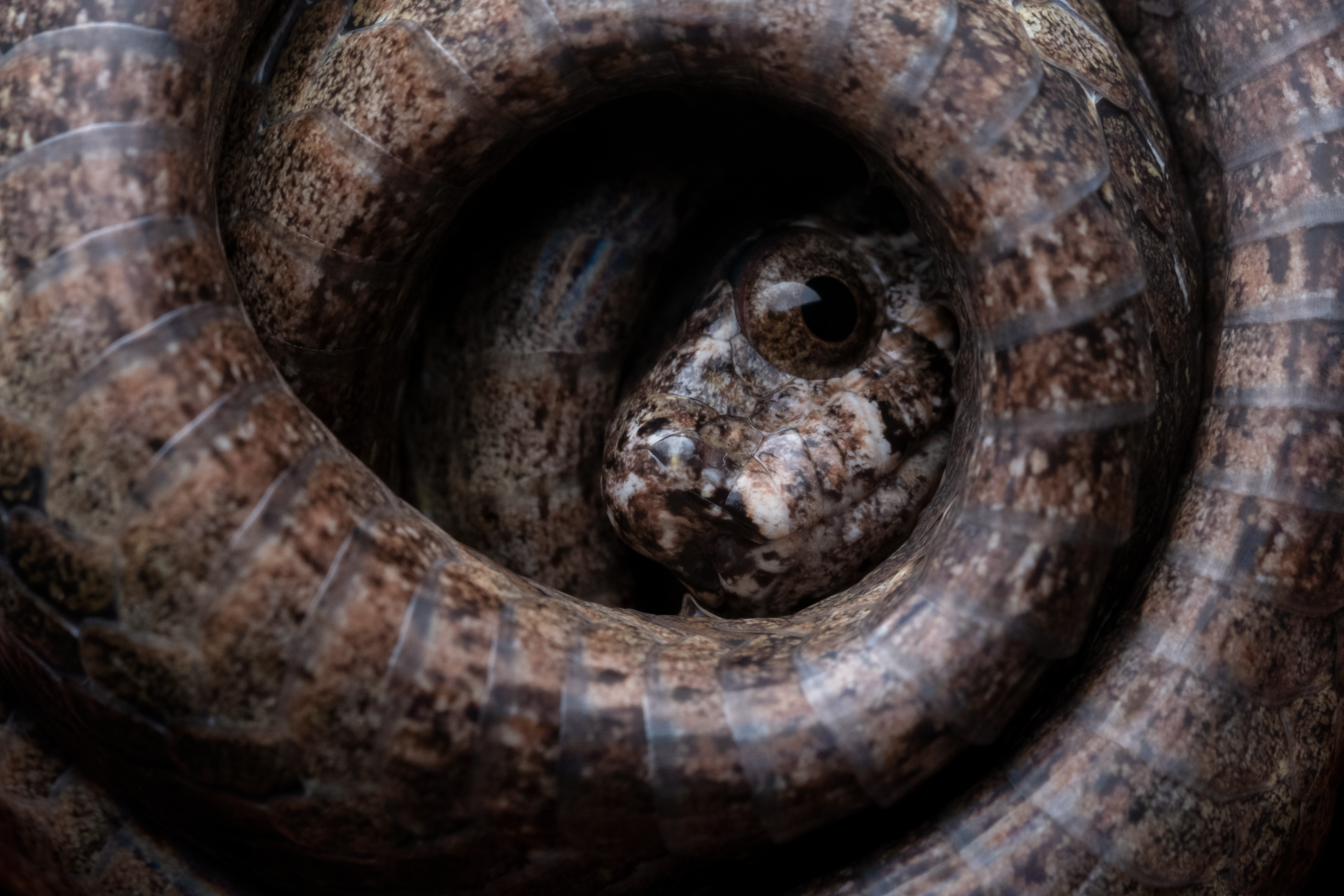
Blunt-headed slug snake (Aplopeltura boa)
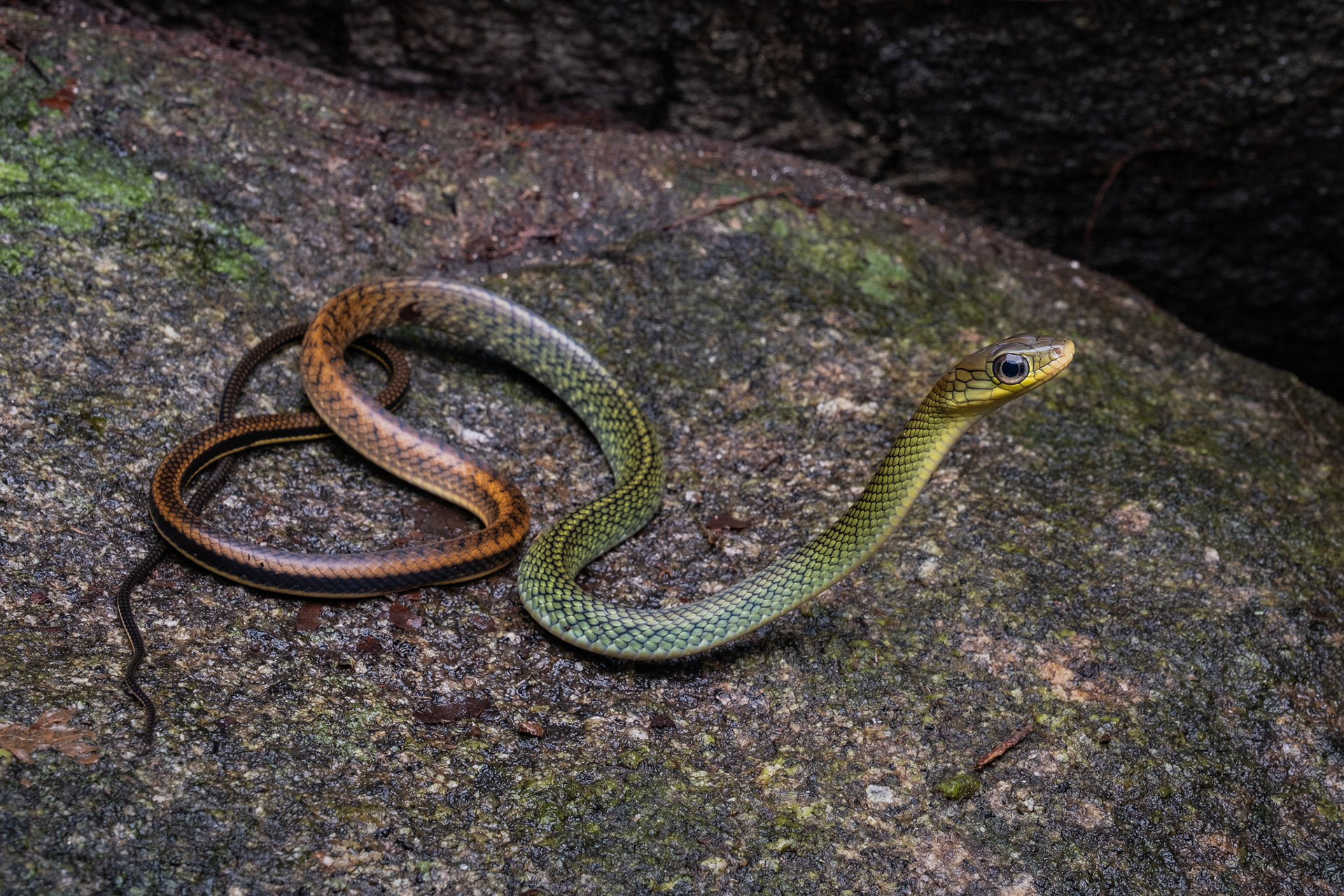
White-bellied ratsnake (Ptyas fusca)
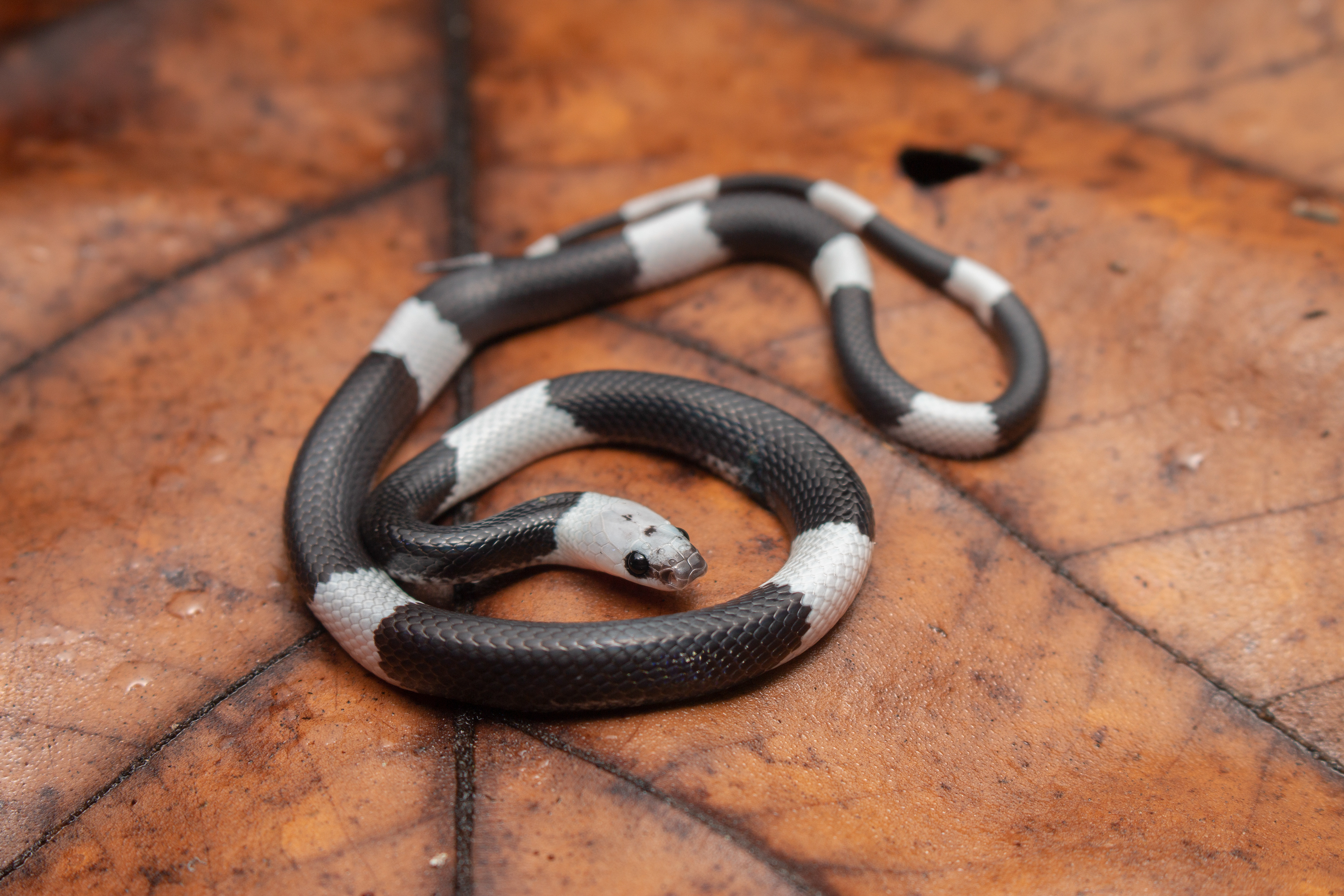
Malayan banded wolf snake (Lycodon subcinctus)
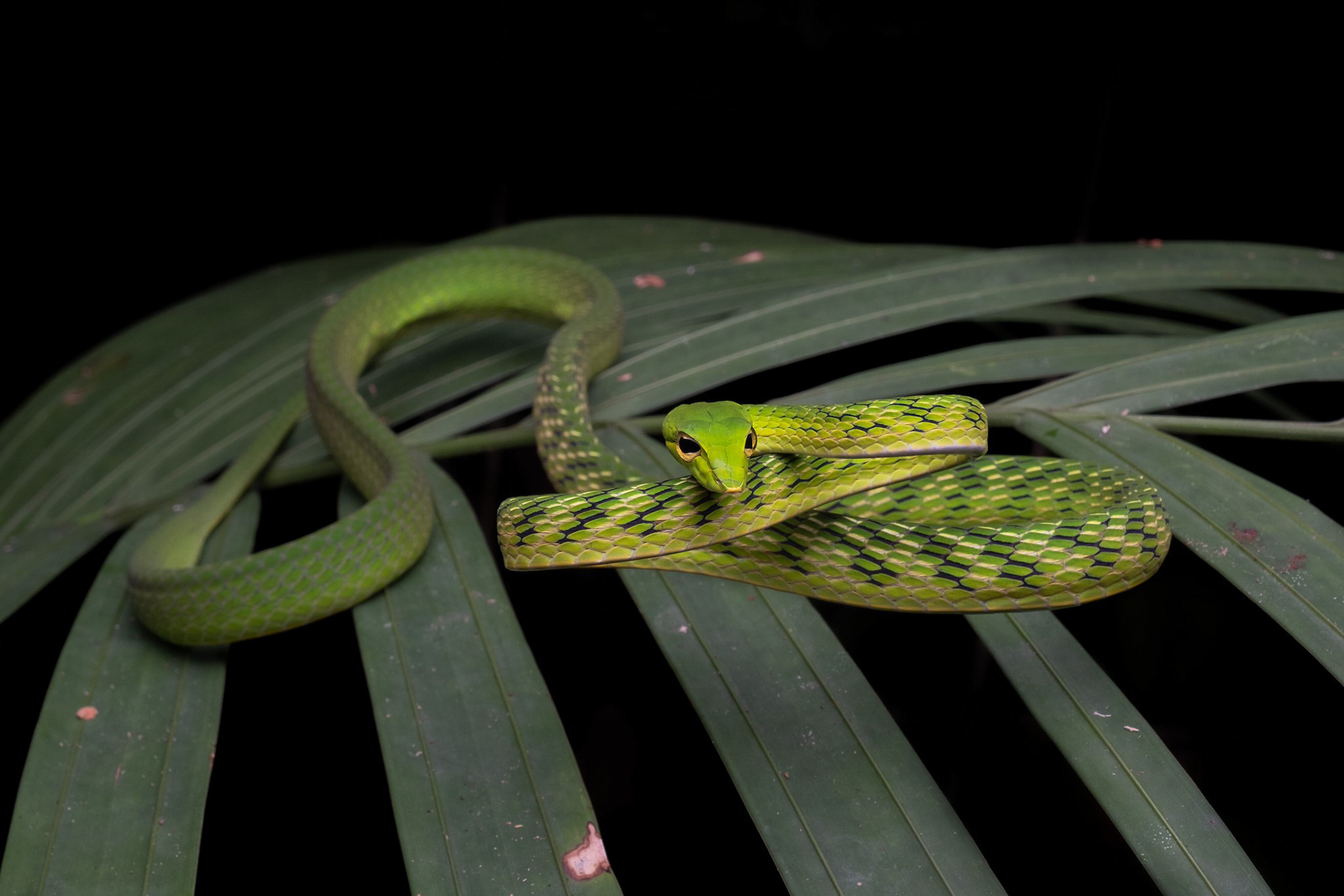
Malayan vine snake (Ahaetulla prasina)
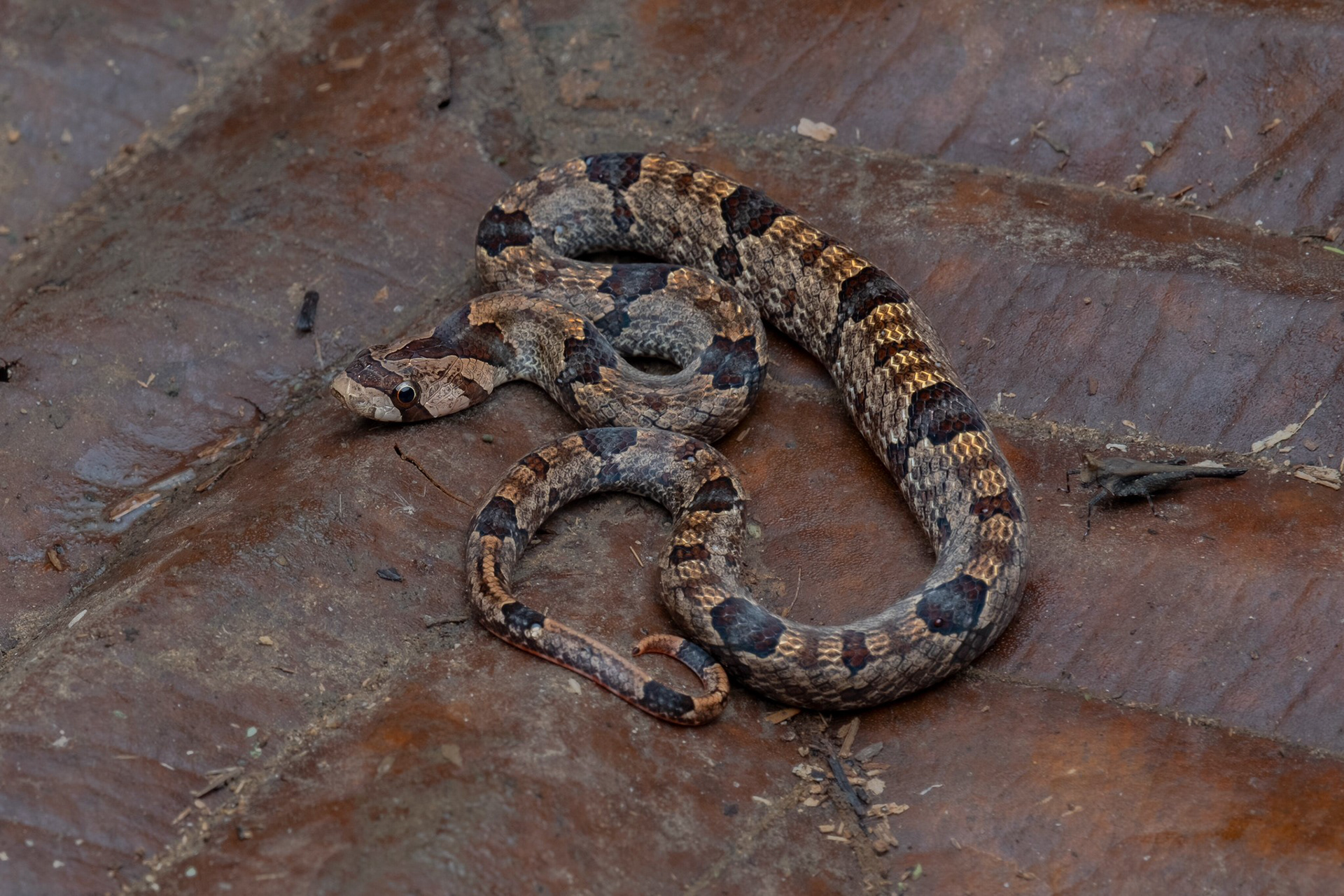
Purple kukri snake (Oligodon purpurascens)
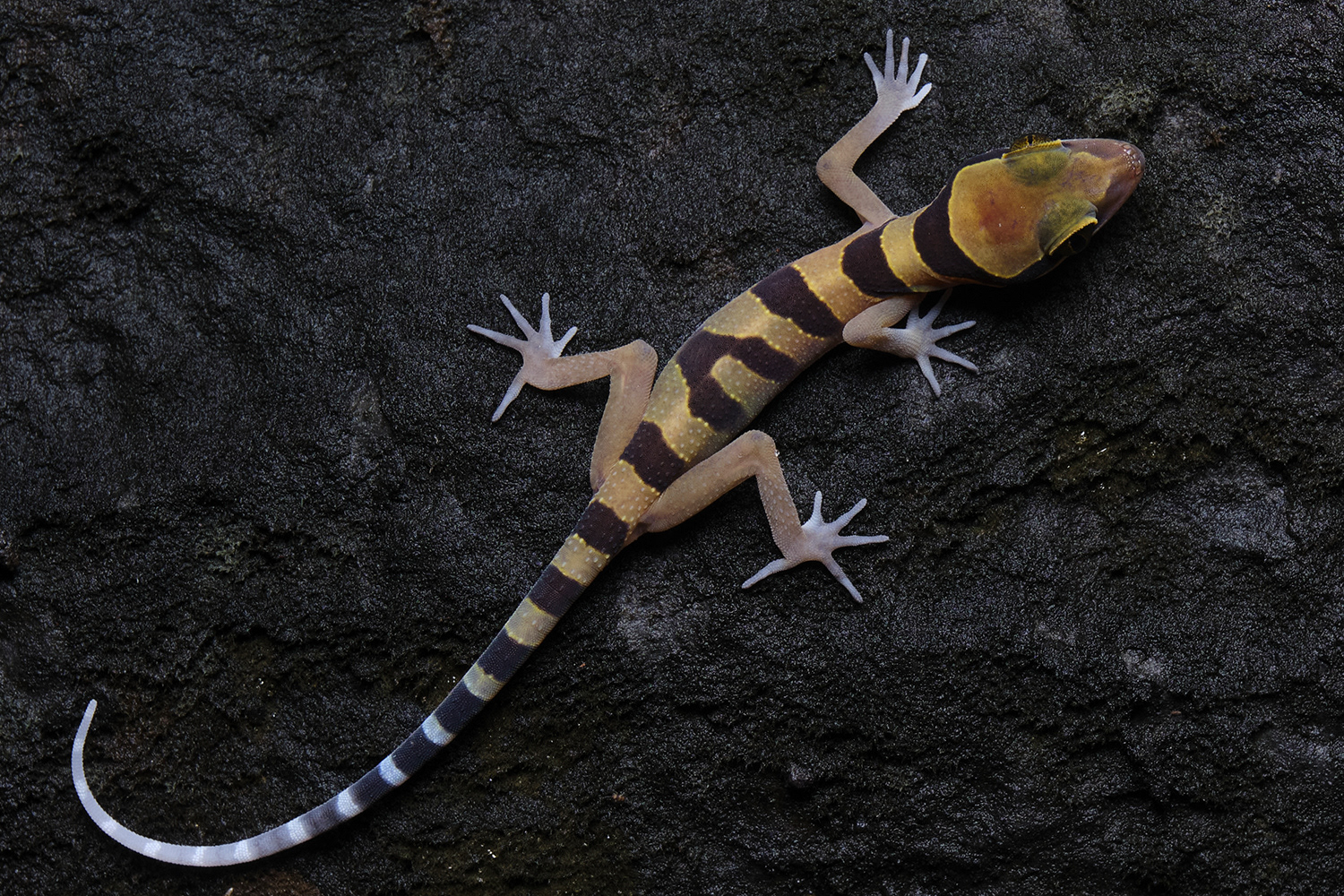
Lekagul's bent-toed gecko (Cyrtodactylus lekaguli)
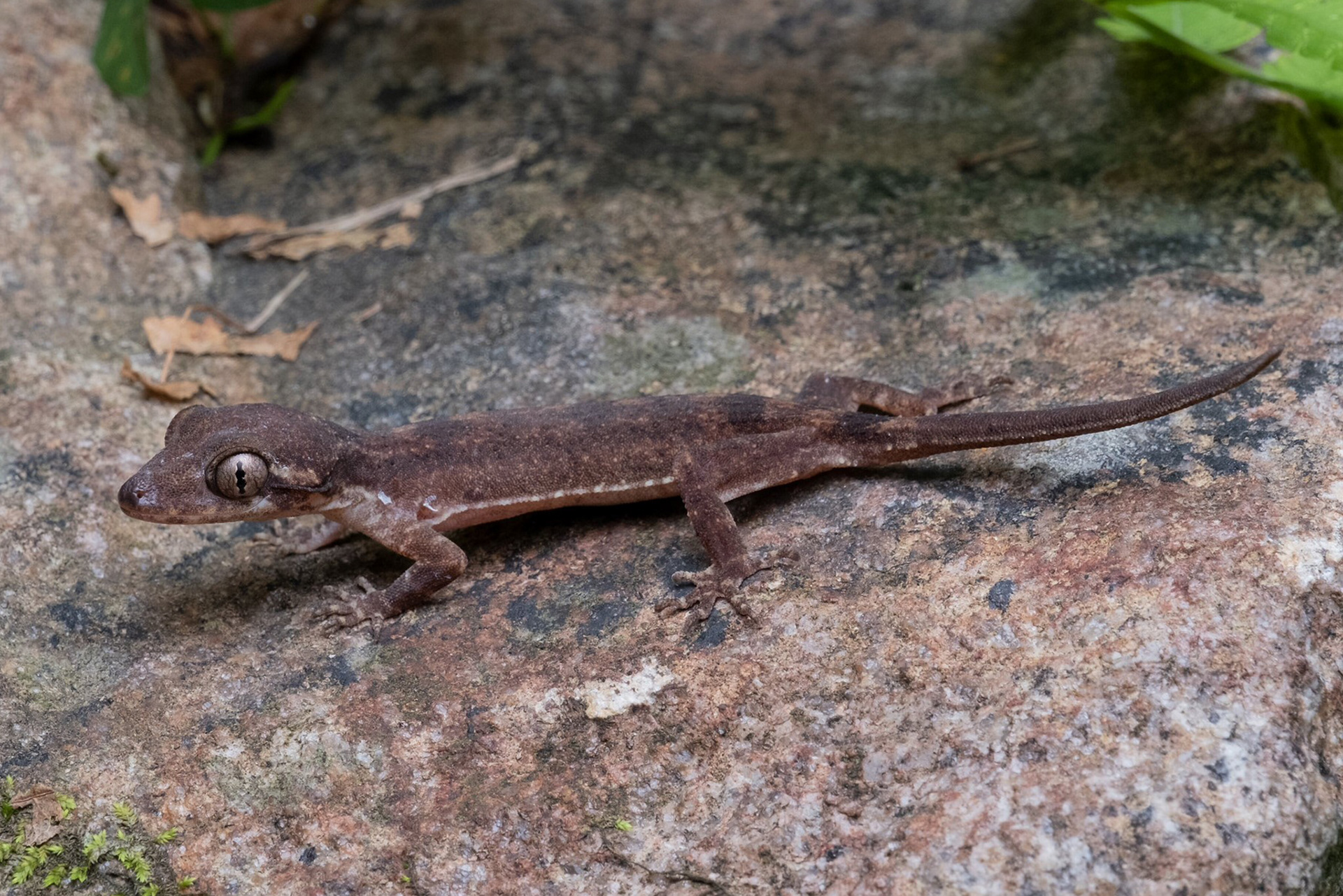
Cyrtodactylus cf. brevipalmatus
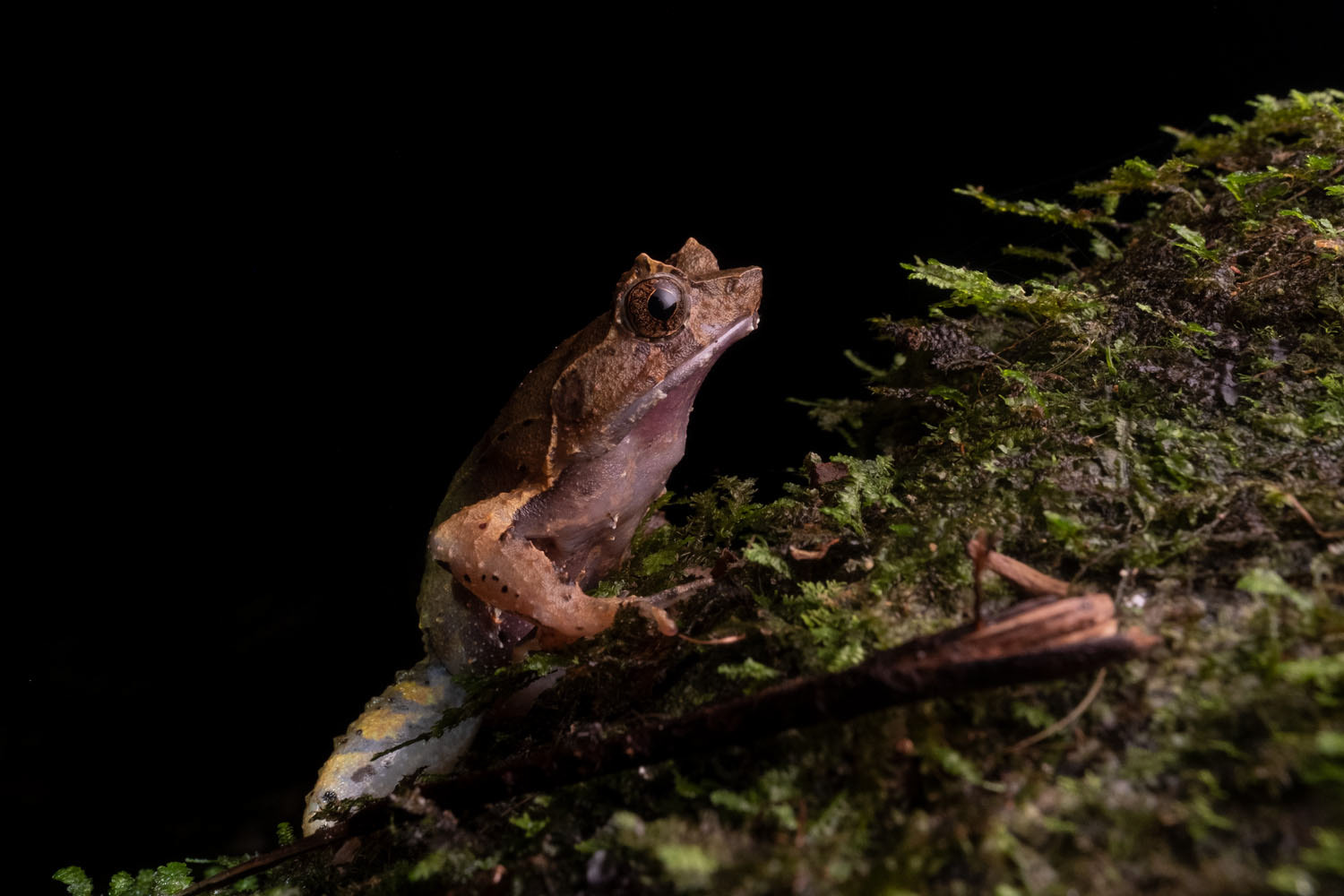
Perak horned frog (Xenophrys aceras)
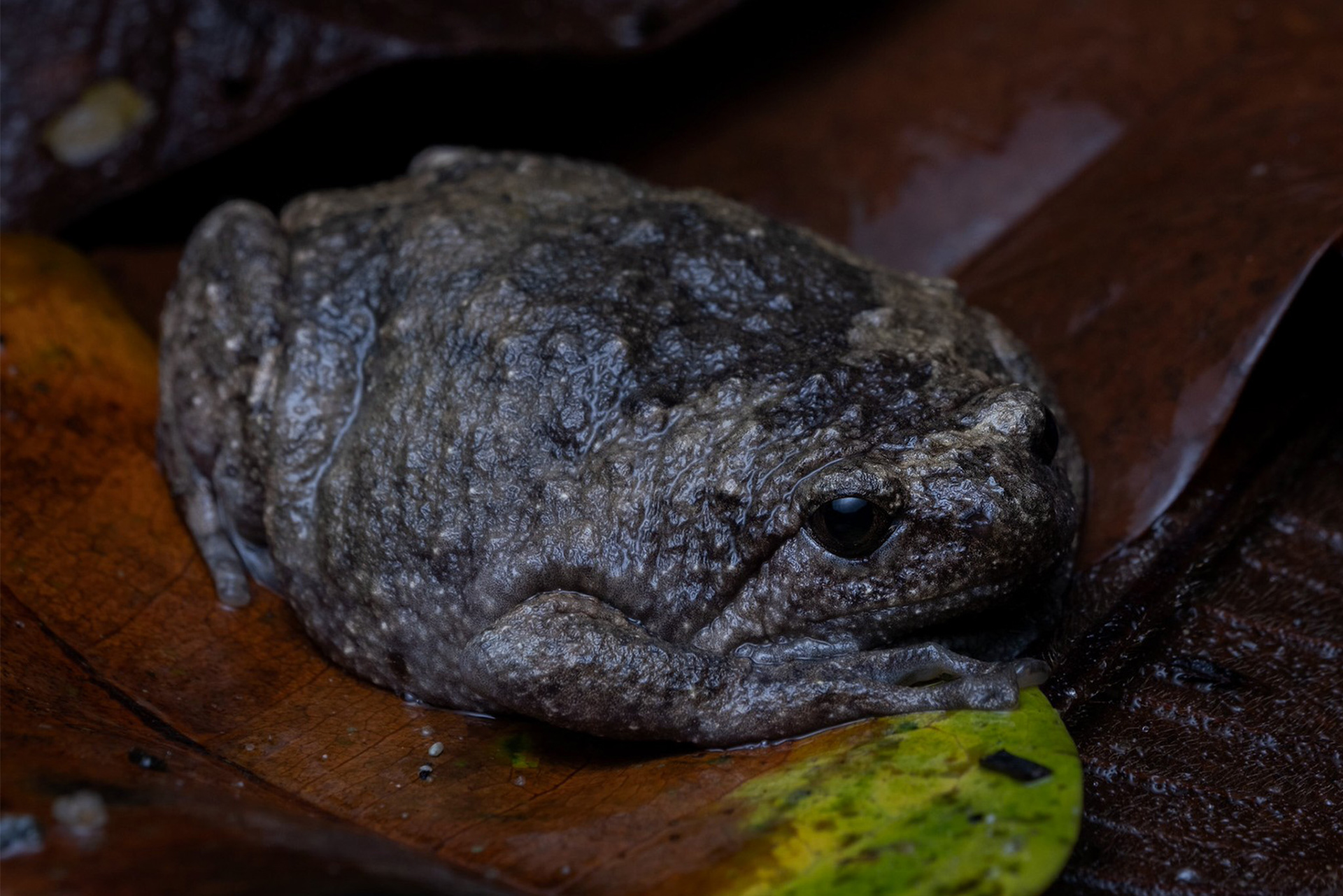
Wide-disked bullfrog (Kaloula latidisca)
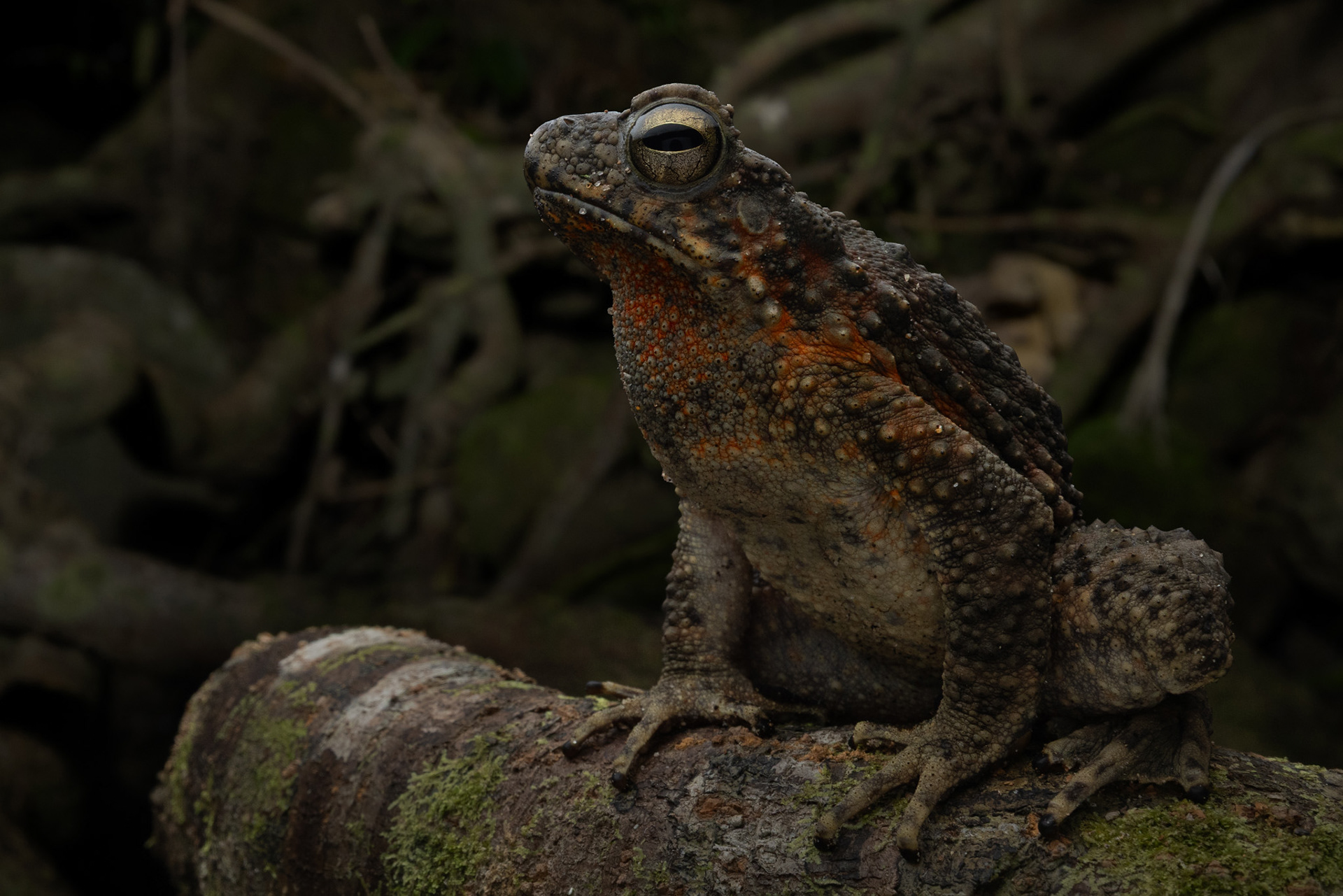
Giant river toad (Phrynoidis asperum)
Days 4 & 5: Trang
Trang is our first venture into tropical rainforest, where we will hike amongst giant dipterocarp trees and an innumerable diversity of herpetofauna. This location has a strong population of red-headed krait (Bungarus flaviceps), and our only opportunity during the trip to see Hagen's pit viper (Trimeresurus hageni). Trang also has isolated populations of the southern clade of white-lipped pit viper (Trimeresurus cf. albolabris), which we will make a stop for, as well as limestone karst formations with arguably the most colourful clade of the beautiful pit viper (Trimeresurus venustus). If we did not encounter a Malayan pit viper (Calloselasma rhodostoma) in Krabi, we are sure to see one in Trang, as they are more abundant here than anywhere else in their range.
The tropical rainforests of the Khao Banthad mountain range are home to a wide variety of colubrid snakes, with Bengkulu cat snake (Boiga bengkuluensis), white-spotted cat snake (Boiga drapiezii) and dark-headed cat snake (Boiga nigriceps) regularly showing up during night walks. Blunt-headed slug snake (Aplopeltura boa) are common, amongst countless other jungle-dwelling species.
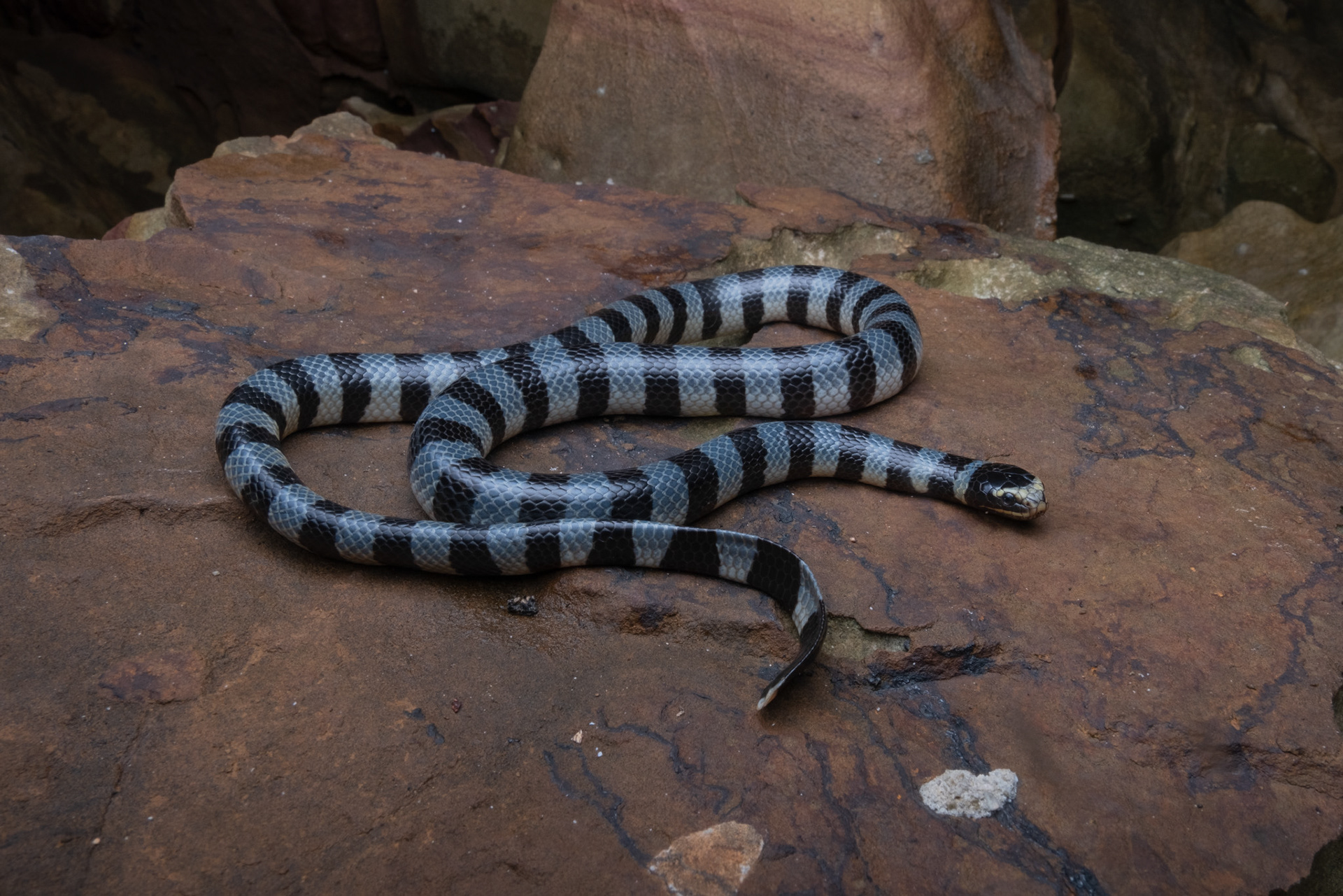
Yellow-lipped sea krait (Laticauda colubrina)
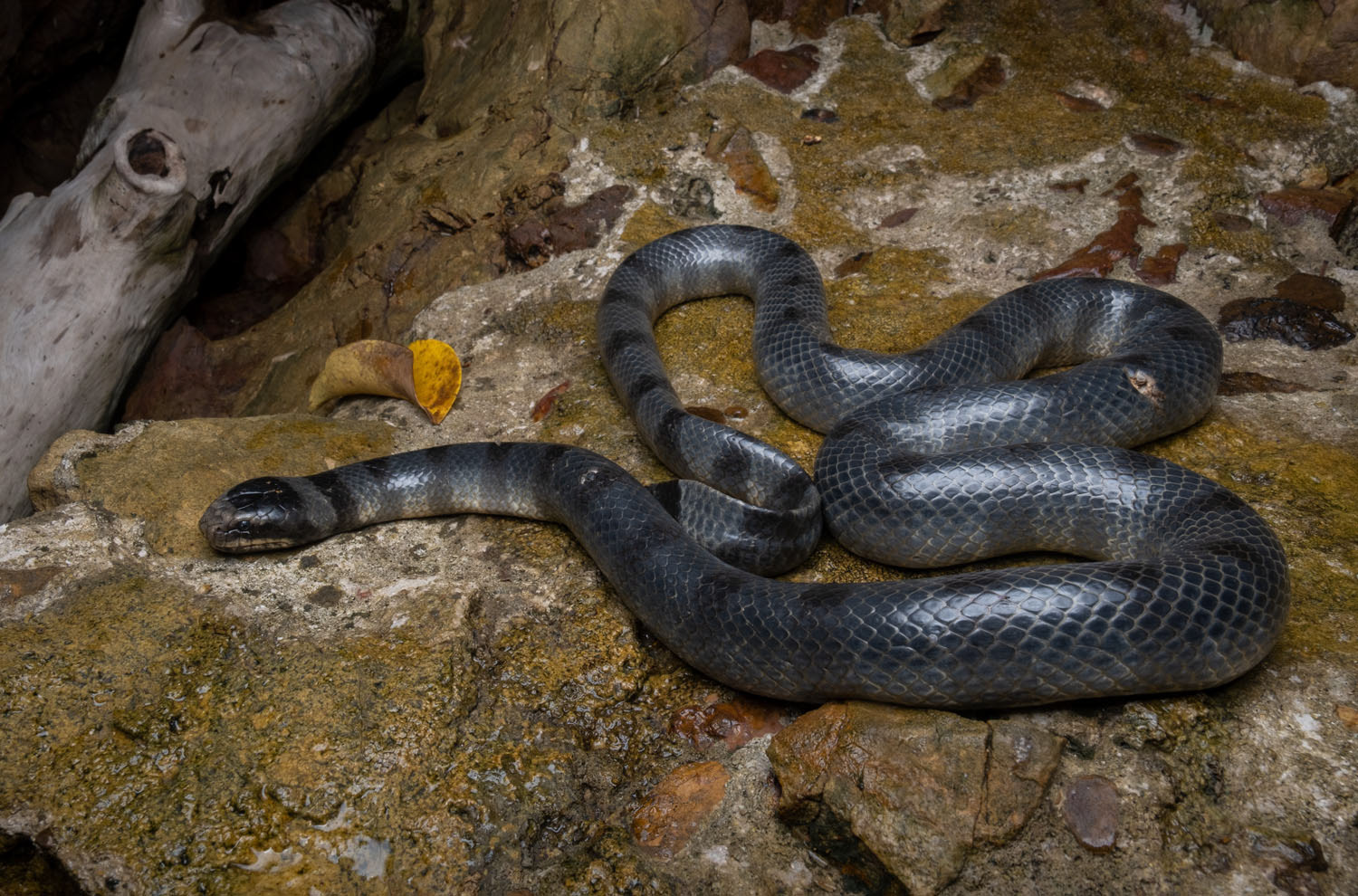
Yellow-lipped sea krait (Laticauda colubrina)
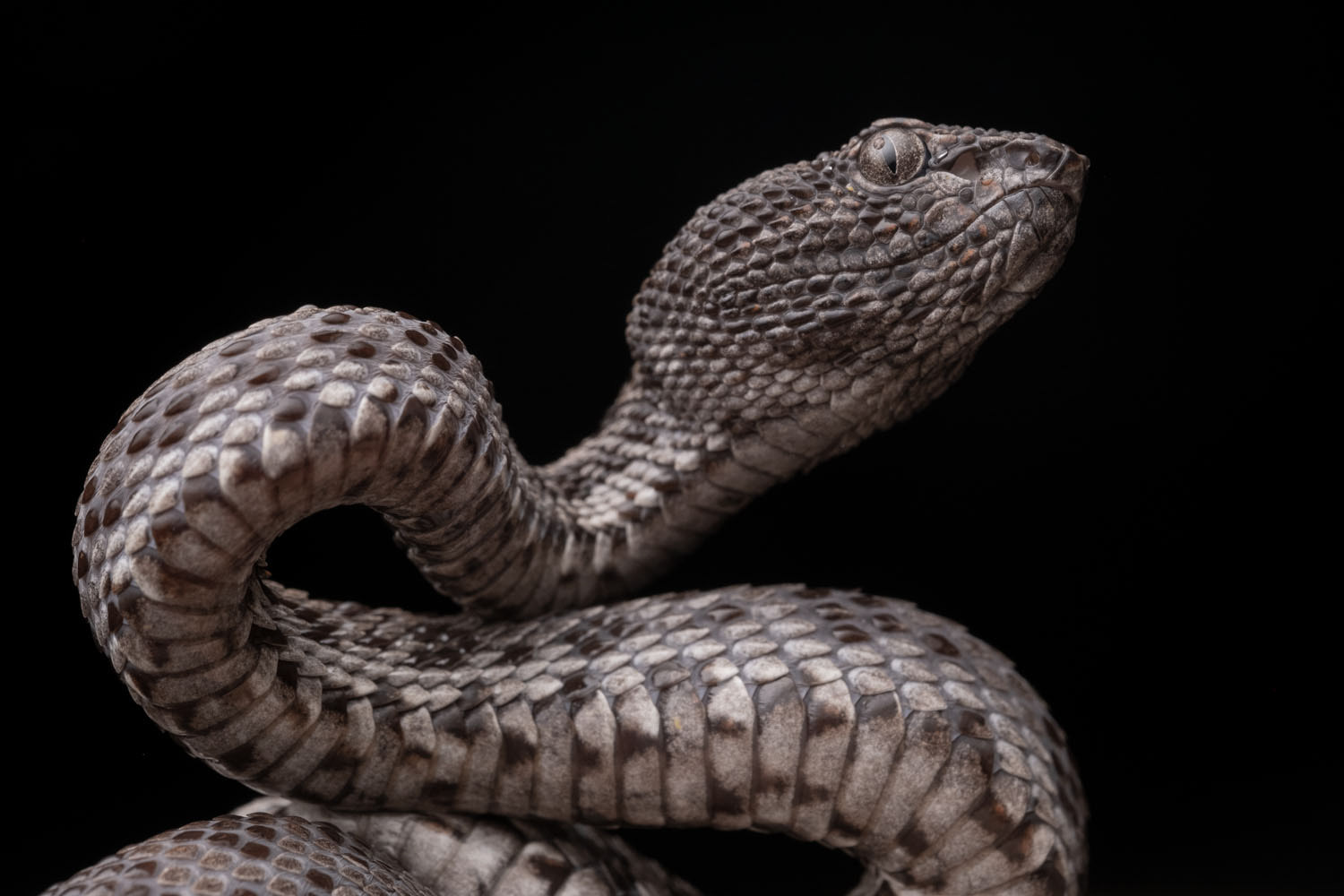
Mangrove pit viper (Trimeresurus purpureomaculatus)
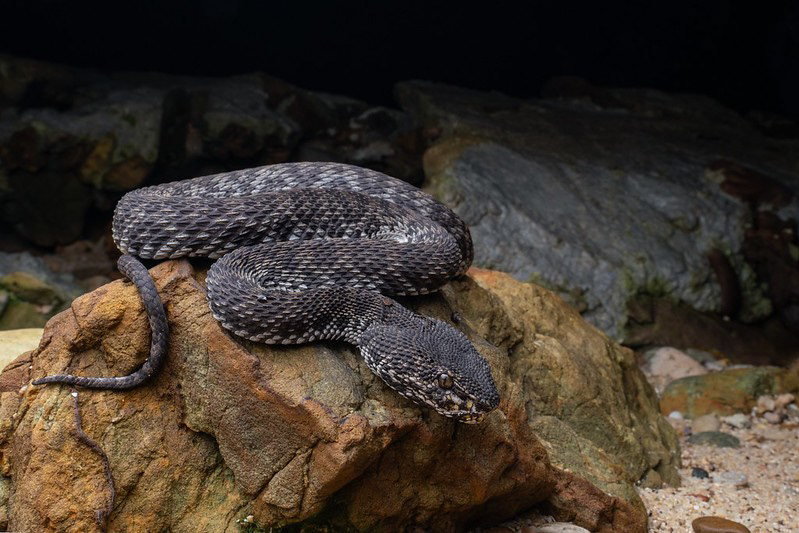
Mangrove pit viper (Trimeresurus purpureomaculatus)
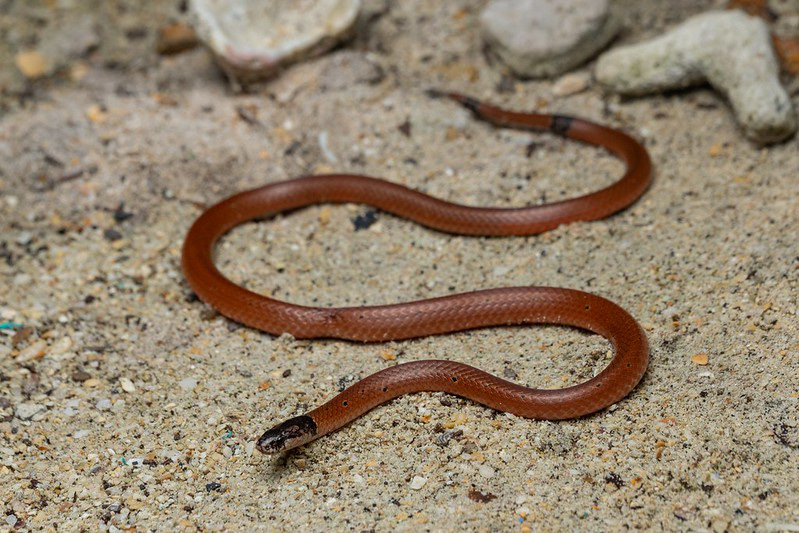
Small-spotted coral snake (Calliophis maculiceps)
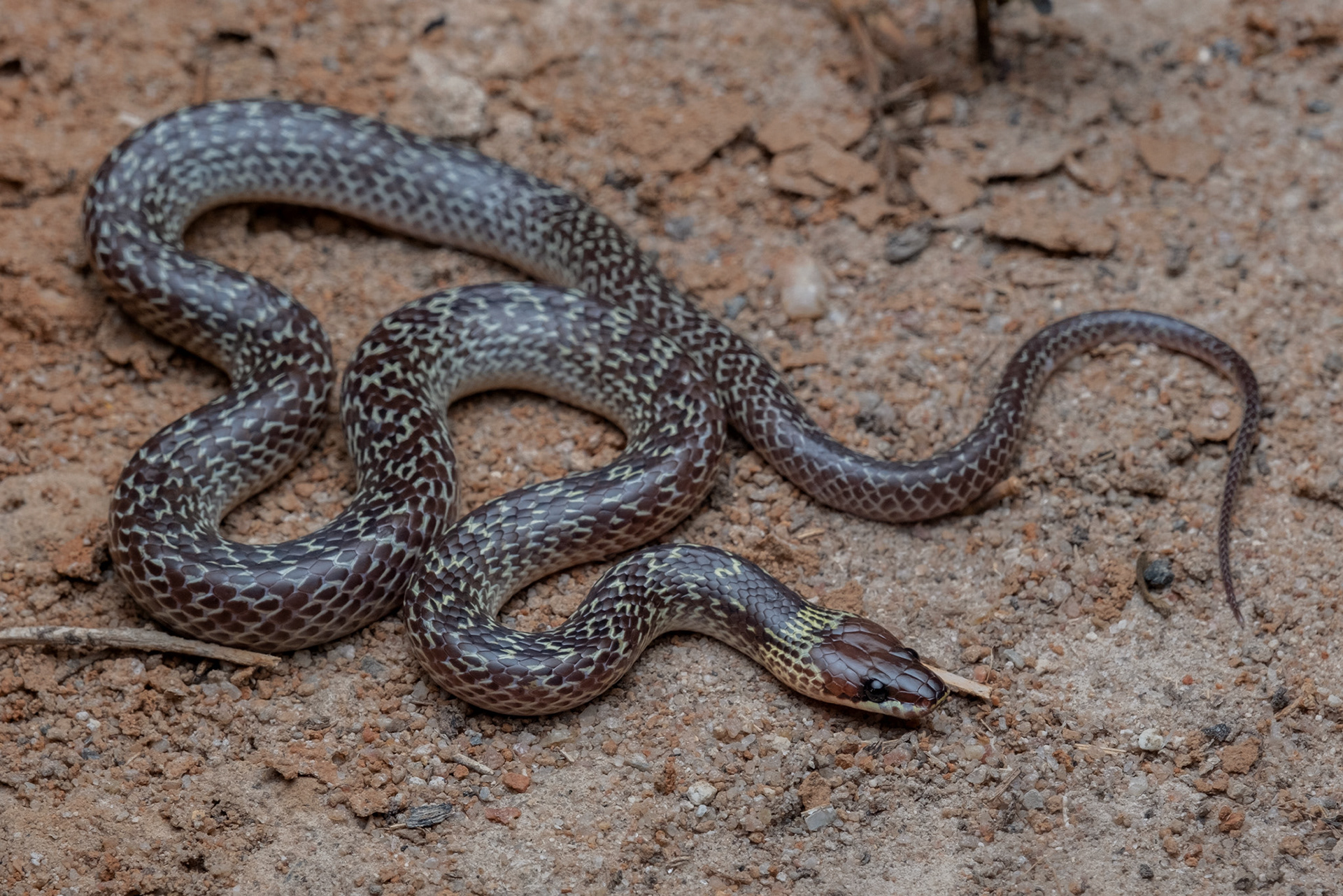
Common wolf snake (Lycodon capucinus)
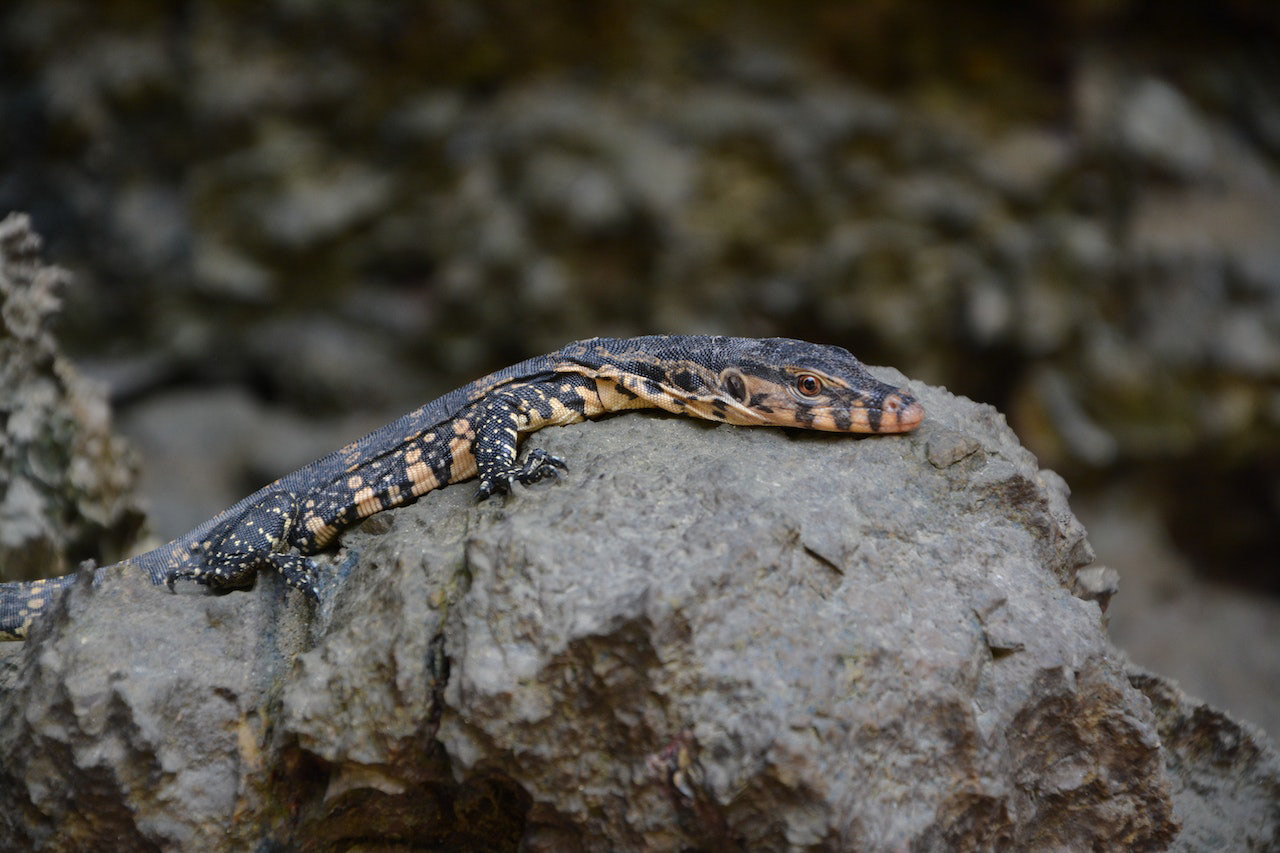
Water monitor (Varanus salvator)

Snake Island
Day 6: Snake Island
Situated just off the west coast of southern peninsula Thailand, "Snake Island" is a forested islet with beautiful sandy beaches, rocky headlands and a few coastal resorts. The reef systems surrounding the island provide hunting habitat for a thriving population of yellow-lipped sea kraits (Laticauda colubrina), which can be found on the island at night as they come to shore to rest, and can even be seen during the daytime if we are extremely fortunate. This island also gives us a fantastic chance to get up close with mangrove pit vipers (Trimeresurus purpureomaculatus) if we missed them in Krabi. They can be found in the garden of our resort and along the beach while searching for sea kraits. We have also found some rare species such as the small-spotted coral snake (Calliophis maculiceps) and paradise flying snake (Chrysopelea paradisi) on this island.
Our accommodation is a seaside resort situated within its own private beach where you can swim or relax in tropical paradise. The resort rents out snorkels and kayaks, and also has a swimming pool of its own. We usually take this leg of the trip as a rest-day from the intense herping of the start of the expedition, preparing for the exciting locations which come after.
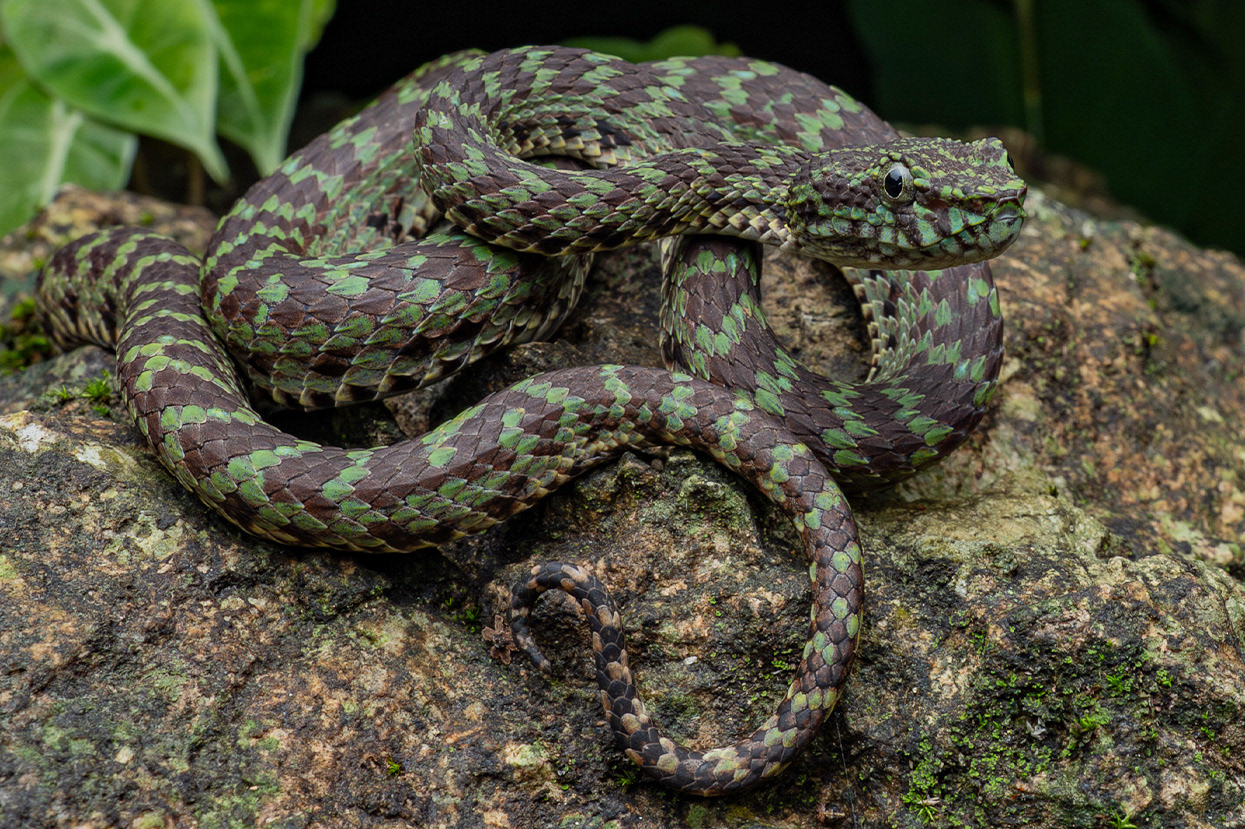
Limestone eyelash pit viper (Trimeresurus ciliaris)
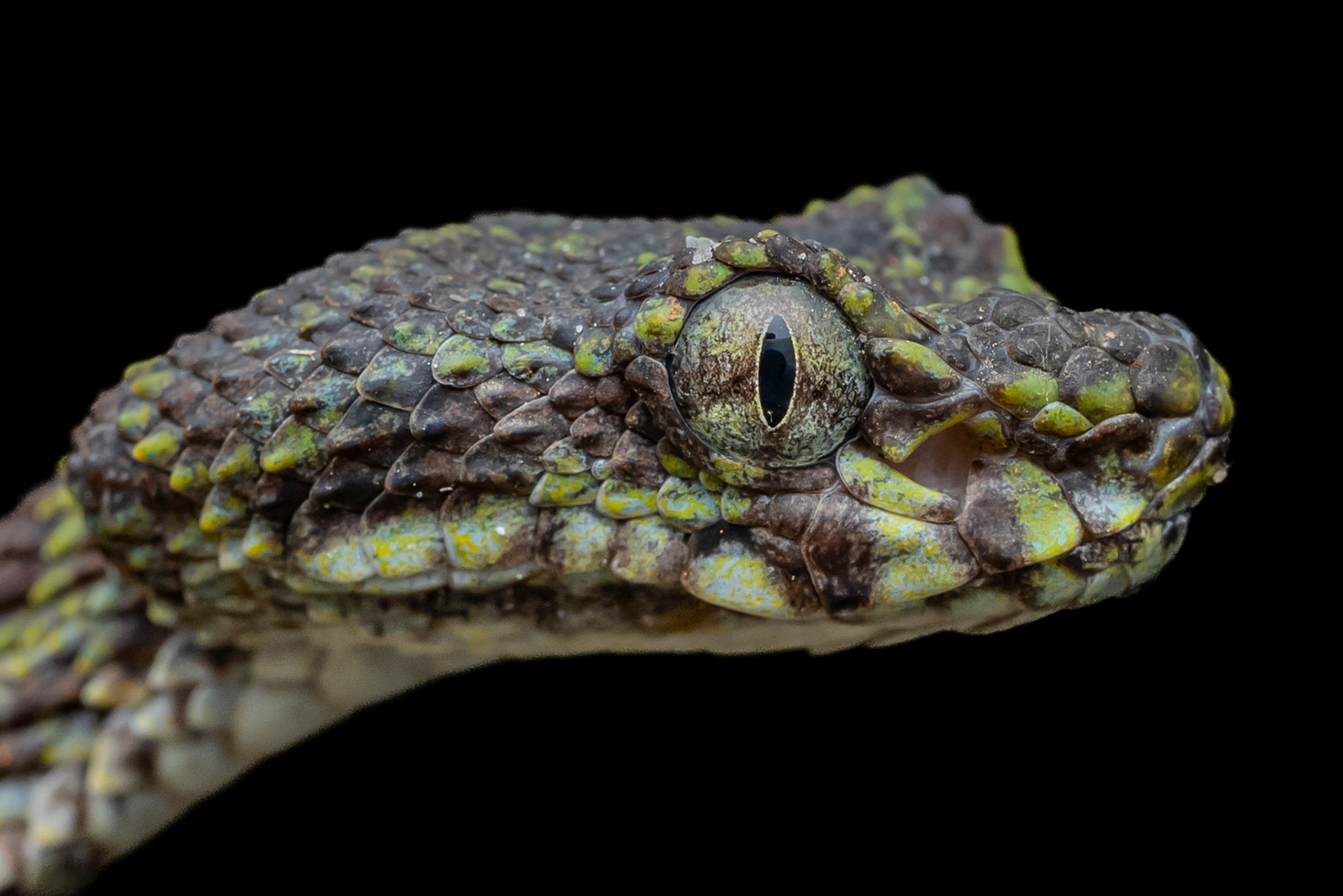
Limestone eyelash pit viper (Trimeresurus ciliaris)
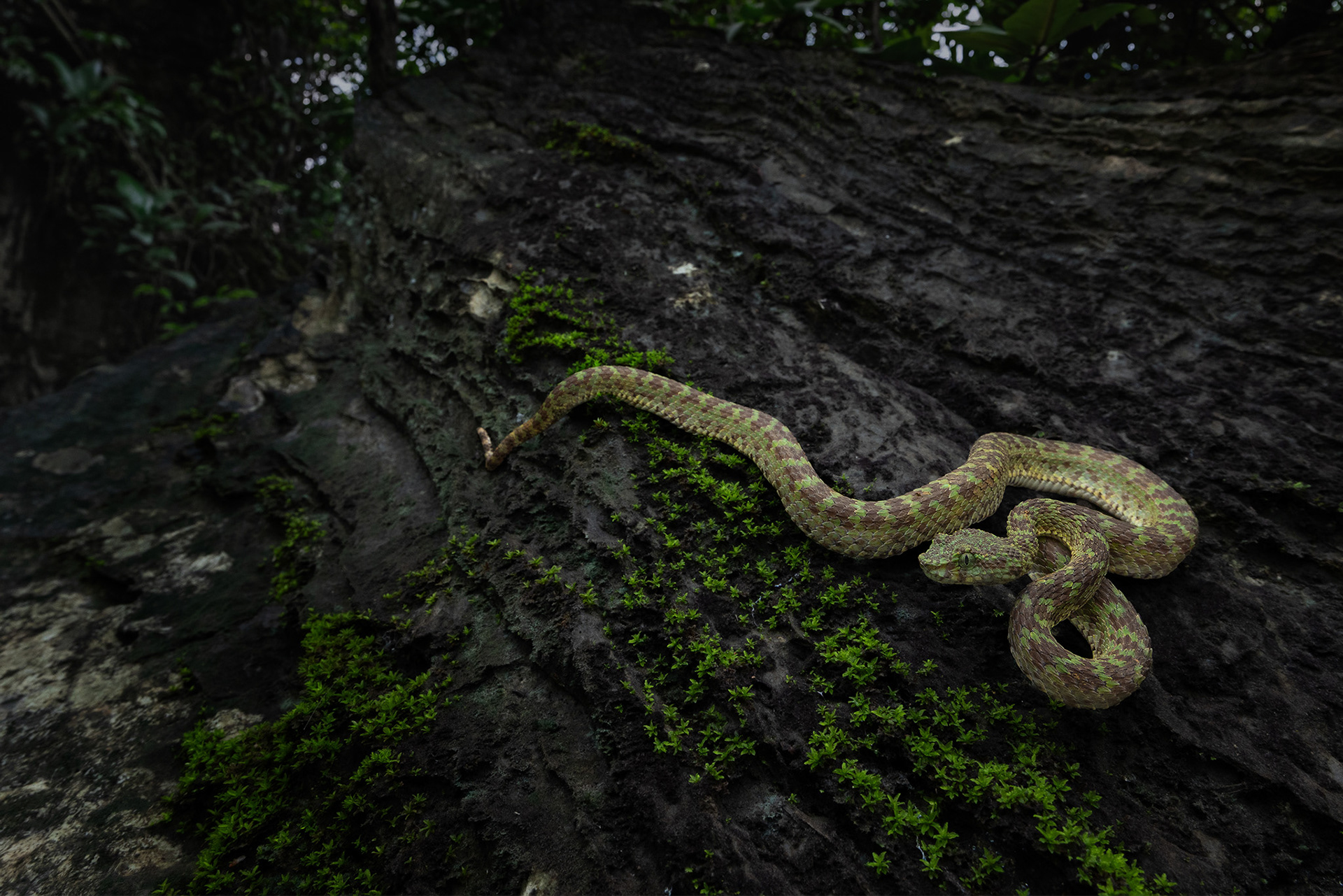
Limestone eyelash pit viper (Trimeresurus ciliaris)
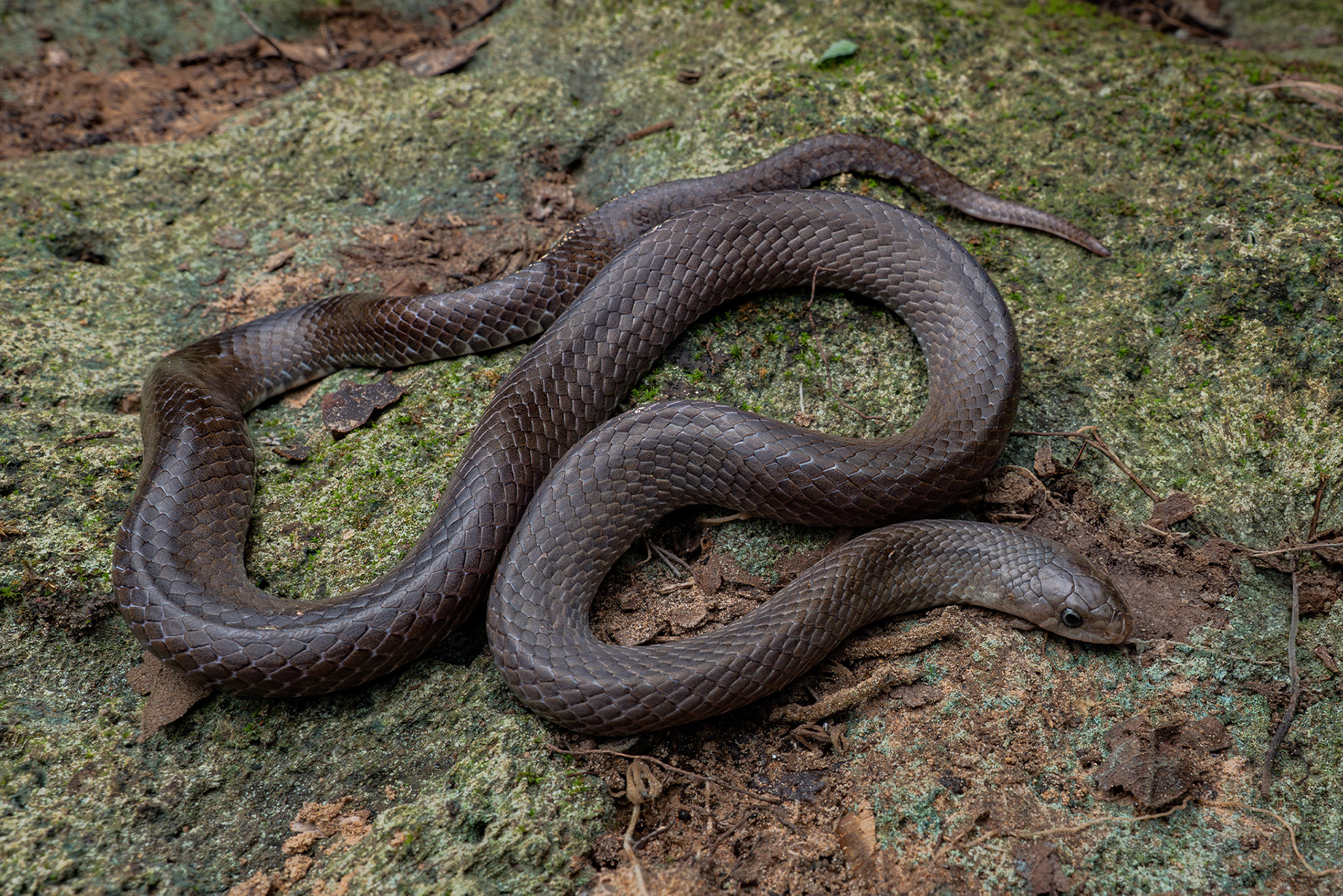
Cave-dwelling kukri snake (Oligodon speleoserpens))
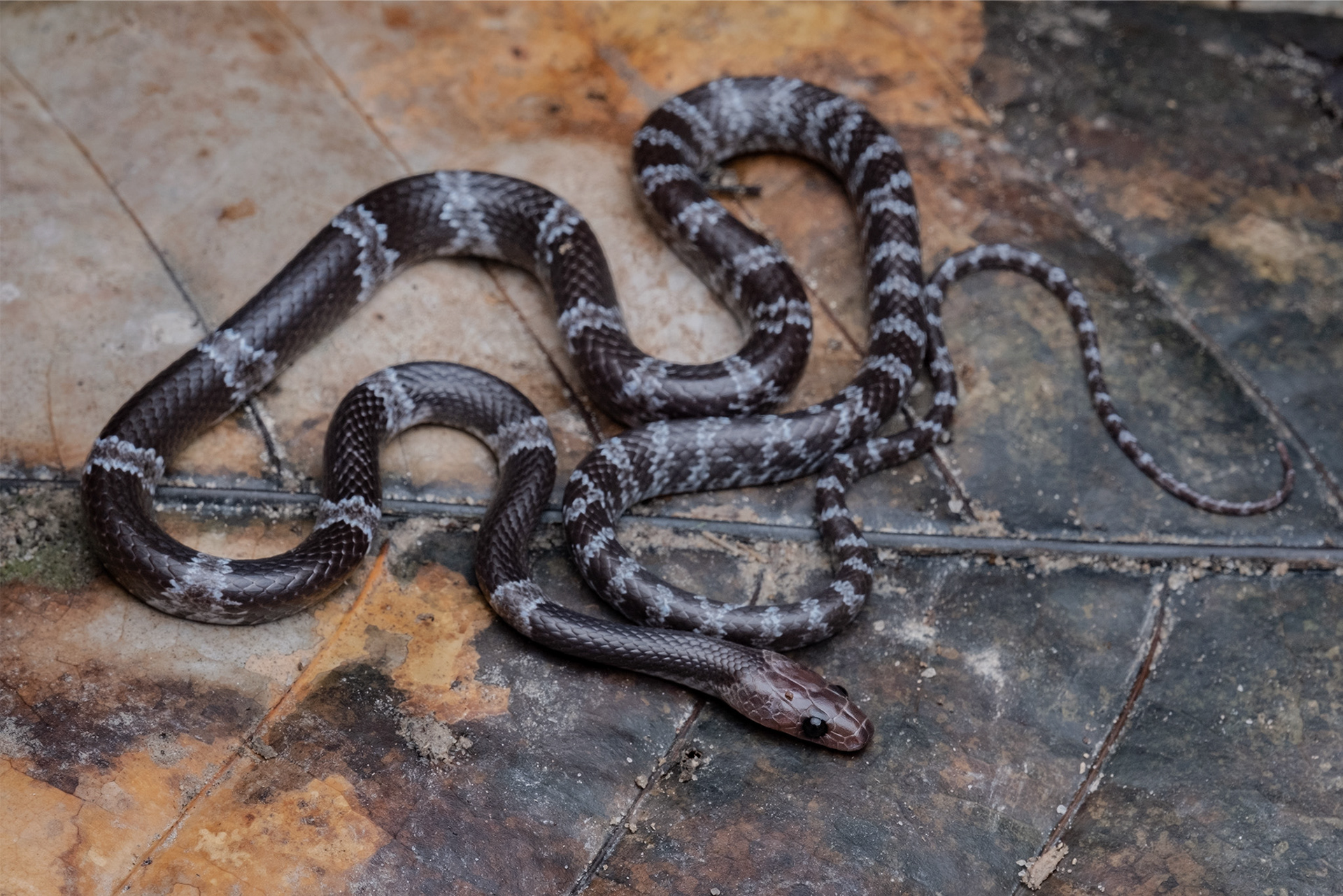
Gua Wang Burma wolf snake (Lycodon cavernicolus)
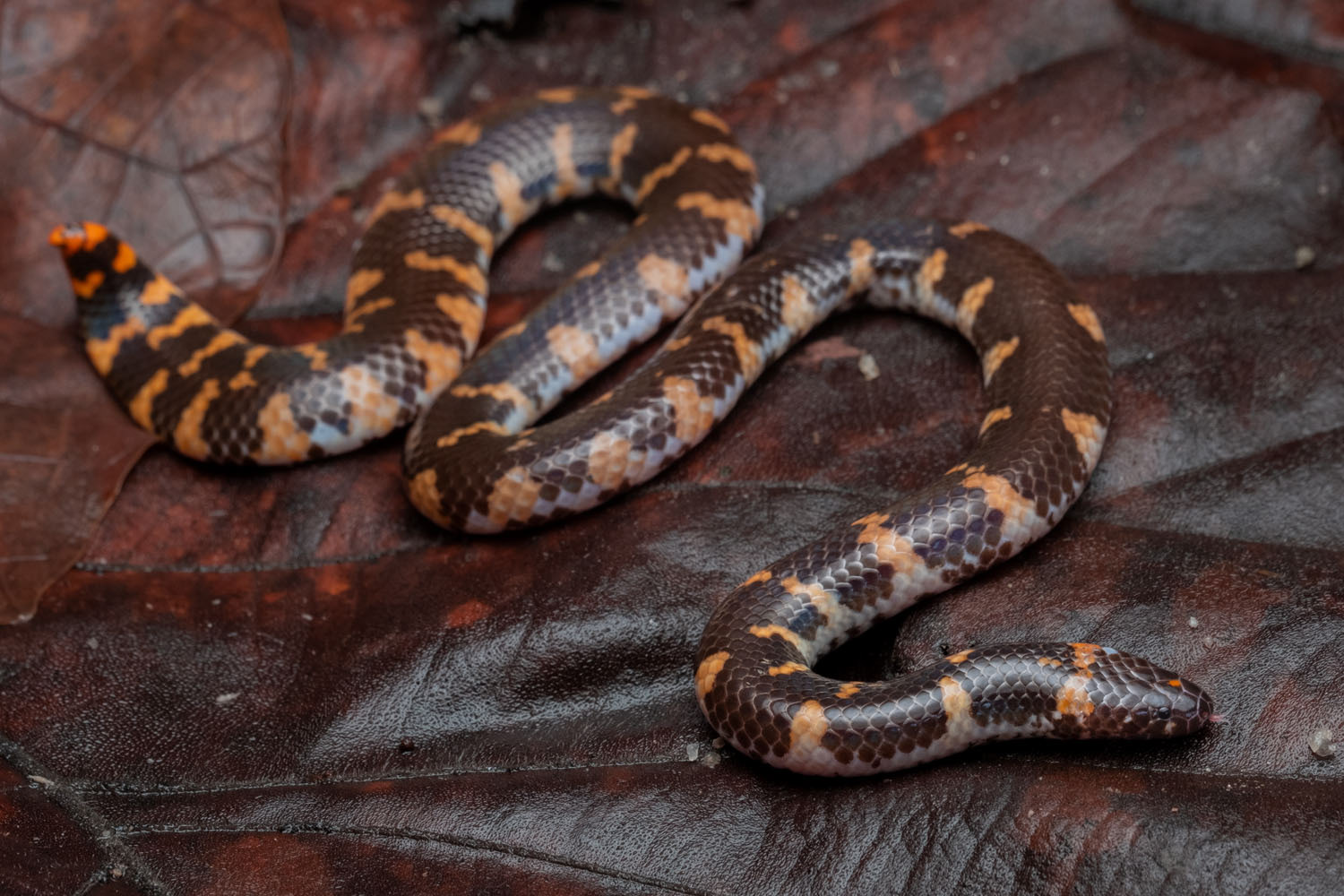
Red-tailed pipe snake (Cylindrophis ruffus)
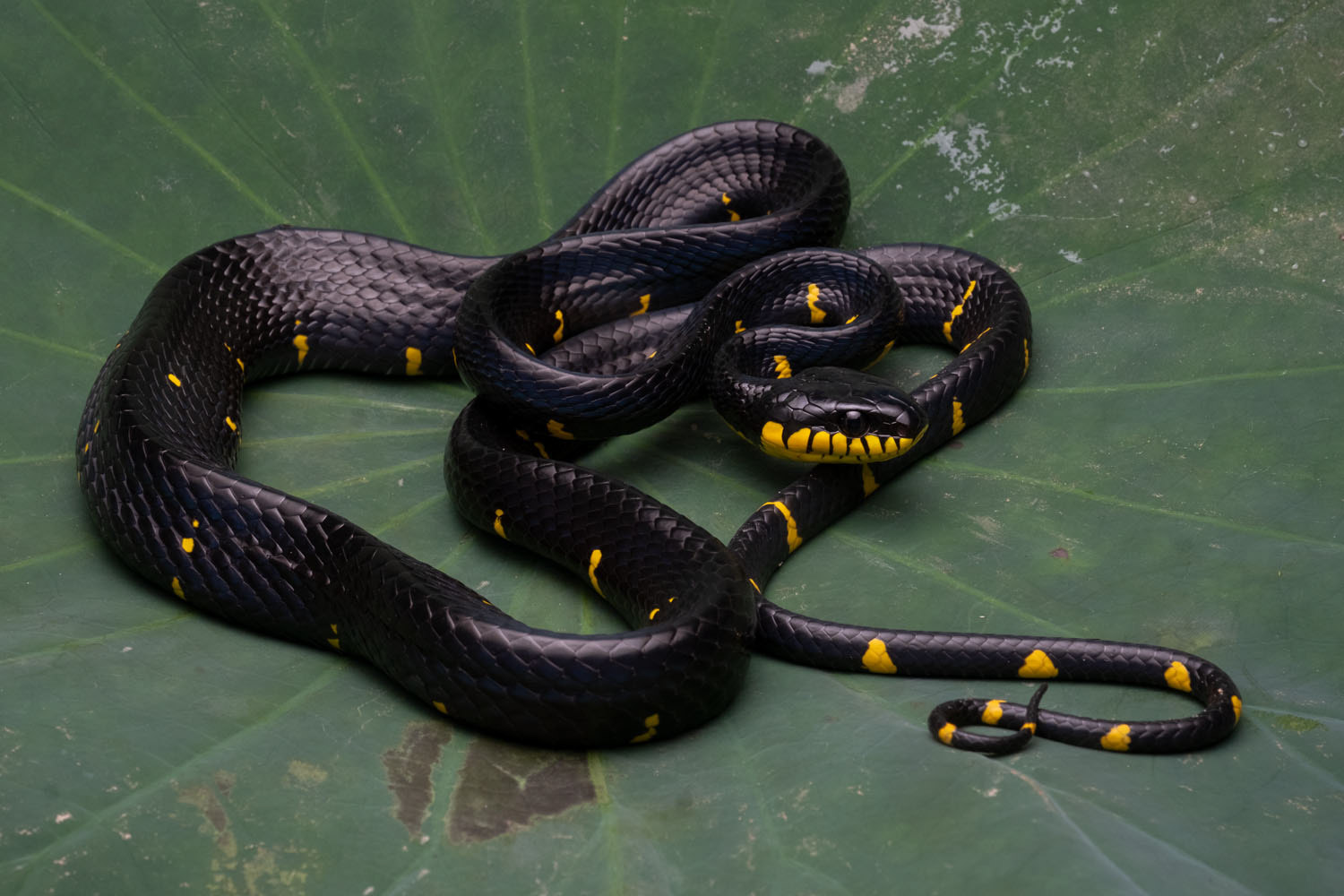
Mangrove cat snake (Boiga melanota)
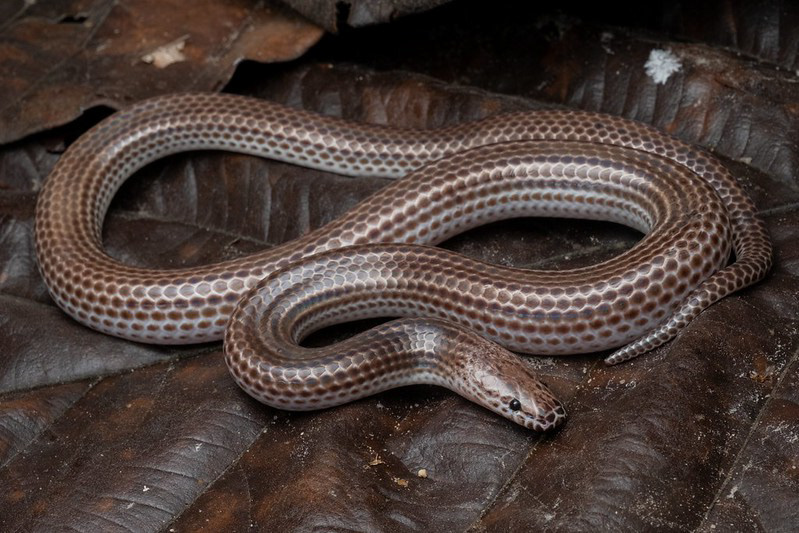
Sunbeam snake (Xenopeltis unicolor)
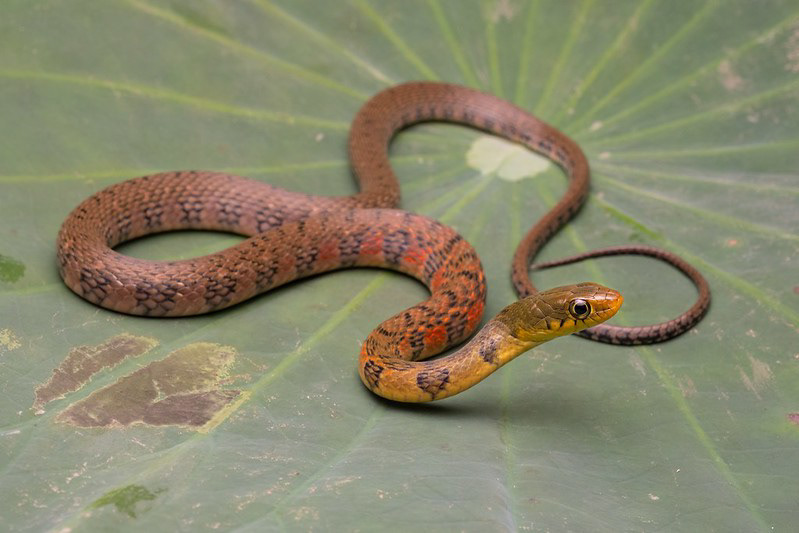
Triangle keelback (Xenochrophis trianguligerus)
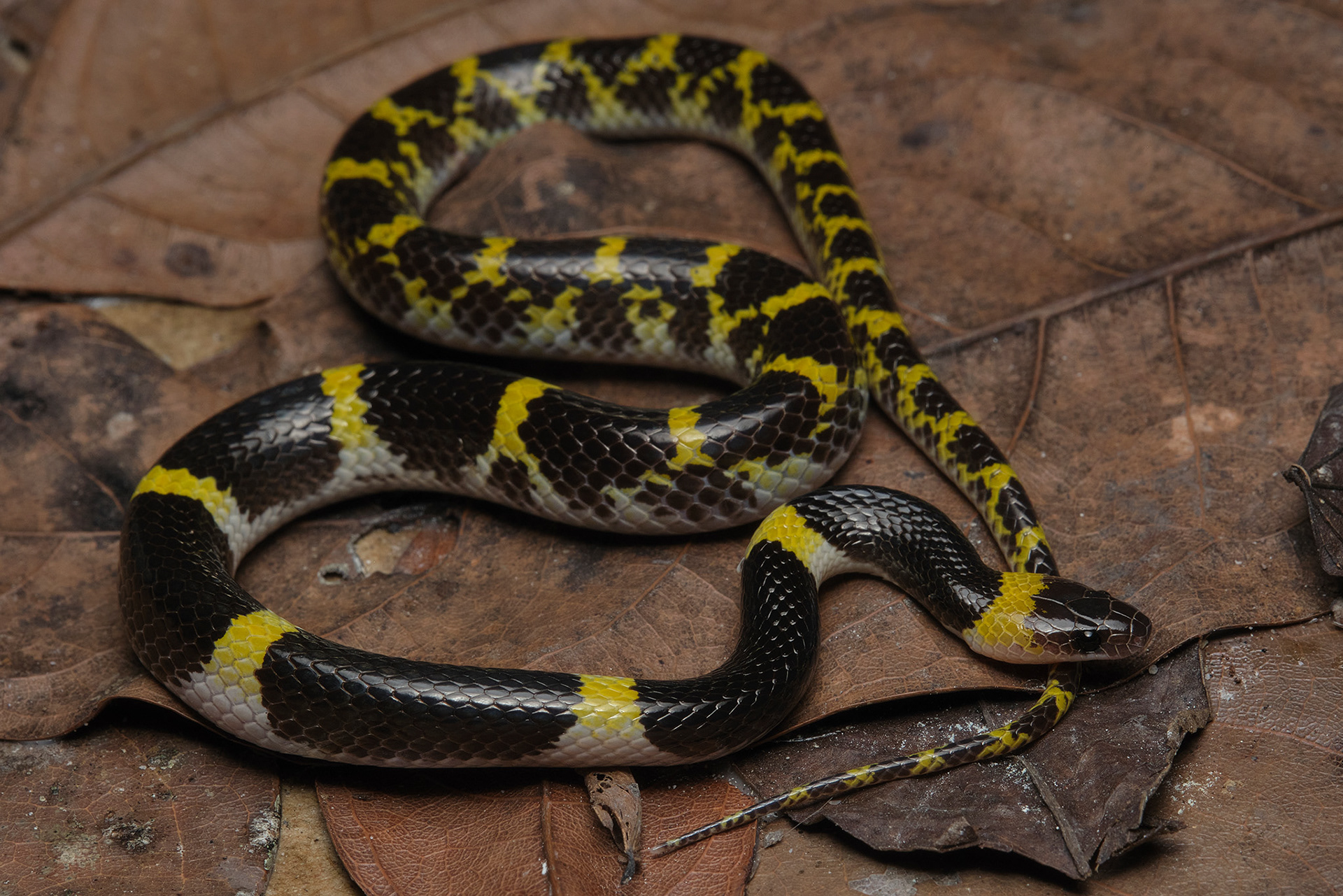
Laotian wolf snake (Lycodon laoensis)
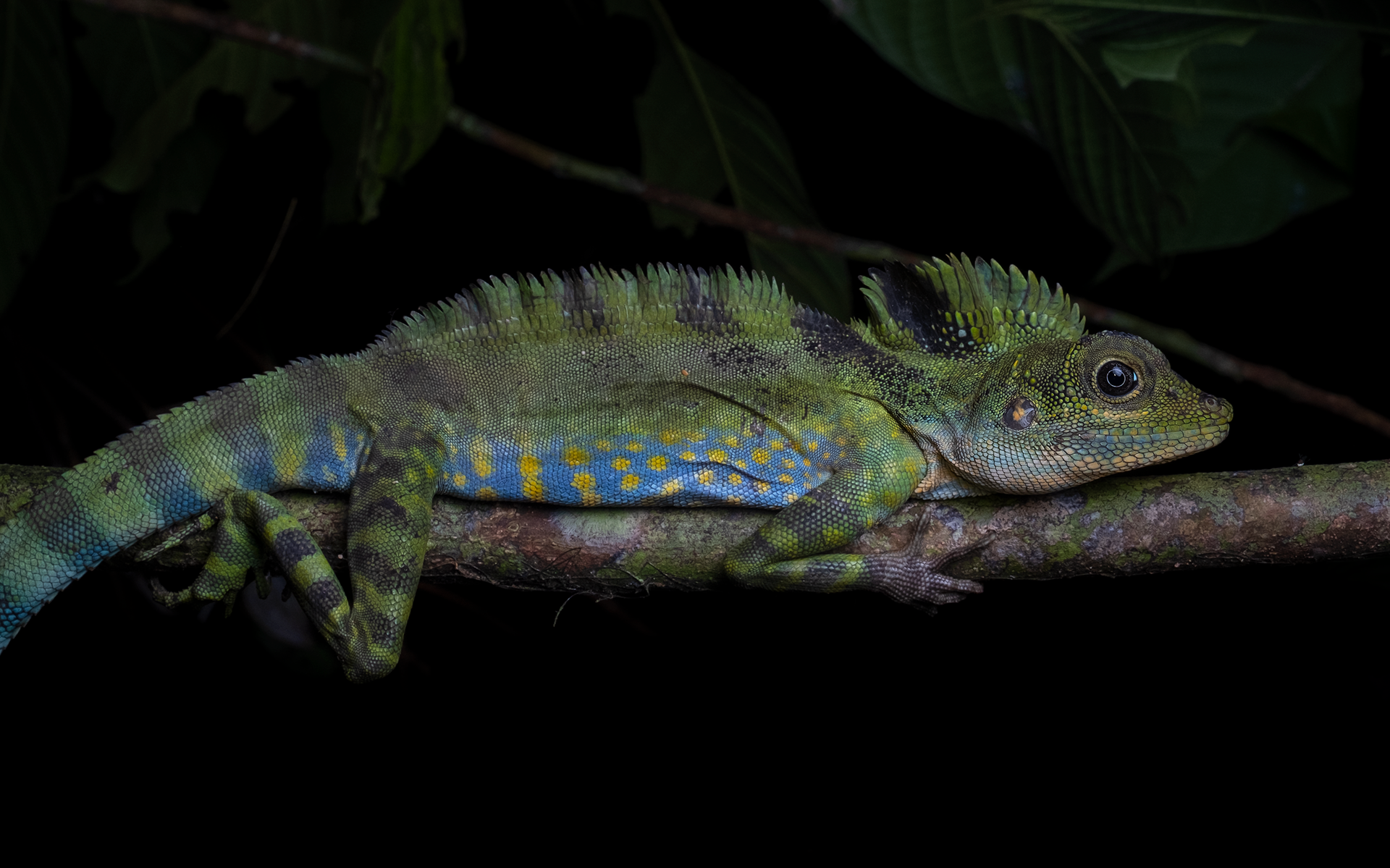
Great angle-headed lizard (Gonocephalus grandis)
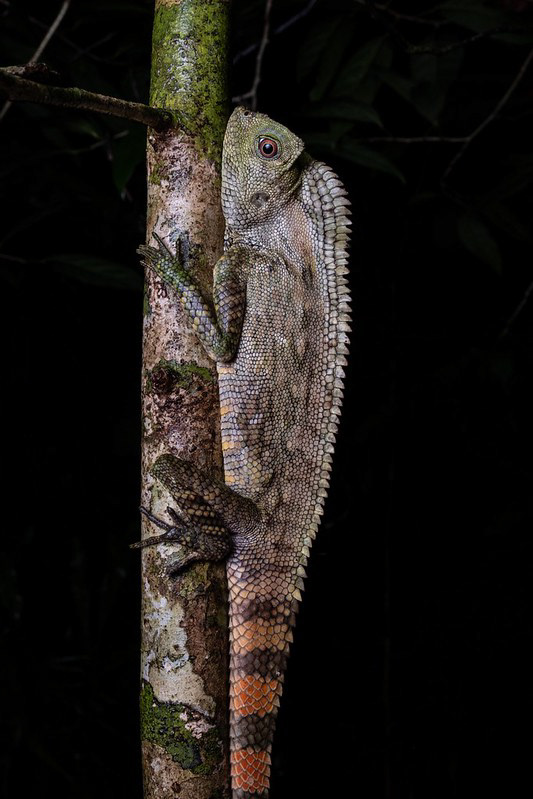
Abbott's angle-headed lizard (Gonocephalus abbotti)
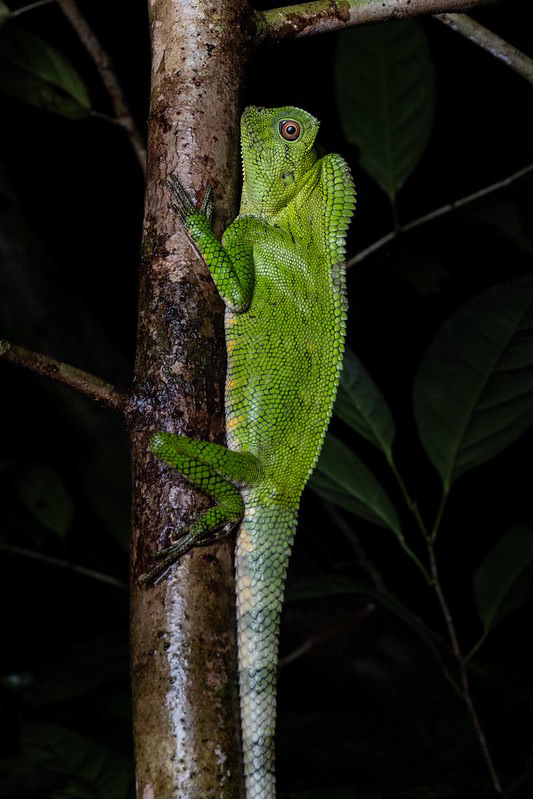
Abbott's angle-headed lizard (Gonocephalus abbotti)
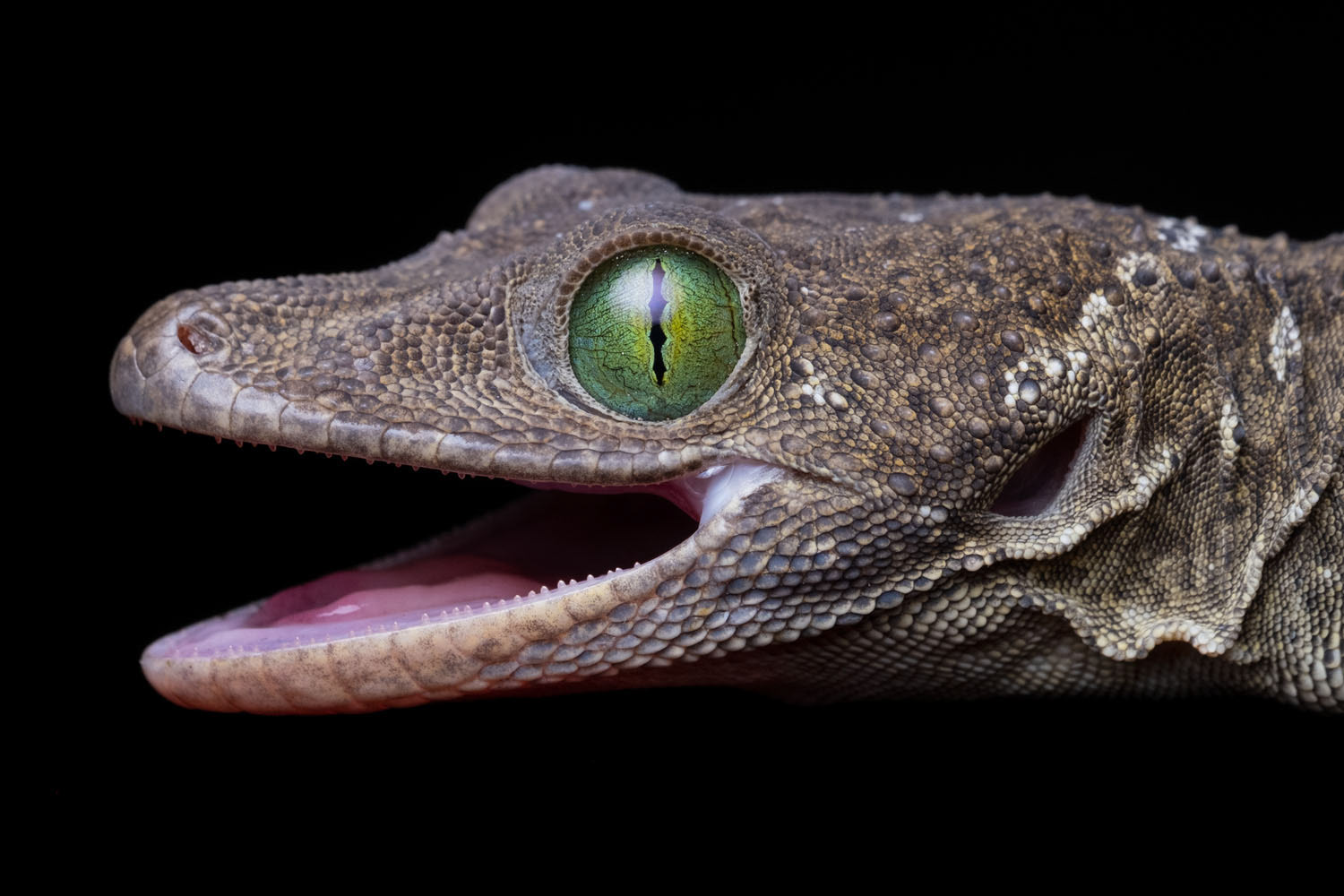
Smith's green-eyed gecko (Gekko smithii)

"black" tokay gecko (Gekko sp.)
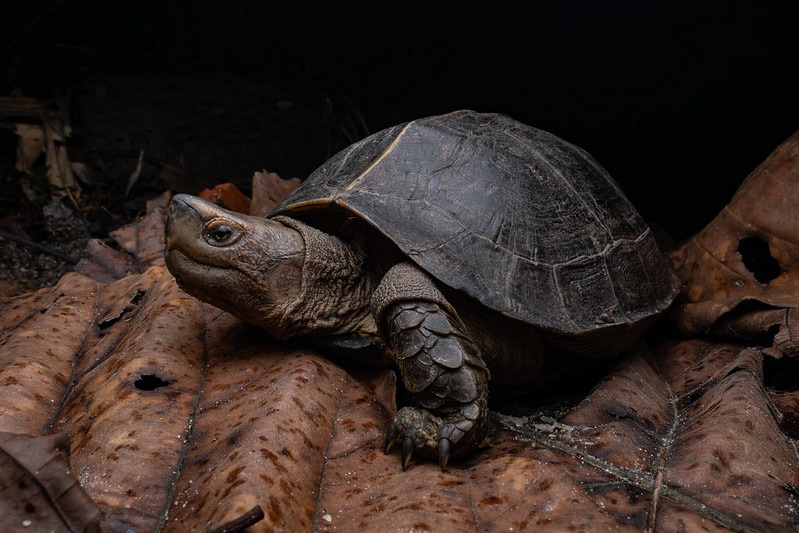
Giant pond turtle (Heosemys grandis)
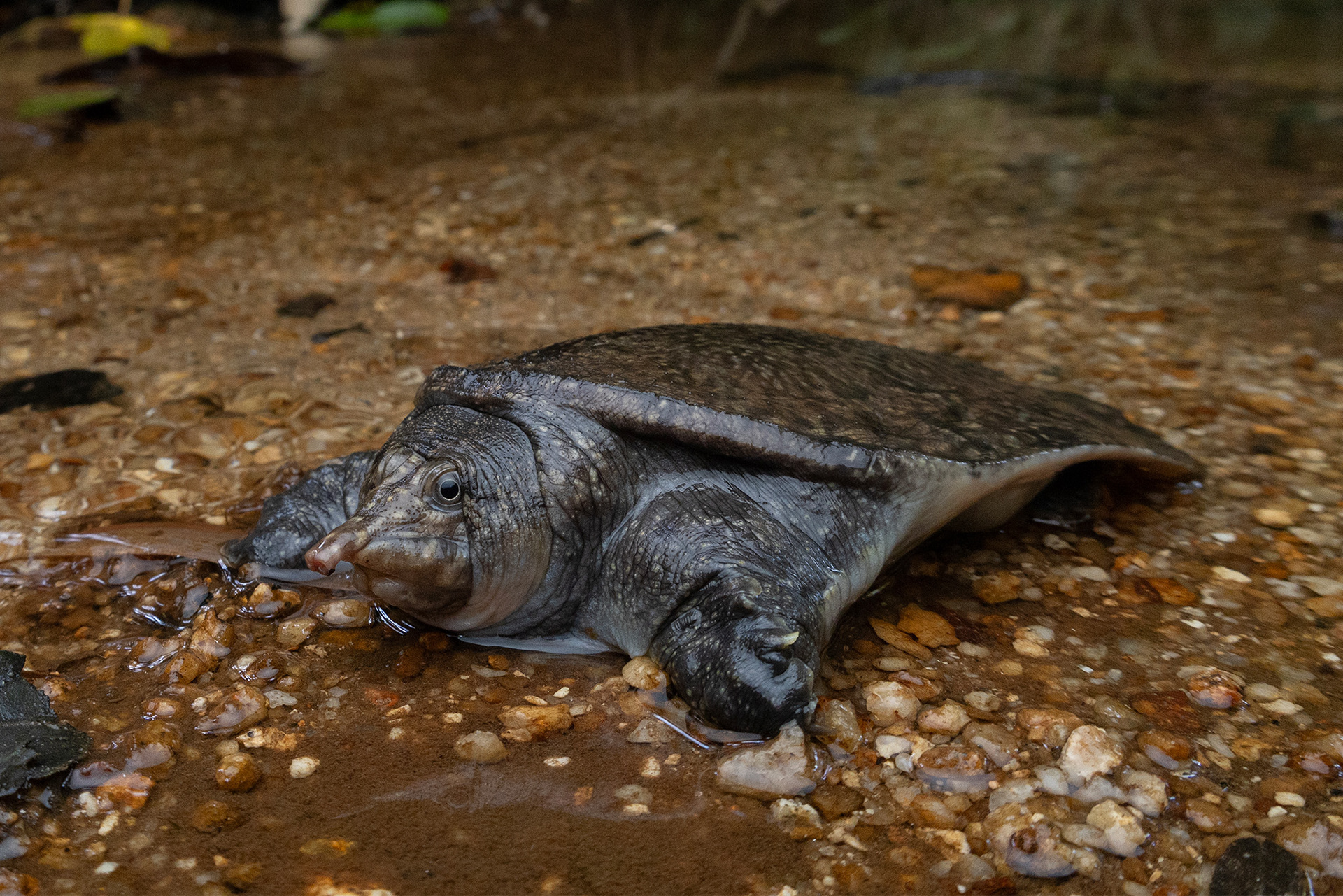
Malayan softshell turtle (Dogania subplana)
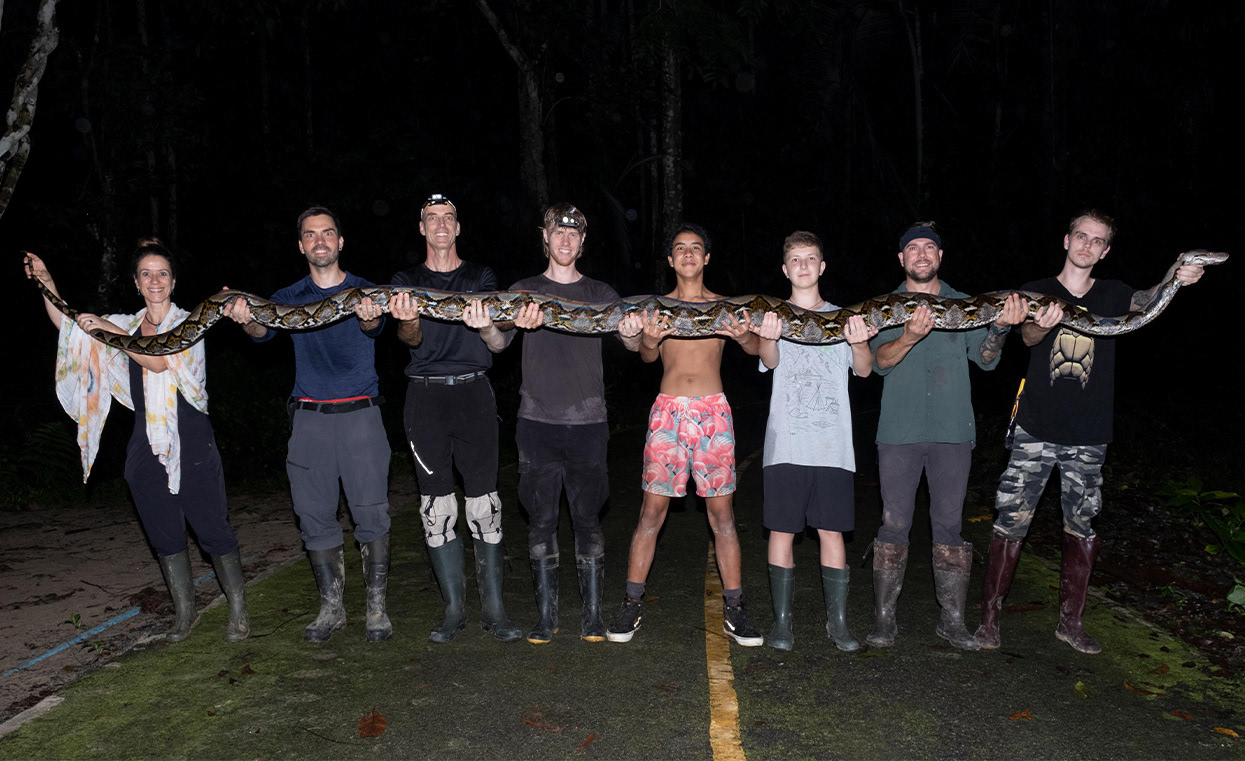
reticulated python (Malayopython reticulatus).
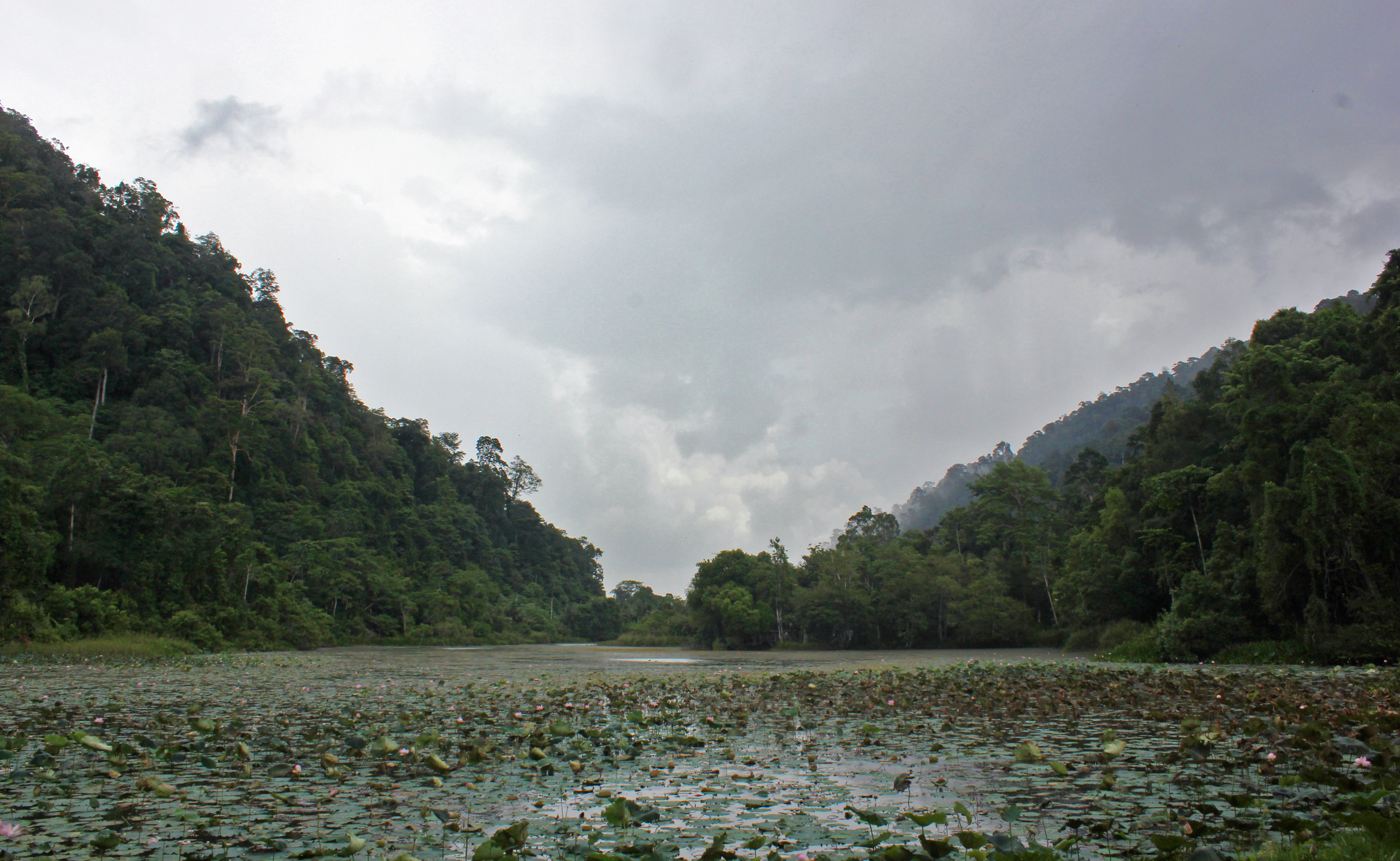
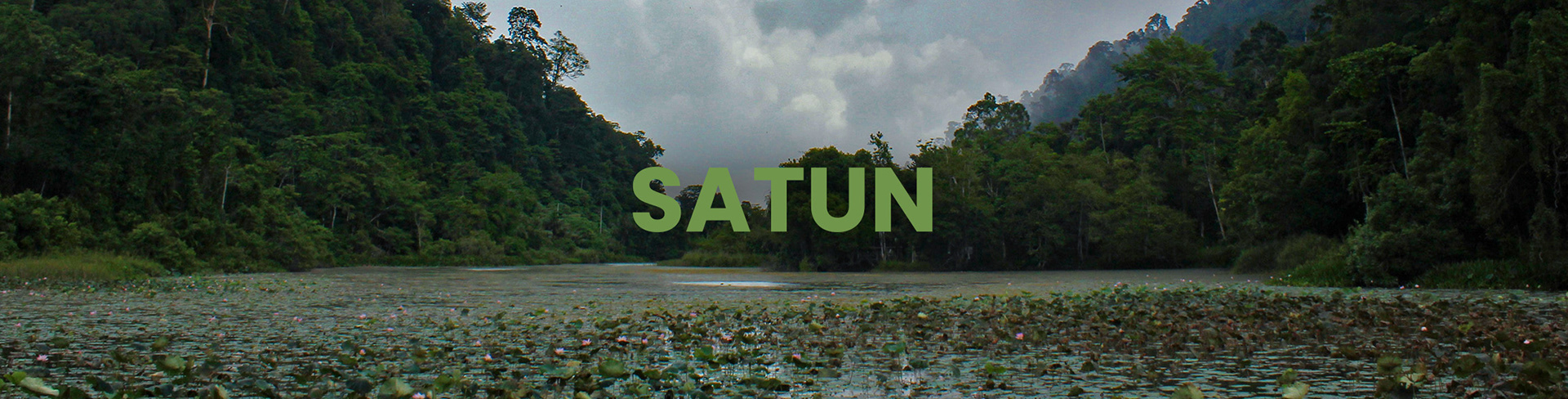
Freshwater lake in Satun.
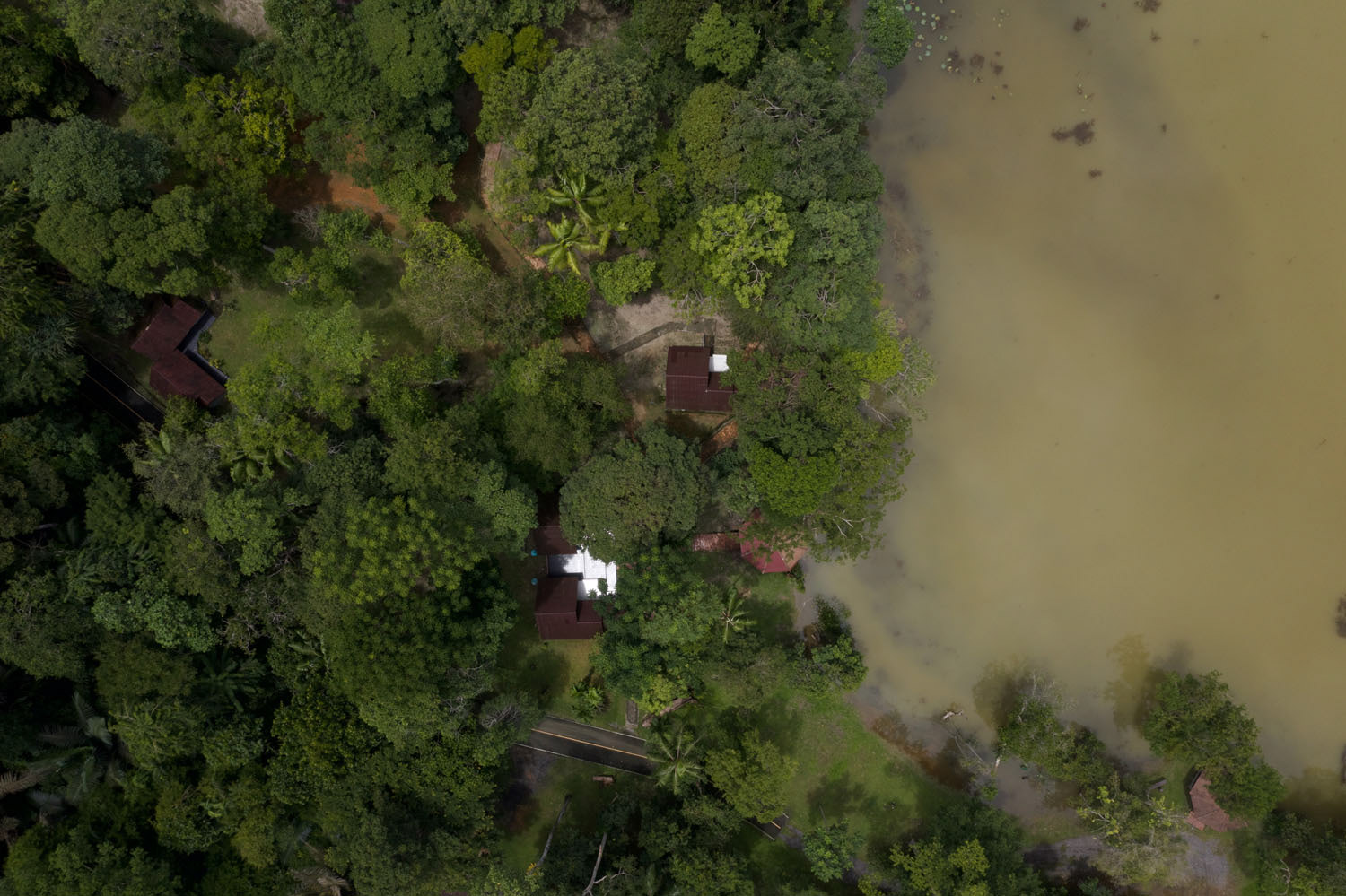
Our bungalows, situated beside a natural lake.
Nights 7 & 8: Satun
Satun is the most southern location we will visit on this trip, where we will stay in bungalows just a couple kilometres from the Malaysia border, surrounded by primary rainforest and a freshwater lake. However, the primary focus of our search will be nearby limestone karst formations, where several very special endemics can be found. Our main target is the limestone eyelash pit viper (Trimeresurus ciliaris), a very small and secretive species. We have two of the best sites to uncover this rarely seen snake, and have found it on four of the last five expeditions. In the same habitat, we can see two other very rare species of snake, the cave-dwelling kukri snake (Oligodon speleoserpens) and the Gua Wang Burma wolf snake (Lycodon cavernicolus). An encounter with either of these would be very special.
Around our accommodation, snakes are usually very challenging to find. However, if the weather conditions are optimal, this area can produce some exceptional numbers and species quality. Very rare species like the orange-lipped keelback (Rhabdophis flaviceps), red-tailed pipe snake (Cylindrophis ruffus) and dragon snake (Xenodermus javanicus) have been recorded here in recent times, while the blue coral snake (Calliophis bivirgata), a very elusive species this far north in its range, can be found here as well. Satun is the only place on this tour we can observe the great angle-headed lizard (Gonocephalus grandis), while the primary rainforests are also home to the rare Abbott's angle-headed lizard (Gonocephalus doriae abotti). As well as the common Kuhl's gliding gecko (Gekko kuhli) and Smith's green-eyed gecko (Gekko smithi), this area also has an endemic "dark morph" of the tokay gecko (Gekko gecko).
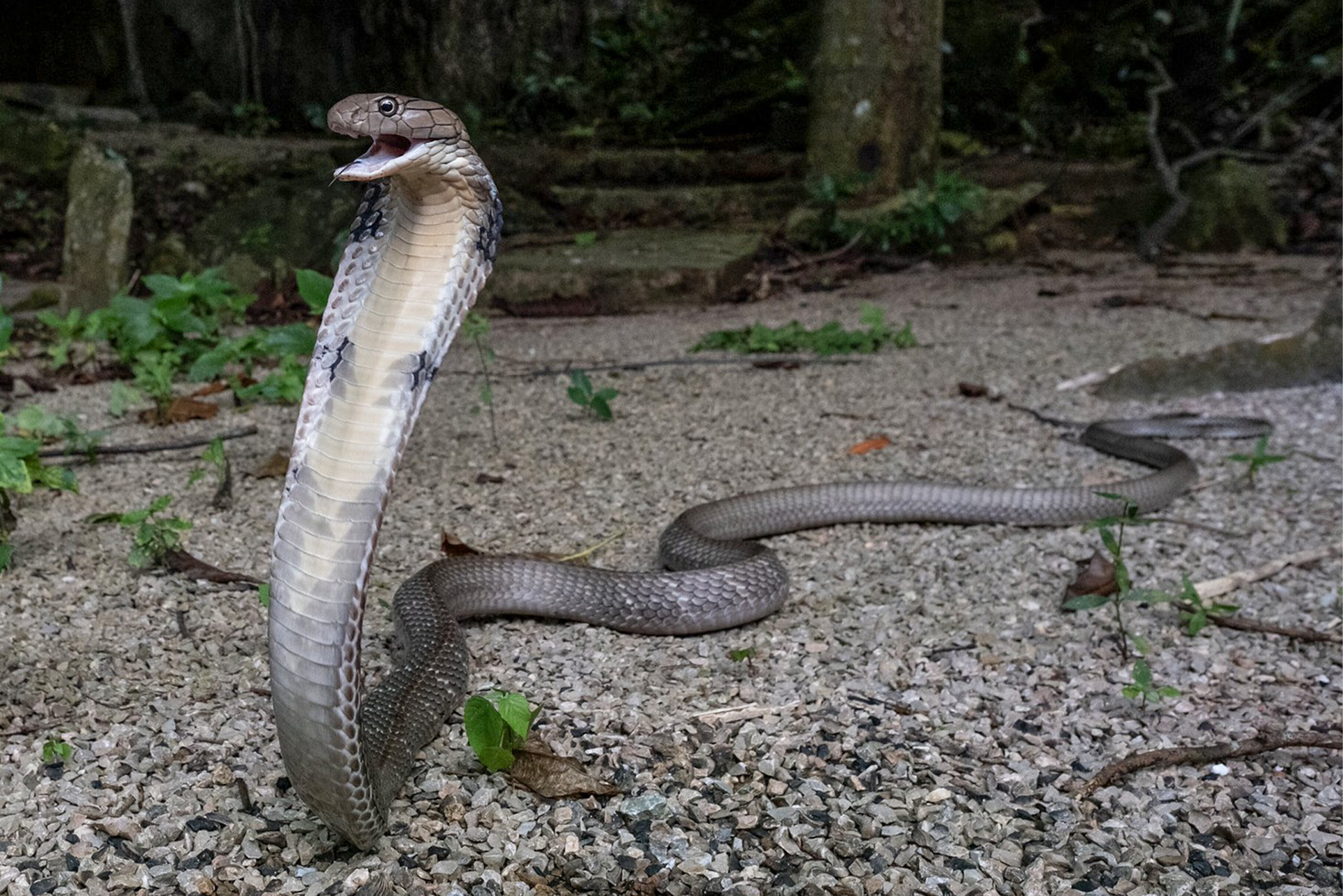
Sunda king cobra (Ophiophagus bungarus)
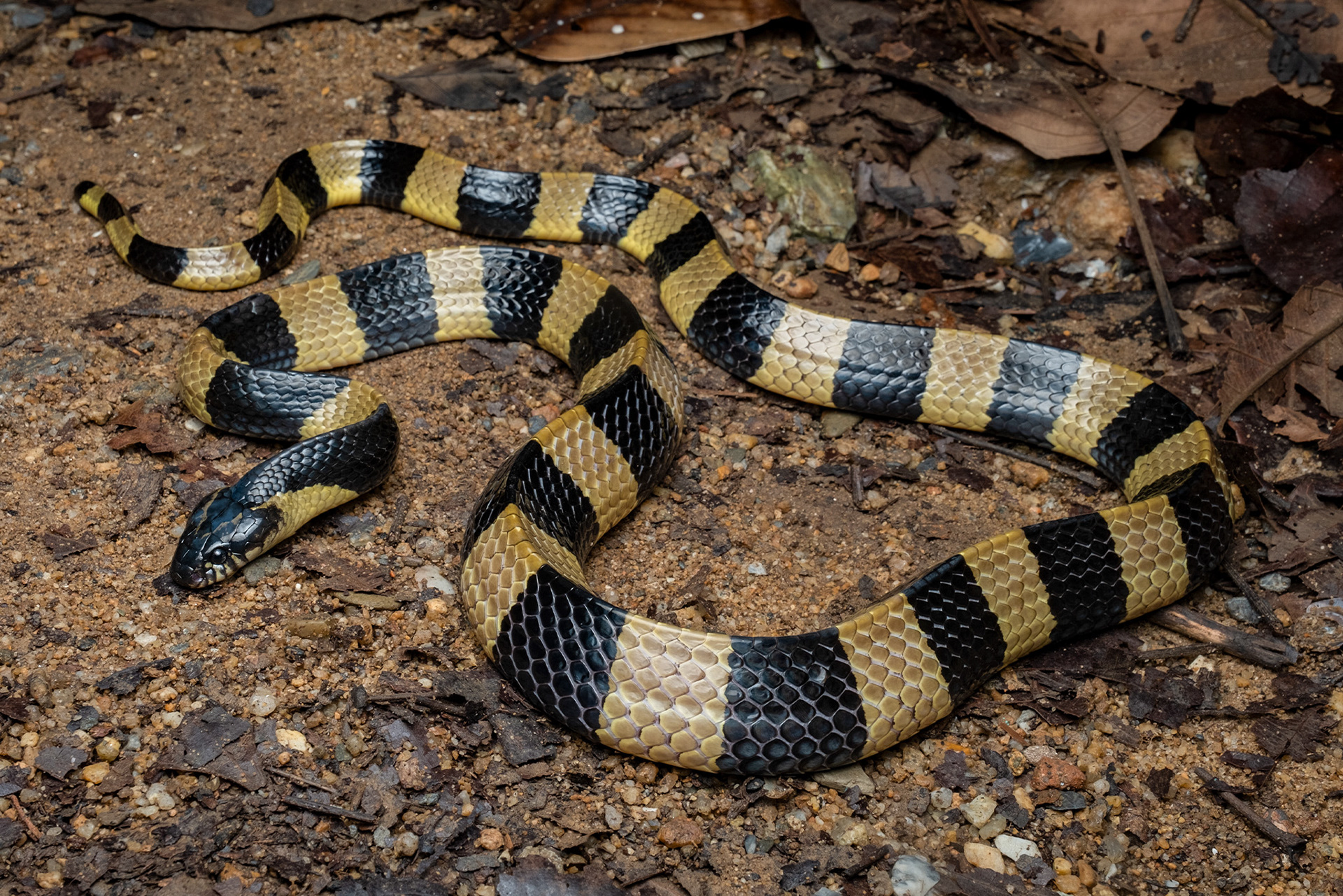
Banded krait (Bungarus fasciatus)
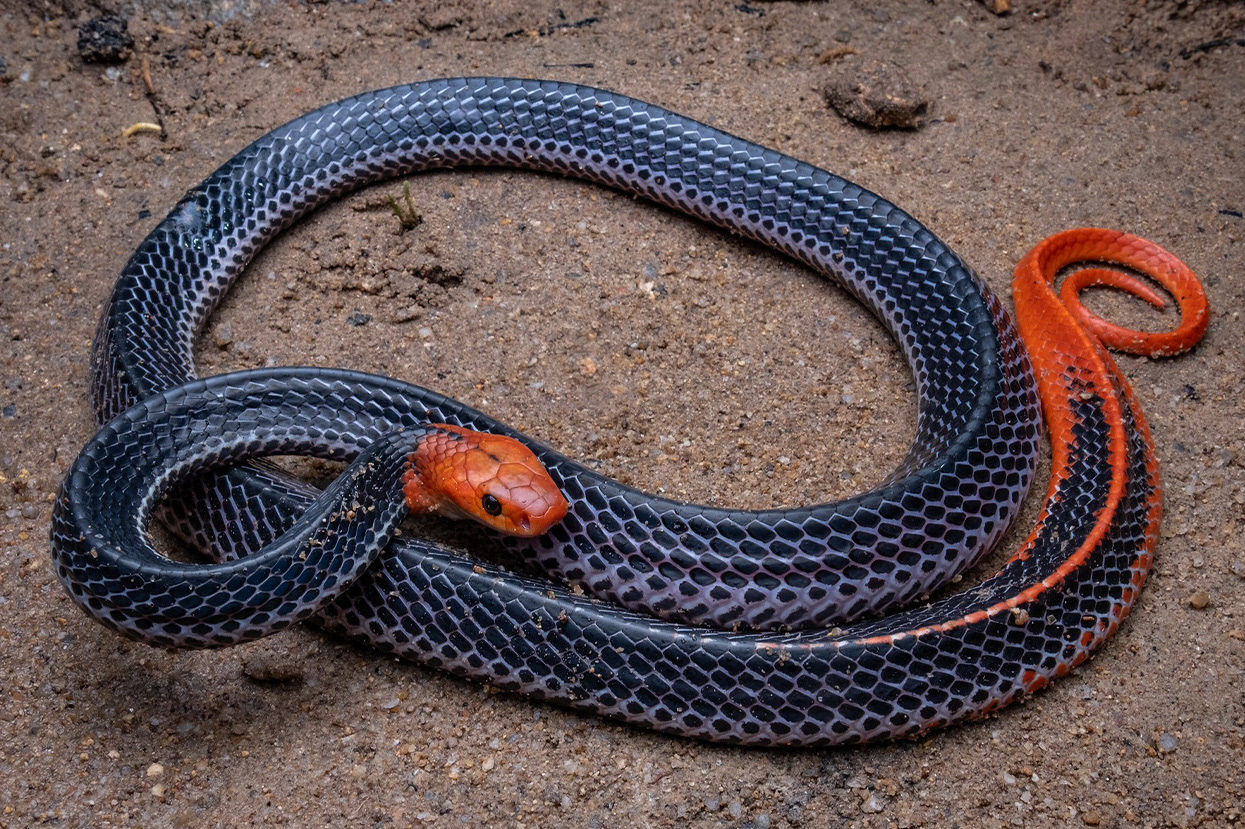
Red-headed krait (Bungarus flaviceps).
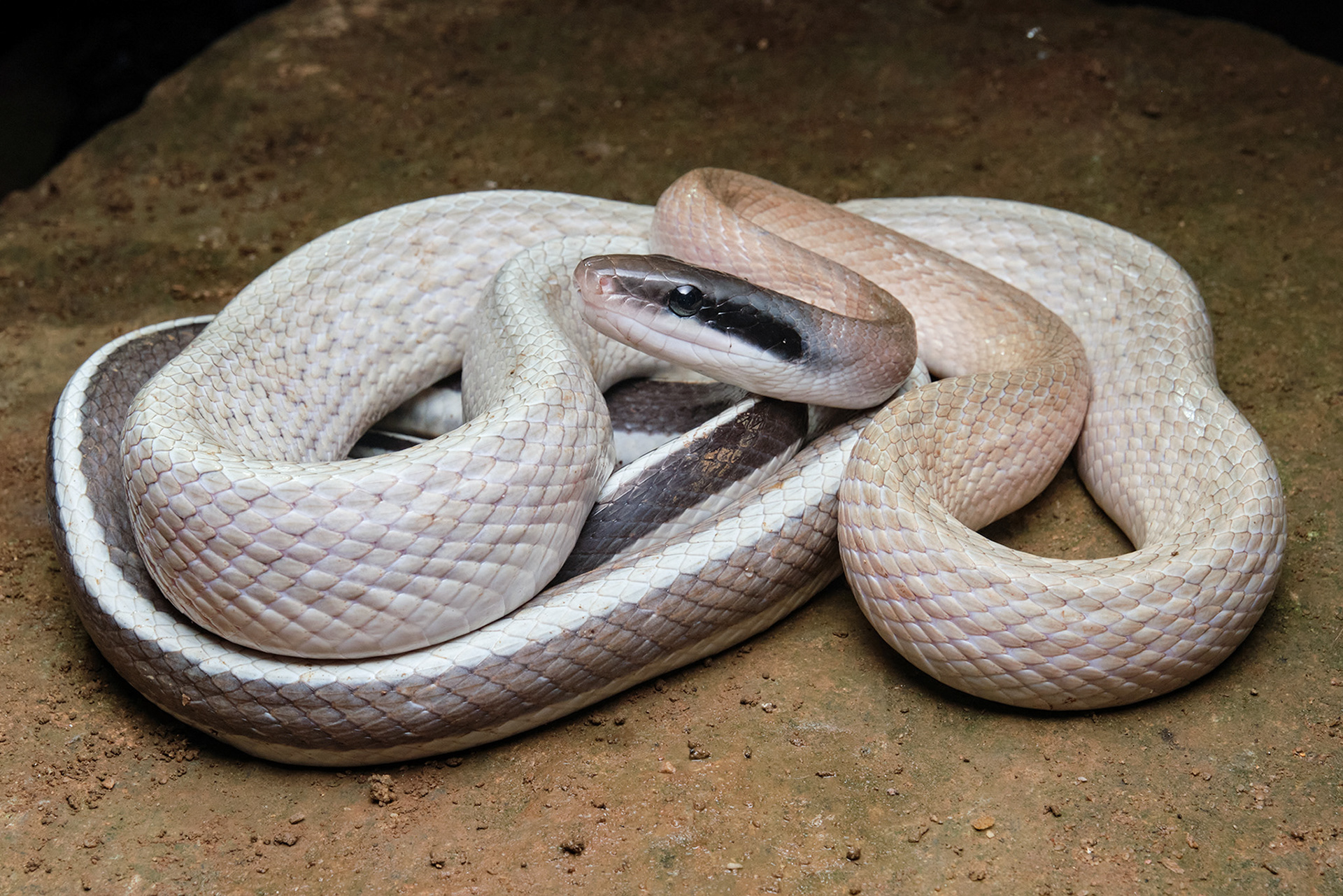
Ridley's cave racer (Elaphe taeniura ridleyi)
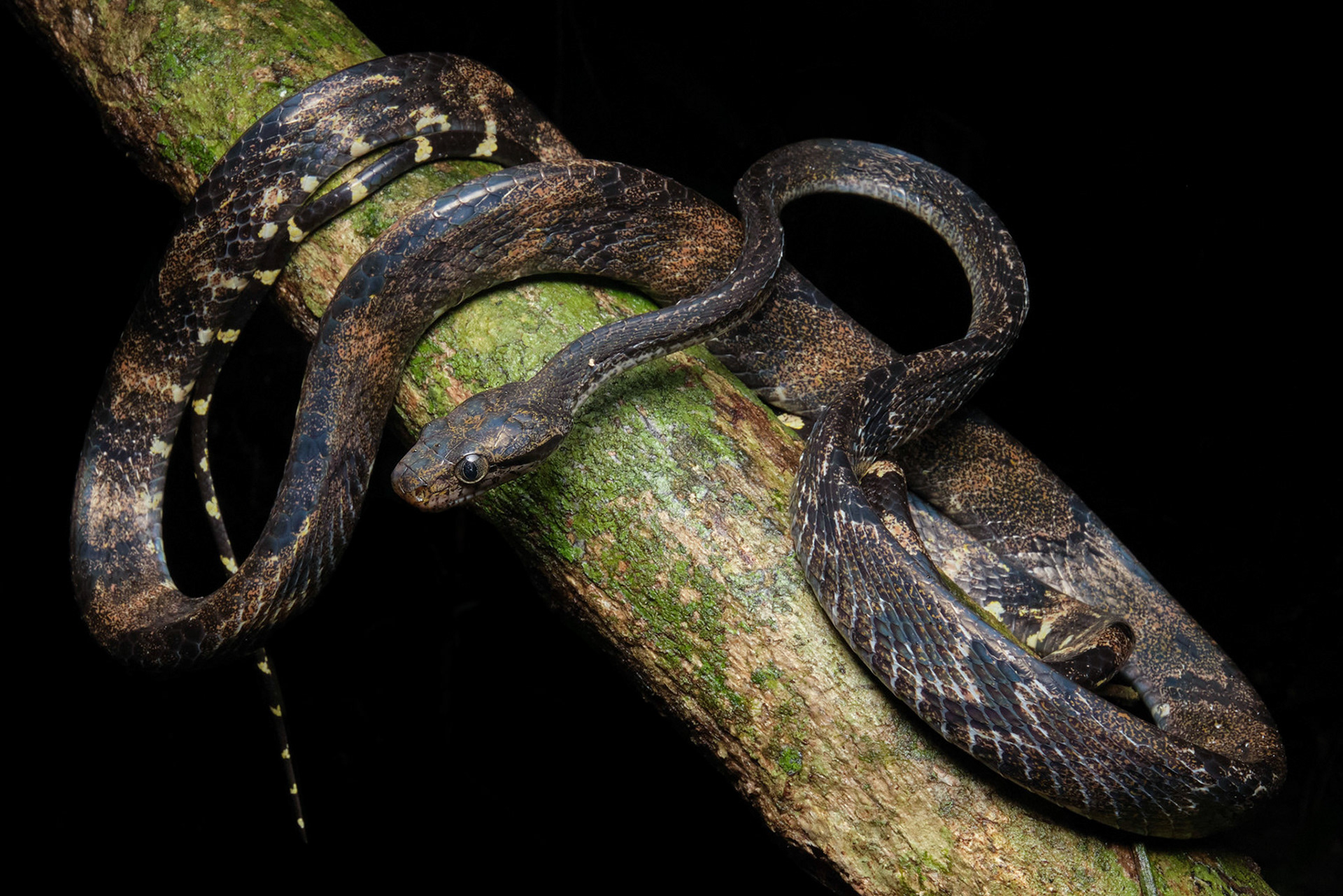
Dog-toothed cat snake (Boiga cynodon)
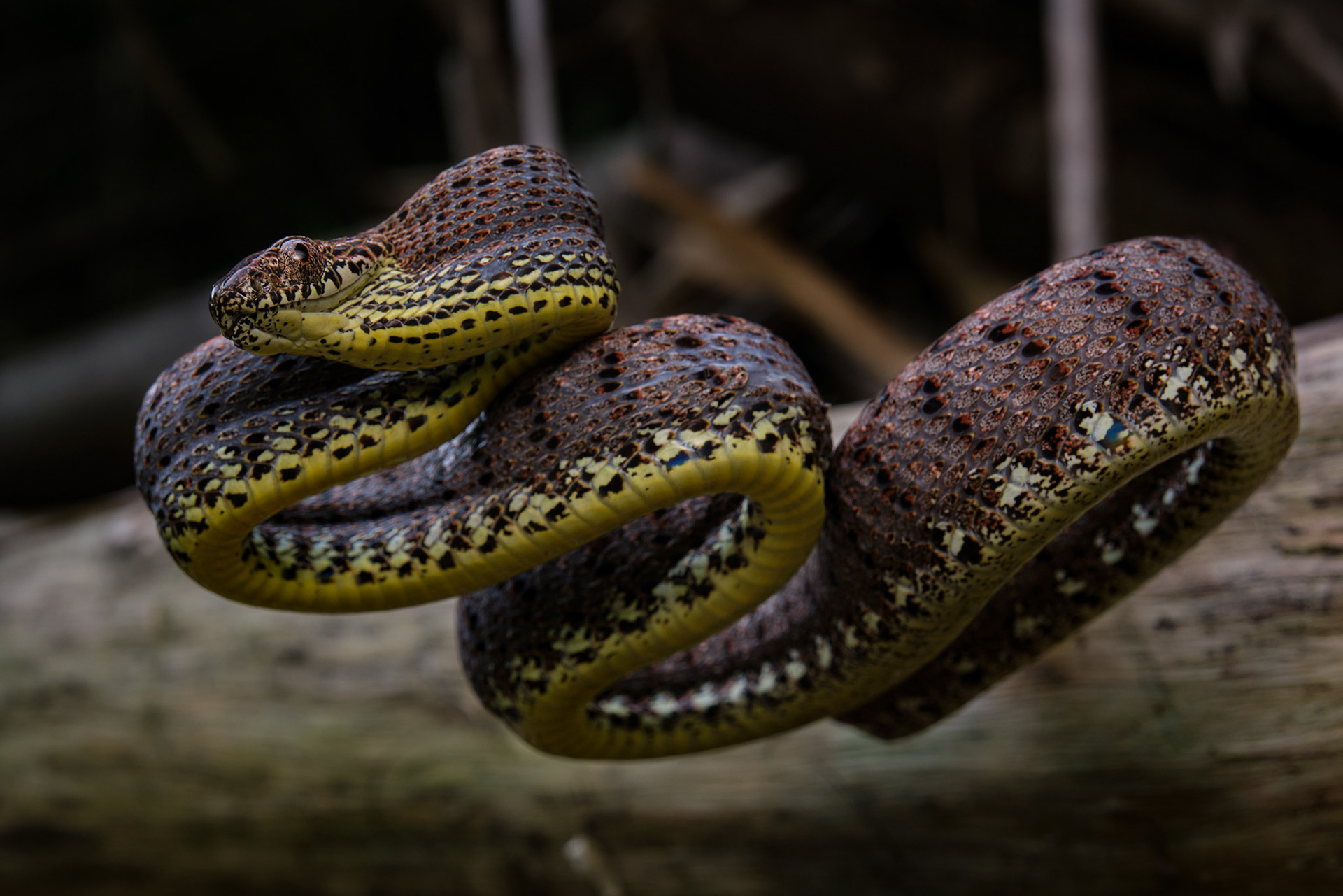
Jasper cat snake (Boiga jaspidea)
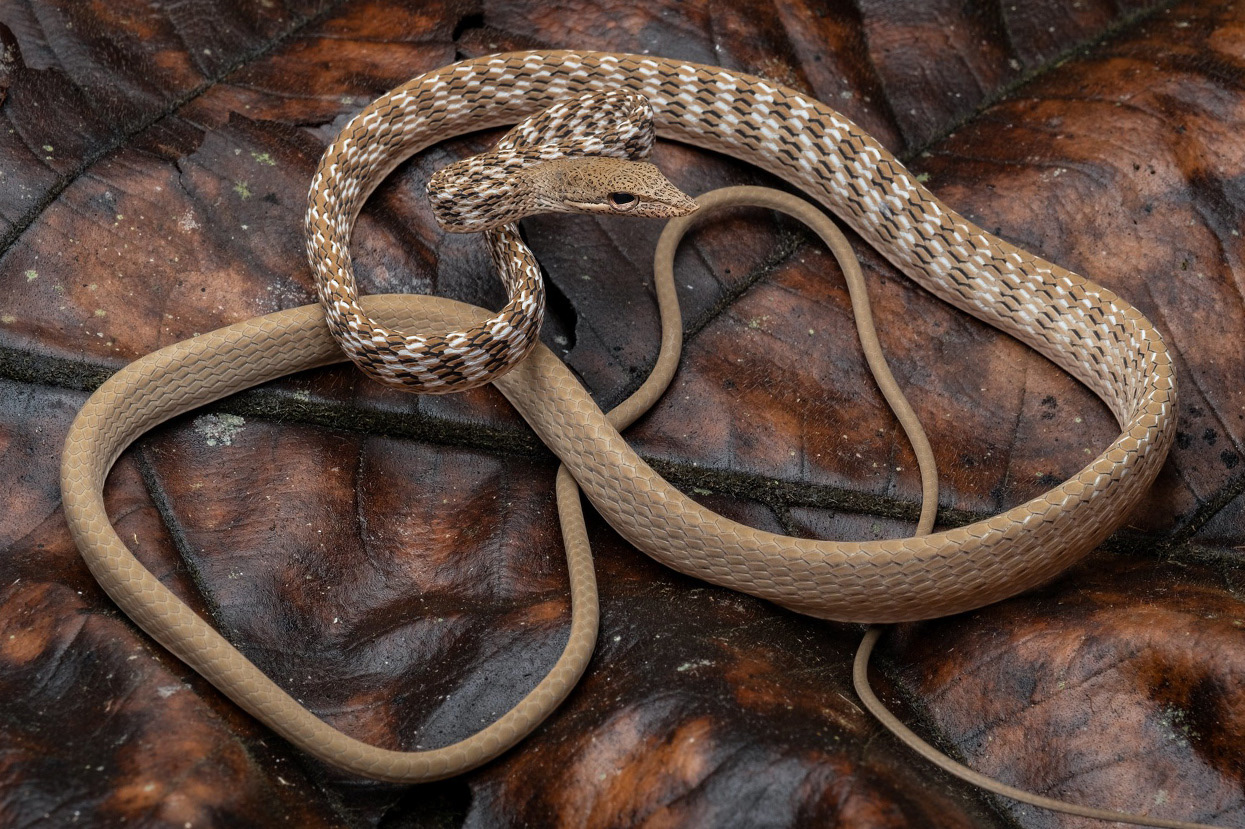
Speckle-headed vine snake (Ahaetulla fasciolata).
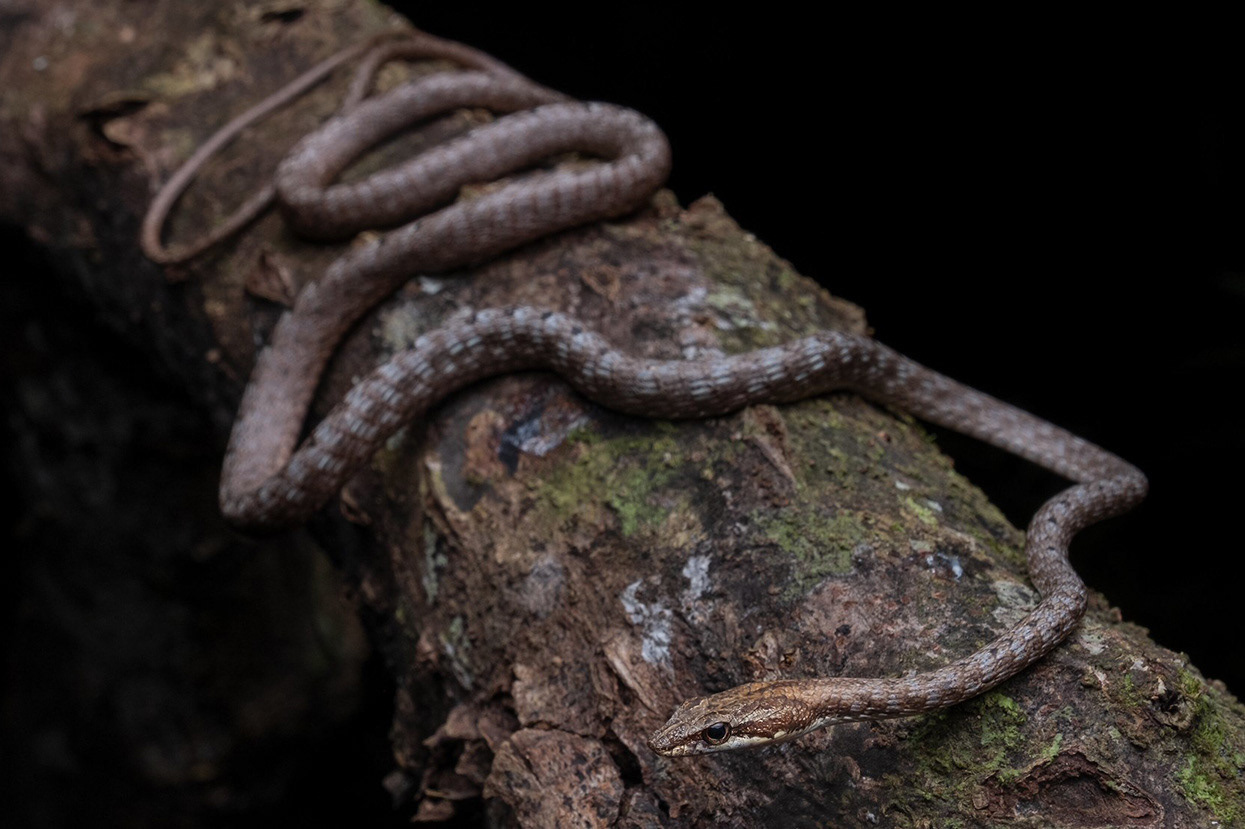
Keel-bellied whip-snake (Dryophiops rubescens).
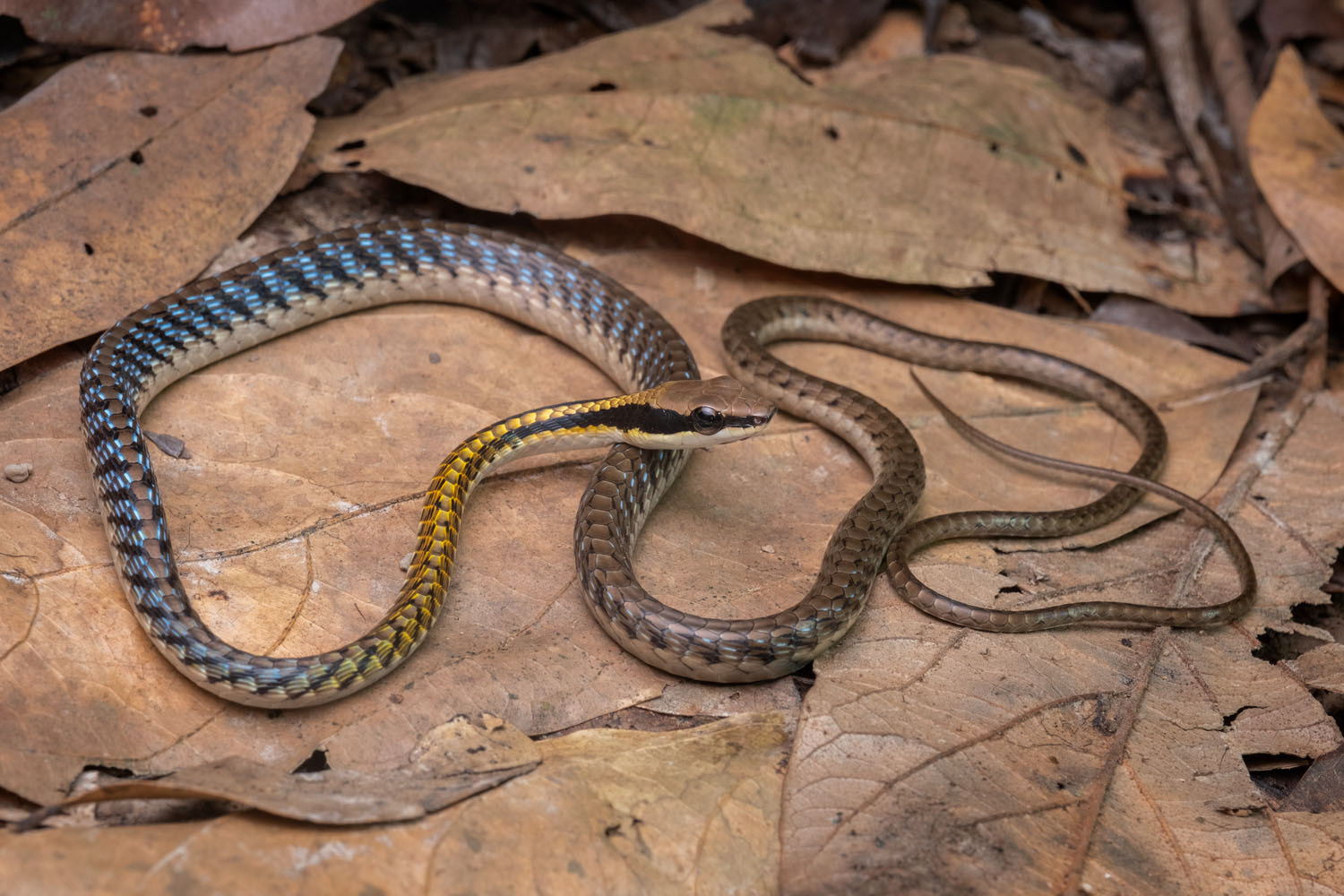
Striated bronzeback (Dendrelaphis striatus)

Twin-barred flying snake (Chrysopelea pelias)
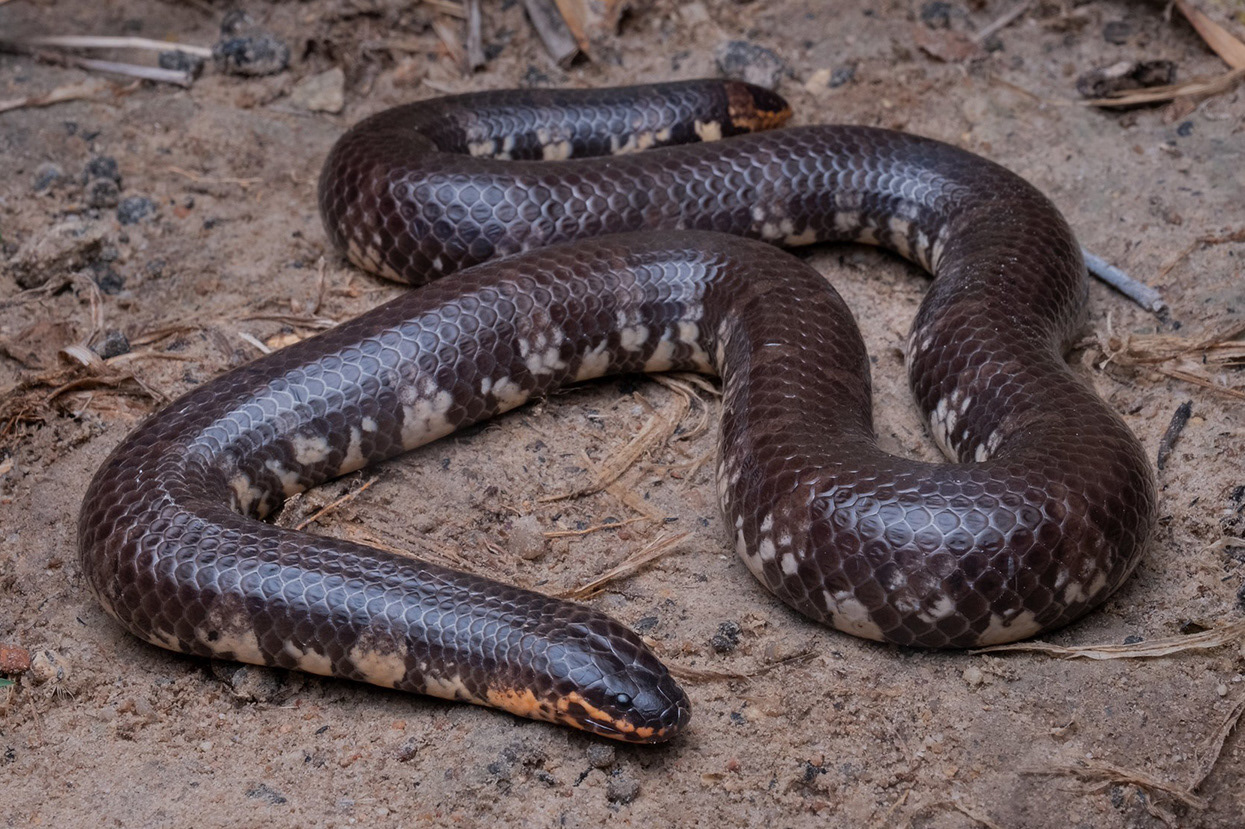
Jodi's pipe snake (Cylindrophis jodiae).
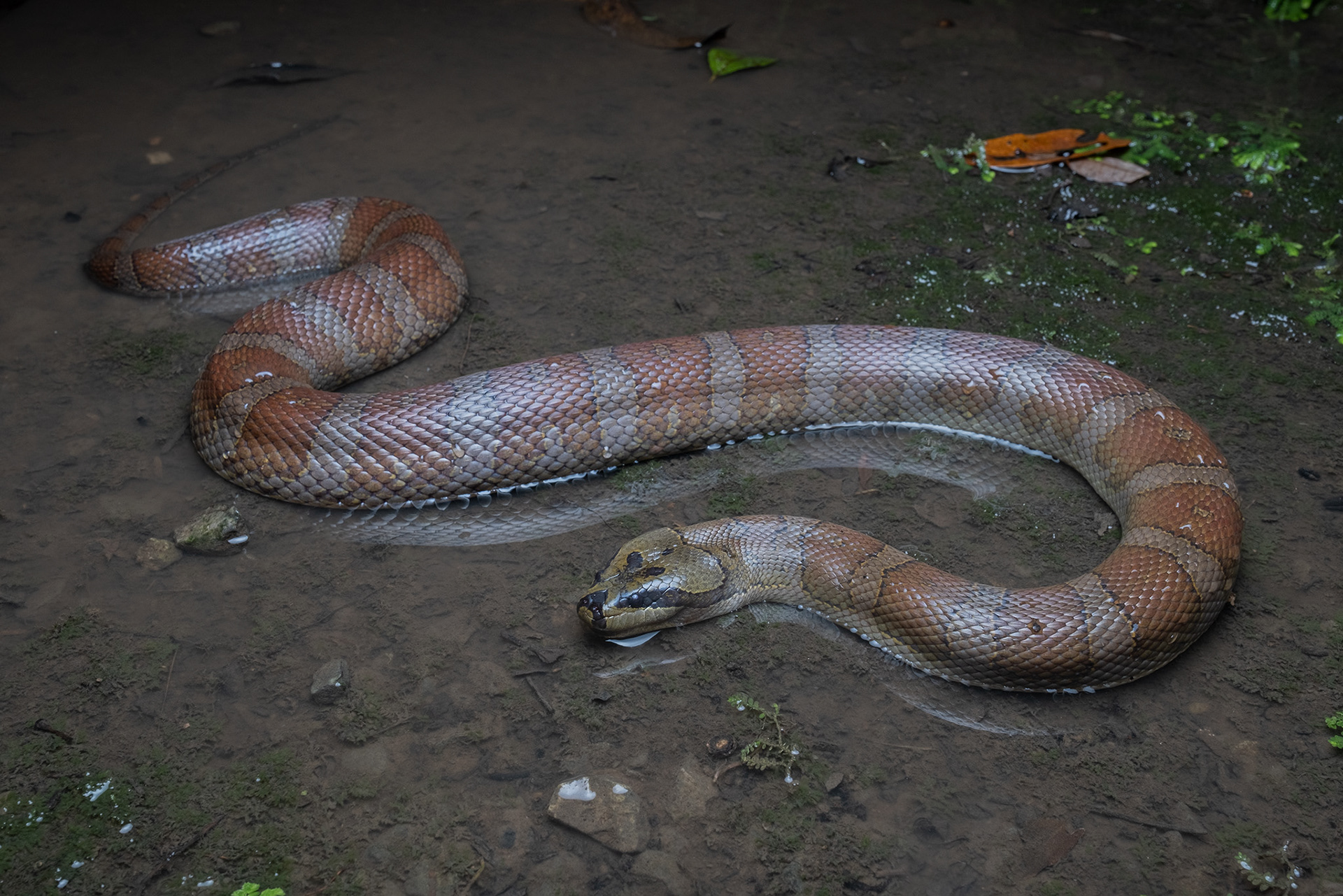
Puff-faced water snake (Homalopsis buccata)
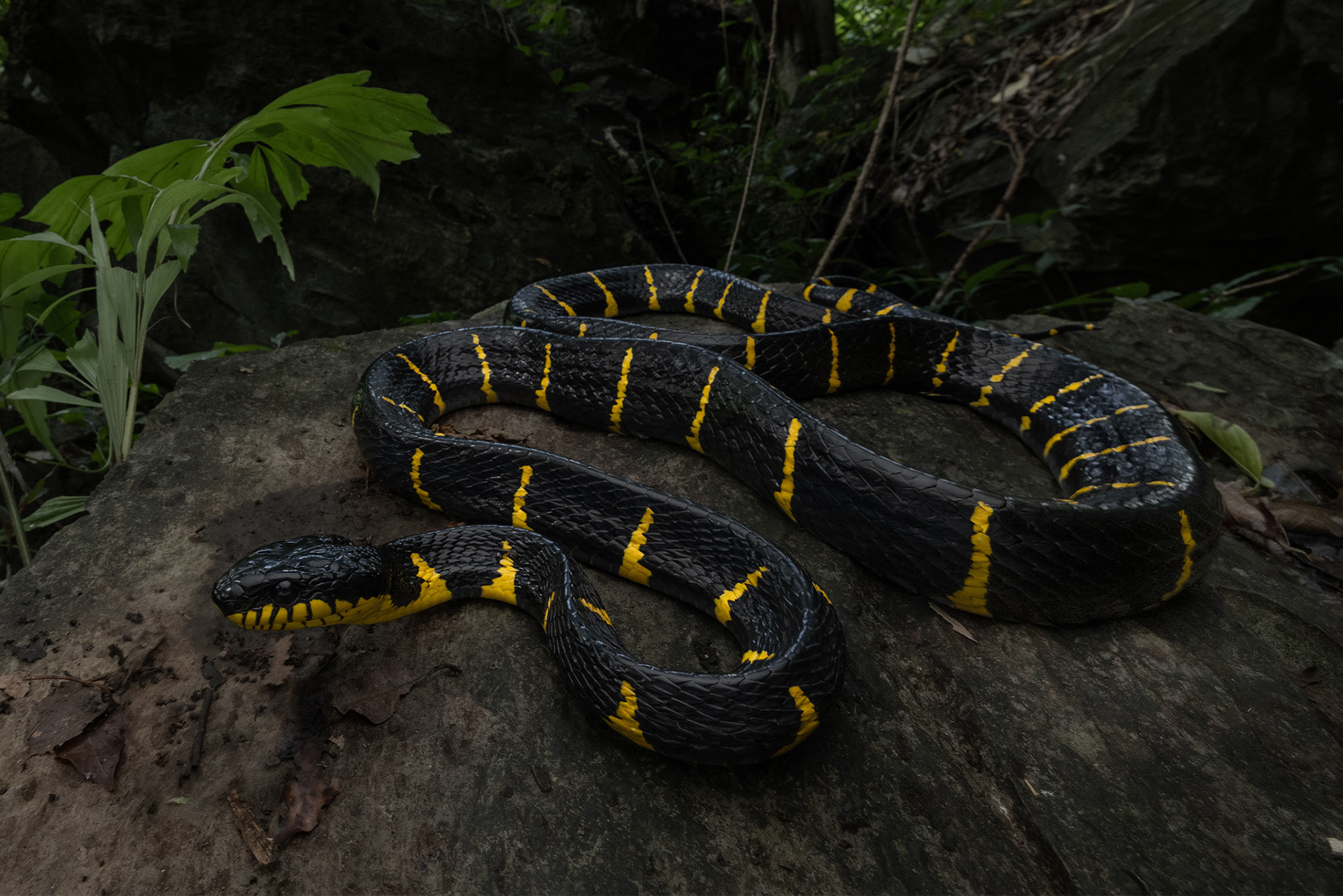
Mangrove cat snake (Boiga melanota)
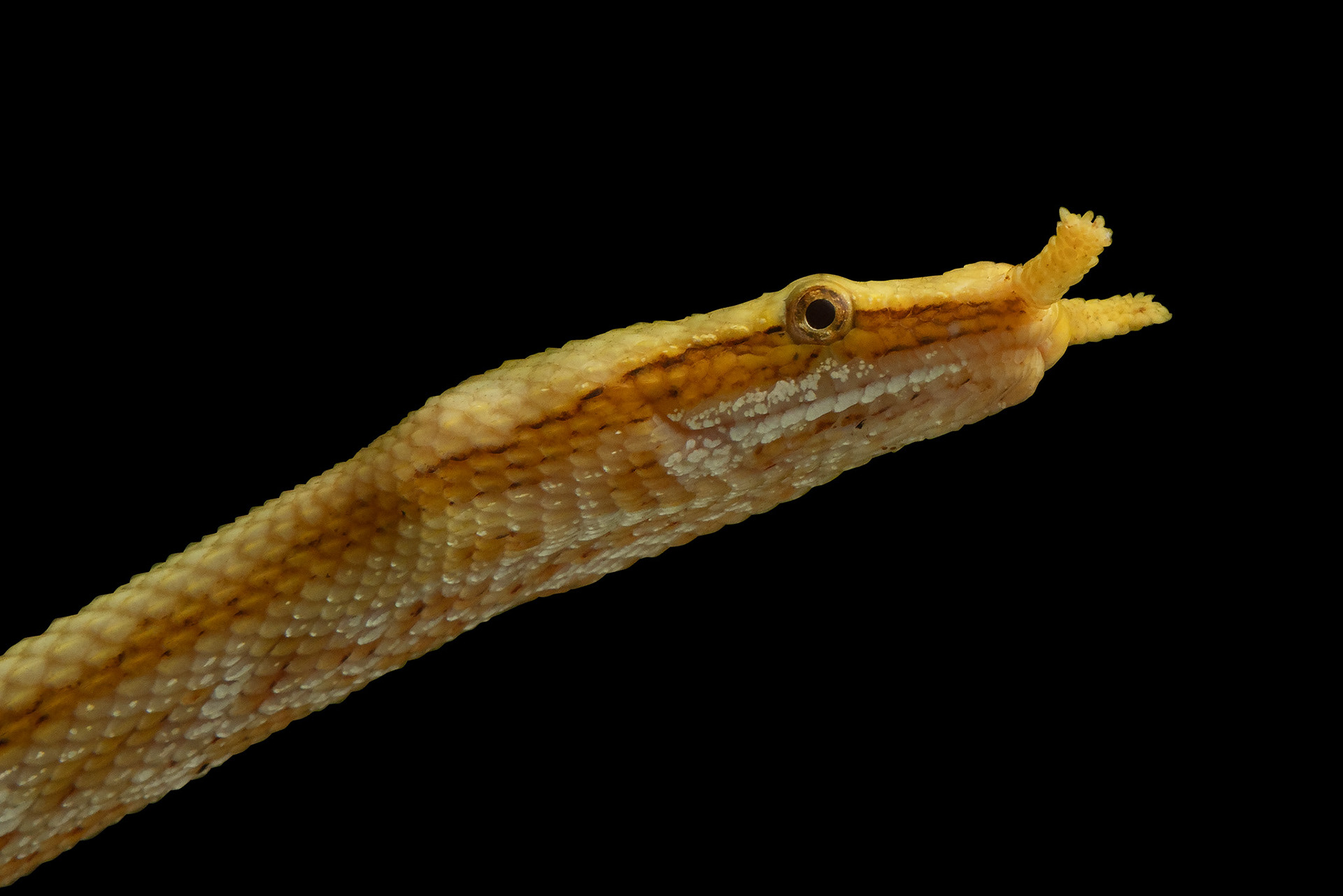
Tentacled snake (Erpeton tentaculatum)
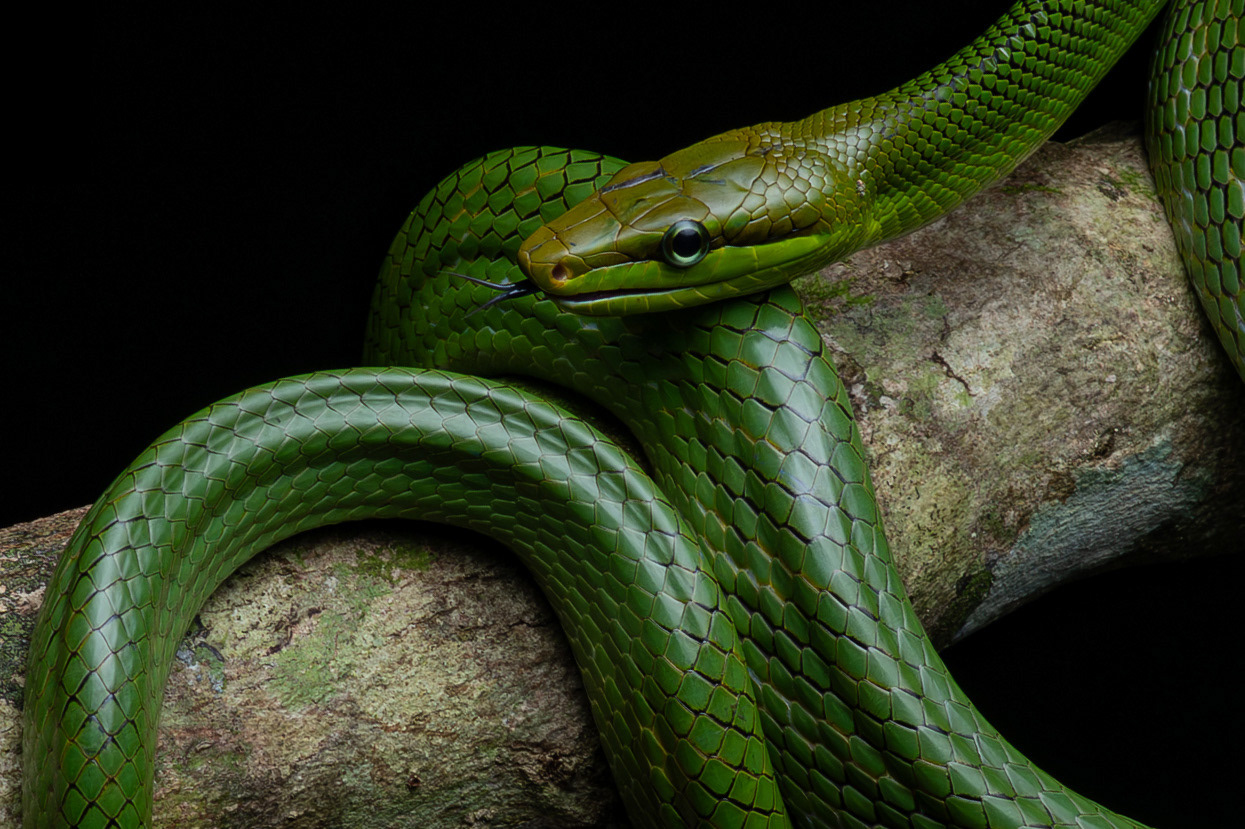
Red-tailed racer (Gonyosoma oxycephalum)
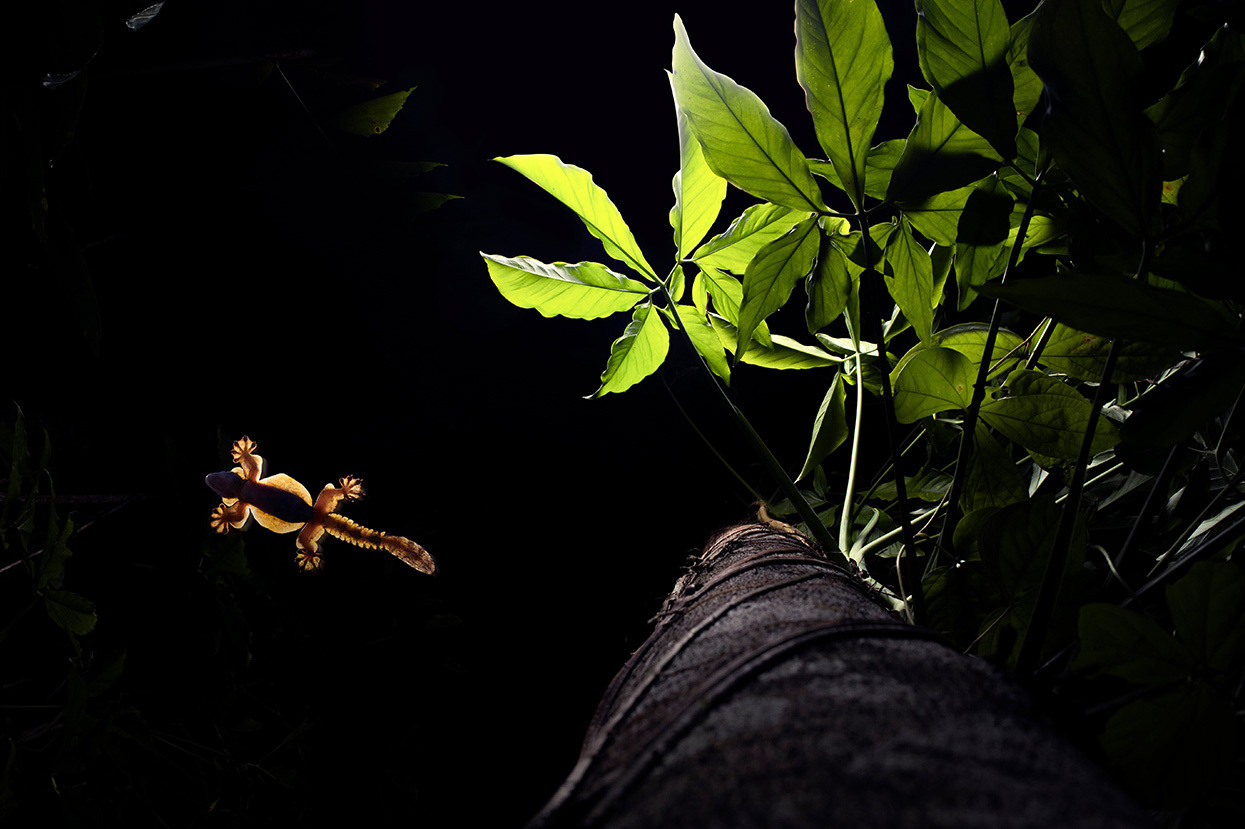
Kuhl's gliding gecko (Gekko kuhli).
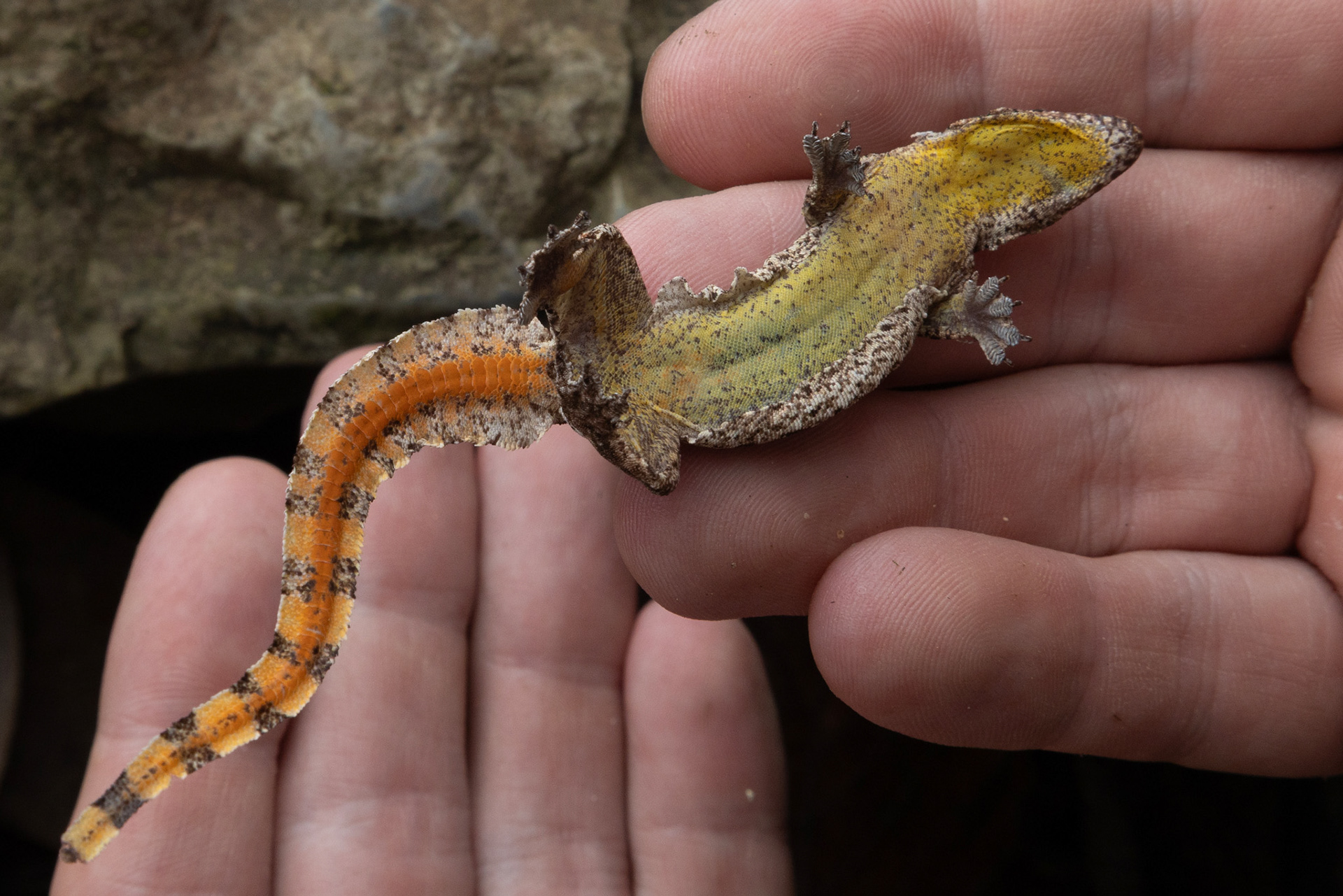
Frilled gecko (Hemidactylus craspedotus).
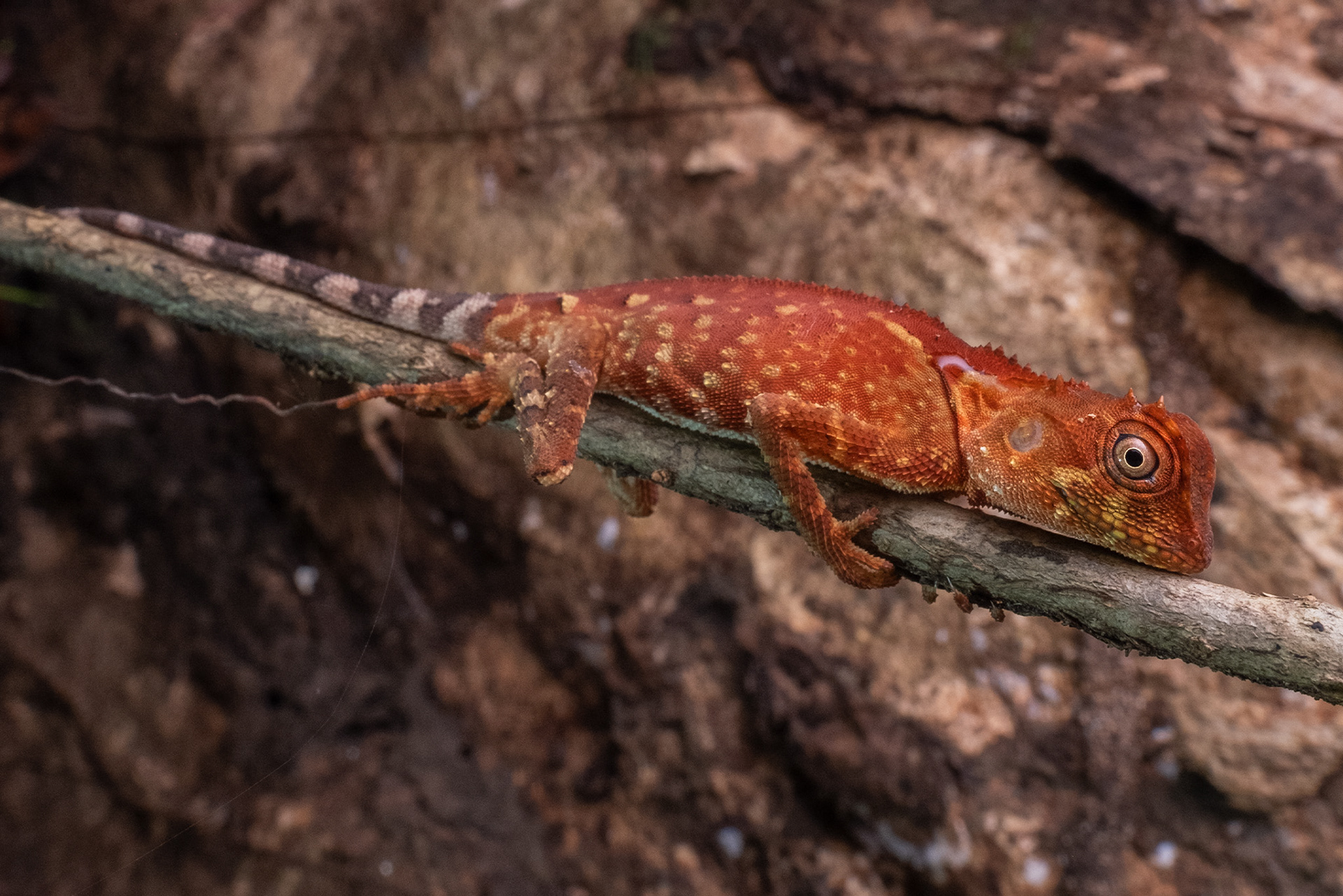
Short-horned lizard (Acanthosaura meridiona)
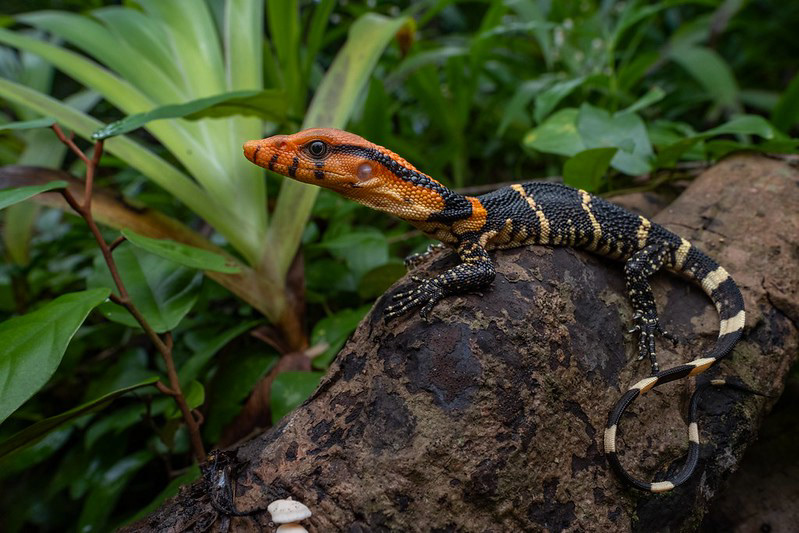
Dumeril's monitor (Varanus dumerilii)
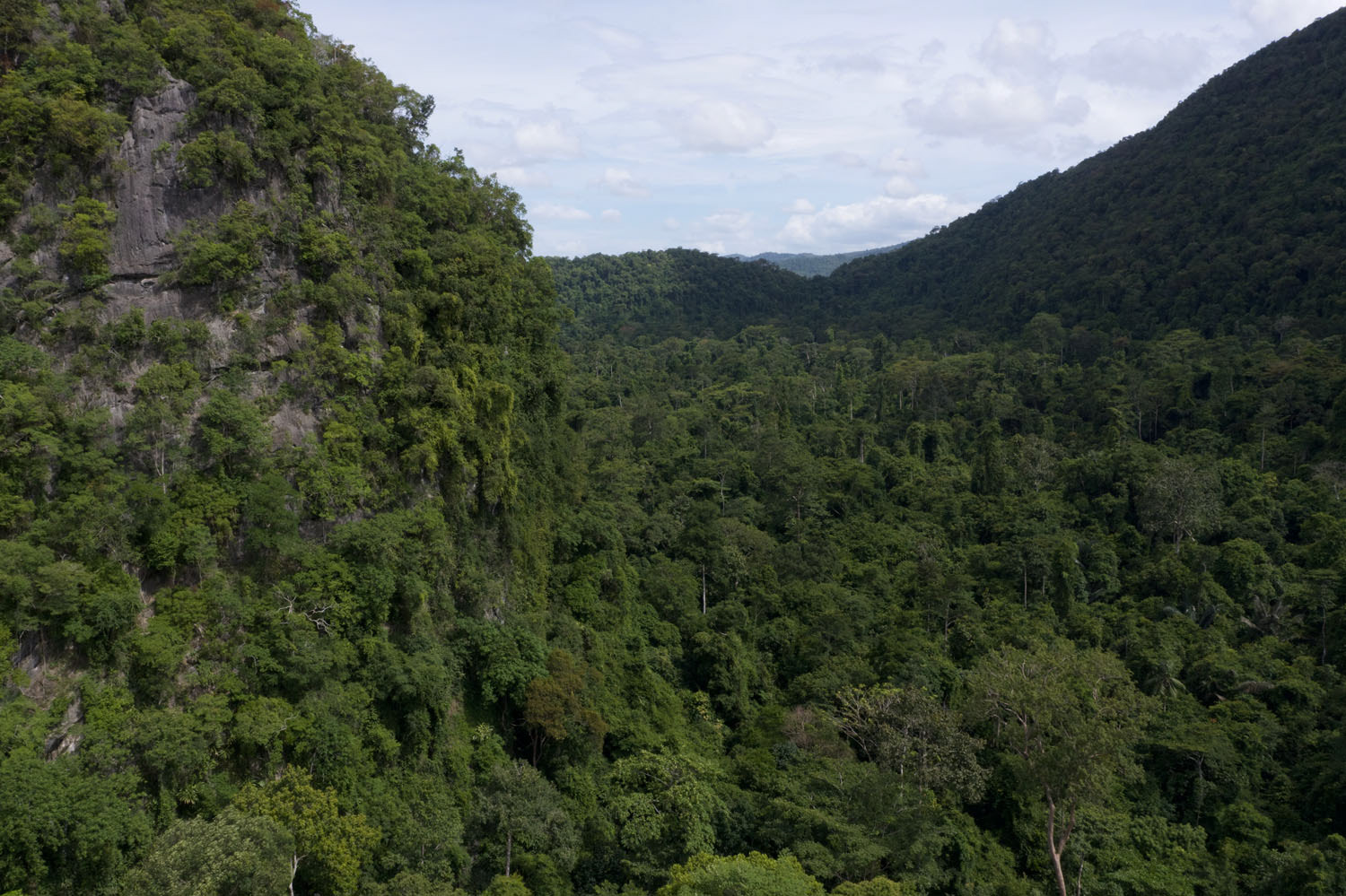
Lowland forest filled with snakes.
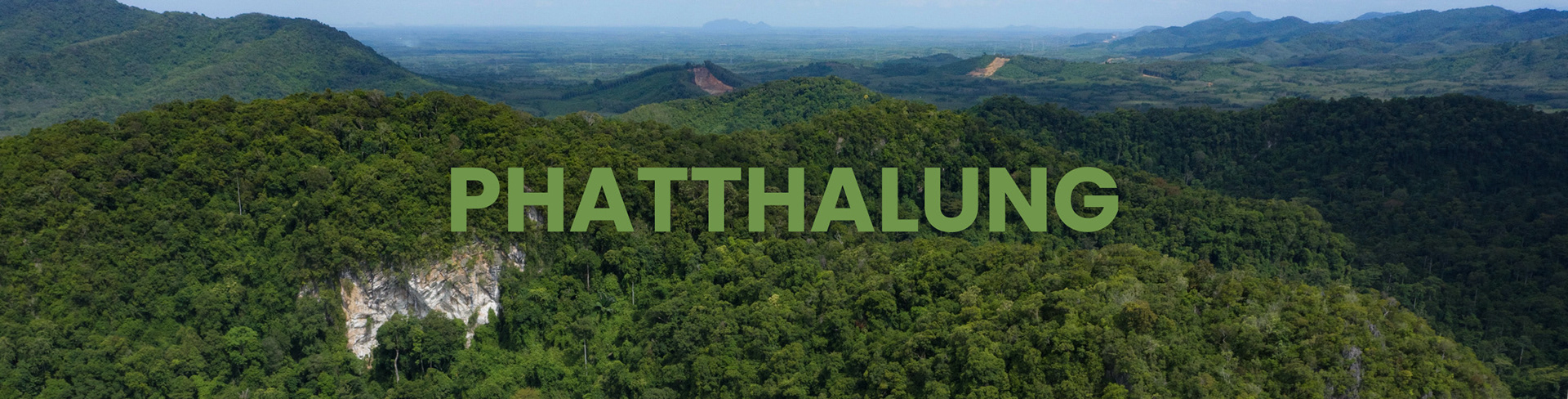
Nights 9 & 10: Phatthalung
Phatthalung is our penultimate location on the expedition, where we will spend two dynamic days staying beside a lagoon. If the weather conditions are optimal, we will explore a swamp forest boardwalk where mangrove cat snake (Boiga melanota), puff-faced water snake (Homalopsis buccata) and reticulated python (Malayopython reticulatus) are very common. If we are very lucky, we can encounter tentacled snake (Erpeton tentaculatum) and banded krait (Bungarus fasciatus) here in this habitat.
Driving west, we will enter a limestone karst formation dominated area with multiple cave systems, where we have a very high chance of encountering Ridley’s cave racer (Elaphe taeniura ridleyi). While exploring these caves on a previous expedition, we encountered a Sunda king cobra (Ophiophagus bungarus). Rare species such as the striated bronzeback (Dendrelaphis striatus) and the keel-bellied whip snake (Dryophiops rubescens) are frequently encountered in Phatthalung, while the tropical forest hills nearby have produced red-headed krait (Bungarus flaviceps) and other showstopper species for us in the past. This is a fantastic location for lizards, with the rare Dumeril's monitor (Varanus dumerilii) showing up here on multiple occasions, along with many interesting geckos, skinks and even Wallace's flying frog (Rhacophorus nigropalmatus).
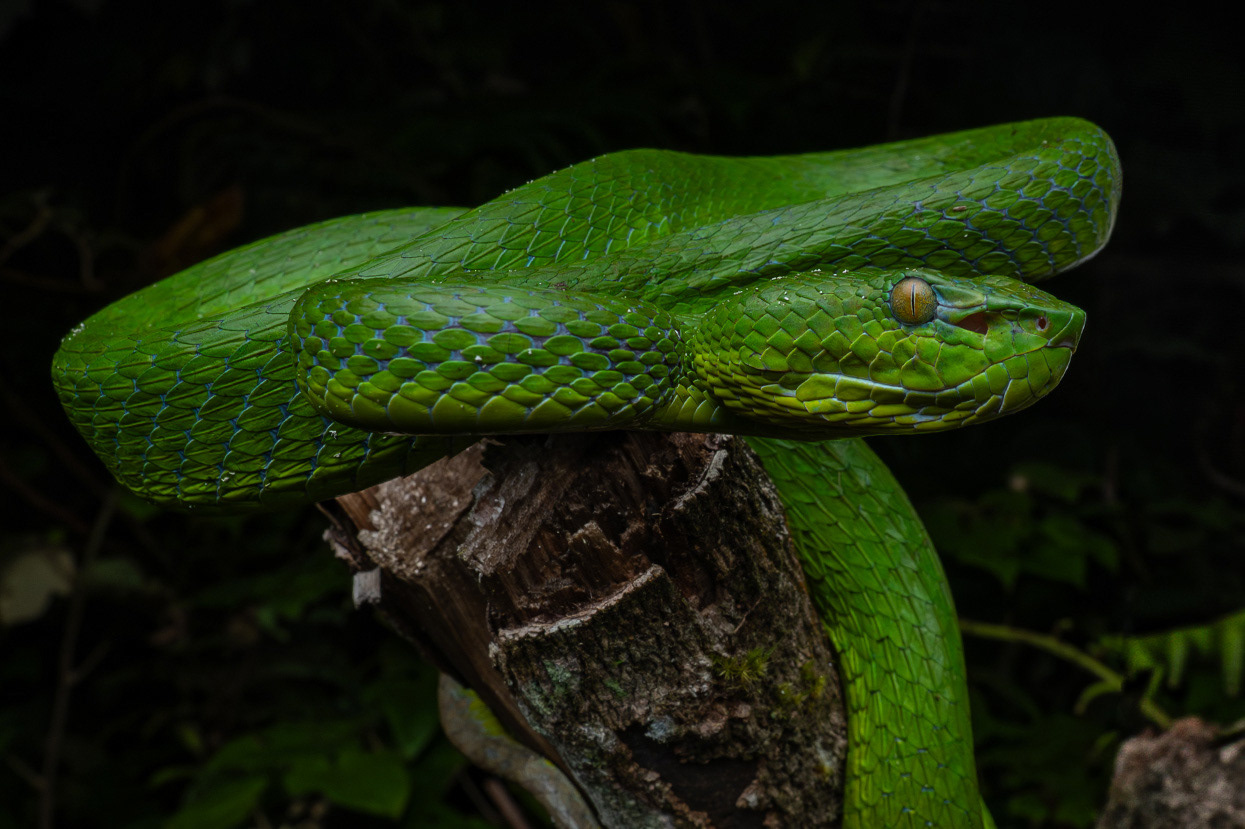
Thai-peninsula pit viper (Trimeresurus sabahi fucatus).
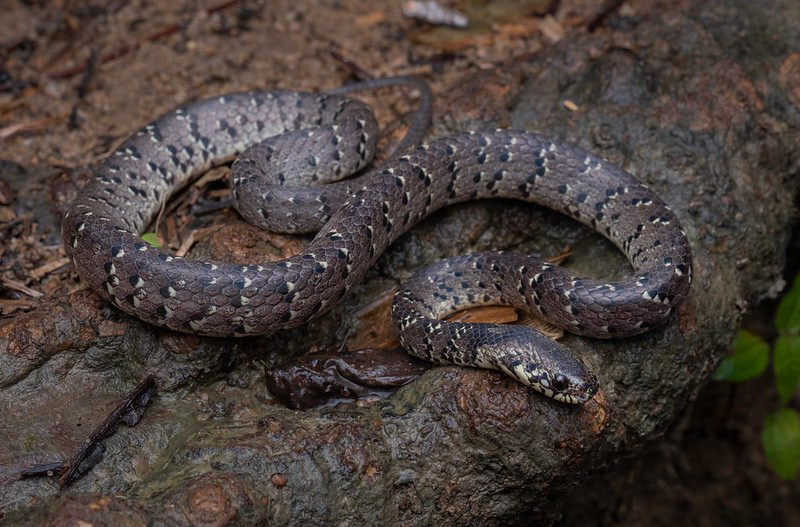
Mountain slug snake (Pareas cf. macularius)
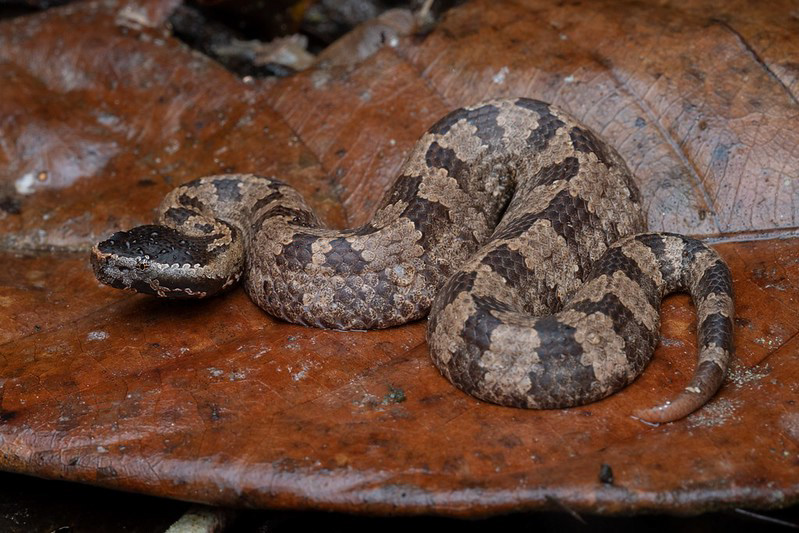
Malayan mountain pit viper (Ovophis convictus)
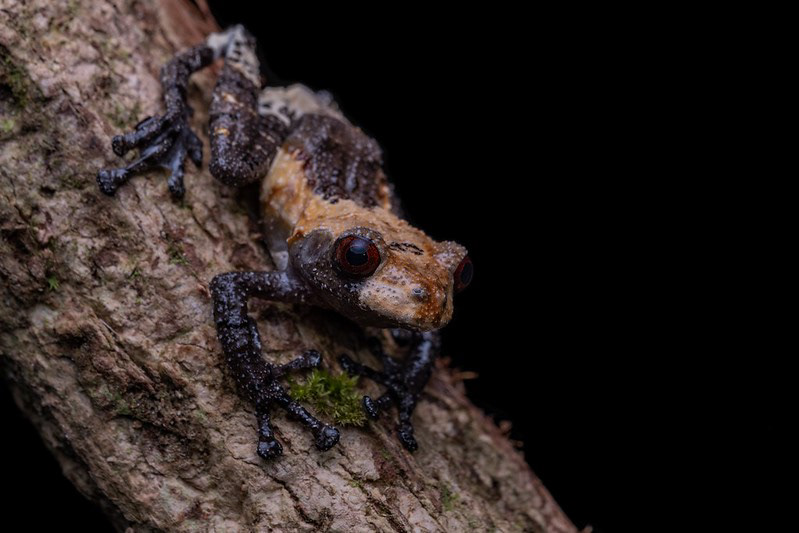
Larut bug-eyed frog (Theloderma asperum)
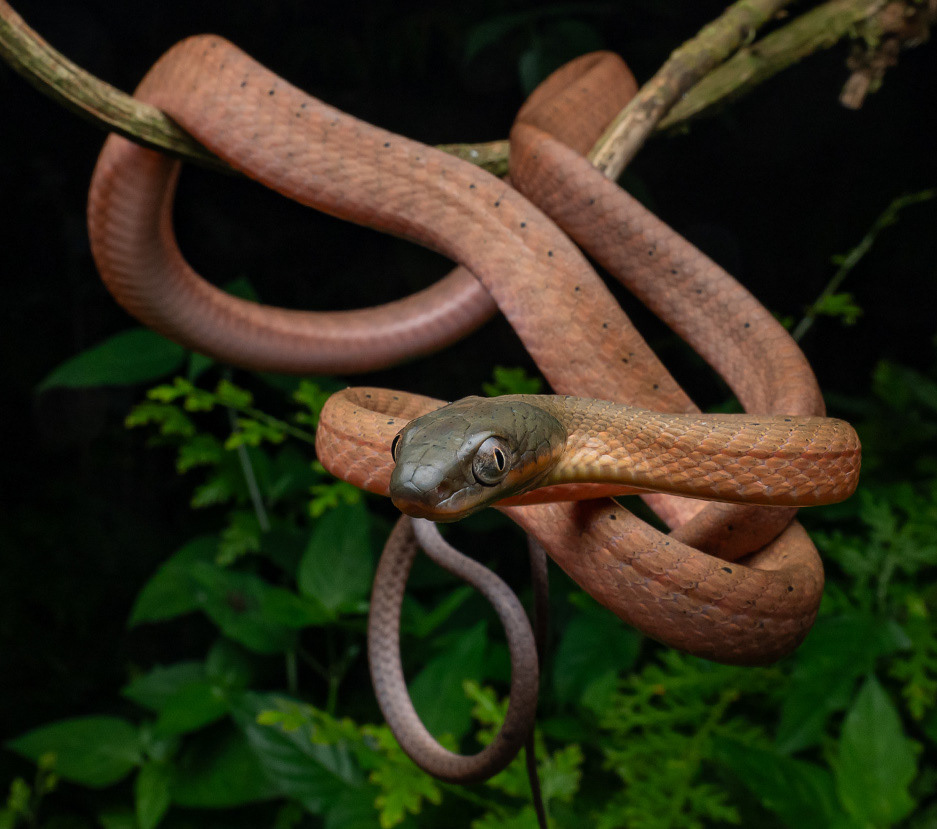
Dark-headed cat snake (Boiga nigriceps).
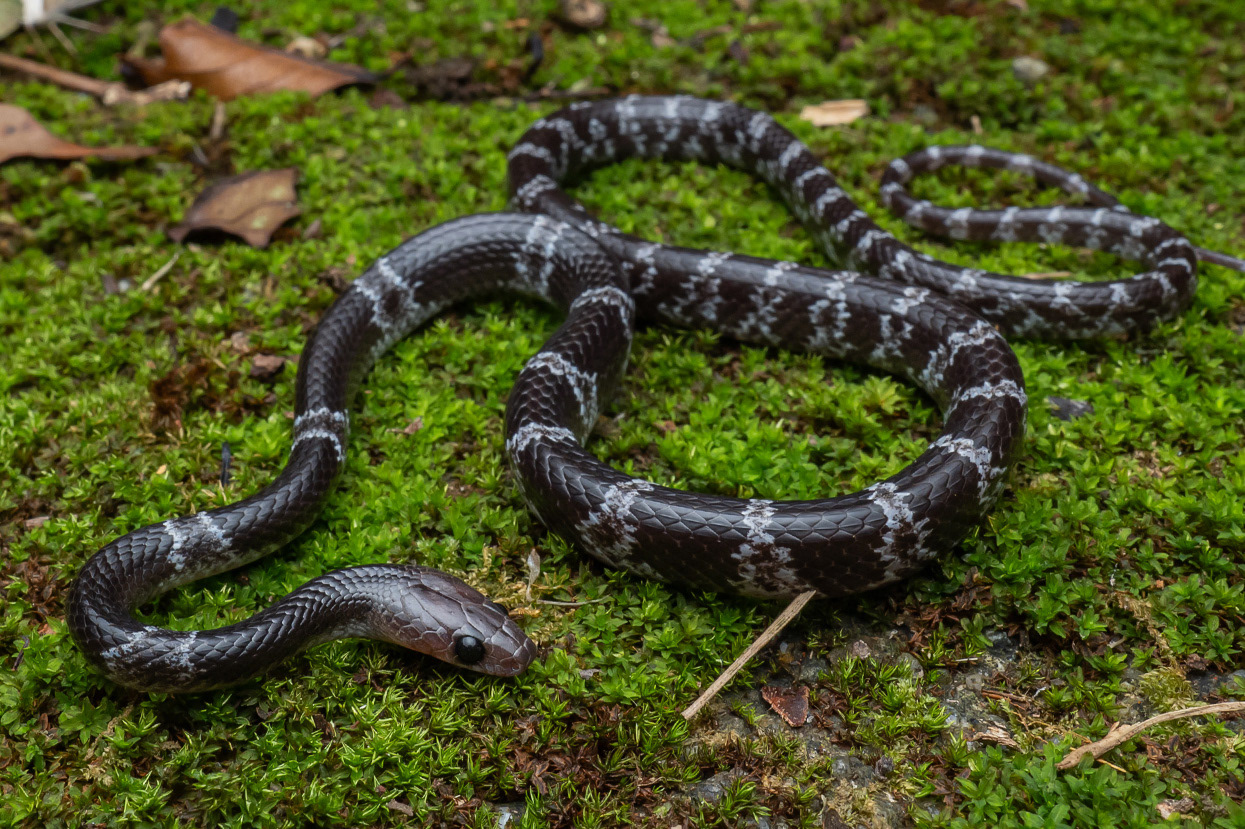
Butler's mountain wolf snake (Lycodon butleri).
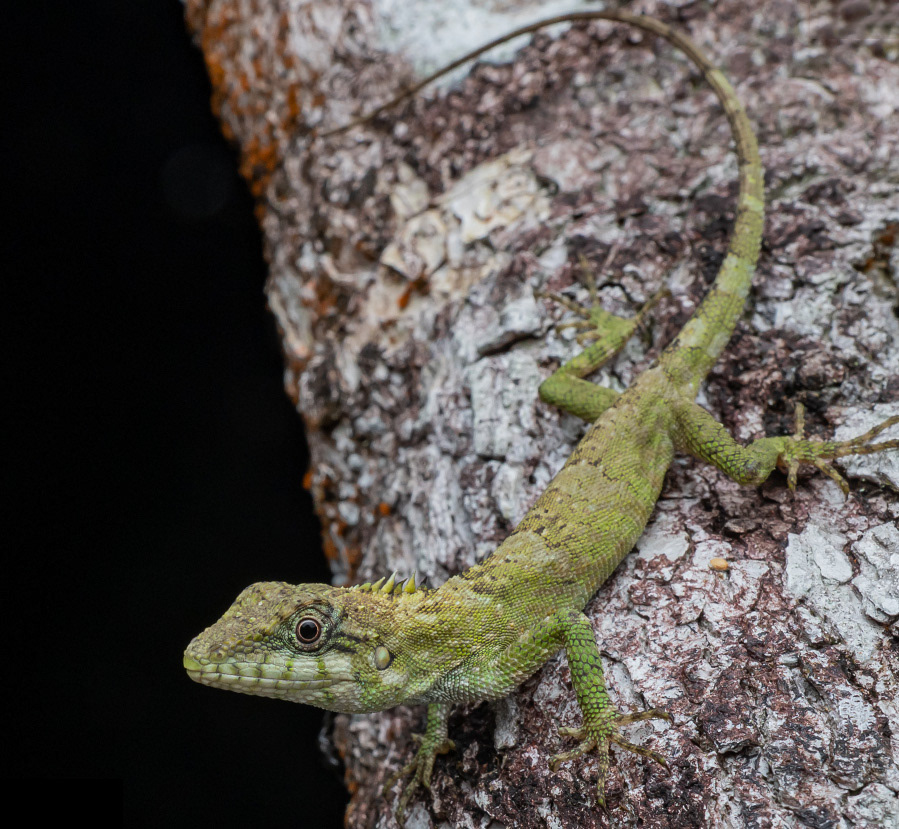
Khao Nan false bloodsucker (Pseudocalotes khaonanensis).
Night 11: Thung Song
On the final night of the expedition, Thung Song completes the full Southern Thai habitat experience with our first and only venture into sub-montane rainforest. The much colder climate at this location provides the opportunity to see some montane endemics, as well as other upland forest-dwelling species. The key viper target in this area is the highland morph of the Thai-peninsula pit viper (Trimeresurus sabahi fucatus), while the holy grail is undoubtedly the extremely rare Malayan mountain pit viper (Ovophis convictus). Mountain slug snake (Pareas macularius) and Butler's wolf snake (Lycodon cf. butleri) are two further species which can only be found at this location which we are unlikely to see anywhere else. Showstoppers such as golden-morph Sumatran cobra (Naja sumatrana) have been recorded from this location, along with some other scarce species of herpetofauna such as the Larut bug-eyed frog (Theloderma asperum) and endemic Khao Nan false bloodsucker (Pseudocalotes khaonanensis).
Accommodation:
Our accommodations are predominantly jungle bungalows, with stays at city hotels in Phuket and Trang, along with a beachside resort on Snake Island. Some accommodation is simple, but you will always have access to electricity, a fan, mobile data and a western bathroom as a minimum. The standard package is a shared room with one other person. One can request a single supplement package if you wish to have a private room for the full duration of the expedition.
Food & drink:
Over the course of this tour you will have the opportunity to try a wide variety of traditional Thai cuisine, as well as western classics when closer to town. We will make stops whenever convenient to 7-eleven to ensure people have enough snacks. We will always be stocked with enough drinking water for the group.
Environmental conditions & fitness:
Southern Thailand’s tropical climate is hot and humid all year round. The temperature rarely drops below 22C at night, and usually climbs to 30C or more during the day. This expedition is planned during Thailand’s rainy season so prepare to get wet at any time; whether it is by storms, wading rivers or diving into the water to catch your dream snake. During this expedition, we will not be scaling any mountains but a minimum level of fitness must be met. We advise an ability to walk at least 10km per day. Mosquitoes, leeches and other invertebrates will be abundant throughout the tour.
Travel information:
All guests must arrive at our designated meeting location in Phuket at midday (12:00) on the 20th August 2027 at the latest, but we advise you to arrive in Phuket the day before. We will return to the same hotel in Phuket by 16:00 on the evening of 31st August 2027, where we will say our farewells and end the tour.
It is the guests responsibility to meet all entry requirements needed to enter Thailand, including visa procedures. Explore Herpetology can help advise entry requirements. Guests travelling from most countries do not require a visa to visit Thailand for less than 30 days. Make sure to check the entry requirements for your country before booking.
If you would like to browse a detailed trip report of our previous Thai Peninsula tour, click here.
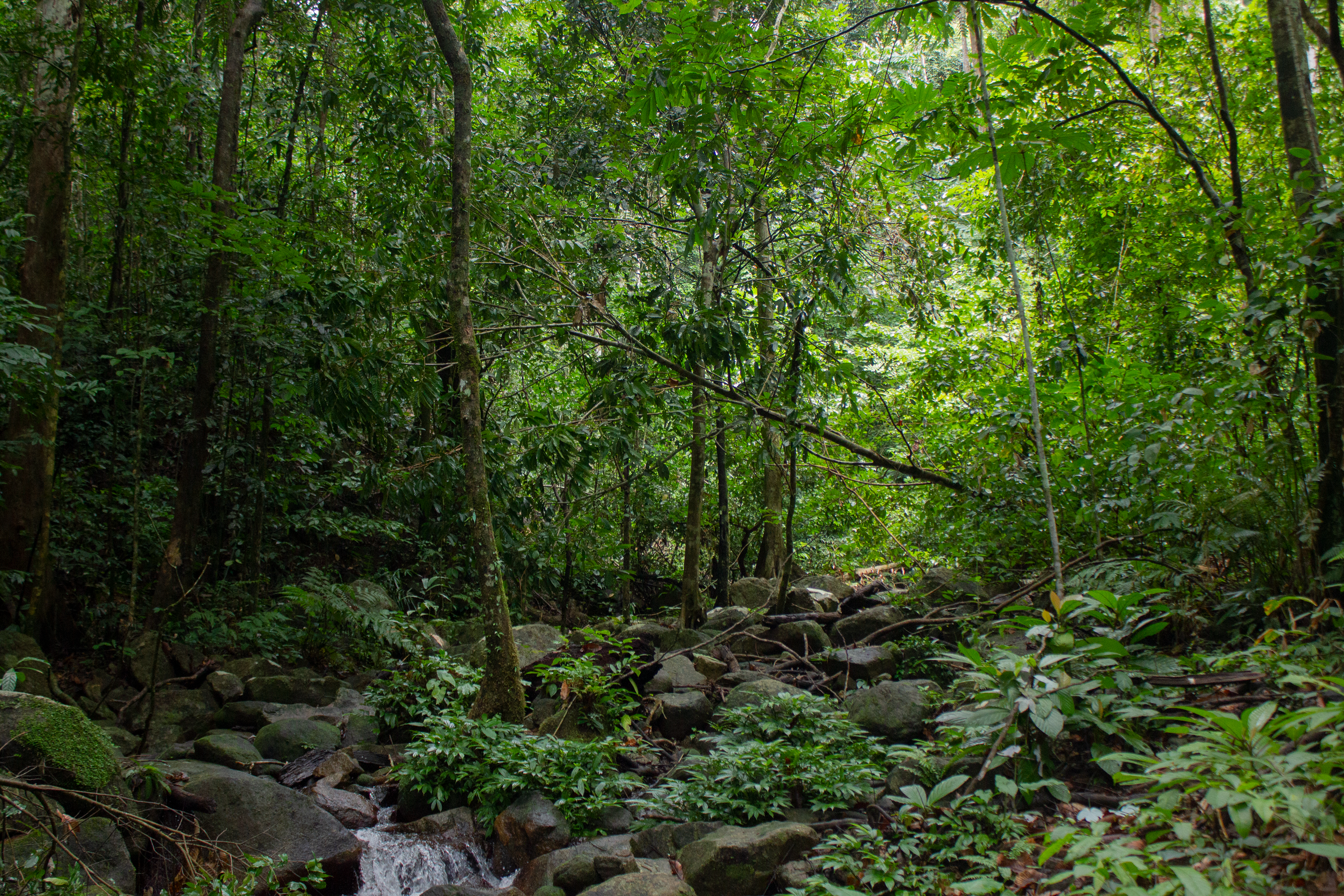
Rainforest, Trang
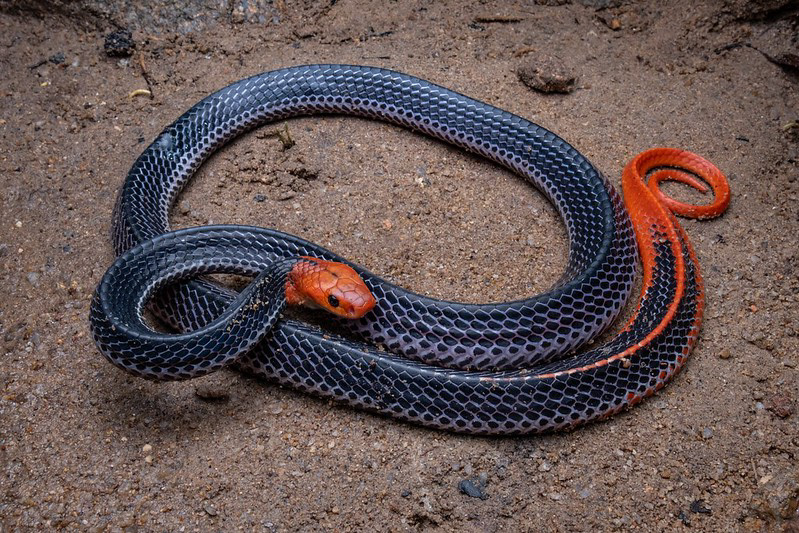
Red-headed krait from Satun 2022
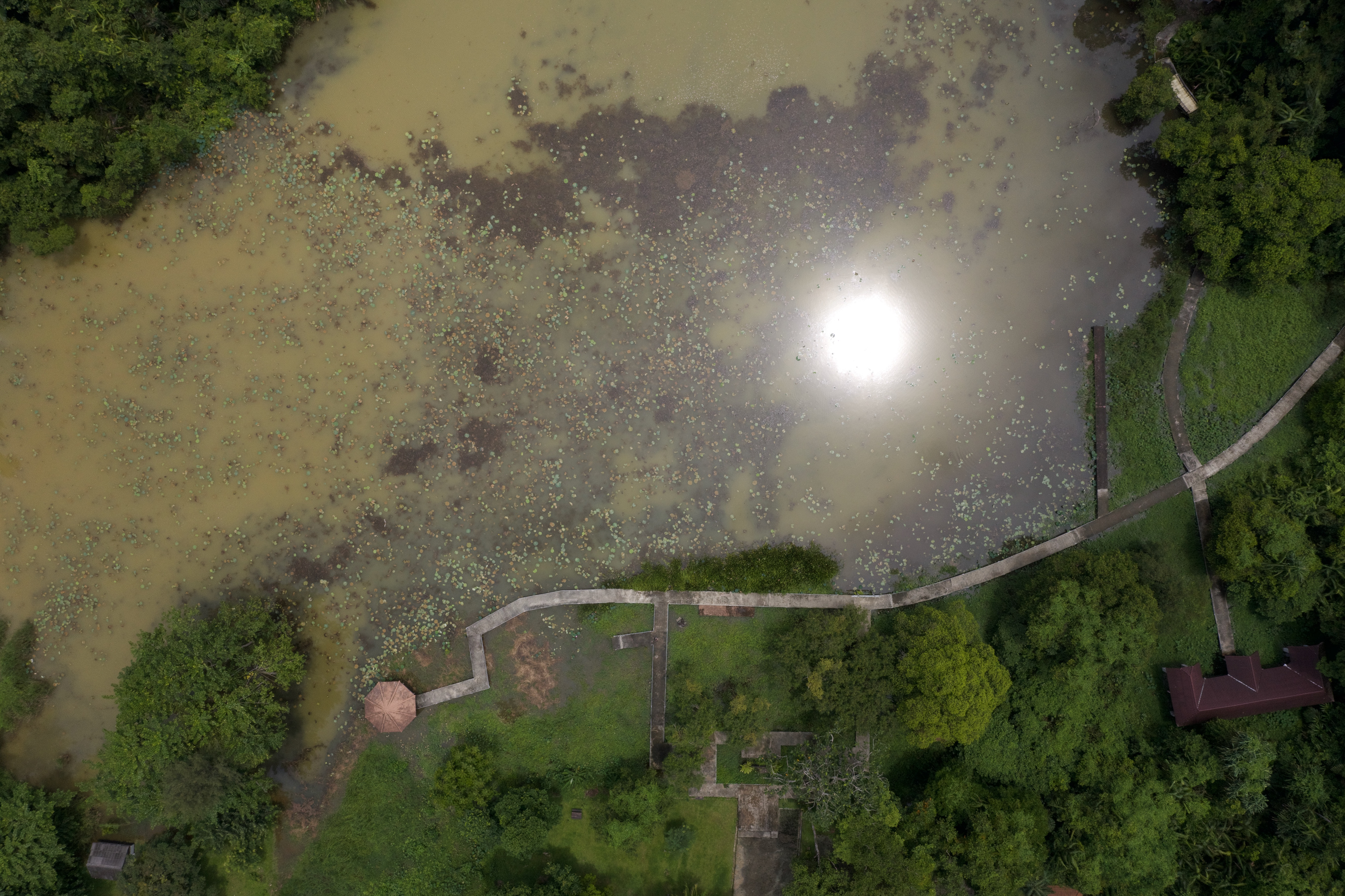
Natural lake and boardwalk, Satun
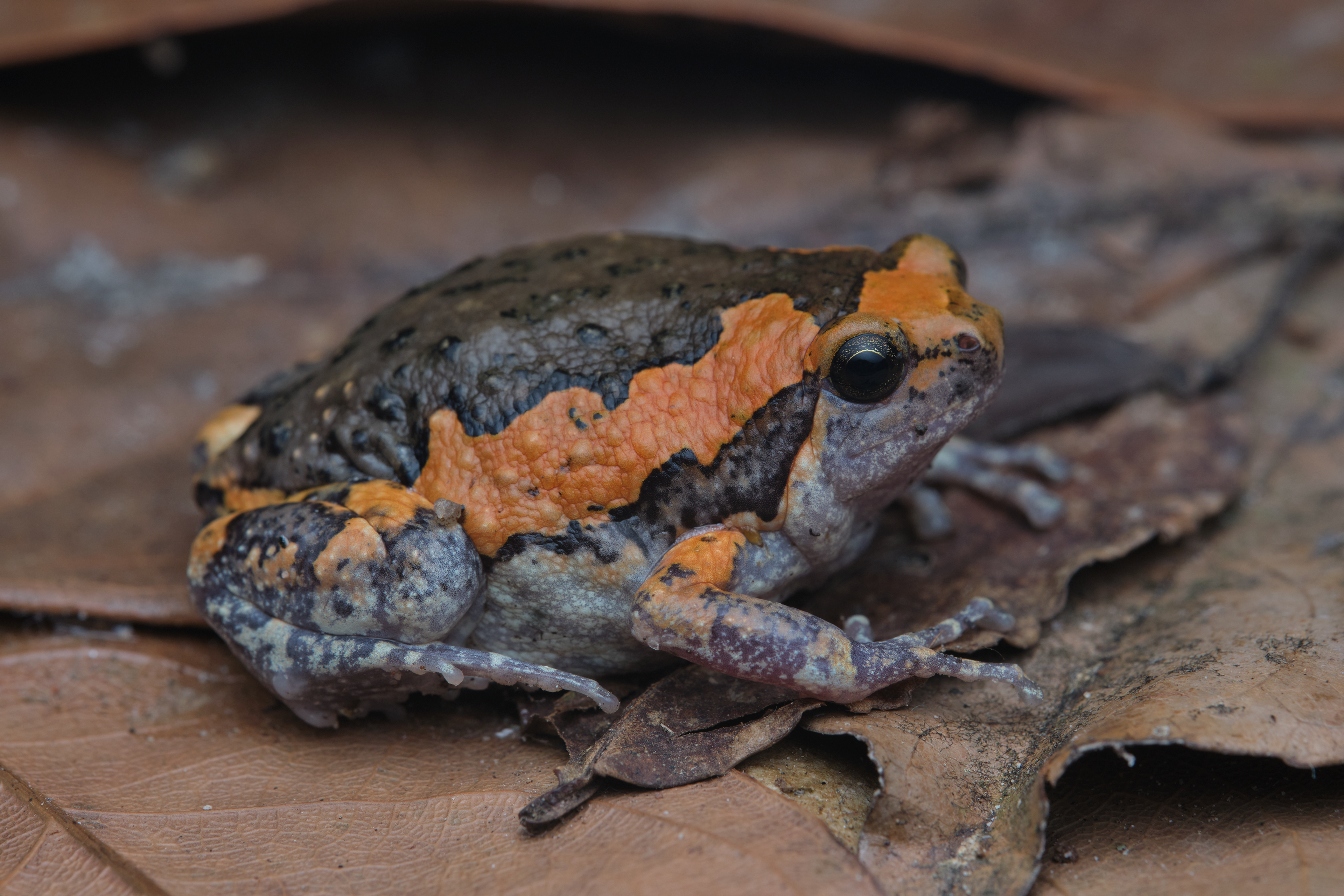
Banded bullfrog (Kaloula pulchra)
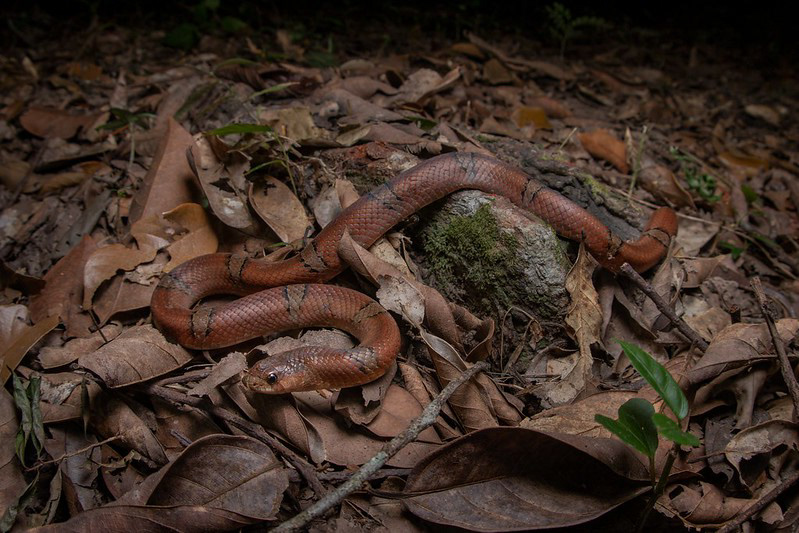
Rare 'annulated' form of Oligodon purpurascens, Trang.

Limestone karst within rice fields, Trang
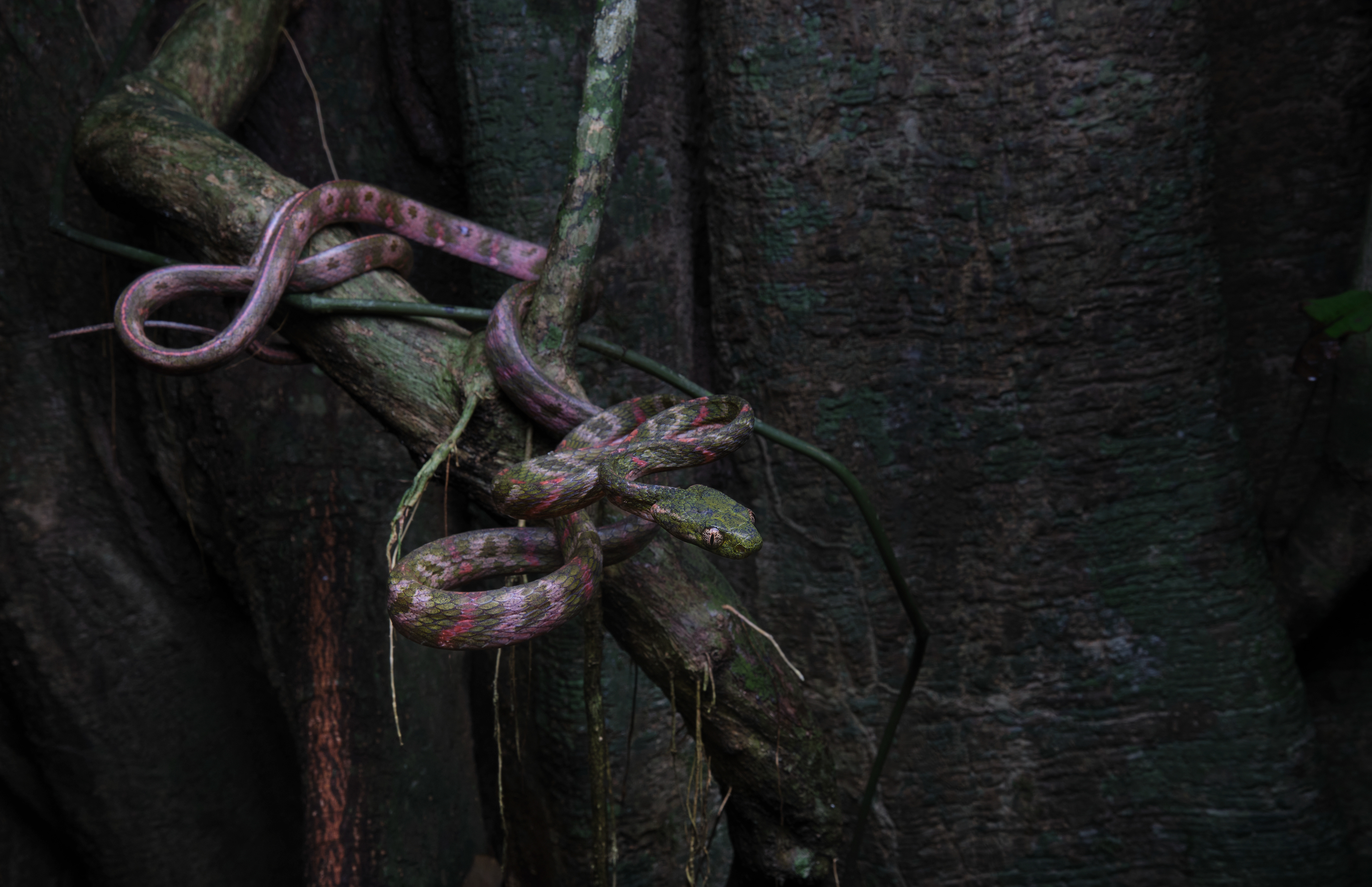
Bengkulu cat snake from Phatthalung
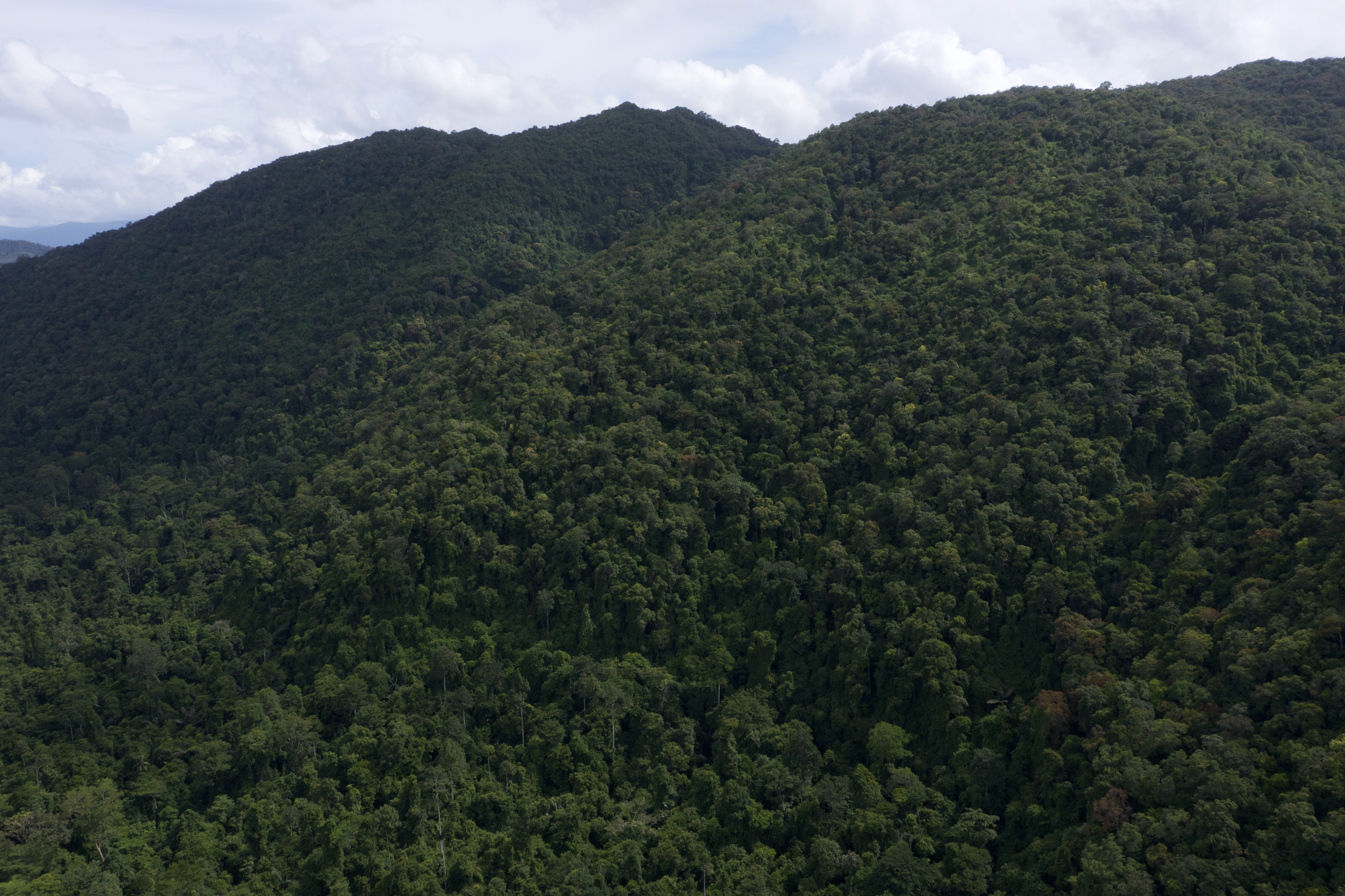
Limestone-based primary rainforest, Phatthalung
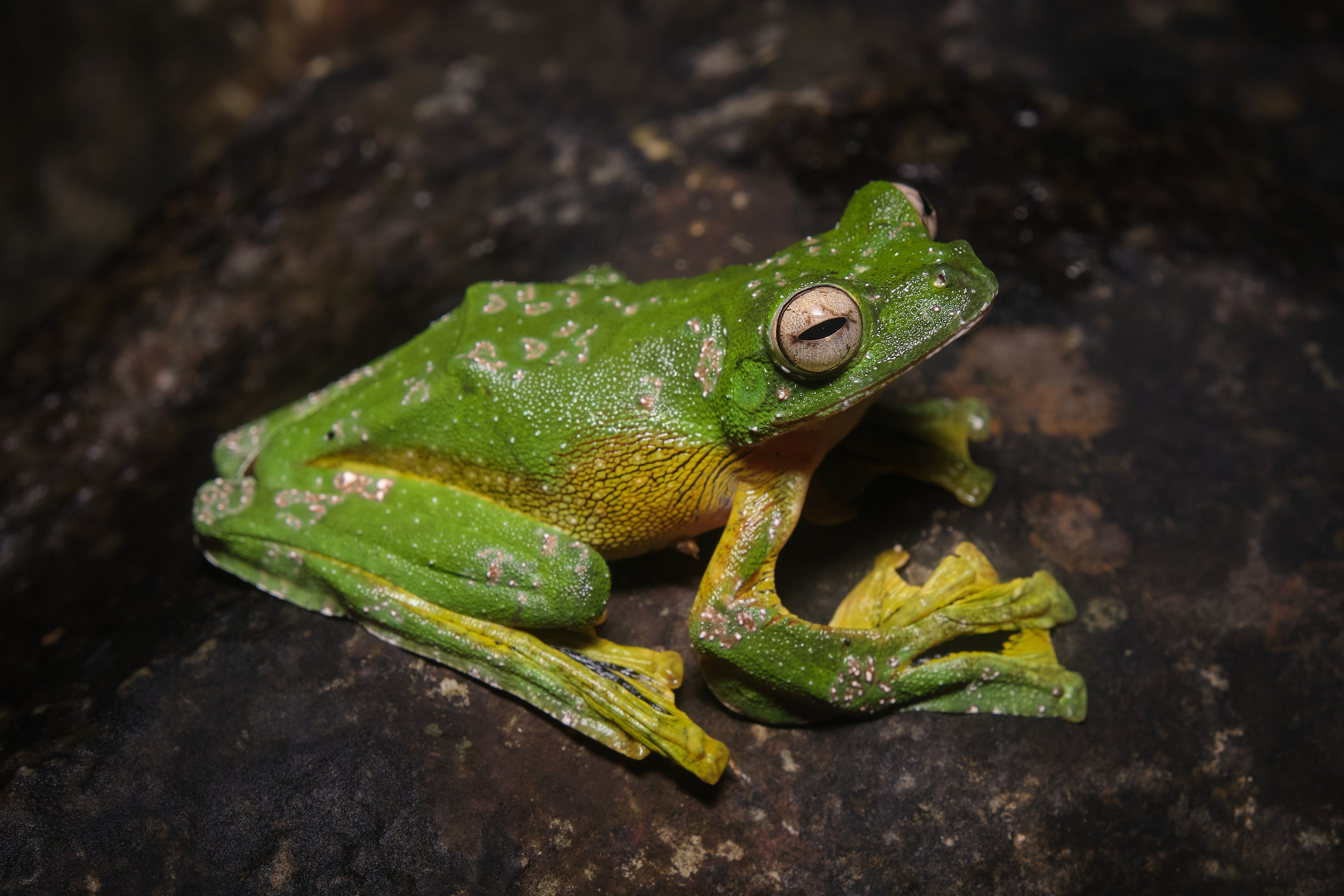
Wallace's flying frog (Rhacophorus nigropalmatus) from Satun
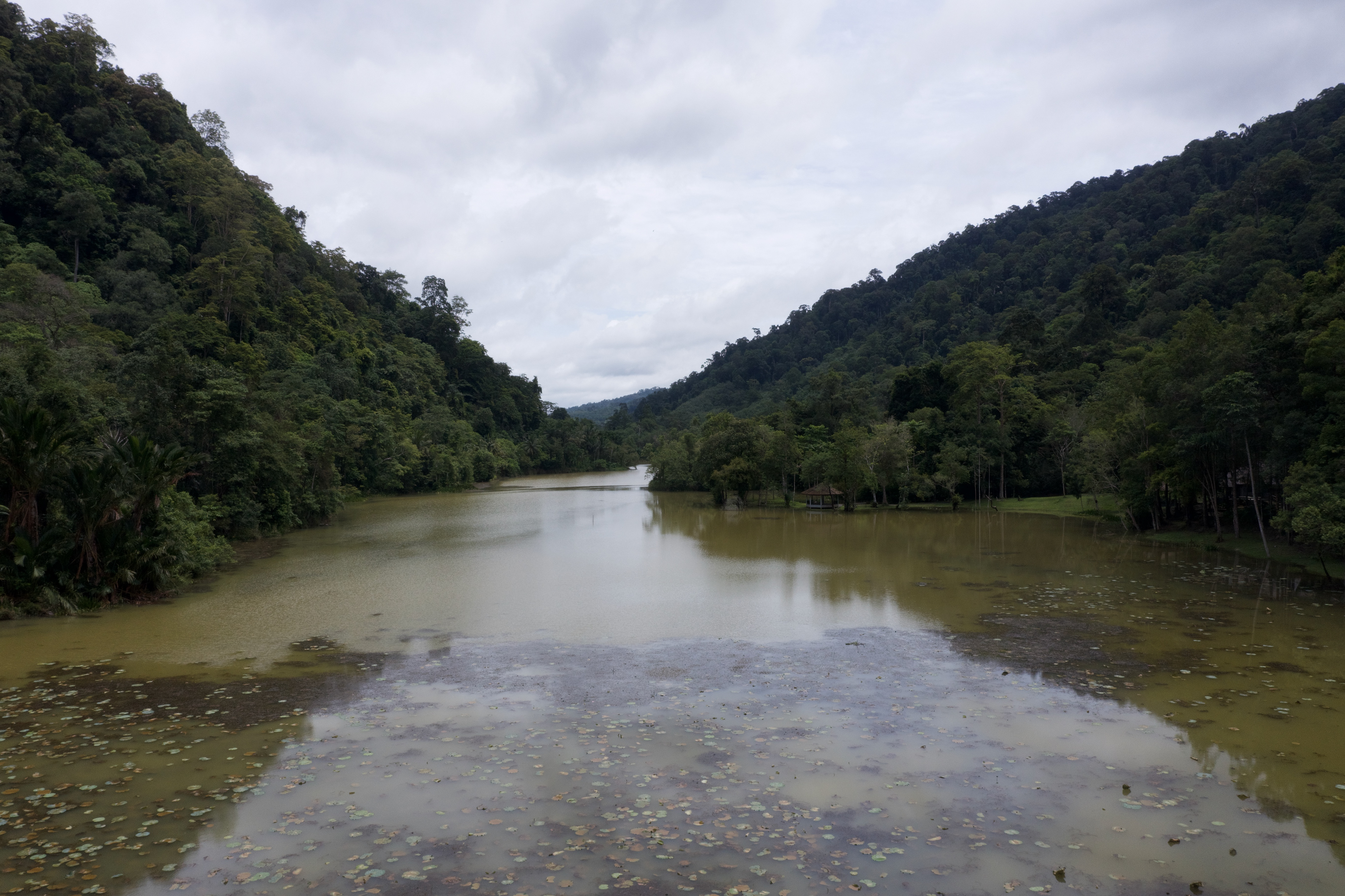
Natural lake in Satun
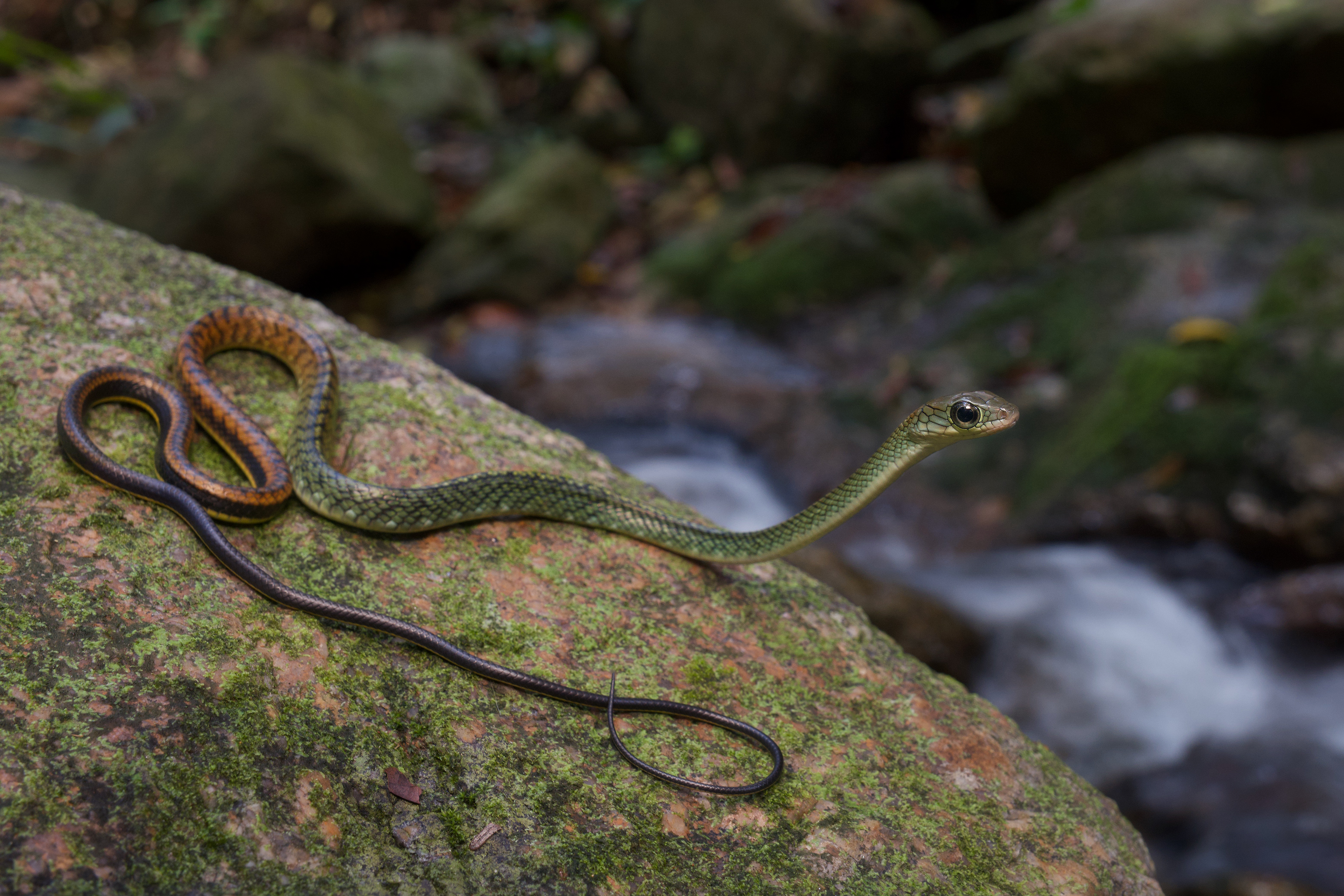
White-bellied rat snake (Ptyas fusca) from Phatthalung
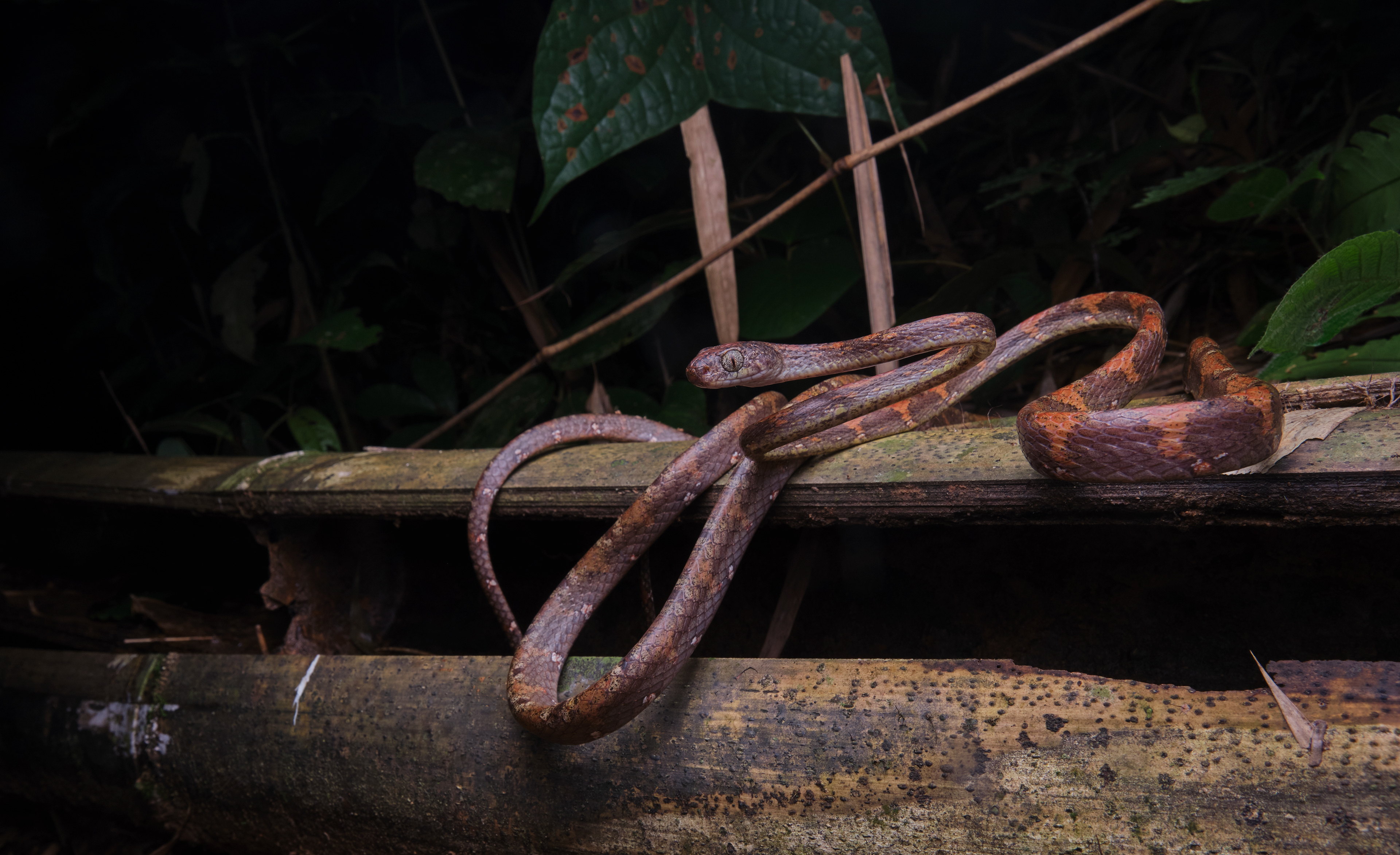
White-spotted cat snake (Boiga drapiezii) from Phuket
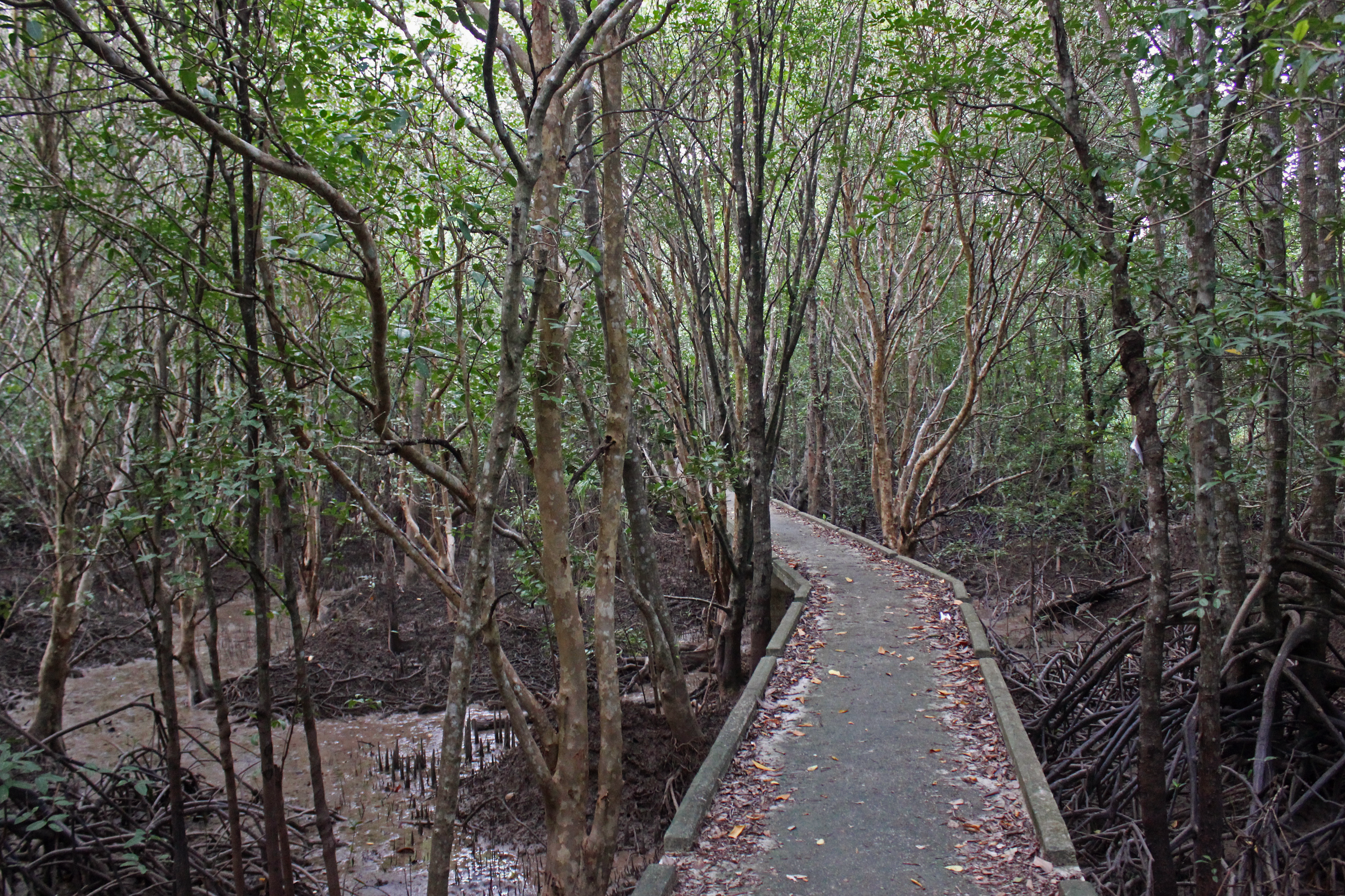
Mangrove forest boardwalk, Krabi
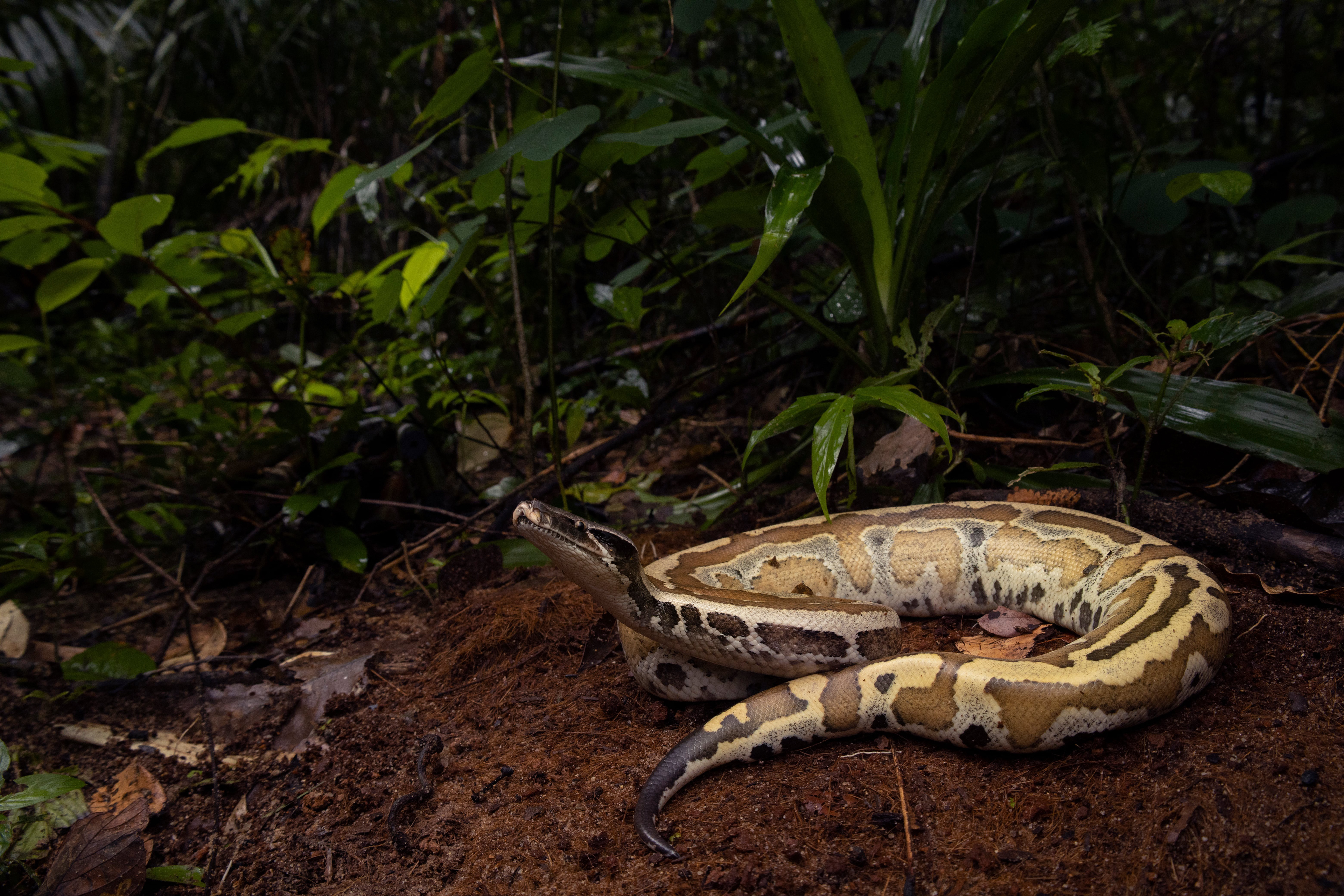
Blood python (Python brongersmai)
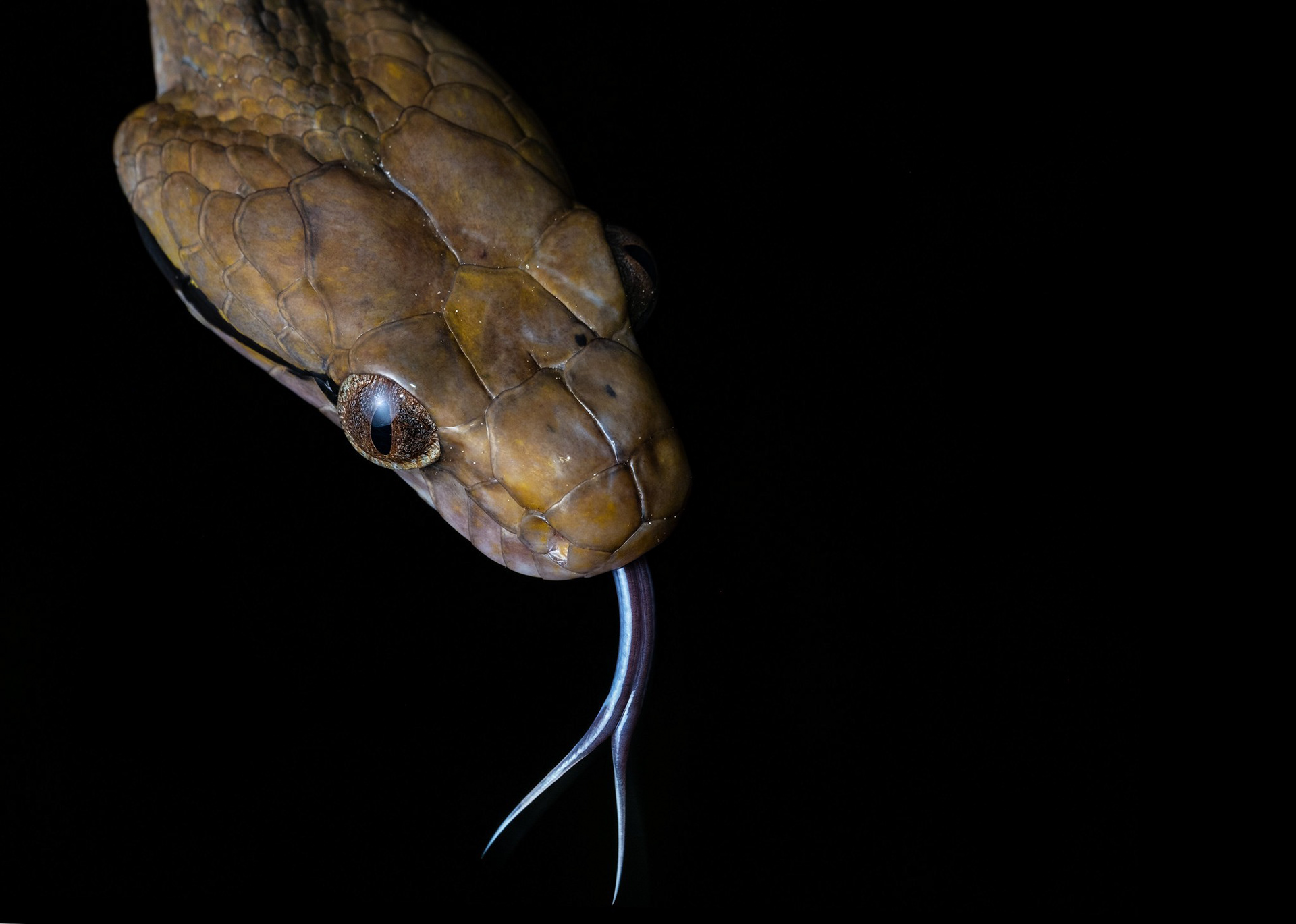
Dog-toothed cat snake (Boiga cynodon)
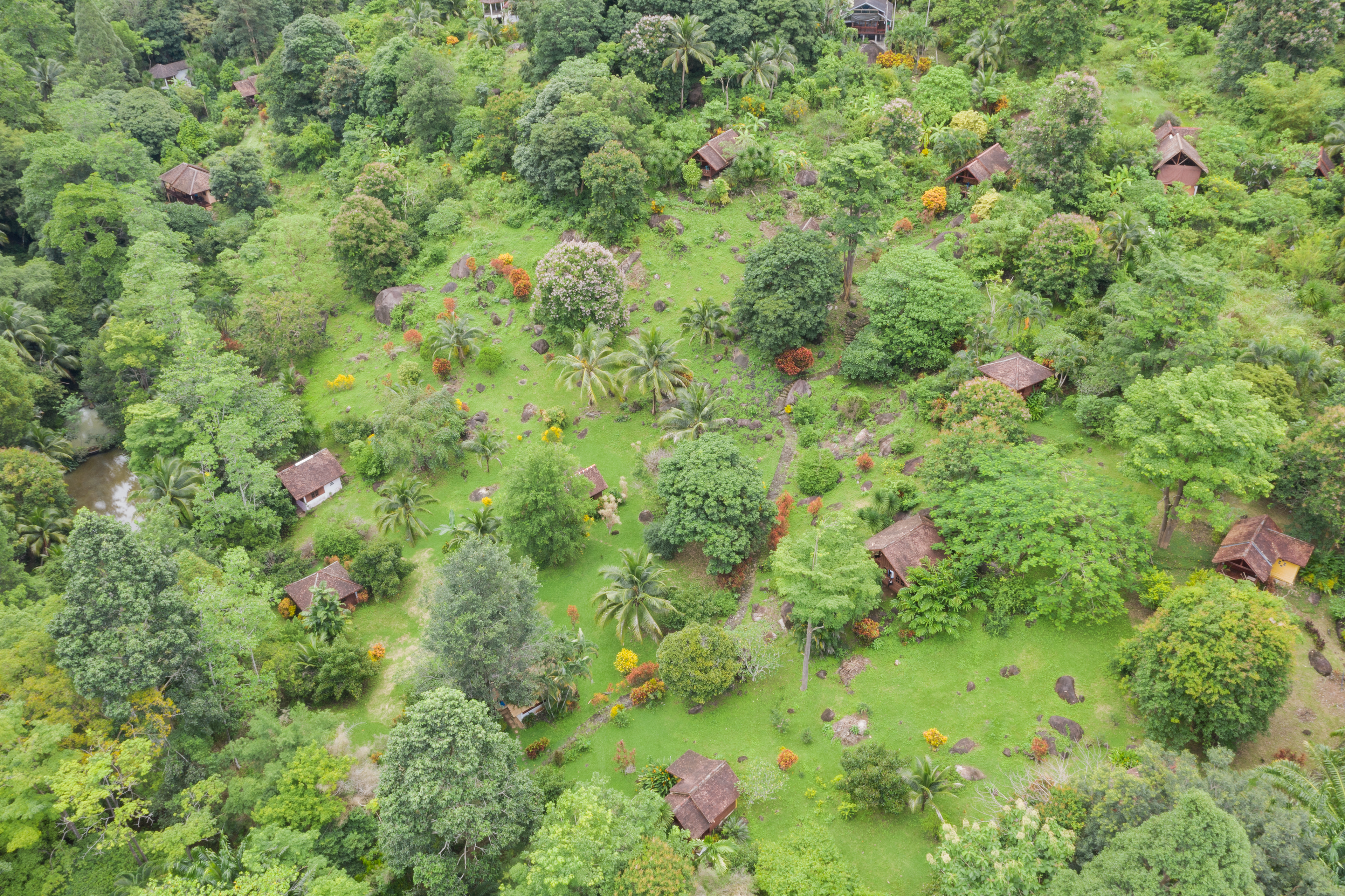
Accommodation in Krabi
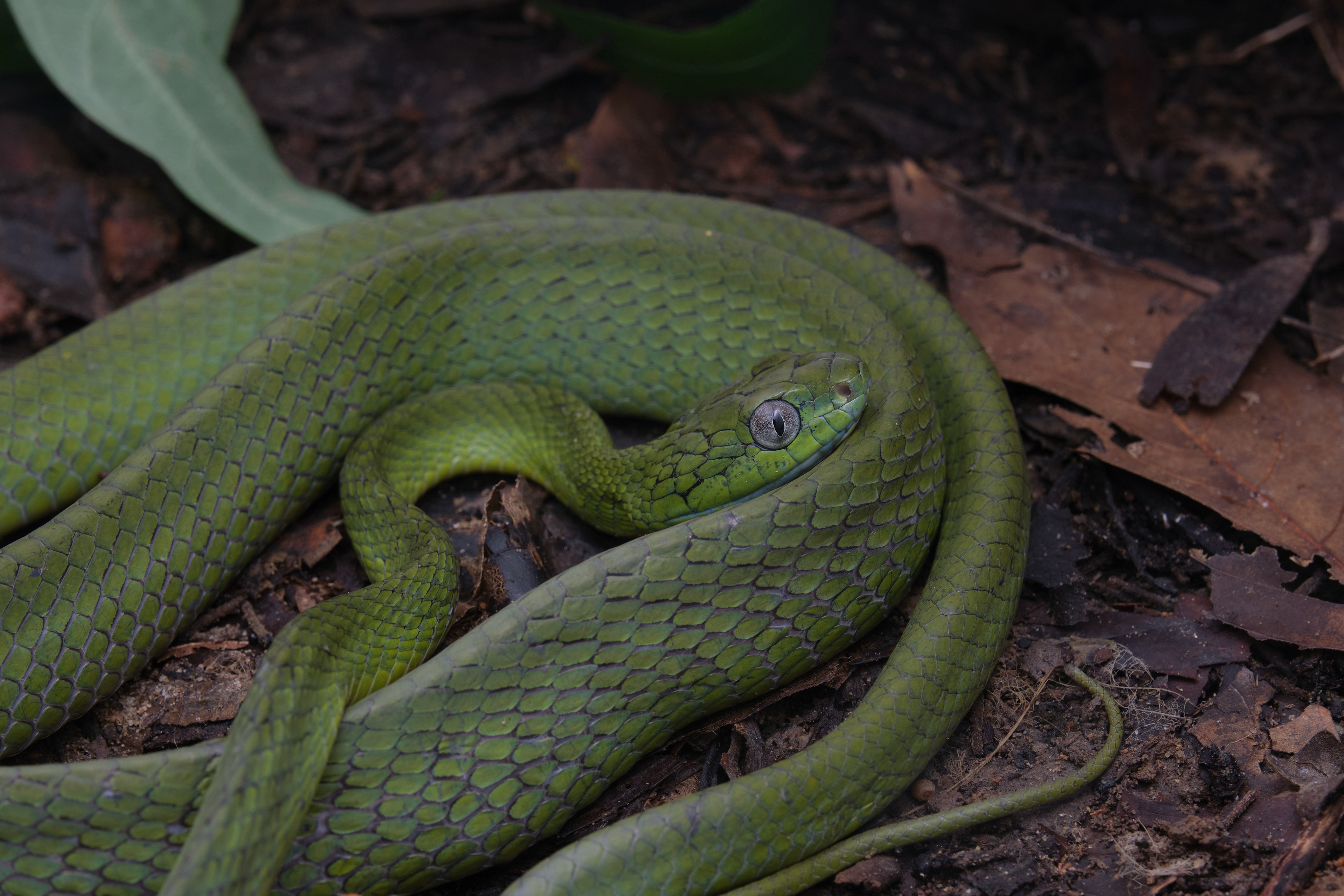
Green cat snake (Boiga cyanea) from Phuket

Karst limestone mountains, Krabi
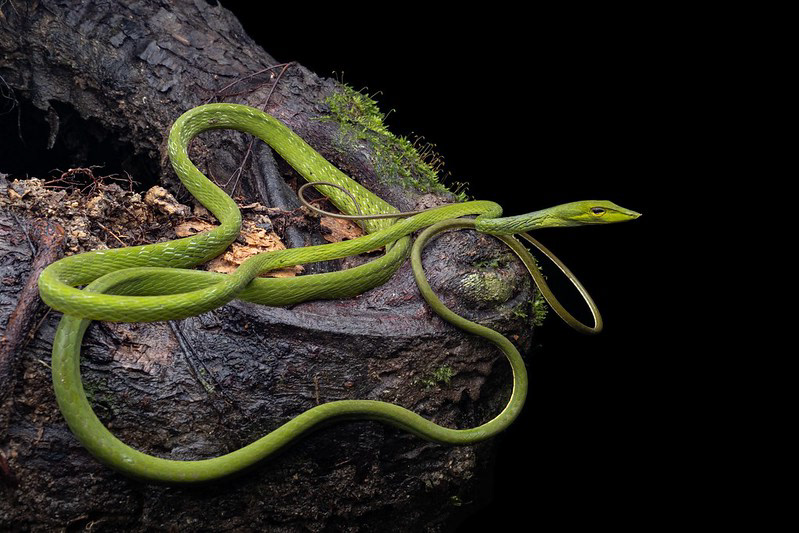
Speckle-headed vine snake (Ahaetulla fasciolata), green morph

Limestone karst formations in Krabi

Malayan snail-eating turtle (Malayemys macrocephala)
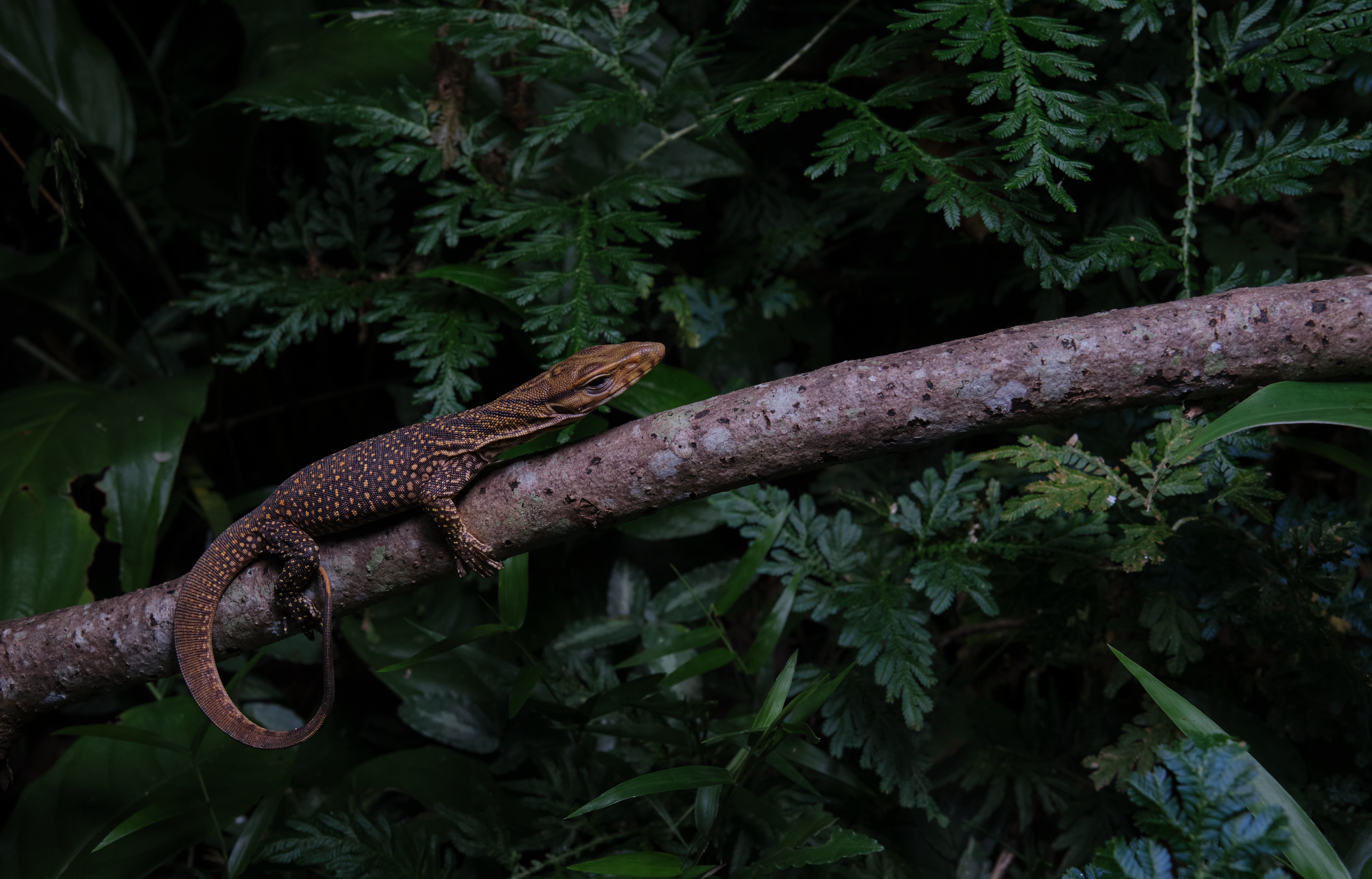
Juvenile clouded monitor (Varanus nebulosus)
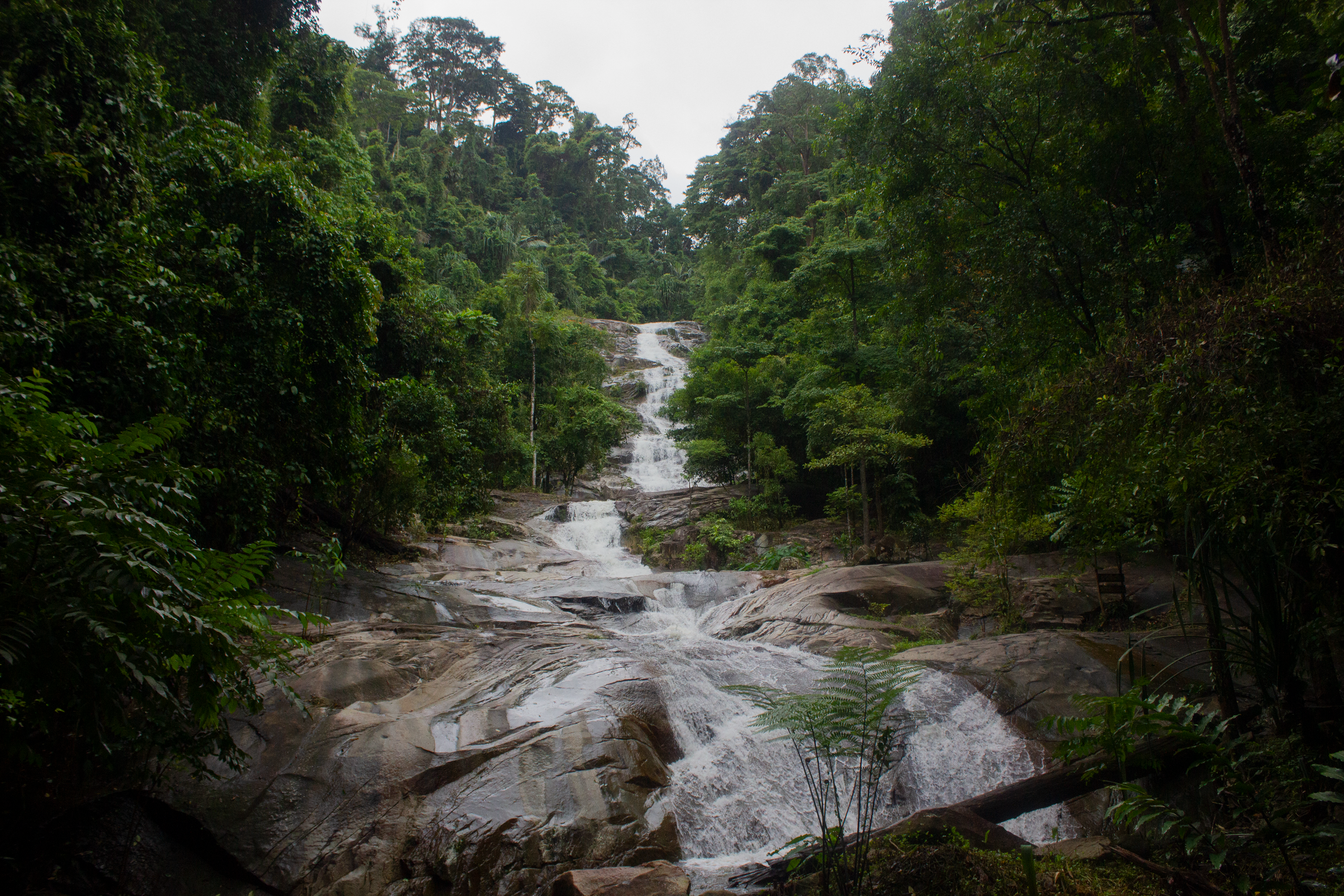
Rainforest waterfall, Trang

White-spotted slug snake (Pareas margaritophorus)
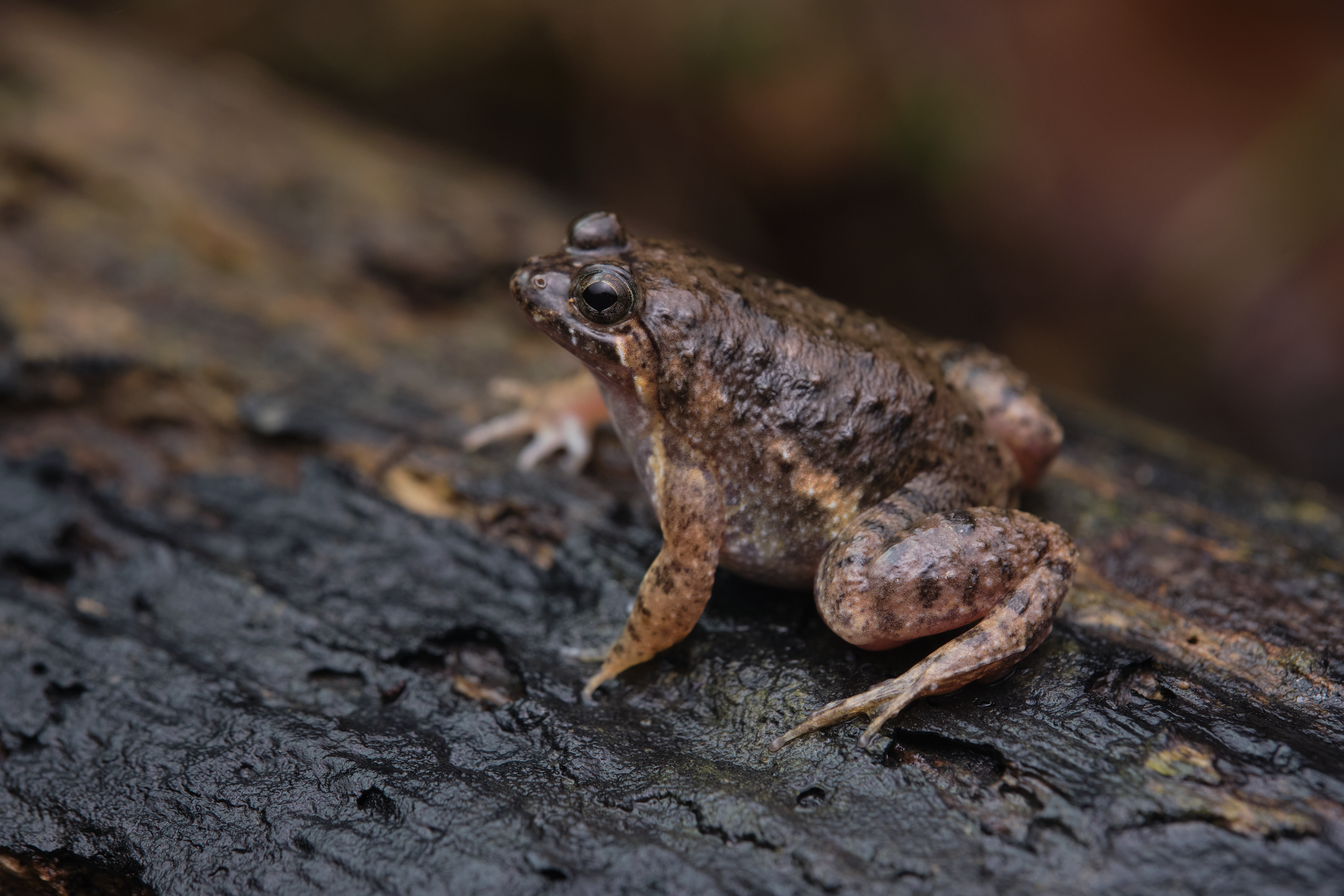
Marten's puddle frog (Occidozyga martensii)
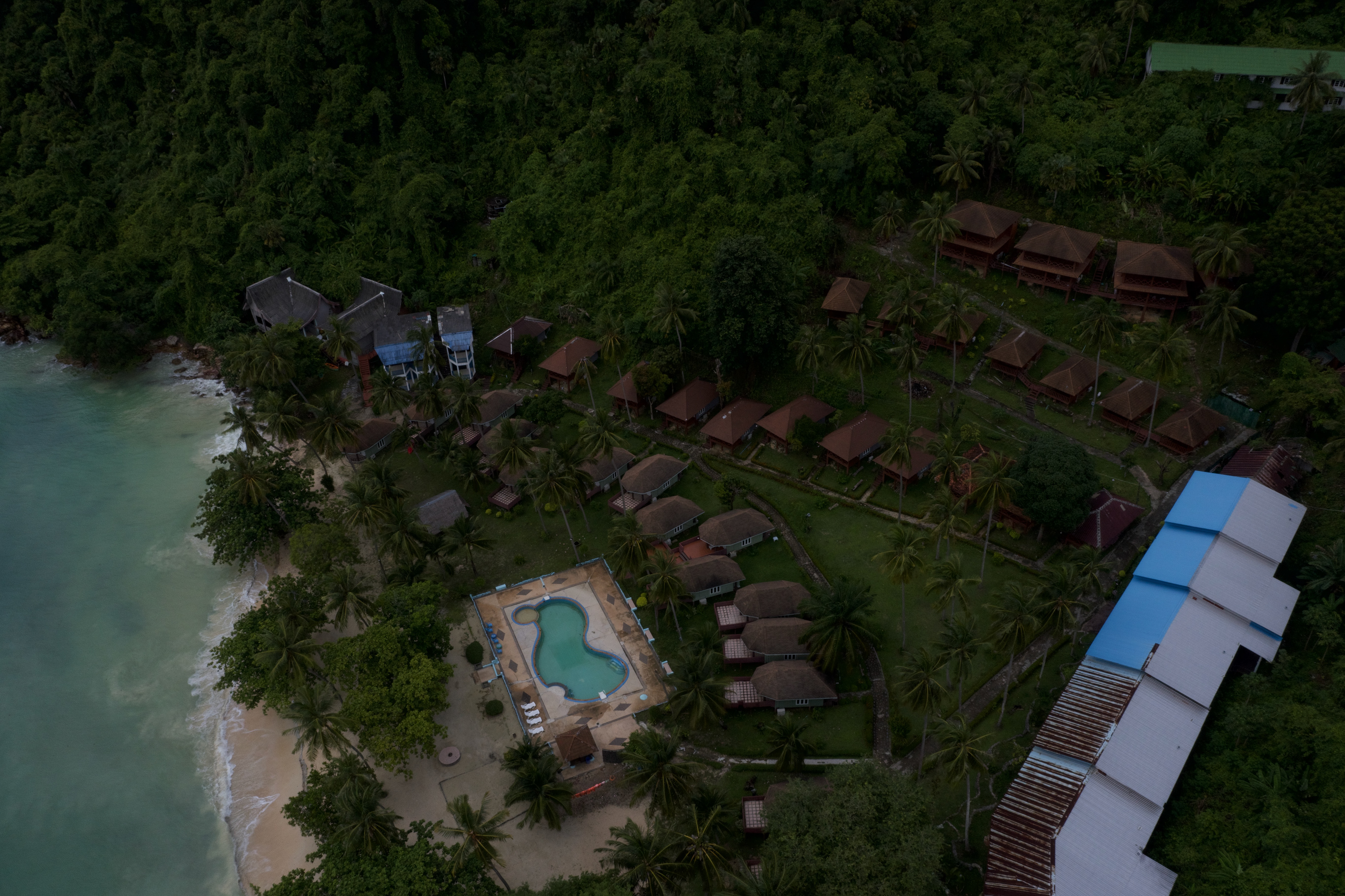
Accommodation on Snake Island
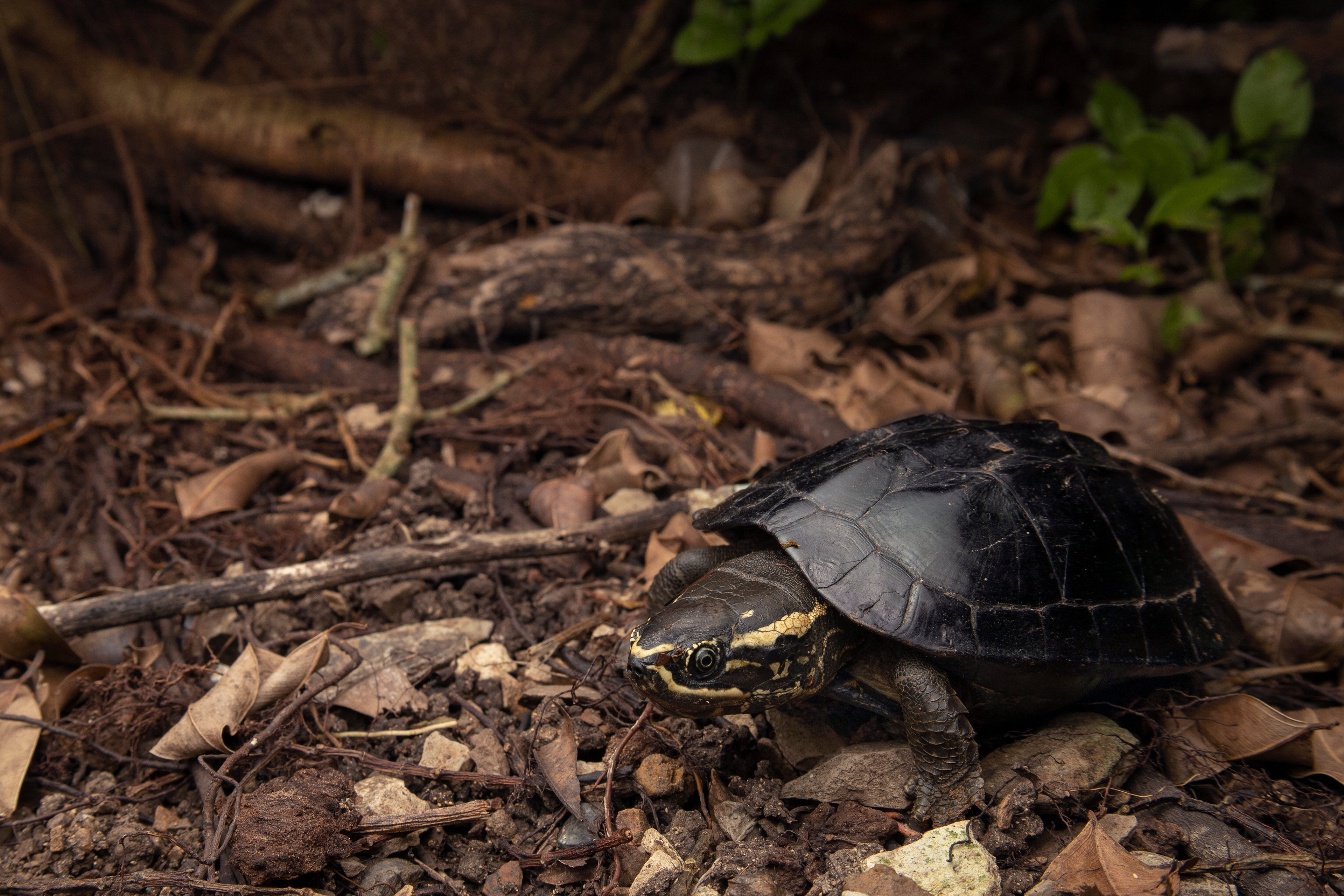
Malayan snail-eating terrapin (Malayemys macrocephala)
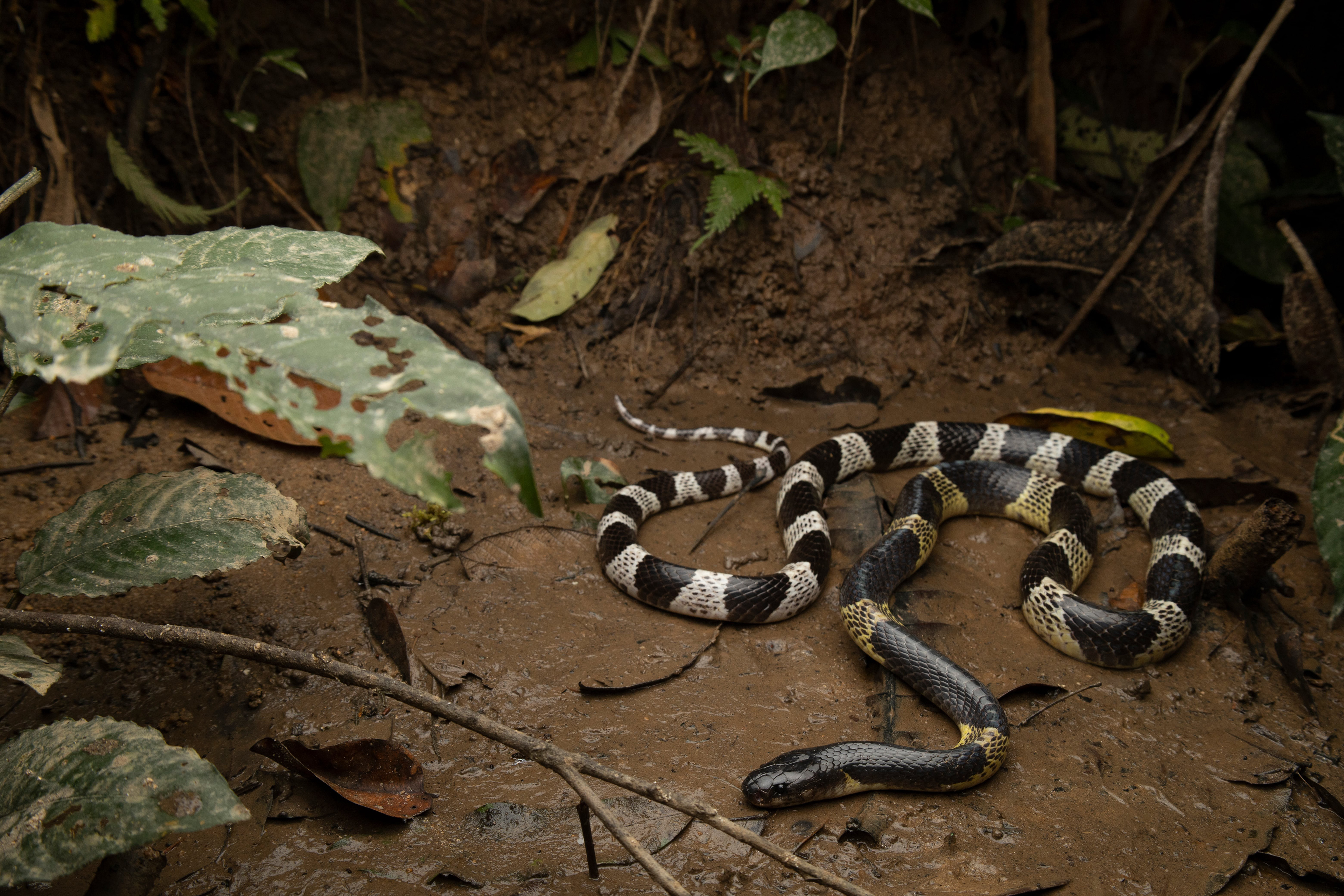
Malayan krait (Bungarus candidus)
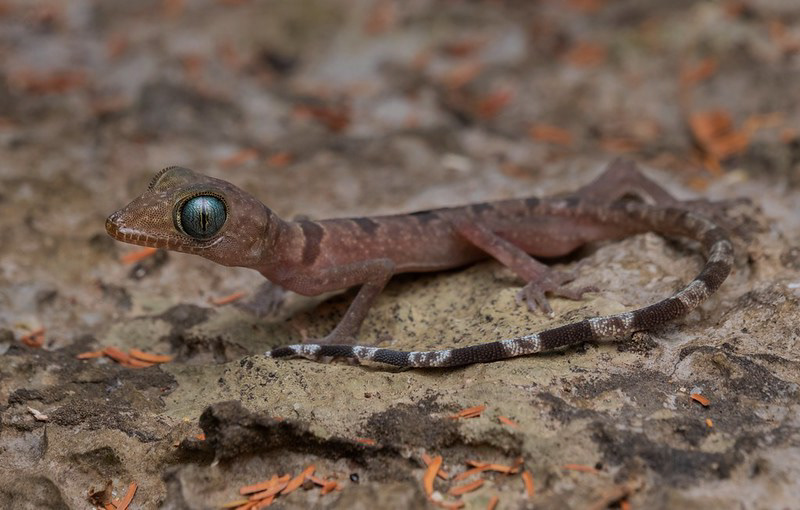
Wangkulangku's bent-toed gecko (Cyrtodactylus wangkulangkulae)