
Introduction:
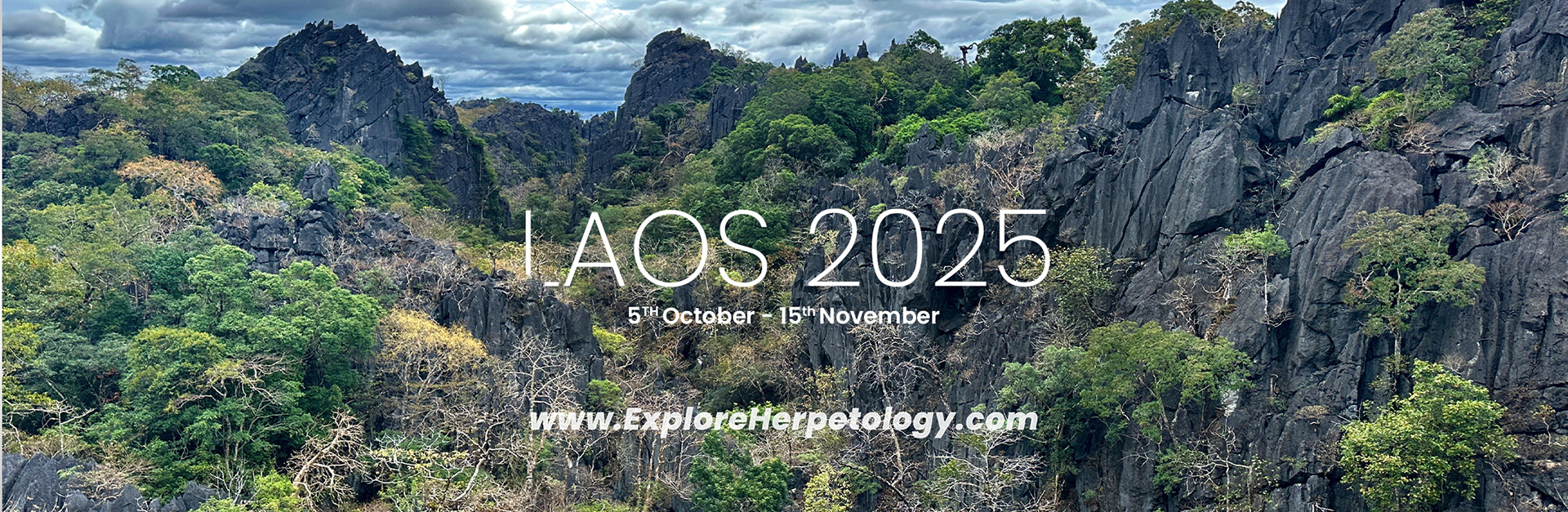
After several scouting and research trips, we launched our first ever Expedition Laos in November 2025. November is already winter in northern Indo-China, and the beginning of the dry season, meaning we expected low temperatures and very little precipitation. These conditions are generally considered imperfect for herpetofauna (and especially snake) activity, but in the limestone karst regions of Laos, this is peak activity season for the rare vipers and other cave-associated species. Our primary objectives for the expedition were to observe as many karst-endemic species as possible, focusing on specific targets rather than finding the maximum number of herpetofauna species possible. The demand for this first-time expedition was high, and we ended up with a larger group than we anticipated. Our group was comprised of 7 guests, 2 ExHerp staff members, and 2 Laotian herpetologists. We met in Vientiane on the 5th, loaded up our Toyota Fortuners, and got started.
To book Expedition Laos in November 2026, click here!
KHAMMOUANE - DAY 1:
Recent road maintenance has improved the route from Vientiane to Khammouane, so after a 4 hour journey we had reached our destination: The Rock. The Rock Lodge is a remarkable resort situated on the border between the towering sandstone mountains and the incredible limestone karst massif of Khammouane, with tons of trails and boardwalks primed for watching wildlife. However, our first day was dedicated to reaching our personal favourite cave, located down a (very complicated) secret trail system a short drive from the resort.
Due to scheduling issues, we were forced to start this expedition on full moon. This is usually something we avoid due to the correlation between full moon and lower herpetofauna activity levels, but as most of our targets occur in and around caves, or under dense canopied limestone karst habitat - we were optimistic that would not matter. That said, we are always very nervous on the first day of a new expedition, and whether our target species would be living within the cave or not was weighing heavily on our minds. Instead of dry, cold weather, there was a strong breeze and light drizzle in the air. Not what we were anticipating.
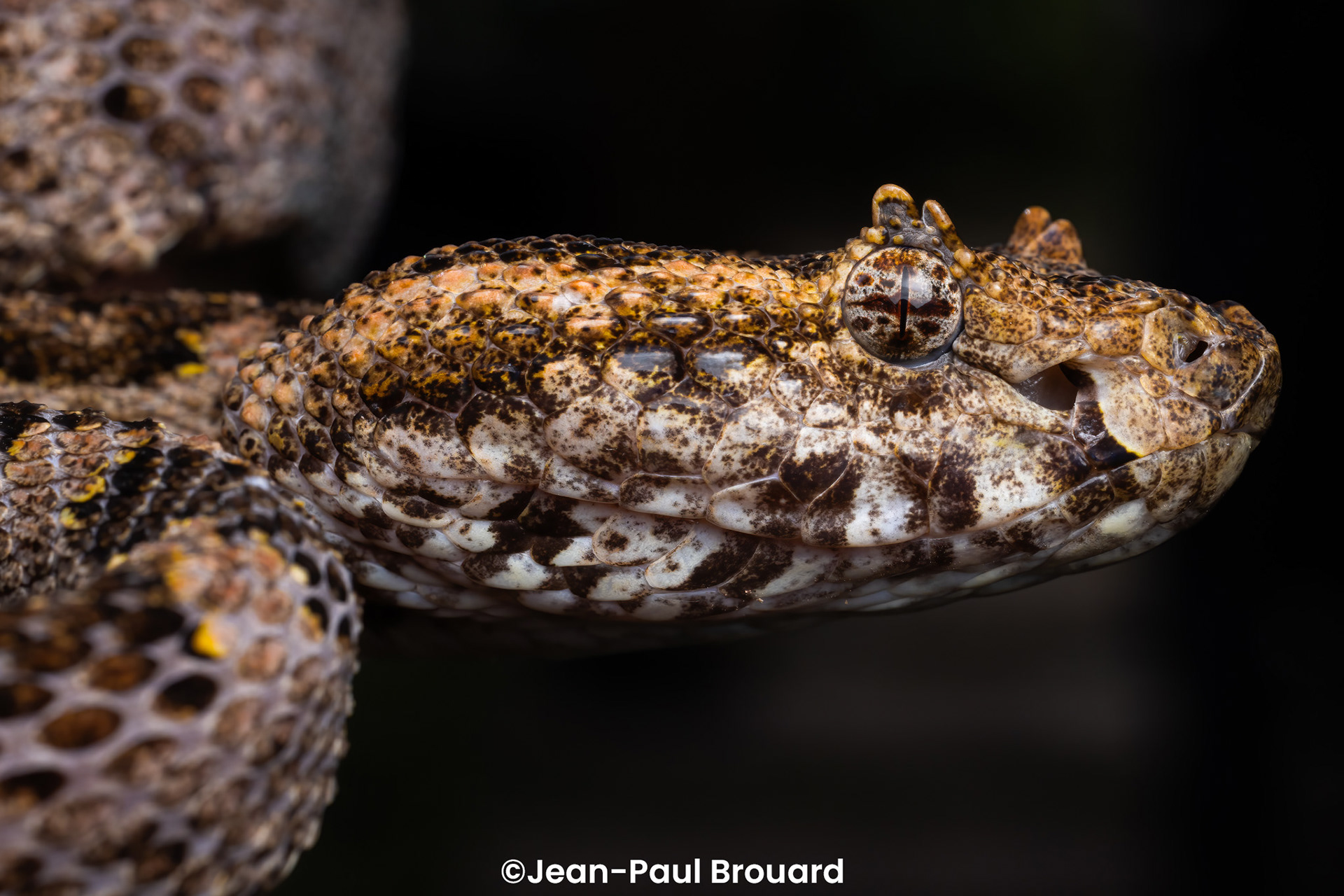
Once we reached the cave, we climbed in and began slowly descending into the pit cave, checking every crevice, platform and nook. After a preliminary scan of all the typical ambush sites for our target, it seemed like there were none active in the cave. Then, while scanning deeper into the cave, Rupert noticed something move by his feet, which turned out to be a well-sized adult male three-horned lance-headed pit viper (Protobothrops sieversorum) - exactly what we were hoping for! Seeing this large species of pit viper living and hunting within these limestone karst caves is a amazing thing, and a huge aspect of what we were hoping to deliver on this expedition. Starting the trip off with this was as good as we could have hoped.
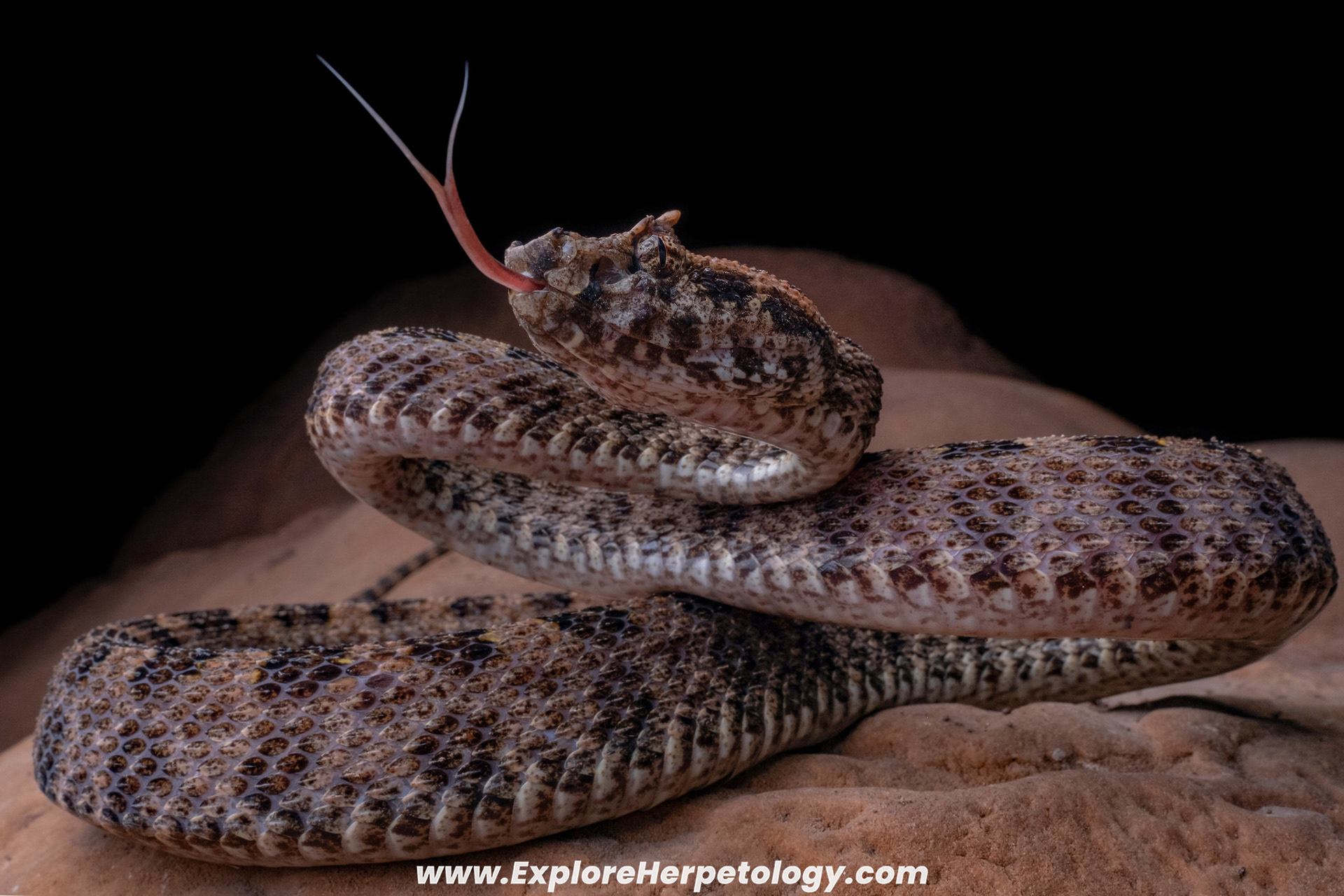
Three-horned lance-headed pit viper (Protobothrops sieversorum).
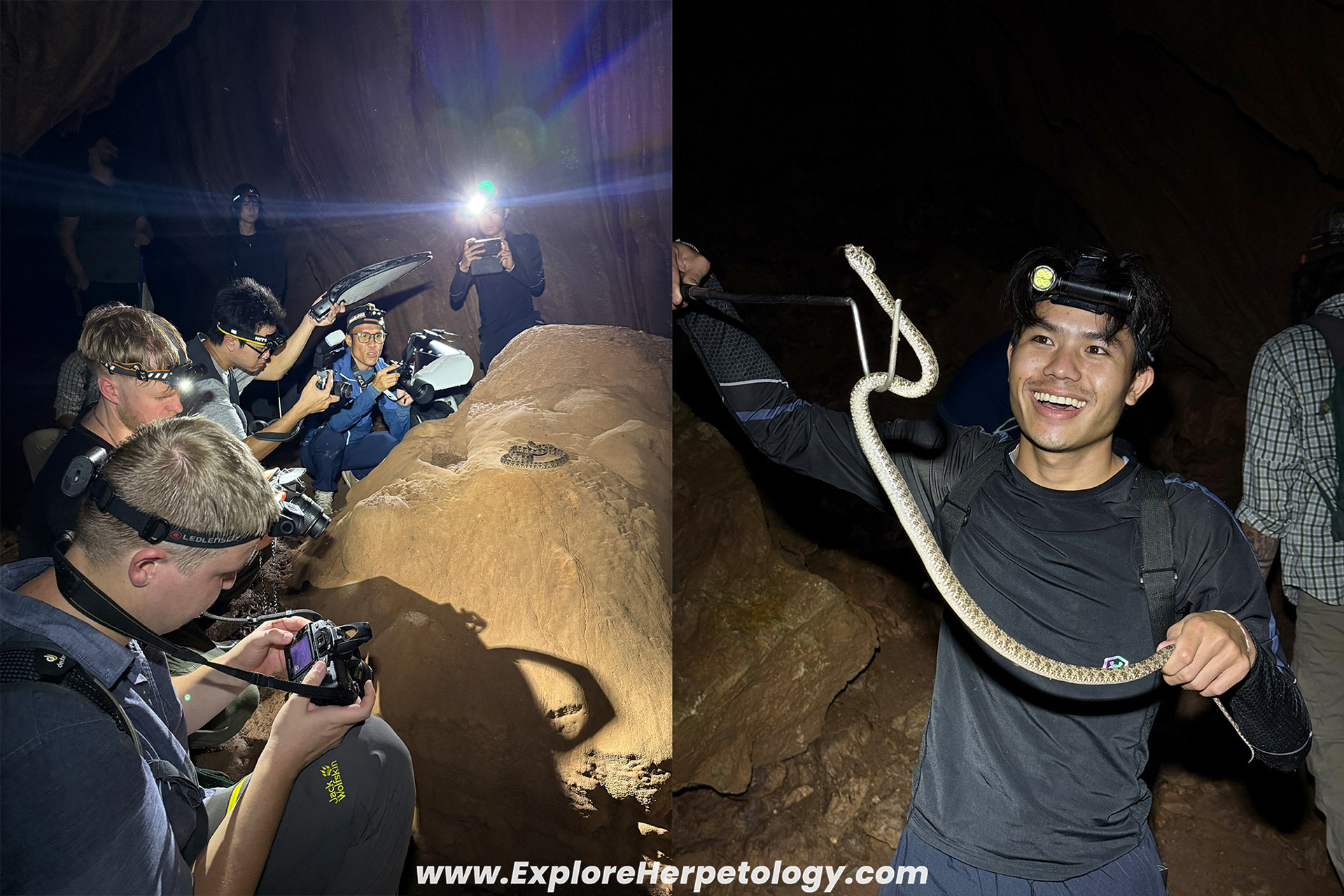
Three-horned lance-headed pit viper (Protobothrops sieversorum).
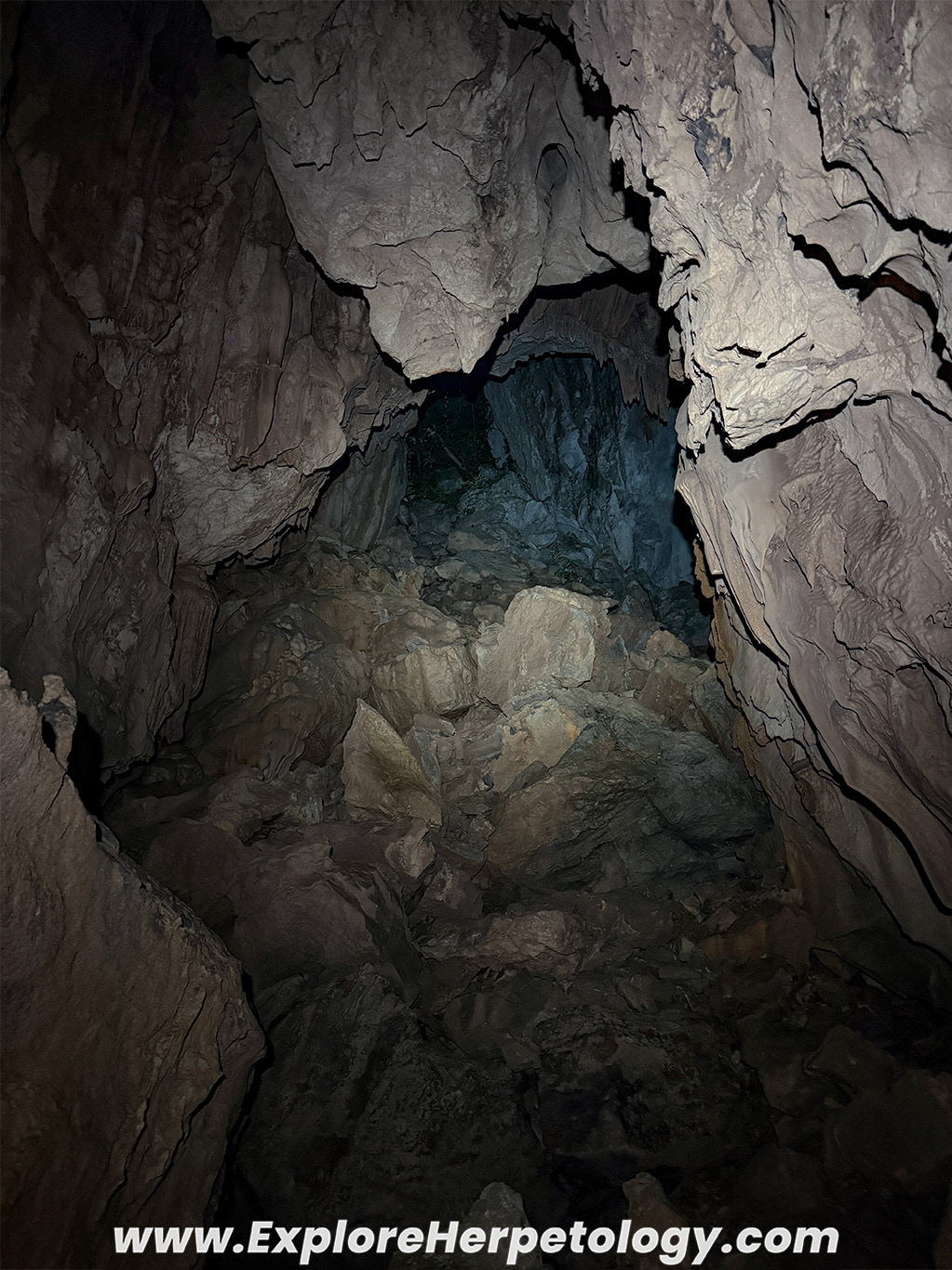
Cave habitat of the three-horned lance-headed pit viper (Protobothrops sieversorum).
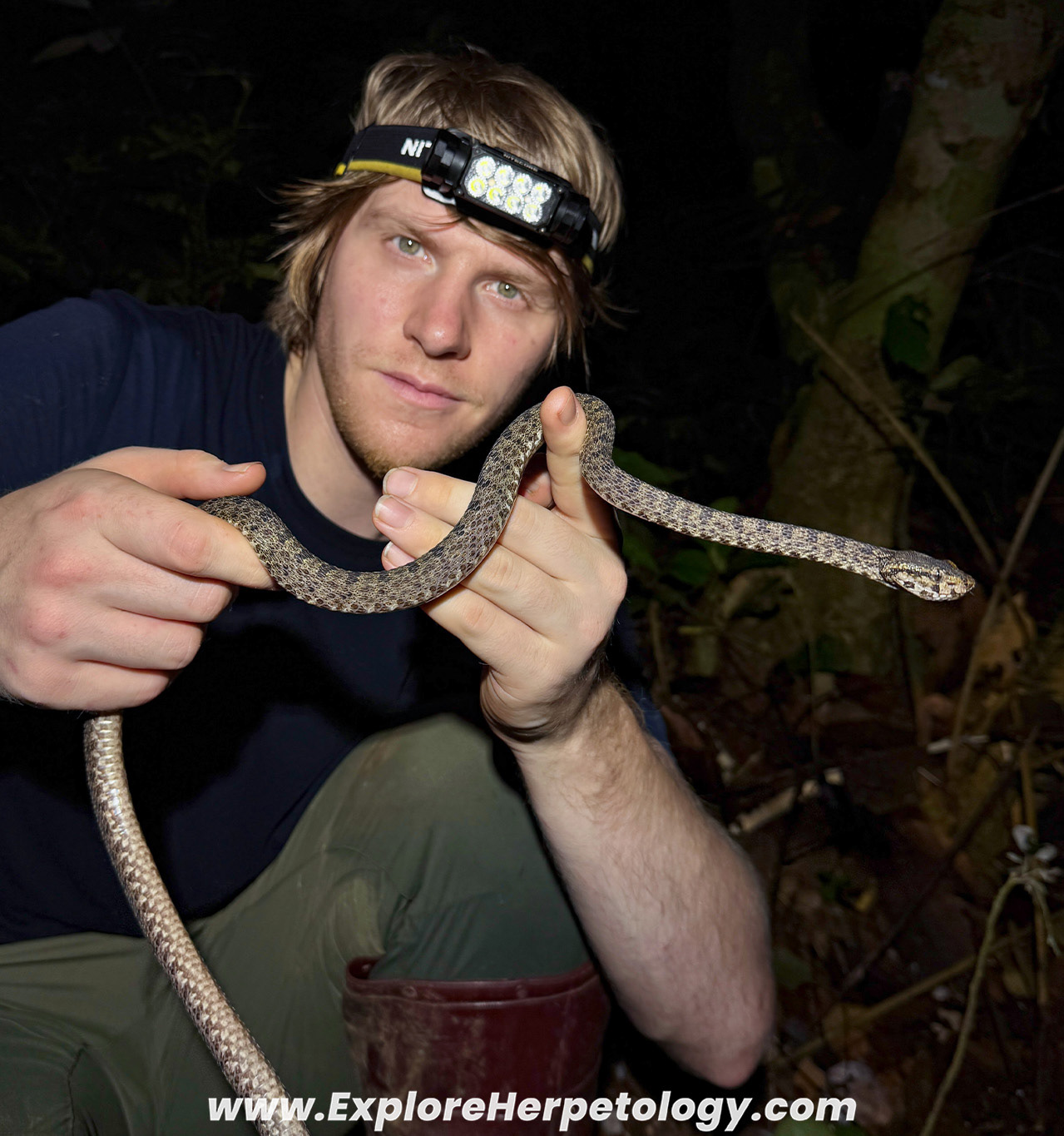
While were were enjoying this incredible moment, taking photos and checking out all the cave flying frogs (Rhacophorus speleaus) which inhabit the deep corners of the cave, some of the group wandered outside to check some more spots around the edge. After a few minutes, we heard Jordan shouting "SNAKE!" from outside the cave, and promtly ran up to check out what he had found. Amazingly, he had found and secured our second biggest viper target for the area - a male Truong Son pit viper (Trimeresurus truongsonensis). This was our first time seeing this species at this cave site, despite many nights herping in this area before, and we had actually expected to encounter this species at the next location on the trip.
Once we had released this snake and the Protobothrops, we walked back towards the cars. We took a different route on the way back, which led to us catching a very big Nganson bronzeback (Dendrelaphis ngansonensis). The individuals from this karst region are look totally different from the morph we see in Thailand, Cambodia and parts of Vietnam, with yellow interstitial skin instead of blue - makes us wonder if it could be a new species entirely.
We originally planned on wrapping the night up early, but several people wanted to maximise our luck and keep things going, so we decided to go for a hike in the sandstone forest near the resort. We found an oriental vine snake (Ahaetulla prasina) shortly into our walk, followed later by a white-backed bug-eyed frog (Theloderma albopunctatus), also known as the 'bird poop frog'. Right when we were considering turning around, JP suddenly shouted "Huge Protobothrops!". Sure enough, crawling amongst some sandstone boulders in the creek was a truly giant adult female three-horned lance-headed pit viper (Protobothrops sieversorum). Not only was this the largest individual we had ever seen, but we did not know these also lived in the sandstone forest as well as the limestone karst formations. Truly an unbelievable end to a first night which could not have gone better.
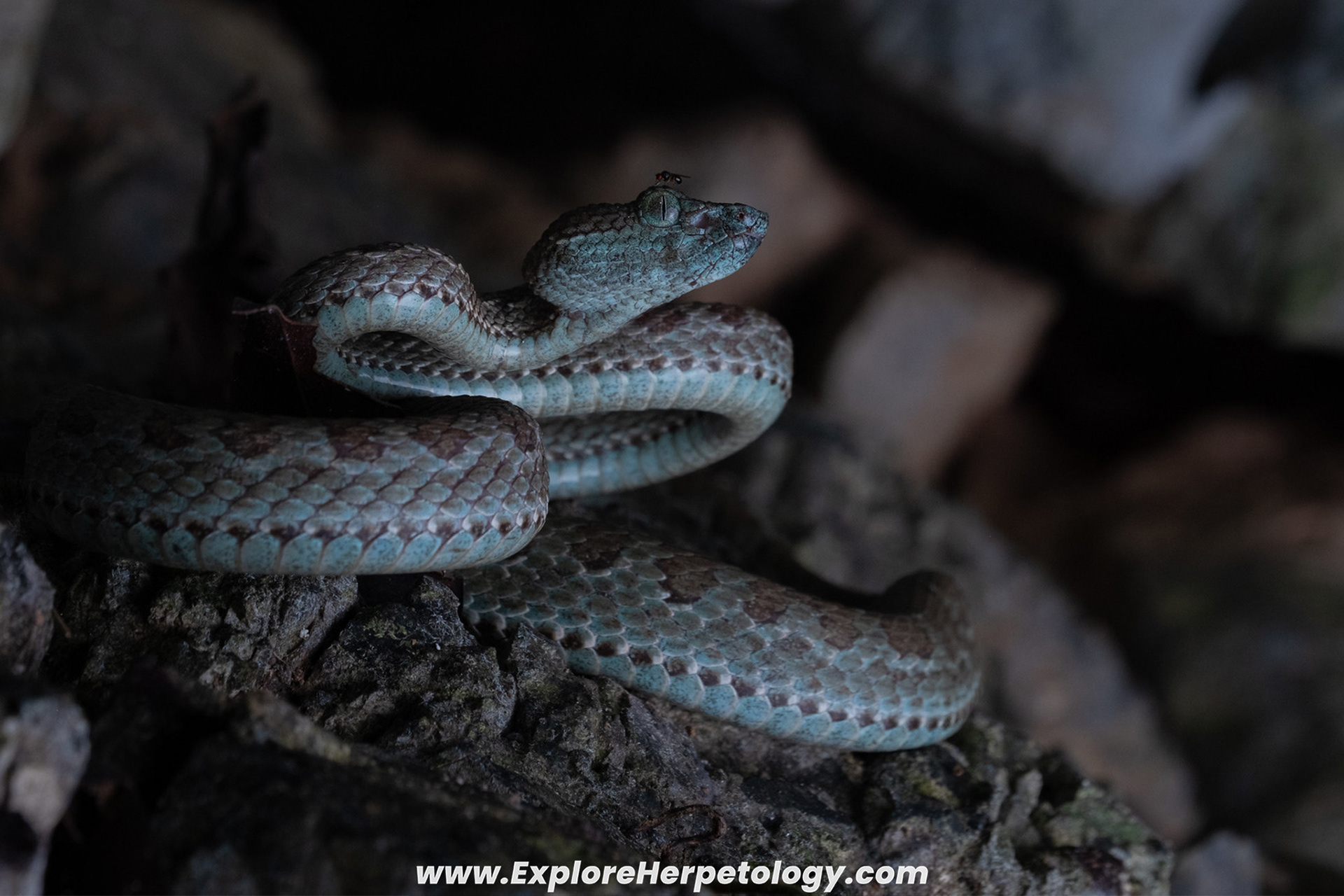
Truong son pit viper (Trimeresurus truongsonensis).
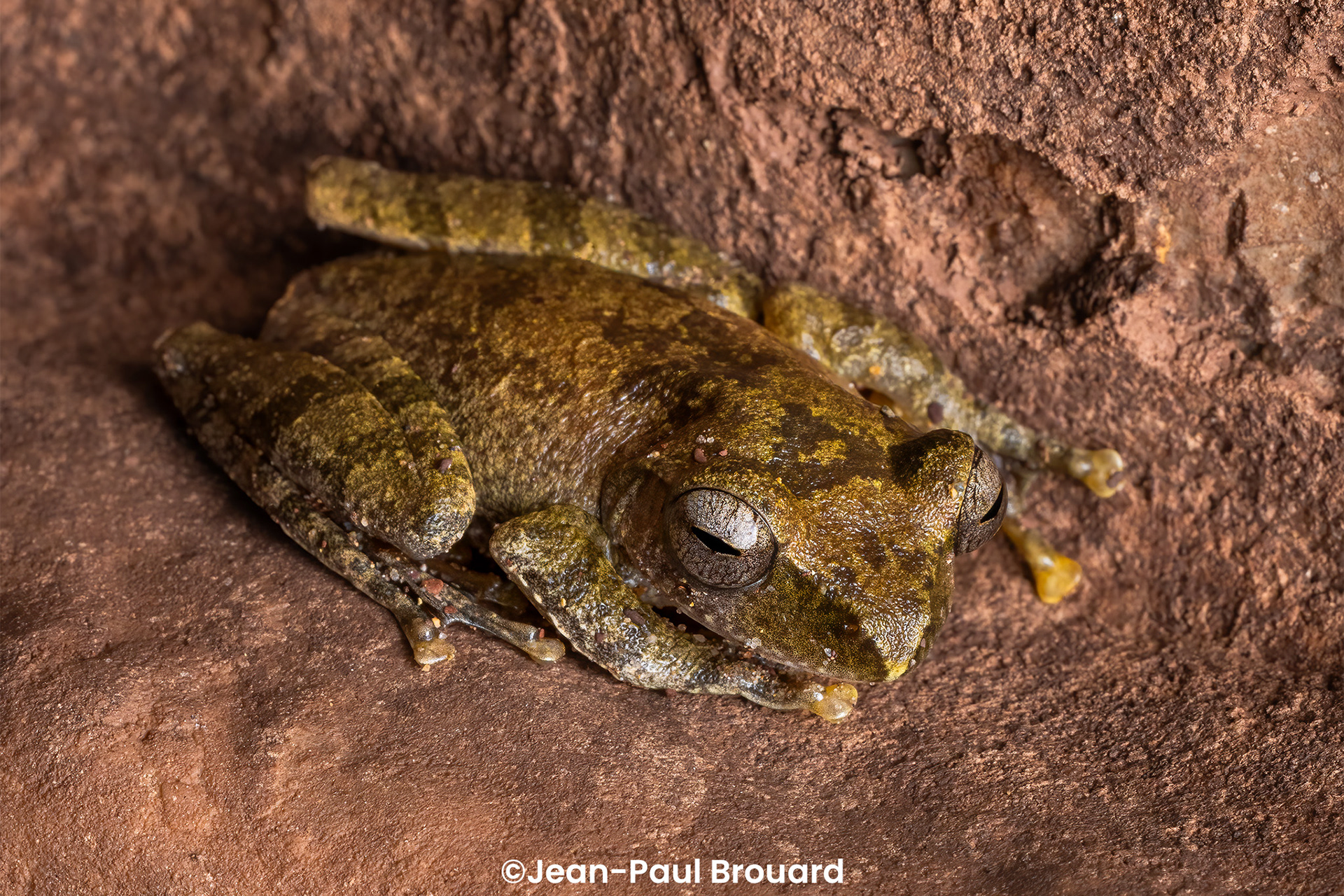
Cave flying frog (Rhacophorus spelaeus).
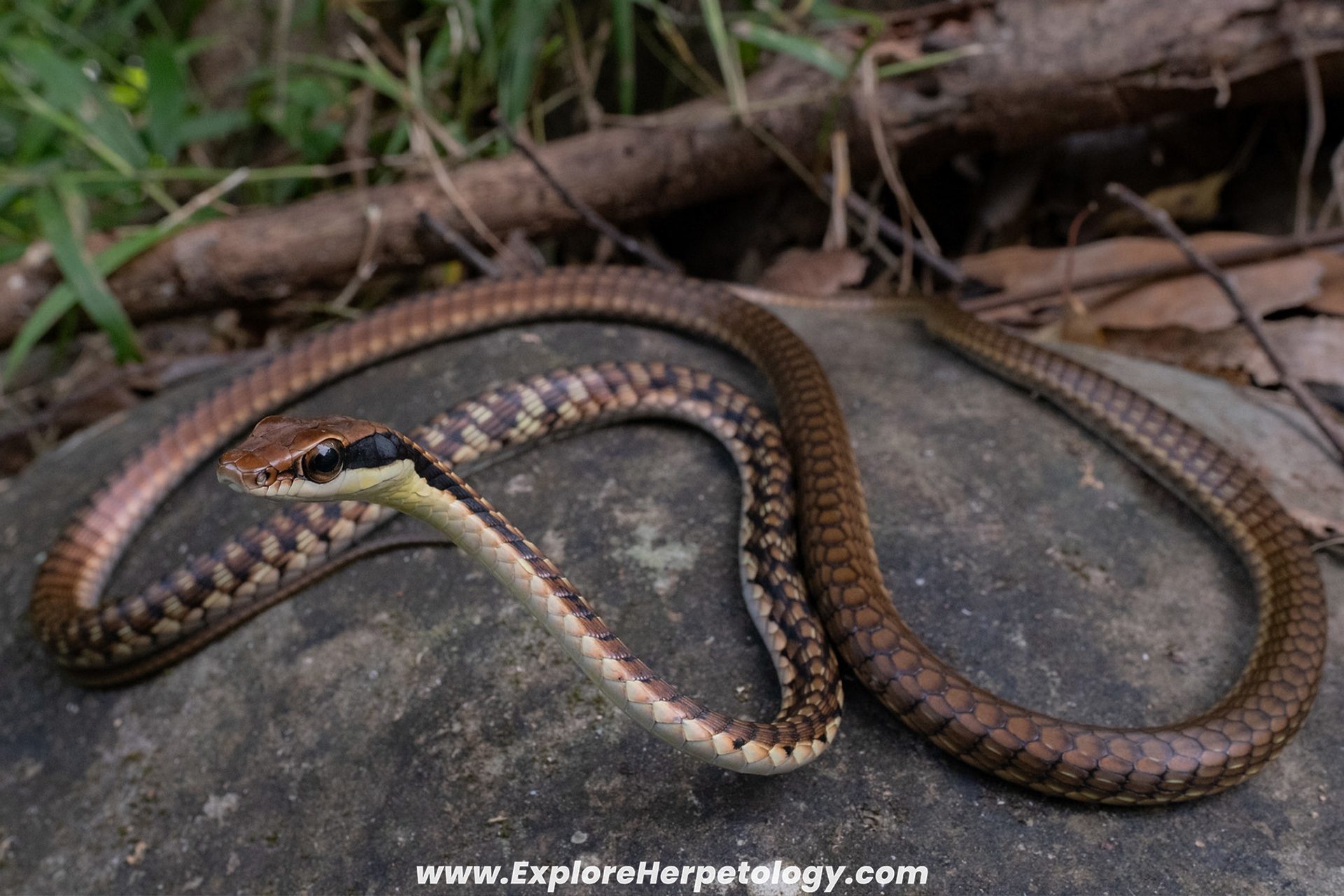
Nganson bronzeback (Dendrelaphis ngansonensis).
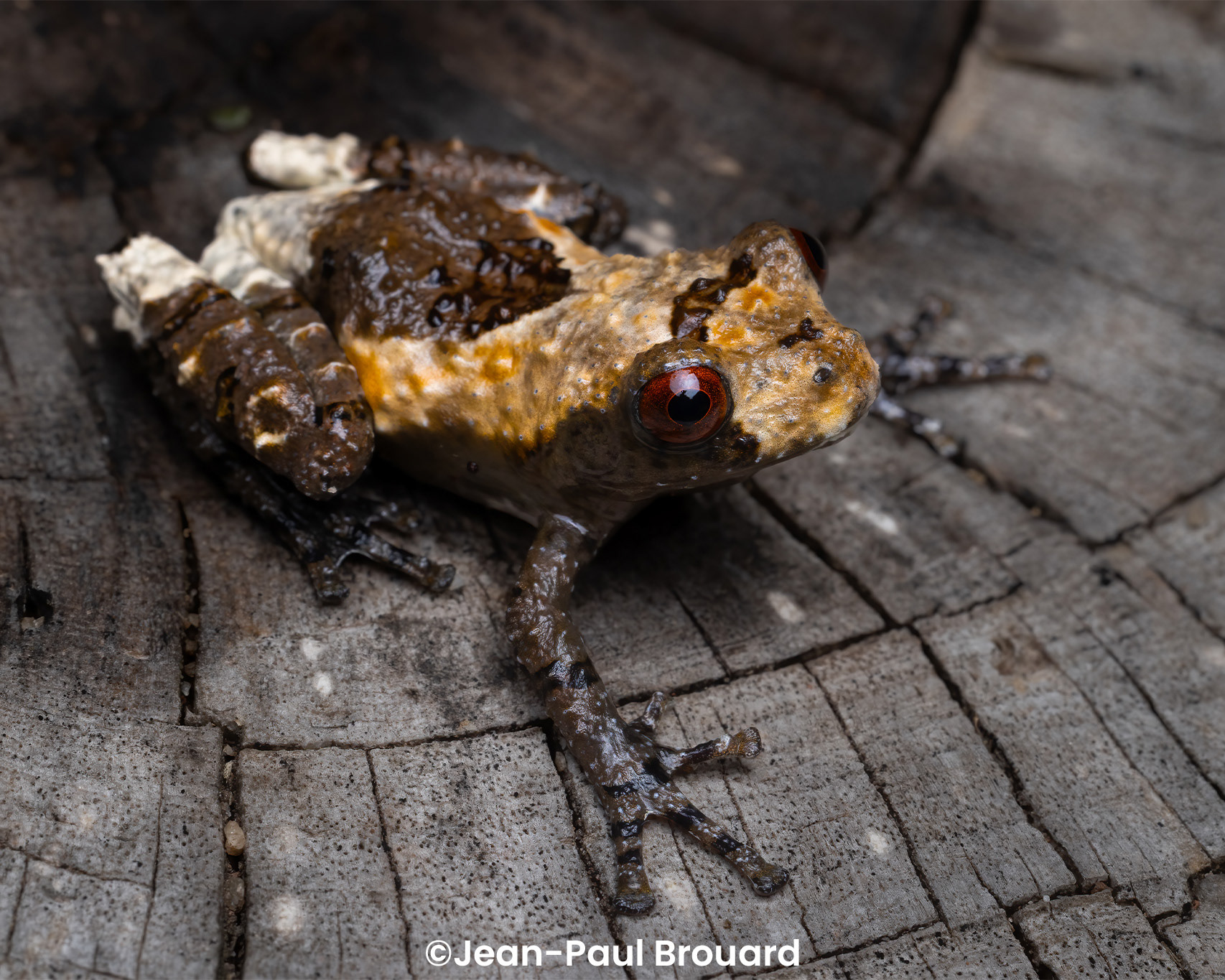
White-backed bug-eyed frog (Theloderma albopunctatum).
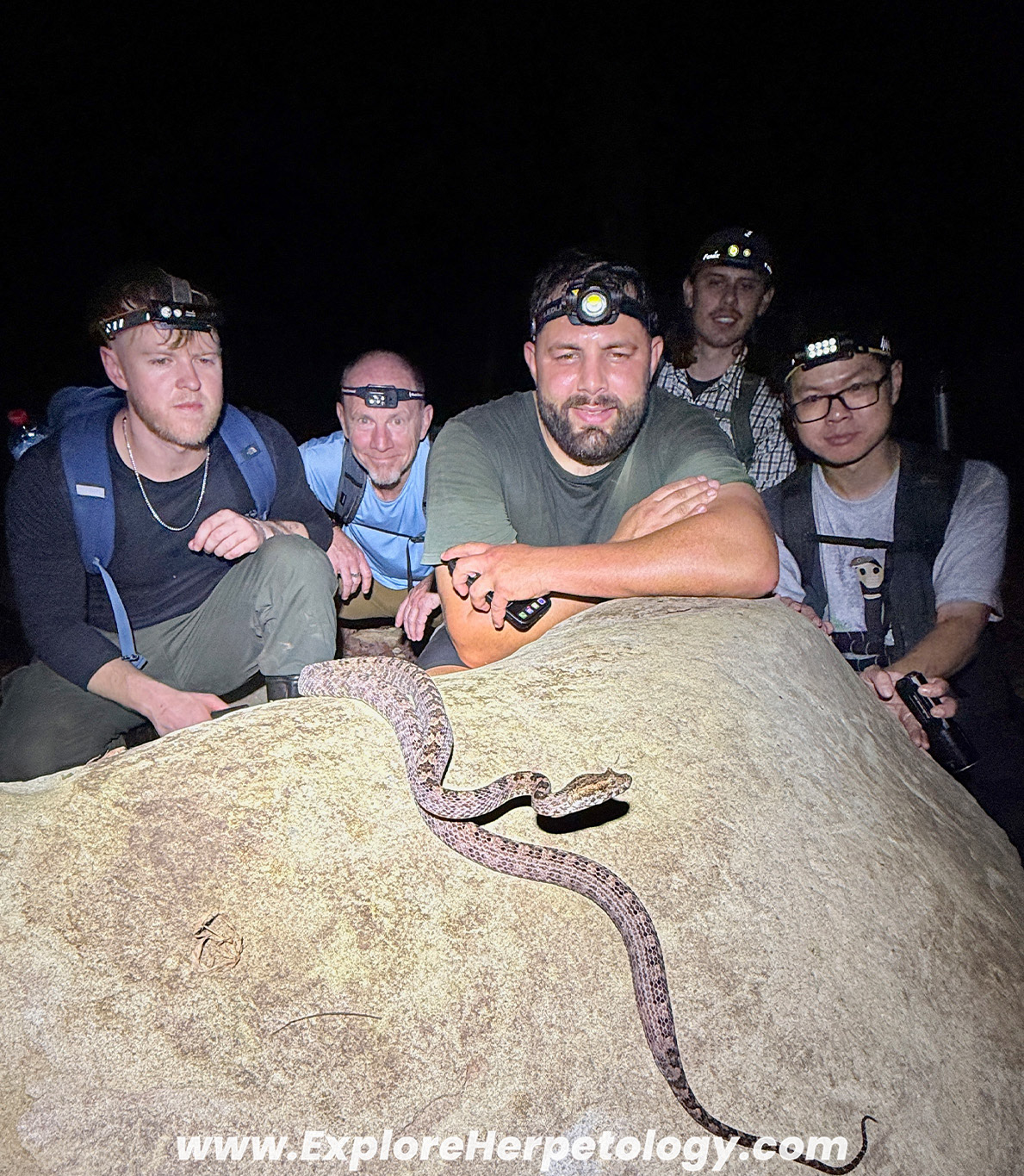
Three-horned lance-headed pit viper (Protobothrops sieversorum).
Three-horned lance-headed pit viper (Protobothrops sieversorum).
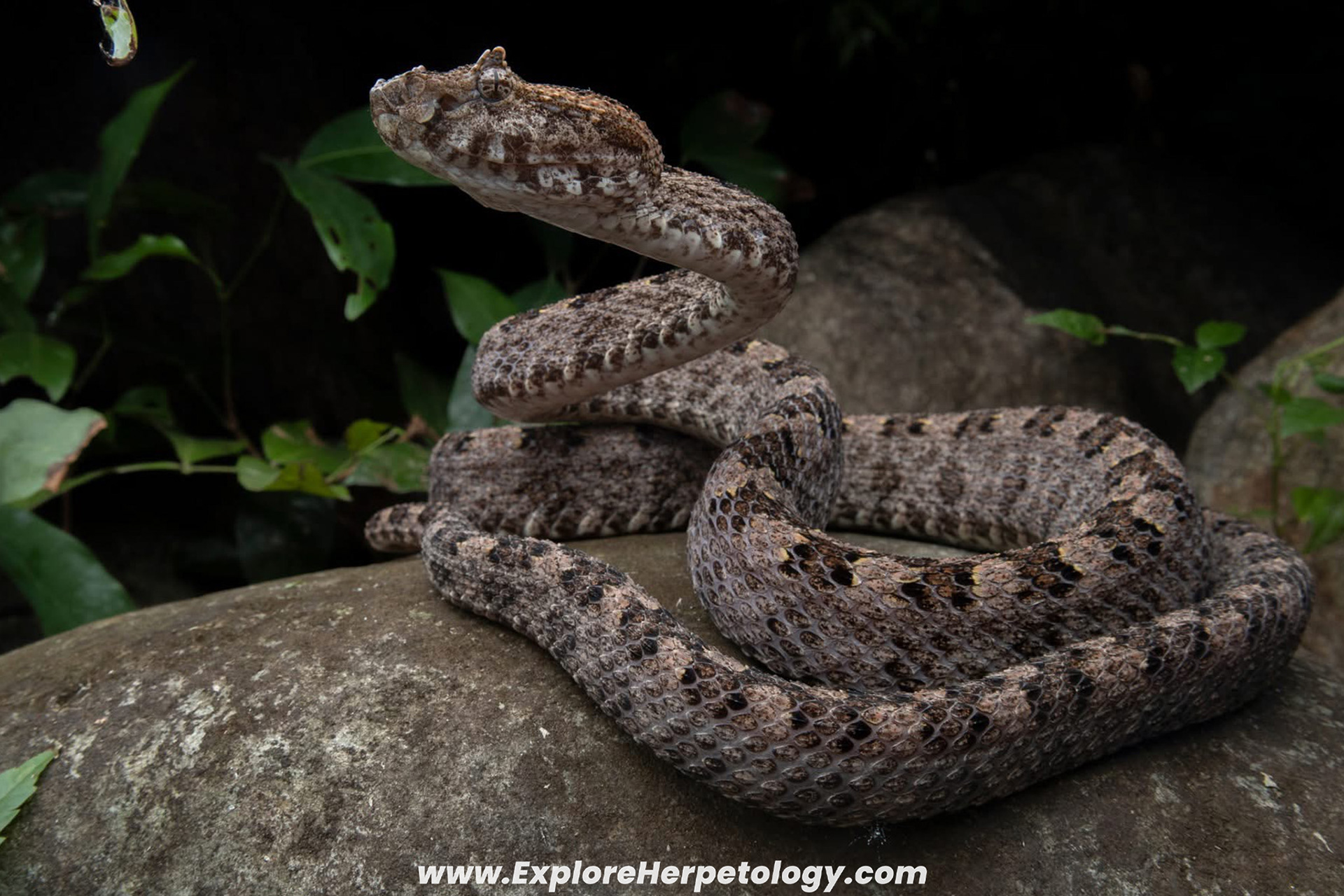
Three-horned lance-headed pit viper (Protobothrops sieversorum).
KHAMMOUANE - DAY 2
After catching up with some photography of the finds from the previous day, we travelled out to a larger, more touristic cave in the mid afternoon. Here, we found an interesting Scincella sp. which we have seen several times in this area, but are yet to get a conclusive identification on. Inside the cave, we searched a deep cavern away from the artificial lighting installed along the main path. In this deep corner of the cave, we found several individuals of Quyet's shrub frog (Gracixalus quyeti). This cave-dwelling frog is highly seasonal, and usually not possible to find in November. This was a huge surprise and a very welcome find.
After dinner, we did an hourlong walk around the resort's elevated boardwalk through the limestone karst. Access to this site is novel and not possible for regular customers, but unfortunately no notable species of herpetofauna were uncovered. From here, we went back to the same trails and cave system which had delivered for us the previous night. Shortly into the walk, we found a Truong Son slug snake (Pareas berdmorei truongsonicus). These must be quite rare, as it was a new (sub)species for all of our team. Further walking turned up two more Nganson bronzebacks (Dendrelaphis ngansonensis). Closer to the cave mouth, we found a young three-horned lance-headed pit viper (Protobothrops sieversorum). Further along the limestone karst formation, we turned up a hatchling individual of the same species. Absolutely fantastic to see all sizes of this species in the first two days.
As we were about to wrap up, we decided to check inside the cave one last time. There were no further Protobothrops inside the cave, but David spotted a large Truong Son pit viper (Trimeresurus truongsonensis) ambushing above the cave entrance. The Truong Son pit viper is considered to be very rare around The Rock, so we were shocked to find two individuals around the same cave.
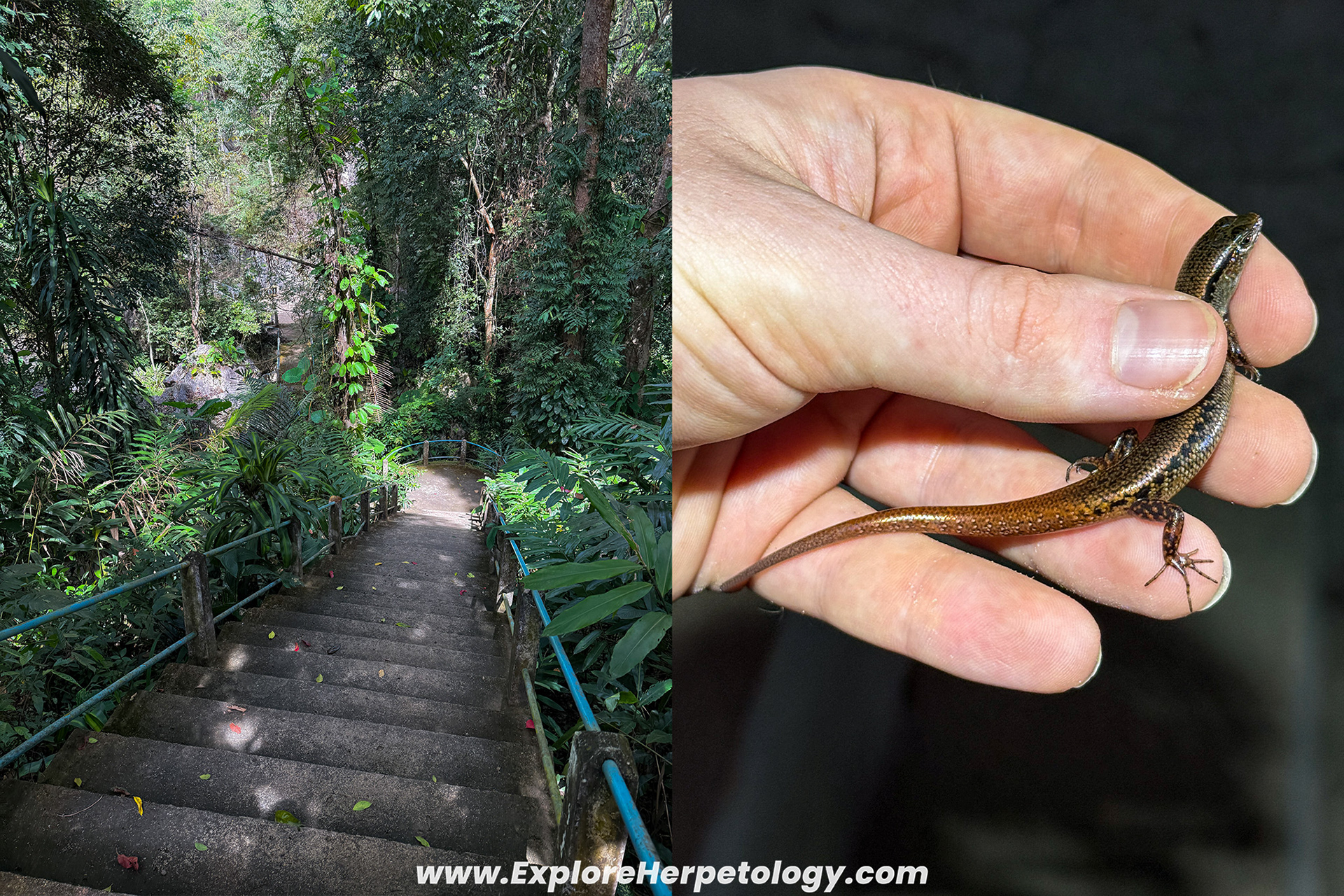
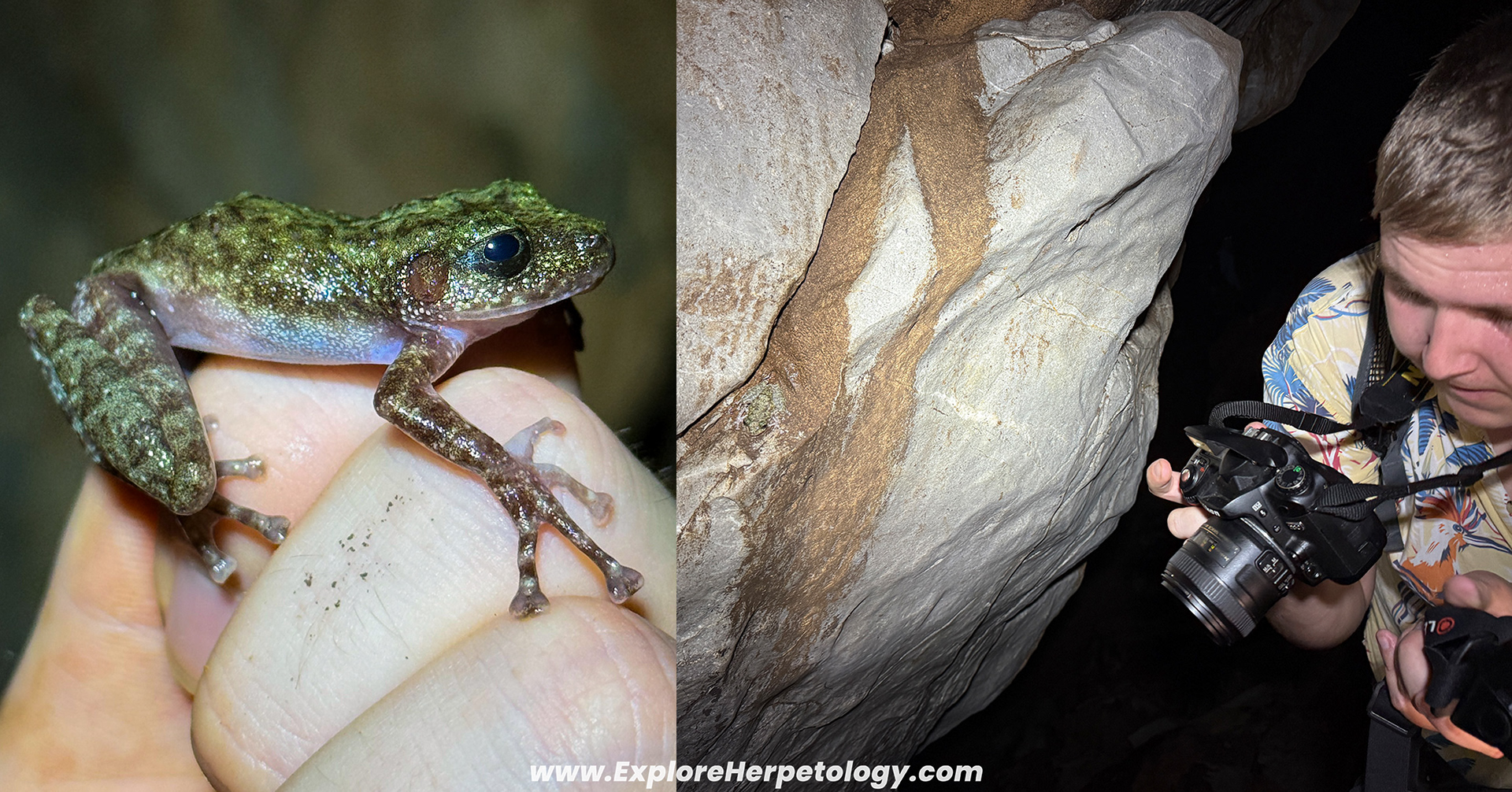
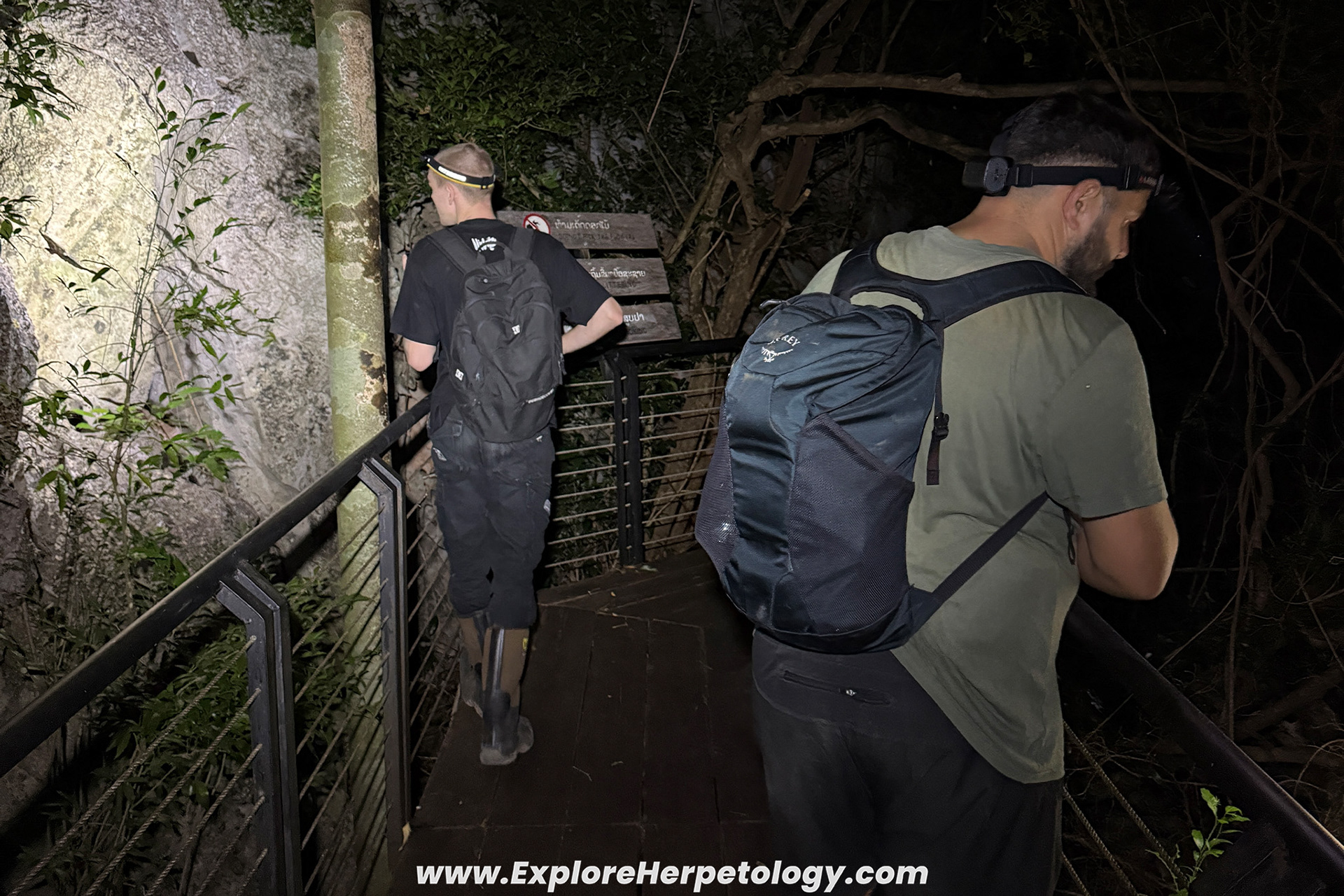
Boardwalking.
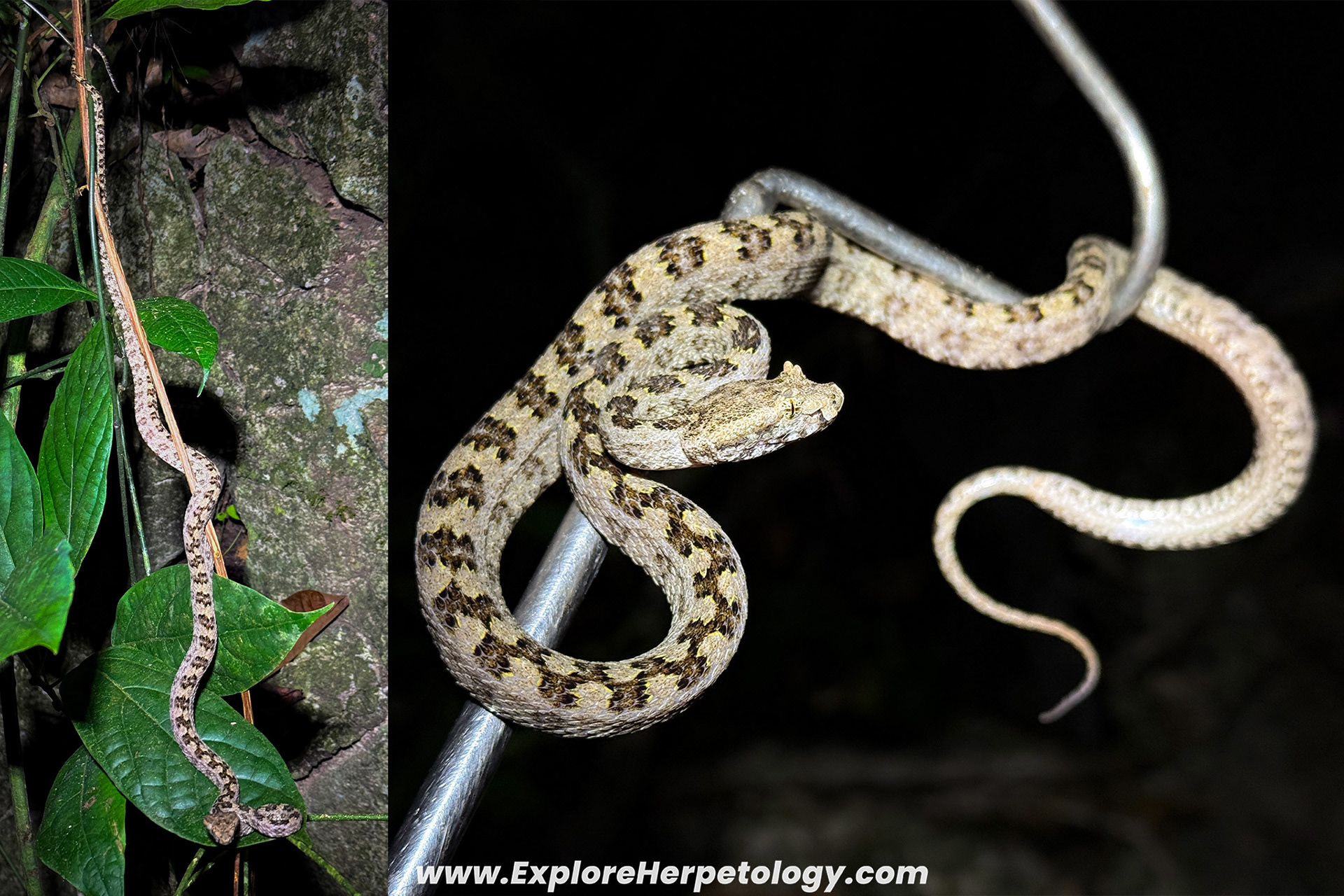
Protobothrops sieversorum sub-adult.
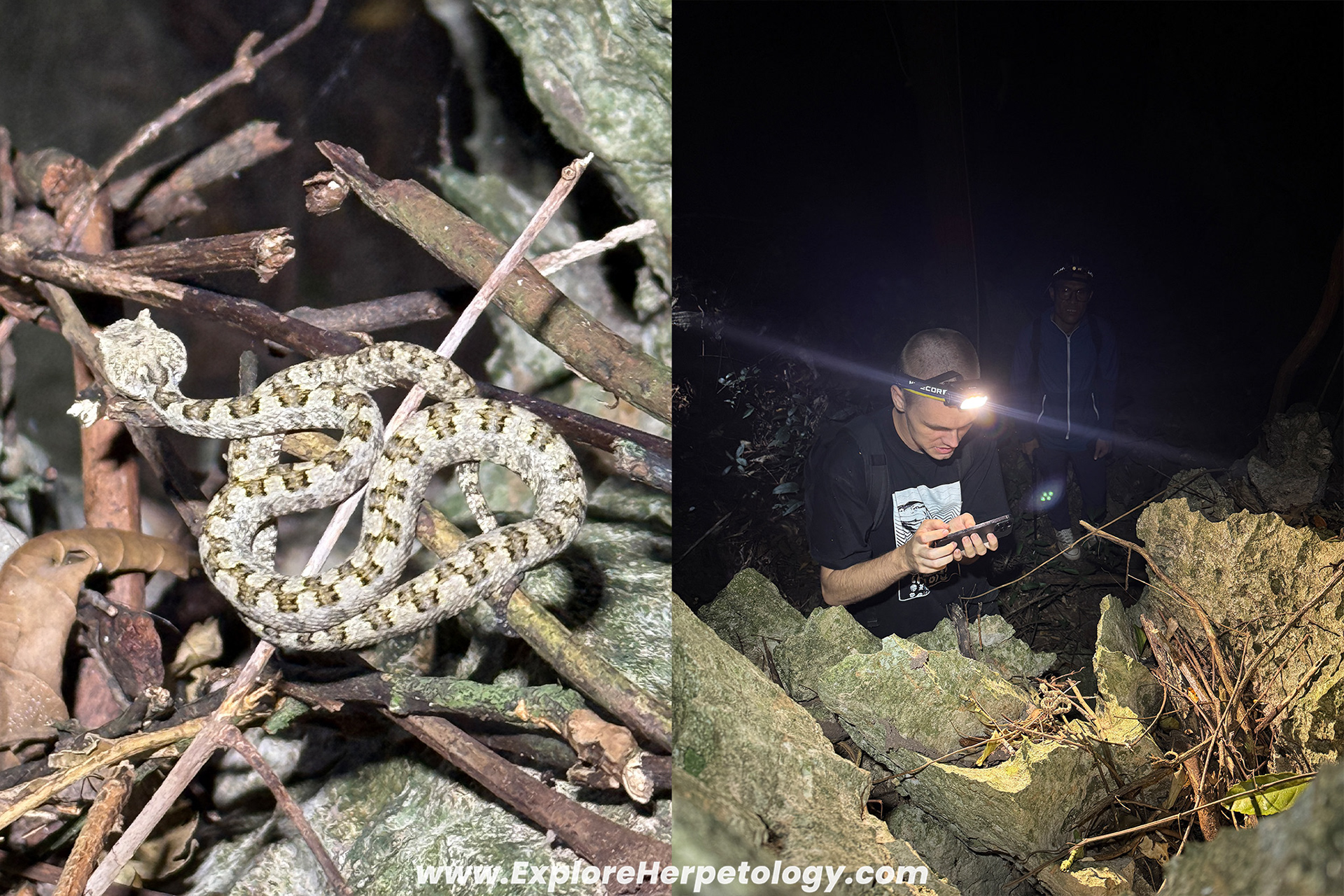
Protobothrops sieversorum juvenile.
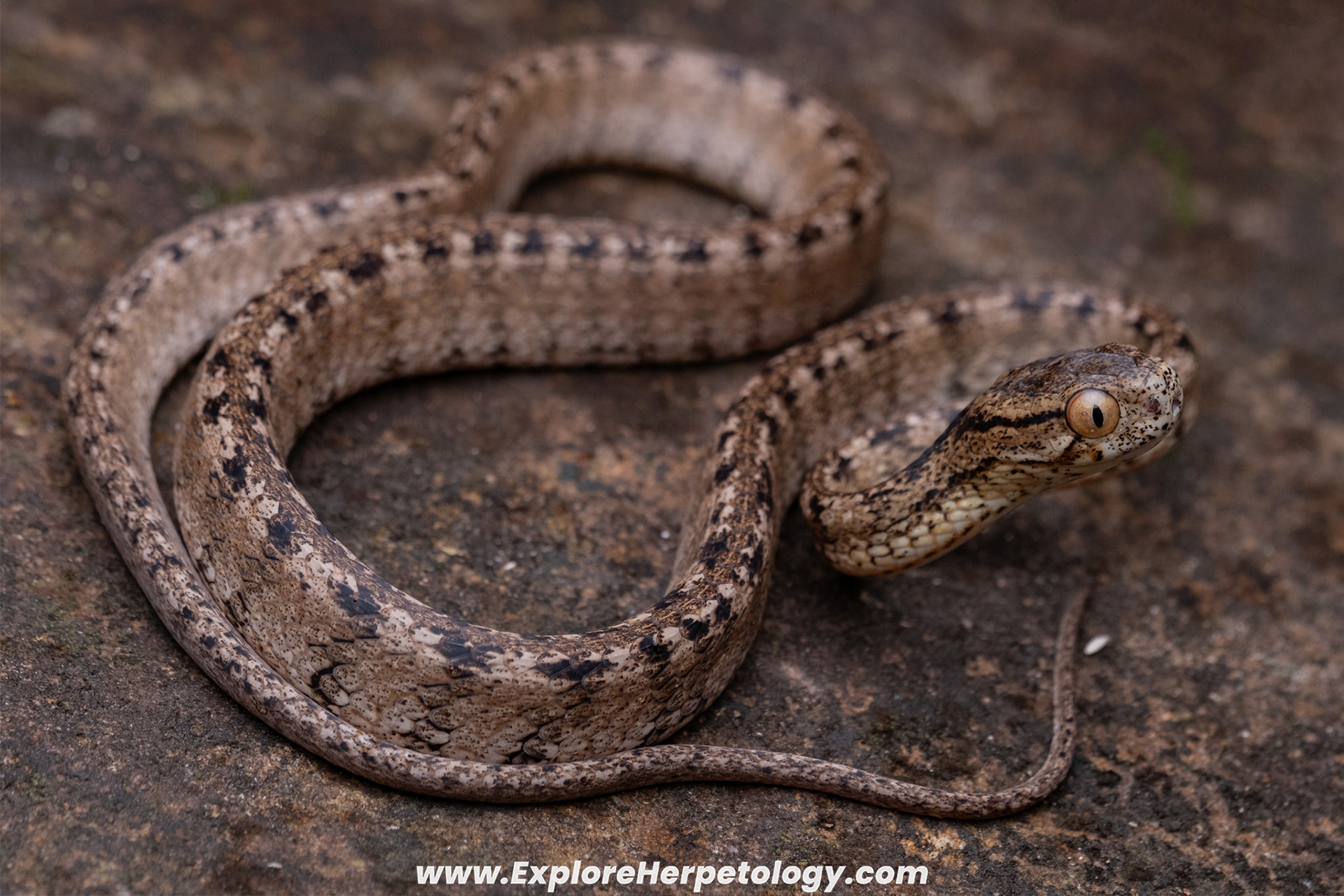
Truong Son slug snake (Pareas berdmorei truongsonicus)
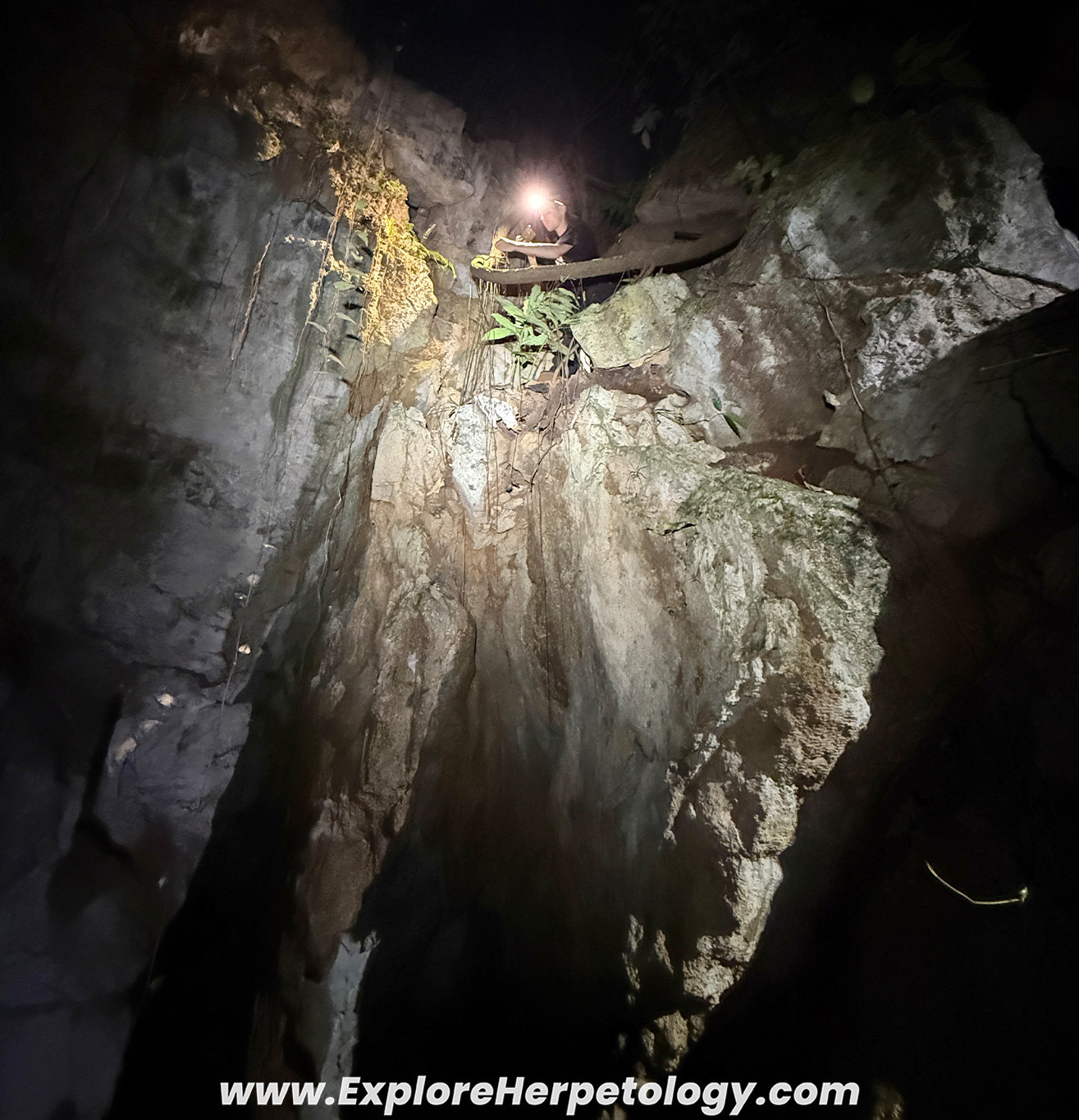
Climbing for the Trimeresurus.
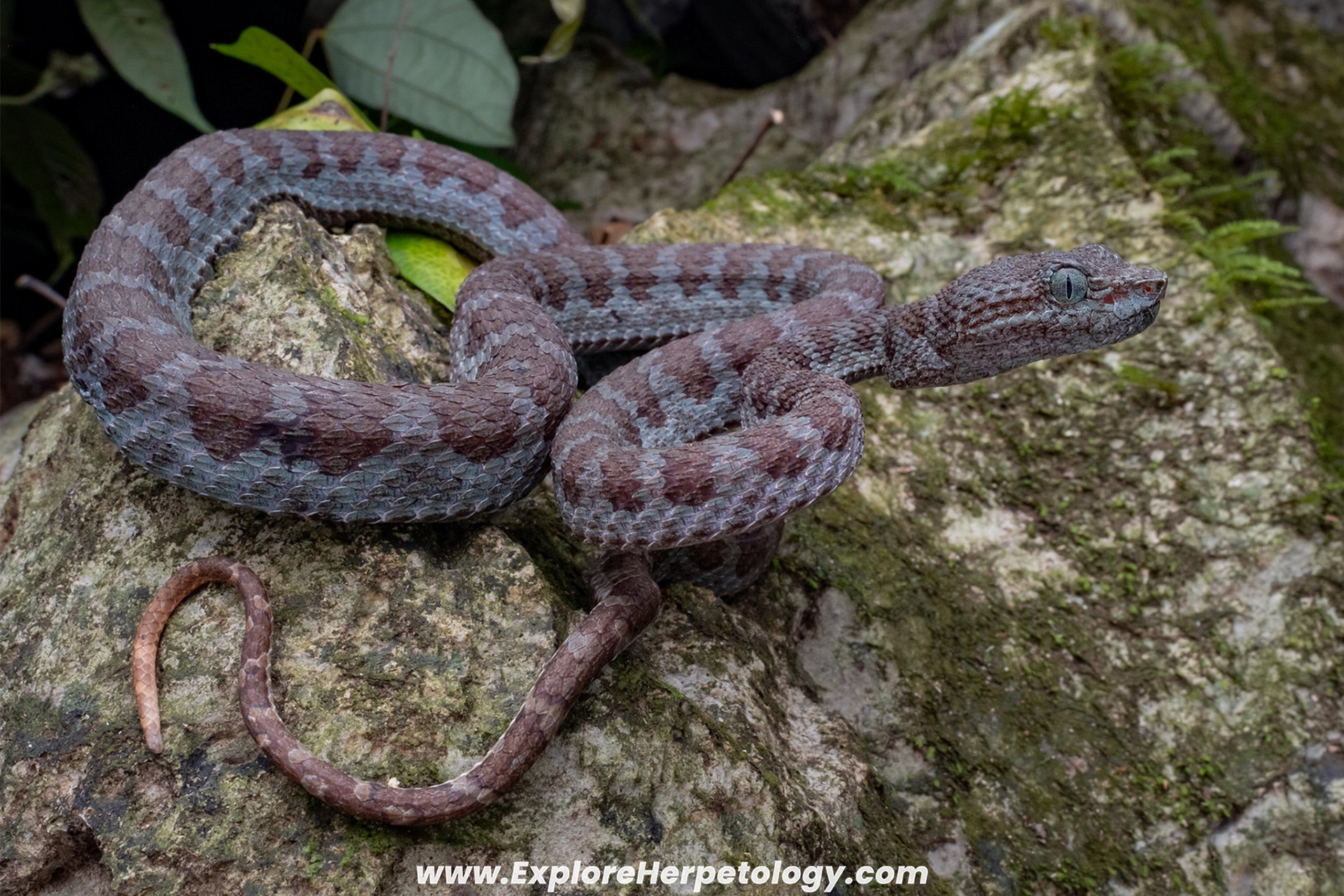
Truong Son pit viper (Trimeresurus truongsonensis)
KHAMMOUANE - DAY 3:
We took the morning off on our third day, preparing for a an absolutely massive hike we had planned. We were due to leave at 3pm for an estimated 7 hour hike to some very remote caves deep into the limestone karst valleys, hoping for an encounter with the very rare Khammouane wolf snake (Lycodon banksi) which had been sighted in these caves in the past. Hereby, we picked up a packed-lunch dinner from the restaurant, and began our journey through the valleys.
The hike was extremely complicated, following an old GPS track from a previous hike of ours. We made several mistakes, and wasted a lot of time trying to find the best route through certain sections of sharp karst rocks. During this process, and still in the daylight hours, we found two individuals of a strange kukri snake (Oligodon) which we cannot show yet, as it is likely a new record for Laos. We also encountered two vine snakes (Ahaetulla sp.) of interesting taxonomic status. One individual was totally white.
The hike had already been a resounding success at this point, but we pushed on until we reached the caves. Sadly, there was absolutely nothing but cave flying frogs inside - and some of us were so tired we considered sleeping there and heading back in the morning. However, we found the motivation to embark on the long hike back. En-route, we encountered a Malayan krait (Bungarus candidus) - a snake many people in the group were extremely happy with. With our refreshed knowledge of the route, the hike back turned out to be considerably easier than the hike to the cave, and we returned to the cars before 11pm. We treated ourselves to some cold ciders and beers before much-need sleep.
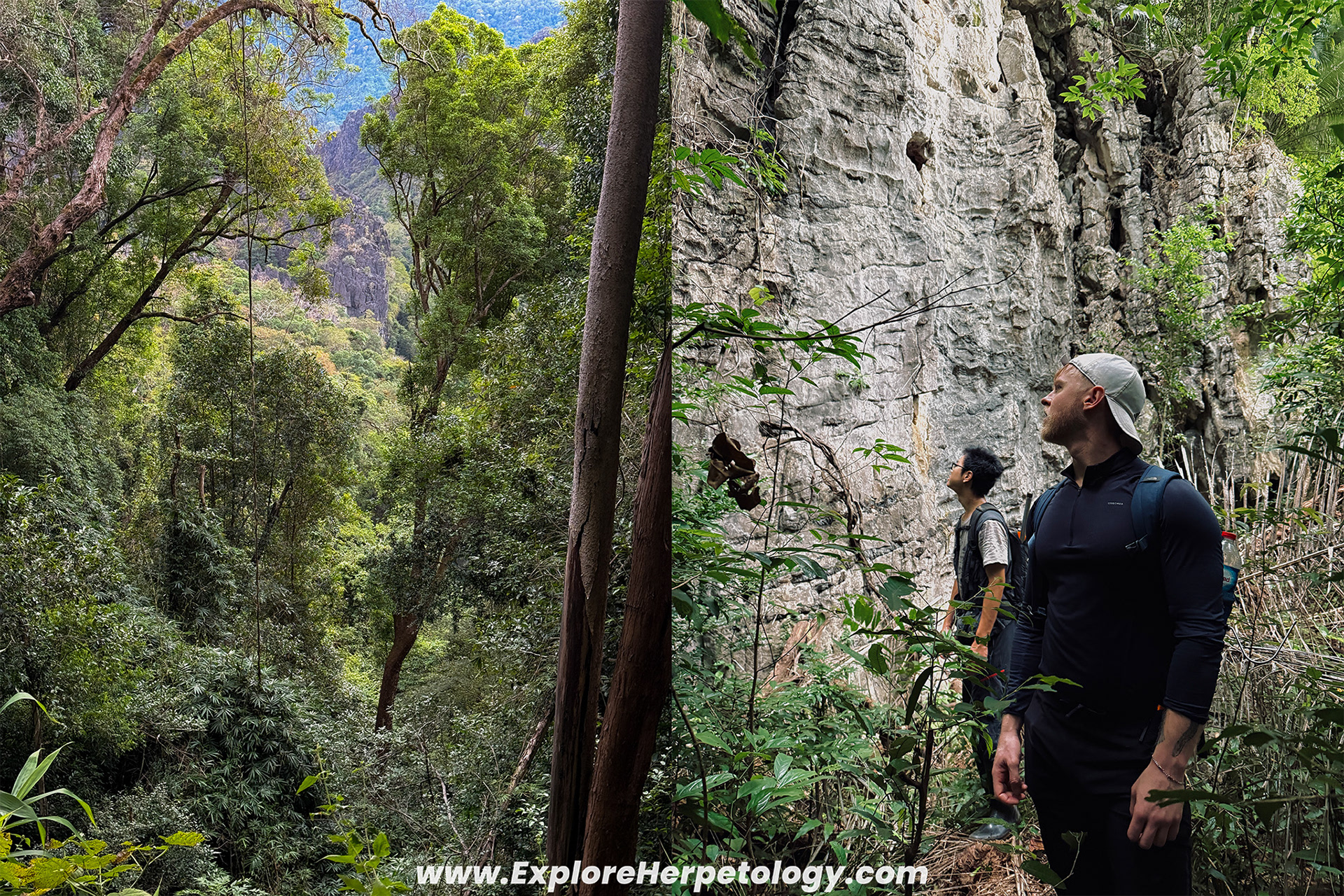
Incredible views during our up-and-down hike.
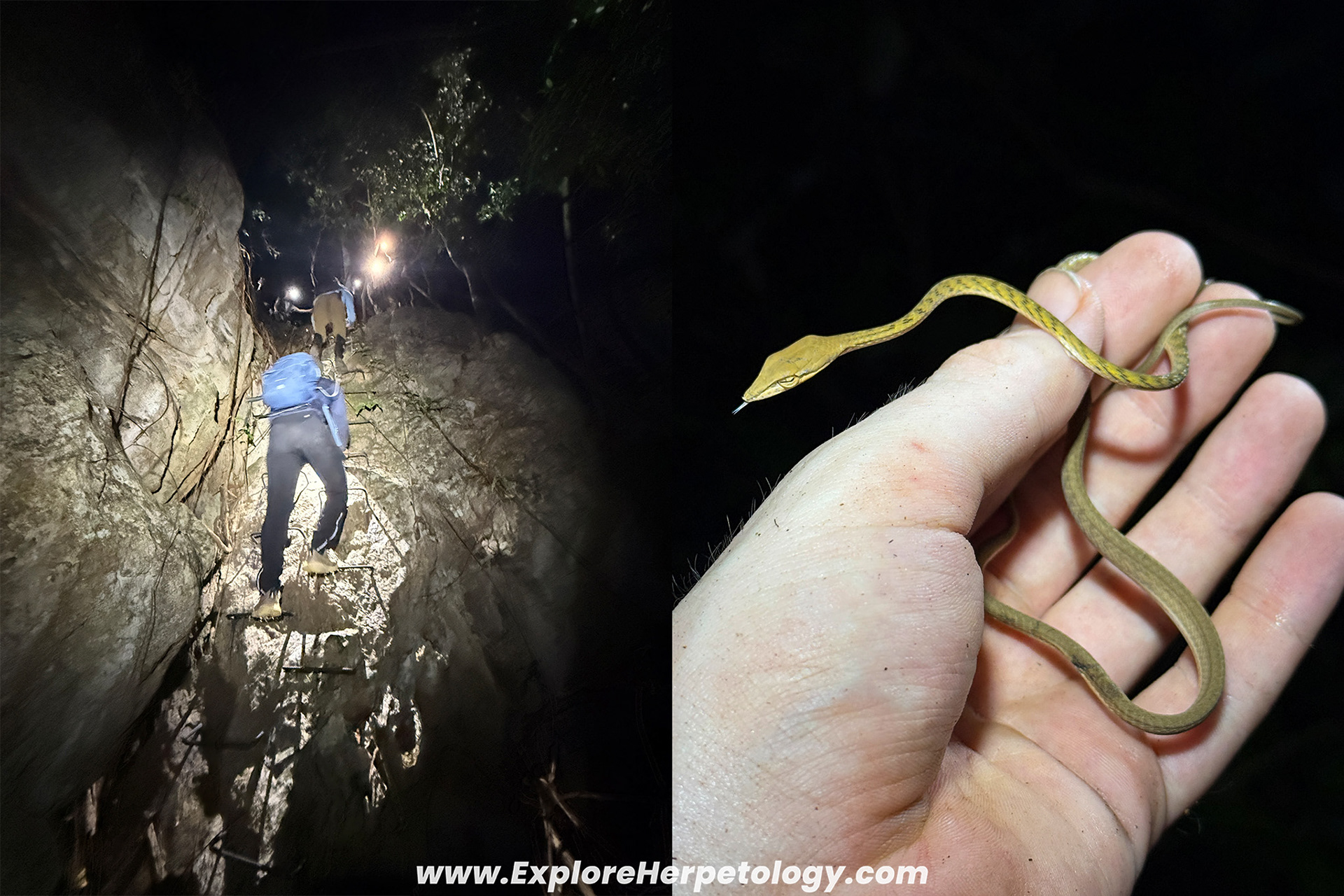
Steep climbs and skinny snakes.
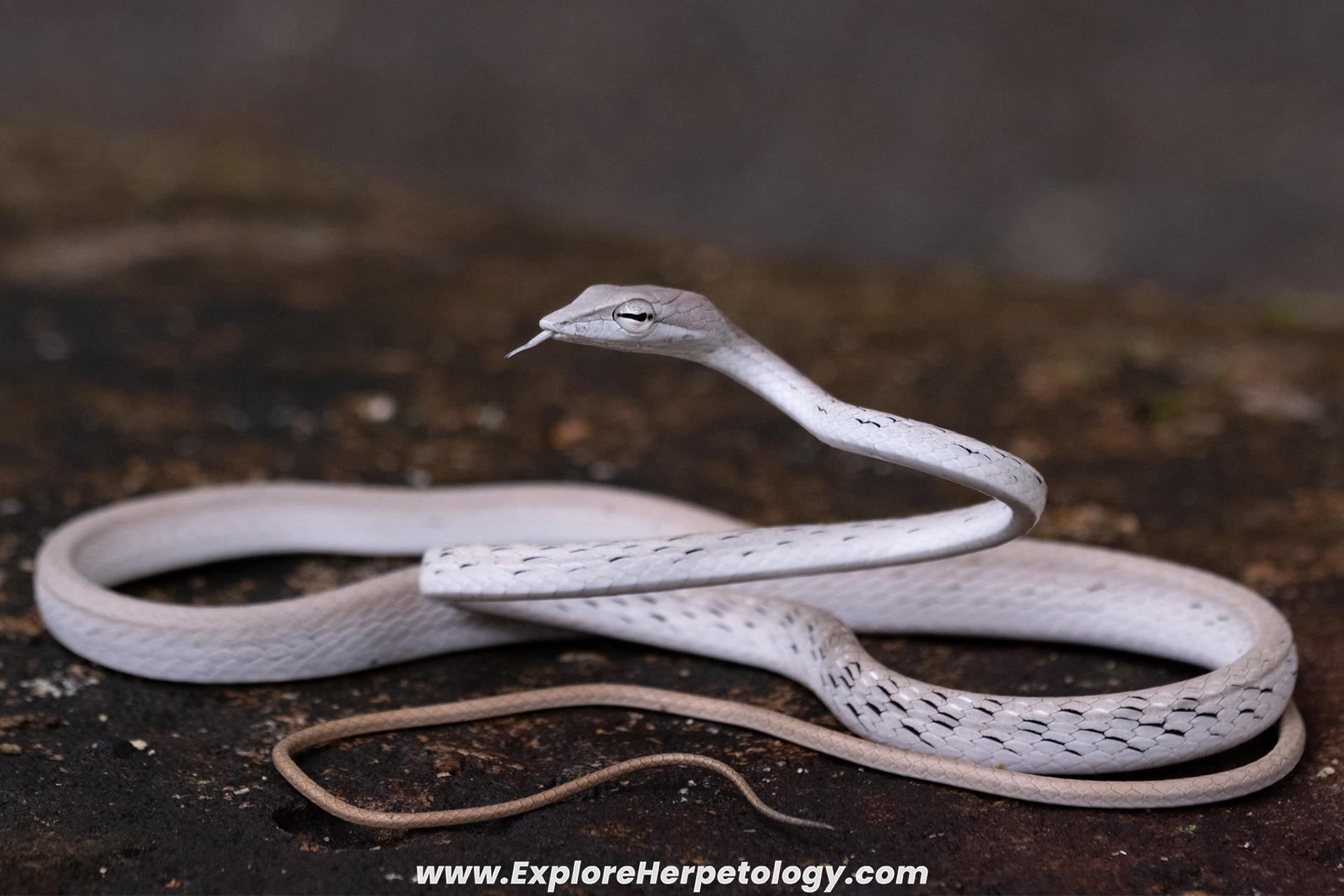
White morph vine snake (Ahaetulla sp.).
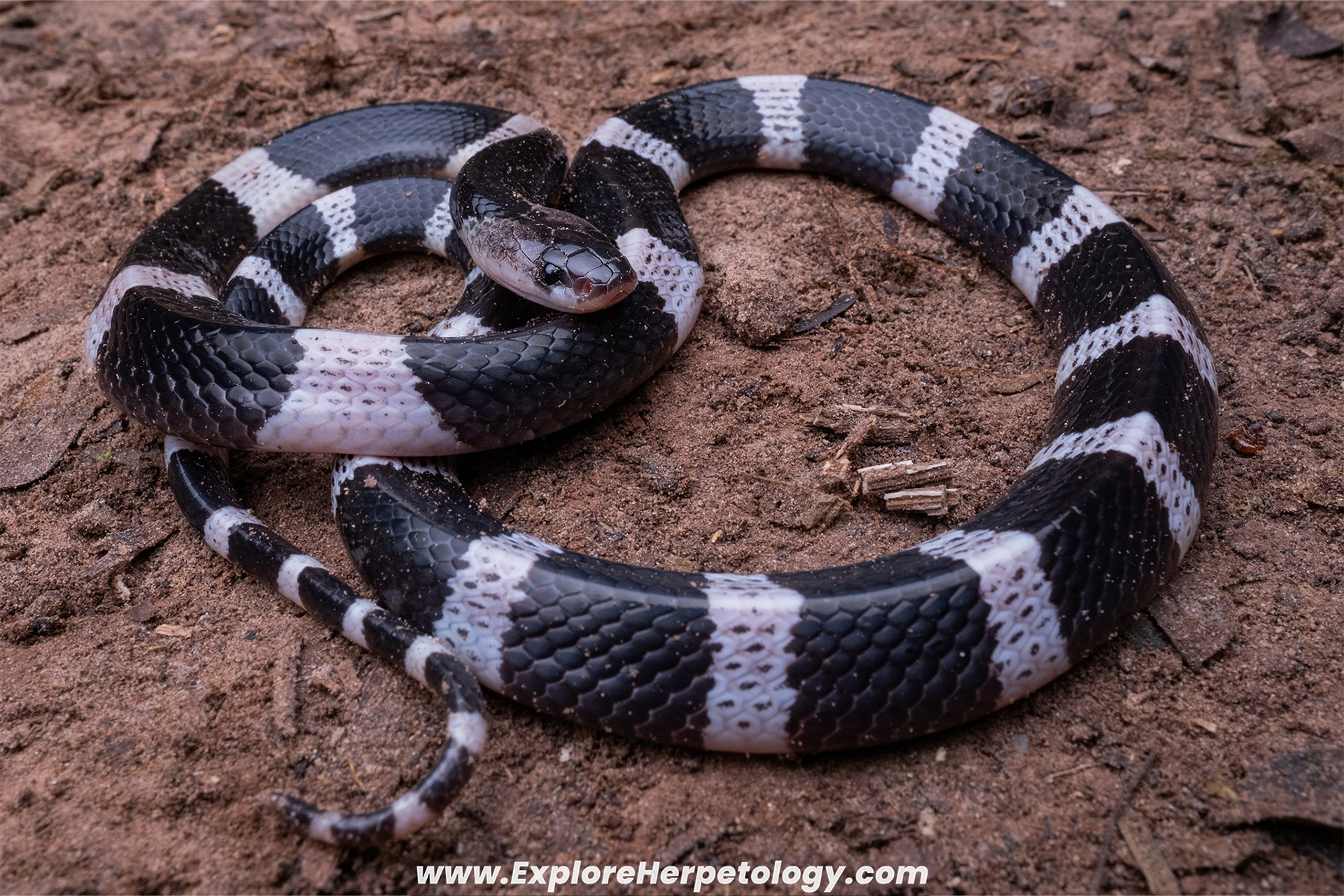
Malayan krait (Bungarus candidus).
KHAMMOUANE - DAY 4:
After the massive 7 hour limestone karst hike from the previous day, we were all pretty tired. This provided the perfect opportunity to search for our final key target remaining for this locality, the Khammouane karst dragon (Laodracon karsticola). This monotypic genus of lizard was described from individuals collected at The Rock, and is endemic only to this karst massif in Laos - discovered thanks to The Rock's elevated karst boardwalk complex. This species lives on the exposed karst pinnacles at the very top of the tallest formations, and would have been almost impossible to find and capture if not for the boardwalk.
There is a very specific part of the boardwalk which has by far the most sightings of this species, so we focused our effort here. After a while, David declared that he had spotted one, an adult male silhouetted against the sky on a pinnacle also adorned by the similarly endemic Bare-faced Bulbul. While sighting these lizards is not challenging if you know where to look, catching them can be almost impossible due to the makeup of the pinnacles and how incredibly dangerous it is - with 3 story drops on all sides. That said, David and Kuet gave it a shot. They climbed up a terrifying pinnacle, and made their way along the ridge towards the lizard - which relies heavily on its monochrome camouflage to remain undetected. David and Kuet approached from two sides, with David slowly creeping towards it until he made a lightning fast grab - just getting hold of it by the base of its tail. Success! Getting this incredible endemic in-hand was something we were not expecting during this expedition.
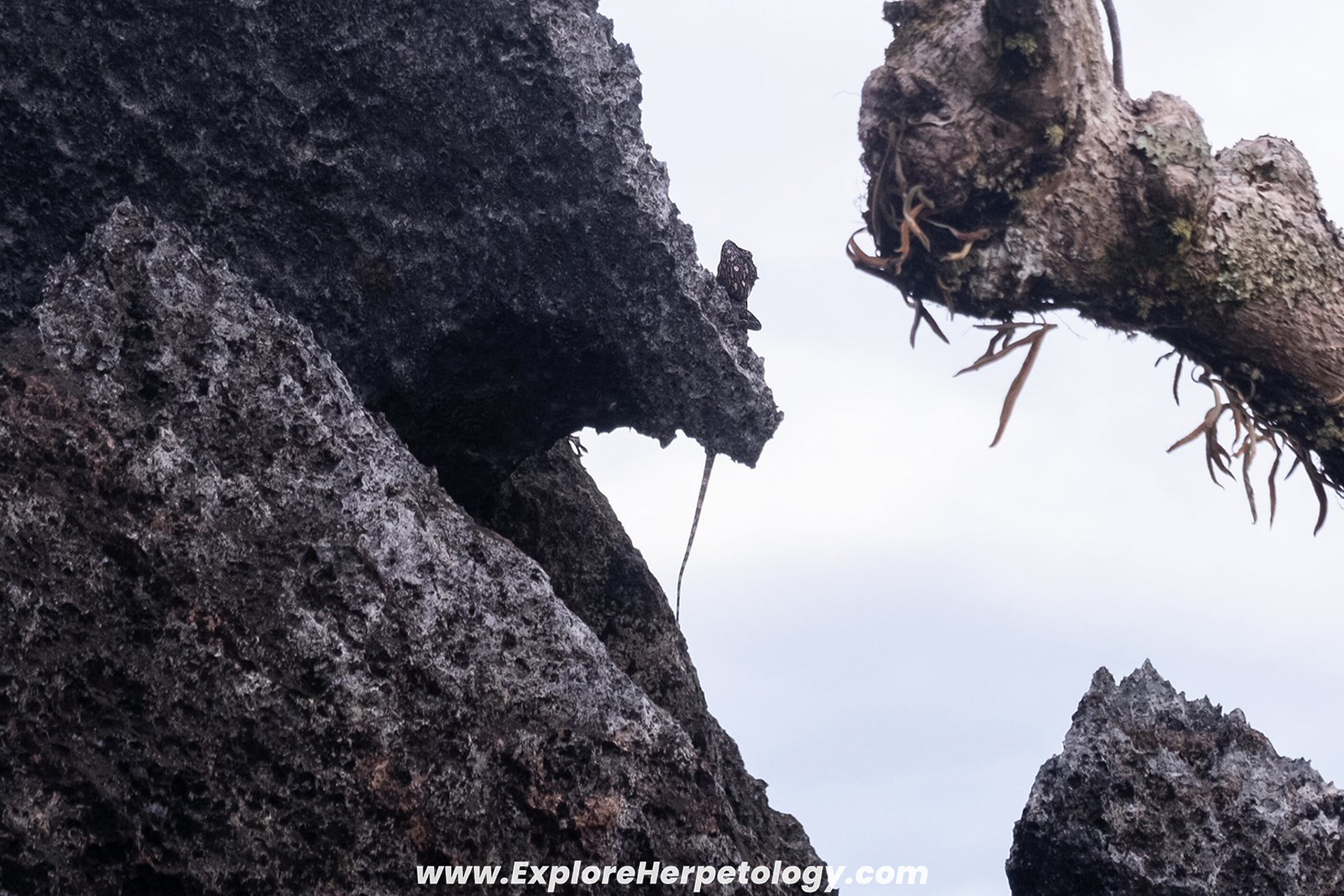
Khammouane karst dragon (Laodracon karsticola)
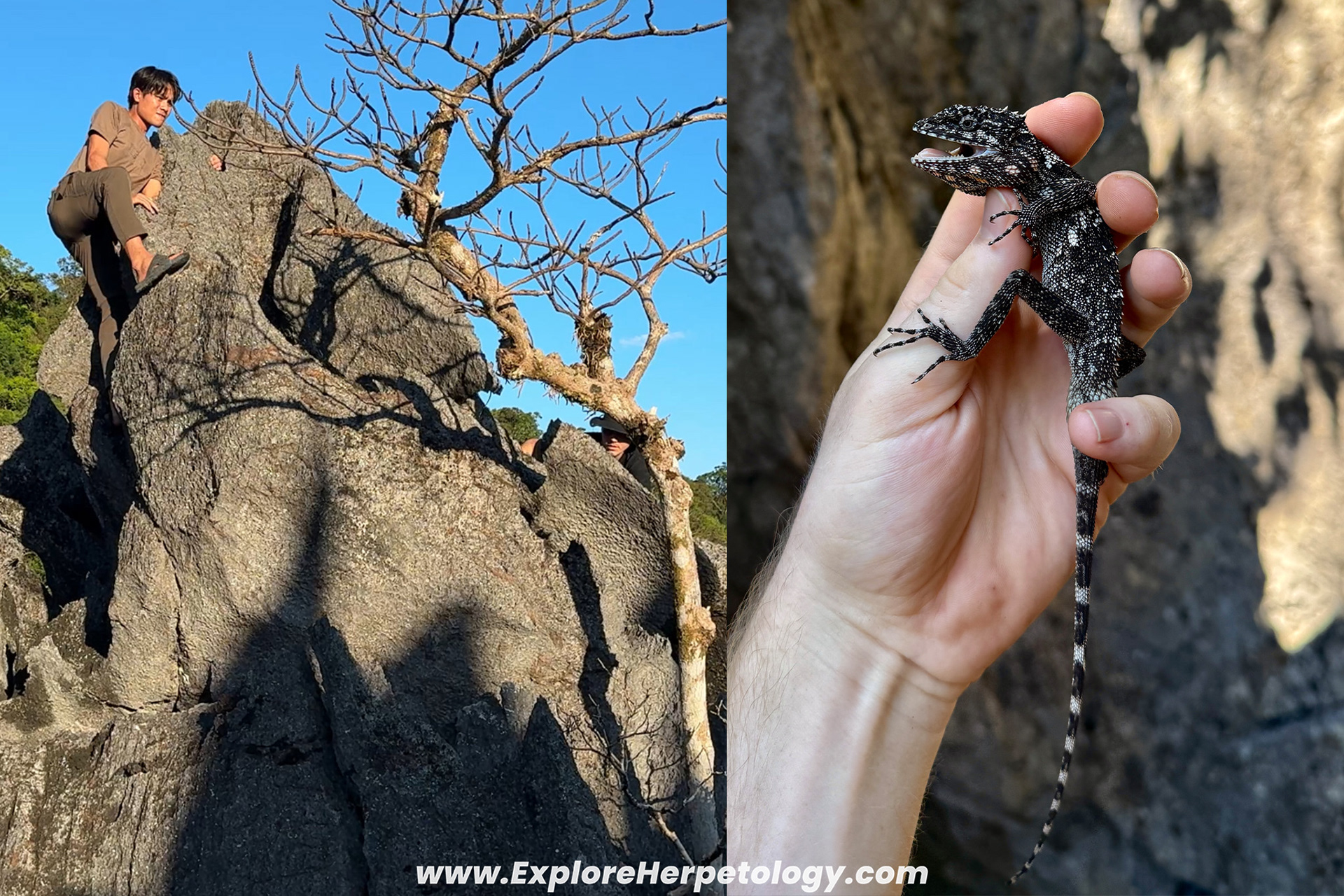
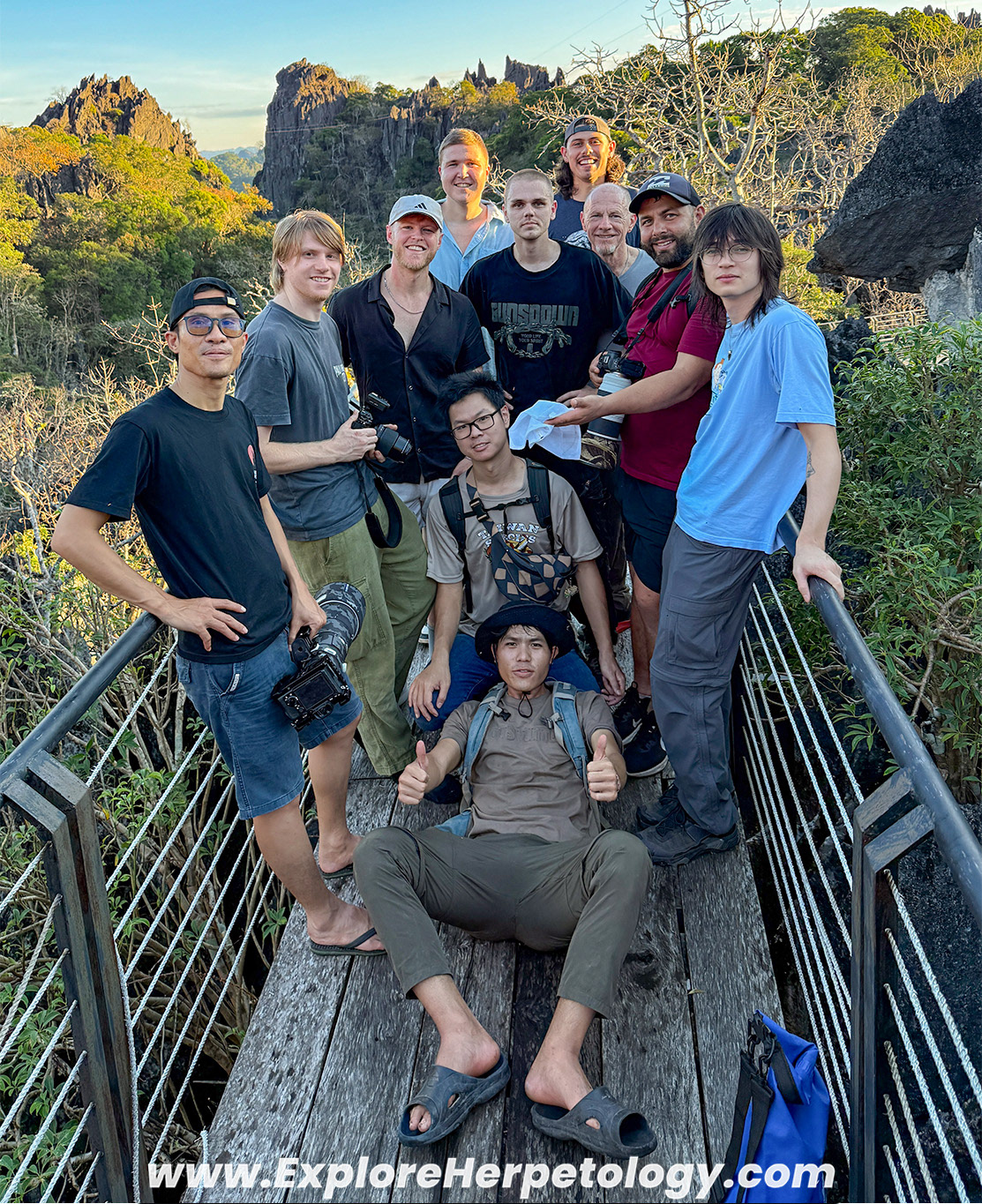
Our group post-capture.
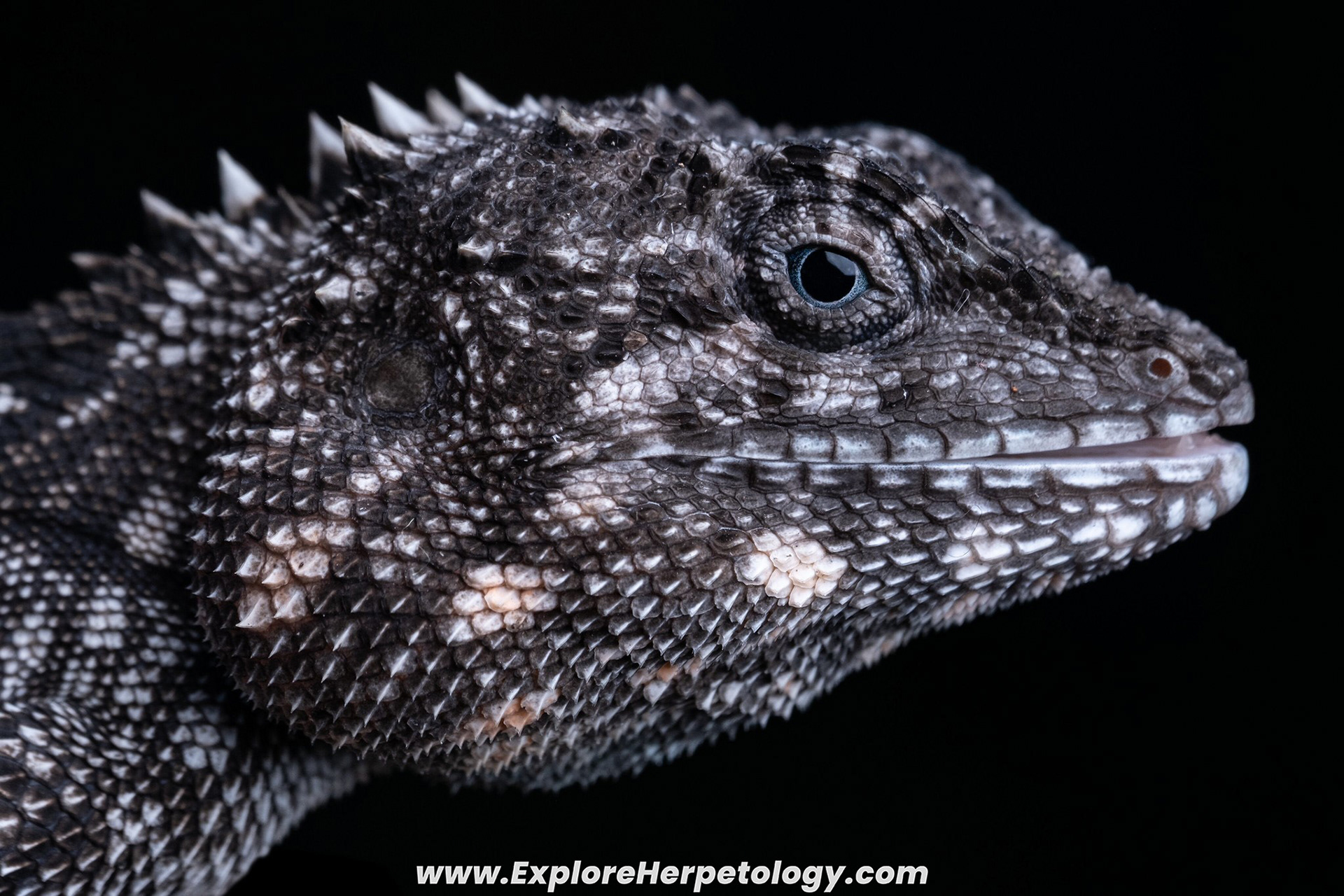
Khammouane karst dragon (Laodracon karsticola)
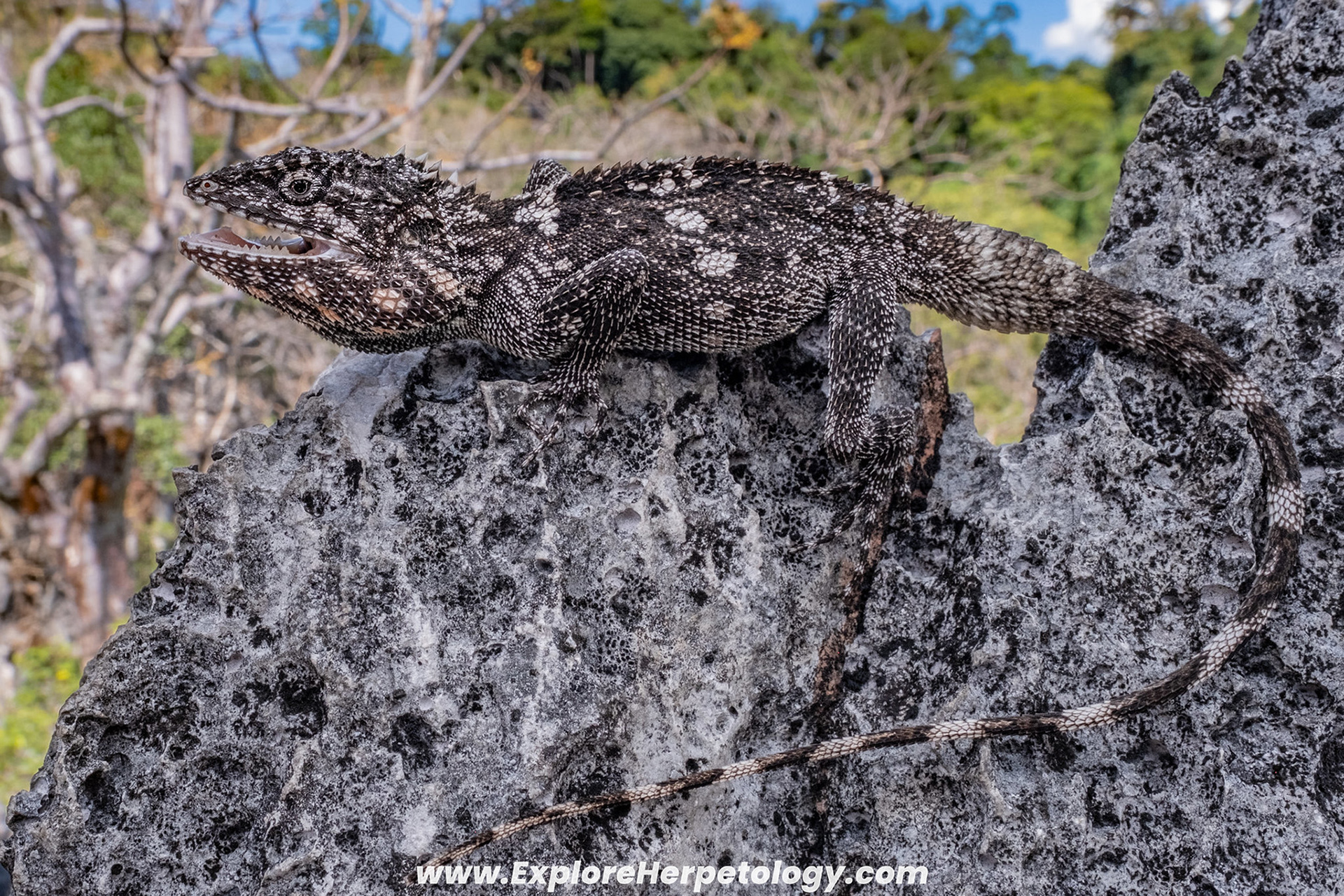
Khammouane karst dragon (Laodracon karsticola)
With such a successful few days, our plan was to wind-down with some light herping on our final night in north Khammouane, splitting the teams between the typical trail system and the sandstone forest to try to get some new species for the trip. We did not see anything on the trail, so we decided to check inside the cave which had delivered both Protobothrops and the Truong Son pit viper in previous visits. At first it seemed like nothing was there, but then Rupert spotted something glistening high on the cave roof. It was very difficult to tell what it was, but a zoomed in photo showed it to be a very glossy snake with yellow banding... the Khammouane karst wolf snake (Lycodon banksi)!
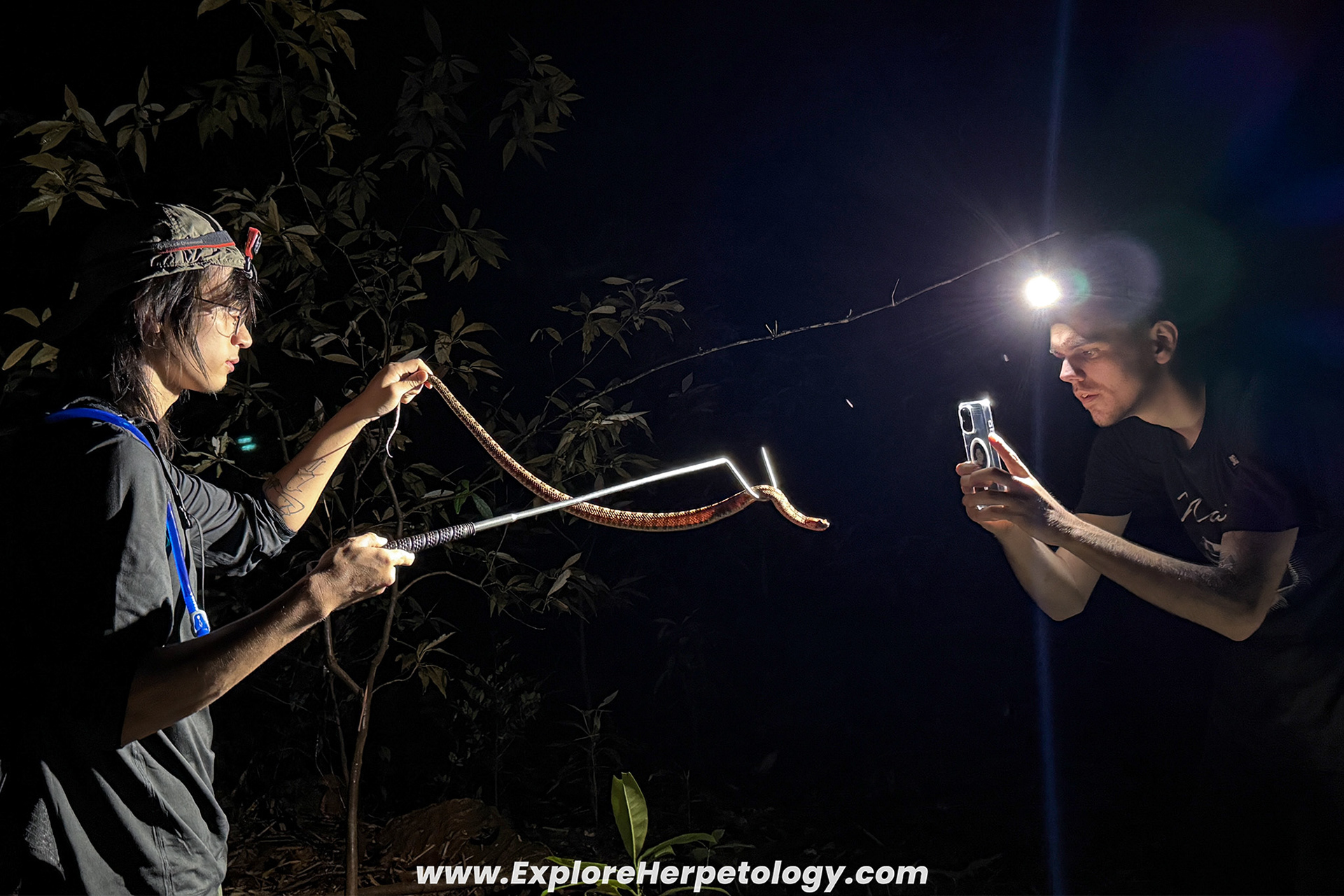
After a massive, hour-long effort to retrieve it from arguably the hardest and highest point of the cave, we were able to use our 8 meter extendable pole to make it jump down into the hands of one of our team. So there it was, our last remaining key endemic from the Khammouane region - all within the first 4 days. This northern Khammouane micro-endemic wolf snake was a lifer to everyone in our group. Even better, the group which went to the sandstone forest were able to find a lovely little mock viper (Psammodynastes pulverulentus), so we got two additional species of snake on this incredible day.
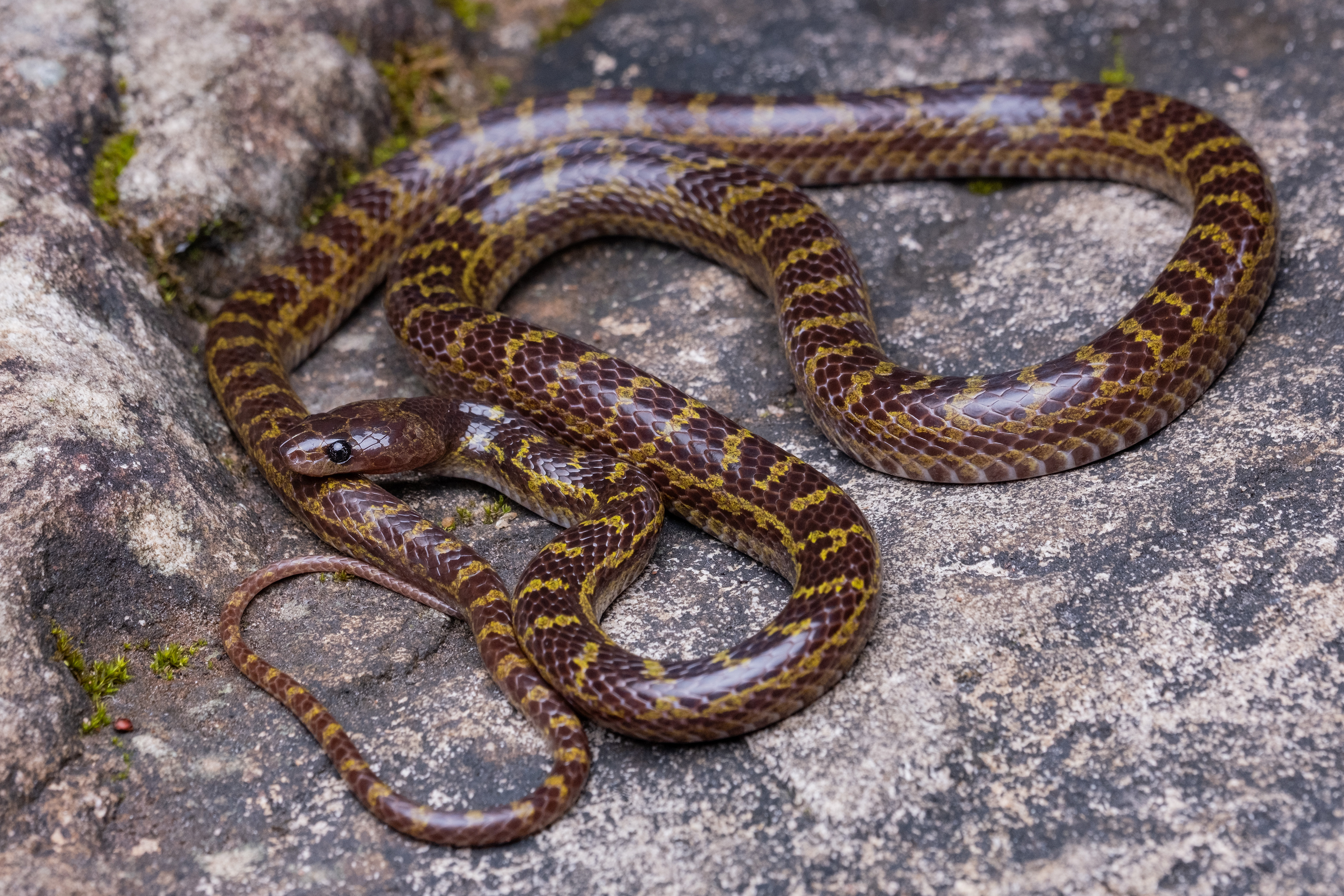
Khammouane wolf snake (Lycodon banksi)
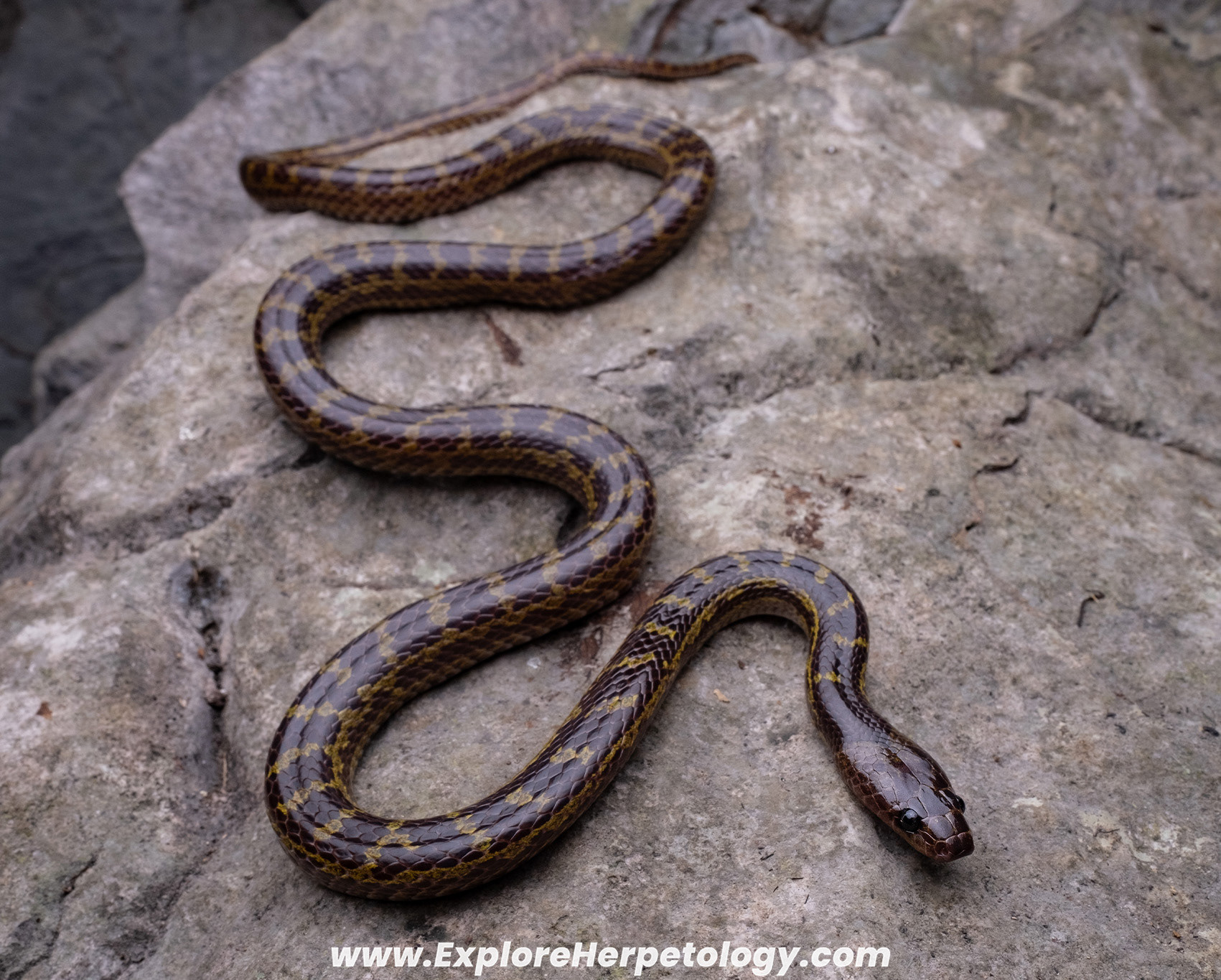
Khammouane wolf snake (Lycodon banksi)
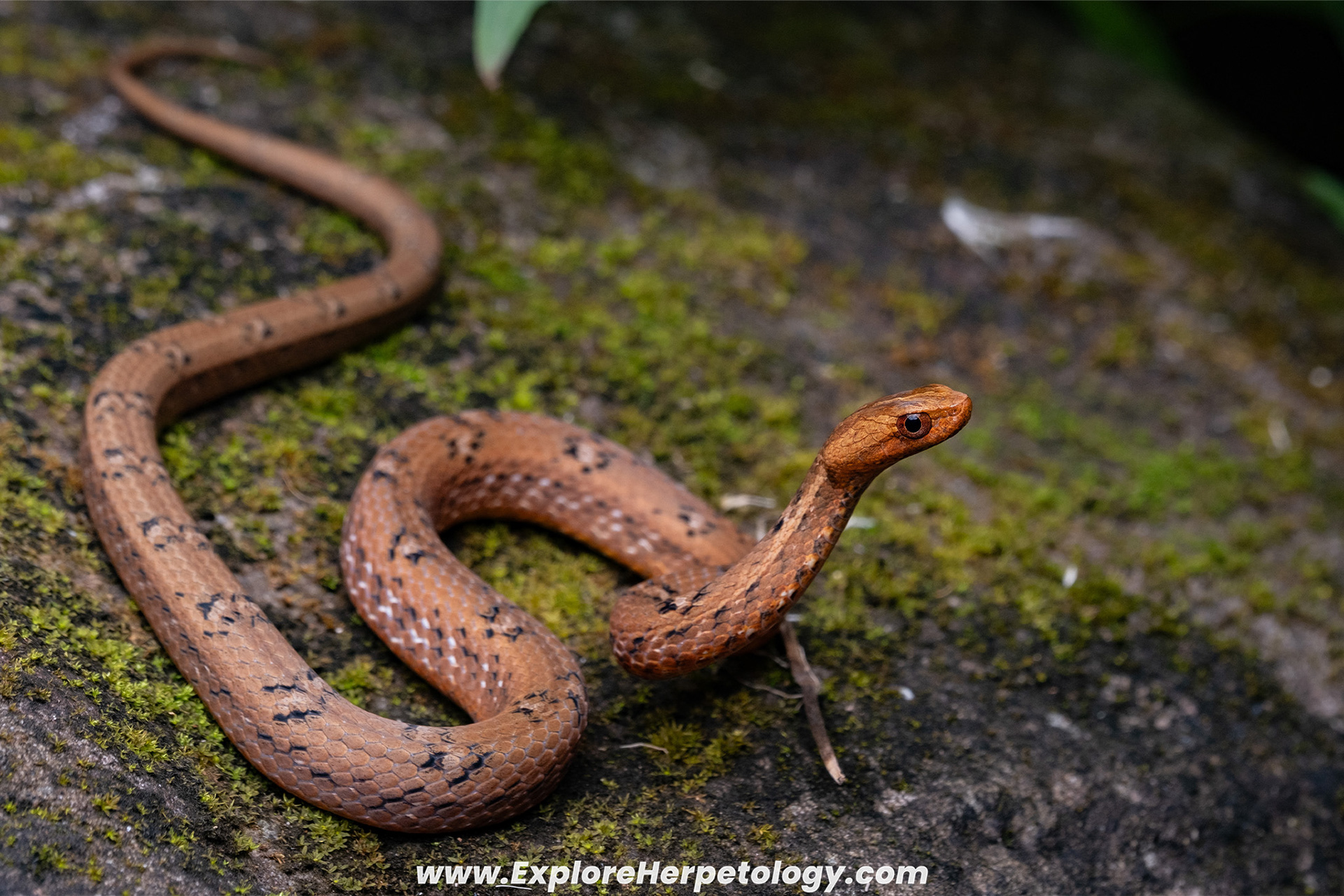
Mock viper (Psammodynastes pulverulentus)
KONGLOR CAVE - DAY 5:
Come day 5, we found ourselves in an unexpected situation. We had found all of our key endemic targets for the area, yet still had 3 days remaining. We had planned to visit Konglor Cave as it is usually a much better area to see the Truong Son pit viper (Trimeresurus truongsonensis), as well as the Khammouane wolf snake (Lycodon banksi). However, having seen both of them already, there was not much for us to go all out for. Fortunately, Konglor Cave has a large river flowing beside the karst formations, which provides the opportunity to see several species which are not present in the dry limestone karst forests near The Rock. The resort is also great, situated right beside the river with many kayaks we can take out into the water whenever we want.
Hereby, we loaded up into kayaks that evening, setting sail to shine for snakes at night in the trees and in the water. Almost immediately, we found several individuals of the final pit viper species inhabiting this area - the large-eyed pit viper (Trimeresurus cf. macrops) - including multiple adult females. These are often ambushing on twigs and shrubs right above the water. Within the first 5 minutes, we also caught a sunbeam snake (Xenopeltis unicolor) and a yellow-spotted keelback (Fowlea flavipunctatus). This was the only sunbeam snake seen this trip, while we would see countless Fowlea every night (and even during the daytime) along the river. We also saw multiple black-ventered mud snakes (Homalopsis nigroventralis), definitely the best-looking member of this genus.
Reaching the cave, our prediction that this area would be better for Trimeresurus truongsonensis came true, as we found a large individual inside the cave within seconds. As we hiked further down the karst wall, we encountered a second individual. This individual was a stunning mint-teal colouration, definitely the finest individual of the trip. On the kayak back to our accommodation, we saw Chinese water dragon (Physignathus cocincinus) and a Murphy's mud snake (Hypsiscopus murphyi).
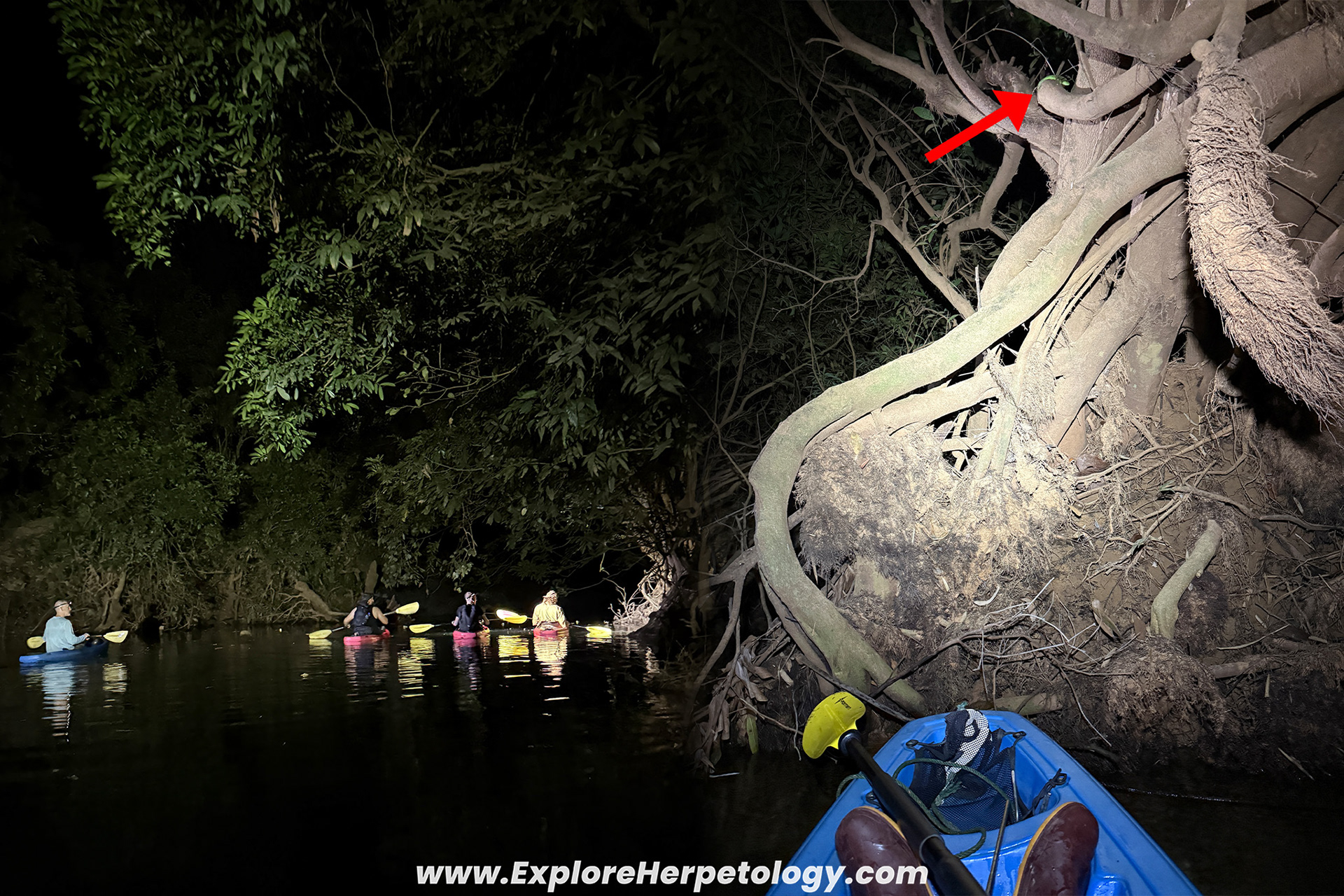
Trimeresurus cf. macrops in-situ.
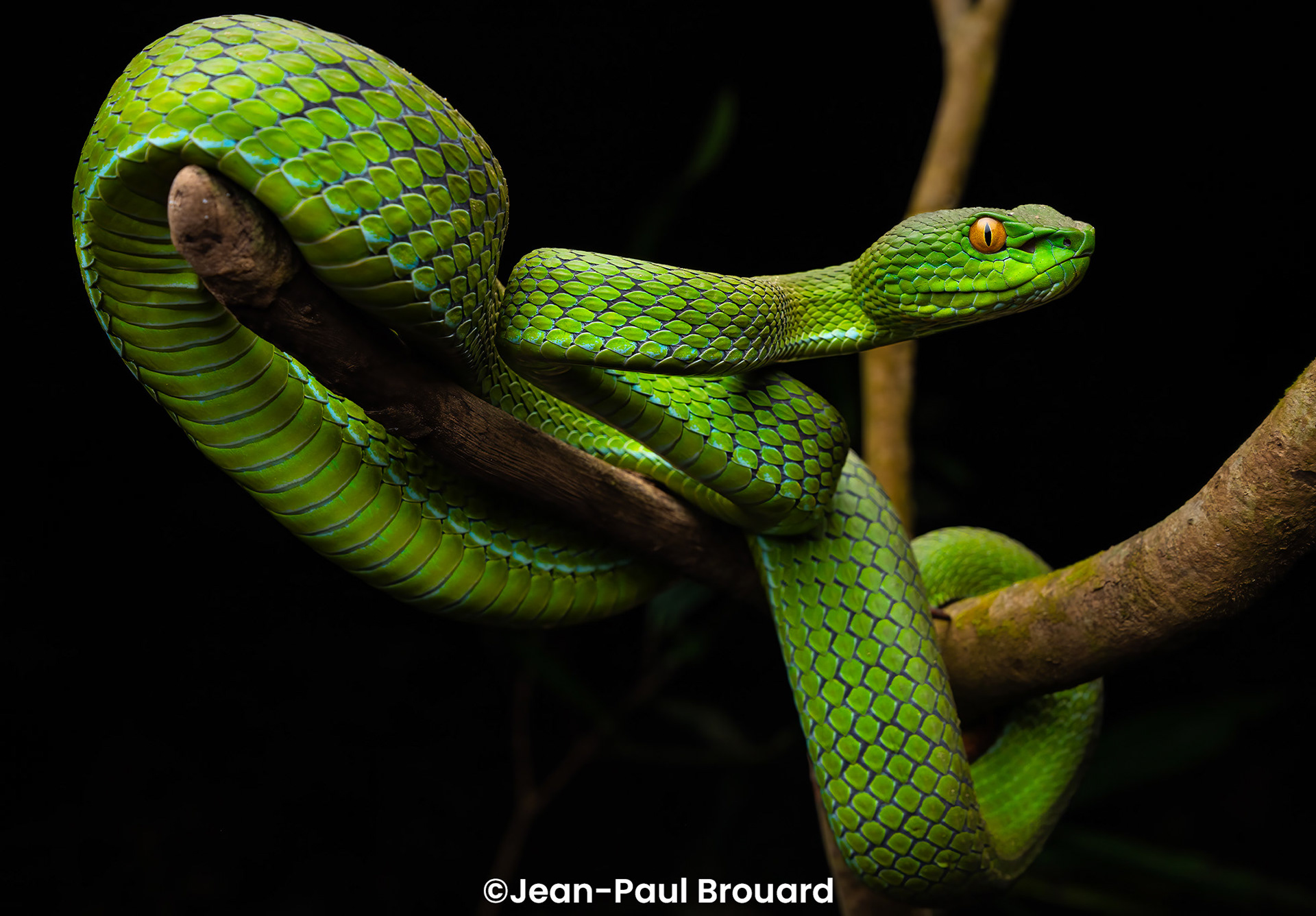
Trimeresurus cf. macrops
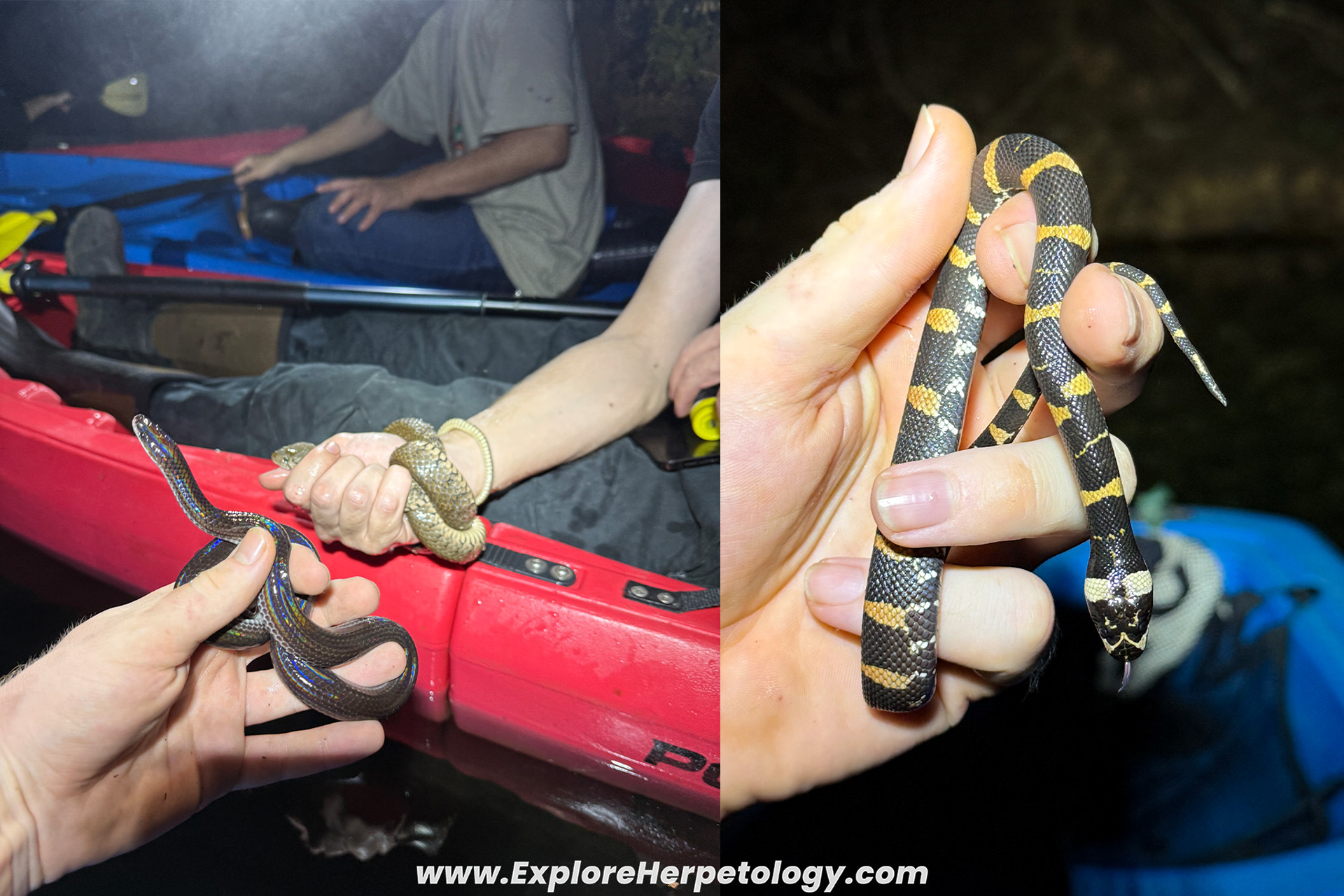
Left: Sunbeam snake. Right: Homalopsis nigroventralis.
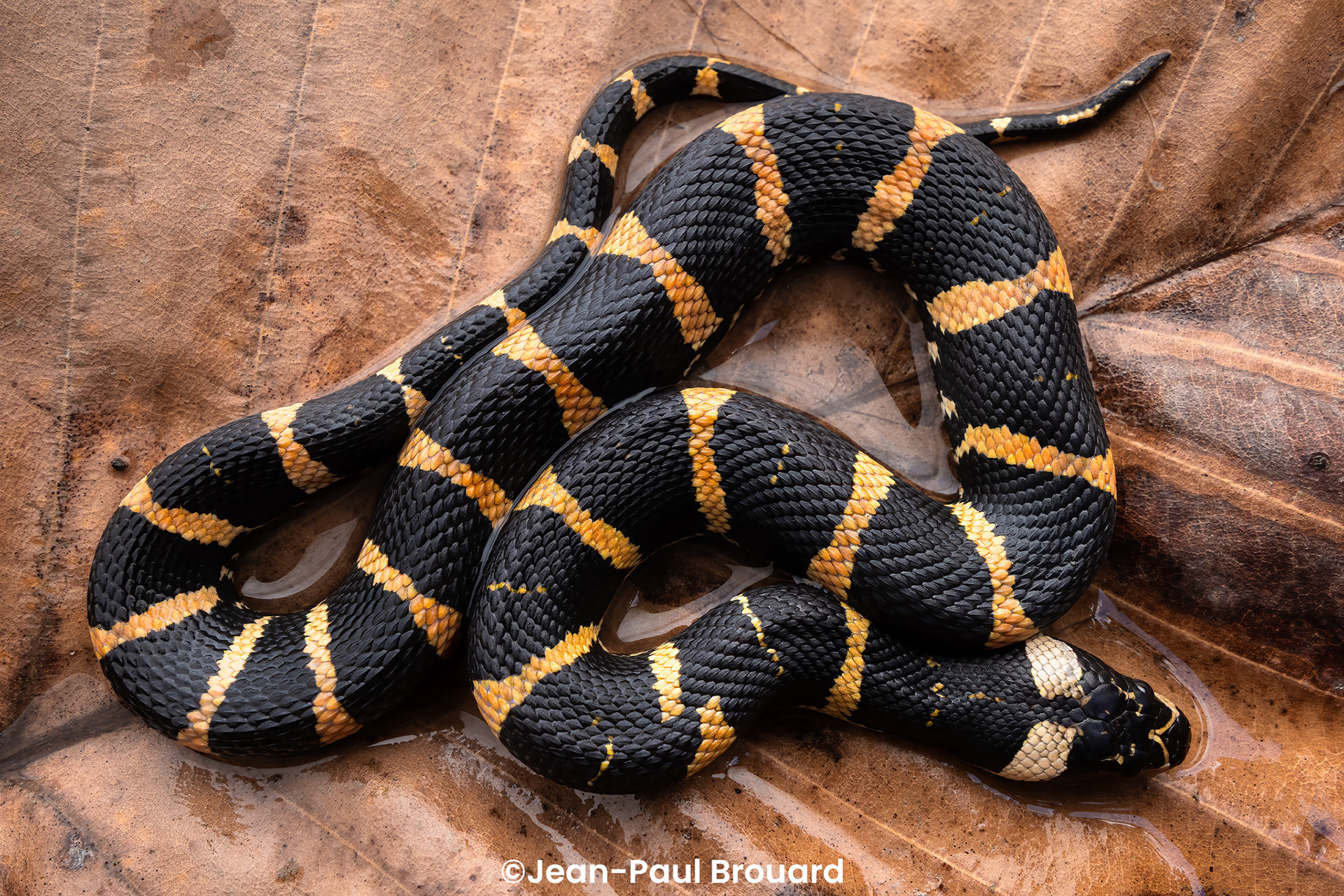
Black-ventered mud snake (Homalopsis nigroventralis).
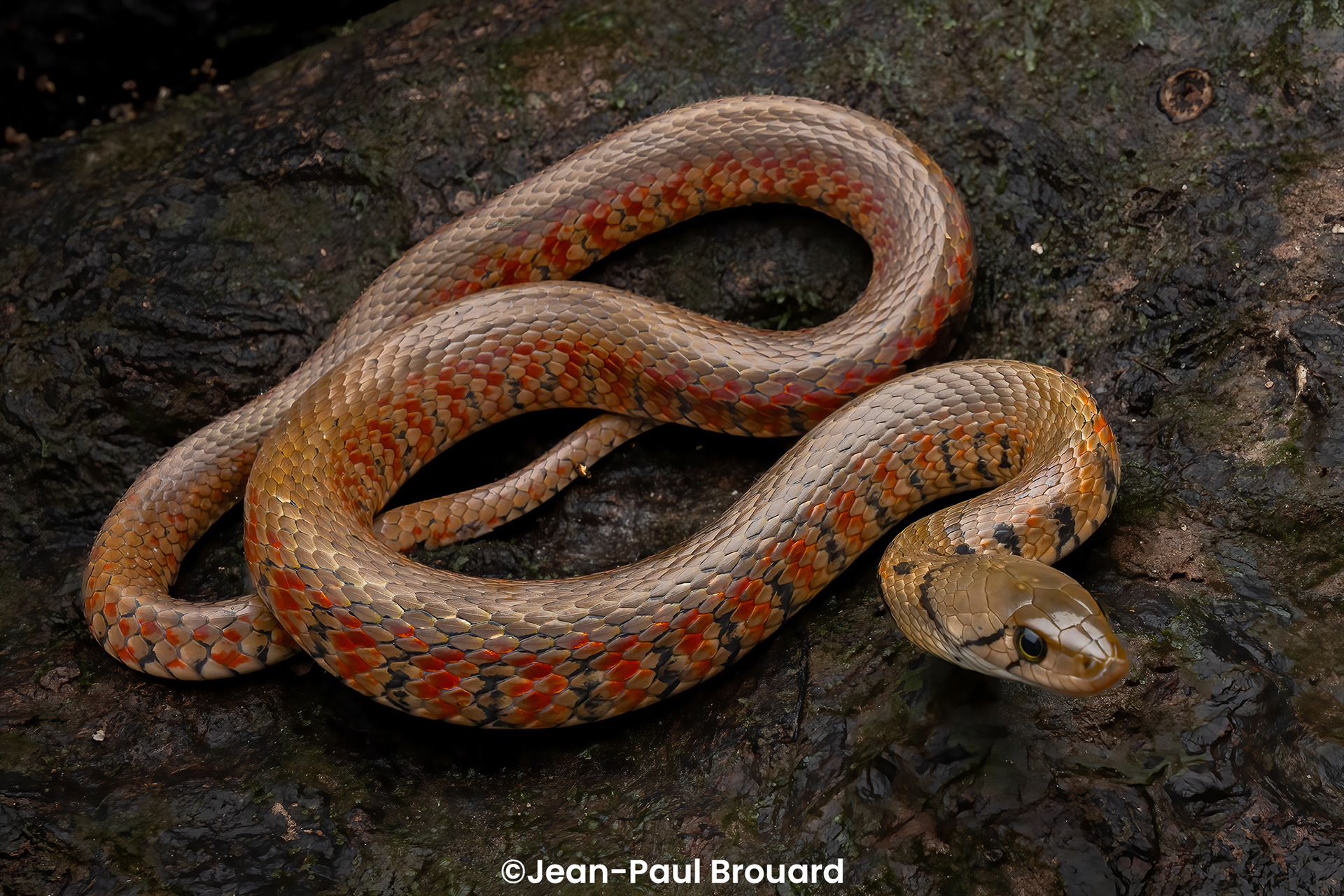
Yellow-spotted keelback (Fowlea flavipunctatus).
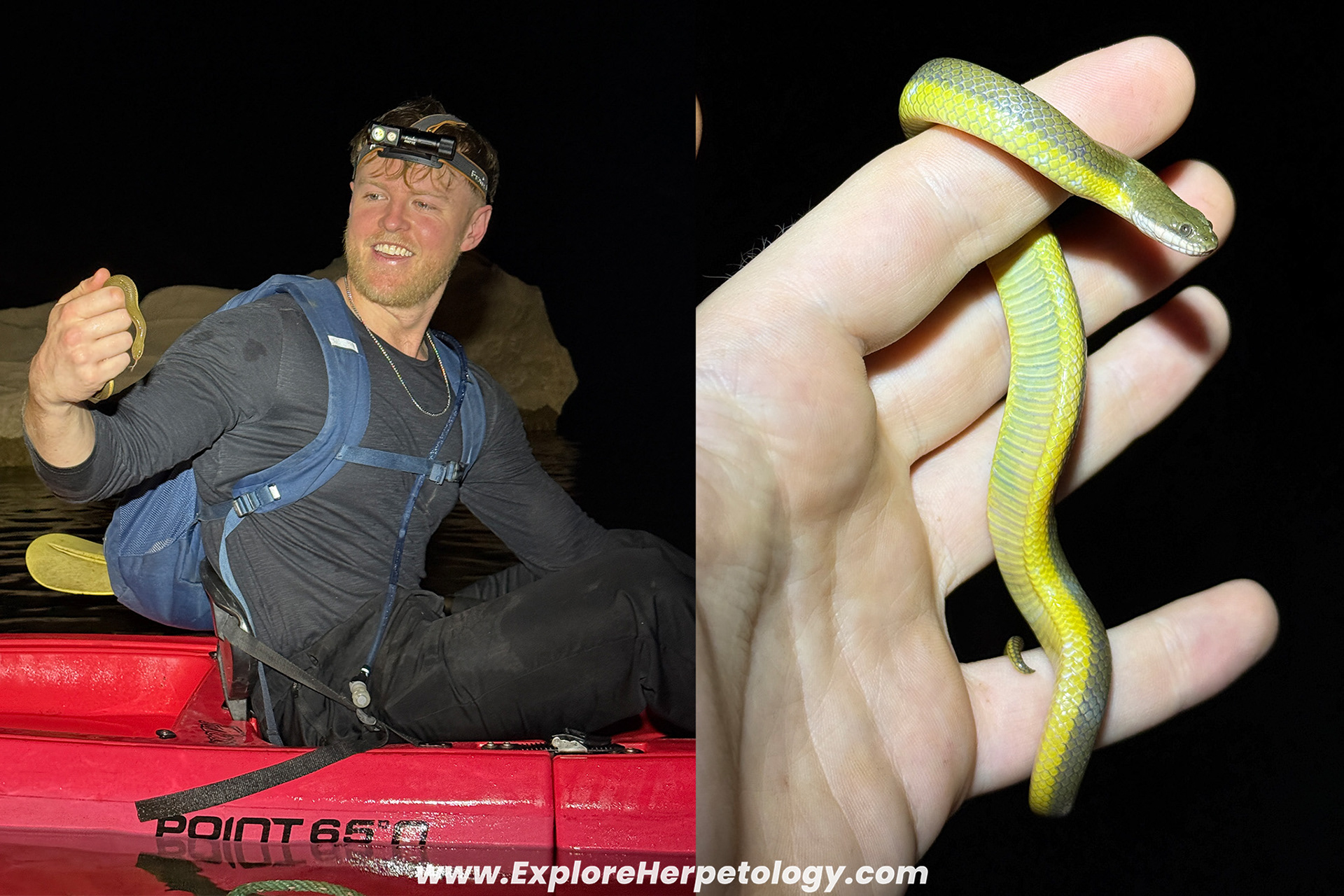
Murphy's mud snake (Hypsiscopus murphyi).
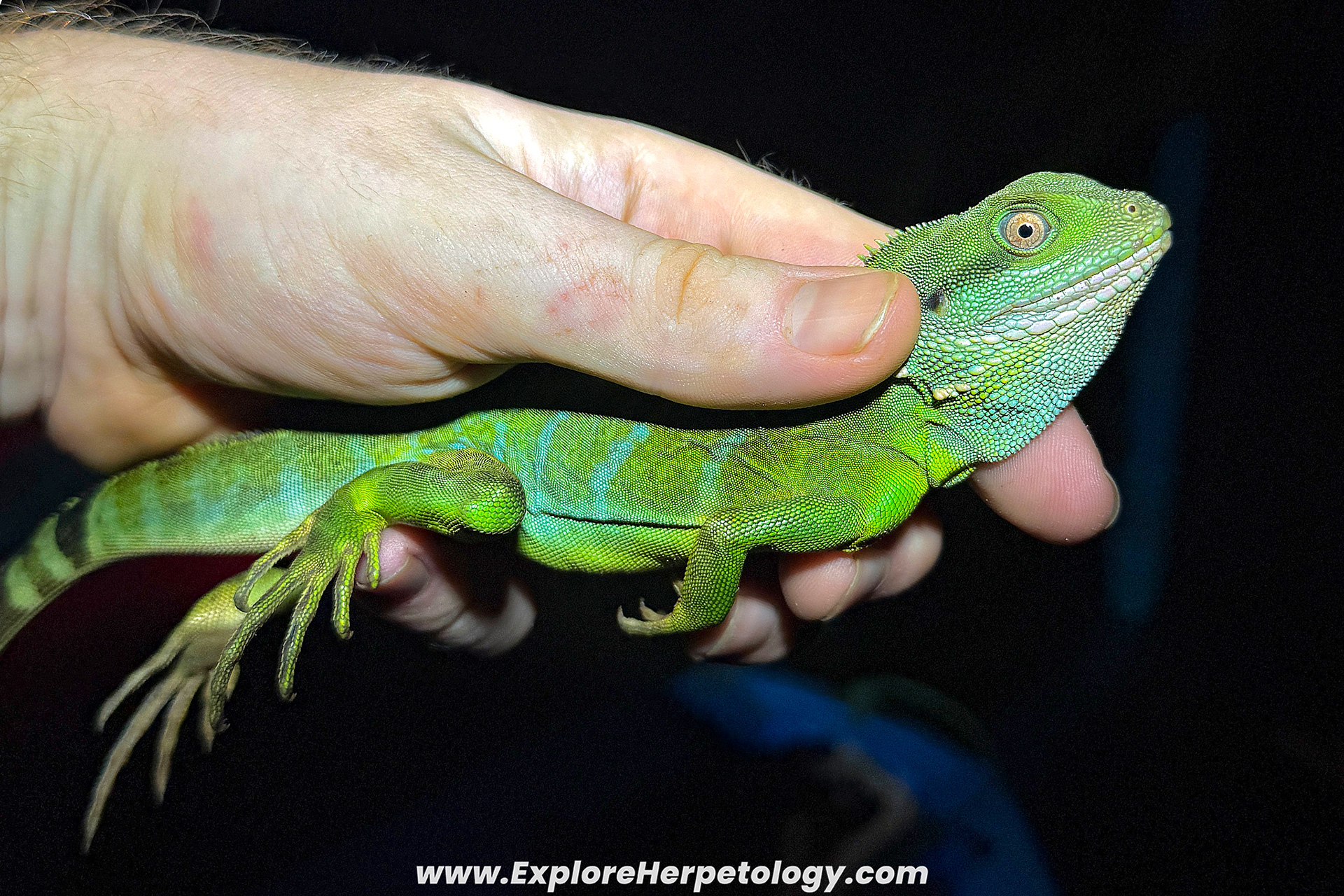
Chinese water dragon.
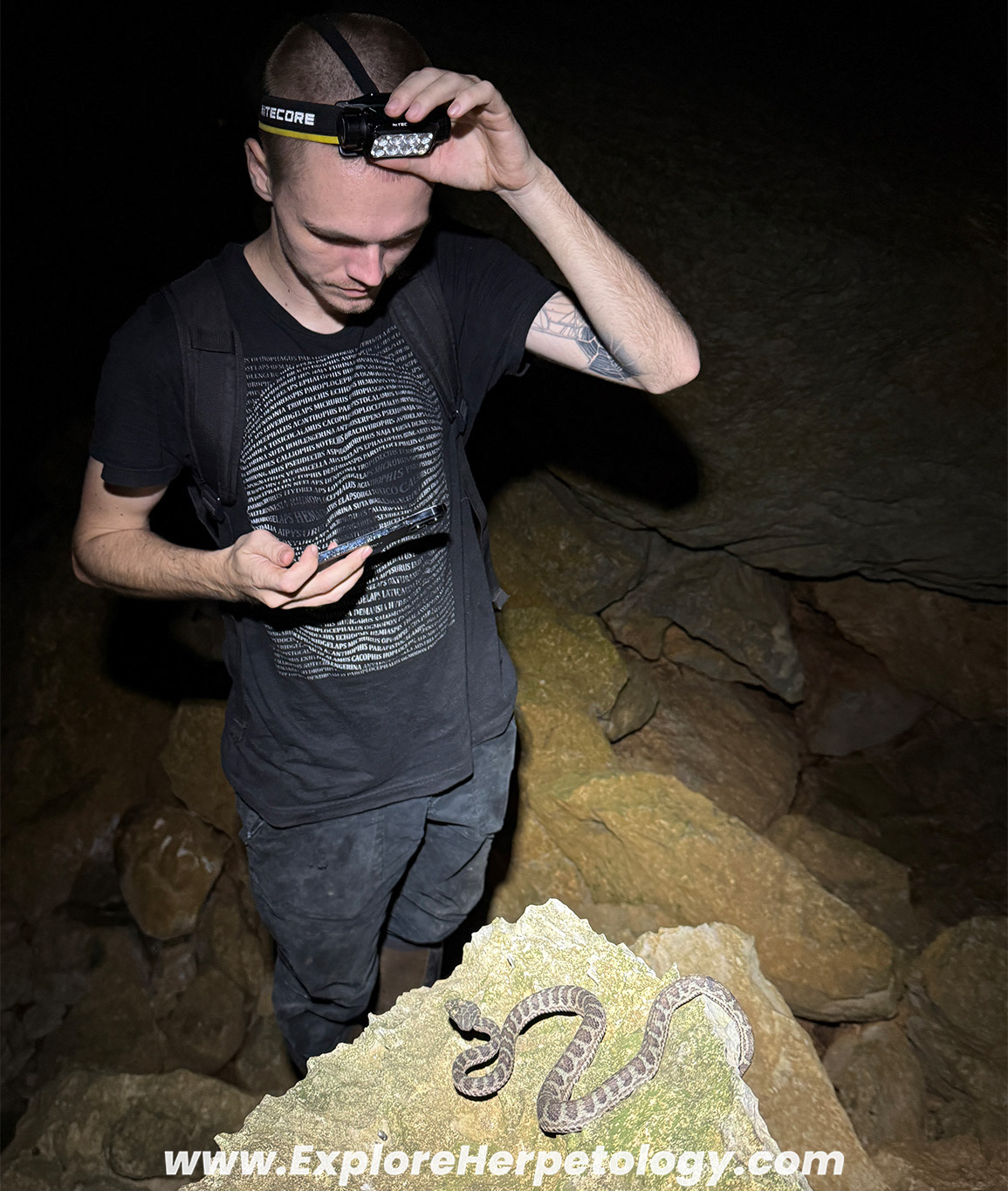
Truong Son pit viper (Trimeresurus truongsonensis)
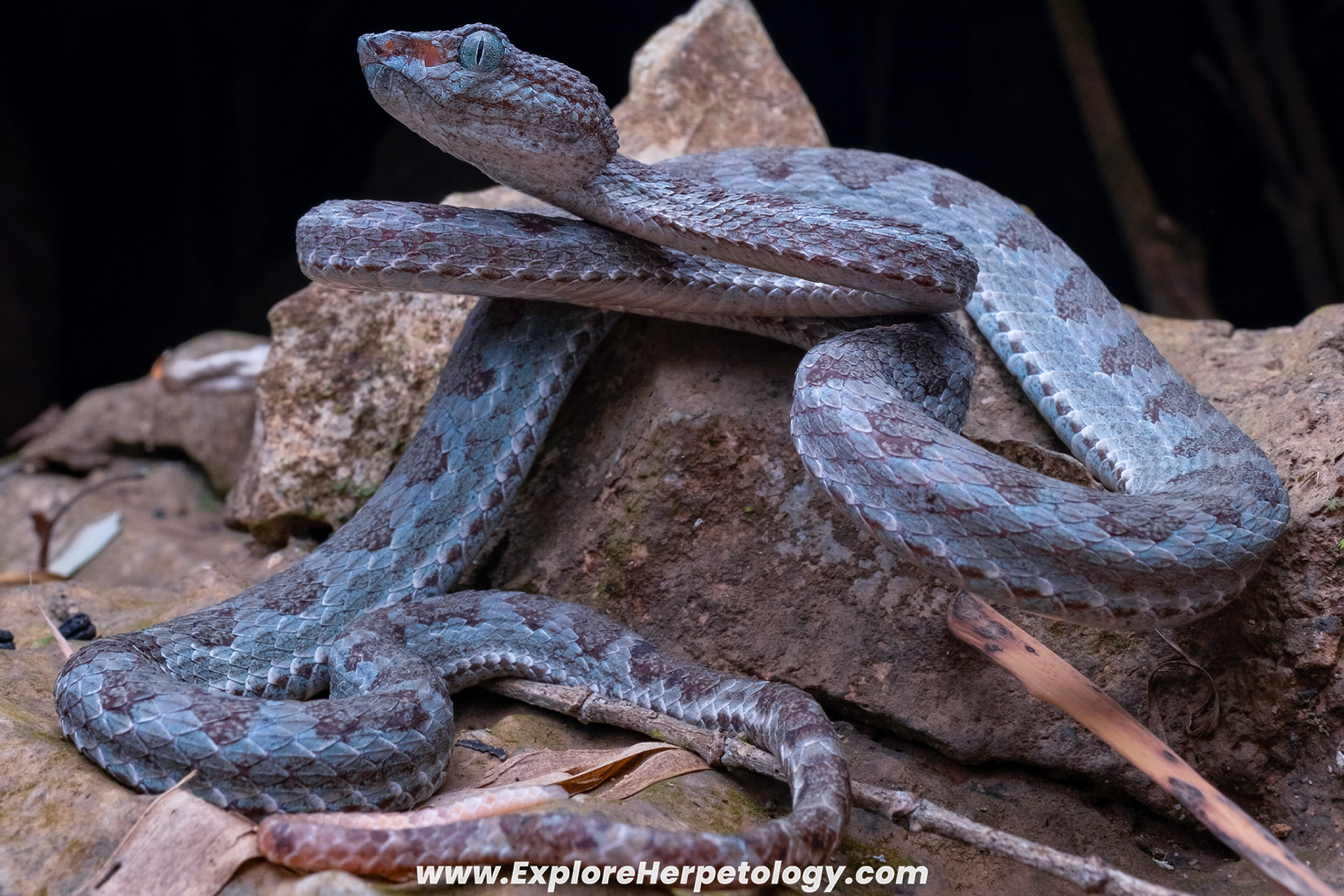
Truong Son pit viper (Trimeresurus truongsonensis)
KONGLOR CAVE - DAY 6:
We took daytime off from herping, spending some time swimming and kayaking near the resort. The weather was great and we decided to take this opportunity to rest up before the final location. At night, we went back out on the kayaks, finding many of the same species as before, but added painted bronzeback (Dendrelaphis pictus) and multiple red-necked keelbacks (Rhabdophis siamensis). At the cave, we were massively surprised by a much bigger Khammouane wolf snake (Lycodon banksi) which was in a considerably easier place to capture - although still required some climbing. We were finding more than 20 snakes every night at this location, making it very fun and low-effort herping.
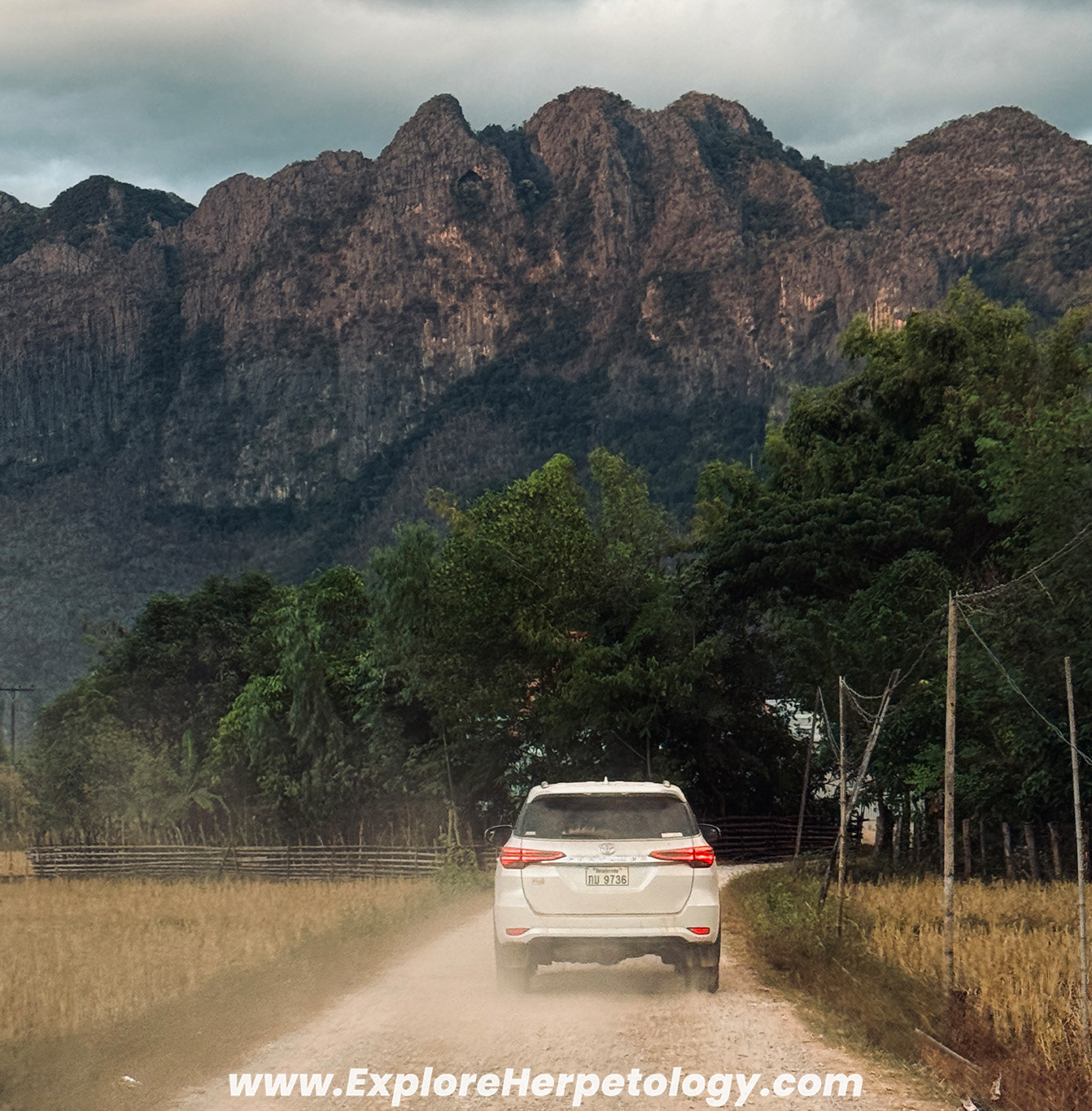
Views on the way to our resort.
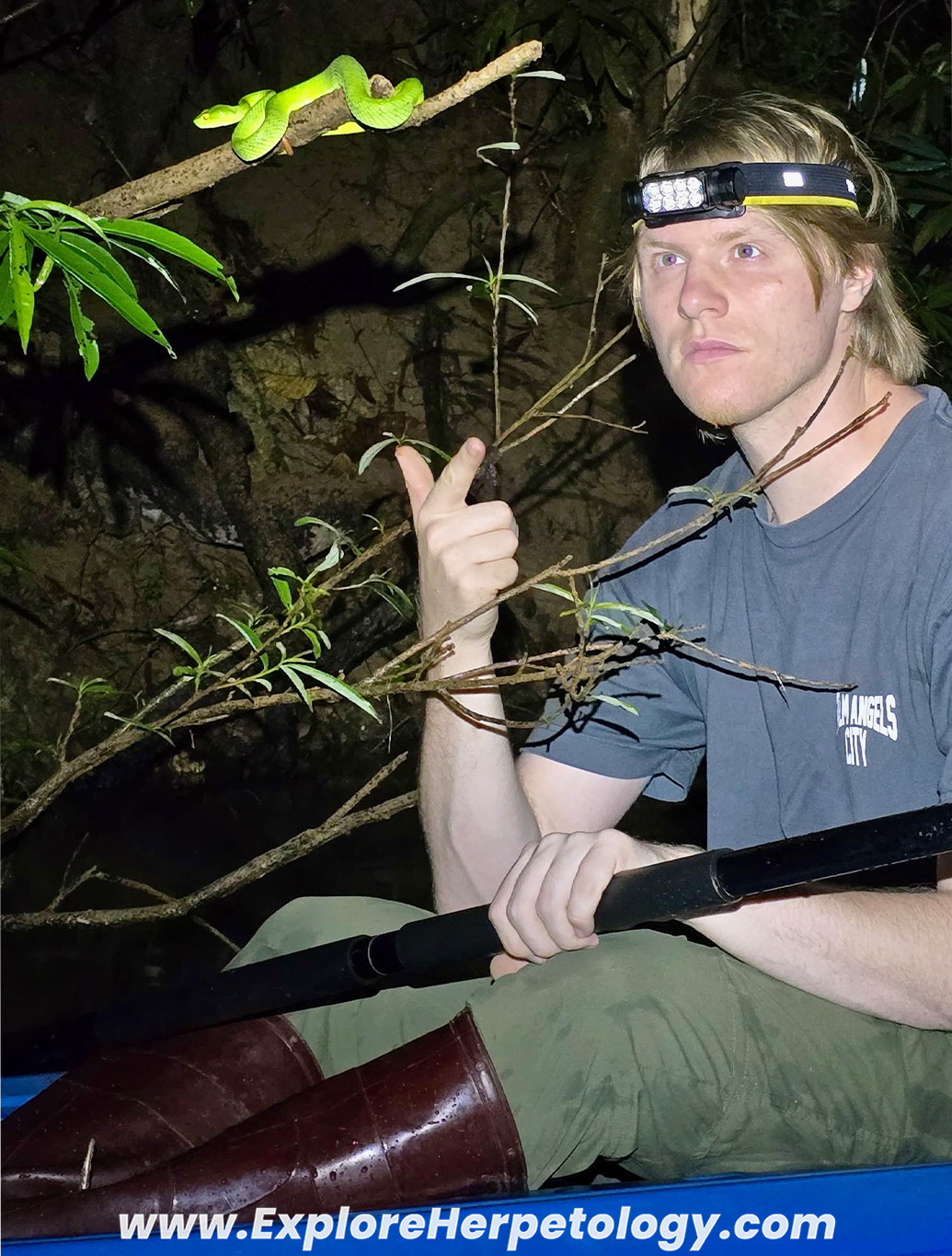
Trimeresurus macrops ambushing above the water.
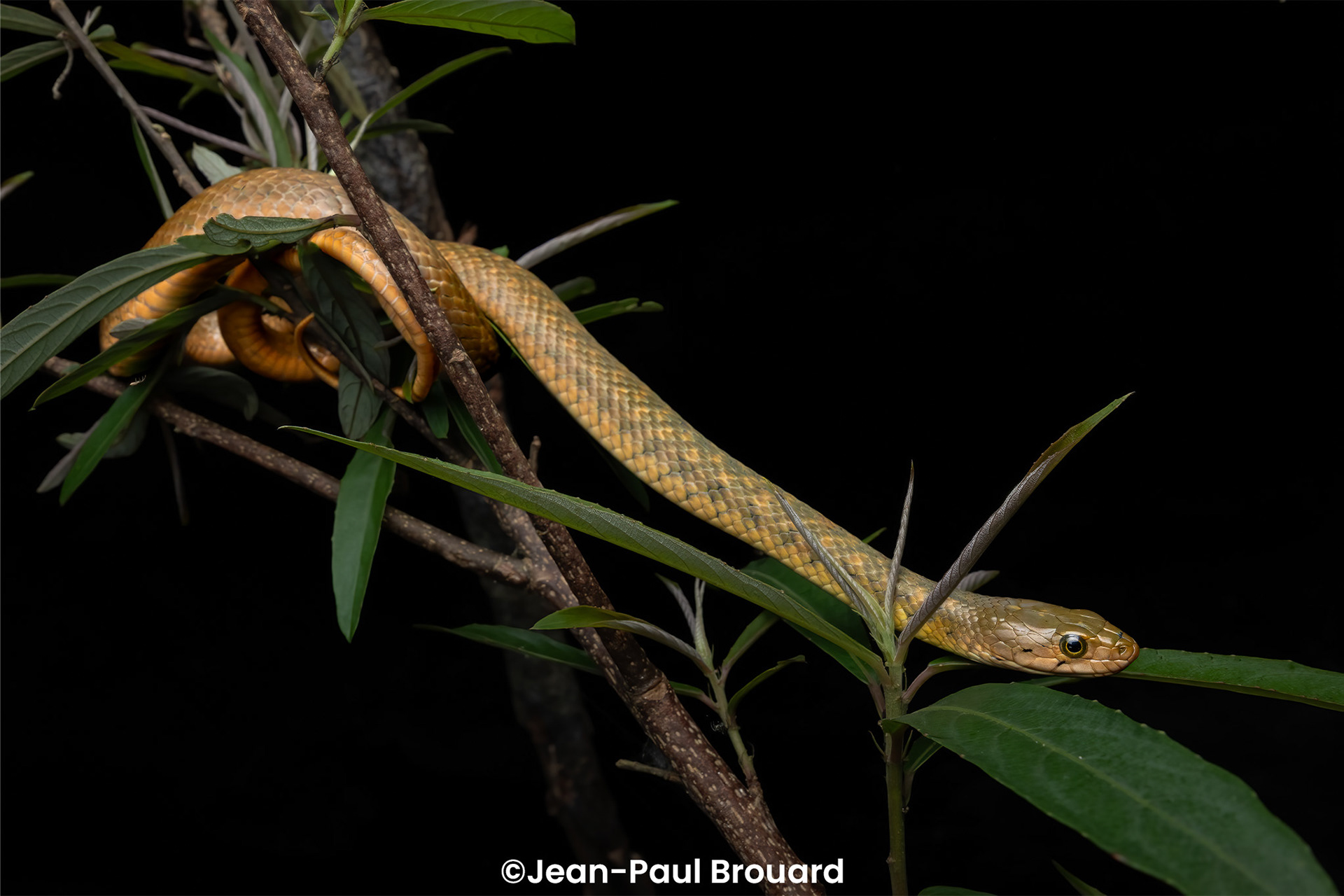
Yellow-spotted keelback (Fowlea flavipunctatus).
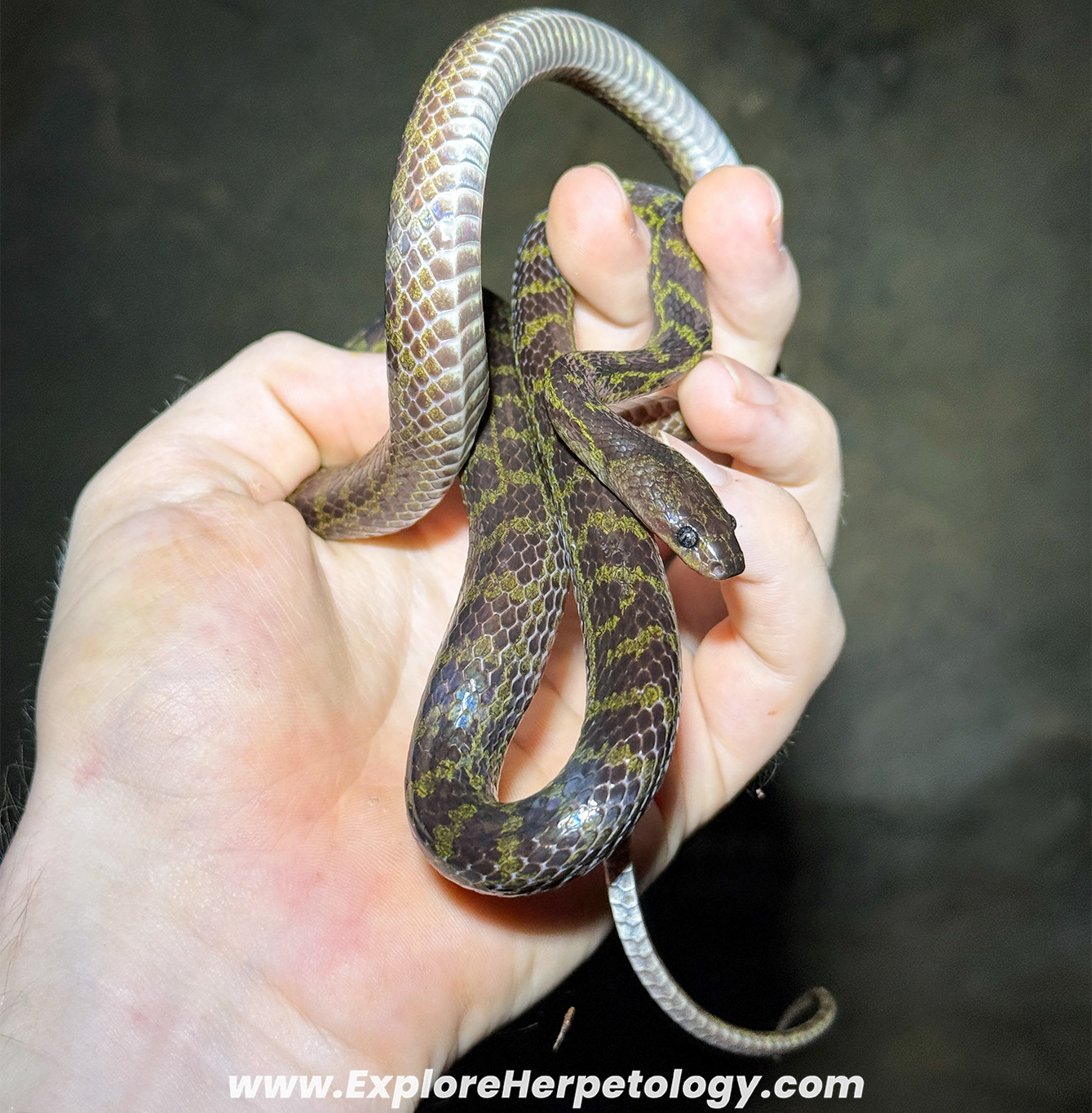
Khammouane wolf snake (Lycodon banksi).
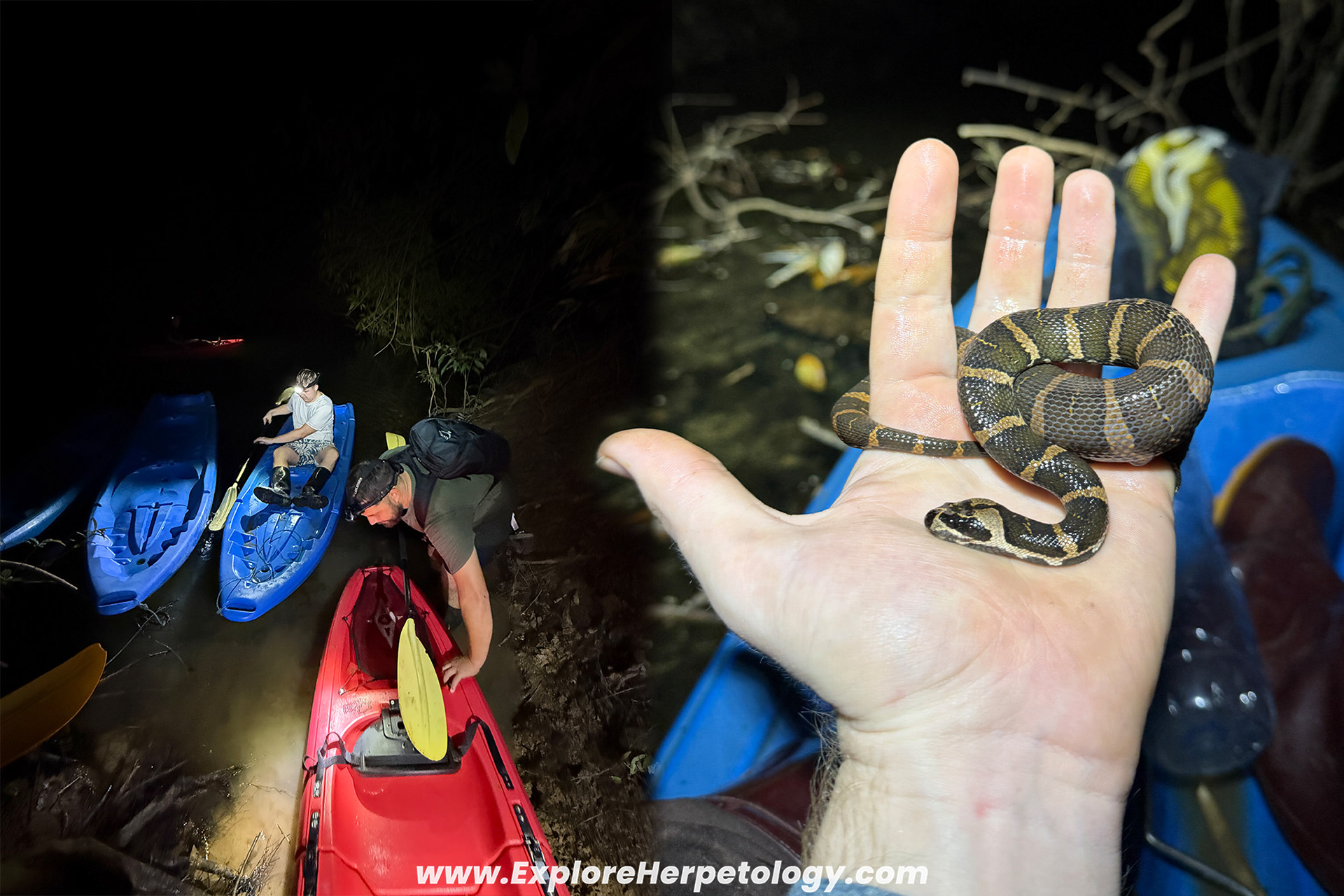
Black-ventered mud snake (Homalopsis nigroventralis).
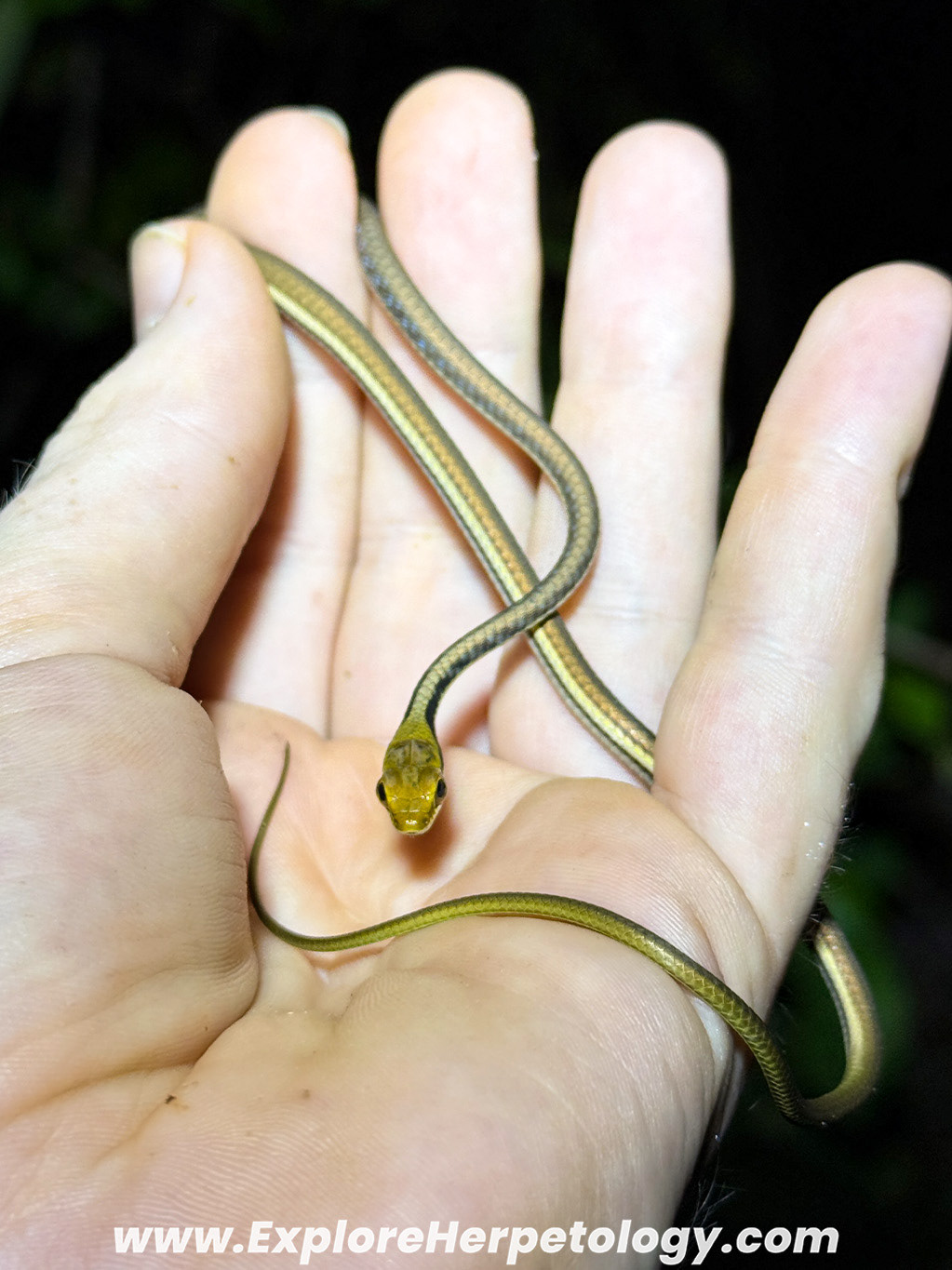
Painted bronzeback (Dendrelaphis pictus).
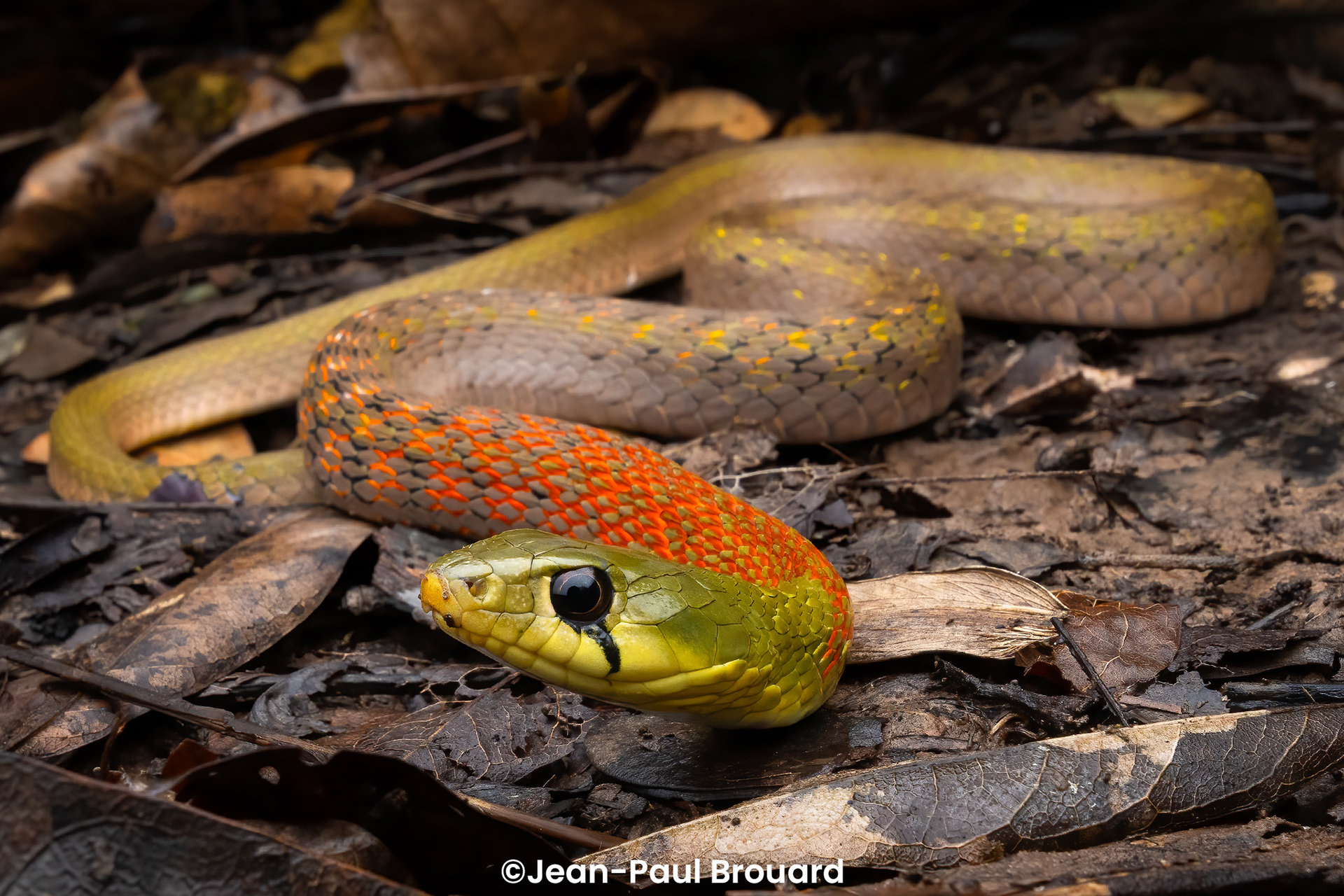
Siamese red-necked keelback (Rhabdophis siamensis).
KONGLOR CAVE - DAY 7:
Our final day followed a similar routine as the previous day, with kayaking and swimming in the crystal clear lagoon waters during the daytime. The major interruption was an unexpected heavy rainstorm which arrived at nightfall. This delayed our voyage out herping, but provided an interesting opportunity to see some rain-active species. On the original journey kayaking out towards the cave, we only saw repeat species from the previous nights. At the cave itself, we were surprised when a big female three-horned lance-headed pit viper (Protobothrops sieversorum) appeared out of nowhere on a rock. Closer inspection revealed this was the exact same individual we had seen at this cave one year before, while scouting the area. Fascinating to see her again on the exact same rock she was found one year before. It was also great to see one last three-horned pit viper before we left Khammouane.
On the way back to the resort, we saw a slightly larger snake swimming across the river. We presumed it would be another yellow-spotted keelback, but when we cruised up it turned out to be a stunning juvenile reticulated python (Malayopython reticulatus). While these are common in much of South-East Asia, collection for food in Laos makes pythons a rare sight - and a very welcome encounter for several of our guests who had never been herping in Asia before. This was our last snake seen in Khammouane.
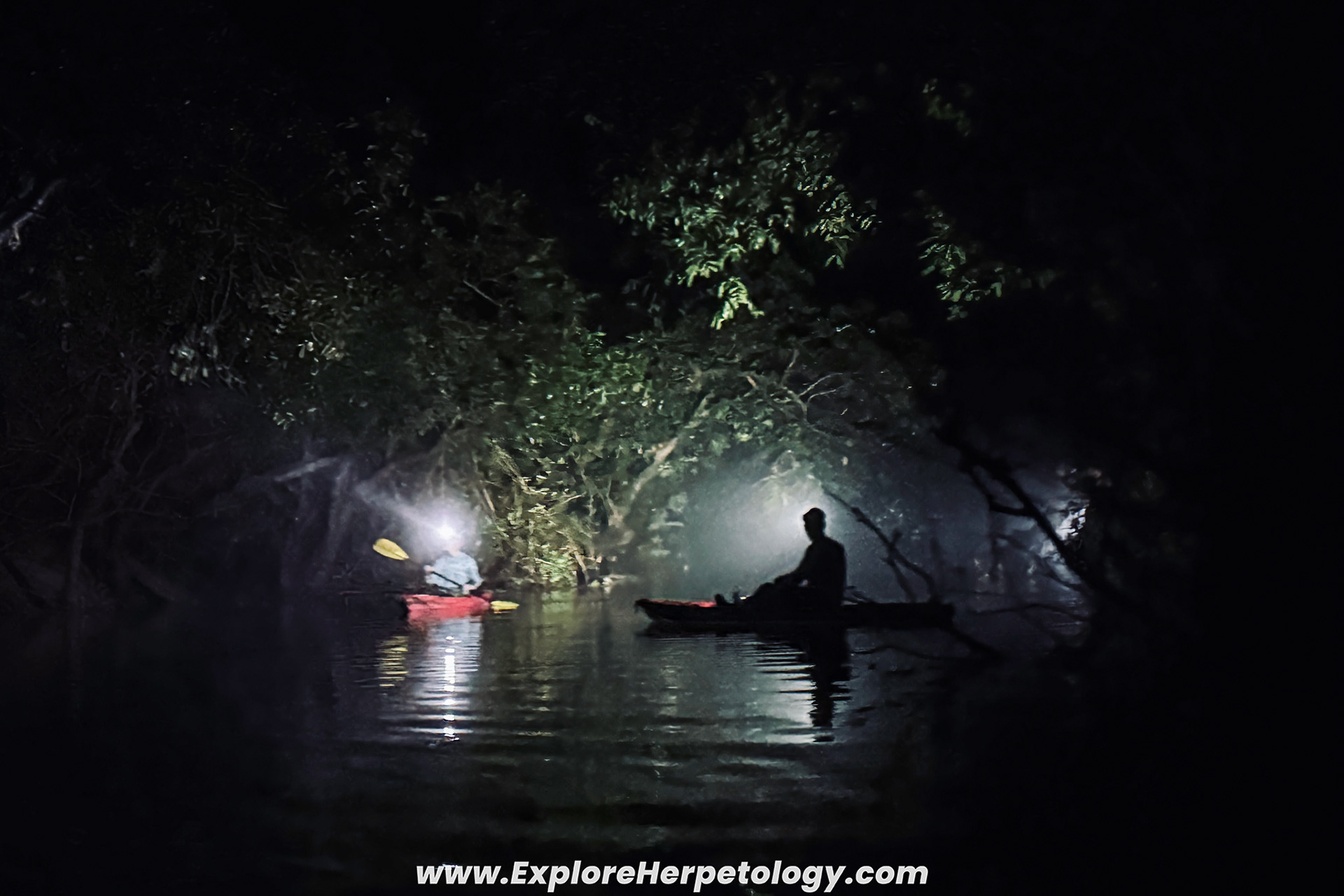
Kayaking on misty waters.
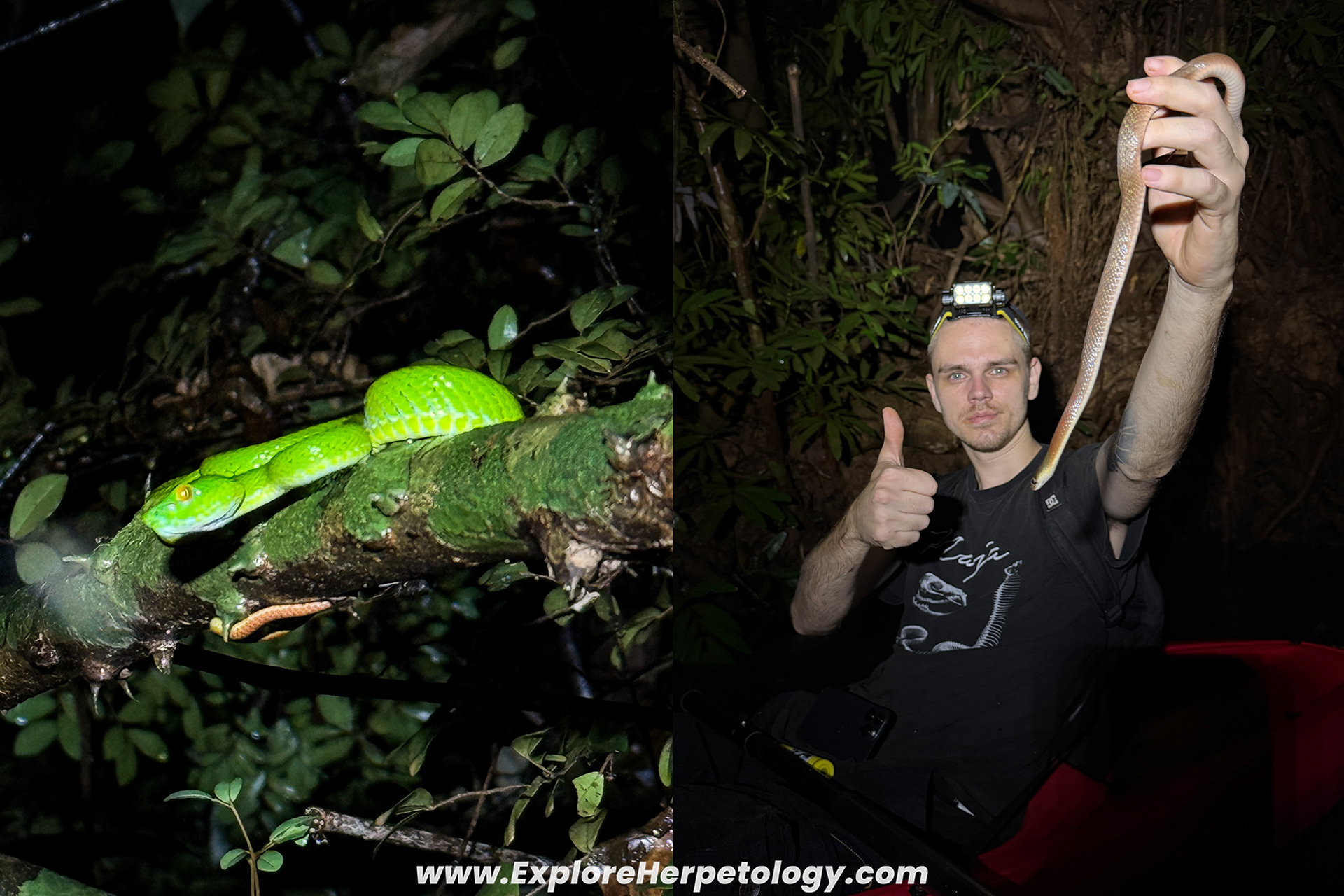
More common species.
Large female Protobothrops.
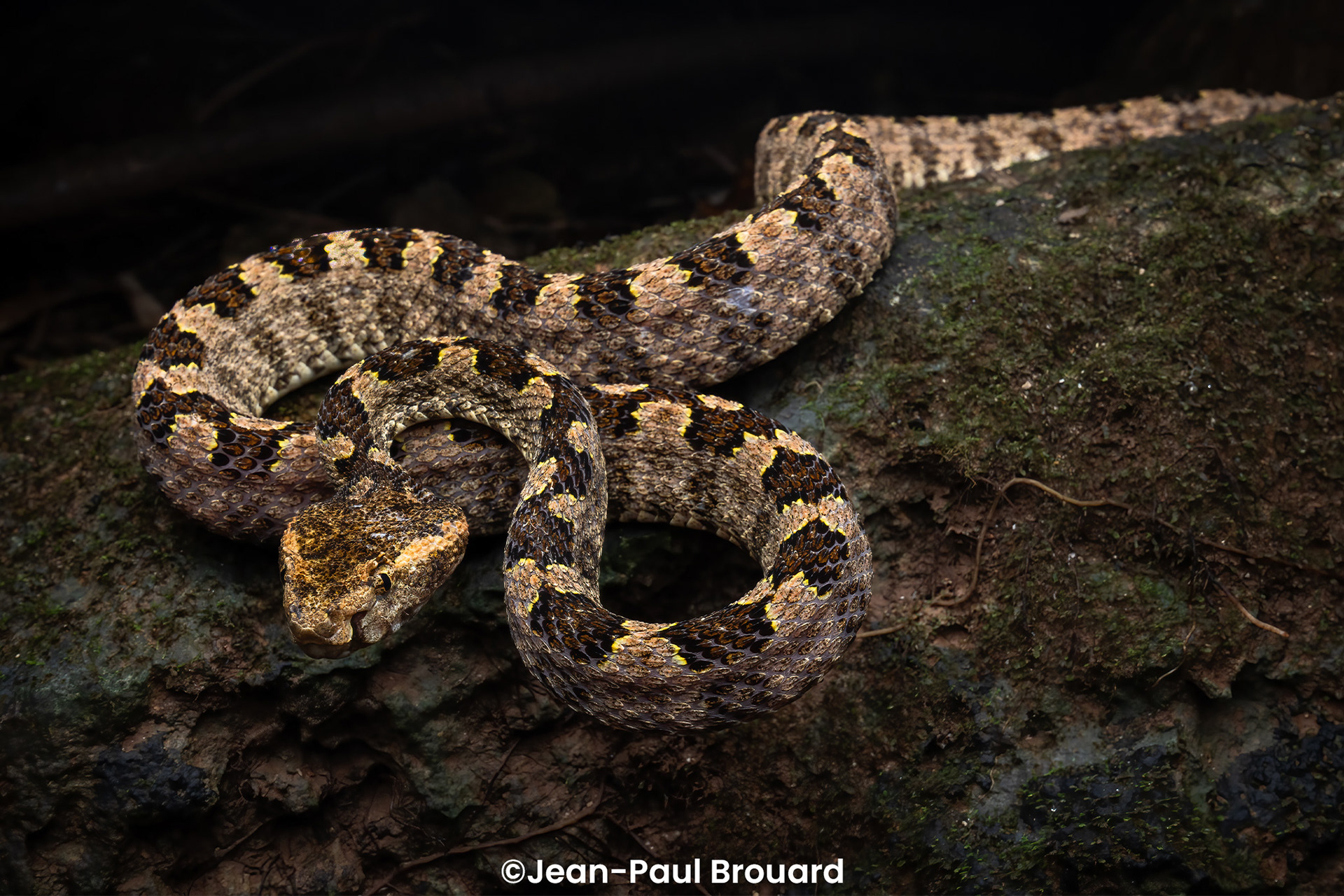
Protobothrops sieversorum.
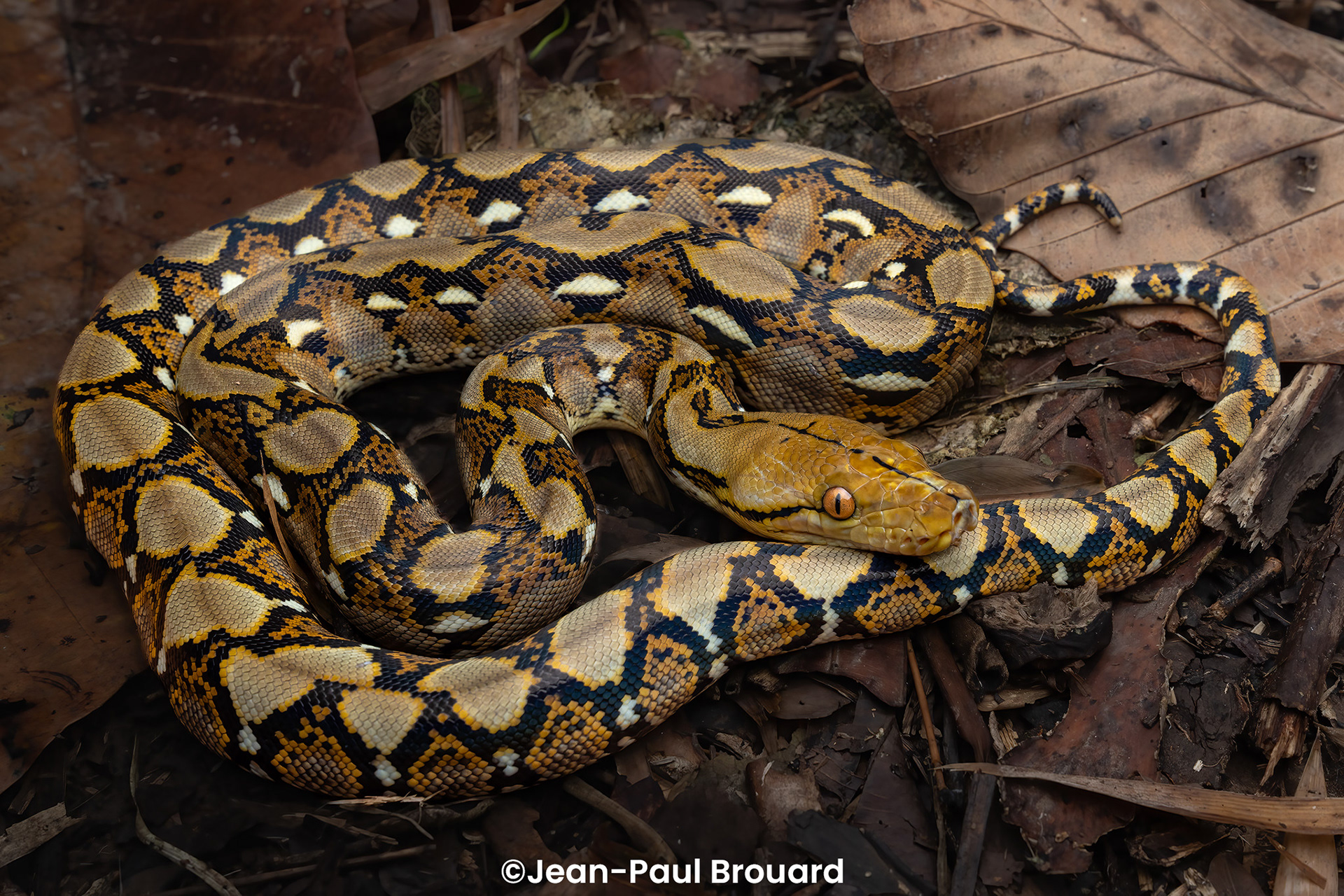
Reticulated python (Malayopython reticulatus).
VANG VIENG - DAY 8:
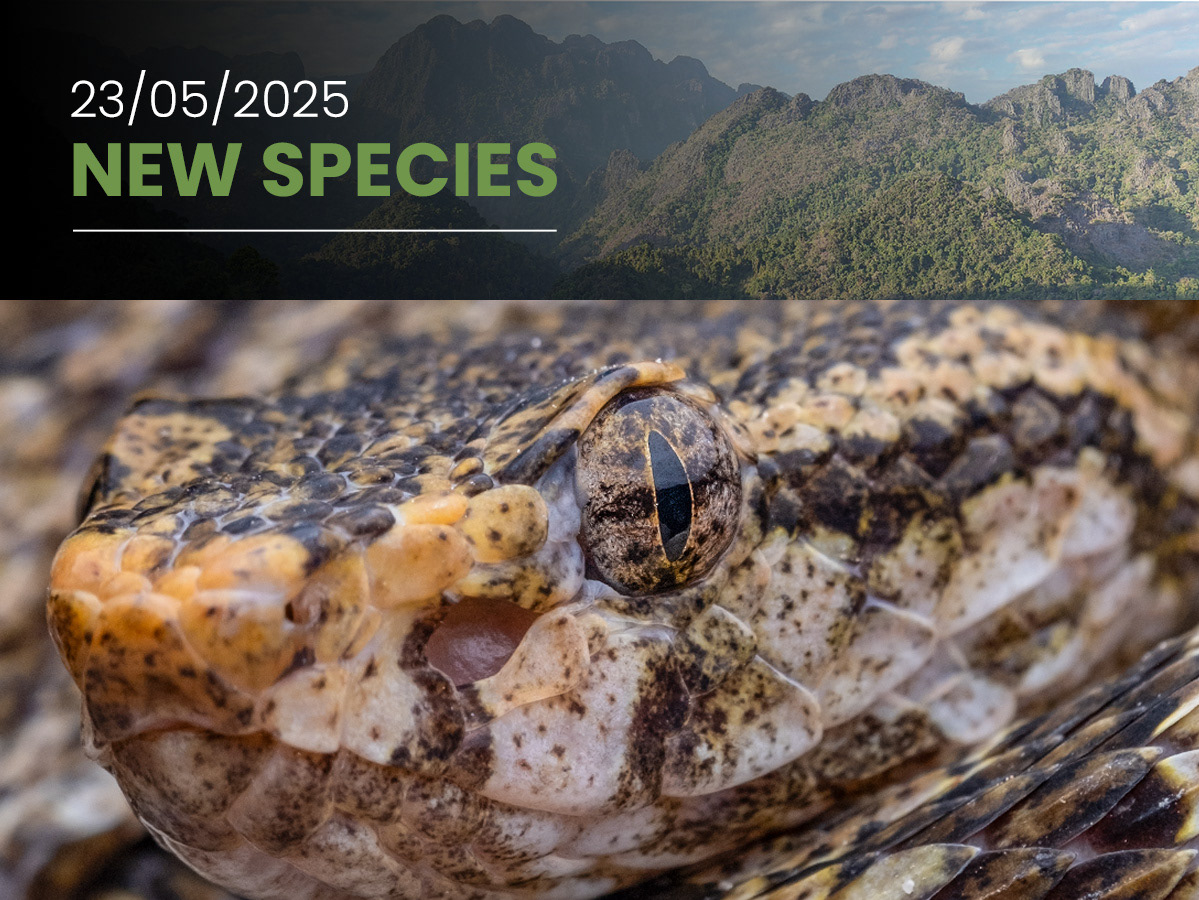
With our time in Khammouane concluded, we drove almost 7 hours north to Vang Vieng, where we would spend the remaining 3 nights of the expedition. Our key target here was the Vang Vieng lance-headed pit viper (Protobothrops flavirostris). This species was described in February 2025 by the Explore Herpetology team and collaborators, and so far only captured once, with 4 total documented observations. Obviously, we had a slim chance to encounter this extremely rare snake, but Vang Vieng is a truly remarkable area with lots more interesting herpetofauna to offer, so we had dinner at the town's Irish pub and got started immediately after.
We began at the type locality for the endemic Protobothrops, following a karst valley deep into the mountains. Shortly into our walk, we found a Kio flying frog (Rhacophorus kio), a very nice species which is not common at all. We also saw several of the local clade of large-eyed pit viper (Trimeresurus cf. macrops). The population from this locality is very different from those in Khammouane, with high rates of axanthism. We found a female individual which was more blue than it was green, truly a stunning snake and many people's favourite find of the night.
For others, the best find of the night was a lovely Guangxi cat snake (Boiga guangxiensis) which we retrieved from almost 10 meters high on the karst. This cat snake is generally rare, and by far the most special cat snake possible to find on the Laos expedition. We had really hoped for an encounter with this species. We also saw several Bermore's slug snakes (Pareas berdmorei), but no Protobothrops.
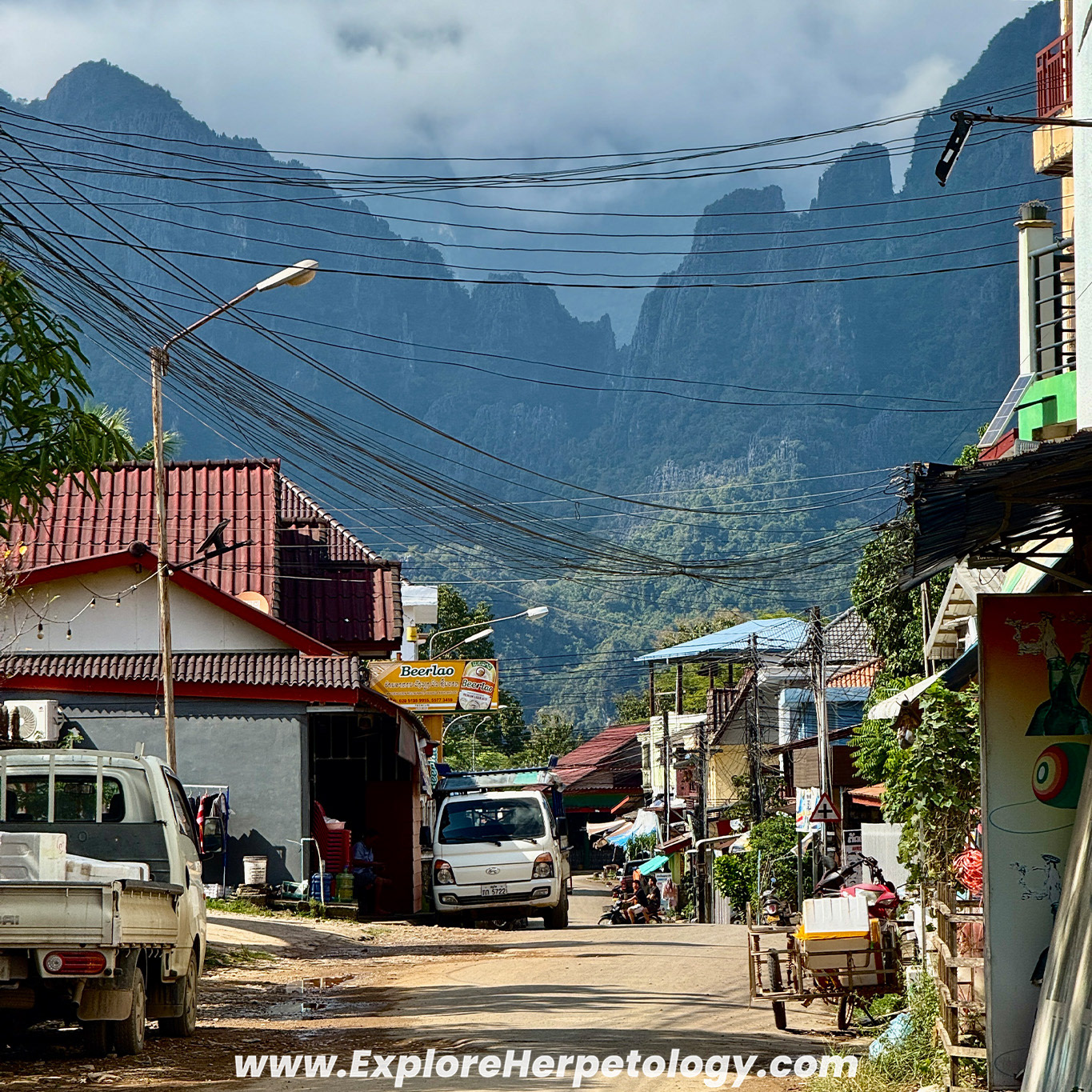
Vang Vieng.
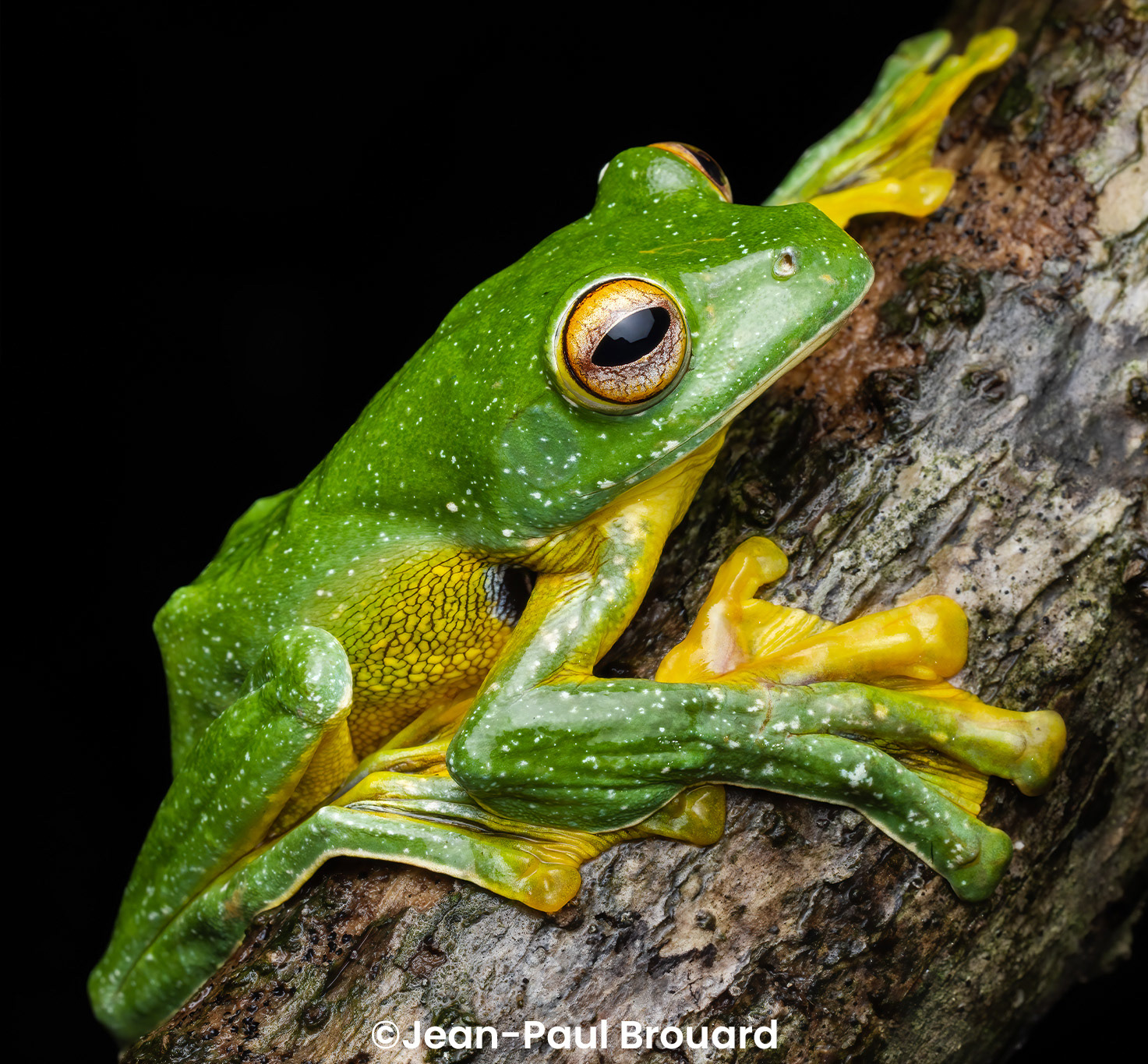
Kio flying frog (Rhacophorus kio).
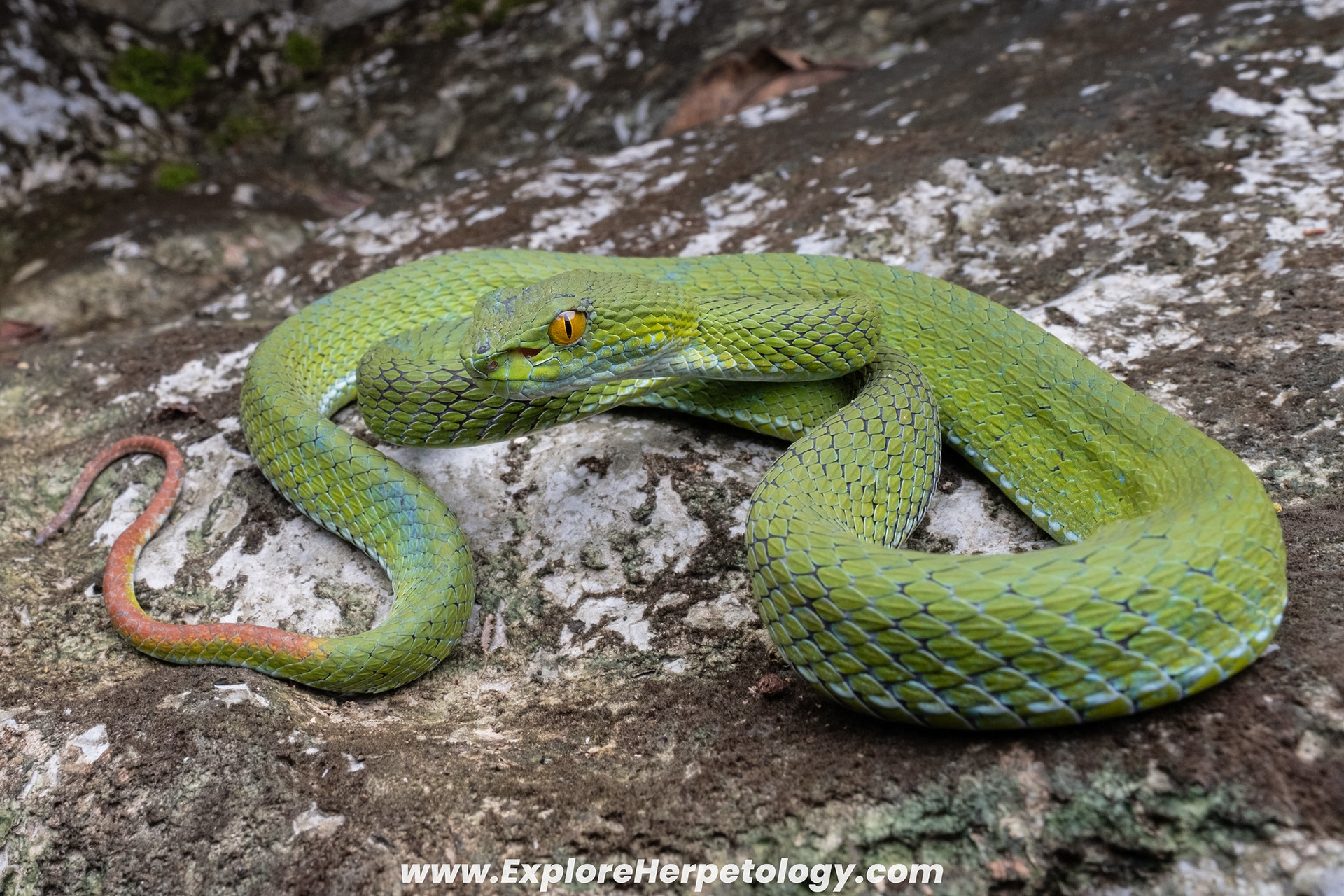
Large-eyed pit viper (Trimeresurus cf. macrops).
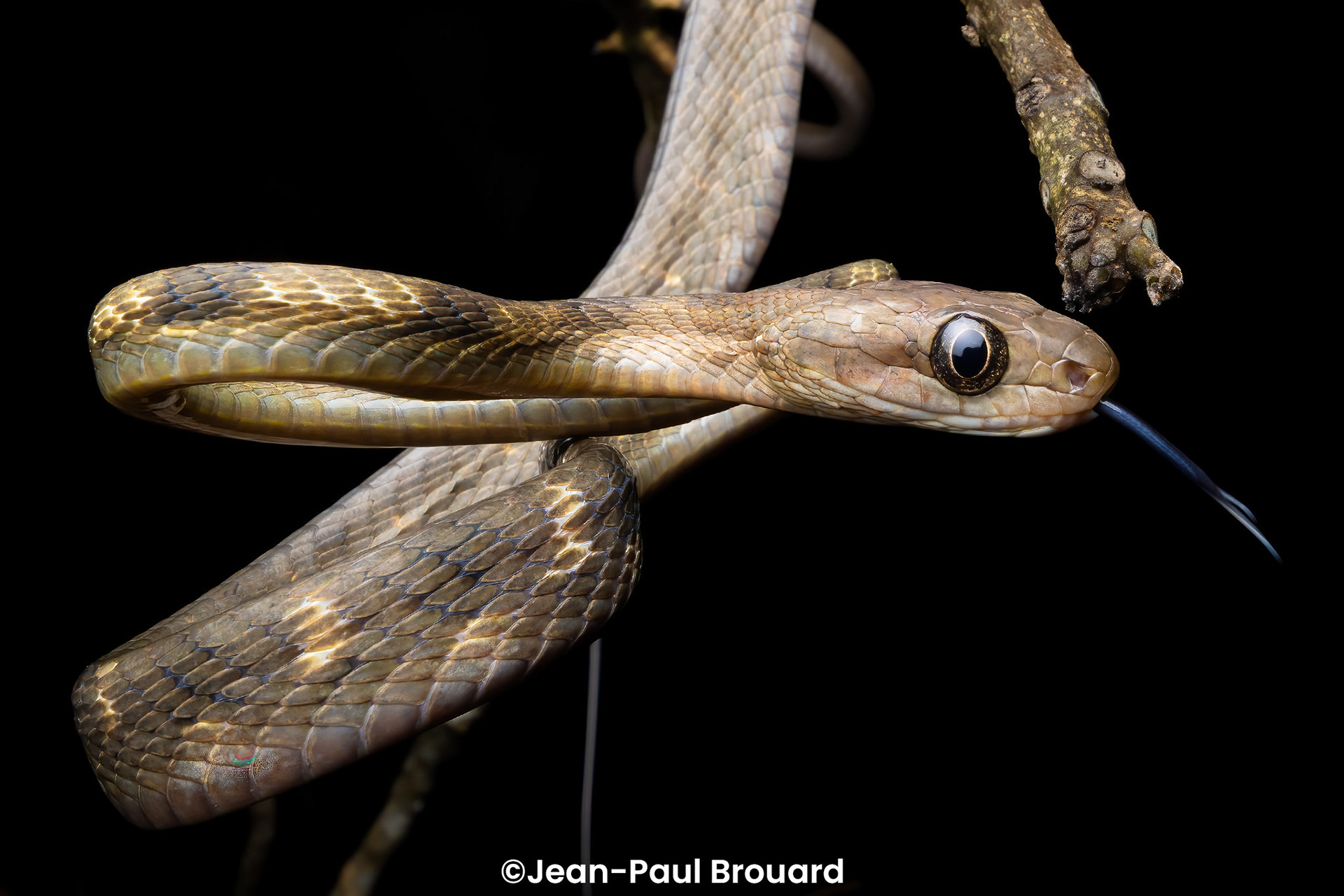
Guangxi cat snake (Boiga guangxiensis).
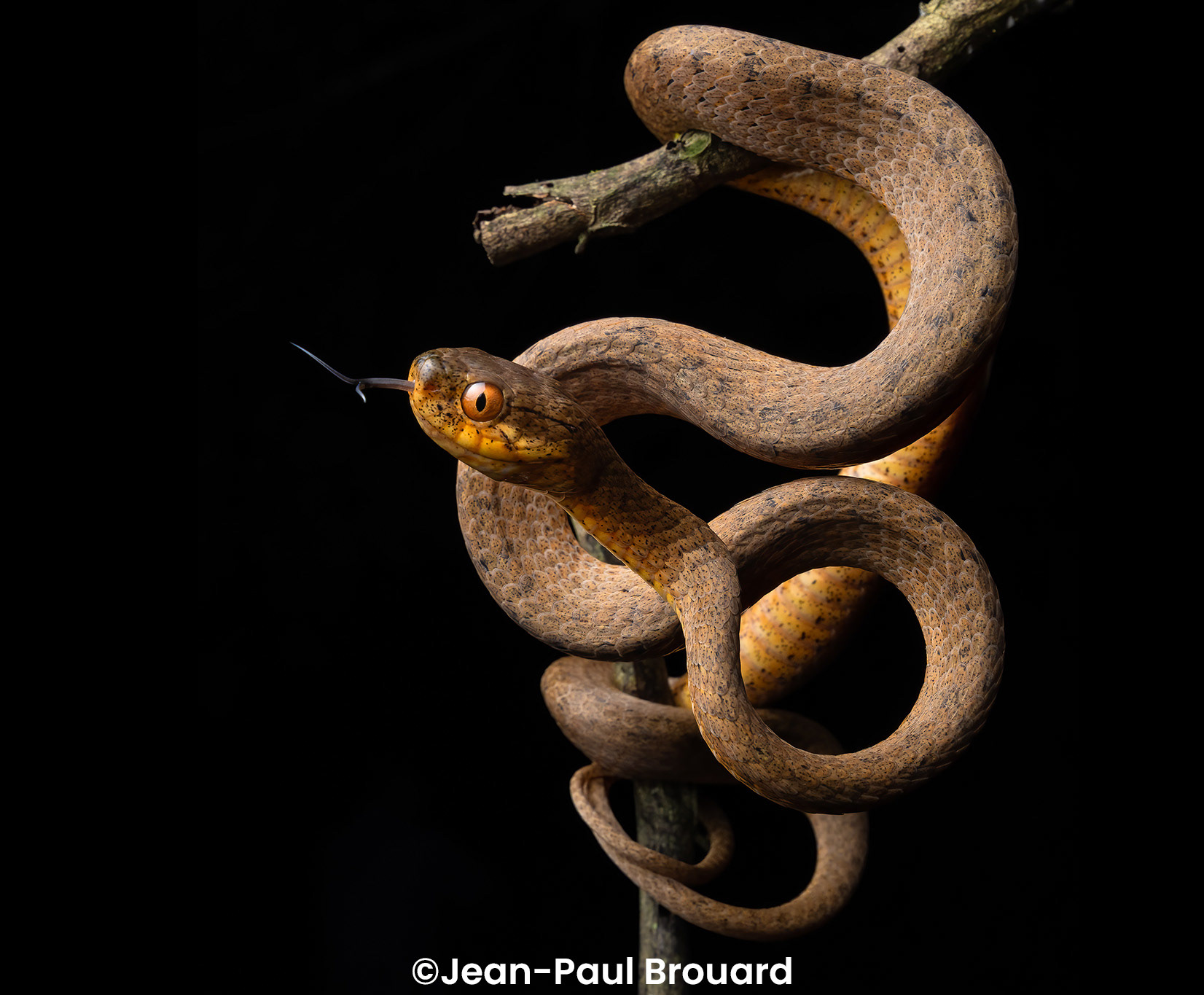
Berdmore's slug snake (Pareas berdmorei).
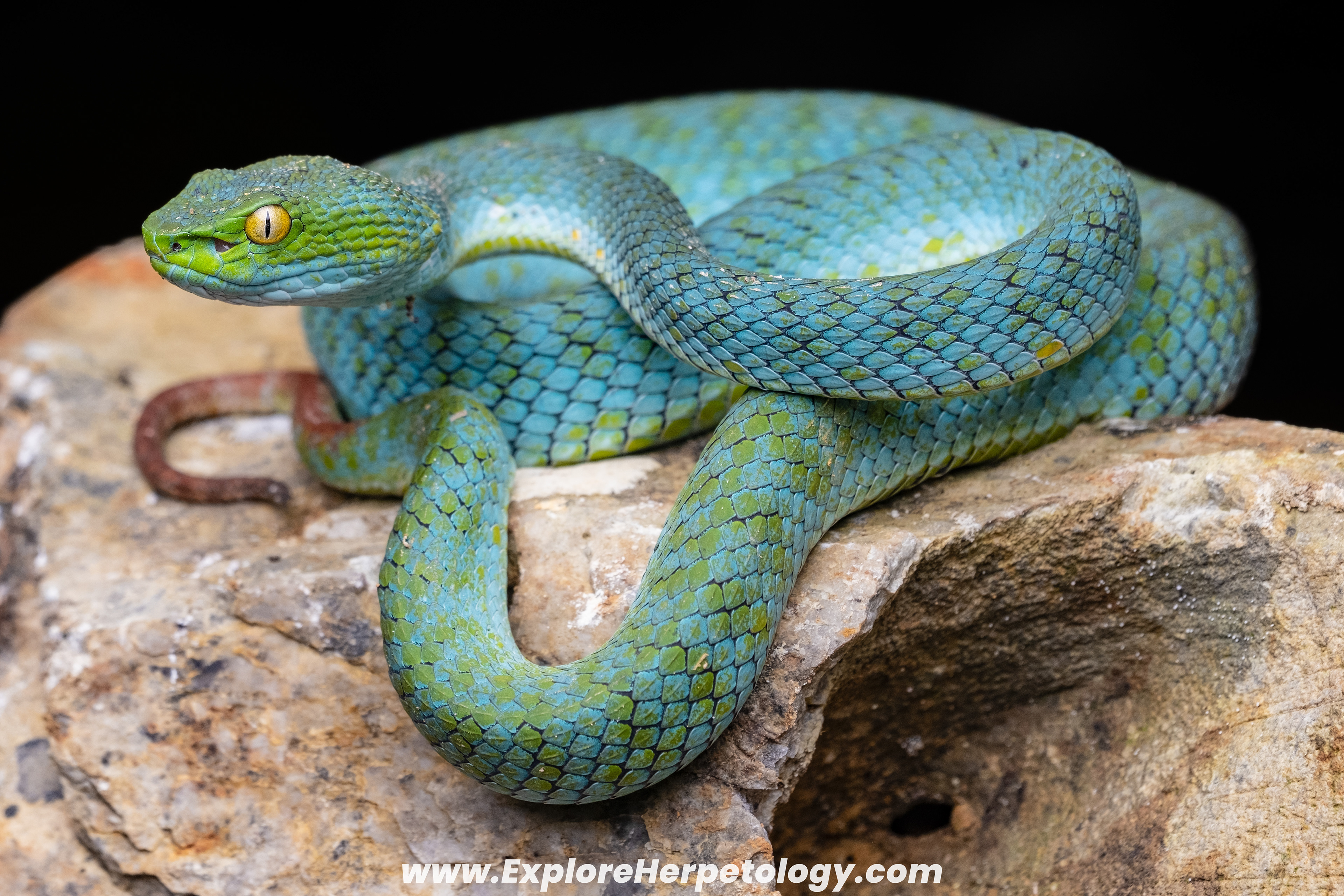
Large-eyed pit viper (Trimeresurus cf. macrops).
VANG VIENG - DAY 9:
We woke up to another stormy day, with light rain coming down over the town and even more ominous clouds above the mountains. It is usually very dry by mid November, but a cyclone in the South China Sea was blowing unseasonal rains into Indo-China. This is not idea for the Protobothrops, which we believe prefers dry nights. Regardless, we had to make the most of the days we had, and henceforth we split up into two groups; one returning to the type locality, and the second undertaking a massive hike into the mountains which started in the late afternoon.
For our group heading deep into the mountains, it was a 45 minute drive from town and then a complicated route through the hills. The weather was relatively cool due to the thick clouds, but the humidity levels were insane - leading to some extremely sweaty hiking on the way to the river. Once we reached the remote forest stream, we found a new green viper for the expedition, a Lanna pit viper (Trimeresurus lanna). After eating some sandwiches in the forest at twilight, we pushed on into nighttime and found a huge small-banded kukri snake (Oligodon fasciolatus). The only additional snakes we saw were more Lanna pit vipers, before we decided to abandon this location and try searching along more limestone karst cliffs.
We returned to the car extremely tired after a 5 hour hike which took us up to over 700 meters above sea level. After a few minutes rest, we walked on foot to the nearest karst formation and managed to find a trail leading along a small stream at the base. This was very promising, and quickly delivered a white-spotted slug snake (Pareas margaritophorus) along with tons of endemic Pagel's bent-toed geckos (Cyrtodactylus pageli). Inspired by this discovery of great habitat, our group went hard and began to comb every inch of habitat accessible along this karst. There were several sections of fallen rocks which allow you to climb up the karst, one of which led to a large karst overhang with a dry cavern at the base. Rupert took a look inside and immediately spotted a Vang Vieng lance-headed pit viper (Protobothrops flavirostris) coiled up.
The snake was in an incredibly precarious place, where one jump off the rock would see it surely vanish into an abyss, so we jumped into action immediately and grabbed the snake by the tail, securing it with a hook and carefully carrying it down to a safe area near the stream. It was at this moment that we realised we had accomplished our mission. The second ever captured individual of our new Protobothrops, and our final big target of the expedition. We met with second group as soon as possible, who had no luck with the viper themselves, but did find several other snakes, including a Indo-Chinese banded wolf snake (Lycodon subcinctus).
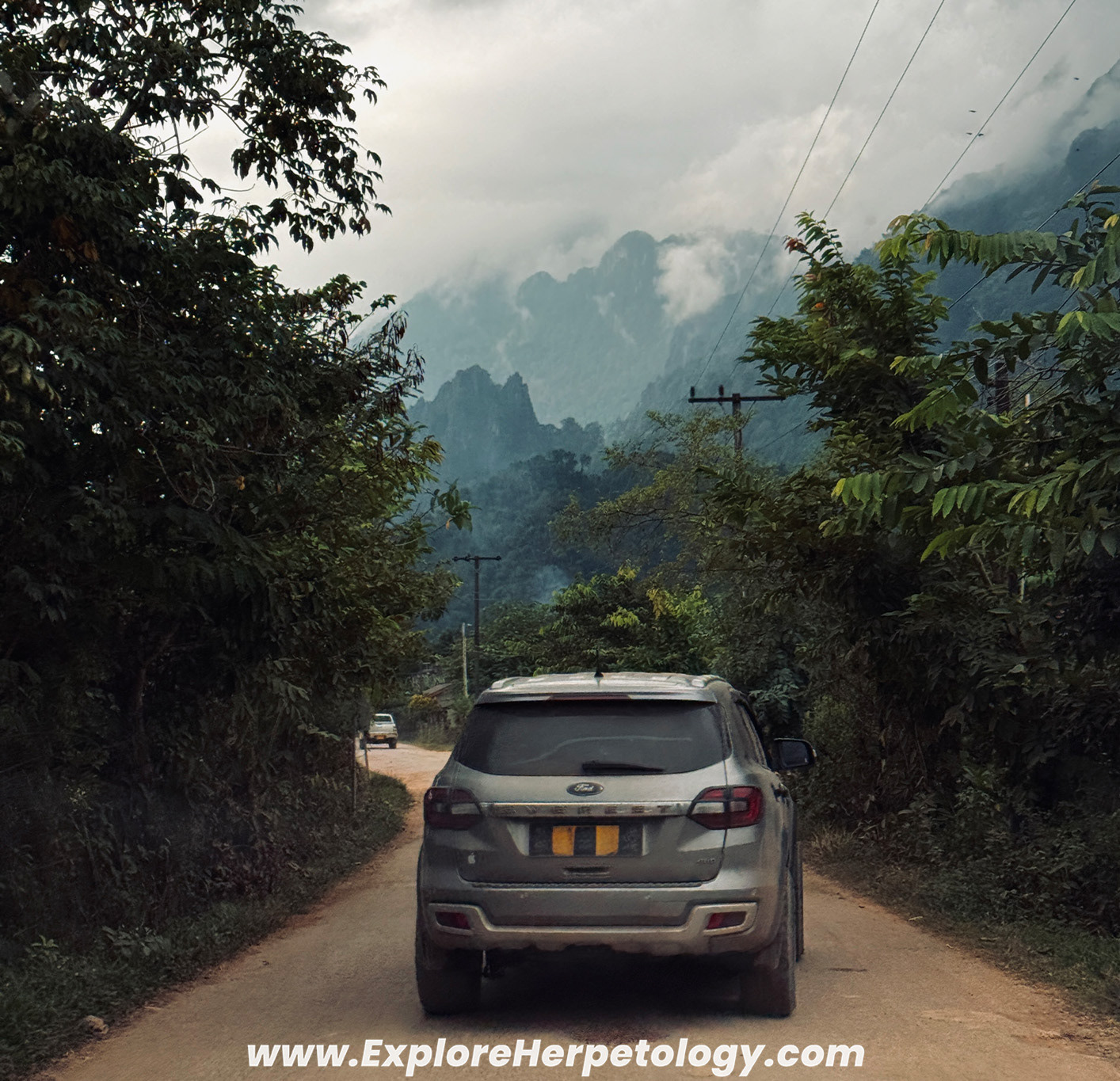
Driving out to our hiking spot.
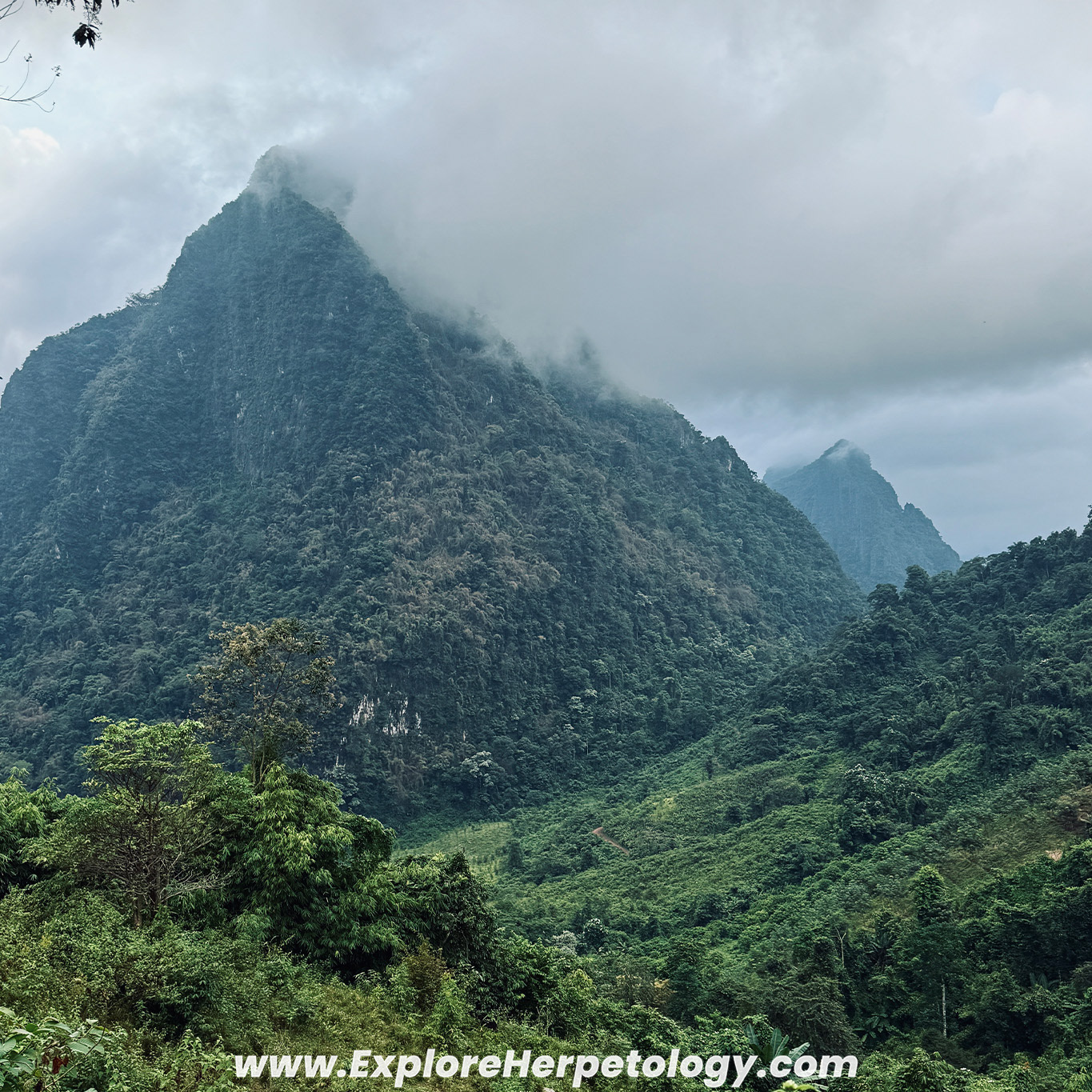
Climbing elevation.
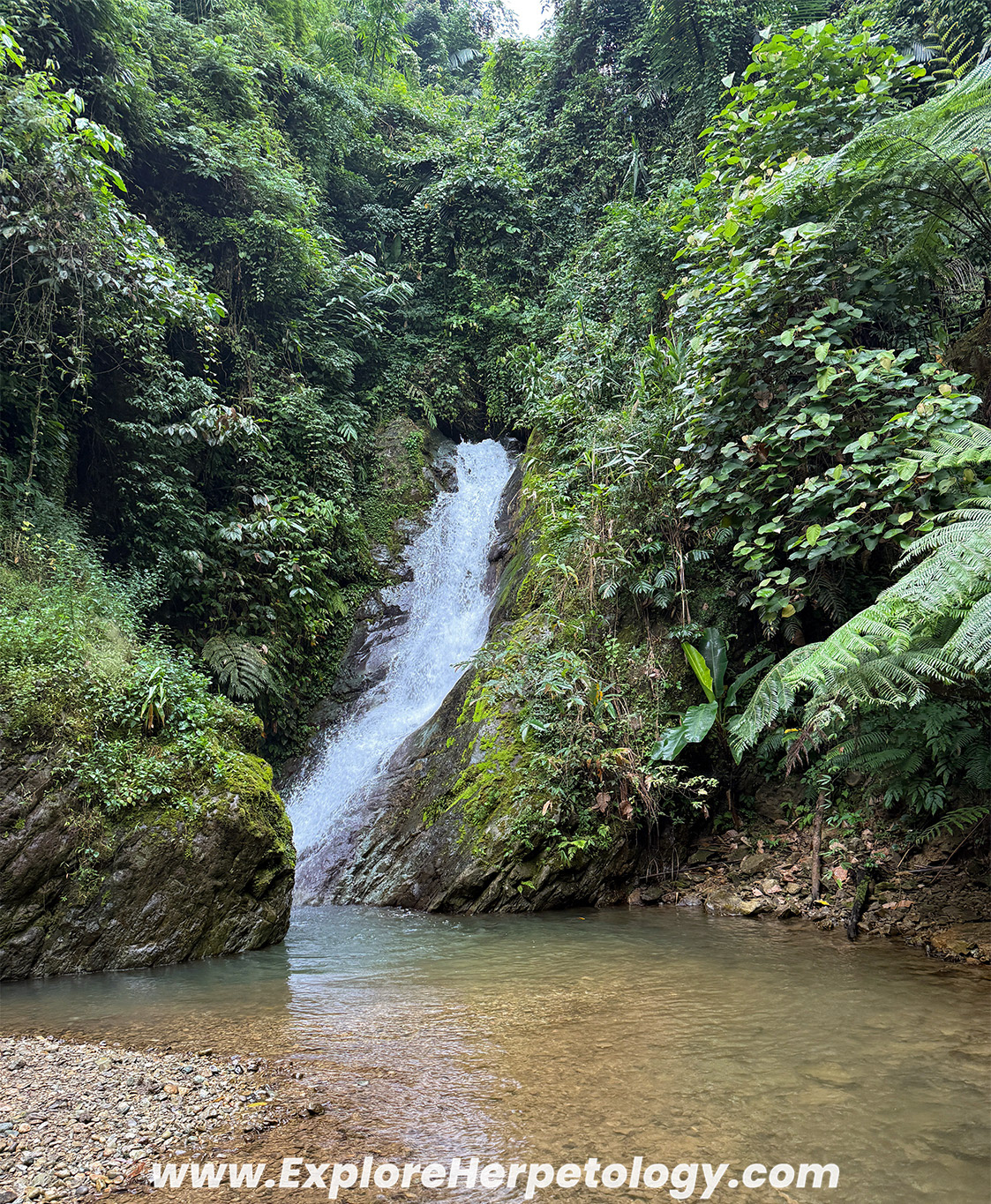
A waterfall on our route.
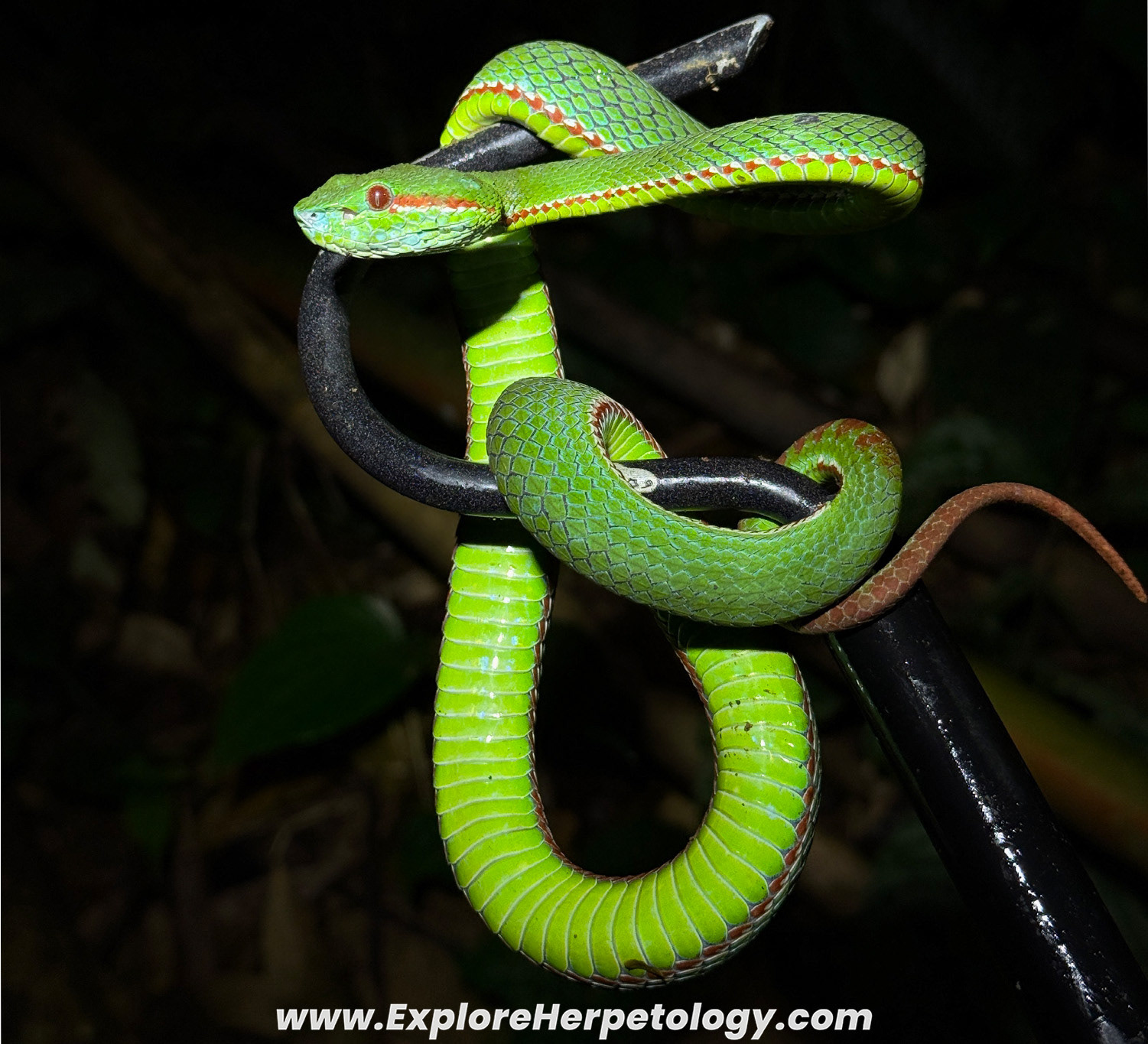
Lanna pit viper (Trimeresurus lanna).
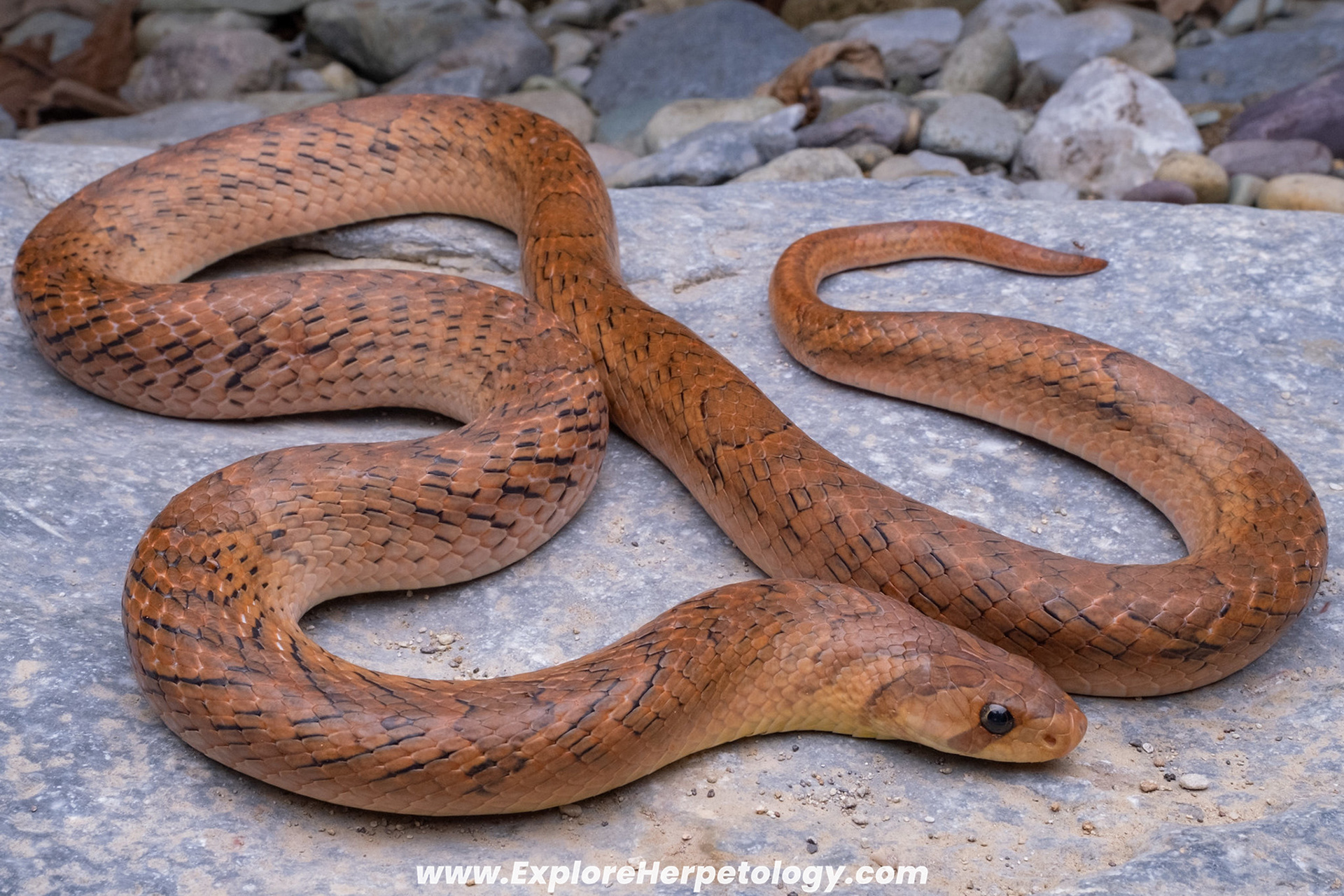
Small-banded kukri snake (Oligodon fasciolatus).
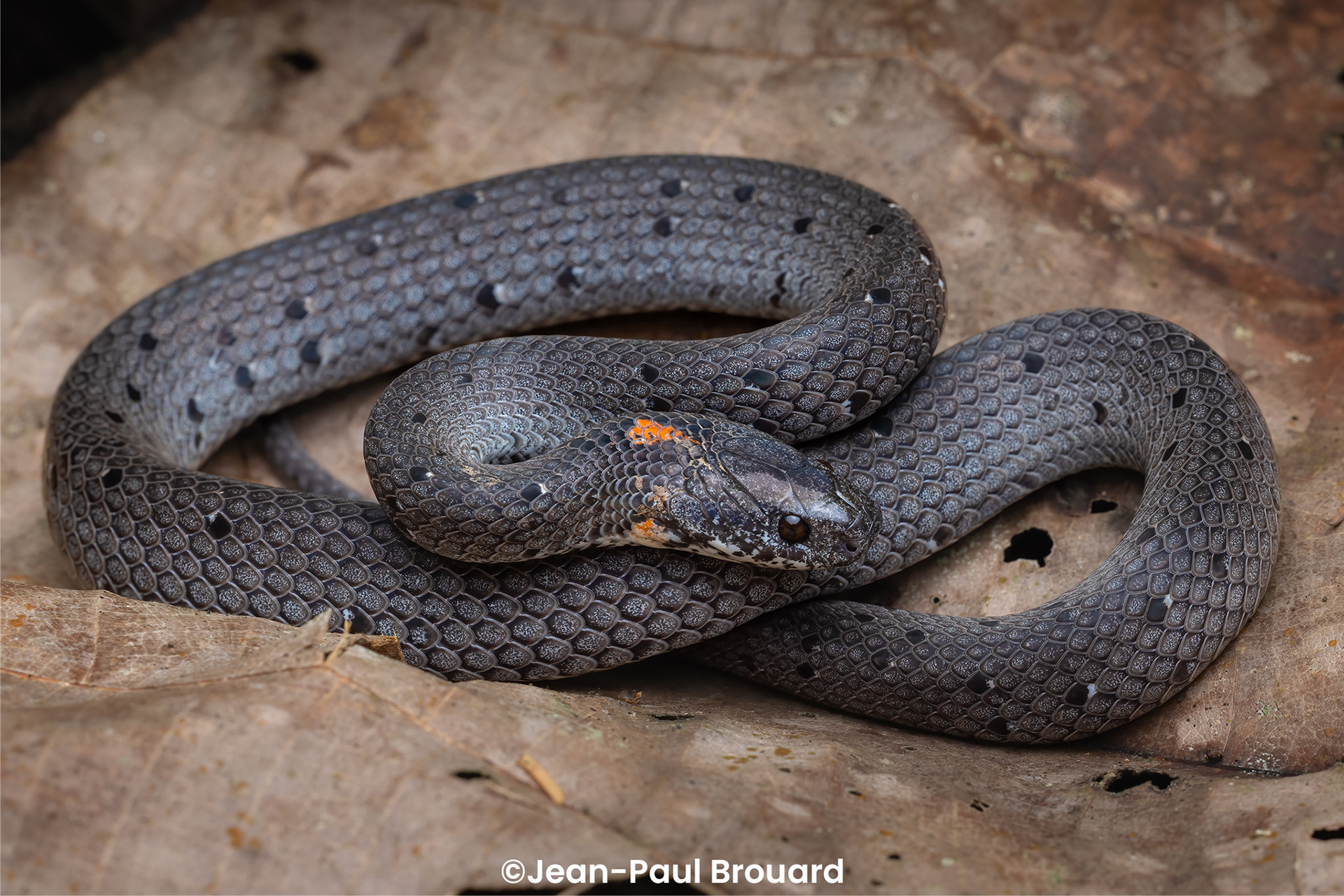
White-spotted slug snake (Pareas margaritophorus).
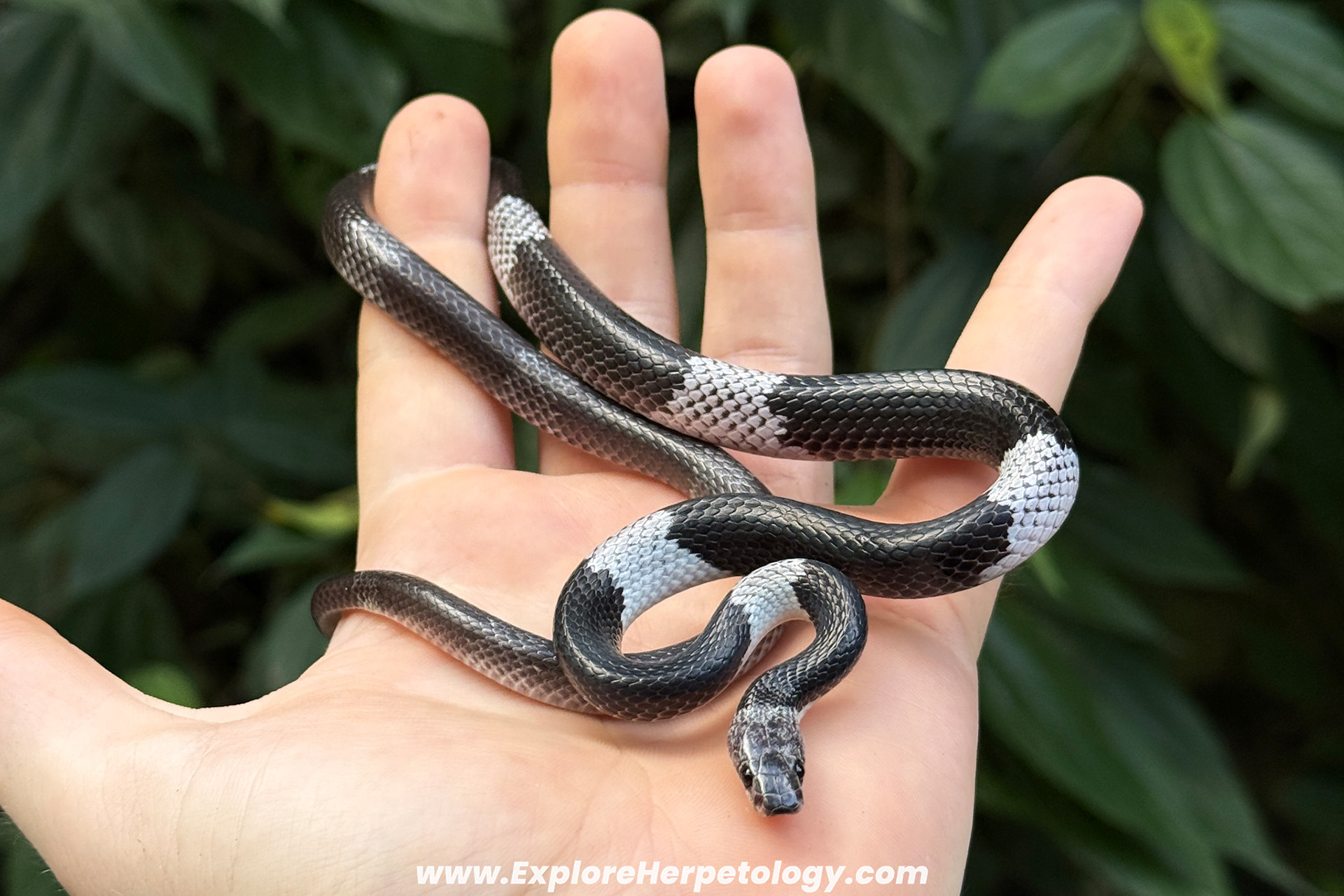
Indo-Chinese banded wolf snake (Lycodon neomaculatus).
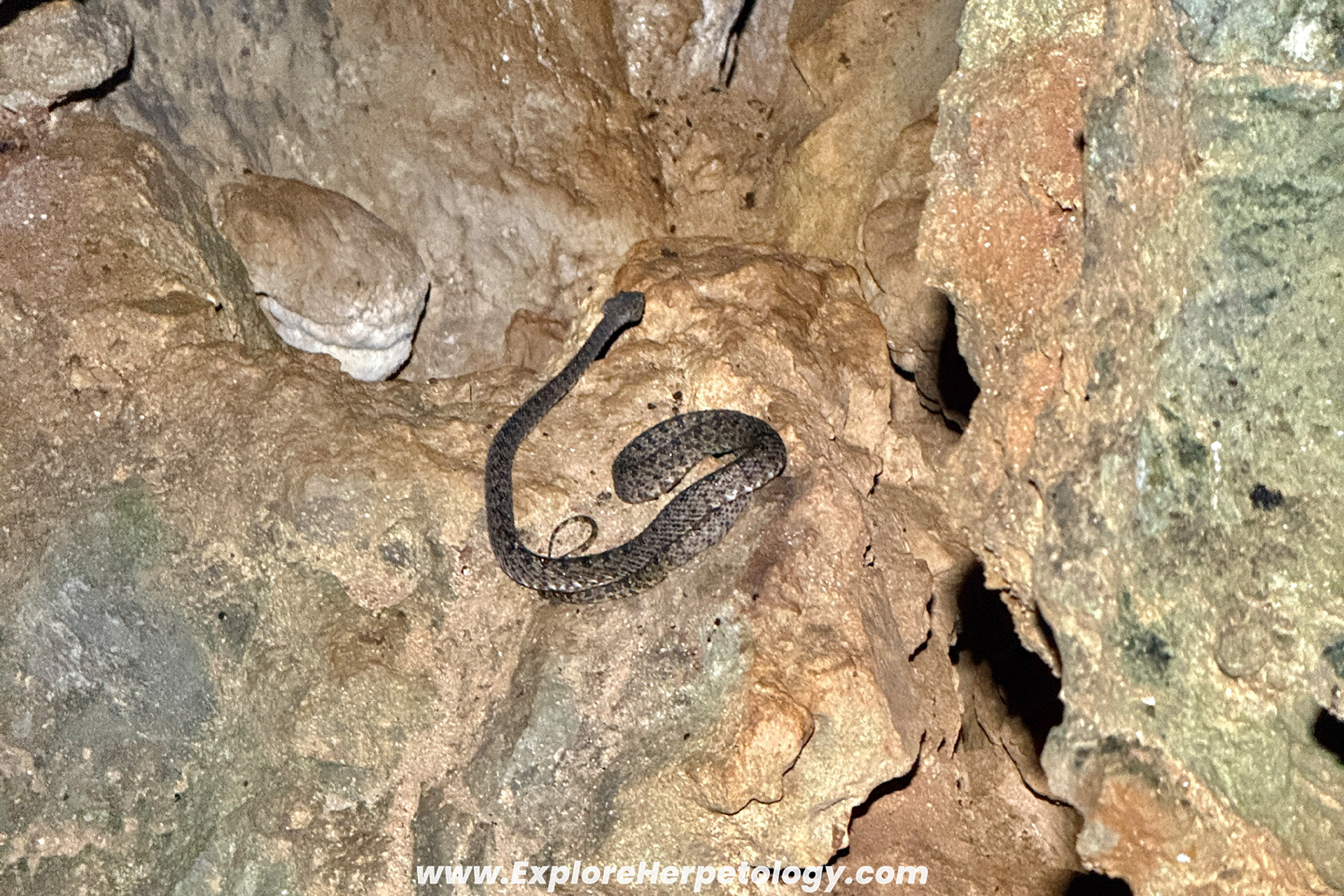
In-situ Vang Vieng lance-headed pit viper (Protobothrops flavirostris).
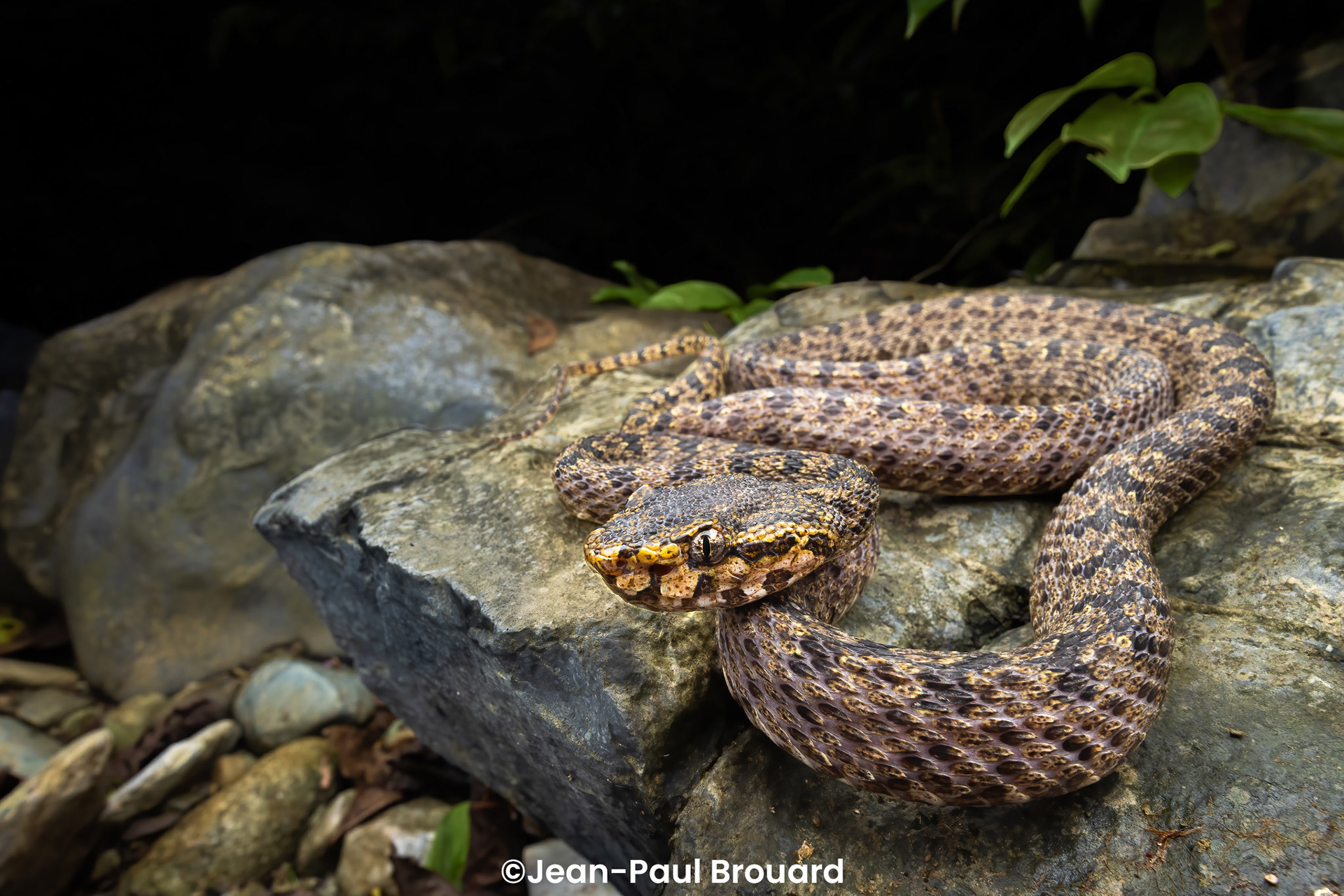
Vang Vieng lance-headed pit viper (Protobothrops flavirostris).
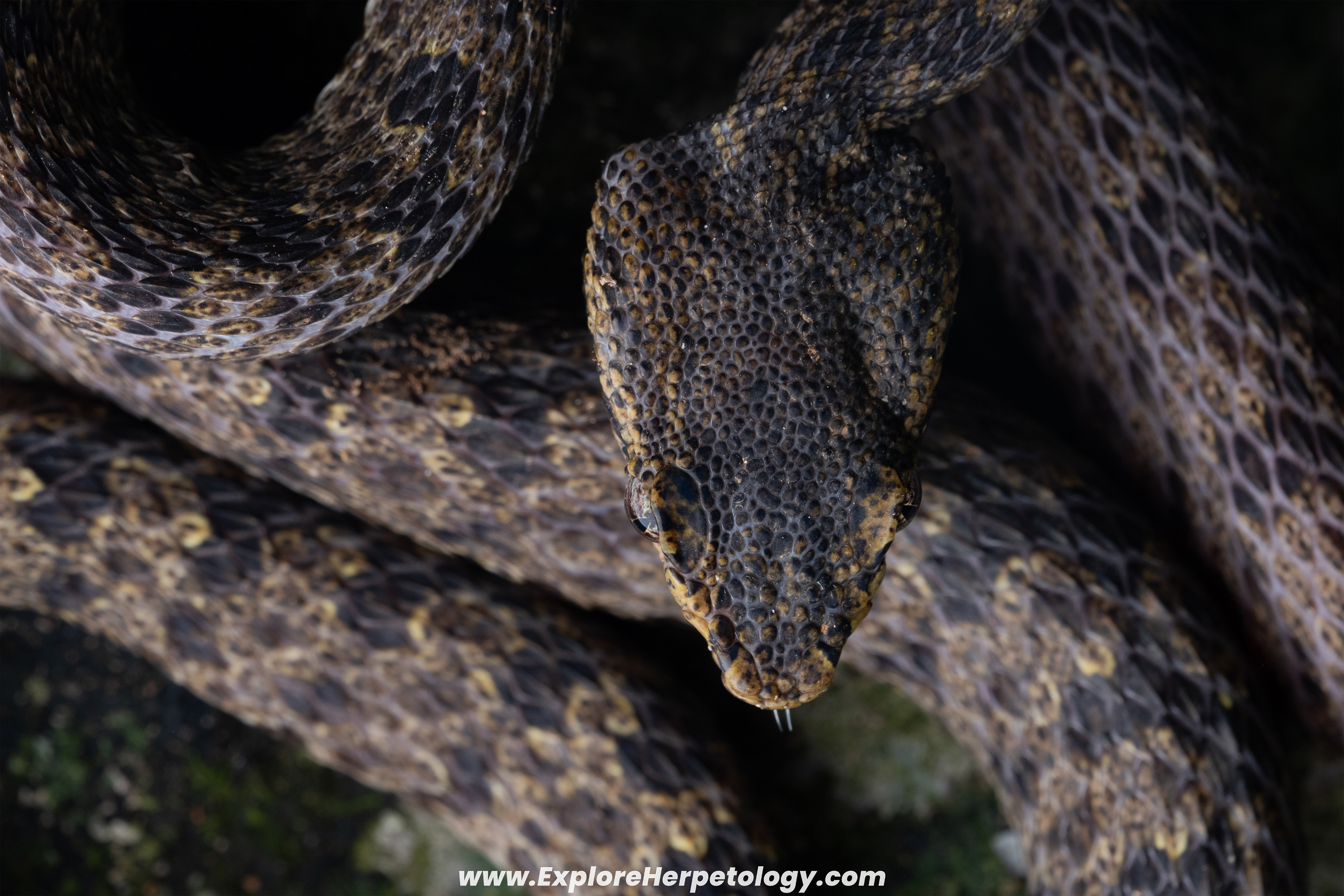
Vang Vieng lance-headed pit viper (Protobothrops flavirostris).
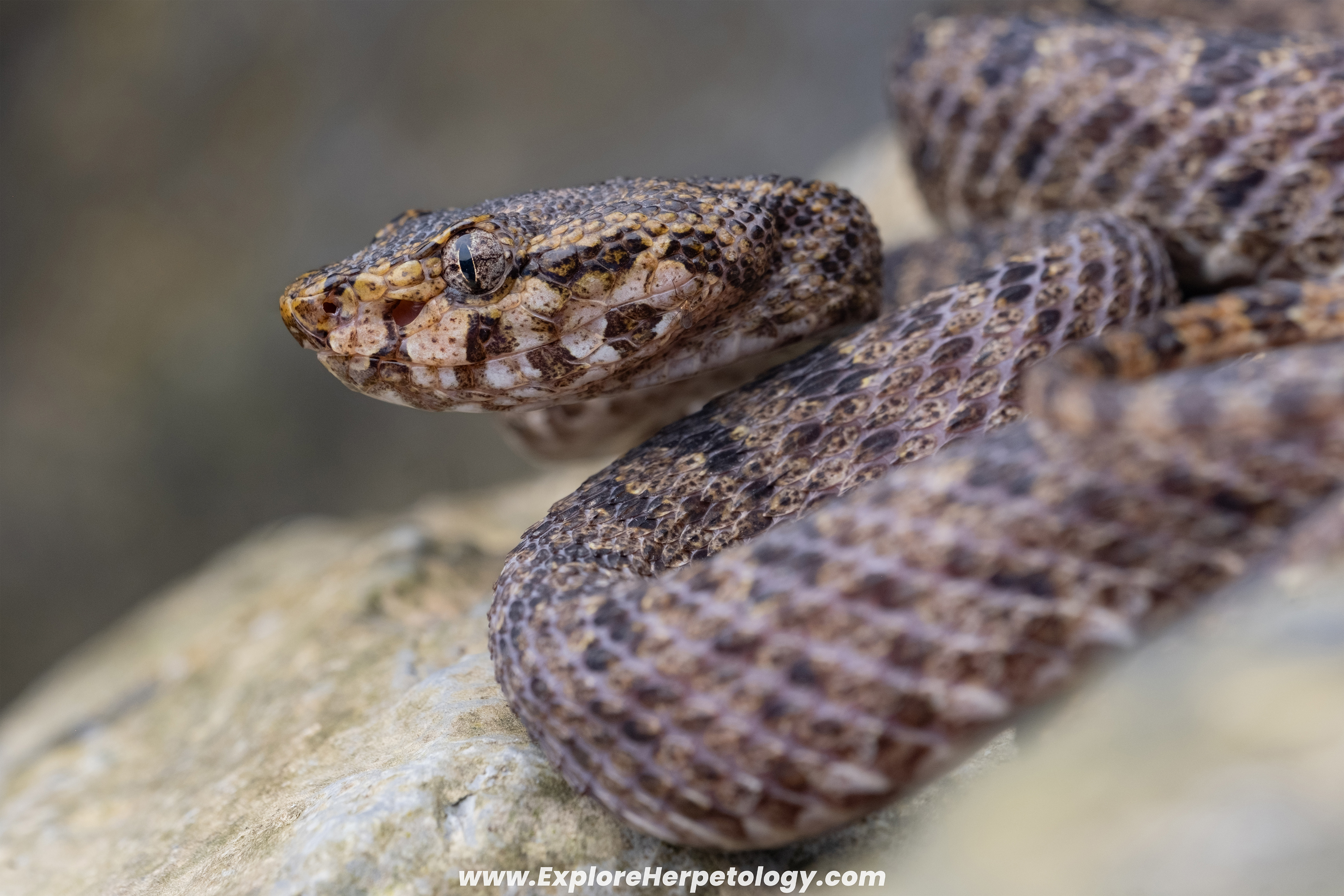
Vang Vieng lance-headed pit viper (Protobothrops flavirostris).
VANG VIENG - DAY 10:
So, by our 10th and final day of the expedition, we had completed all our major objectives and were completely worn out. The last 2 nights in particular had included long and strenuous hikes through challenging habitat for all participants, and there were many murmurs of completely skipping herping on our final night and celebrating our success. In the end, we decided to do a mixture of both; heading out to release the Vang Vieng pit viper back where we found it, and trying our luck at finding another individual in the same area.
Despite the weather being substantially more promising than the previous day, we only saw several Trimeresurus cf. macrops along the karst wall. At a nearby stream, we saw more than 10 checkered keelbacks (Fowlea piscator) - another new species for the trip - along with an oriental vine snake (Ahaetulla prasina). We wrapped up after this fun hour of herping and went back to town for "500 somersbys" and some good Vang Vieng food, celebrating one of the most productive Explore Herpetology trips since we began operating in February 2022. The following morning, we drove back to Vientiane and ended the tour.
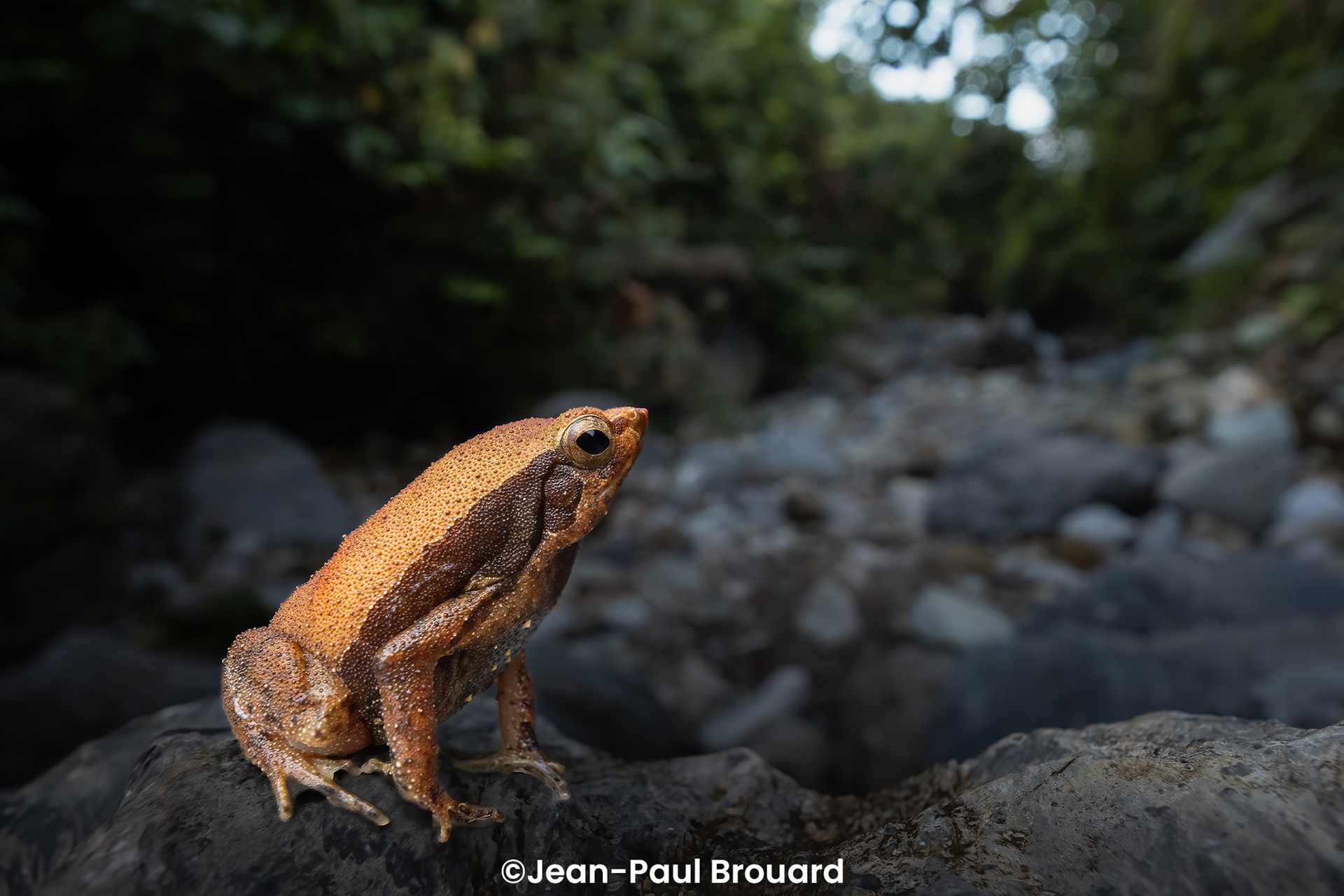
Lined sticky frog (Kalophrynus interlineatus).
Releasing our Protobothrops.
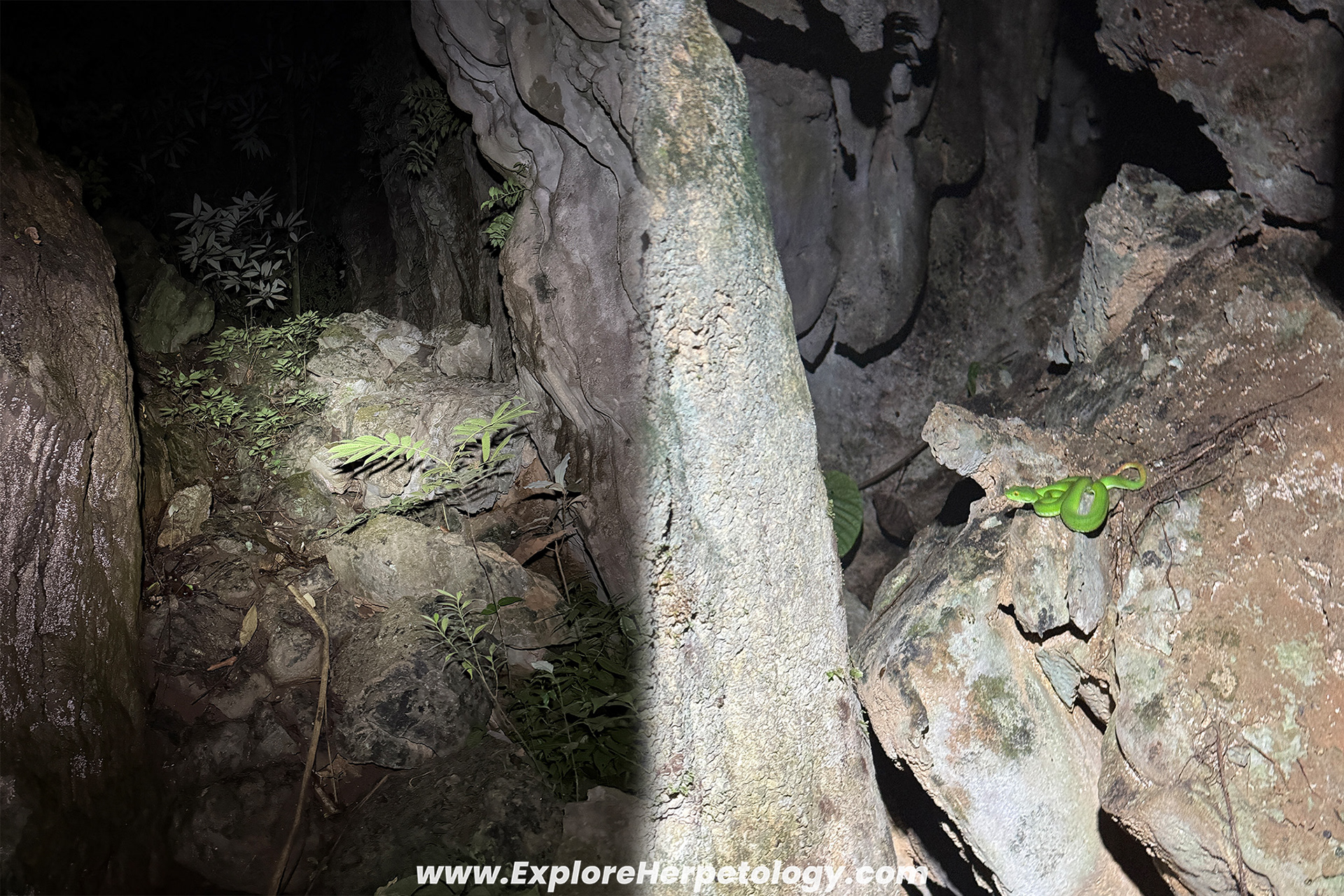
Trimeresurus cf. macrops and habitat.
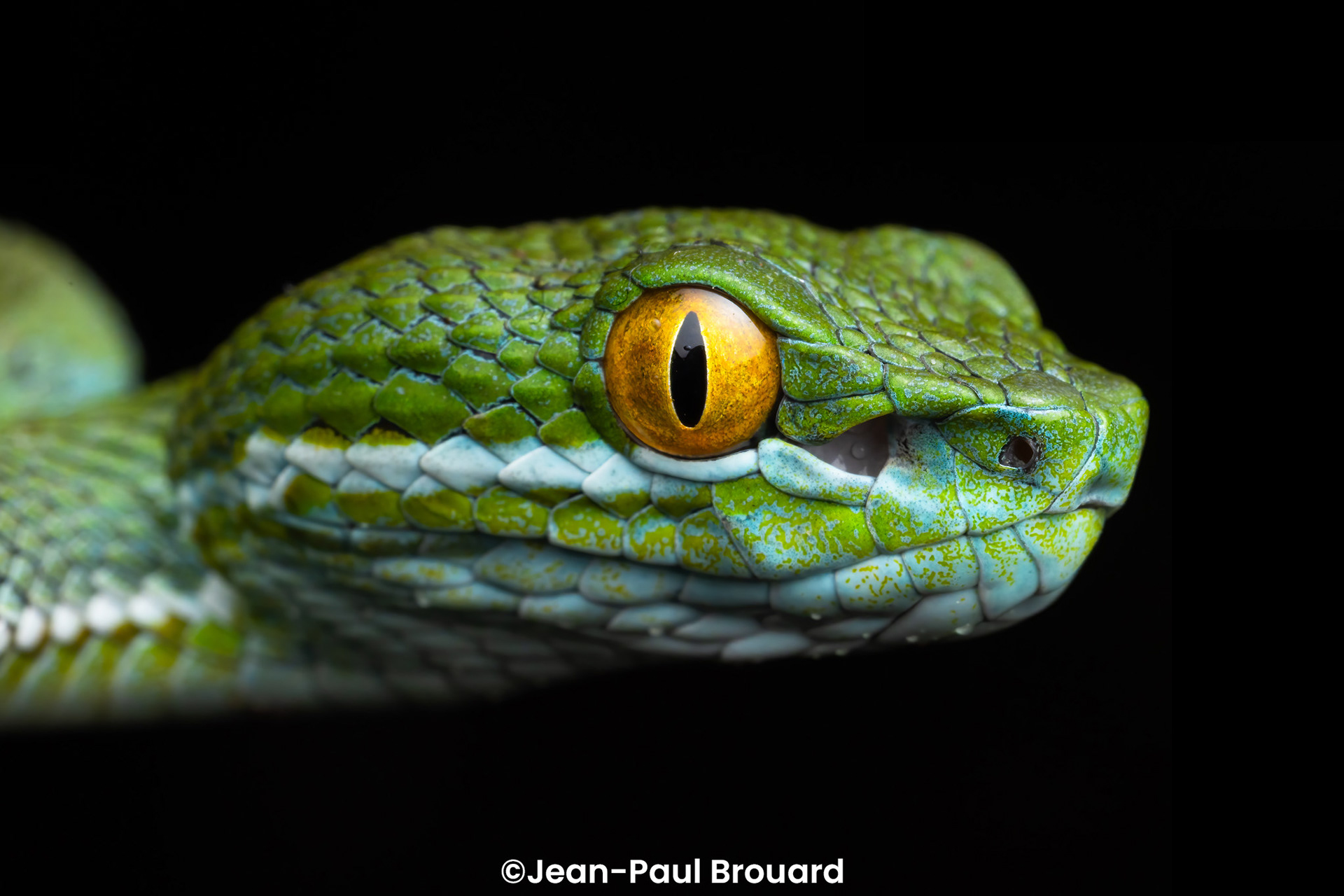
Adult male Trimeresurus cf. macrops.
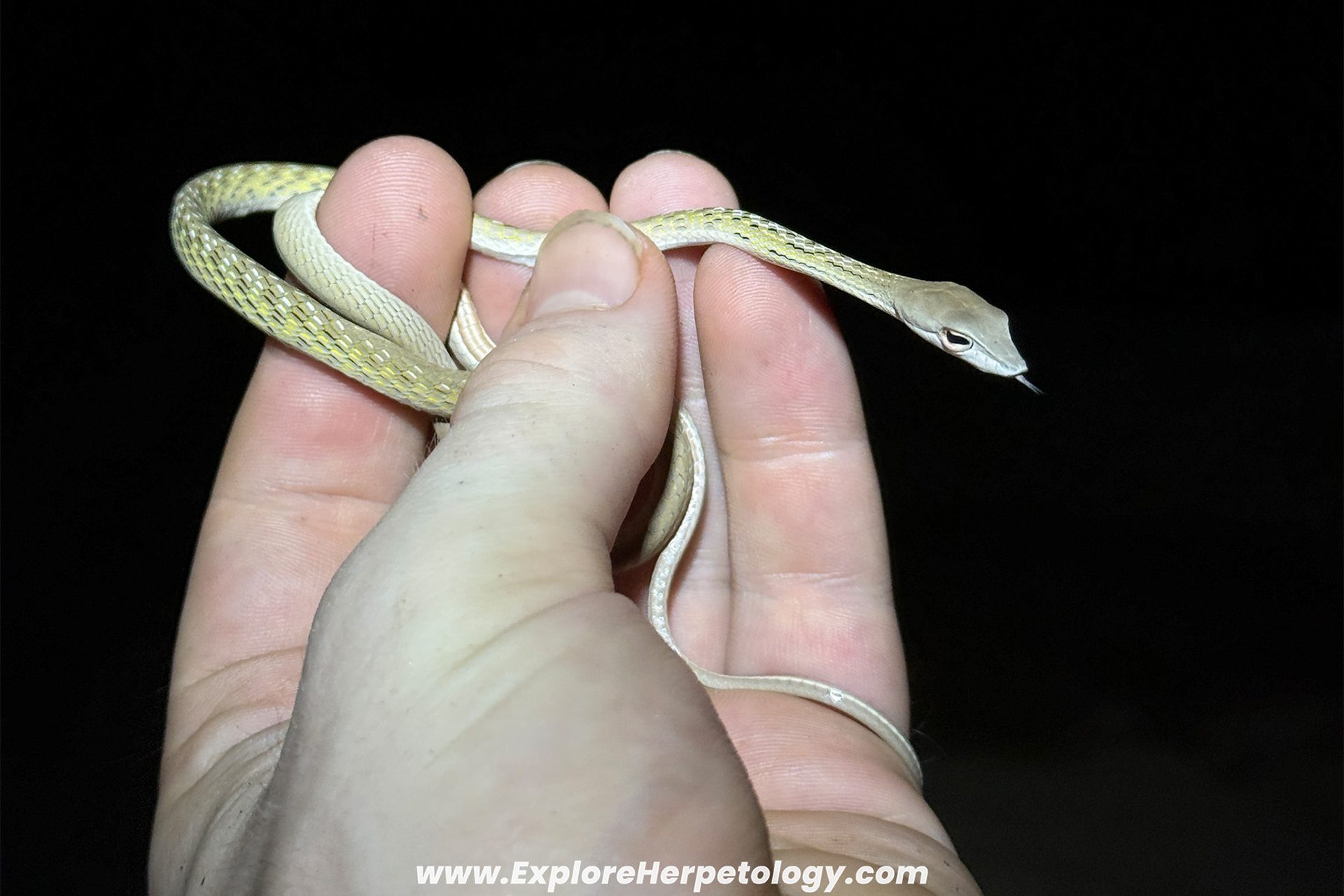
Ahaetulla prasina.
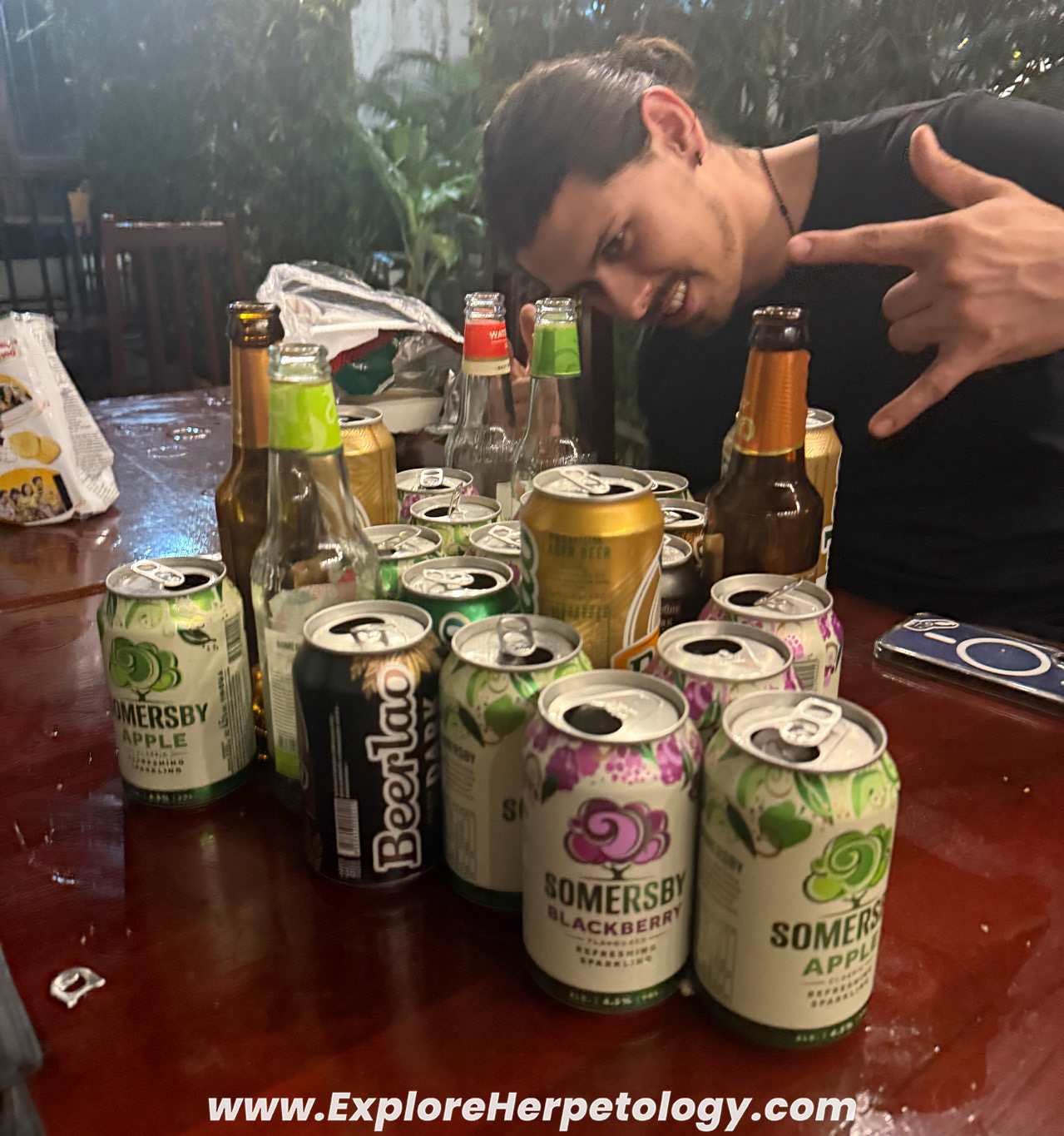
500 Somersbys.
To join our next EXPEDITION LAOS (1st - 9th November 2026), click here!
FULL SPECIES LIST
Snakes:
1. Ahaetulla prasina x2
2. Ahaetulla sp. x3
3. Boiga guangxiensis
4. Bungarus candidus
5. Dendrelaphis ngansonensis x3
6. Dendrelaphis pictus x3
7. Fowlea flavipunctatus x20+
8. Fowlea piscator x12
9. Homalopsis nigroventralis x12
10. Hypsiscopus murphyi x2
11. Lycodon banksi x2
12. Lycodon neomaculatus
13. Malayopython reticulatus
14. Oligodon fasciolatus
15. Oligodon sp. x2
16. Pareas berdmorei x3
17. Pareas margaritophorus x3
18. Pareas truongsonicus
19. Protobothrops flavirostris
20. Protobothrops sieversorum x5
21. Psammodynastes pulverulentus
22. Rhabdophis siamensis x3
23. Trimeresurus cf. macrops (clade 1) x20+
24. Trimeresurus cf. macrops (clade 2) x9
25. Trimeresurus lanna x5
26. Trimeresurus truongsonensis x4
27. Xenopeltis unicolor
2. Ahaetulla sp. x3
3. Boiga guangxiensis
4. Bungarus candidus
5. Dendrelaphis ngansonensis x3
6. Dendrelaphis pictus x3
7. Fowlea flavipunctatus x20+
8. Fowlea piscator x12
9. Homalopsis nigroventralis x12
10. Hypsiscopus murphyi x2
11. Lycodon banksi x2
12. Lycodon neomaculatus
13. Malayopython reticulatus
14. Oligodon fasciolatus
15. Oligodon sp. x2
16. Pareas berdmorei x3
17. Pareas margaritophorus x3
18. Pareas truongsonicus
19. Protobothrops flavirostris
20. Protobothrops sieversorum x5
21. Psammodynastes pulverulentus
22. Rhabdophis siamensis x3
23. Trimeresurus cf. macrops (clade 1) x20+
24. Trimeresurus cf. macrops (clade 2) x9
25. Trimeresurus lanna x5
26. Trimeresurus truongsonensis x4
27. Xenopeltis unicolor
Lizards:
1. Acanthosaura lepidogaster
2. Acanthosaura rubrilabris
3. Calotes emma
4. Calotes versicolor
5. Cyrtodactylus jaegeri
6. Cyrtodactylus pageli
7. Cyrtodactylus ruffordi
8. Cyrtodactylus teyniei
9. Dixonius sp.
10. Draco blandfordi
11. Eutropis longicauda
12. Eutropis multifasciata
13. Gekko aaronbaueri
14. Gekko kabkaebin
15. Hemidactylus frenata
16. Hemidactylus platyurus
17. Laodracon karsticola
18. Physignathus cocincinus
19. Scincella sp.
20. Sphenomorphus sp.
1. Acanthosaura lepidogaster
2. Acanthosaura rubrilabris
3. Calotes emma
4. Calotes versicolor
5. Cyrtodactylus jaegeri
6. Cyrtodactylus pageli
7. Cyrtodactylus ruffordi
8. Cyrtodactylus teyniei
9. Dixonius sp.
10. Draco blandfordi
11. Eutropis longicauda
12. Eutropis multifasciata
13. Gekko aaronbaueri
14. Gekko kabkaebin
15. Hemidactylus frenata
16. Hemidactylus platyurus
17. Laodracon karsticola
18. Physignathus cocincinus
19. Scincella sp.
20. Sphenomorphus sp.
Amphibians:
1. Amolops sengae
2. Duttaphrynus melanosticus
3. Fejervarya limnocharis
4. Gracixalus quyeti
5. Gracixalus sp.
6. Kalophrynus interlineatus
7. Kaloula pulchra
8. Megophrys sp.
9. Microhyla mukhleseri
10. Micryletta inornata
11. Occidozyga lima
12. Odorrana sp.
13. Polypedates megacephalus
14. Rhacophorus kio
15. Rhacophorus orlovi
16. Rhacophorus spelaeus
17. Sylvirana nigrovittata
18. Theloderma albopunctatum
1. Amolops sengae
2. Duttaphrynus melanosticus
3. Fejervarya limnocharis
4. Gracixalus quyeti
5. Gracixalus sp.
6. Kalophrynus interlineatus
7. Kaloula pulchra
8. Megophrys sp.
9. Microhyla mukhleseri
10. Micryletta inornata
11. Occidozyga lima
12. Odorrana sp.
13. Polypedates megacephalus
14. Rhacophorus kio
15. Rhacophorus orlovi
16. Rhacophorus spelaeus
17. Sylvirana nigrovittata
18. Theloderma albopunctatum