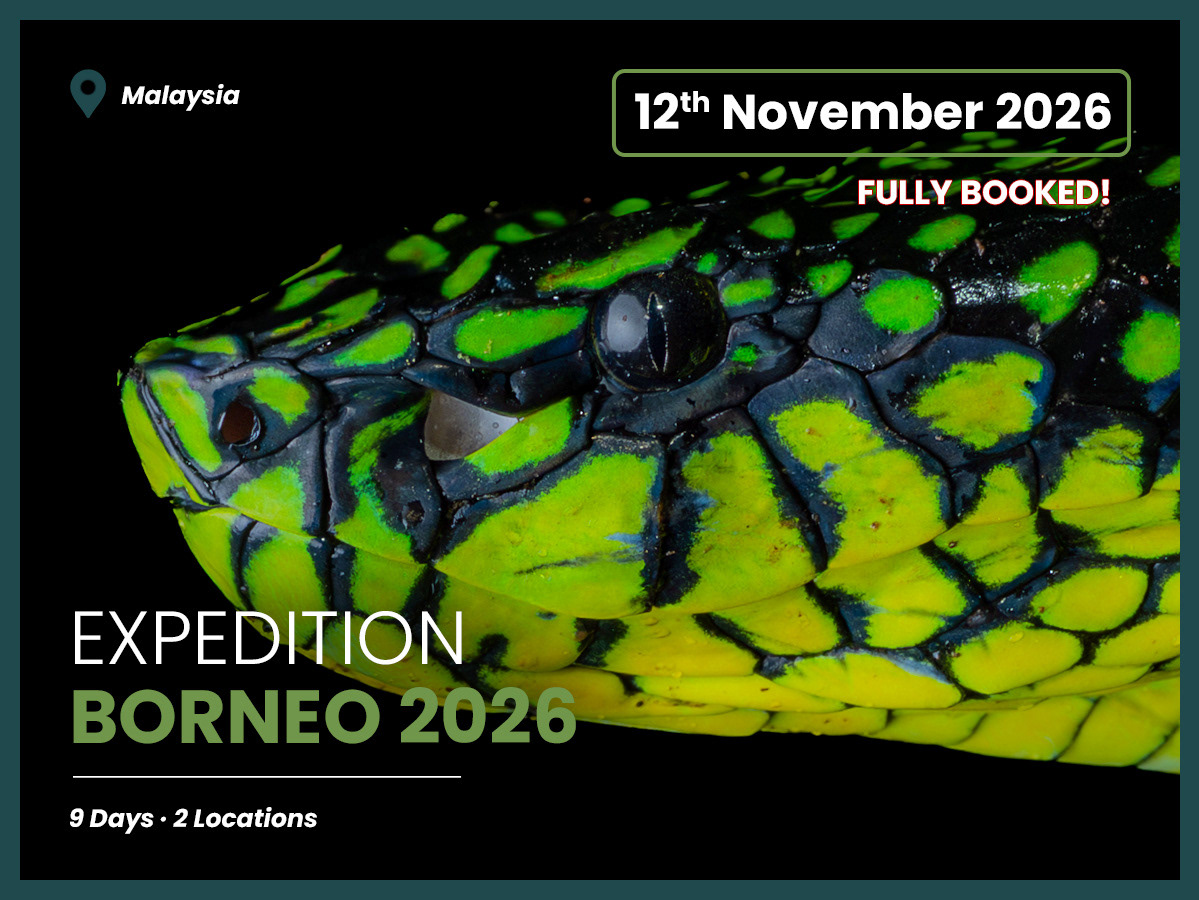

Start: 1st November 2026 | End: 9th November 2026 | Meeting location: Vientiane Capital | Spaces available: 7
Included in the tour:
- Expert herpetologist guides.
- Accommodation.
- Transportation.
- Food & drinks.
- Activity/permit fees.
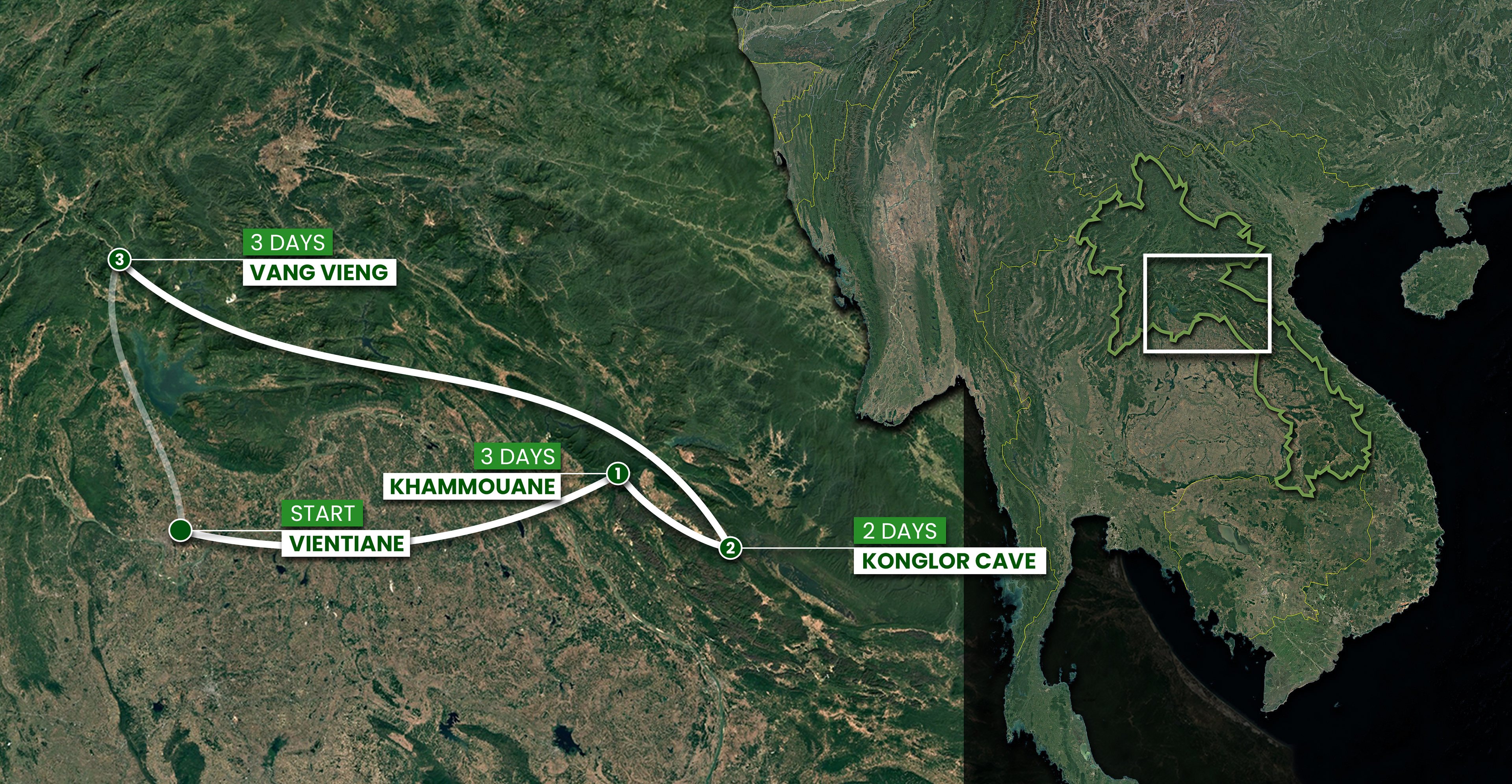
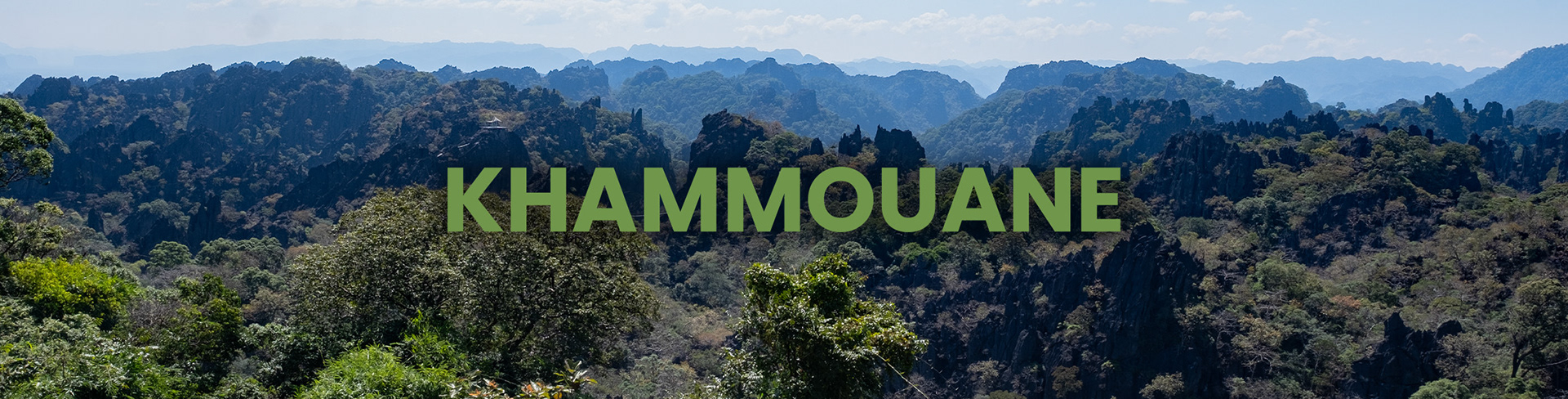
KHAMMOUANE (1st - 4th Nov):
We begin the expedition with 3 nights at The Rock, a famous eco-resort situated above the magnificent limestone karst massif of Khammouane province, which we affectionately refer to as "nature's knives". The resort has its own extensive network of trails, including a boardwalk which leads through the peaks and valleys of the karst formations - for which we will have special all-day and nighttime access. Moreover, our team know several unmarked trails to secret caves in the area, which are home to our key target species for this portion of the expedition. The resort restaurant (overlooking the view pictured on the banner above) serves great western and local food, with very comfortable rooms surrounded by evergreen rainforest.
Our primary target in this area is the three horned lance-headed pit viper (Protobothrops sieversorum), a large and very impressive 'horned viper' endemic to this area and some karst massifs across the border in neighbouring Vietnam. We will search for this seldom-seen species by hiking to undisturbed cave systems, where they can be found hunting both inside the caves and on the limestone rocks adjacent to the cave entrance. Seeing such a large pit viper living inside caves is a once in a lifetime experience and essential to the novel experiences on offer via this expedition. Another huge target is the incredible micro-endemic Khammouane karst dragon (Laodracon carsticola), for which we will search carefully along the sharp rocky pinnacles of the karst formations. This lizard is monochrome in colour and blends in almost perfectly with the karst. While challenging to catch, we were able to capture a huge male individual on our most recent expedition.
On our third and final day in the area, we will undertake an long hike deep into the karst massif to find some even more remote caves where we will target the extremely scarce and locally endemic Khammouane cave wolf snake (Lycodon banksi), a species we found for the first time on our last expedition. Along this trail, we have also found Malayan krait (Bungarus candidus), unknown kukri snakes (Oligodon sp.) and many other interesting species. These caves are crawling with the aptly named cave flying frog (Rhacophorus speleaus), which are often congregated in large numbers in damp crevices, along with several endemic geckos.
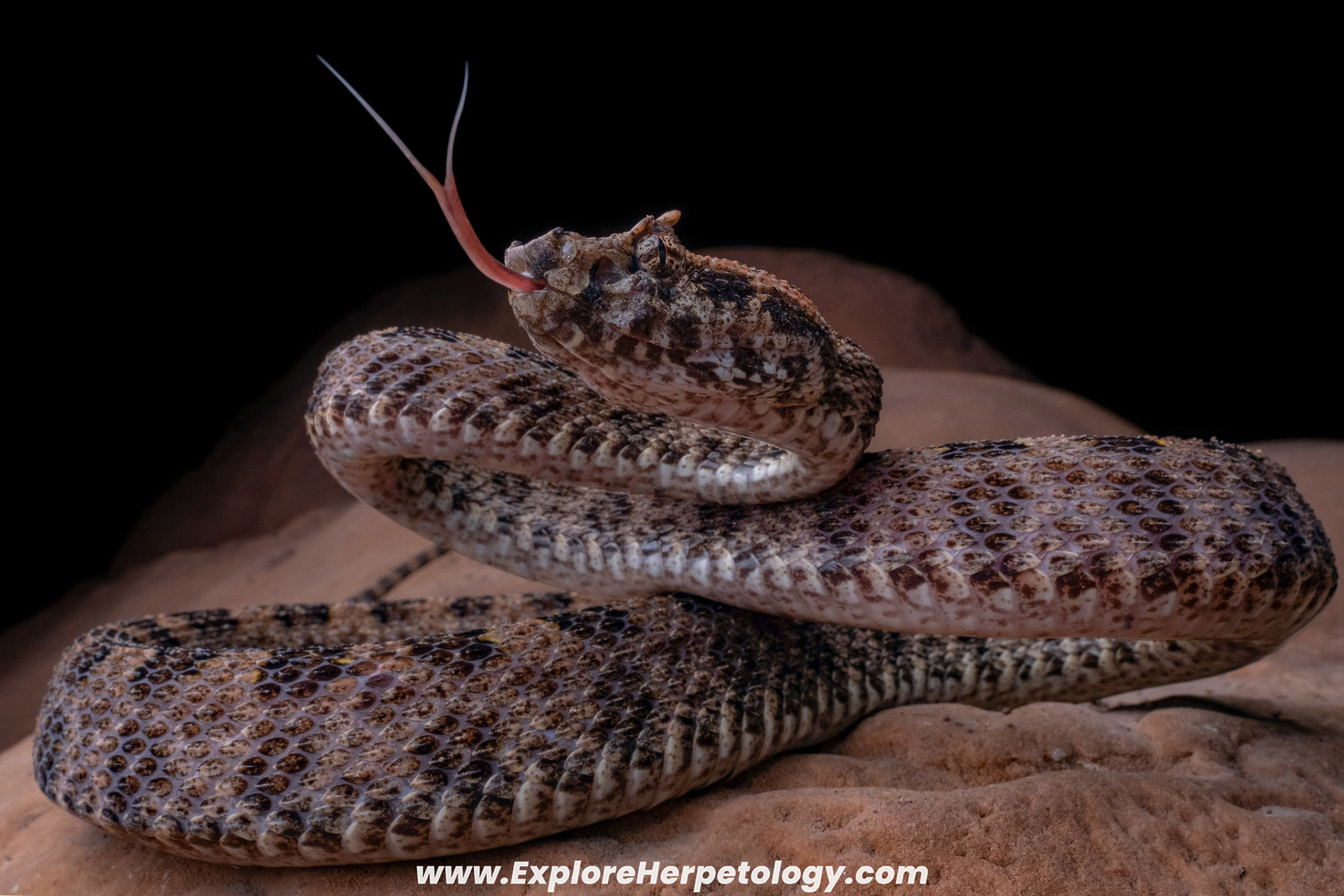
Three-horned lance-headed pit viper (Protobothrops sieversorum).
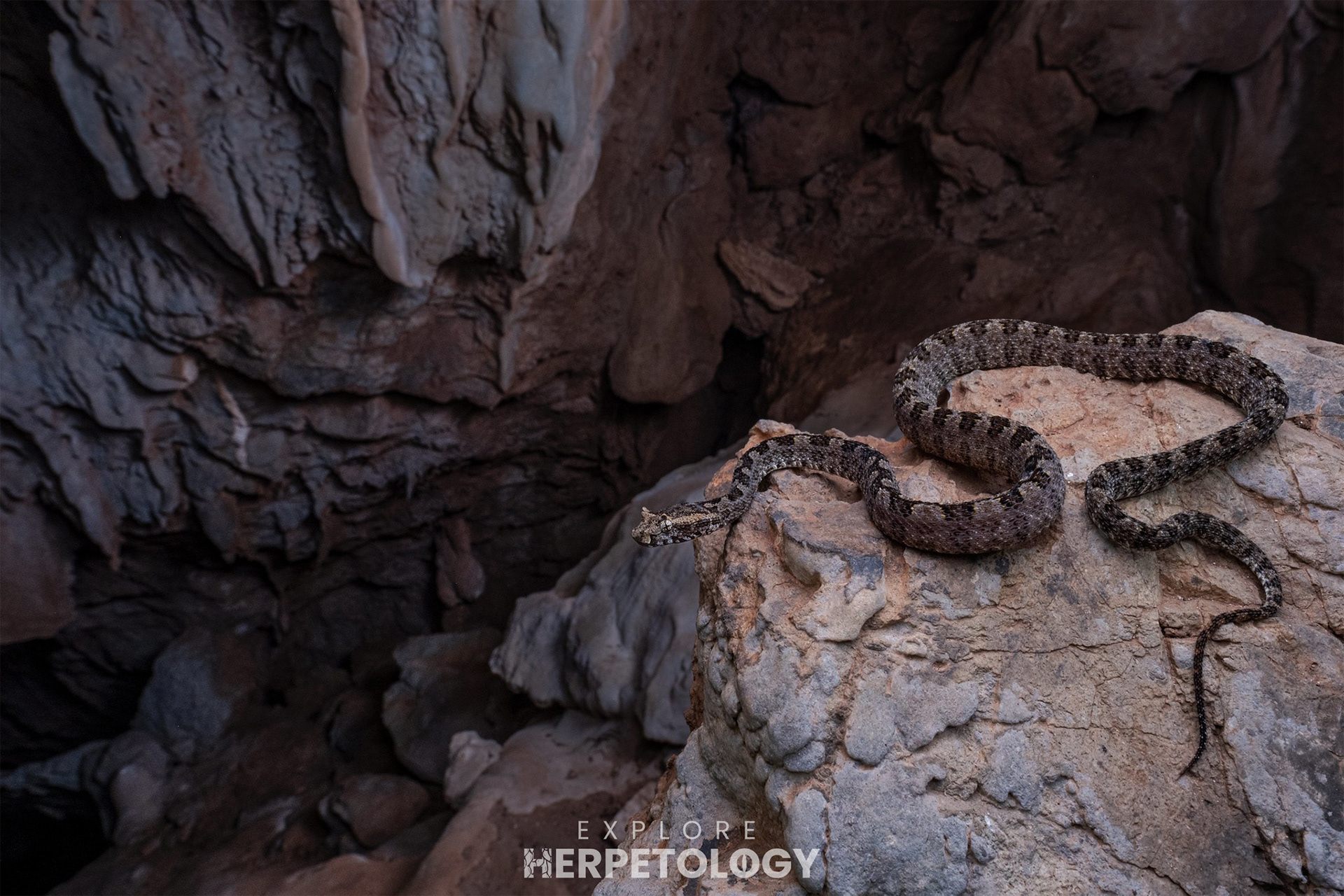
Three-horned lance-headed pit viper (Protobothrops sieversorum).
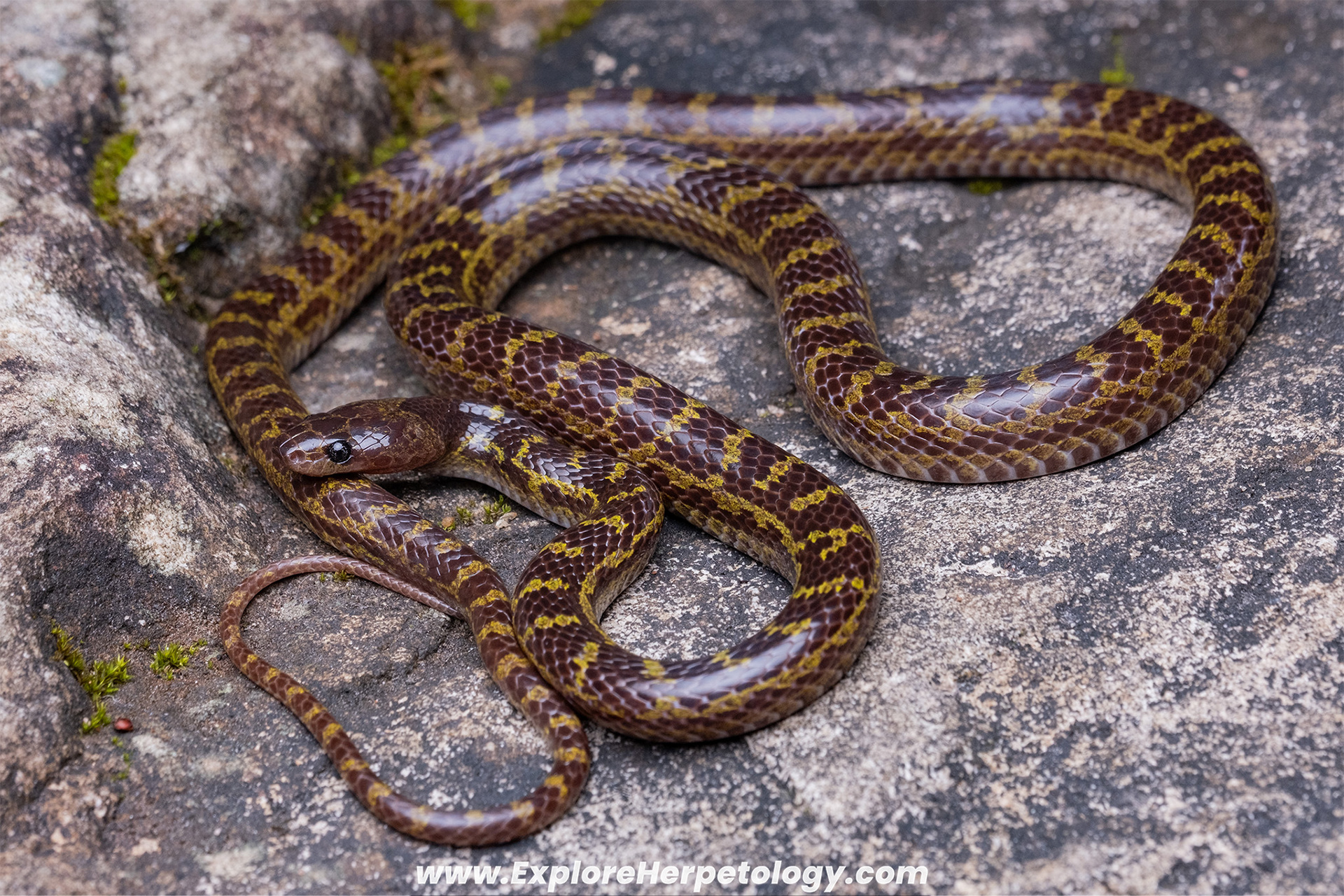
Khammouane wolf snake (Lycodon banksi).
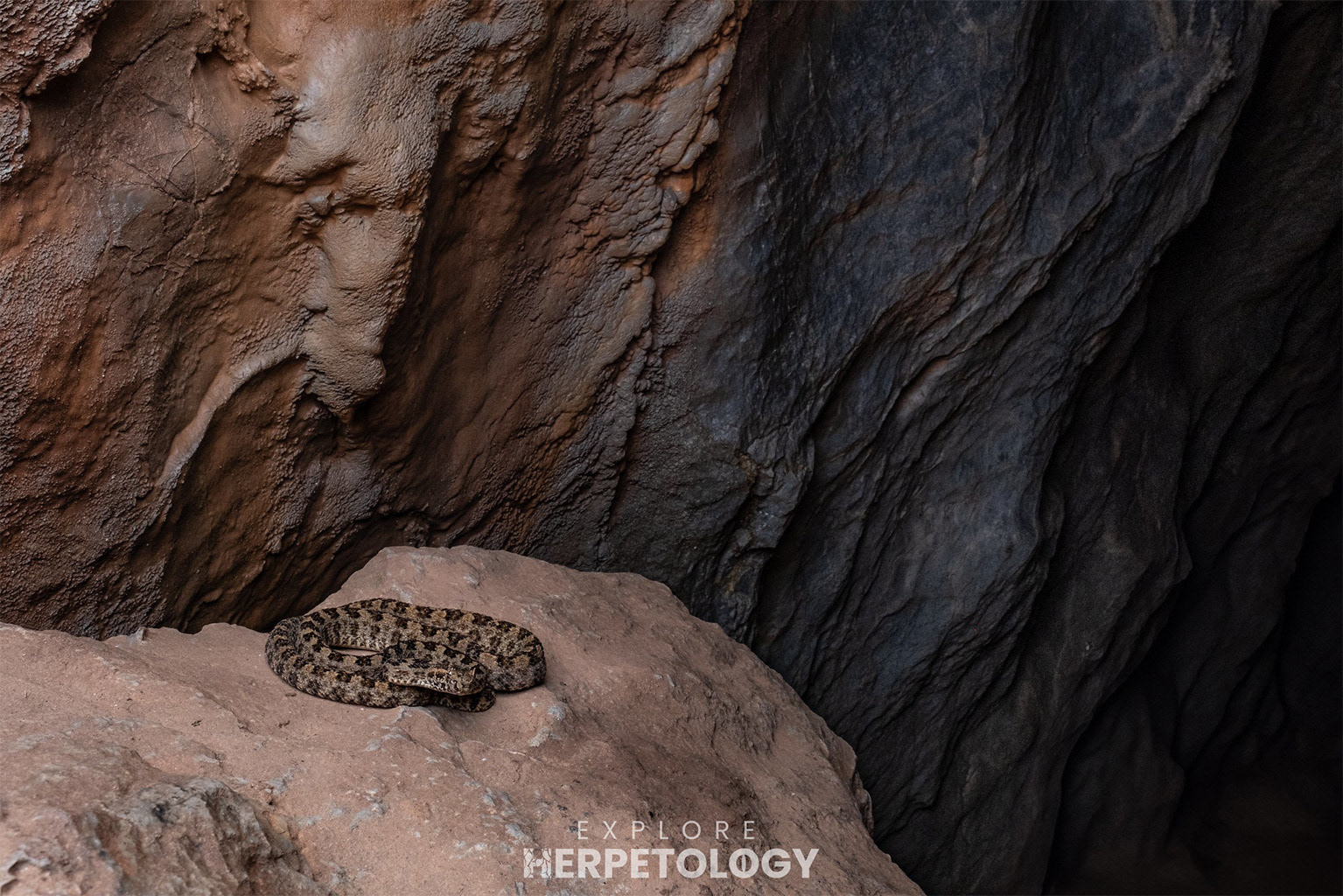
Three horn-scaled lancehead (Protobothrops sieversorum)
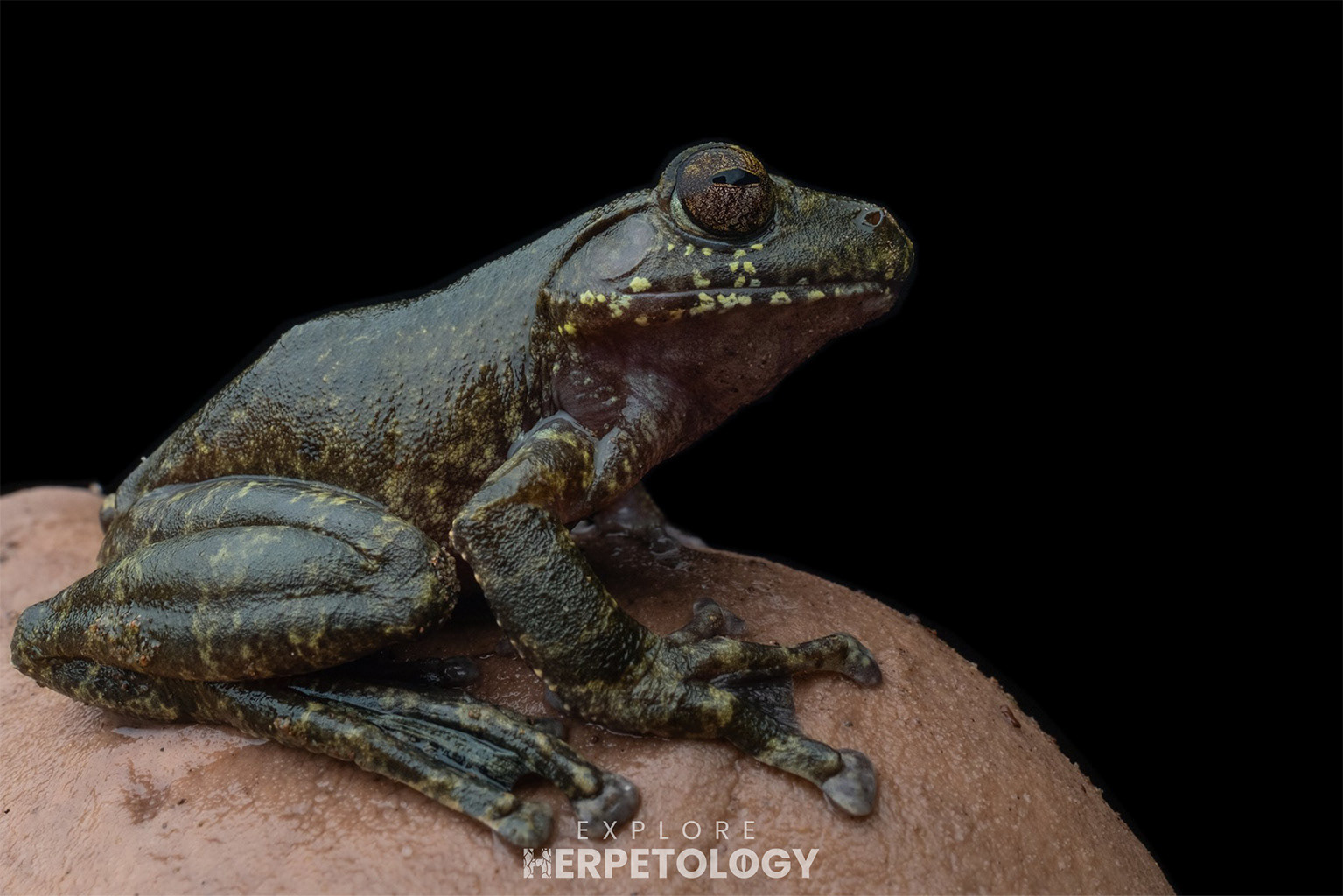
Cave flying frog (Rhacophorus spelaeus)
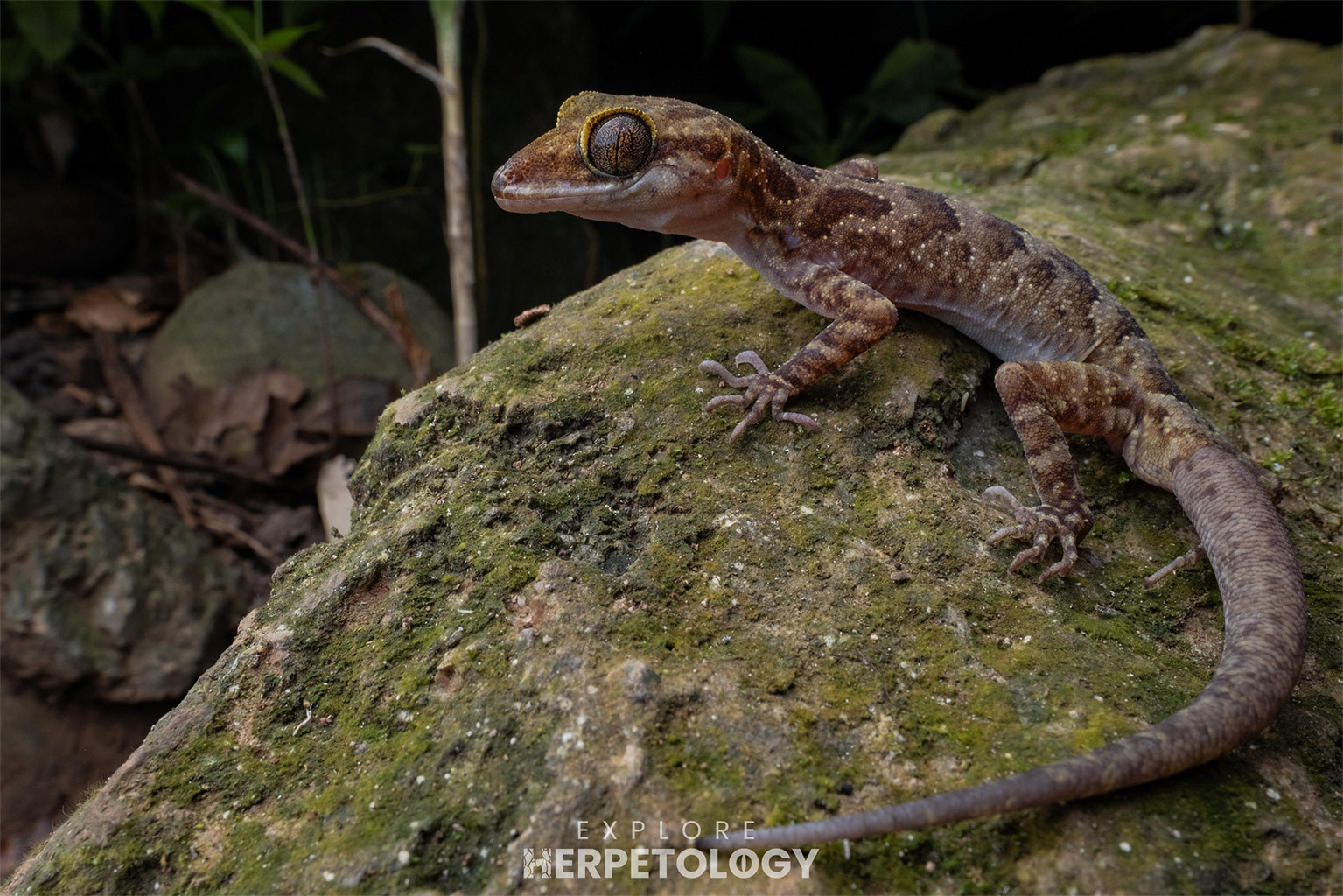
Jaeger's bent-toed gecko (Cyrtodactylus jaegeri)
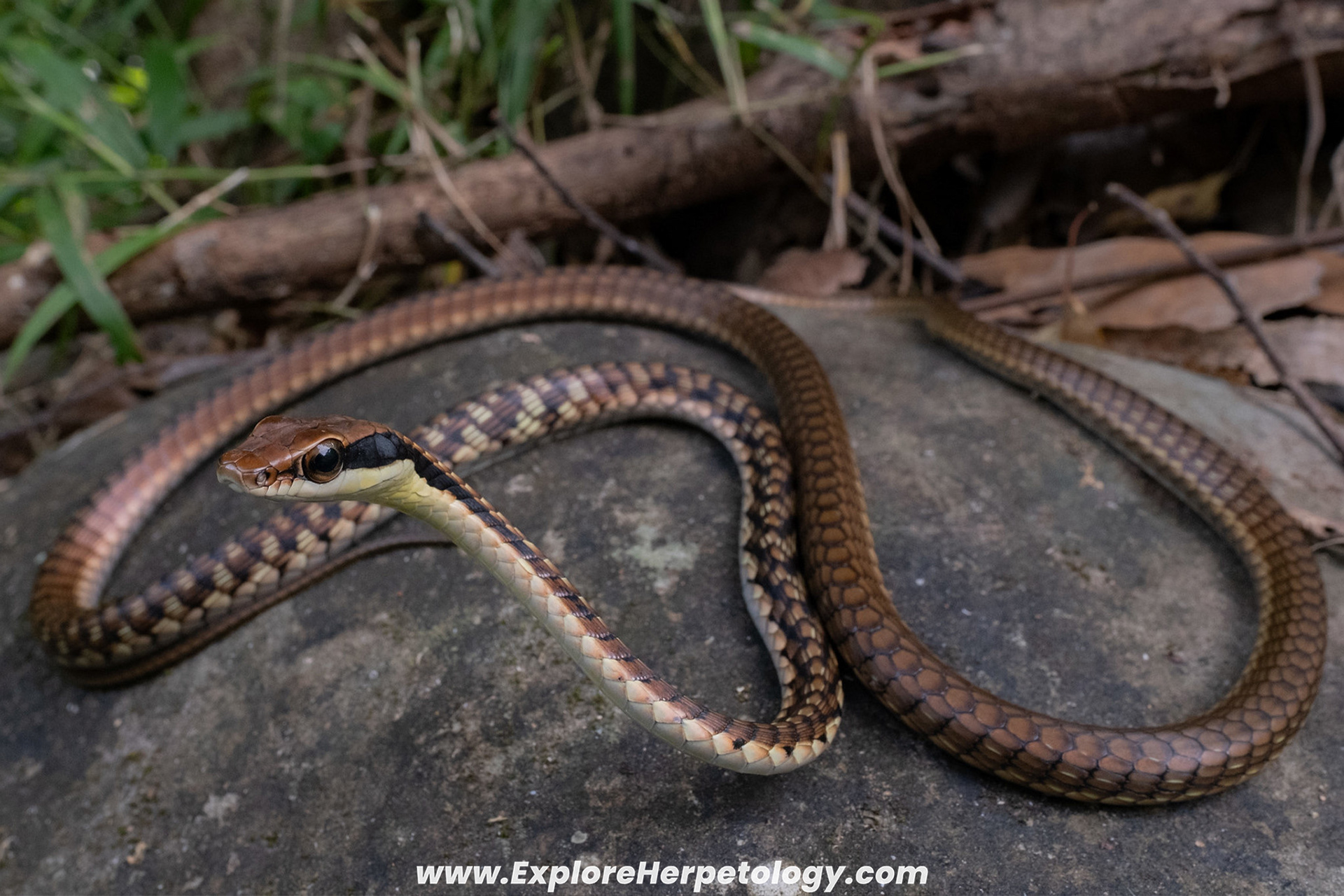
Nganson bronzeback (Dendrelaphis ngansonensis).
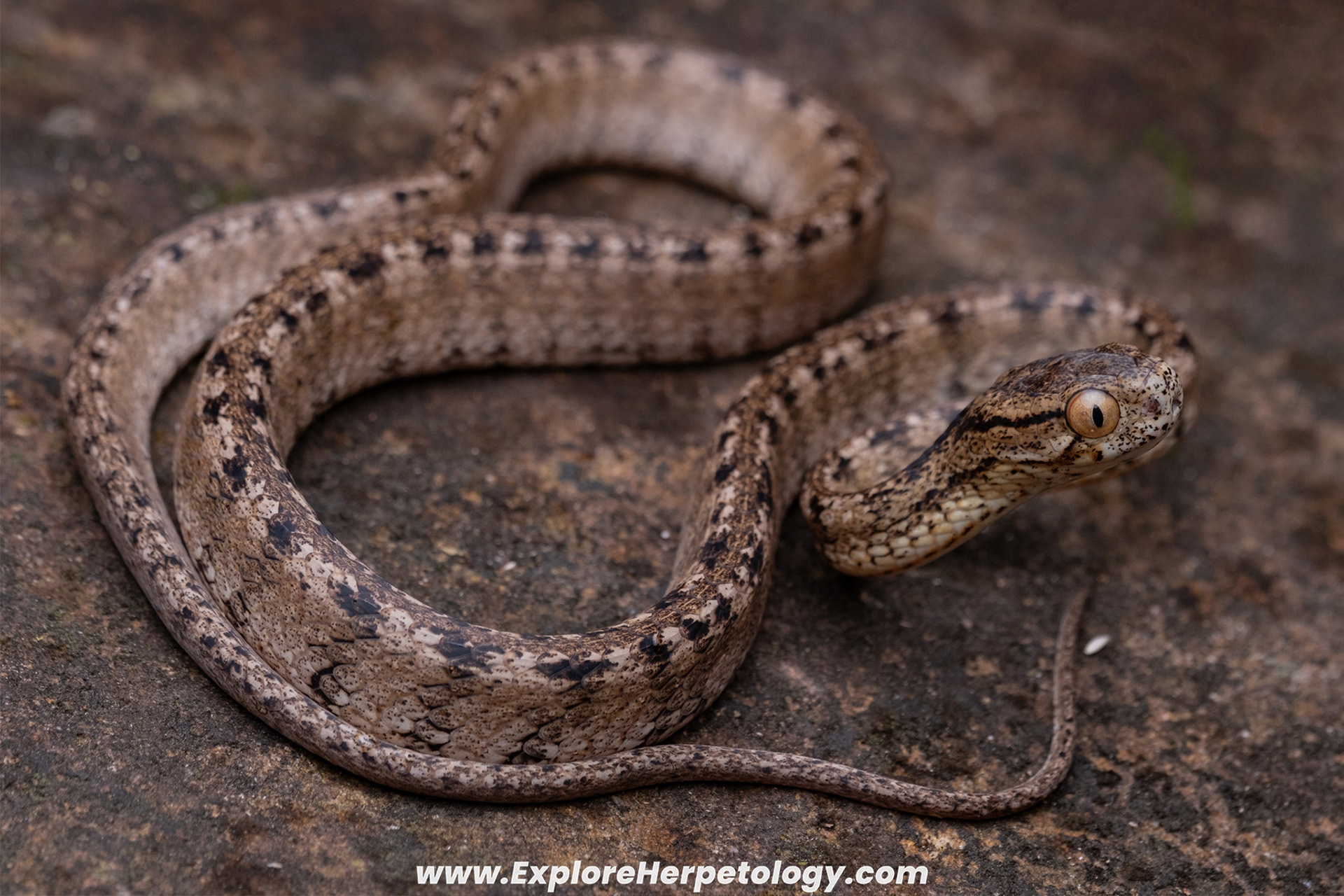
Truong Son slug snake (Pareas b. truongsonicus).
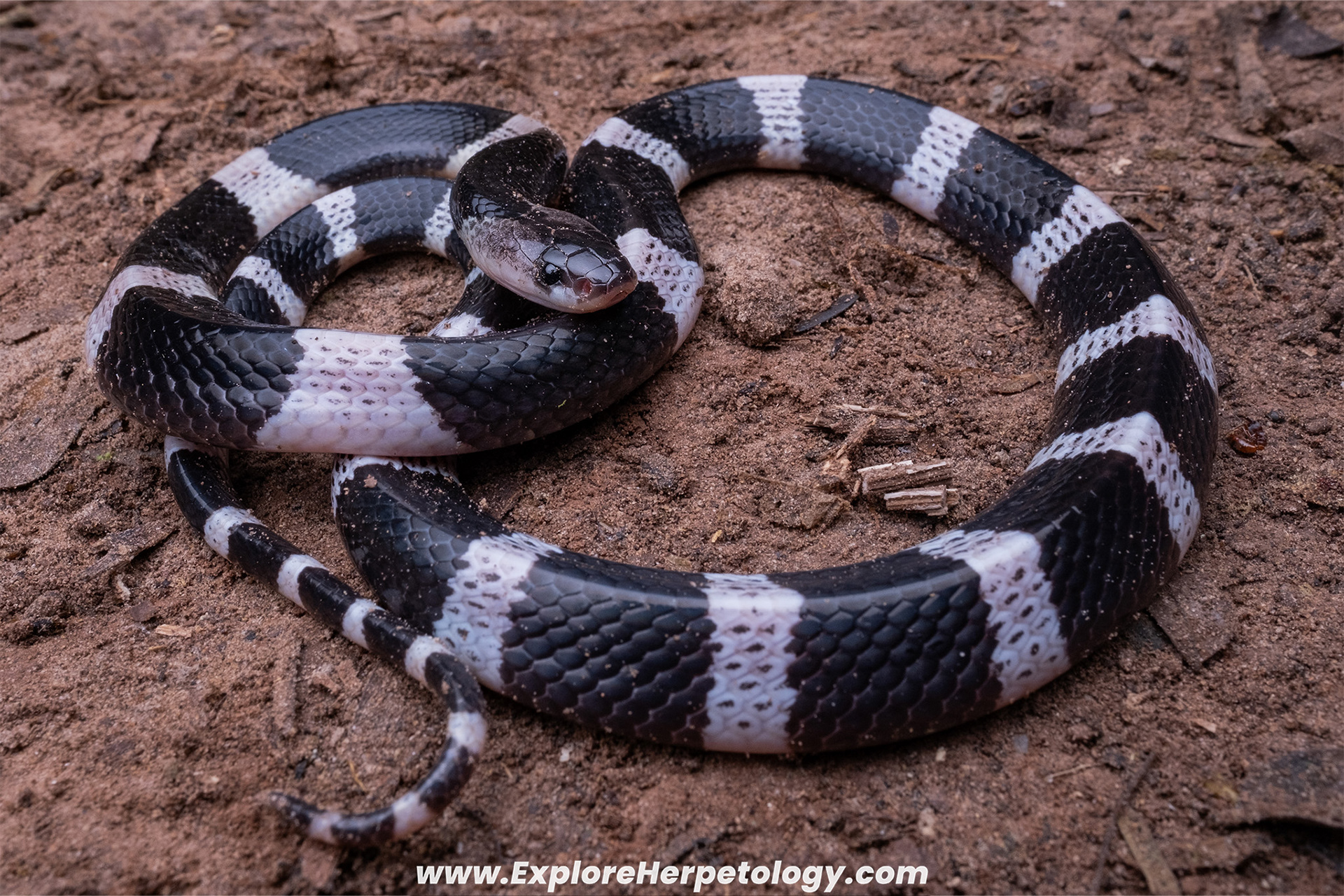
Malayan krait (Bungarus candidus).
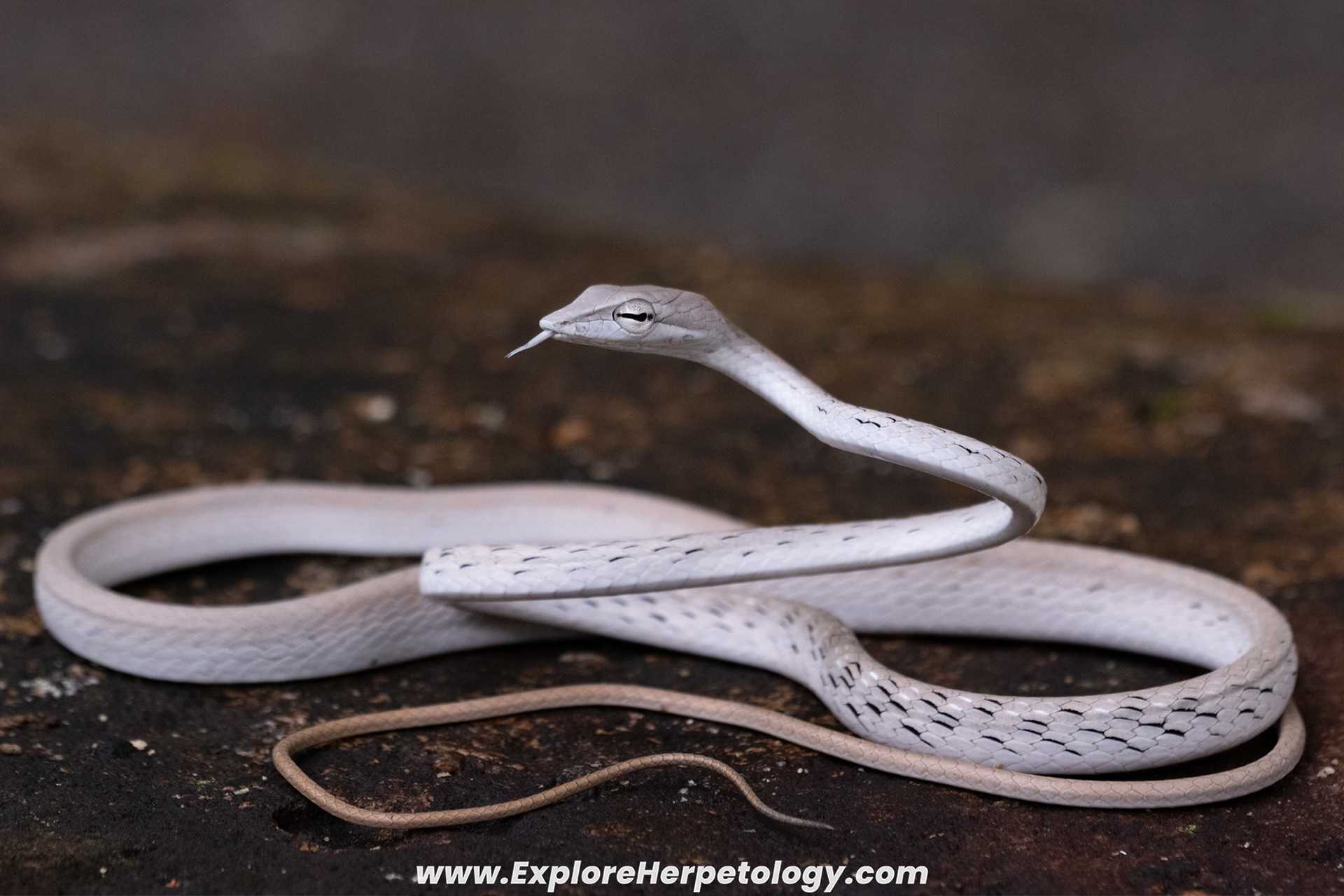
Vine snake (Ahaetulla sp.).
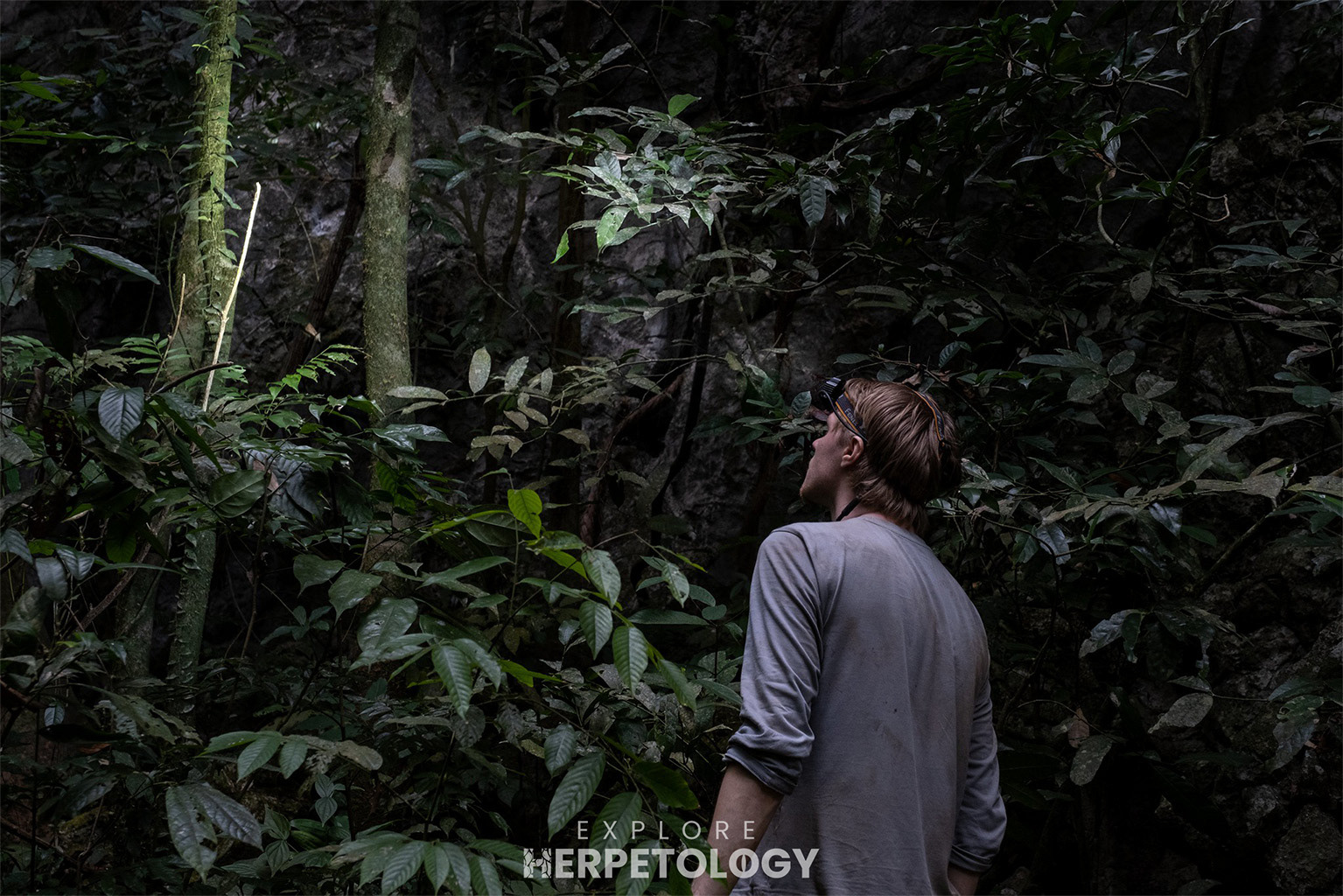
Exploring limestone karst forest
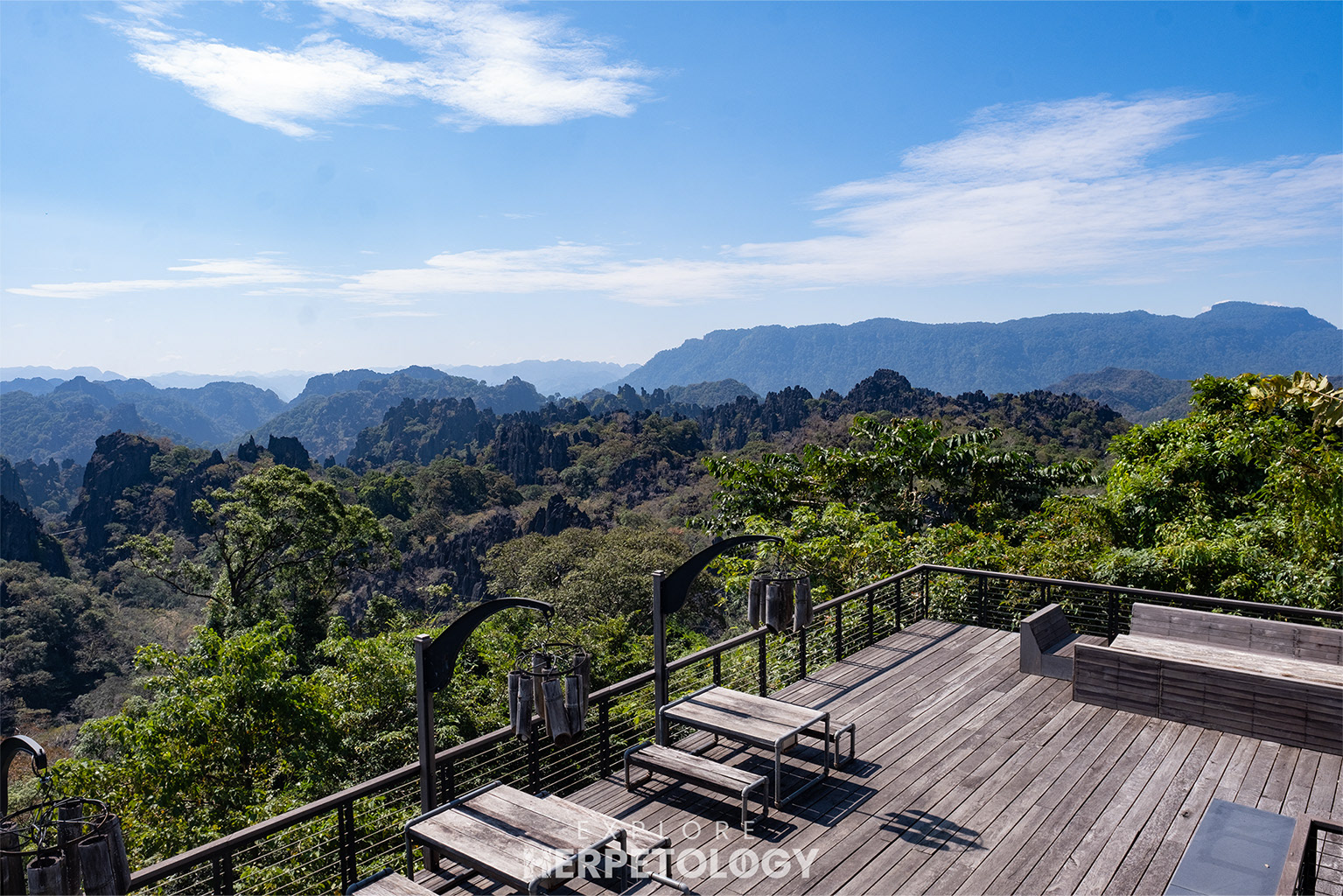
View from the restaurant.
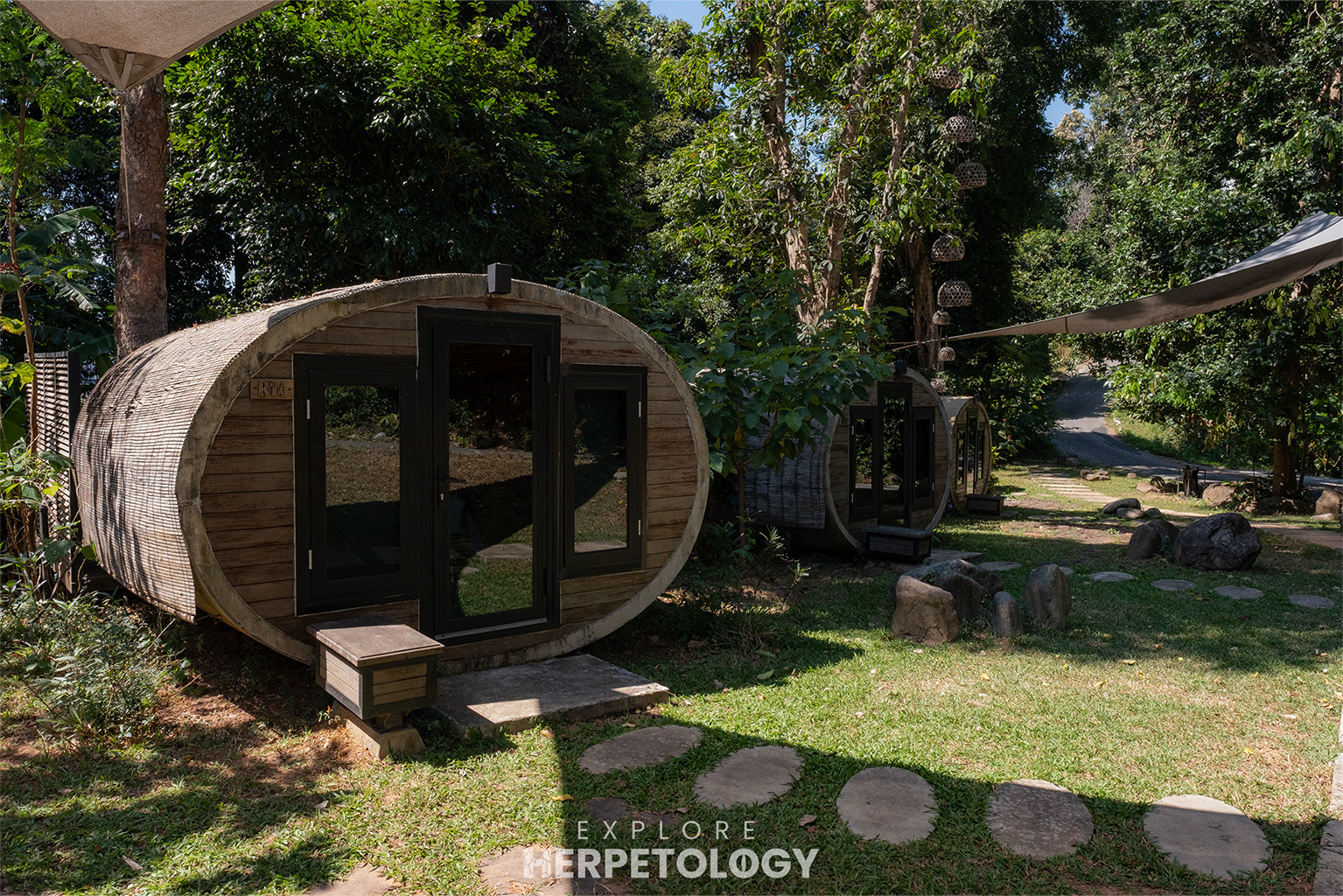
Our rooms.
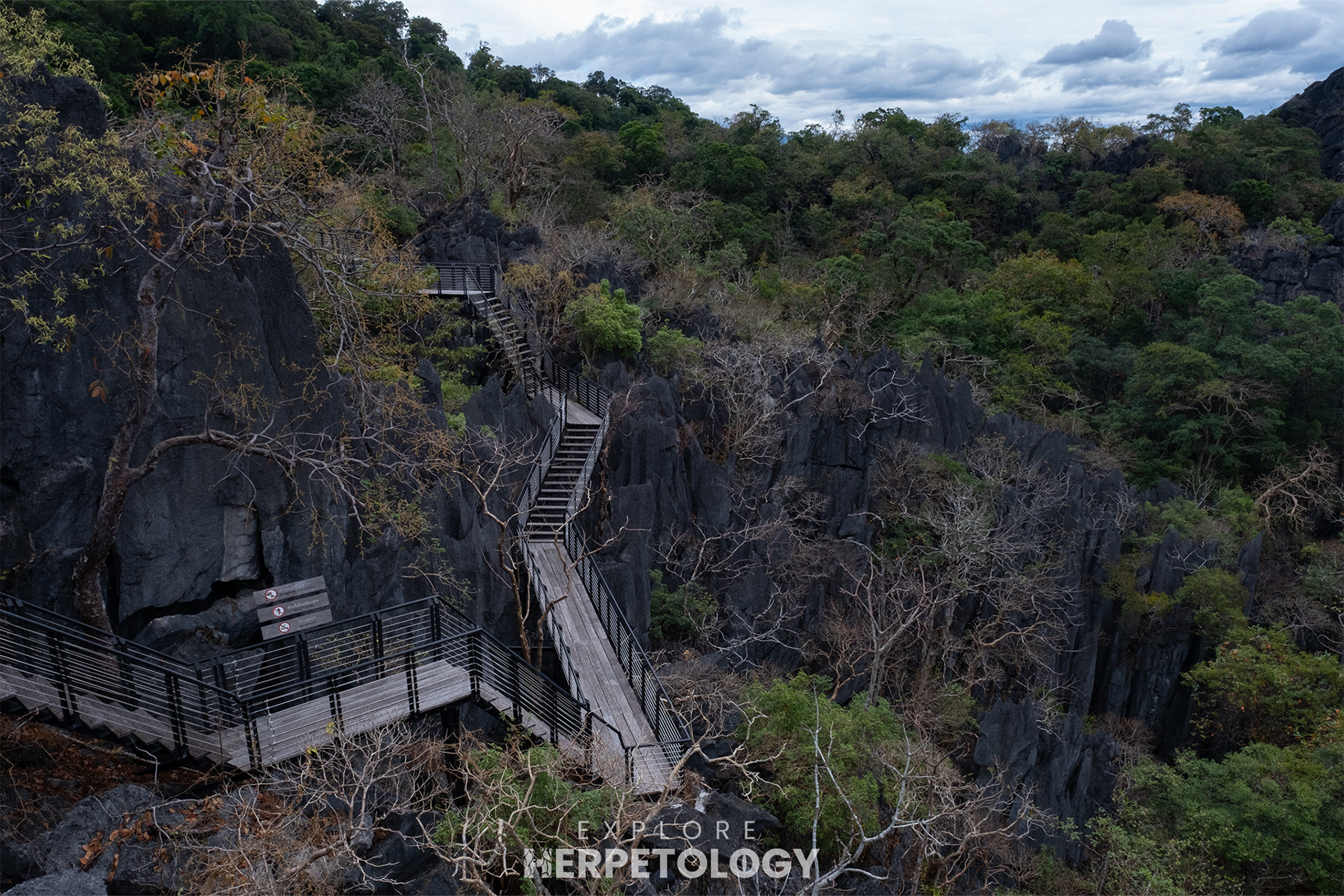
Boardwalk through the karst pinnacles.
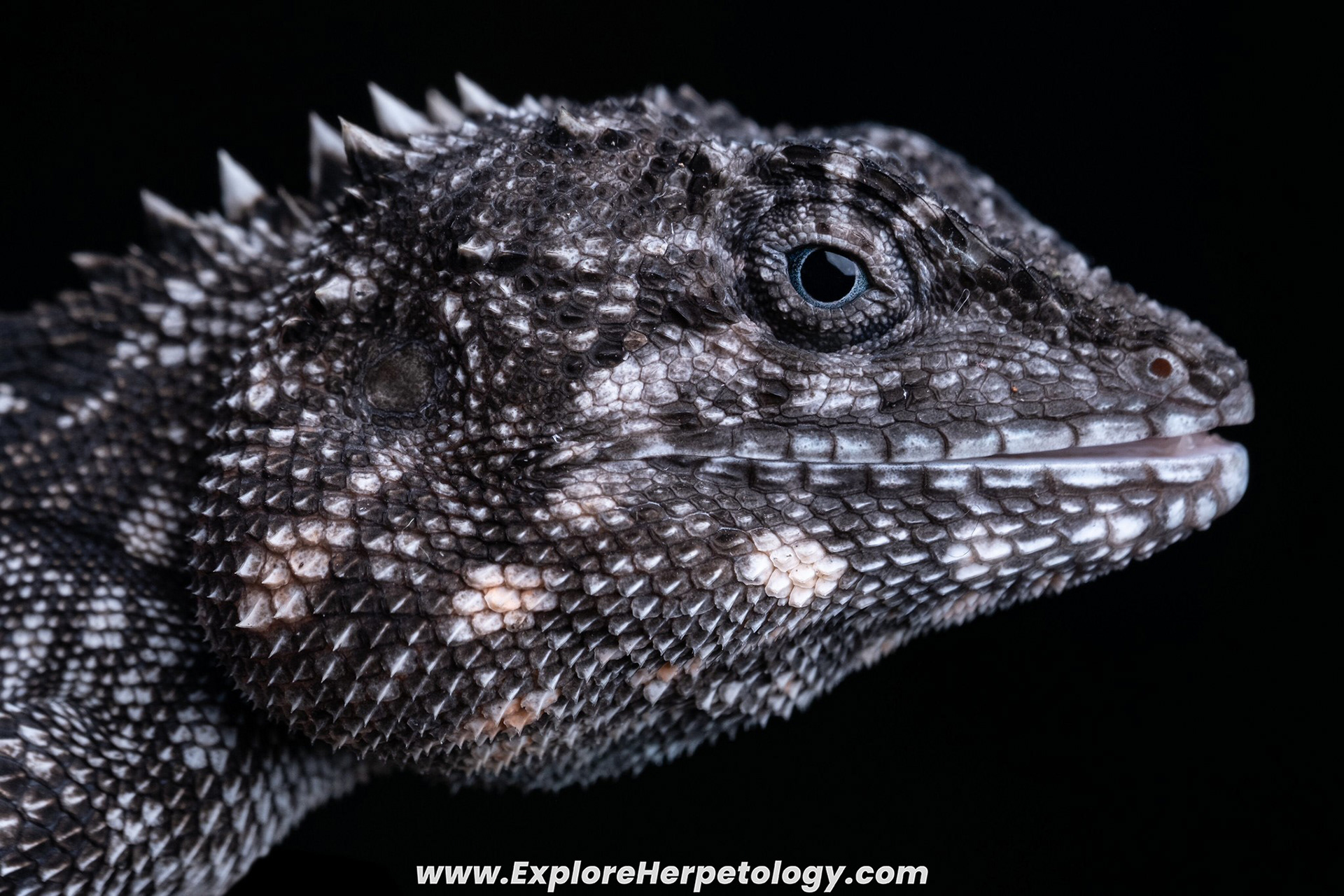
Lao karst dragon (Laodracon karsticola).
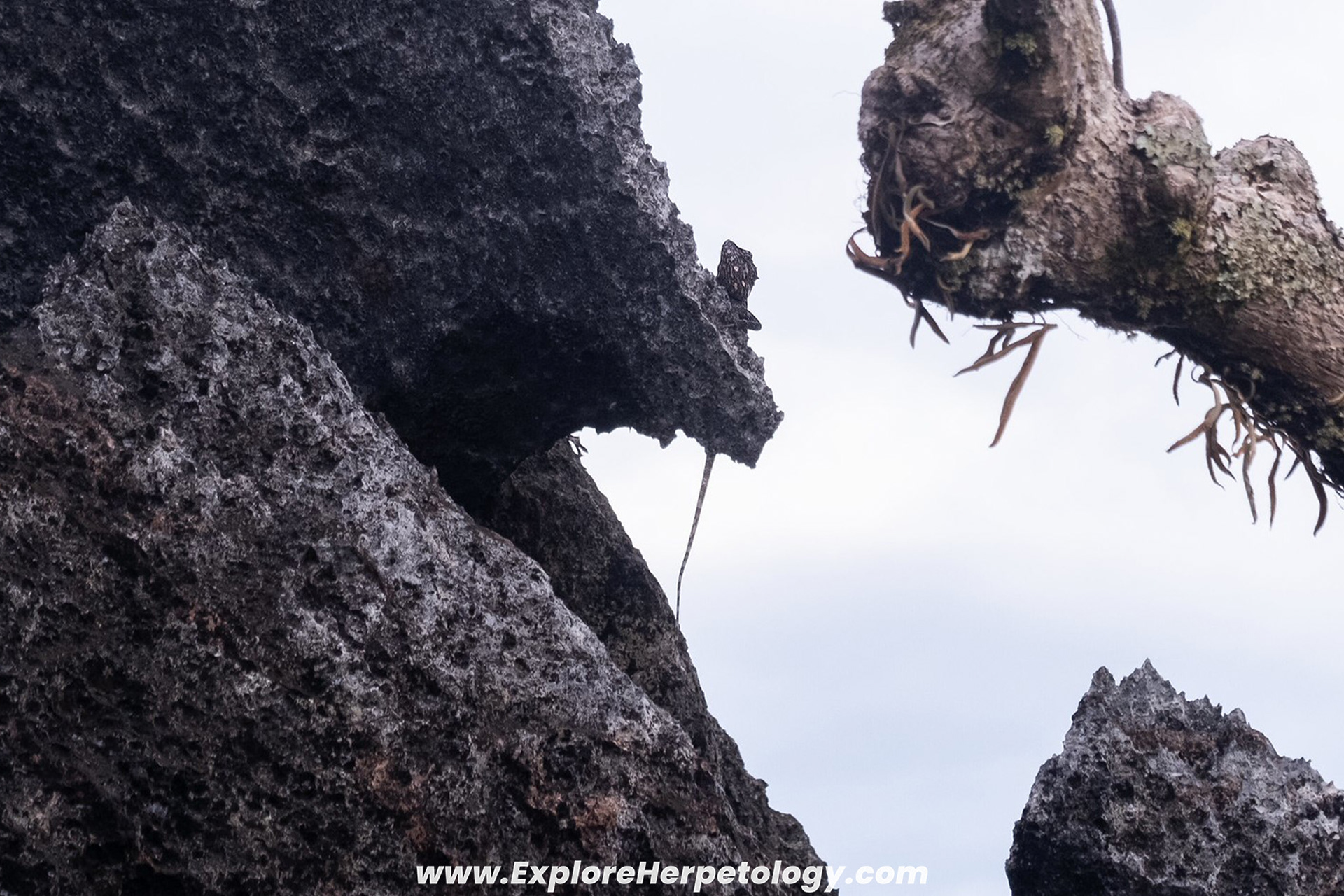
Lao karst dragon (Laodracon karsticola).
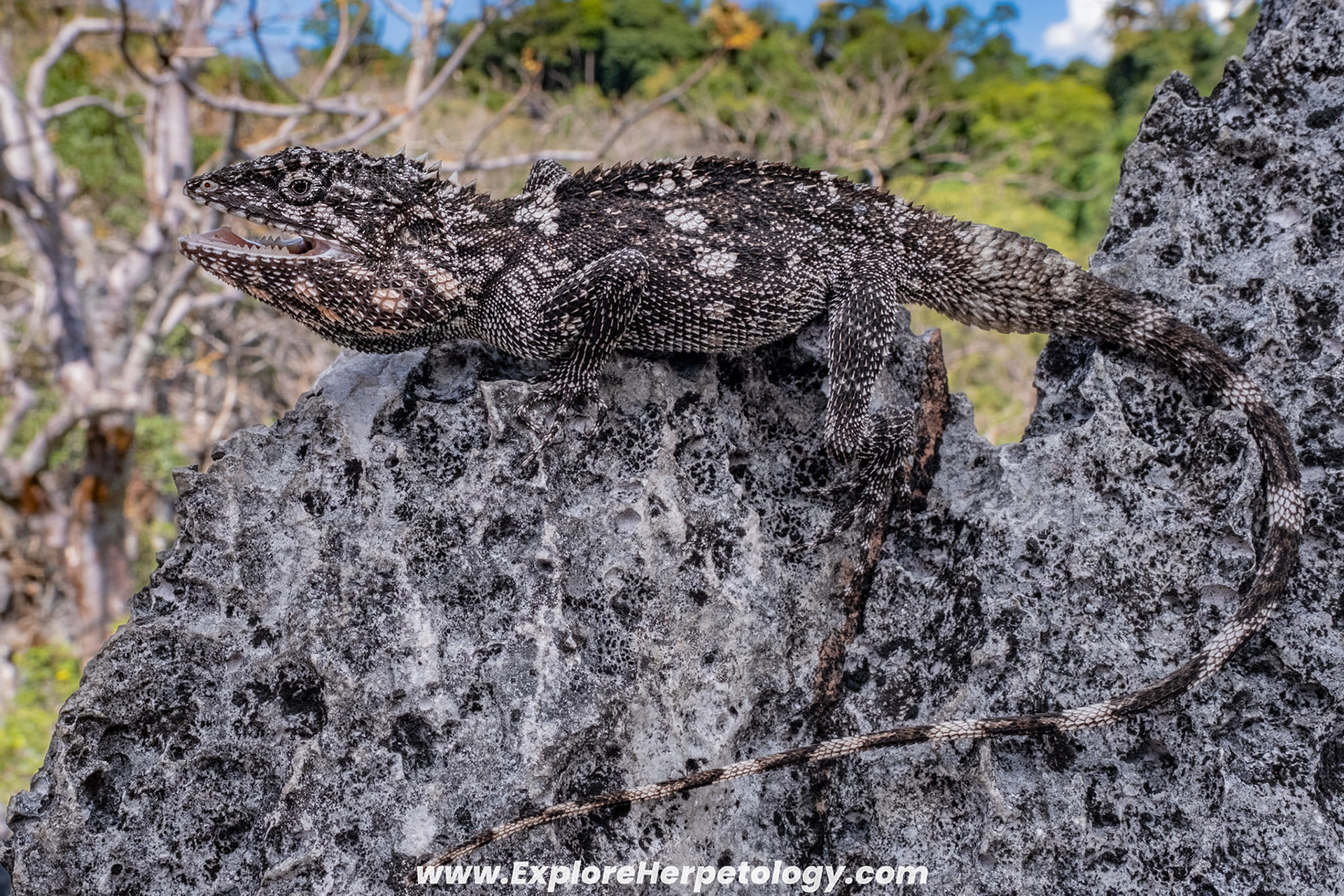
Lao karst dragon (Laodracon karsticola).
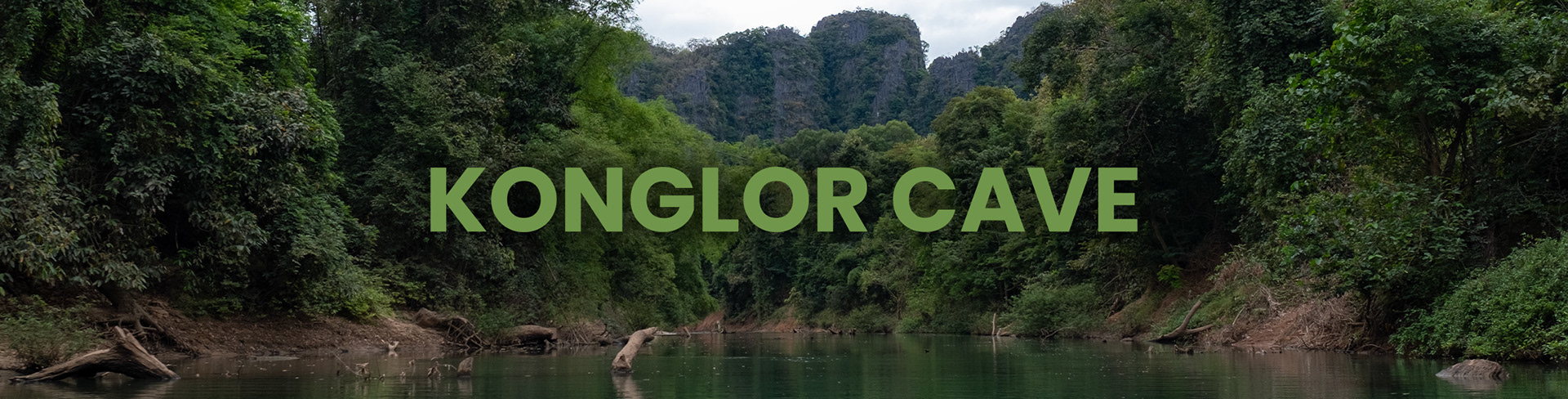
KONGLOR CAVE (4th - 6th Nov):
After our first 3 days exploring the dry karst formations in northern Khammouane province, we drive around an hour south to our second destination: Konglor Cave. While the karst habitat looks is superficially similar, the herping experience is very different here. Firstly, our primary mode of transport will be kayaks, which we will use to access remote limestone karst walls and more cave systems. This area is fantastic for finding Truong Son pit viper (Trimeresurus truongsonensis), our second major viper target of the expedition. This limestone-karst loving rarity can be green, brown, orange or teal-blue in colouration, and can be found both within caves and on the karst walls at night.
The presence of the river system also provides a totally new diversity of semi-aquatic species, which we will use our kayaks to search for. It is incredibly fun to slowly cruise through the water and spot snakes in all kinds of places. Large-eyed pit viper (Trimeresurus cf. macrops) are very easy to spot in the trees from the canoe, along with red-tailed racers (Gonyosoma oxycephalum), yellow-spotted keelback (Fowlea flavipunctatus) and Siamese red-necked keelback (Rhabdophis siamensis). Meanwhile, we have spotted sunbeam snake (Xenopeltis unicolor), black-bellied mud snake (Homalopsis nigroventralis) and reticulated python (Malayopython reticulatus) swimming in the water at night. Even though they are extensively hunted for food in Laos, we often find Indo-Chinese water dragon (Physignathus cocincinus) sleeping above the water as well.
If we missed any during the first 3 days, this area provides another opportunity to see several of our key targets from the first location. For example, we have seen the Khammouane cave wolf snake (Lycodon banksi) at our favourite cave here, while there is a large female three-horned lance-headed pit viper (Protobothrops sieversorum) which permanently resides in this specific cave and has been seen several times by us in the past.
Again, our resort is a major highlight at this destination. Comfortable rooms, serving high quality western and local food, overlooking the Konglor river and dry limestone karst formations which form a natural barrier to the rest of the world. The area is truly perfect for a getaway with rare snakes and good people. We can set sail directly from the resort with our kayaks and explore as far as our hearts content. The scenery in this region is truly some of the most impressive of anywhere we have been, and the rural farming landscape really gives a good idea as to what many places in Thailand would have been like more than 30 years ago. During the daytime, we will embark in many kayak-based endeavours, including visiting the incredible Konglor Cave, or simply having some cold drinks while swimming in crystal clear waters nearby.
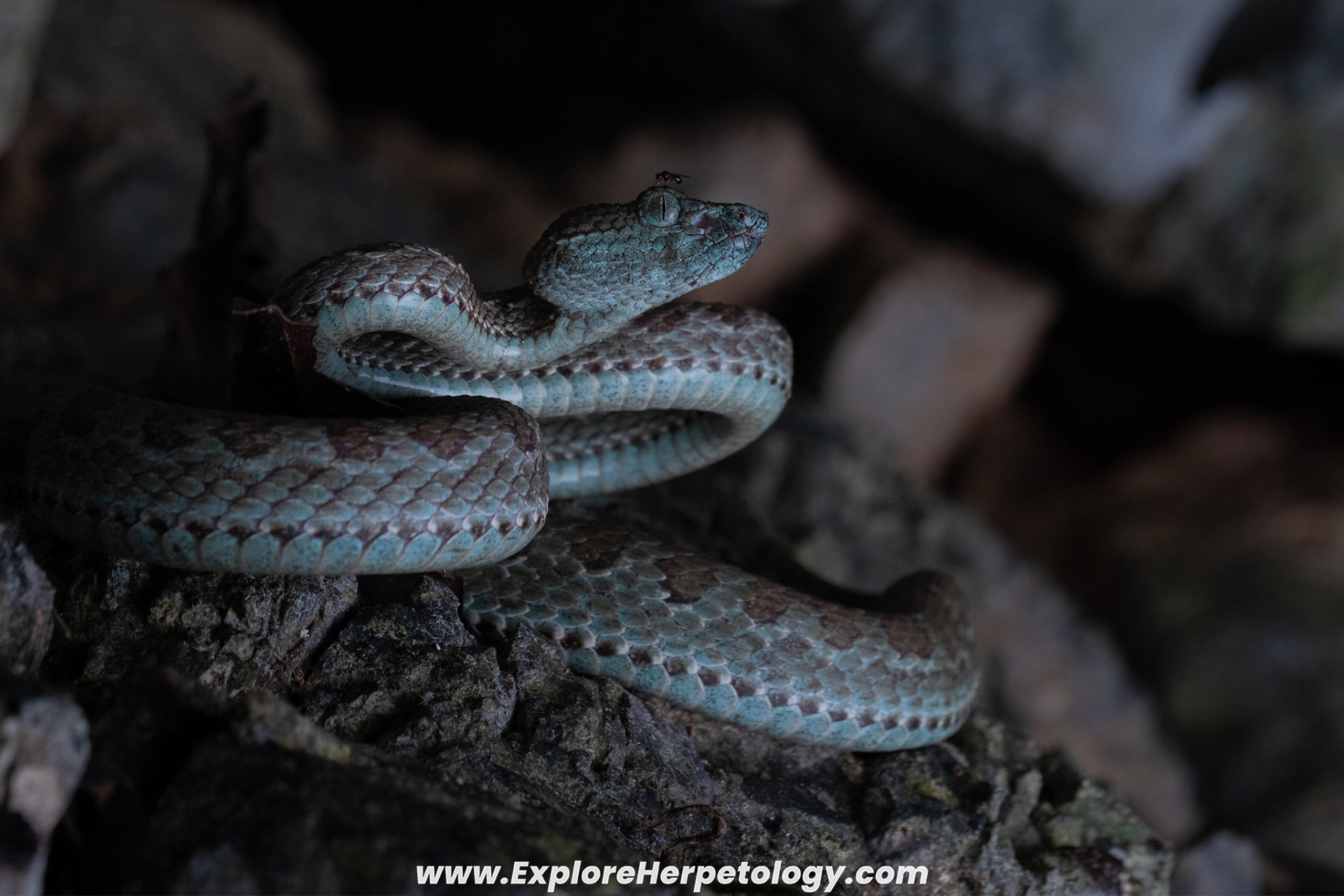
Truong Son pit viper (Trimeresurus truongsonensis).
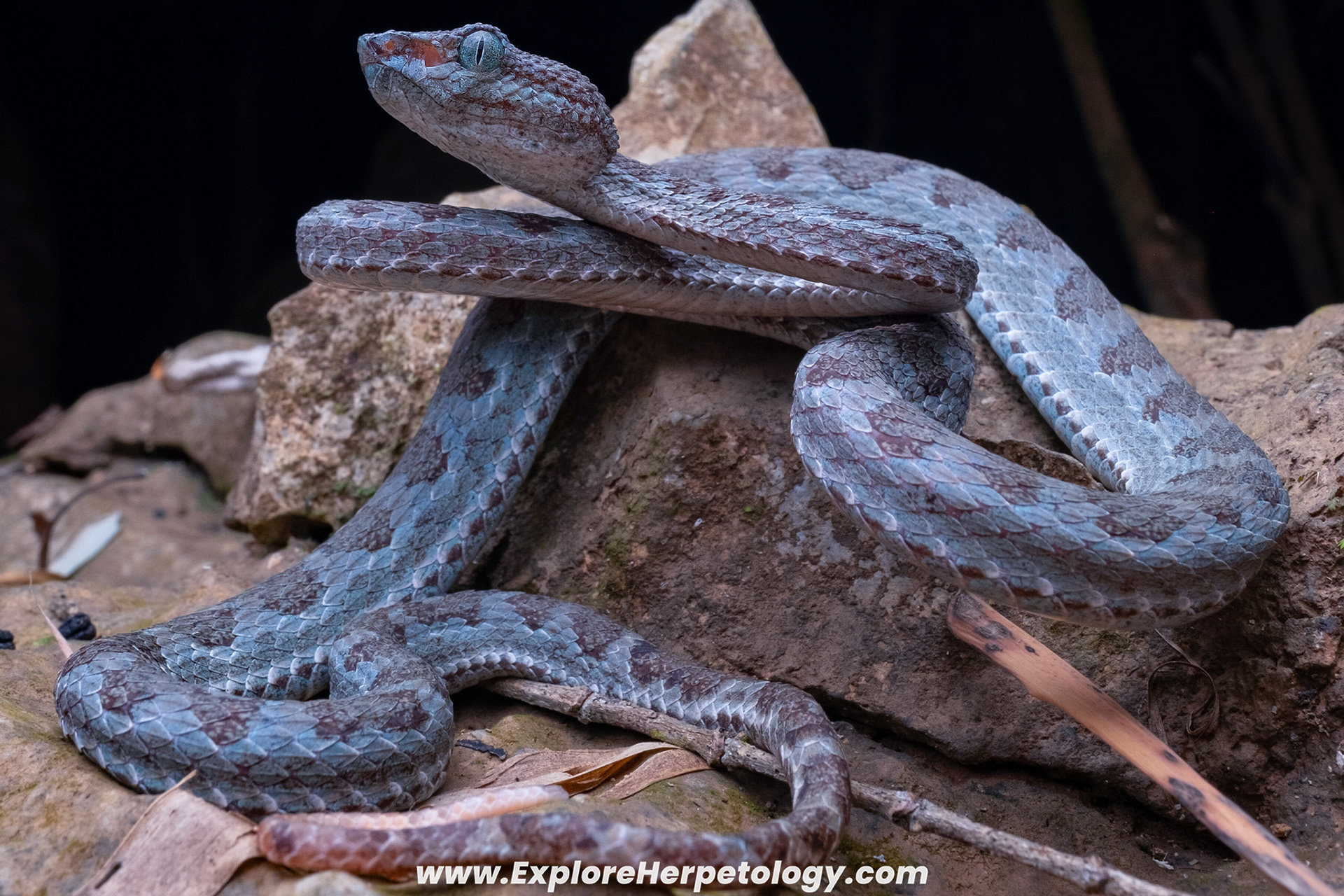
Truong Son pit viper (Trimeresurus truongsonensis).
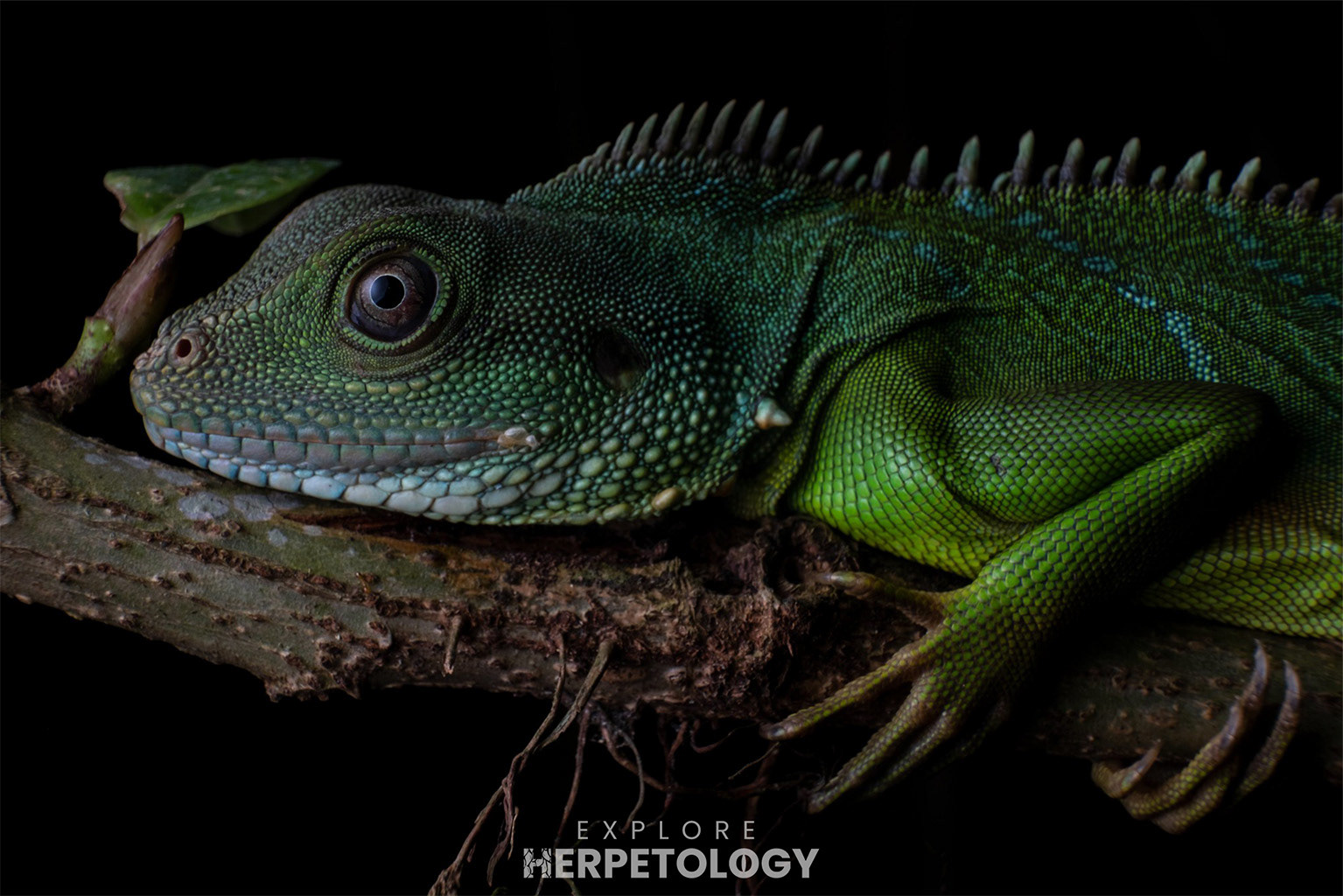
Indo-Chinese water dragon (Physignathus cocincinus)
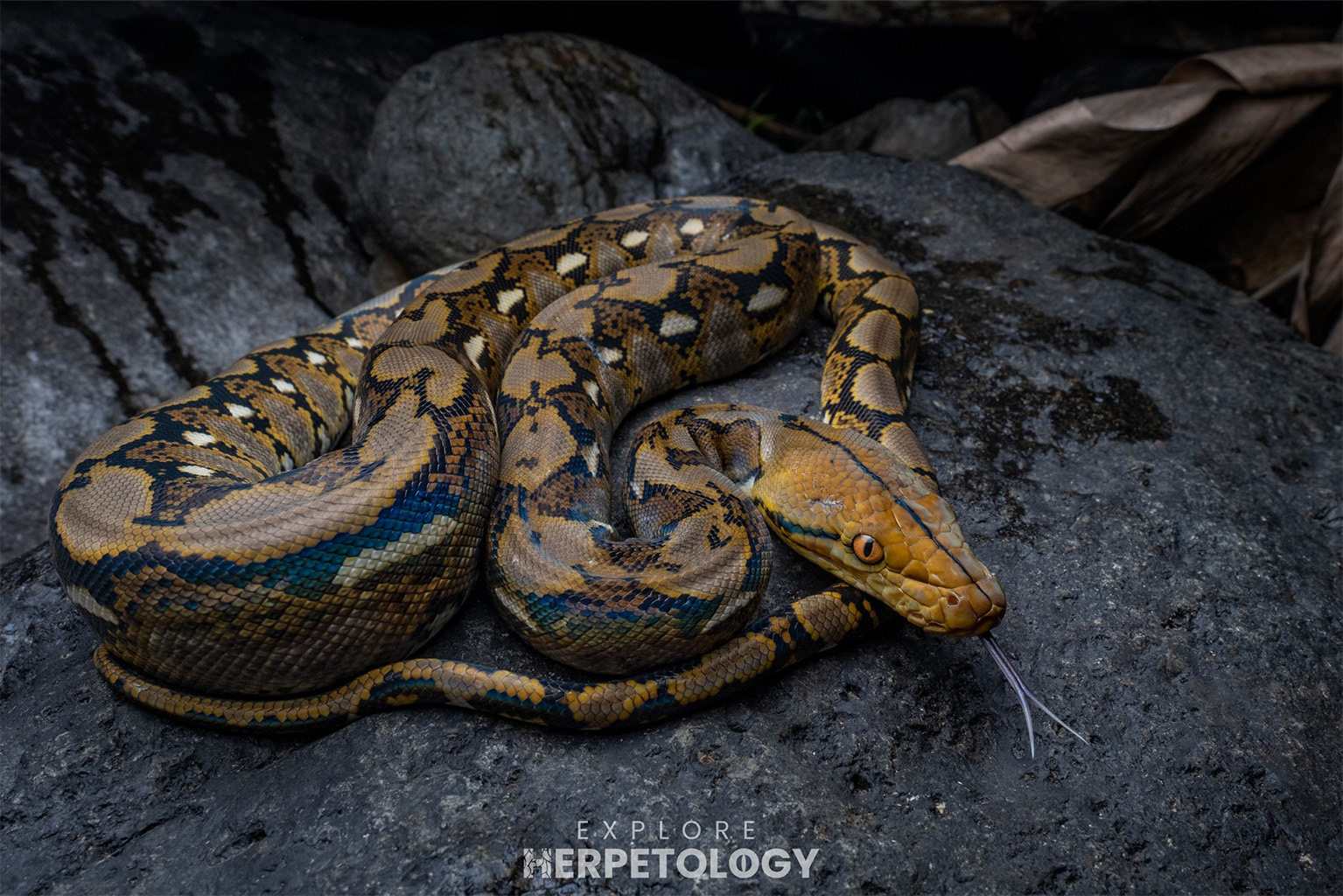
Reticulated python (Malayopython reticulatus)
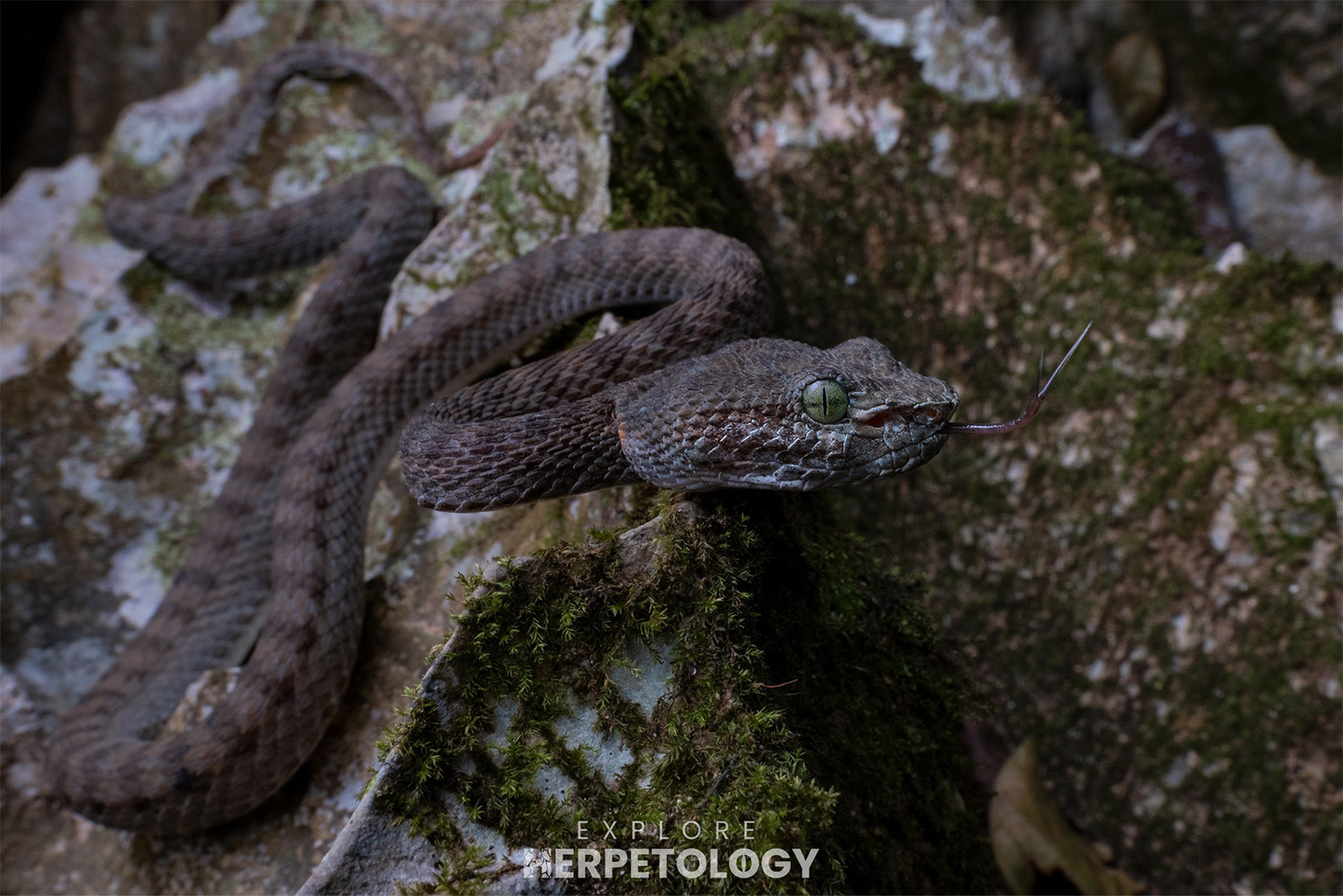
Truong Son pit viper (Trimeresurus truongsonensis)
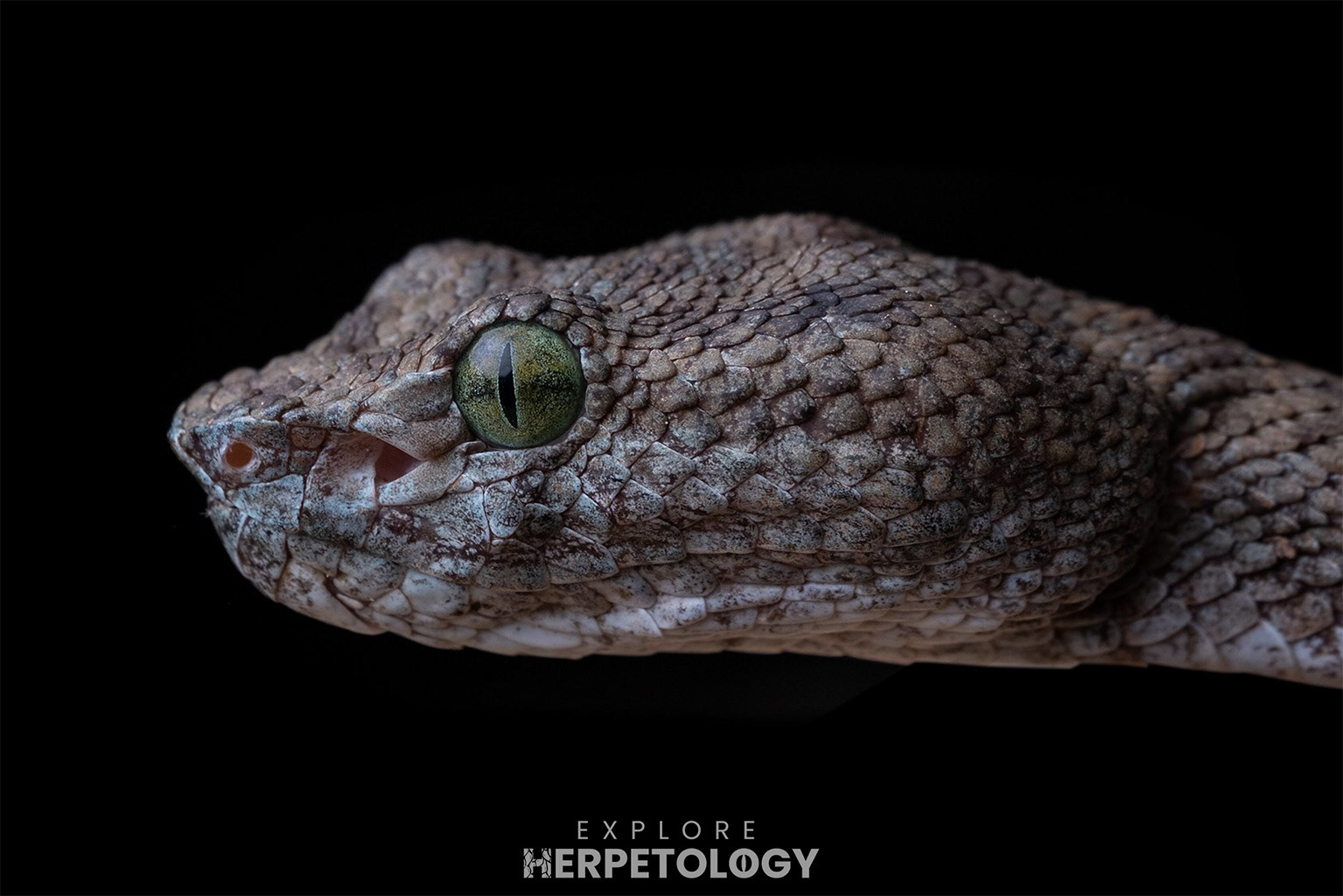
Truong Son pit viper (Trimeresurus truongsonensis)

Large-eyed pit viper (Trimeresurus cf. macrops)
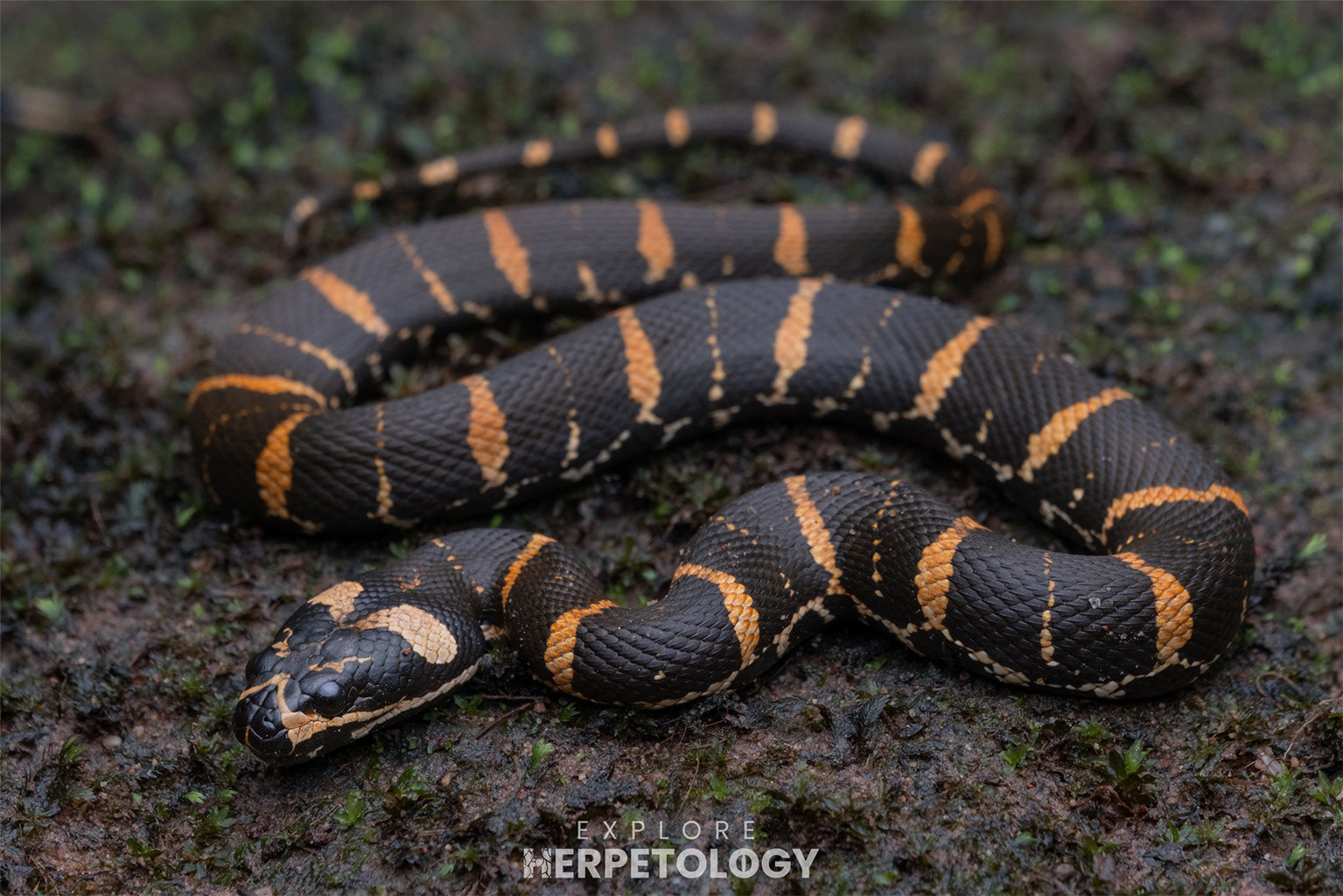
Black-bellied mud snake (Homalopsis nigroventralis)
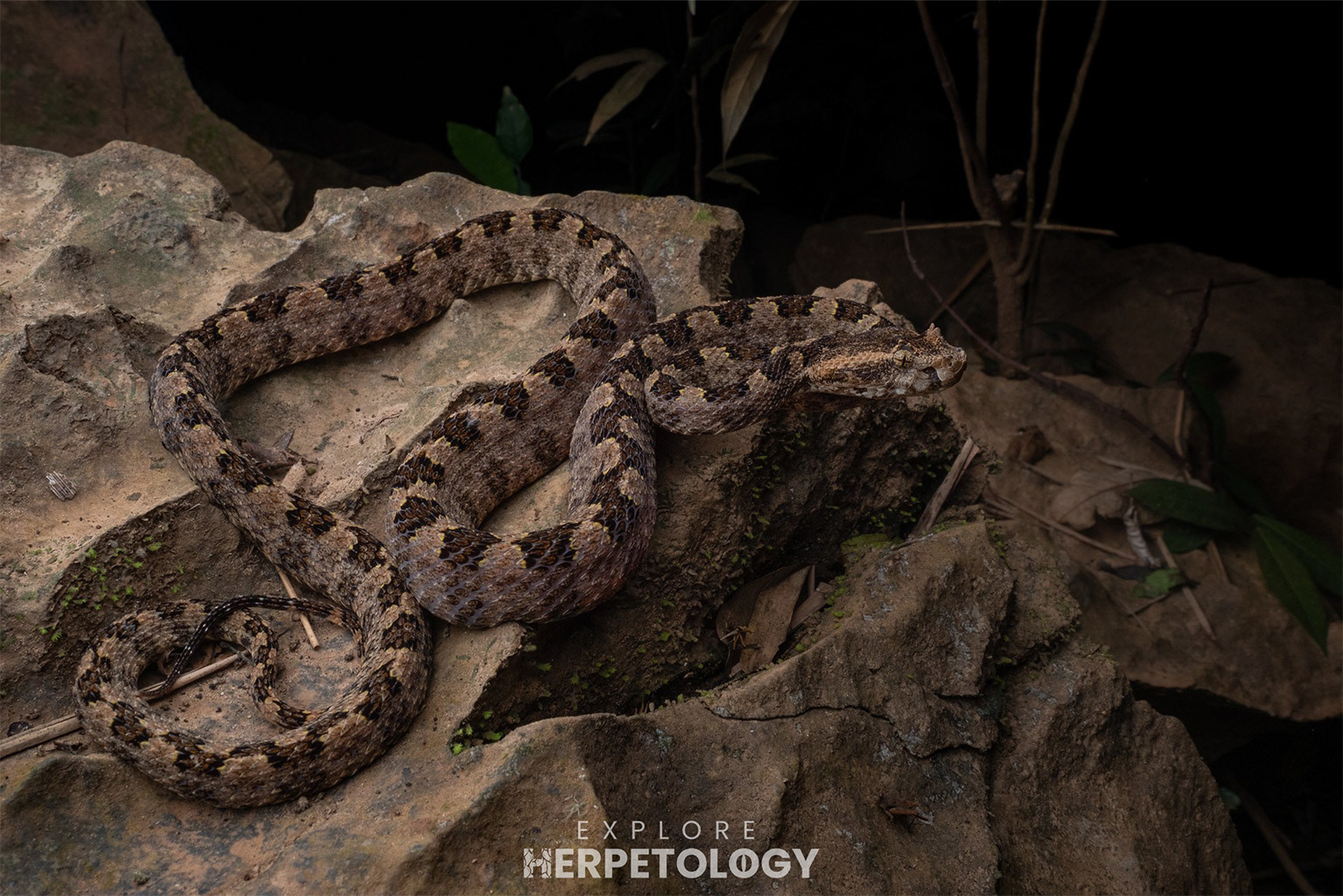
Three horn-scaled lancehead (Protobothrops sieversorum)
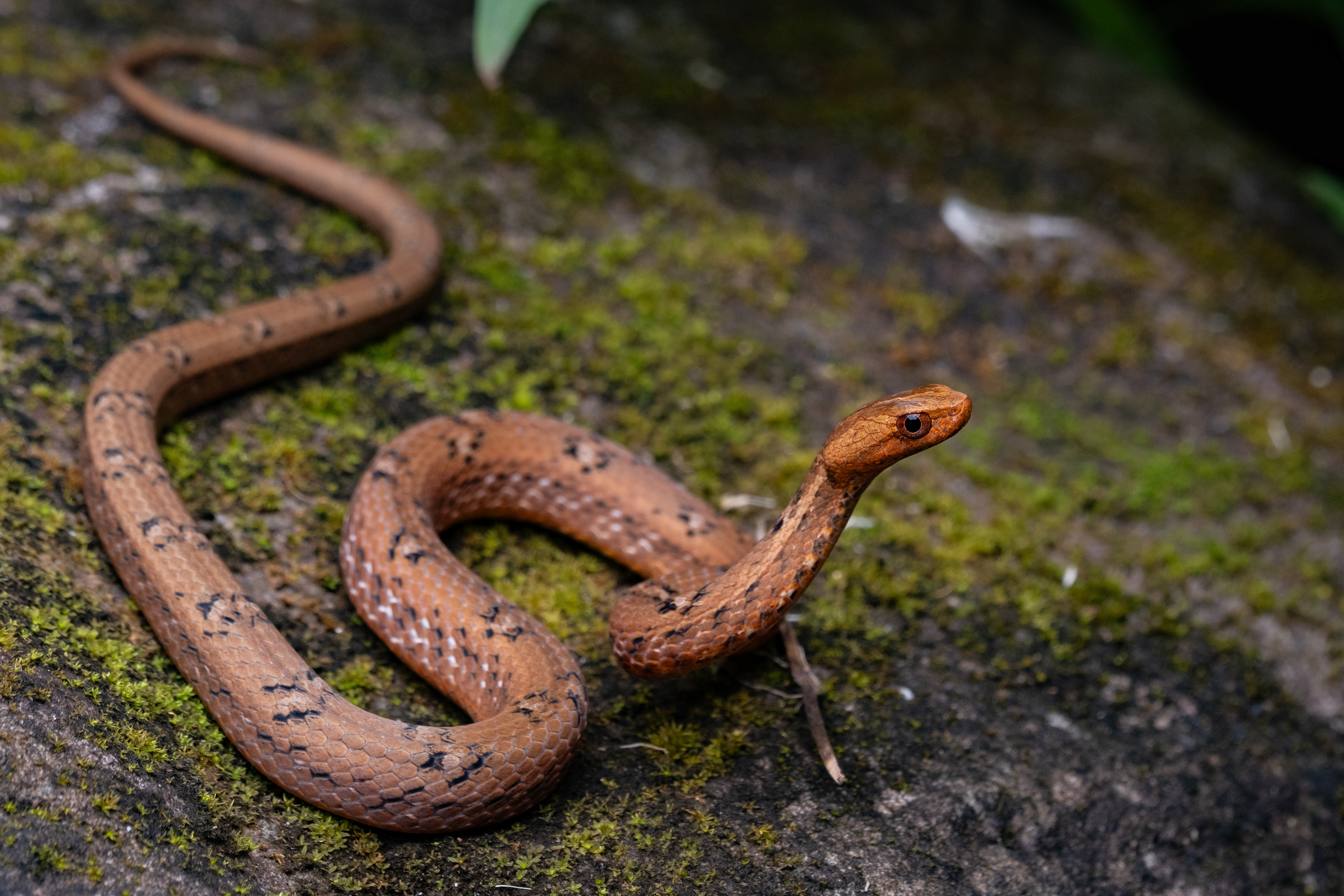
Mock viper (Psammodynastes pulverulentus).
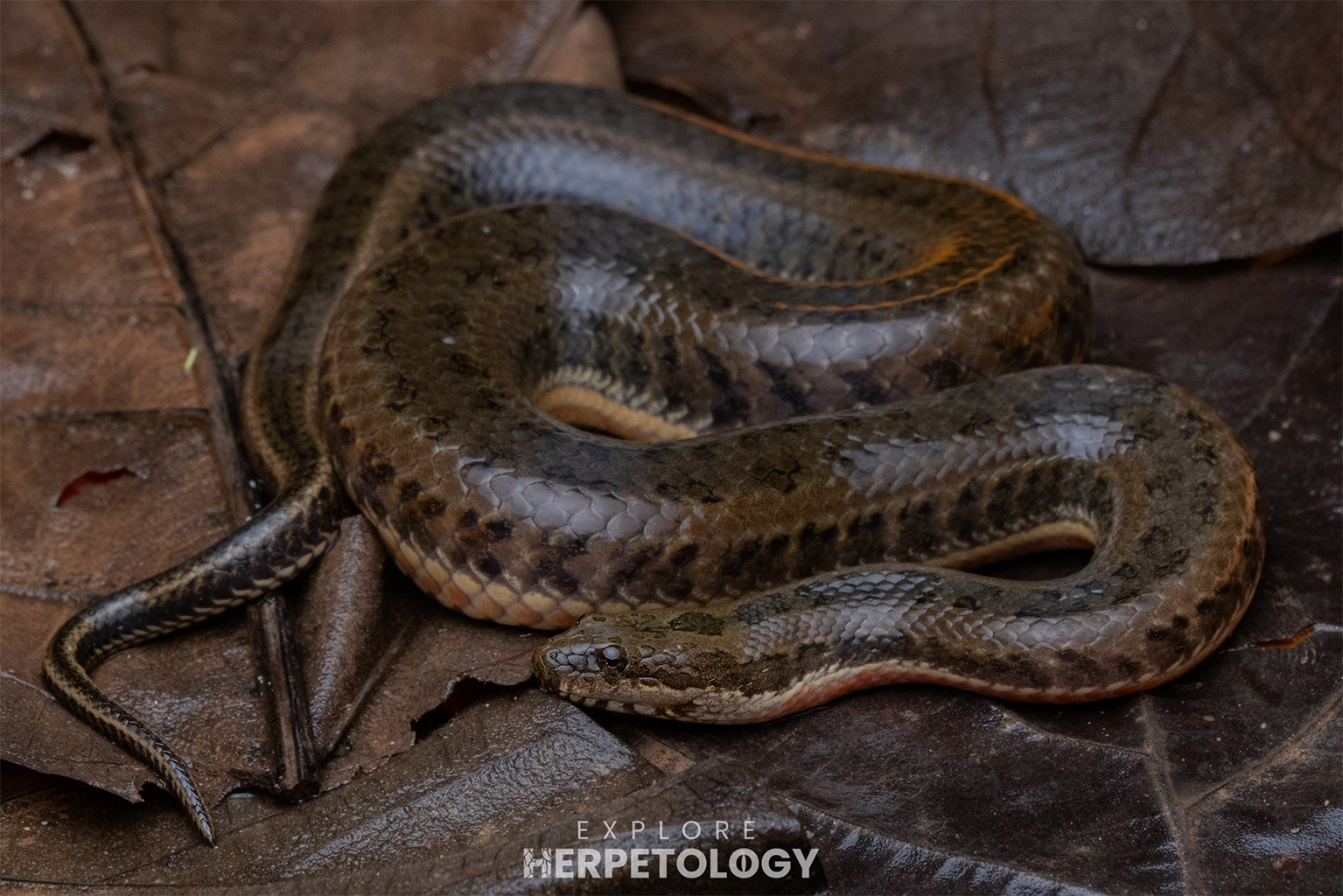
Mekong mud snake (Enhydris subtaeniata)
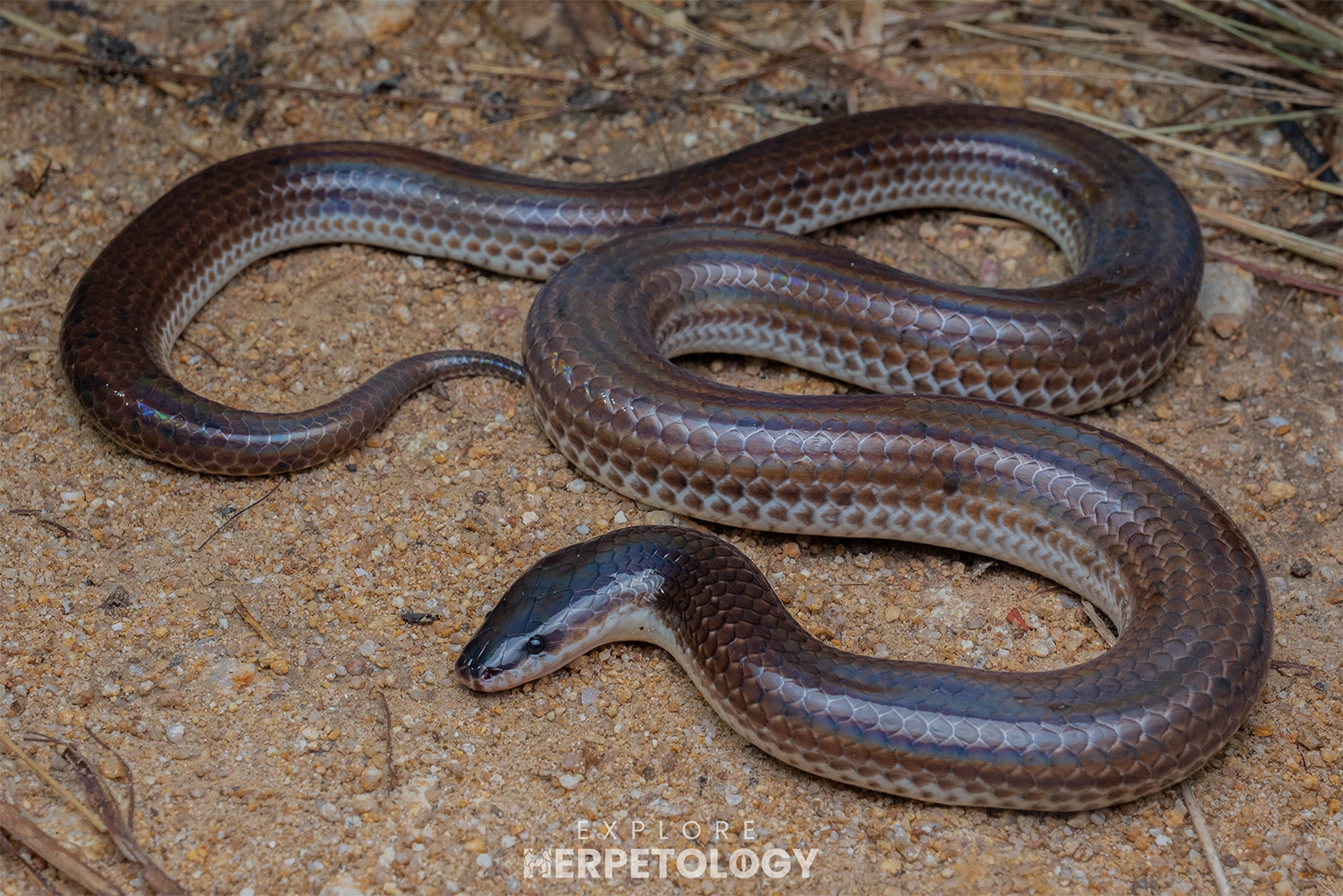
Sunbeam snake (Xenopeltis unicolor)
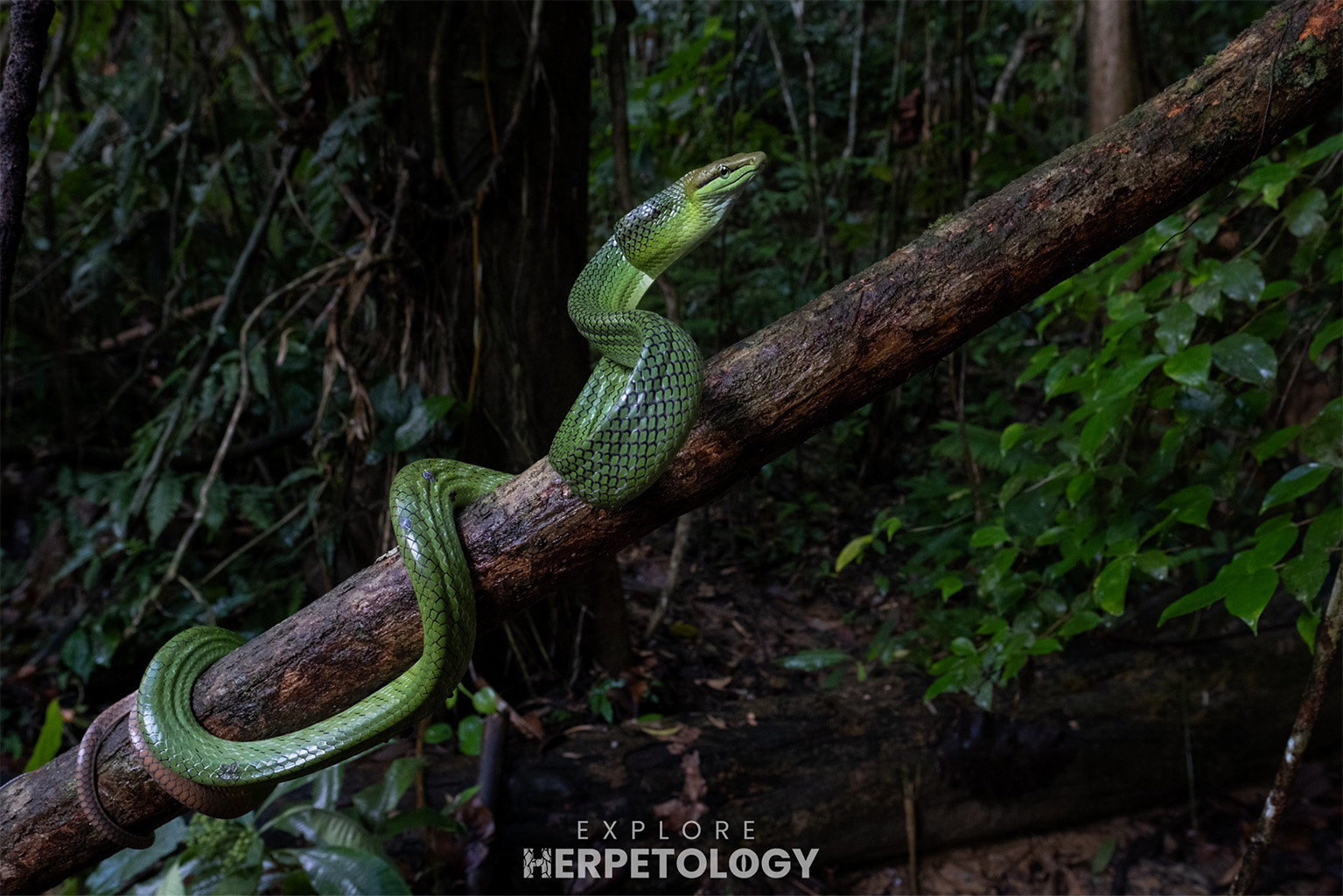
Red-tailed ratsnake (Gonyosoma oxycephalum)
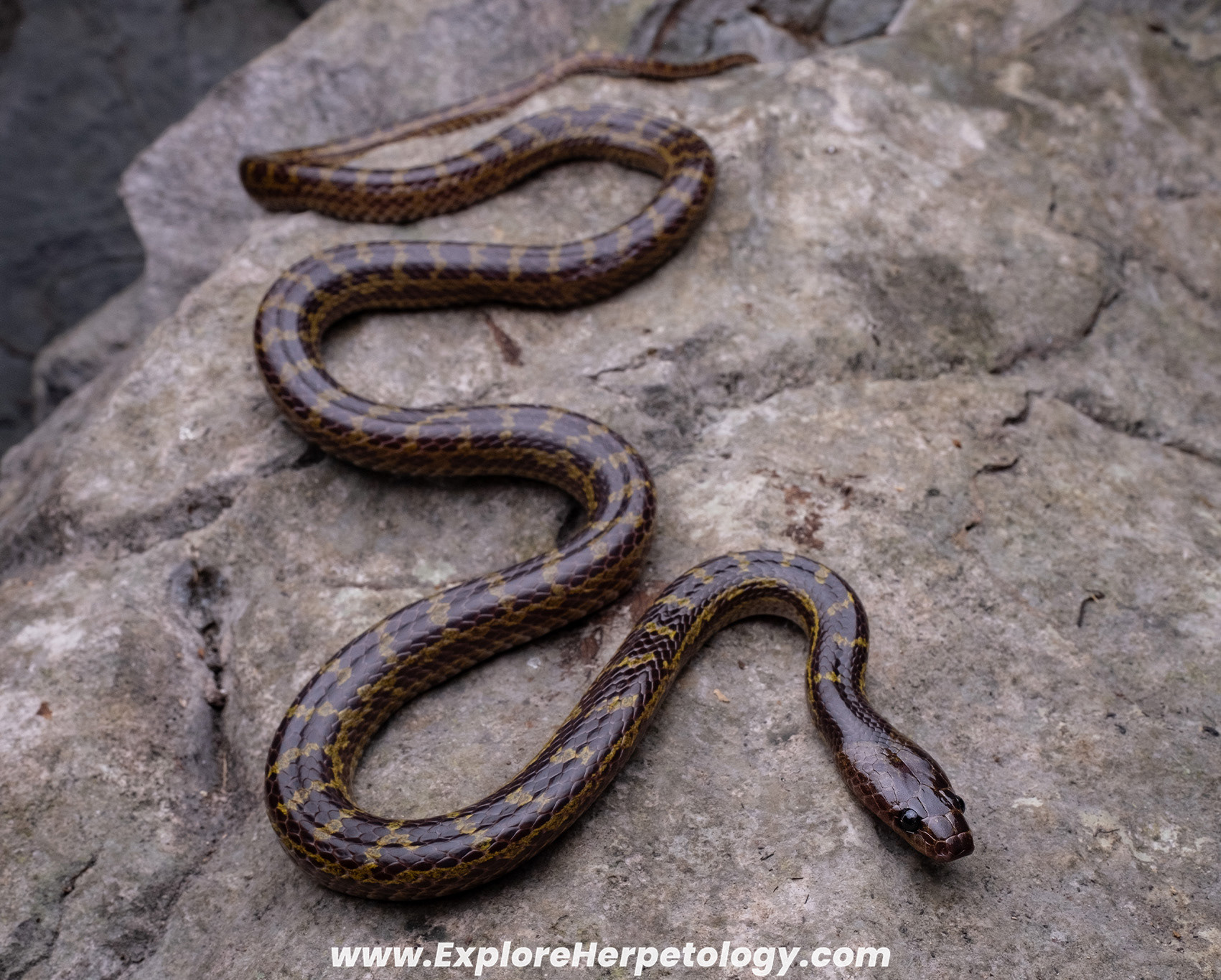
Khammouane wolf snake (Lycodon banksi).
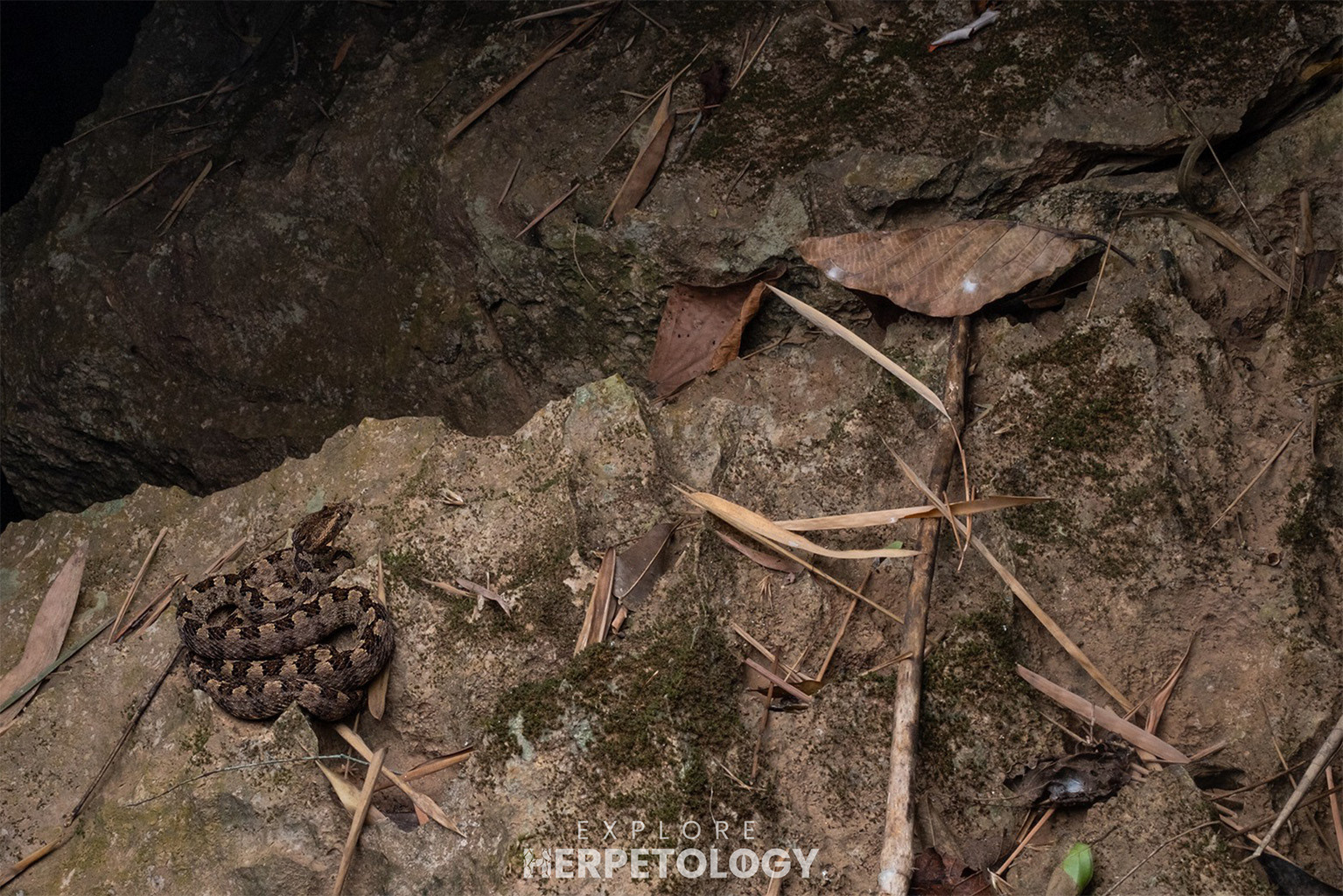
Three horn-scaled lancehead (Protobothrops sieversorum)
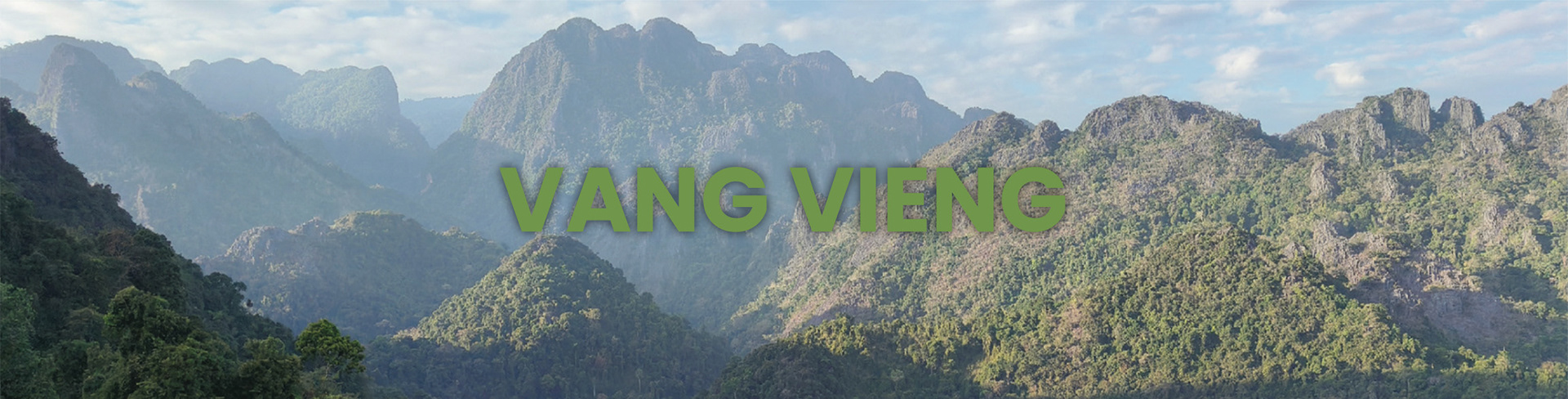
VANG VIENG (6th - 9th Nov):
After an enriching 5 nights in Khammouane, we will drive several hours north to the town of Vang Vieng. This is one of the most popular tourist destinations in Laos, mainly due to its simply mesmerising landscape of limestone karst mountains reaching over 1,000 meters in elevation. These limestone karst formations are particularly interesting to us, as they are home to the Vang Vieng lance-headed pit viper (Protobothrops flavirostris), an extremely rare micro-endemic Protobothrops discovered and described by the Explore Herpetology team. So far, it has only been captured twice; the type specimen in 2024 and a second individual from our Expedition Laos in 2025, which was released after capture. We will put maximum effort in across our final 3 nights to find an individual of this pit viper.
While searching for the endemic Protobothrops, we will likely encounter several individuals of the local clade of the large-eyed pit viper (Trimeresurus cf. macrops). The population from this locality has a very high rate of axanthism, with most individuals being covered in flecks of blue, with others being almost entirely blue. We have seen the uncommon Guangxi cat snake (Boiga guangxiensis) here on multiple occasions, as well as the more widespread green cat snake (Boiga cyanea). We also encountered a giant banded krait (Bungarus fasciatus/annularis) at this locality in the past, along with many other common snake species. This location is home to the micro-endemic David's wolf snake (Lycodon davidi), which is one of the only Laotian karst-endemic species we are yet to see. If we have early success with our pit viper target, we can explore open-access trails through mid-elevation evergreen hill forest. Within this habitat, we can see Lanna pit viper (Trimeresurus lanna) as well as several other species which are less common or do not occur in the limestone karst habitat.
During our time here, we will stay in a hotel within Vang Vieng town, where we will eat all our breakfasts and dinners. Vang Vieng is a bustling hub of activity, with so many food stalls to eat after herping, along with pleasant cafes and restaurants to rest and eat during the daytime. The herping habitat is a very short drive from town, with some spots being as far as 45 minutes. Overall, a perfect place to end the trip after 5 nights in the remote, sparsely populated Khammouane province.
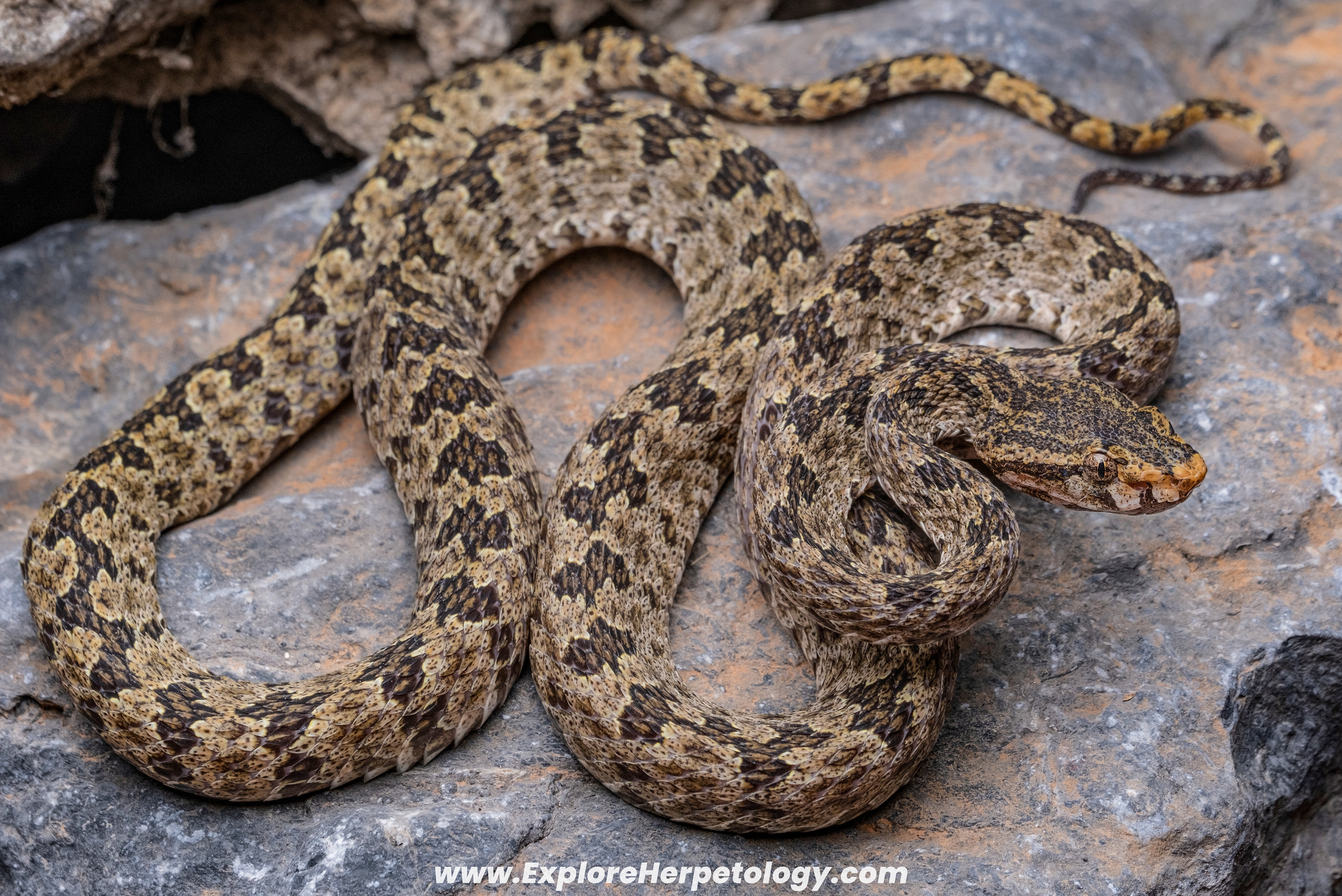
Vang Vieng lance-headed pit viper (Protobothrops flavirostris).
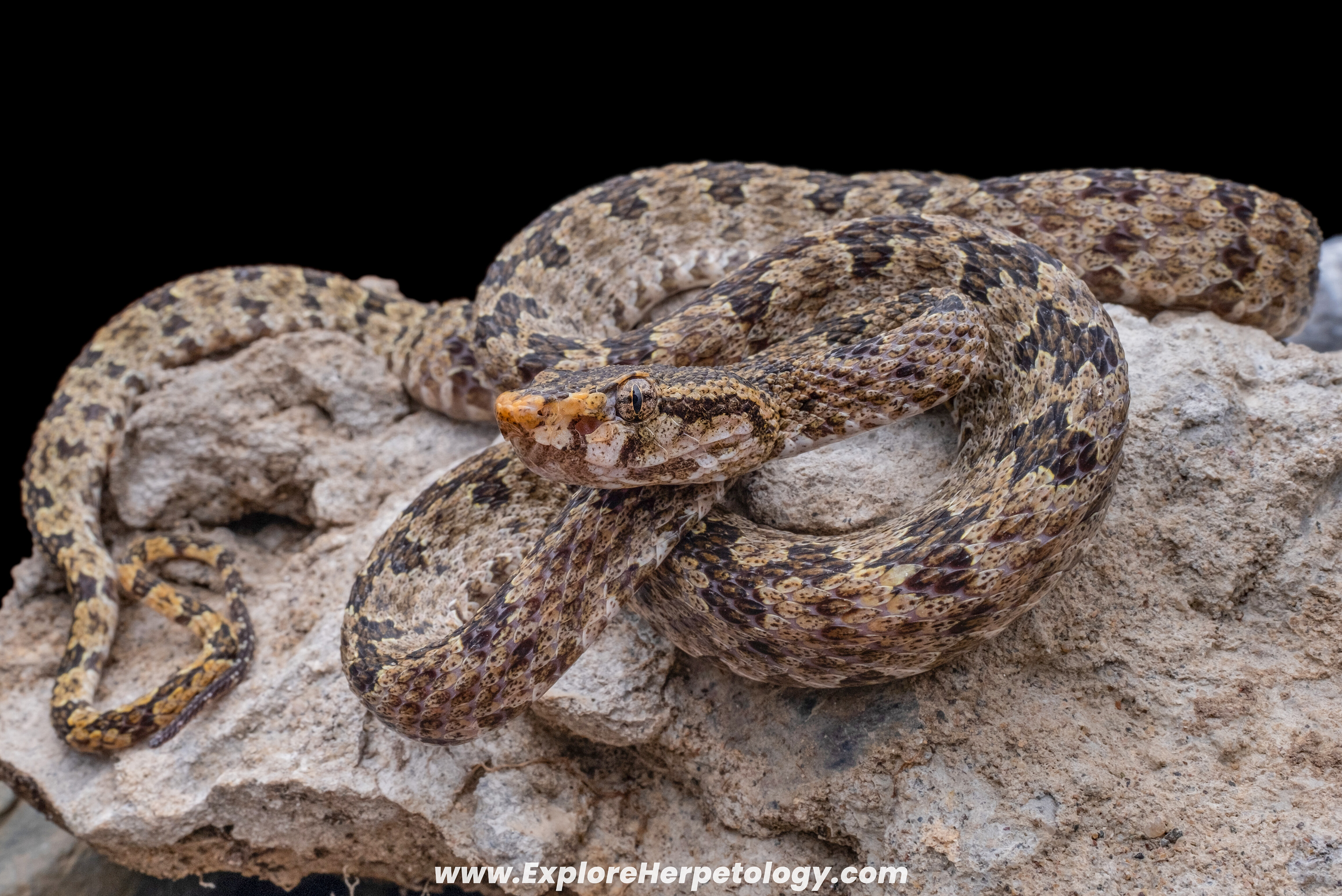
Vang Vieng lance-headed pit viper (Protobothrops flavirostris).
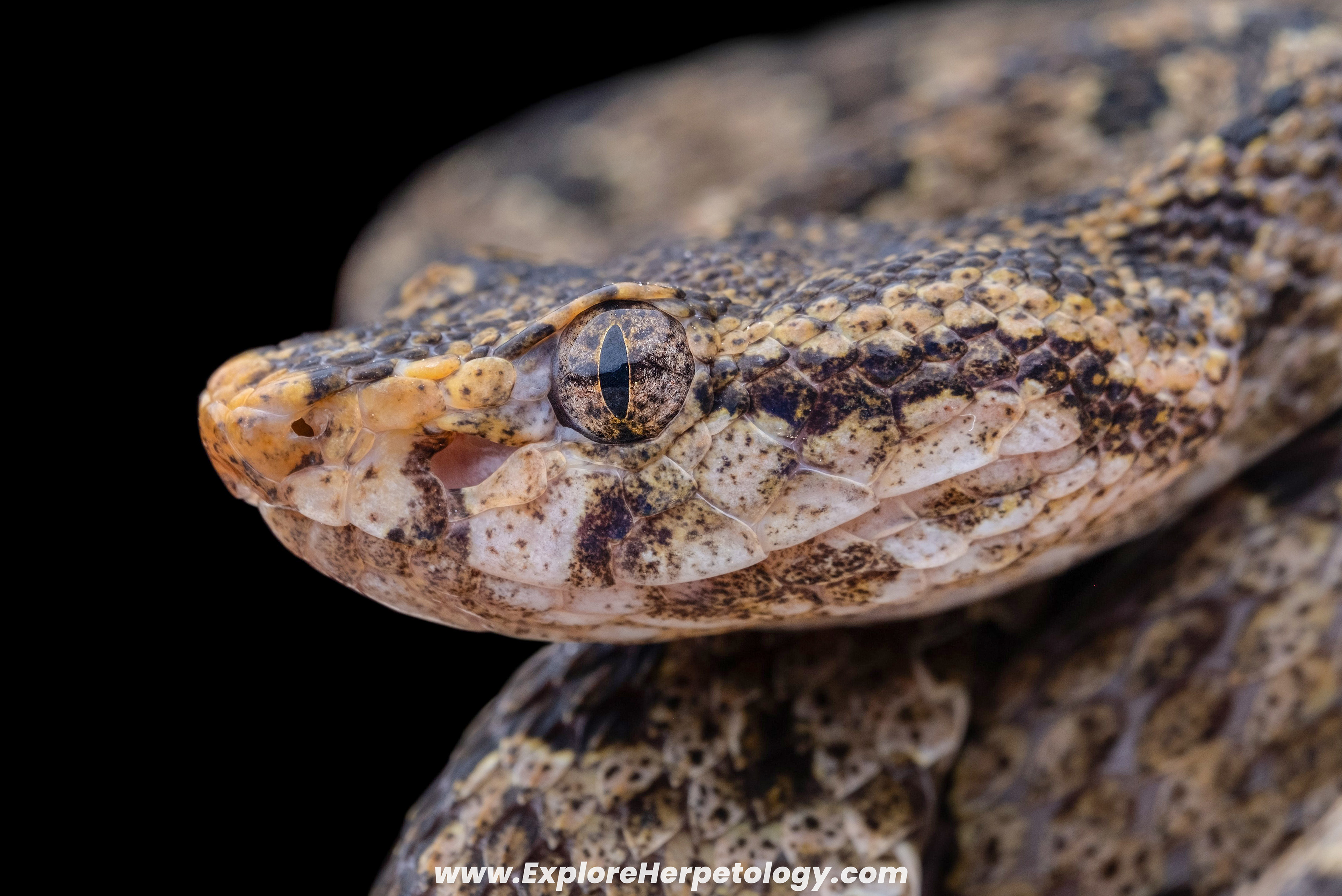
Vang Vieng lance-headed pit viper (Protobothrops flavirostris).
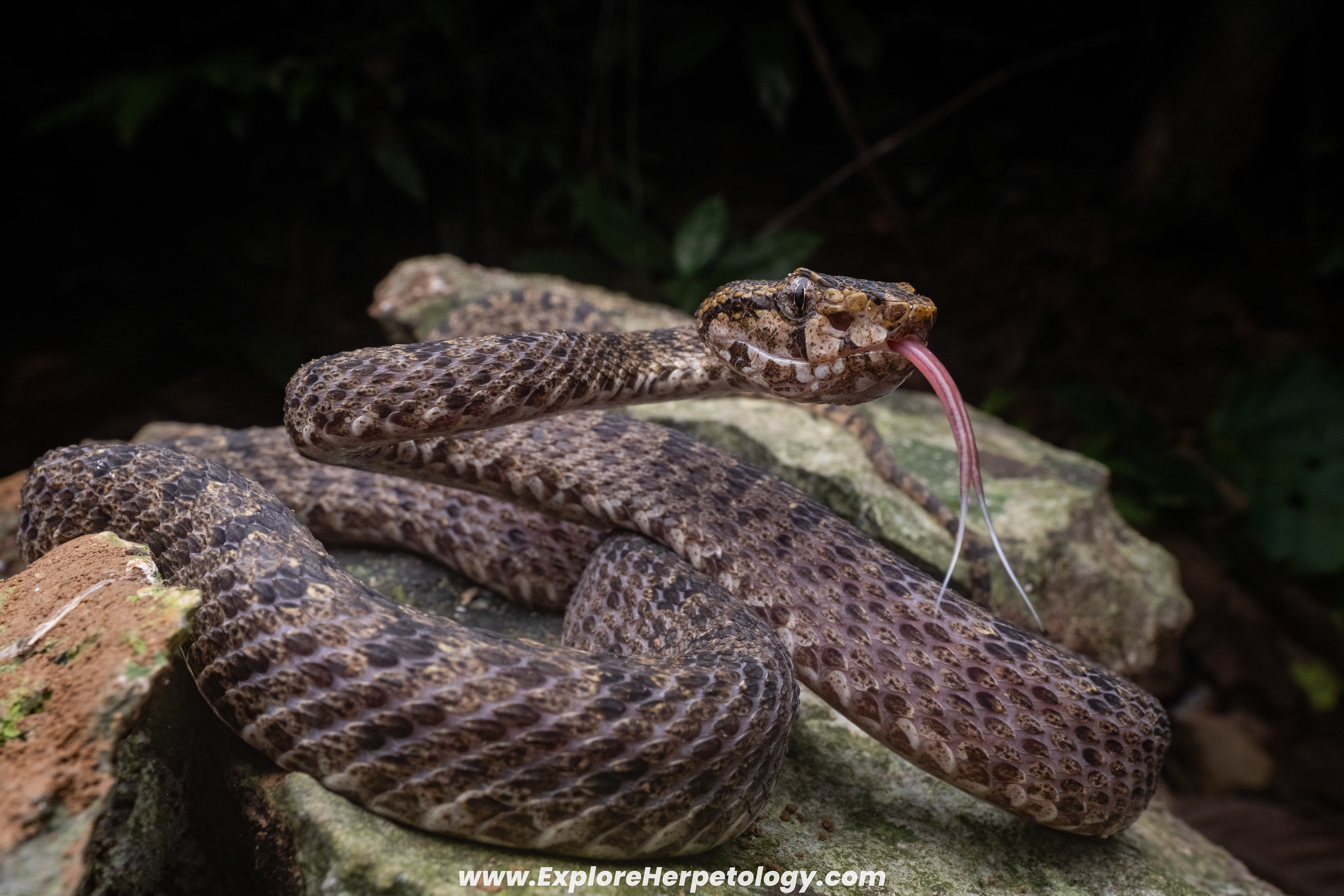
Vang Vieng lance-headed pit viper (Protobothrops flavirostris).
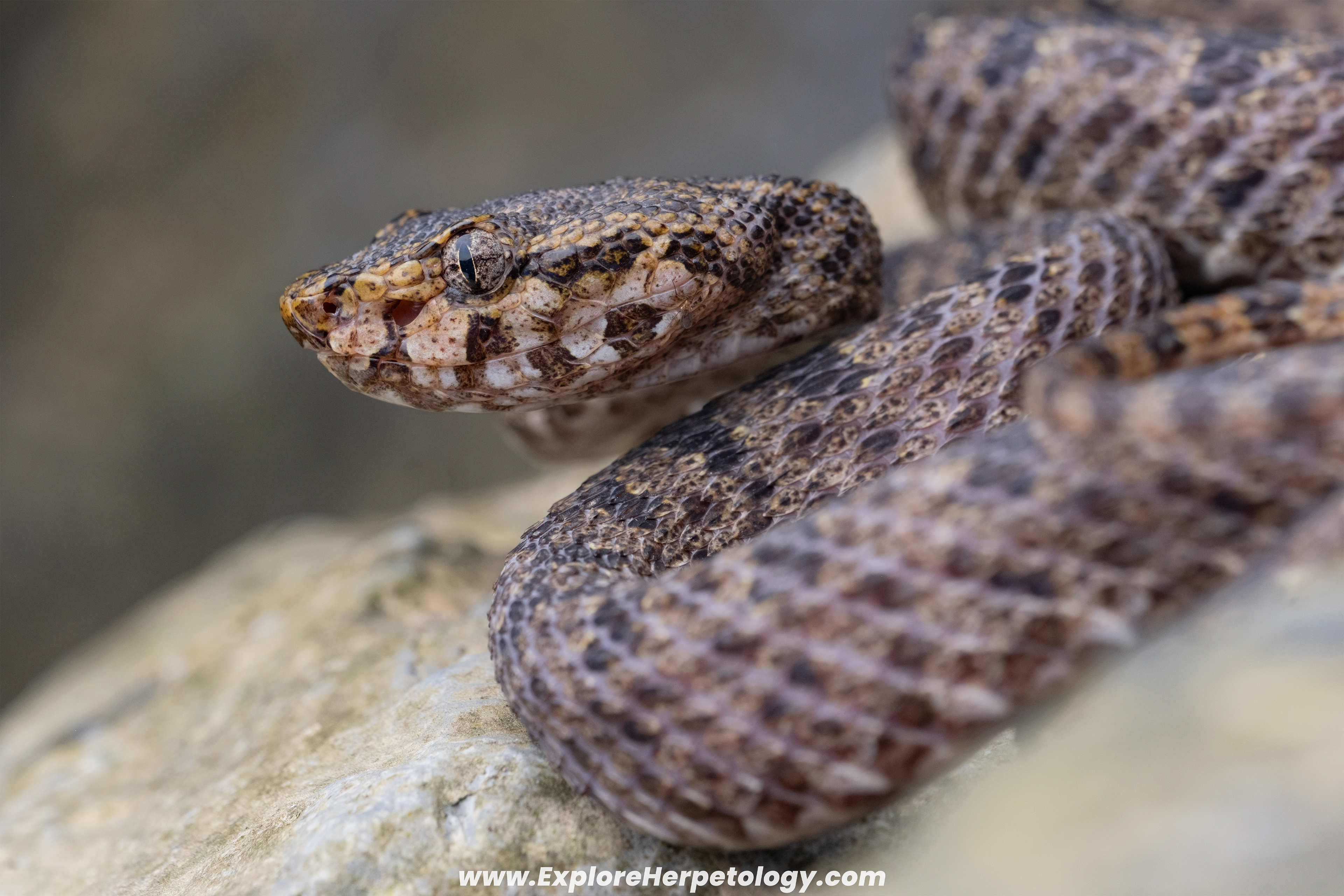
Vang Vieng lance-headed pit viper (Protobothrops flavirostris).
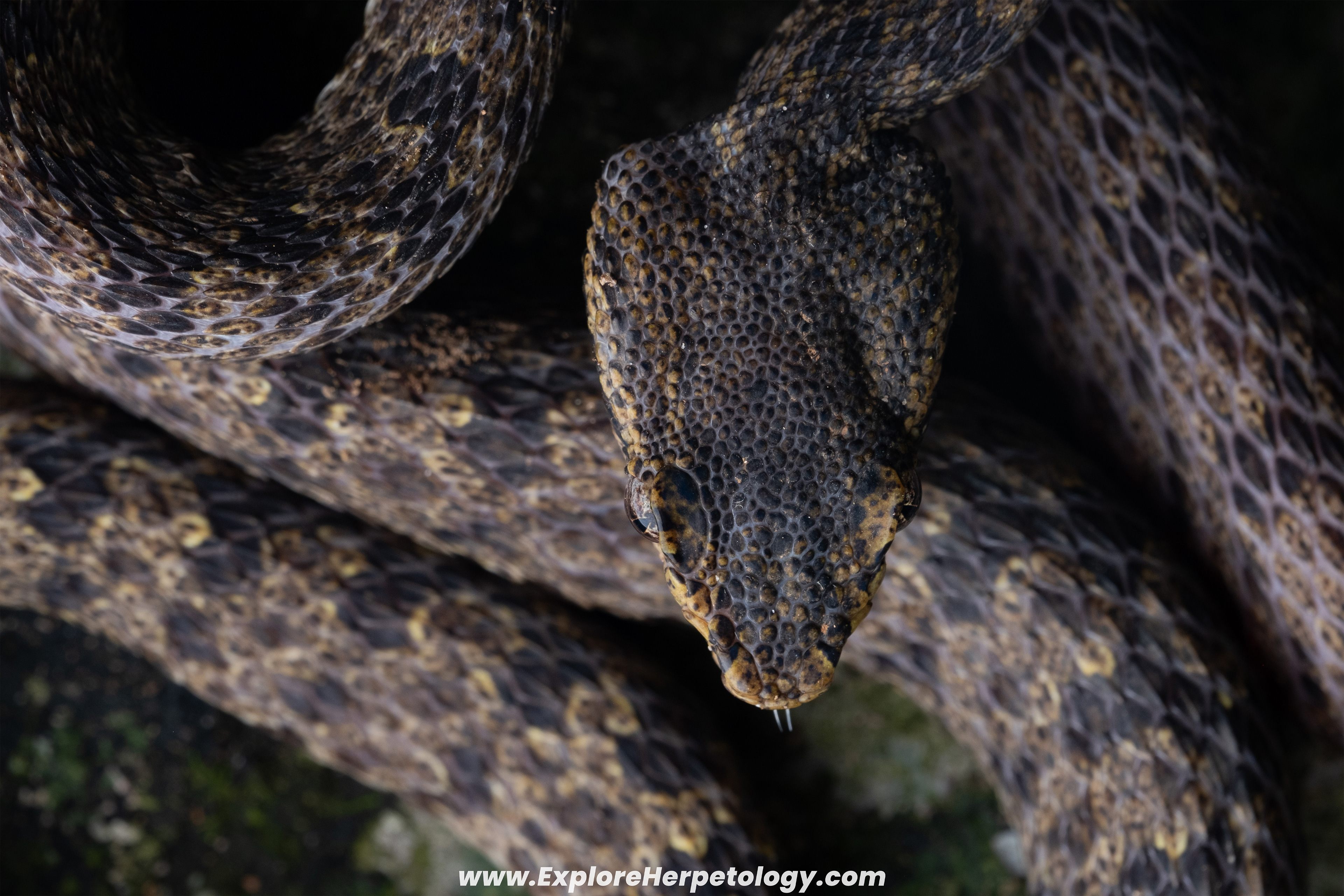
Vang Vieng lance-headed pit viper (Protobothrops flavirostris).
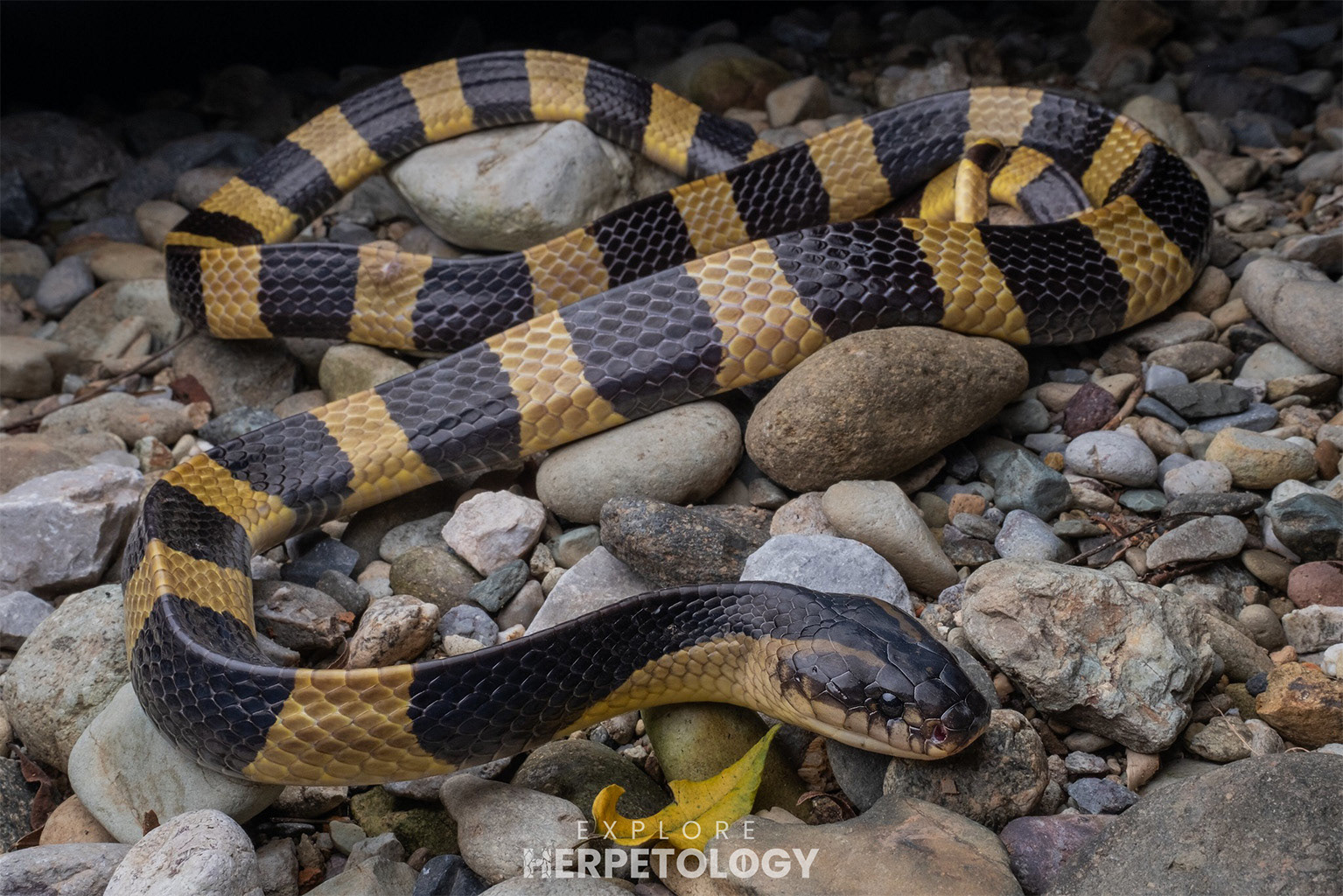
Banded krait (Bungarus fasciatus)
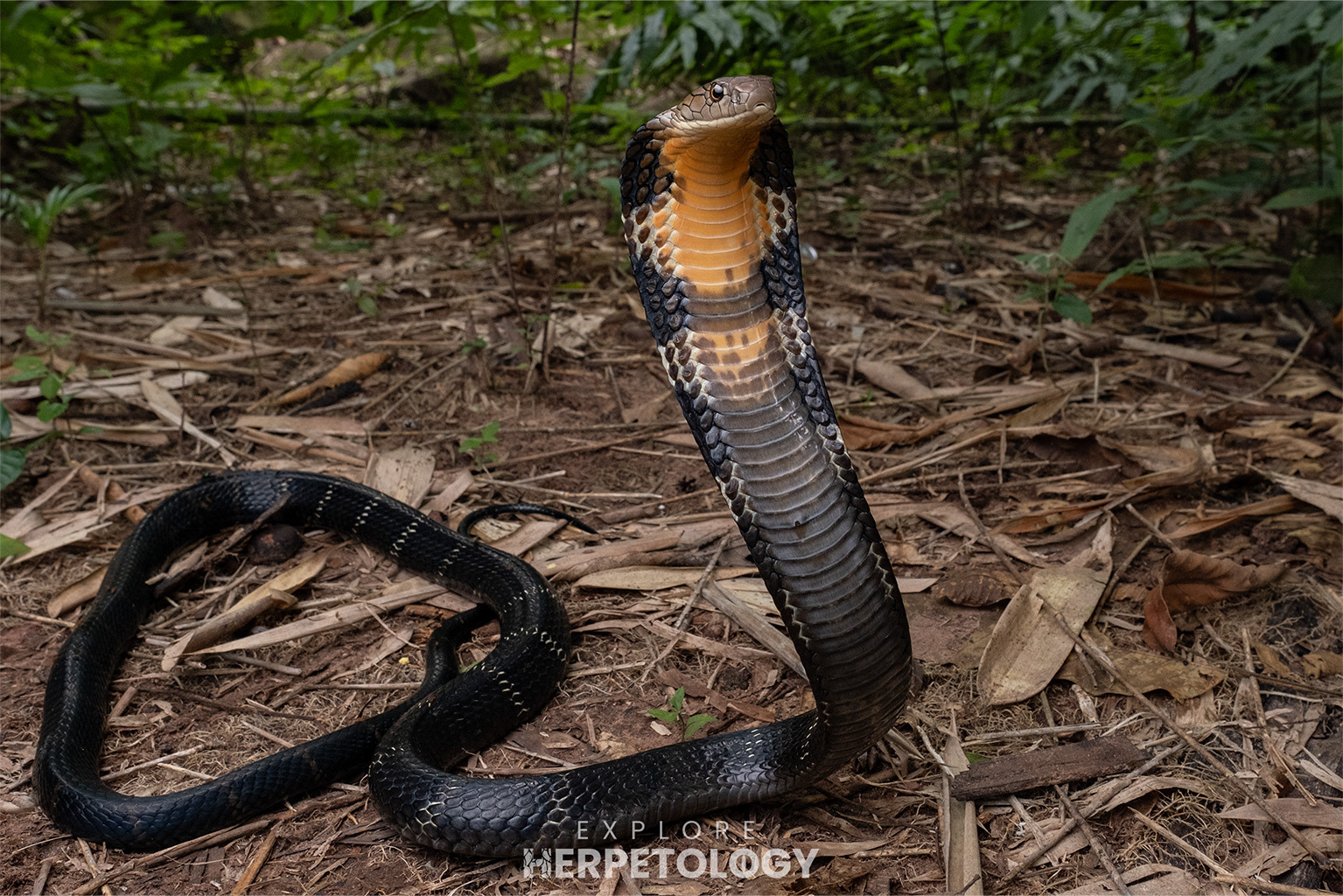
King cobra (Ophiophagus hannah)

Indo-Chinese banded wolf snake (Lycodon neomaculatus)
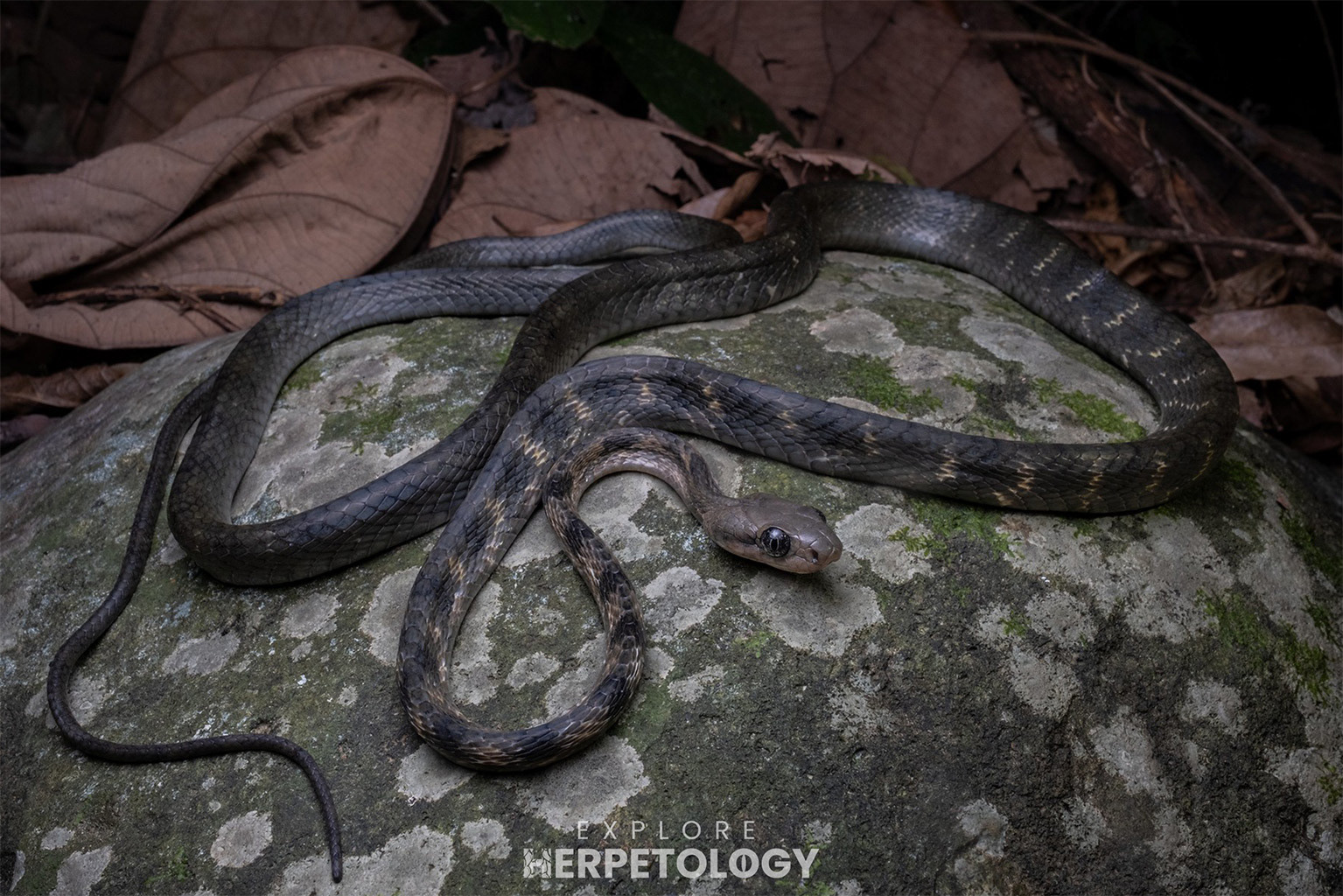
Guangxi cat snake (Boiga guangxiensis)
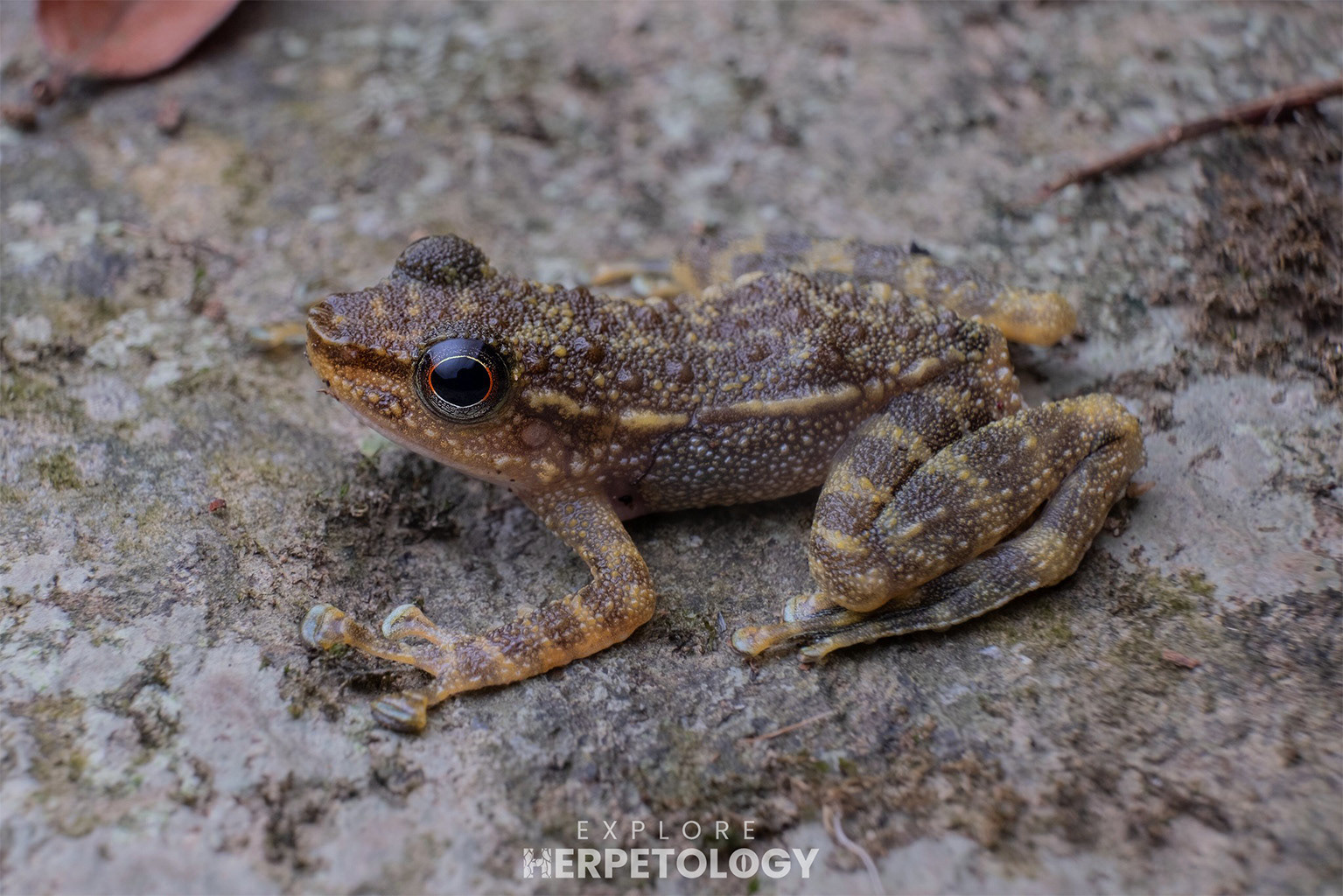
Amalops sengae
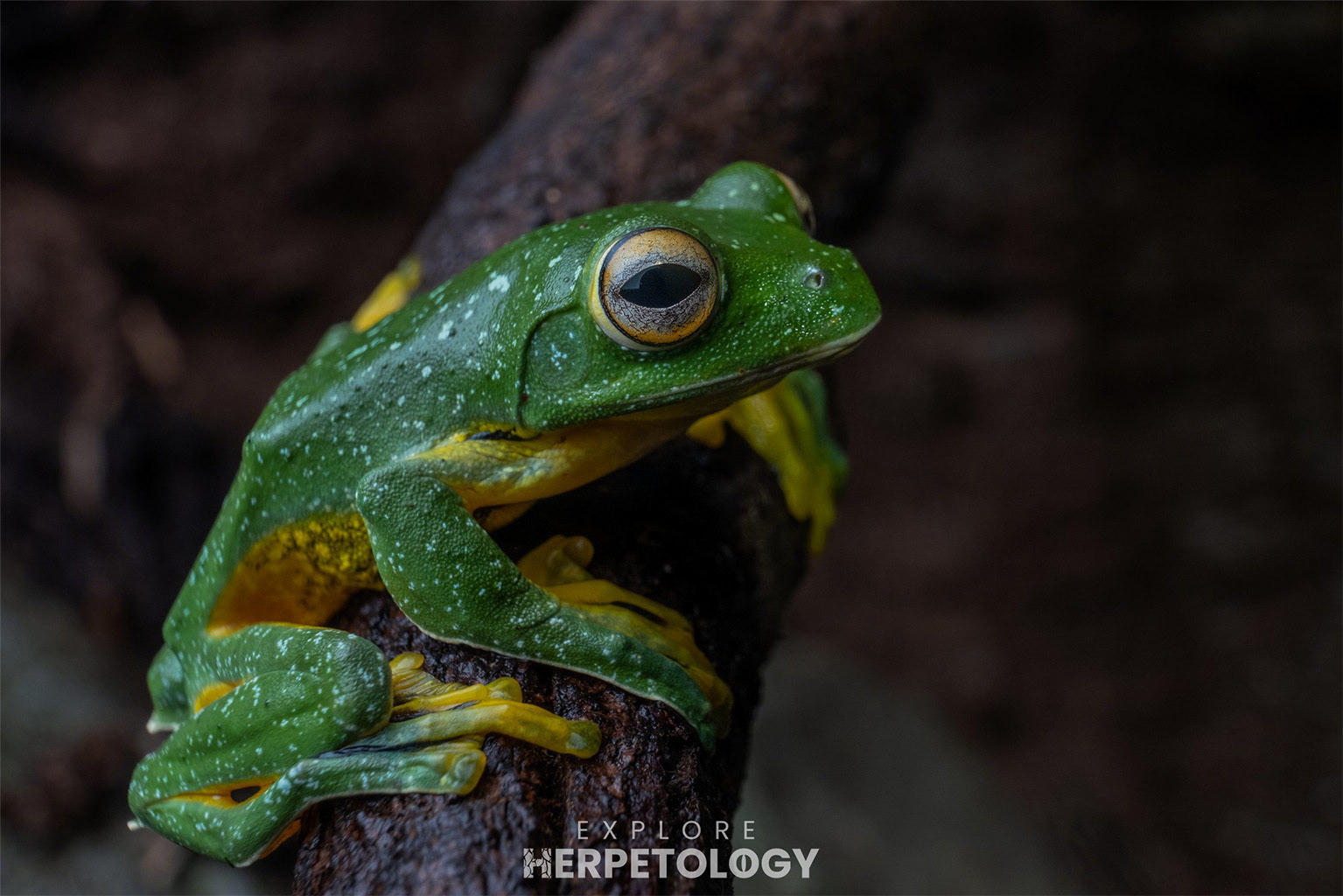
Kio flying frog (Rhacophorus kio)
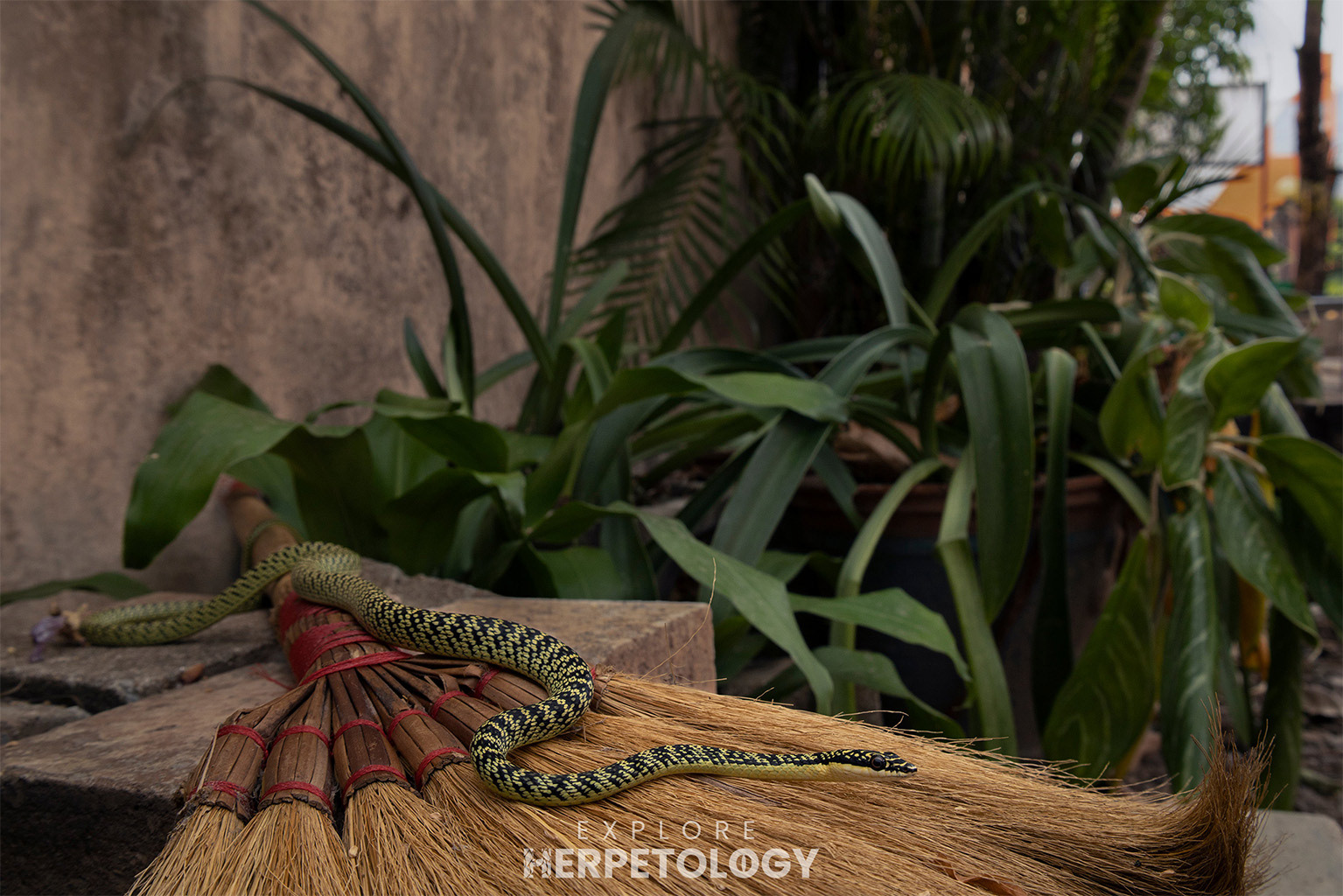
Golden flying snake (Chrysopelea ornata)
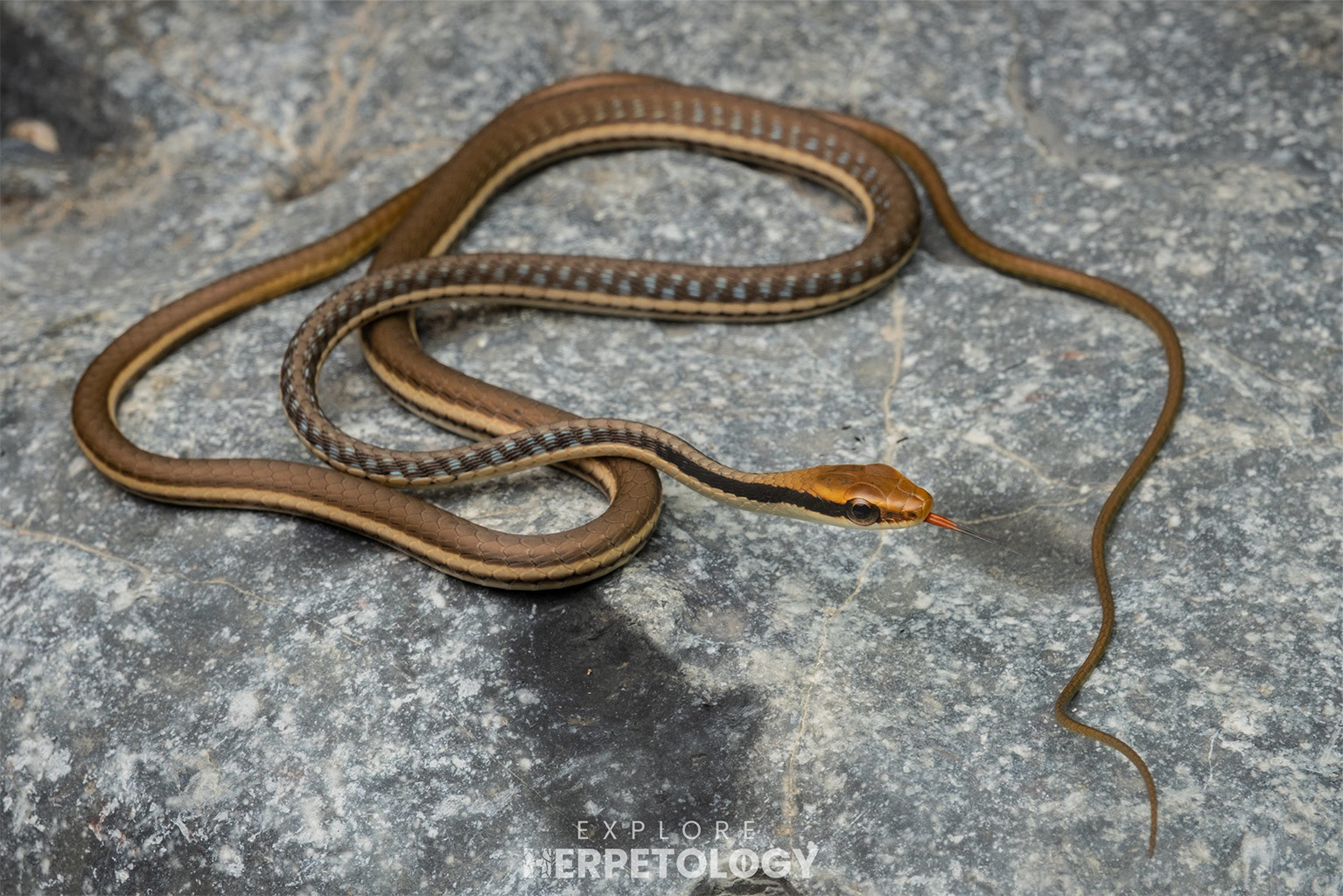
Painted bronzeback (Dendrelaphis pictus)
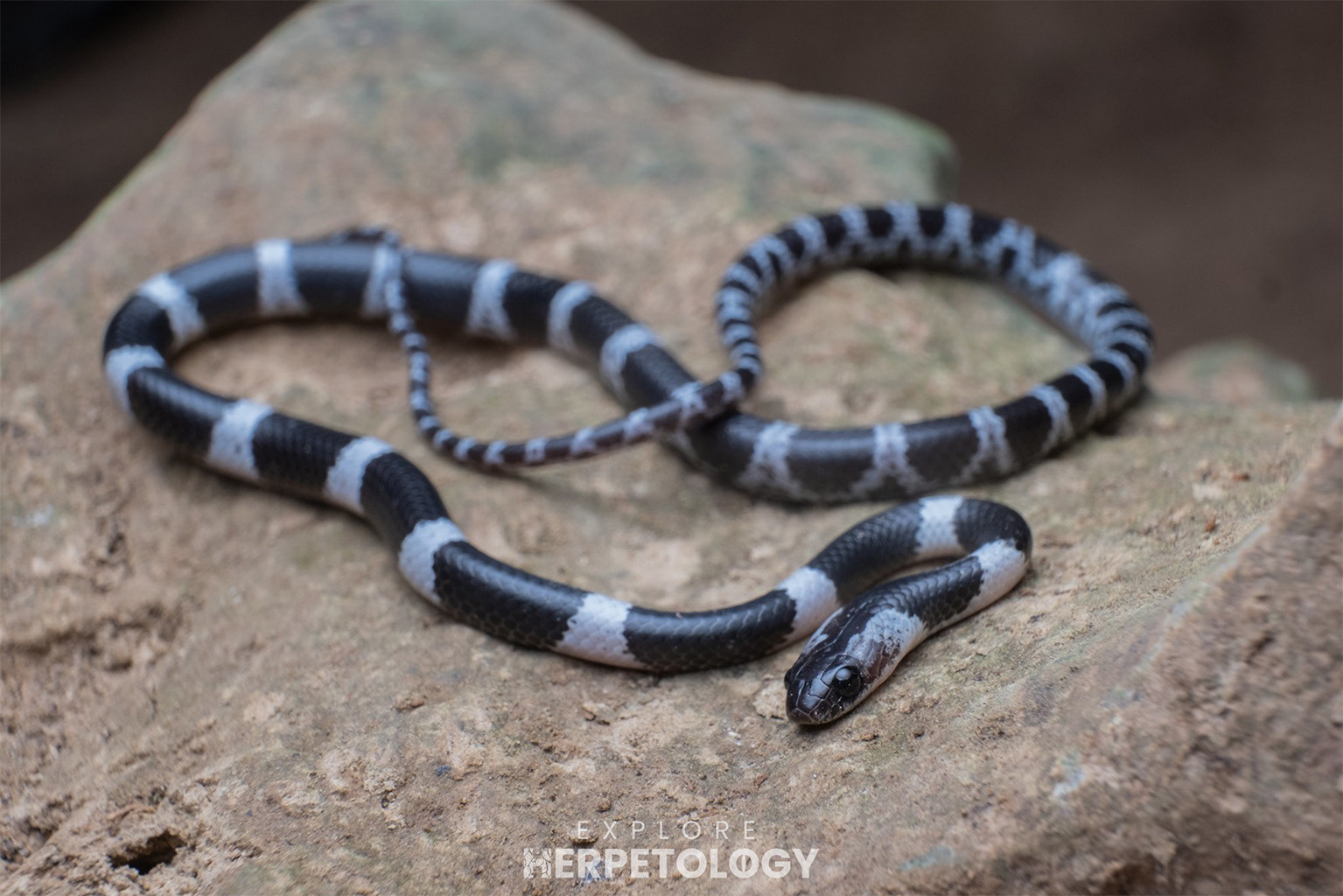
Davison's bridle snake (Dryocalamus davisonii)
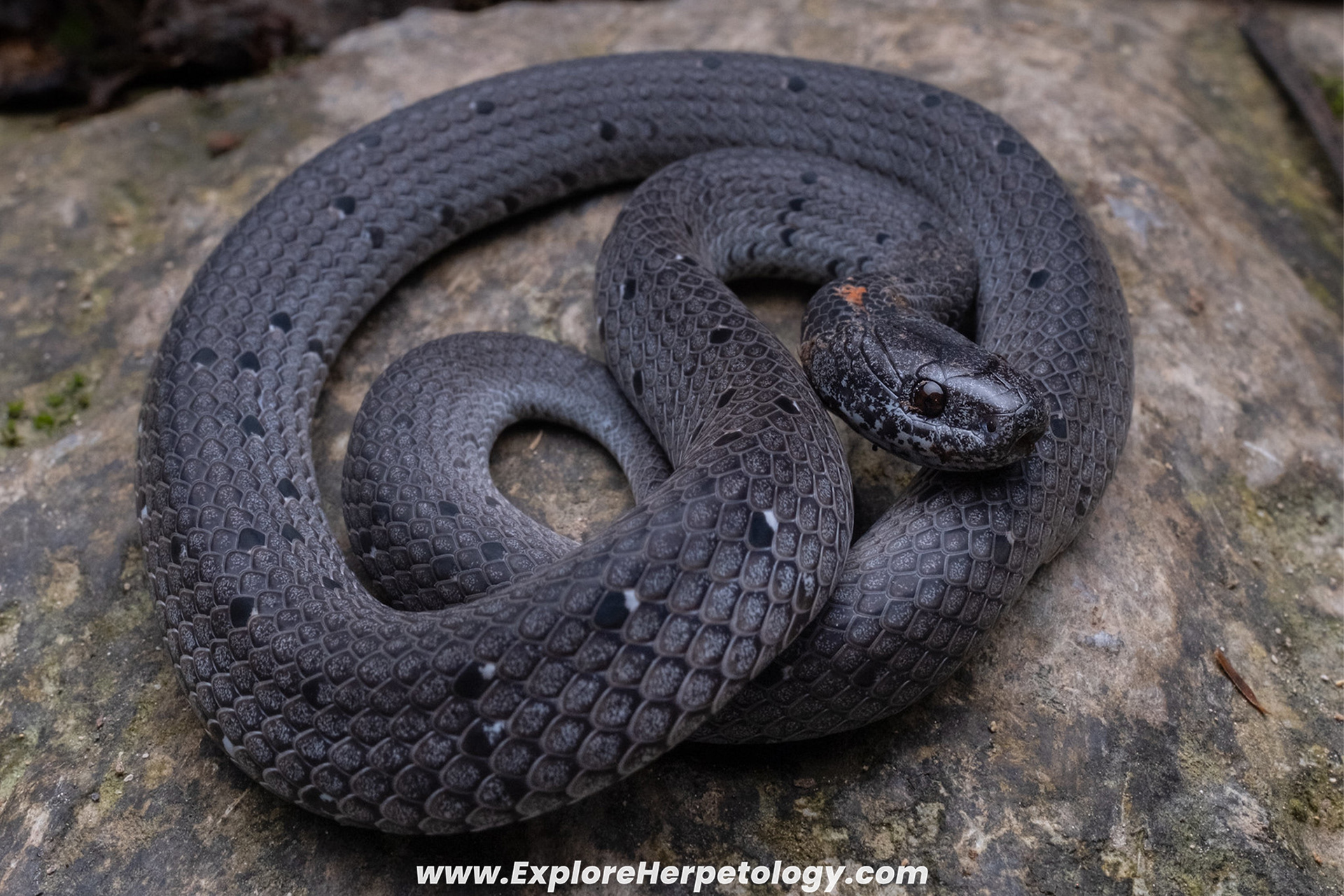
White-spotted slug snake (Pareas margaritophorus).
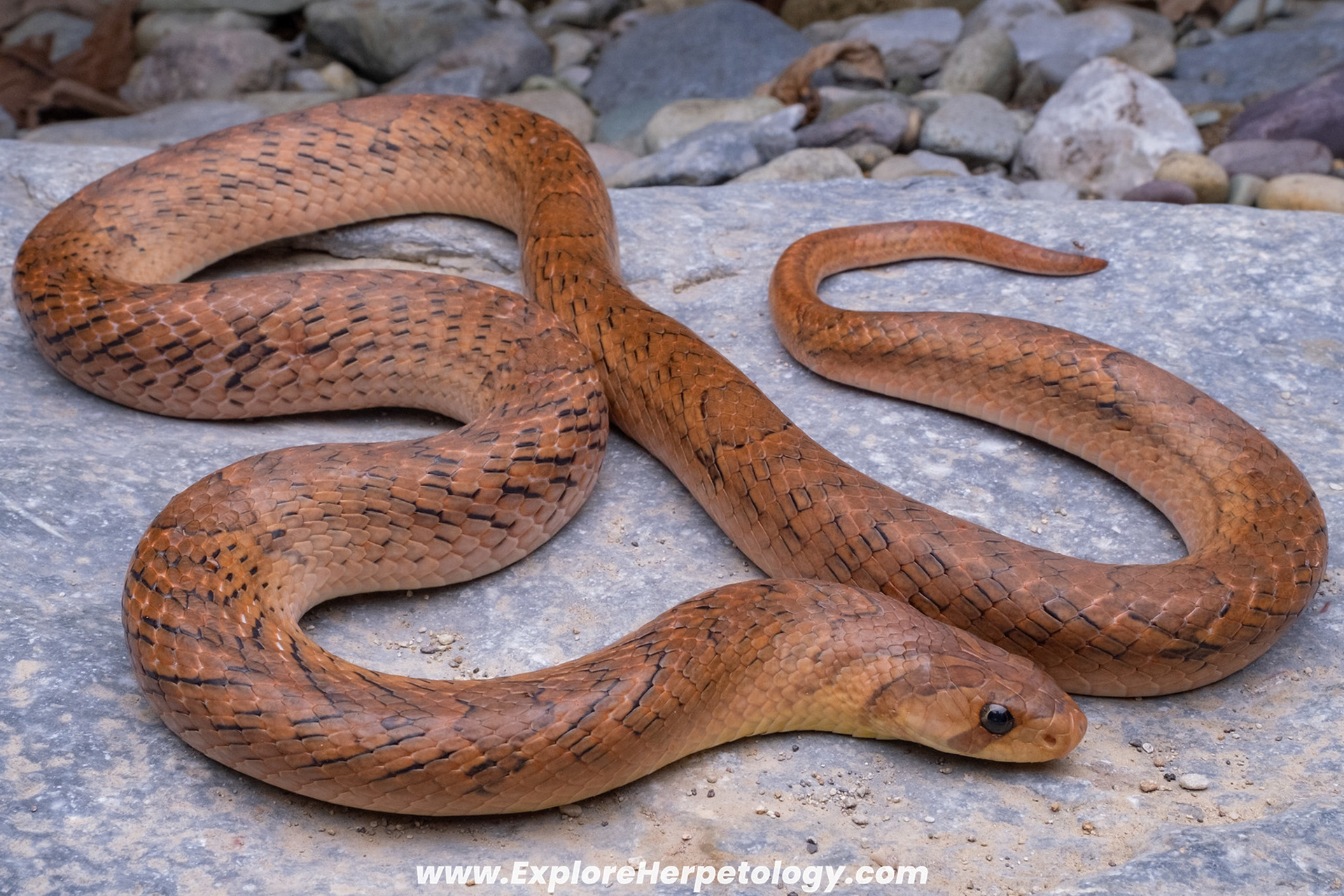
Small-banded kukri snake (Oligodon fasciolatus).
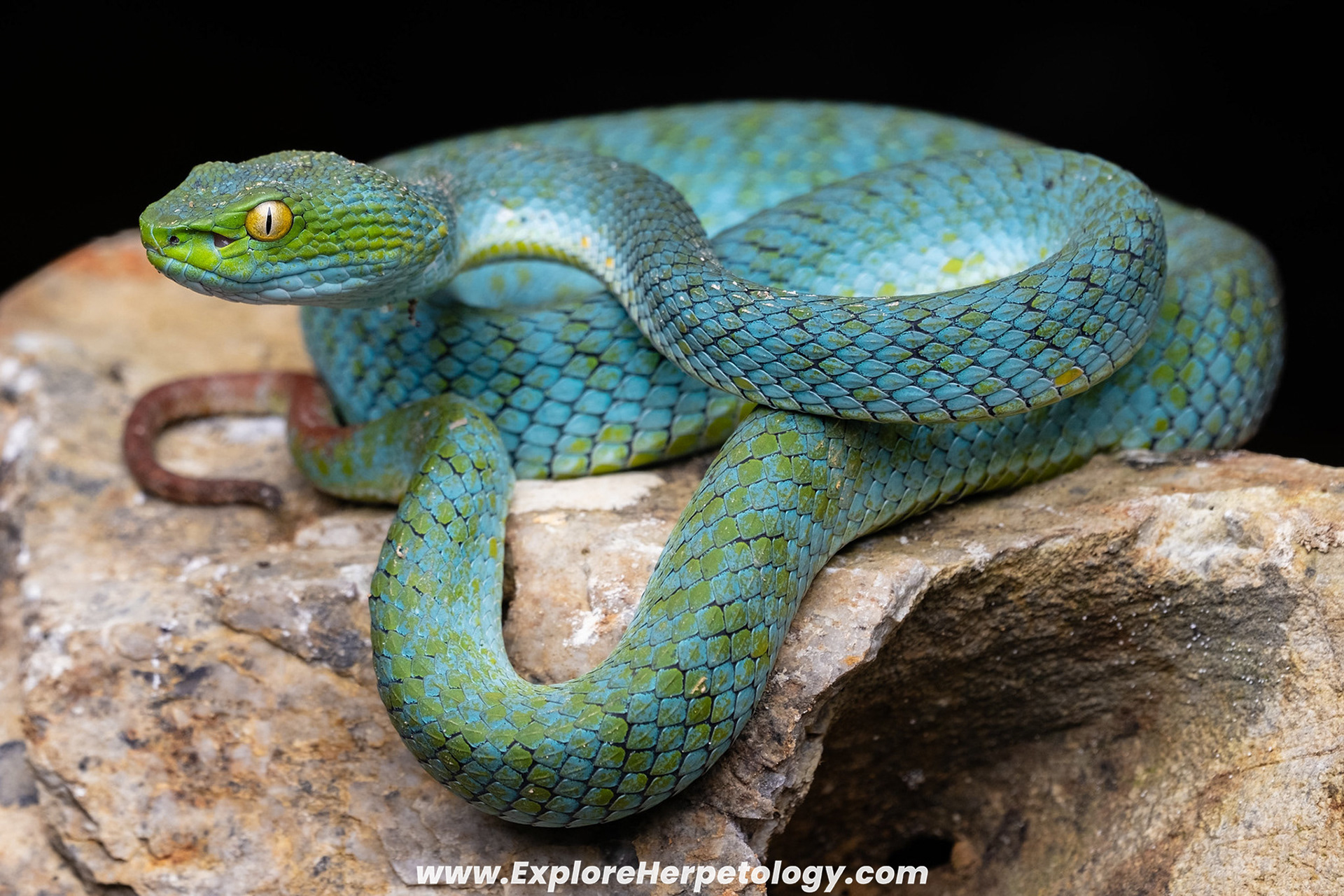
Large-eyed pit viper (Trimeresurus cf. macrops).
MORE INFORMATION:
Expedition Laos is a truly unique expedition to a region seldom surveyed by herpetologists, led by some of the most knowledgeable and experienced individuals for this particular area of South-East Asia. Our team are close collaborators with the NUOL research institute, and look to contribute to scientific understanding of the herpetofauna of Laos whenever possible. Therefore, there is a chance for you to be present and part of important herpetological discoveries throughout this expedition. On our 2025 expedition, we found new country records along with totally new species of herpetofauna (currently in press), and there is much more to discover than what we have seen thus far. Hereby, for those who want to be involved with the scientific process and experience herpetological fieldwork behind the scenes, this is a perfect trip to join.
Pictured below are a collection of photos from our previous trips to Laos, which we hope will give a more comprehensive impression of the what to expect:
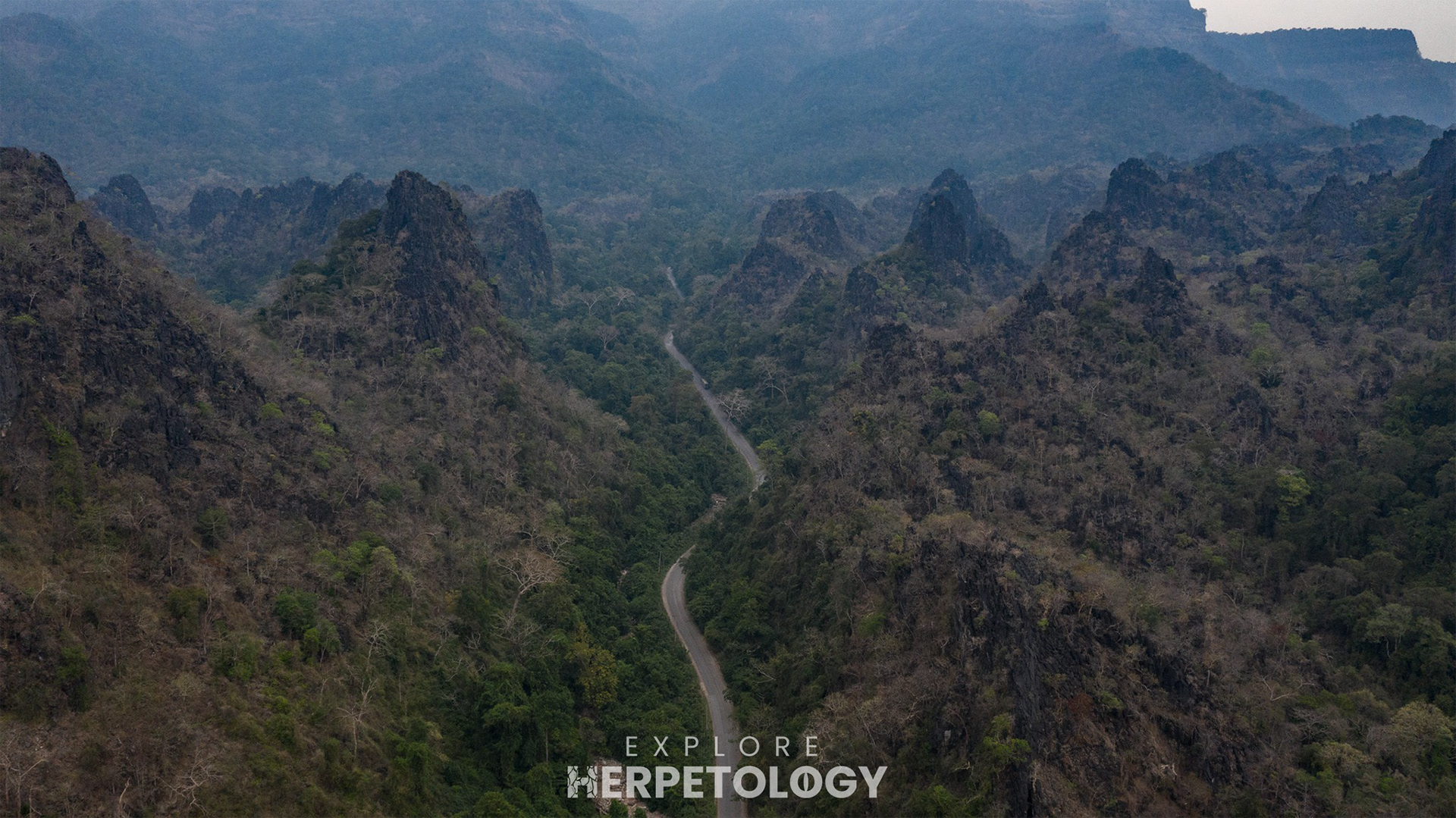
Khammouane province.
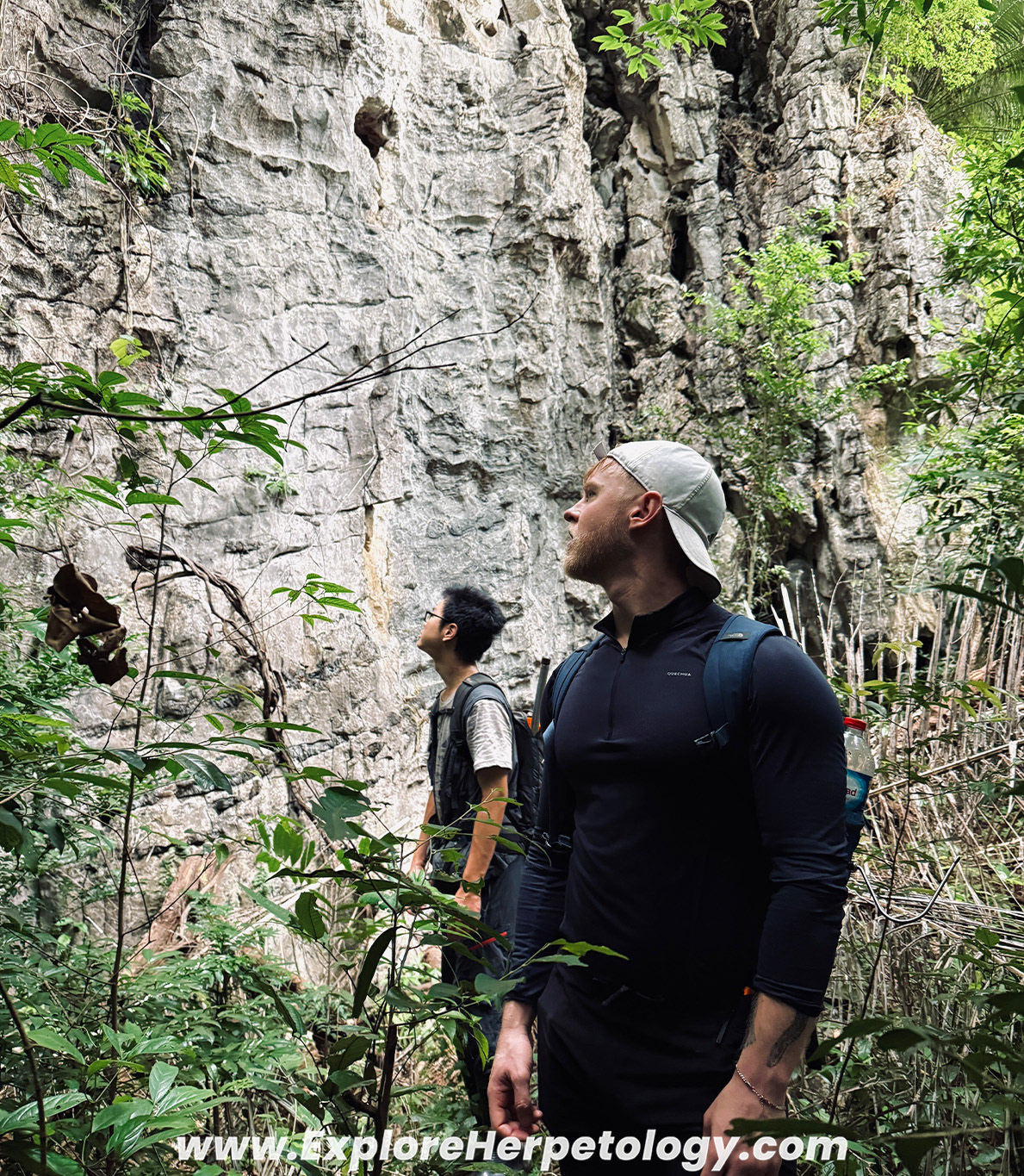
Hiking in Khammouane.
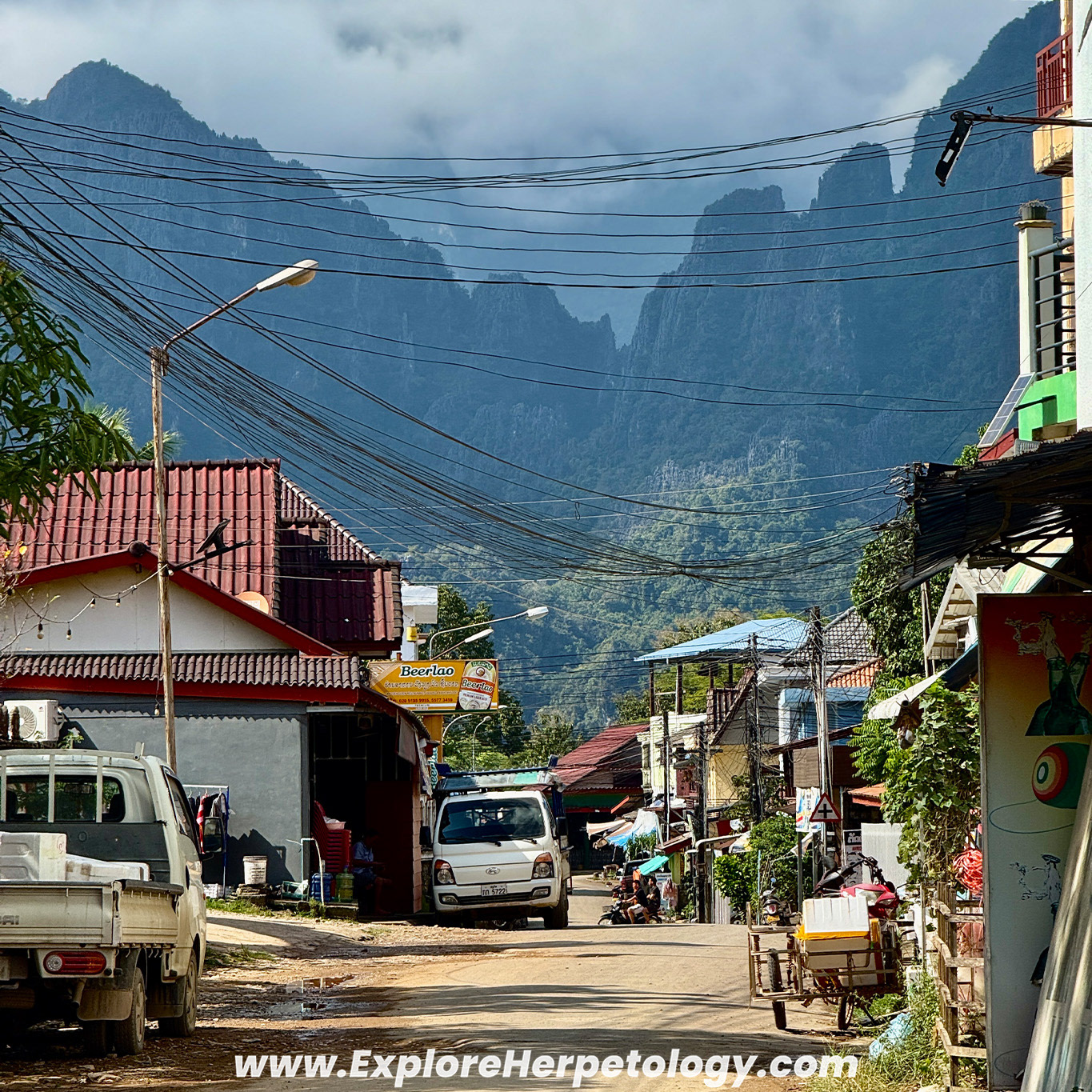
Vang Vieng City.
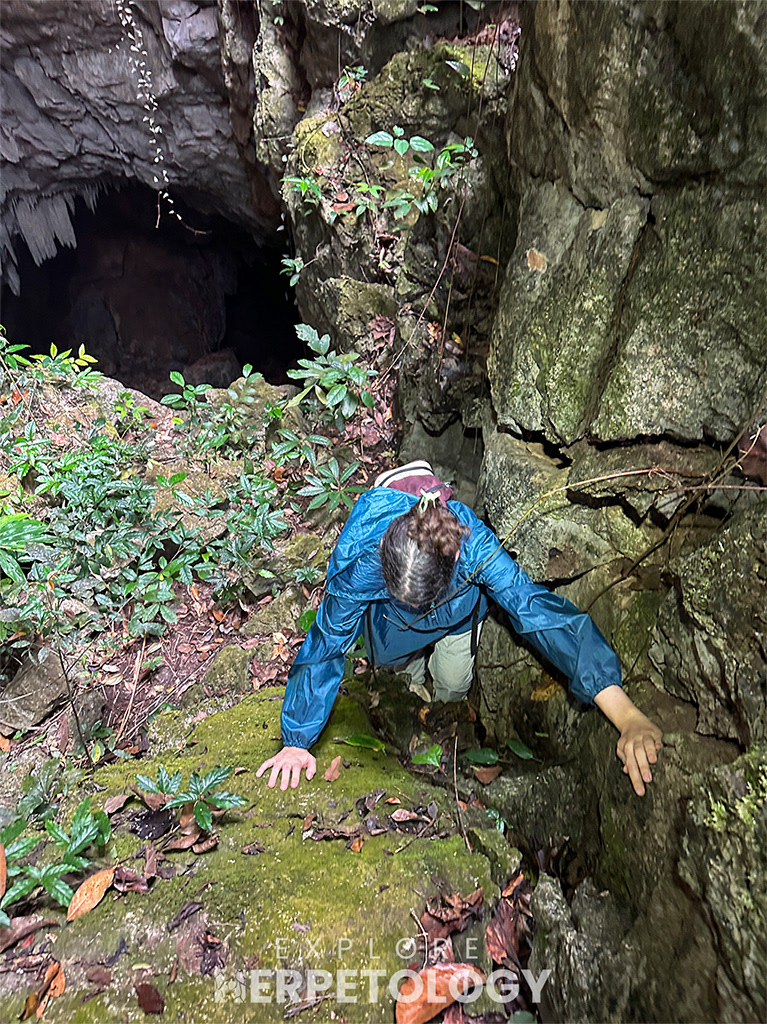
Climbing out of a cave in Khammouane.
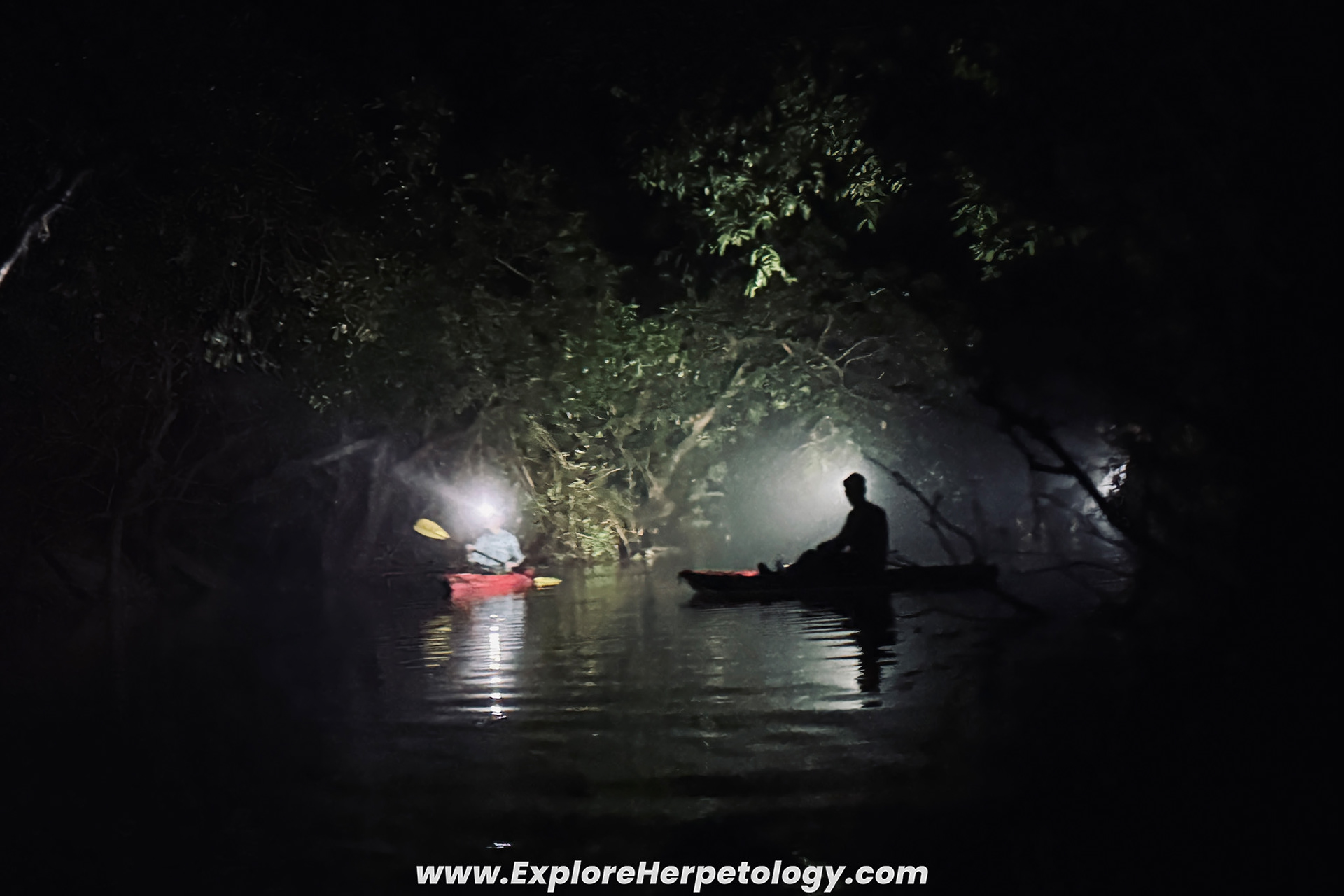
Kayaking near Konglor Cave.
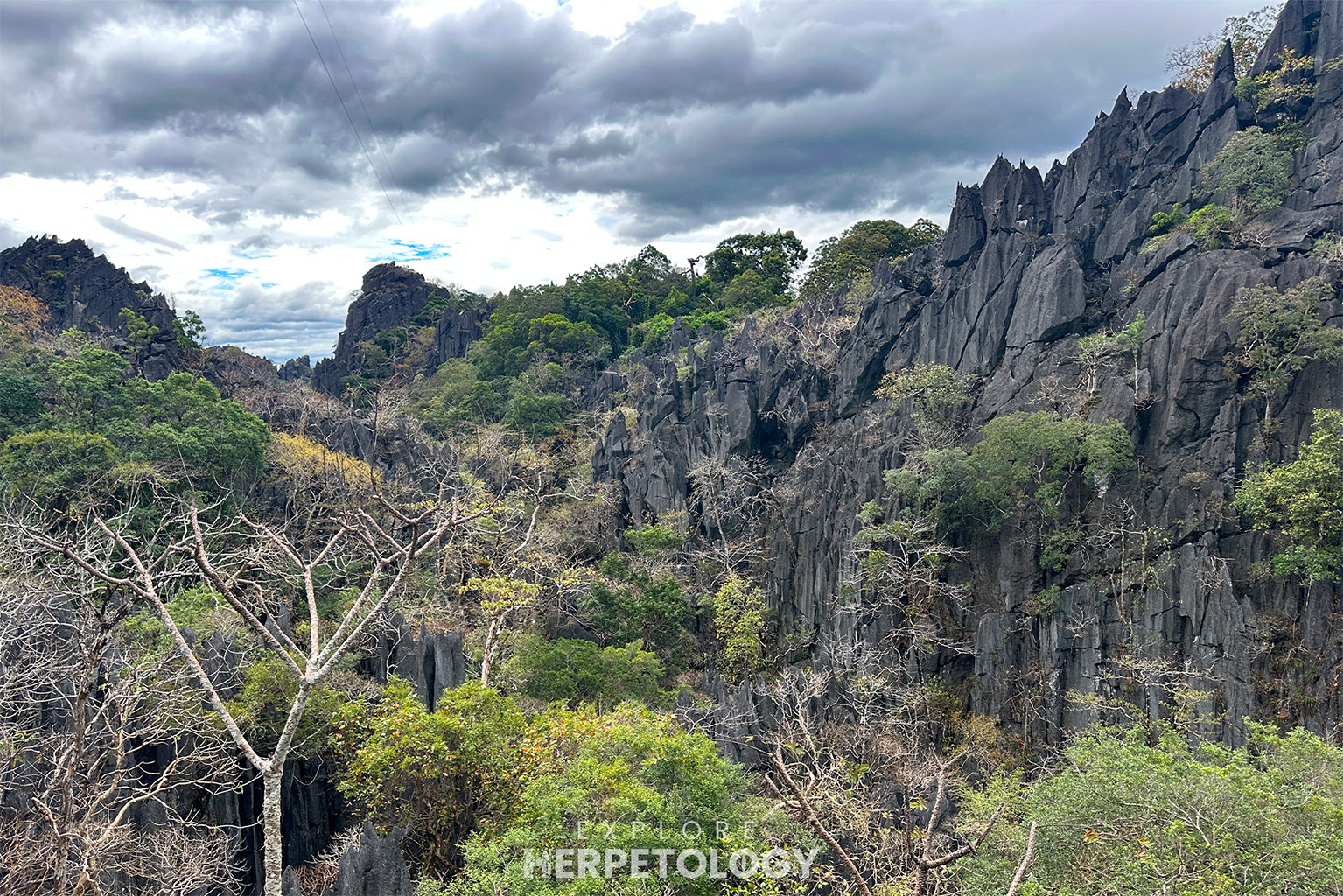
The Rock.
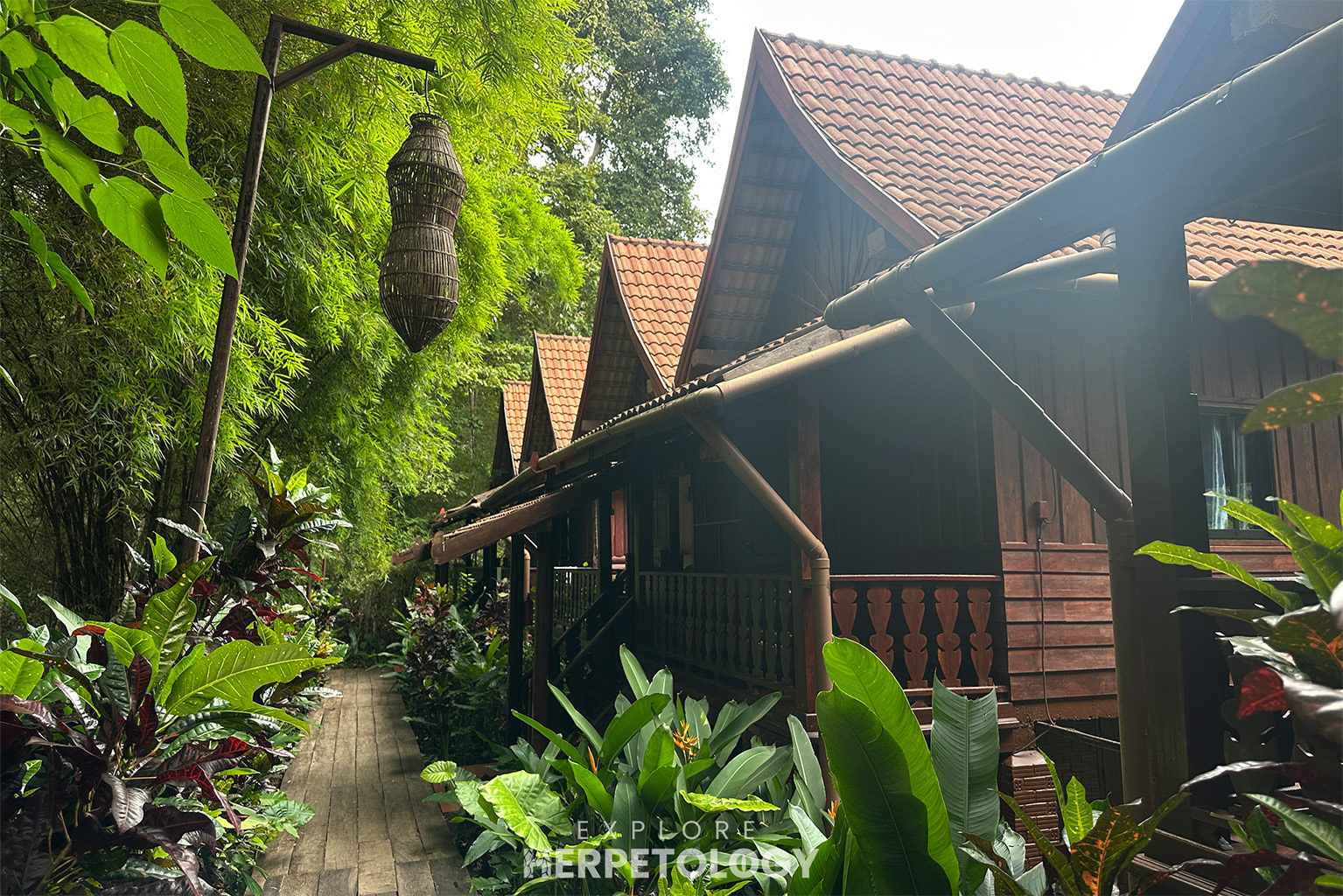
Accommodation at Konglor Cave.
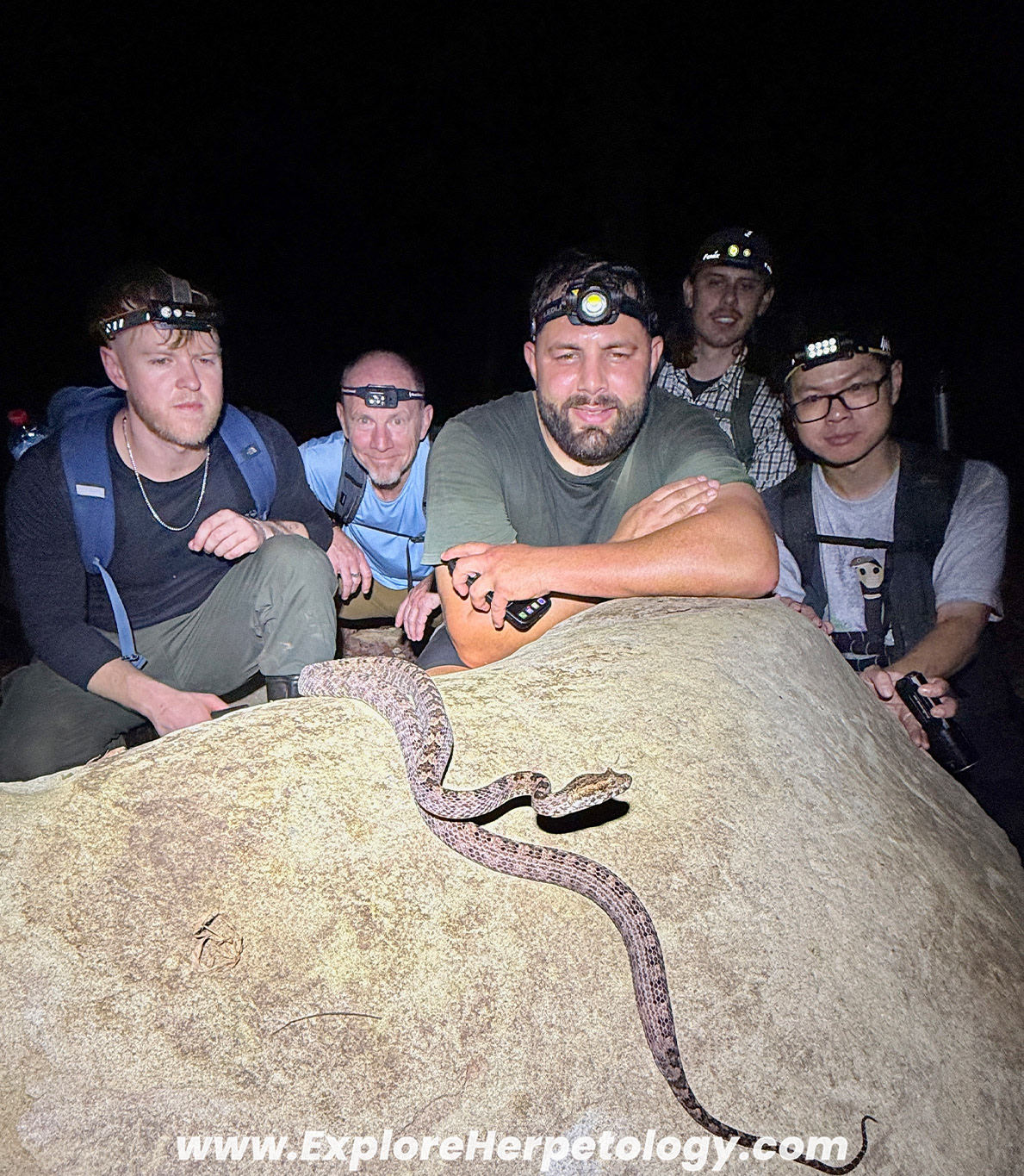
A big female Protobothrops sieversorum.
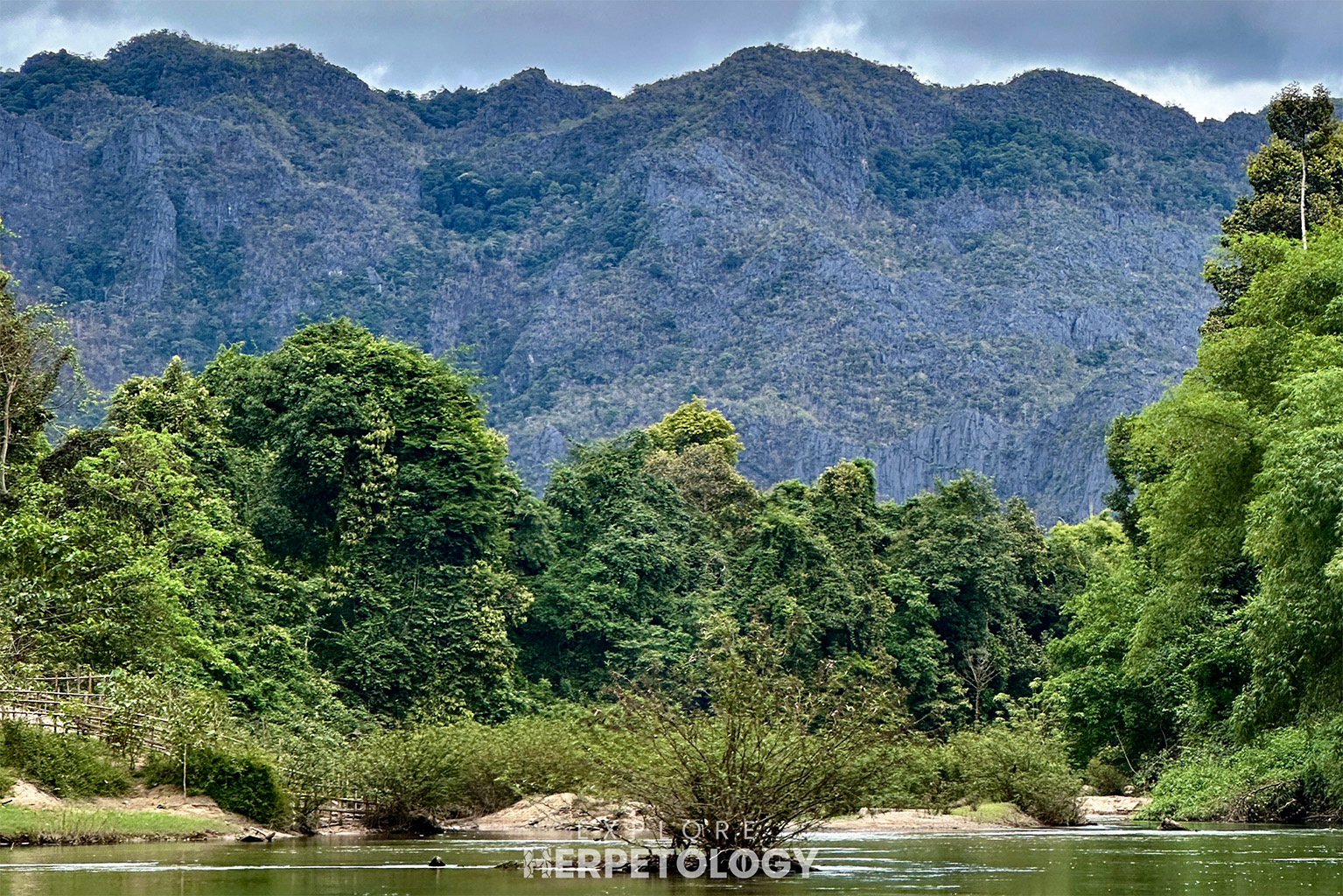
Konglor cave area.
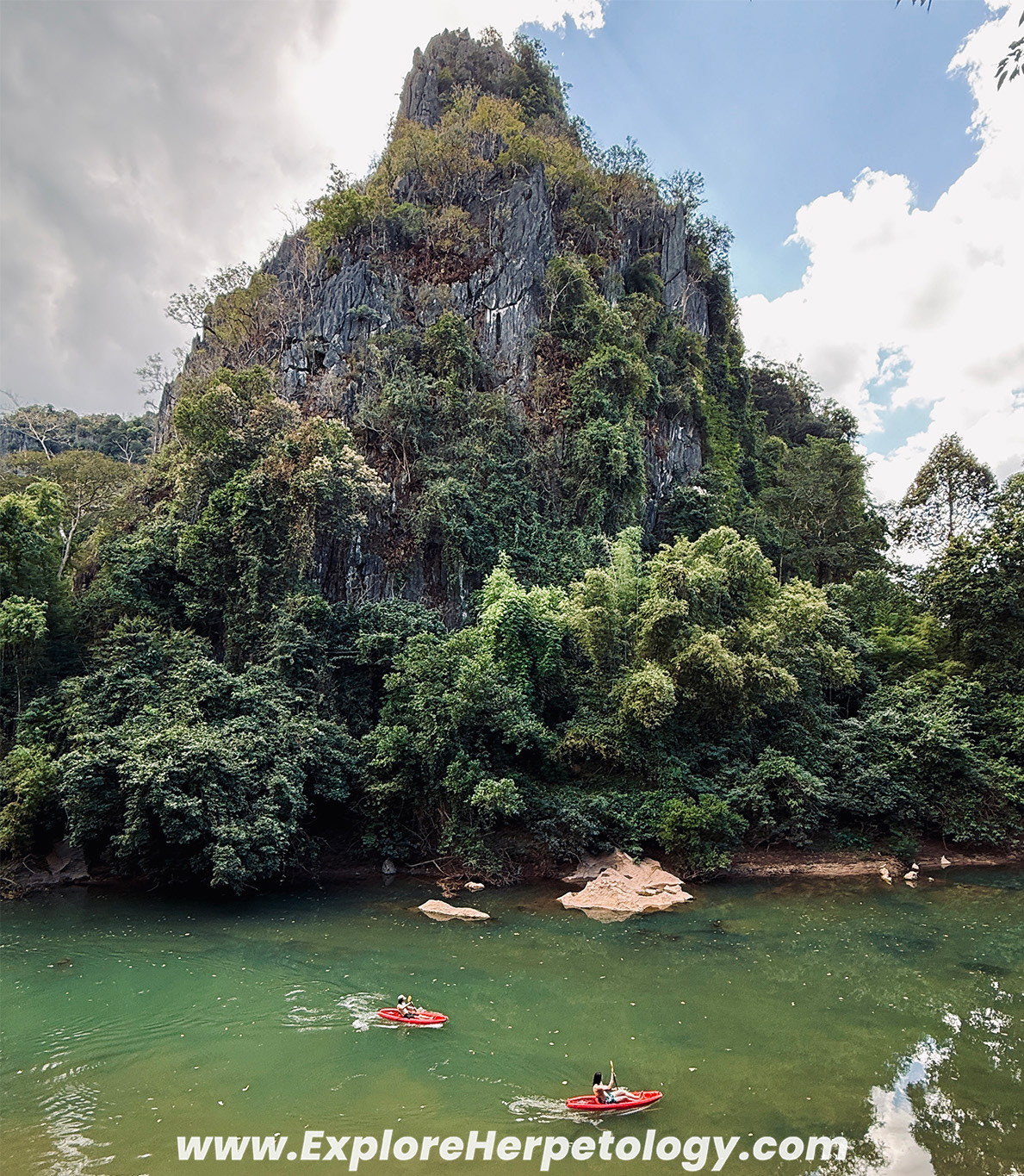
Kayaking near Konglor Cave.
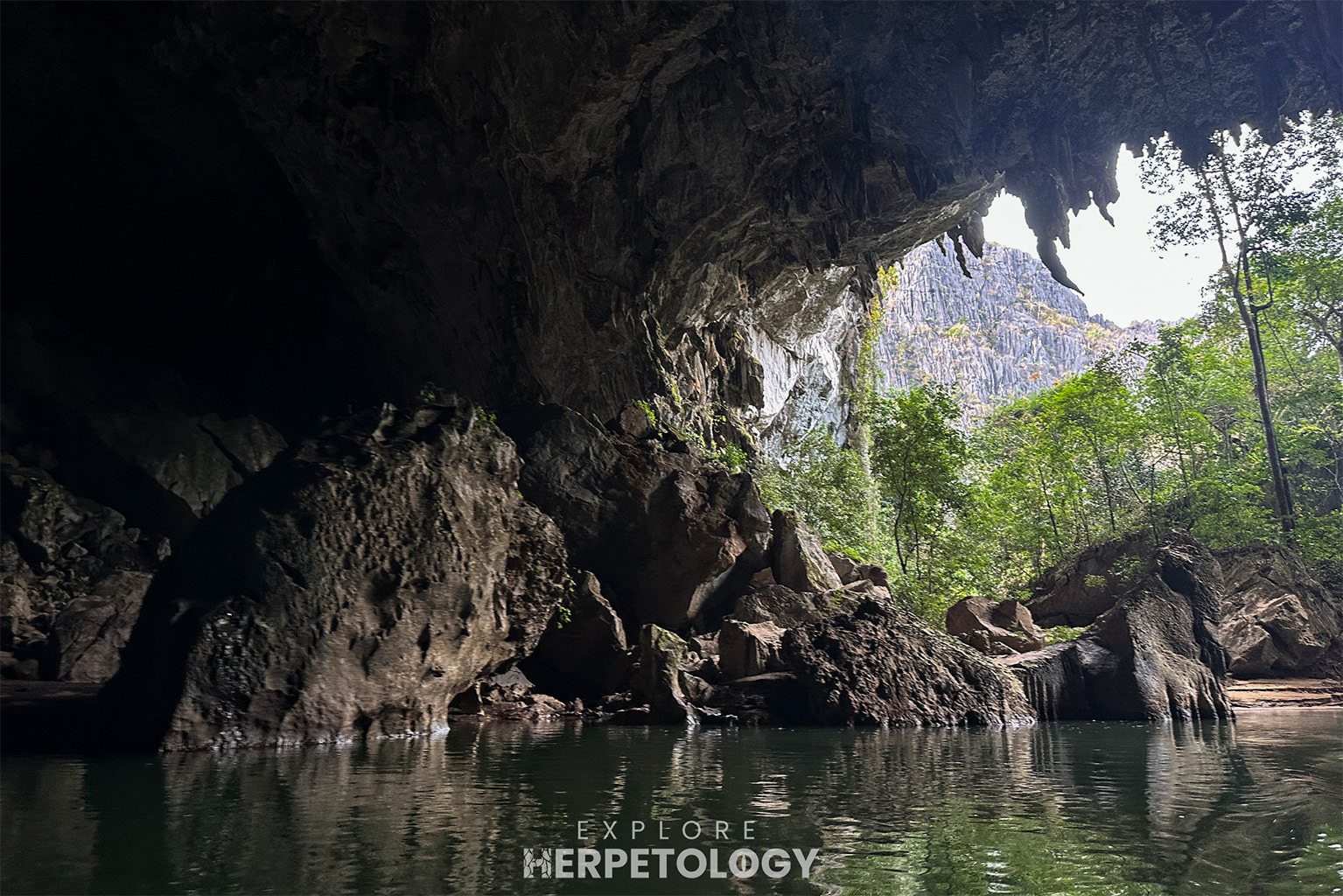
The mouth of Konglor cave.
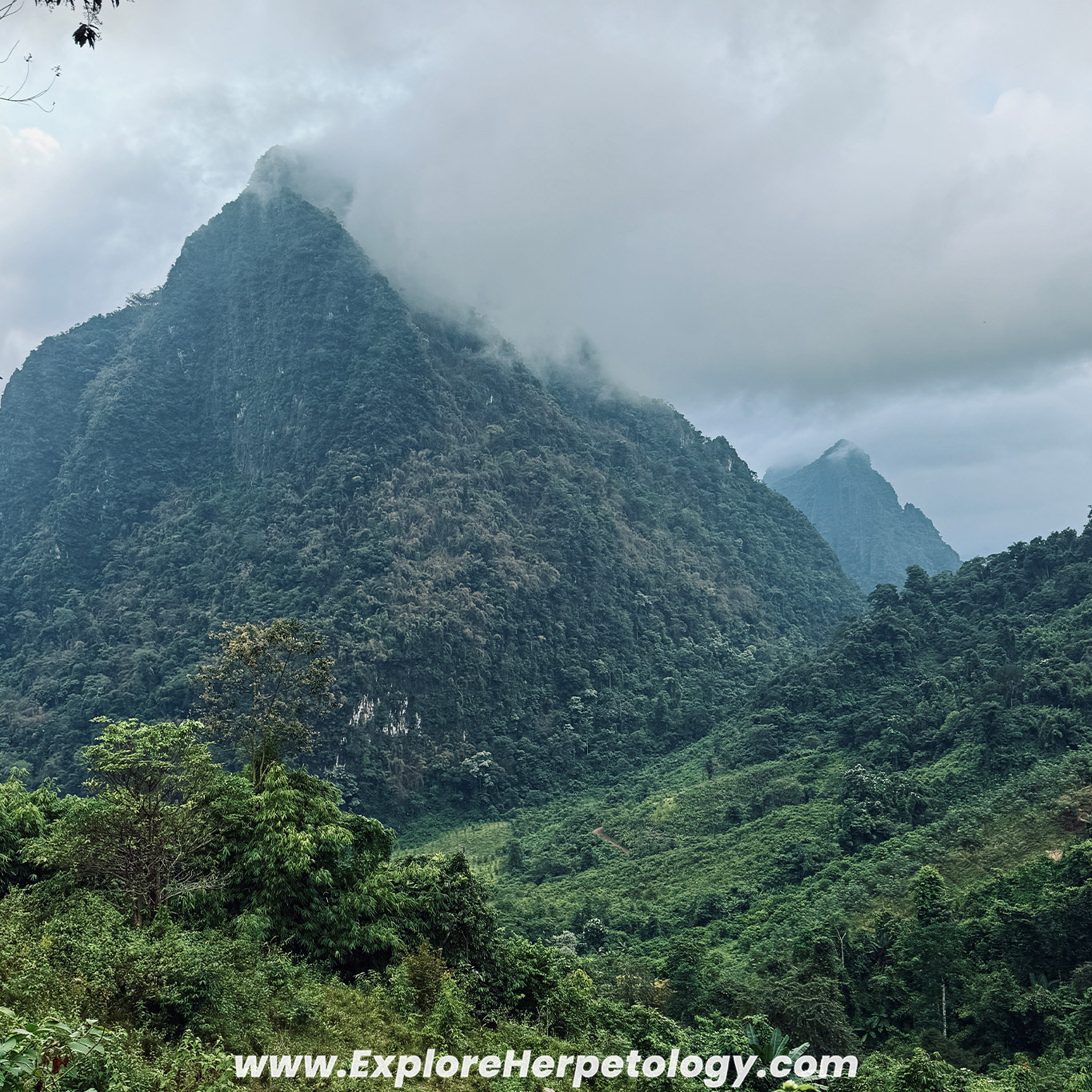
Vang Vieng karst habitat.
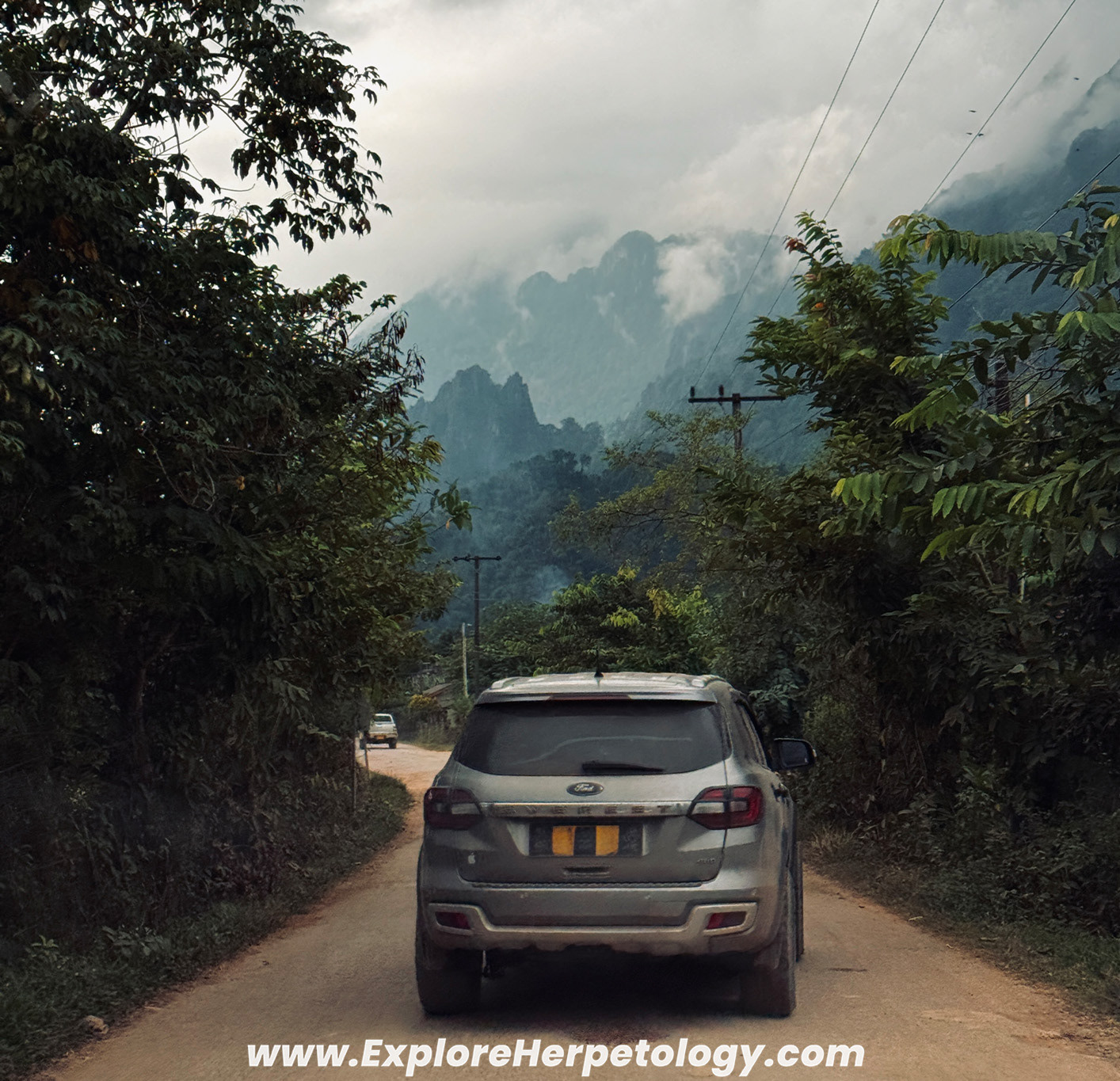
Driving in Vang Vieng.
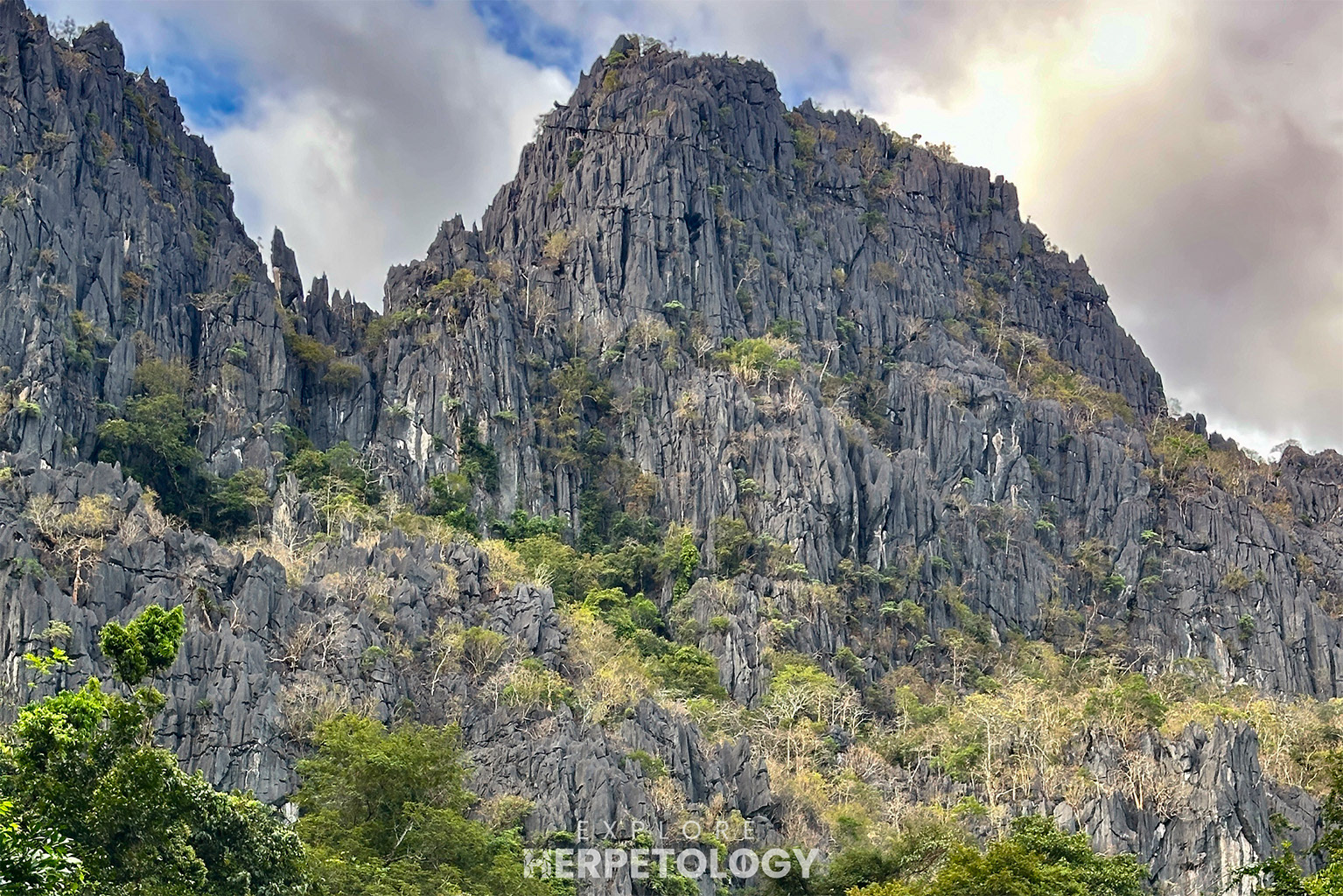
Habitat in Khammouane.
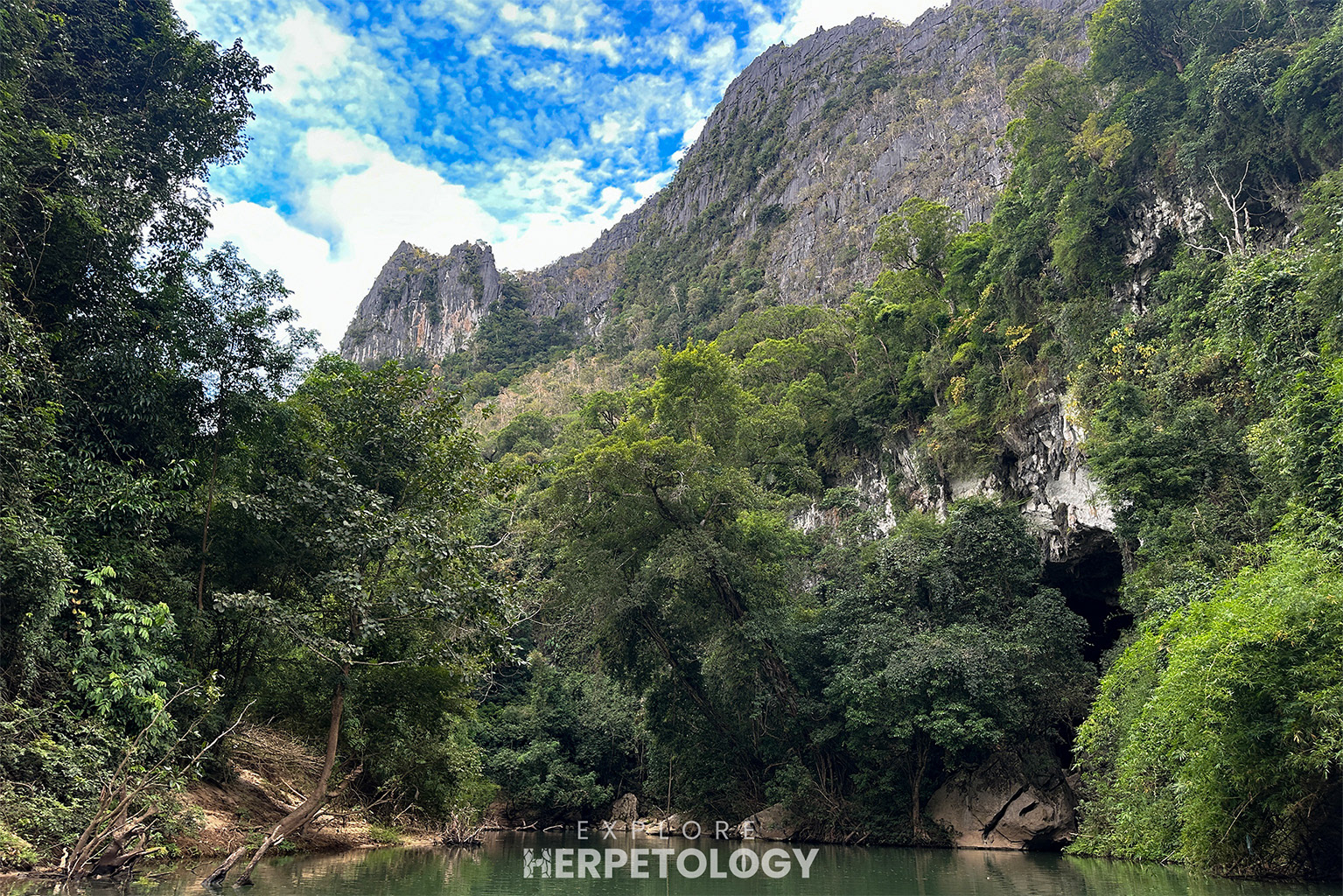
Habitat in Khammouane.
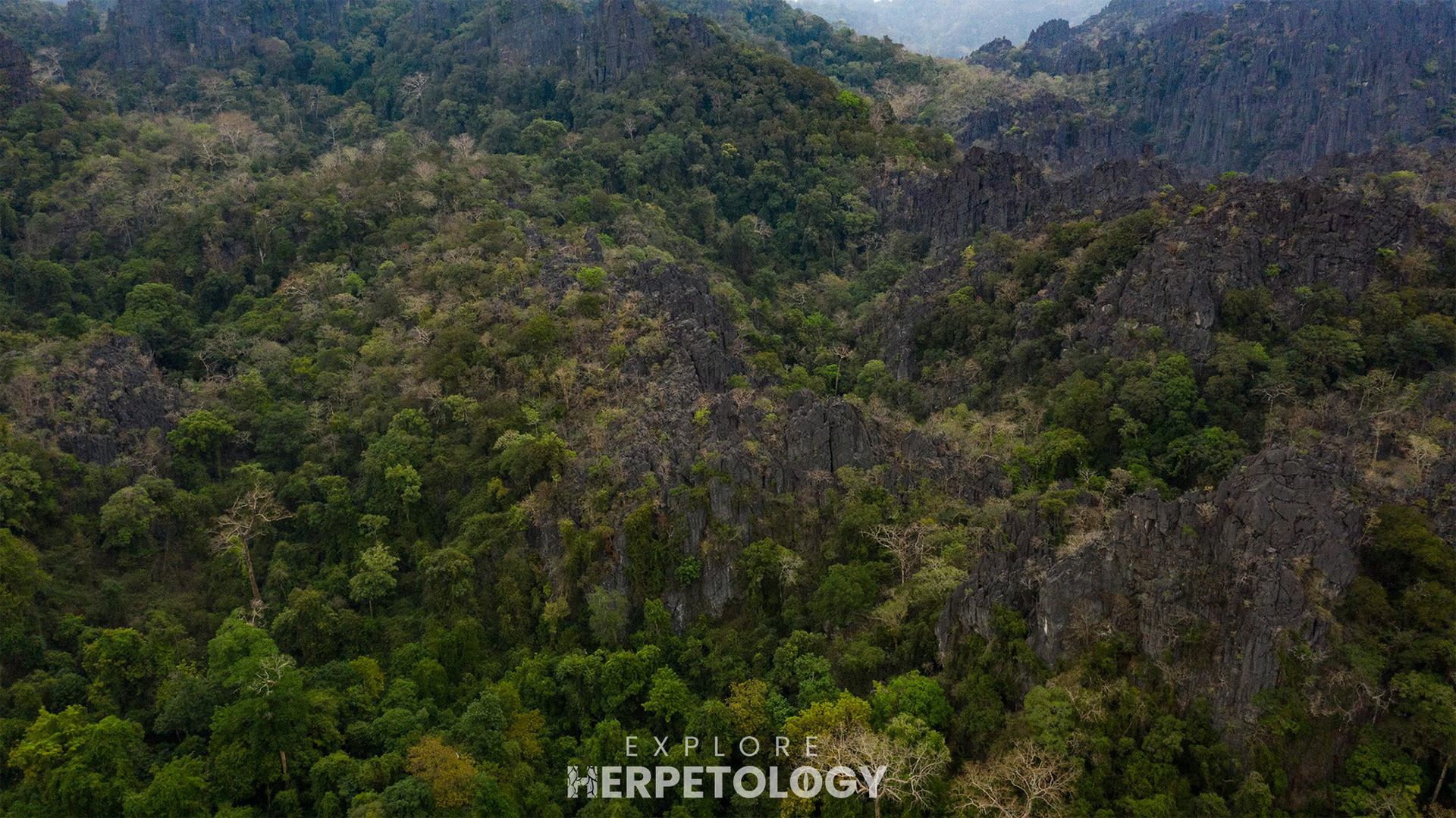
Drone view of Khammouane.
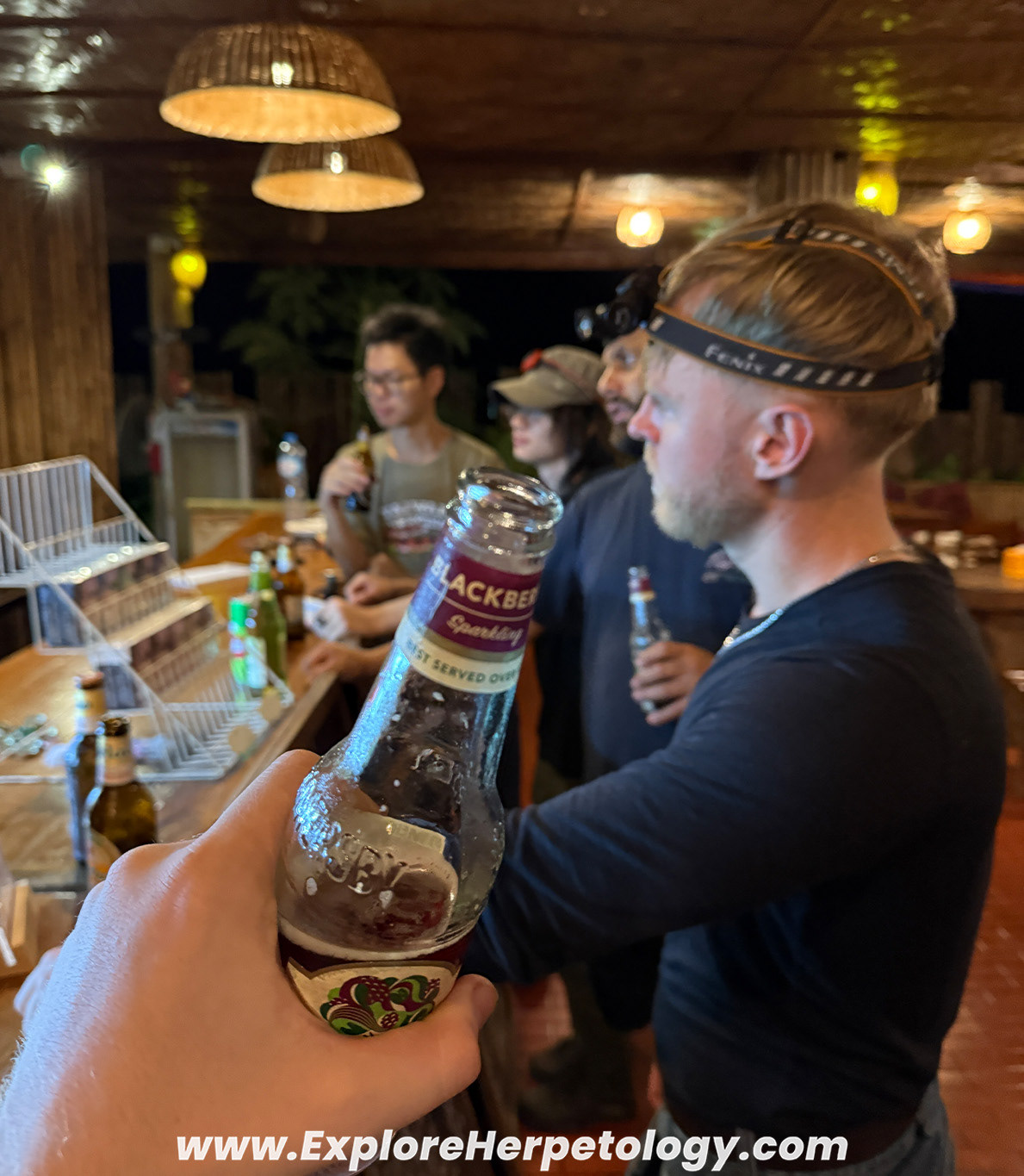
Post-herping drinks.
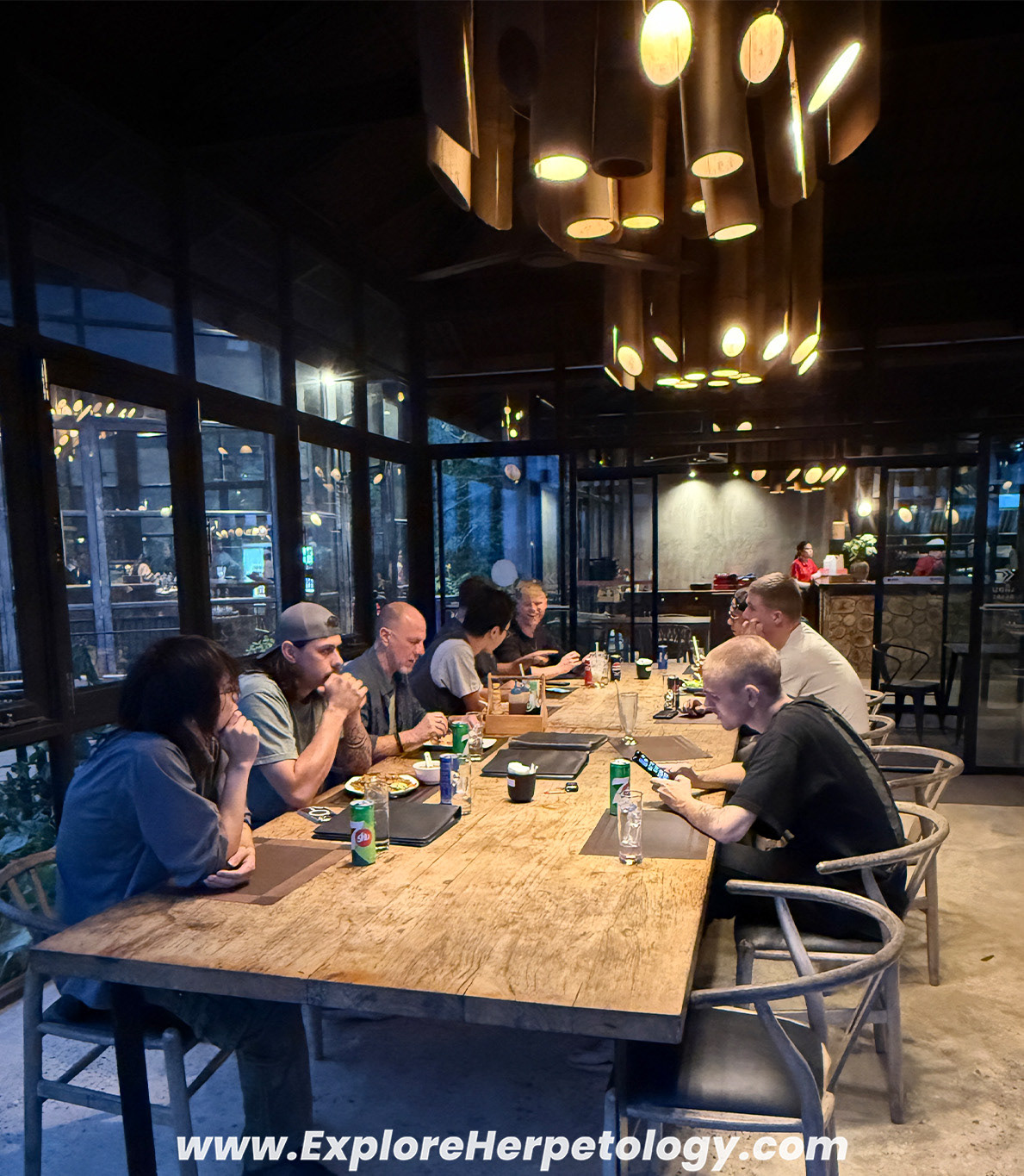
Restaurant in Khammouane.
Accommodation:
The accommodation on this expedition is high quality, with a comfortable bed and good amenities at each location. You will always have access to electricity and a western bathroom, as well as air-conditioning/fan. Wifi is present at every hotel. Laundry can be done on day 6 of the expedition.
Food:
As mentioned in the main body of text, both resorts have their own restaurant which serves both western and local food. They also have little 'shops' where you can buy snacks and other supplies for being in the field. In Vang Vieng, we have a huge abundance of local and western food catering restaurants.
Environmental conditions & fitness:
As this expedition involves hiking to caves and around limestone karst formations, you must self-assess yourself to ensure you are capable of this endeavour. It can be slippery and sometimes treacherous in these habitats, made ever more dangerous due to the sharp limestone rocks all around. We have not incurred any injuries in the past, and want to keep it this way. Of course, not every hike is mandatory, but being able to explore all the caves and karst habitat is essential to getting the full experience on this expedition. While not every person needs to kayak themselves (some fit 2 people), being fit enough to paddle in slow-flowing (or still) water is highly recommended.
Travel information:
All participants must arrive in Vientiane at the designated meeting location by 11:00am on the 1st November 2026. The meeting location will be communicated in private around 1 month before the start of the expedition. The best means to access Laos is by plane into Vientiane (the capital of Laos), but both buses and trains run from Bangkok to Vientiane. Most journey plans will likely take you via Thailand. We will return to Vientiane at 12:00pm on the 9th November 2026, where the tour will officially end.
It is the guests’ responsibility to meet all entry requirements needed to enter Laos, including visa procedures. Visas can be obtained online or at the border, although we recommend purchasing the tourist visa online to save time when you arrive in Laos. Do not purchase your visa from any third party website. Make sure to check the entry requirements for your country before booking.